
 Deutsch
 English
 Español
 Français
 Italiano
 Polski
 Português
 Suomi
 Svenska
 Türkçe
 Русский
 עברית
 한국어
 中文
 日本語
Places in this article: Samarkand · Bukhara · Khiva · Tashkent
The 10 Places That Actually Justify a Trip to Uzbekistan
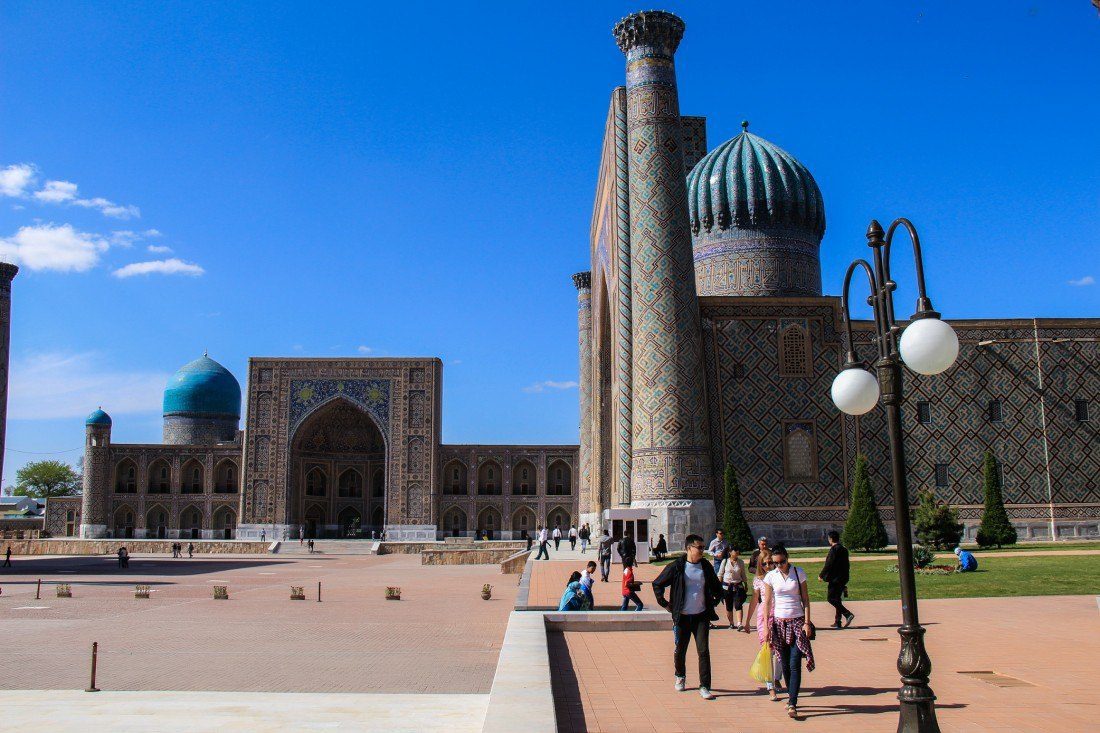
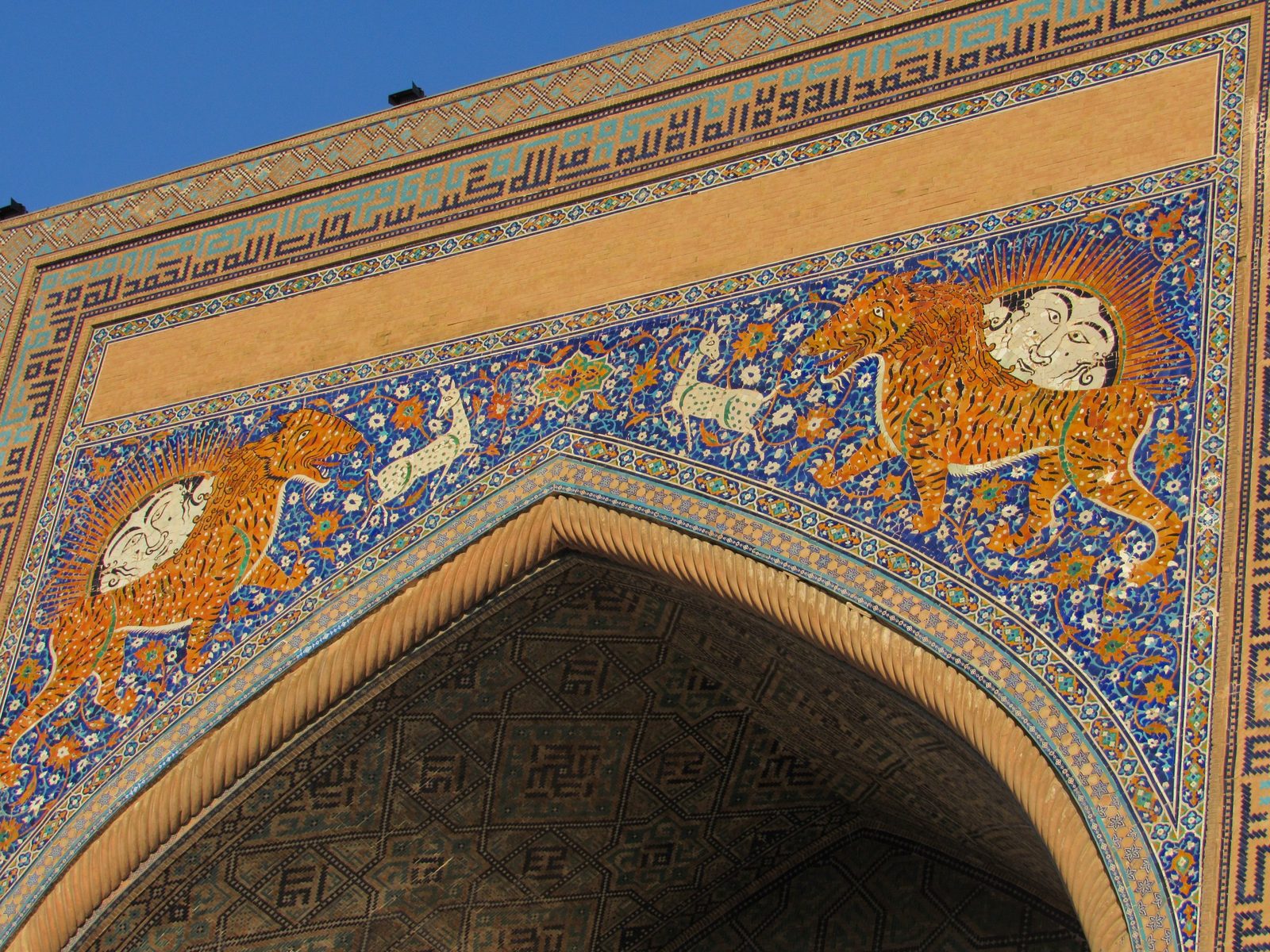
Six in the evening on the .Did you know? The Registan's sun-carrying lion went on a banknote The Sher-Dor Madrasah (1619–1636) is named for the big cats with the sun on their backs on its portal. The image appeared on the reverse of Uzbekistan's 200-som note of 1997. Read more → The group that arrived at lunchtime has taken the same photos as everyone else and gone to dinner. A few people are still sitting on the steps. They are in no hurry: they are waiting for the sun to drop and the tiles on the facades to turn from blue to copper. Twenty minutes later, they do.
Those people know the main rule of a trip to Uzbekistan. There are so many World Heritage monuments here that you could «collect» them in a week and remember very little. Fewer places with time to spare work better.
So this list has ten places, not thirty. We are a tour operator in Tashkent, and we have put them roughly in the order you pass them on the Tashkent, Samarkand, Bukhara and Khiva route. Two of them need a detour of their own, and we say which. For the full picture, city by city, see our guide to the sights of Uzbekistan.
1. The Registan, Samarkand: a conversation across two centuries
Everyone knows the square with three madrasahs from postcards. Fewer know it was not one design but a conversation that took two hundred years. The Did you know? Engineers pulled a leaning minaret back upright By 1920 a minaret of the Ulugh Beg Madrasah on the Registan was tilting. In 1932 engineer Vladimir Shukhov straightened it; the second minaret was set upright in 1965. Read more → was built in the early 15th century. The Sher-Dor opposite came only in the 17th century and repeats its outline like a reflection. The third, ,Did you know? The 'gilded' mosque of the Registan Tilla-Kari, built in 1646–1660, means 'gilded'. With Bibi-Khanym in ruins, it served as Samarkand's main Friday mosque until the 1920s. Its prayer hall glows with kundal, relief painting finished in gold leaf, restored in 1979. Read more → closed the square last.
Look at the Sher-Dor portal: big cats (lions or tigers, people still argue) chase deer, with a sun with a human face rising behind them. Images of living creatures are rare in Islamic architecture, and guides like to stop here. Come twice: at midday for the detail, near sunset for the light. More in our page on the Registan.
2. The Ark and the Kalyan minaret, Bukhara: the tower a conqueror spared
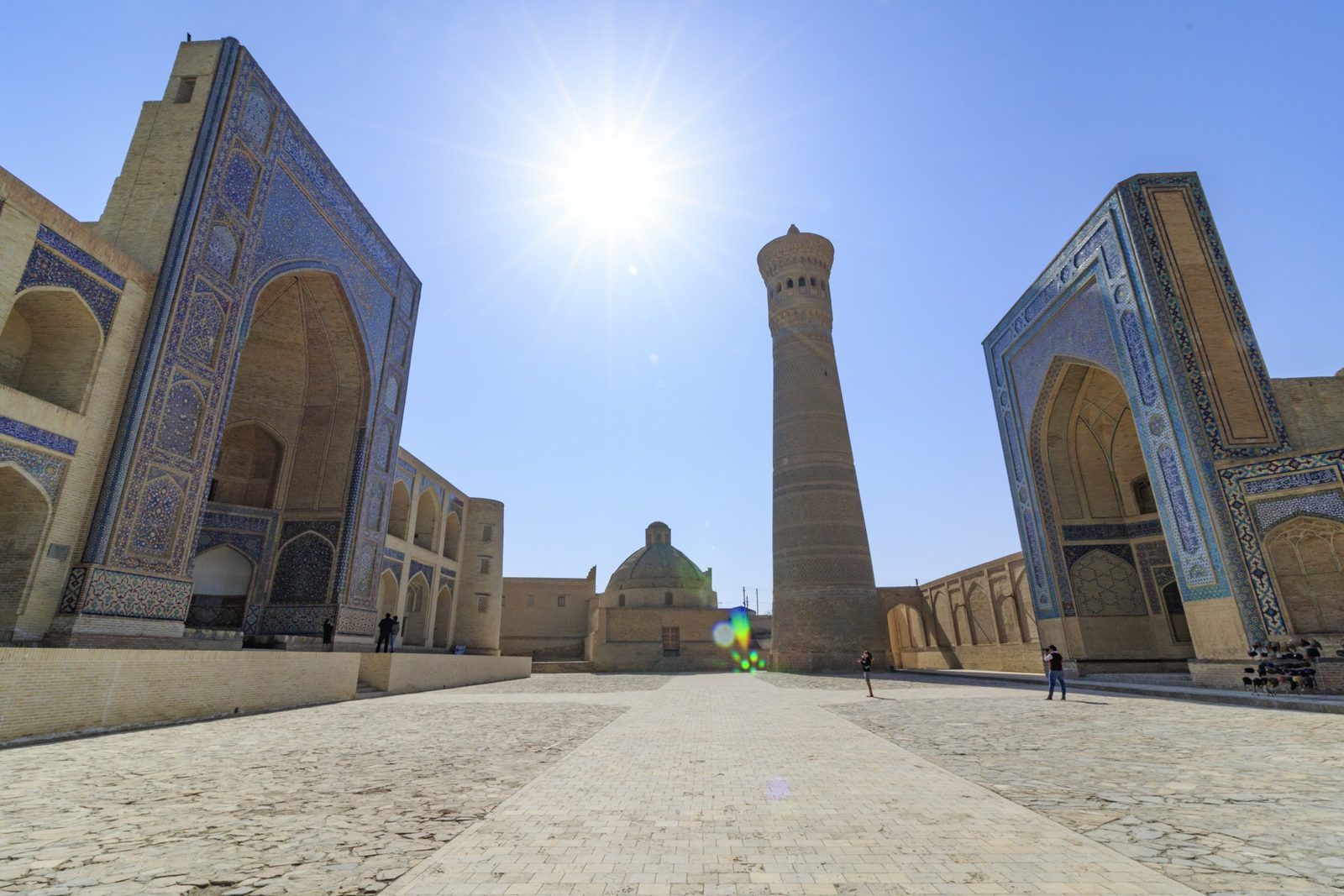
Bukhara has about 140 listed monuments, and almost all of them fit into an old town you can cover on foot. Two buildings hold its skyline. The Did you know? Legend: the Ark was laid out with a bull's hide Legend credits the Ark to Siyavush, a prince of the Persian epic, who was offered as much land as a bull's hide would cover. He cut it into thin strips and circled a hill. In fact people built up the Ark's hill over more than 2,000 years. Read more → was the seat of Bukhara's rulers for more than a thousand years, until 1920.
The Did you know? Diggers went 13 m down and never found its base The Kalyan Minaret of 1127 rises about 46 m, and an excavation reached 13 m without finding the bottom of its foundations. Genghis Khan reportedly ordered it spared. Read more → has stood since 1127. The legend says Genghis Khan, who took the city, looked up at the tower and ordered it left alone. True or not, the minaret outlived almost everything around it. Visitors are usually not allowed up, and you do not need to be: it is visible from almost anywhere in the old town and is the easiest landmark when you get lost in the lanes. See Poi Kalyan and the Ark.
3. Itchan Kala, Khiva: the one place on the list where you need no car
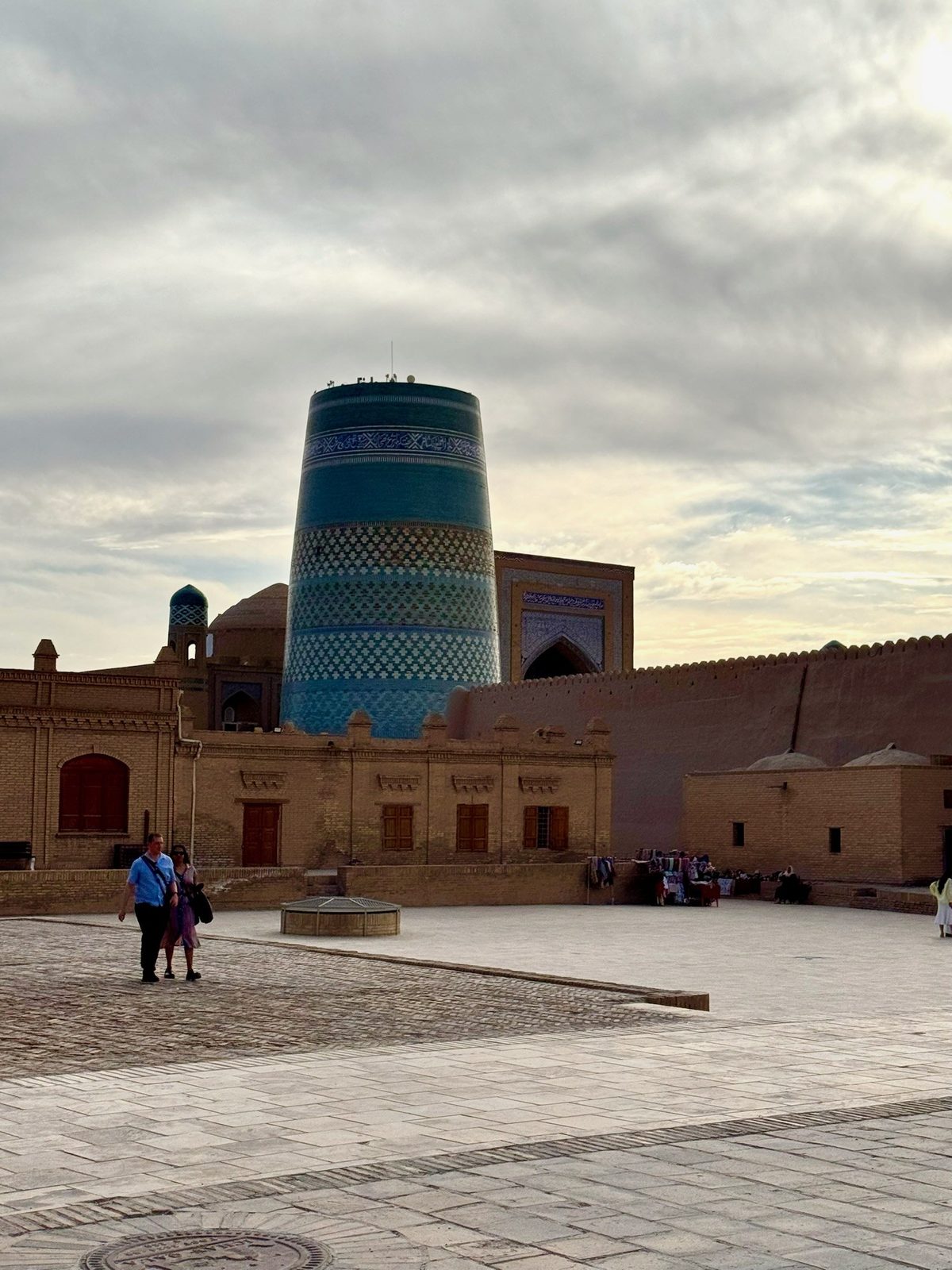
The inner town of Khiva is walled, and inside the walls little has changed since the days of the khans. In 1990 Did you know? People still live inside Khiva's museum city Itchan Kala packs more than 50 historic monuments and about 250 old houses inside clay walls 8–10 m high and 5–6 m thick, and families still live and work in its lanes. Read more → became Uzbekistan's first World Heritage site.
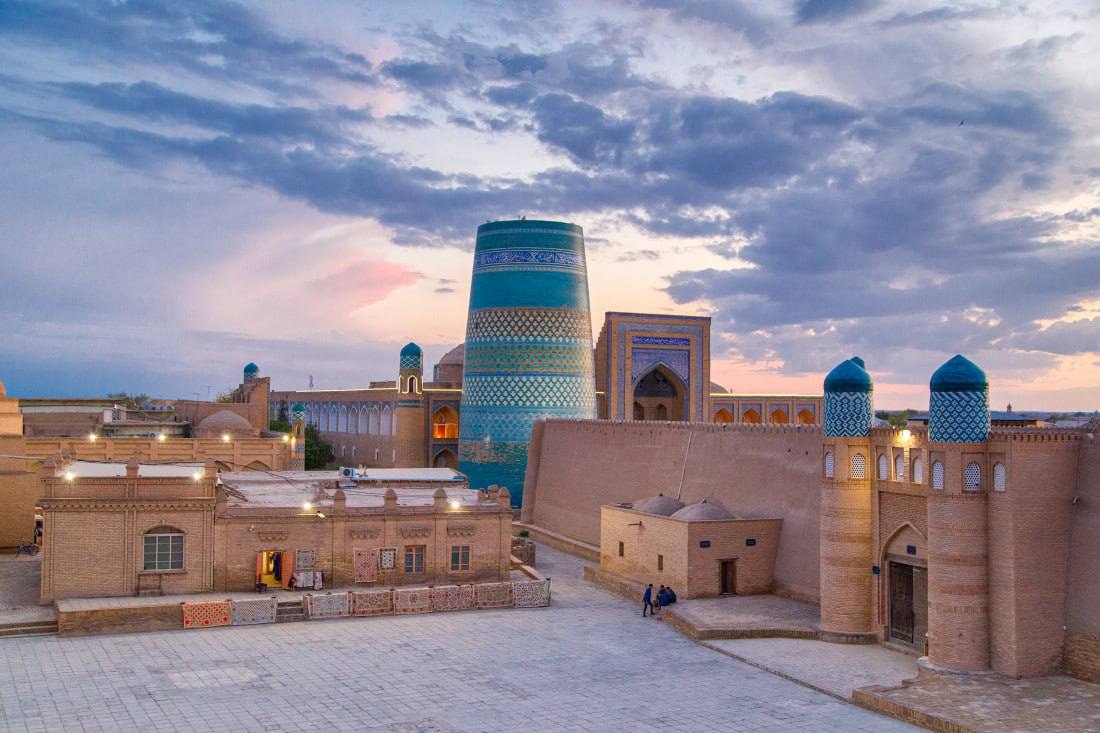
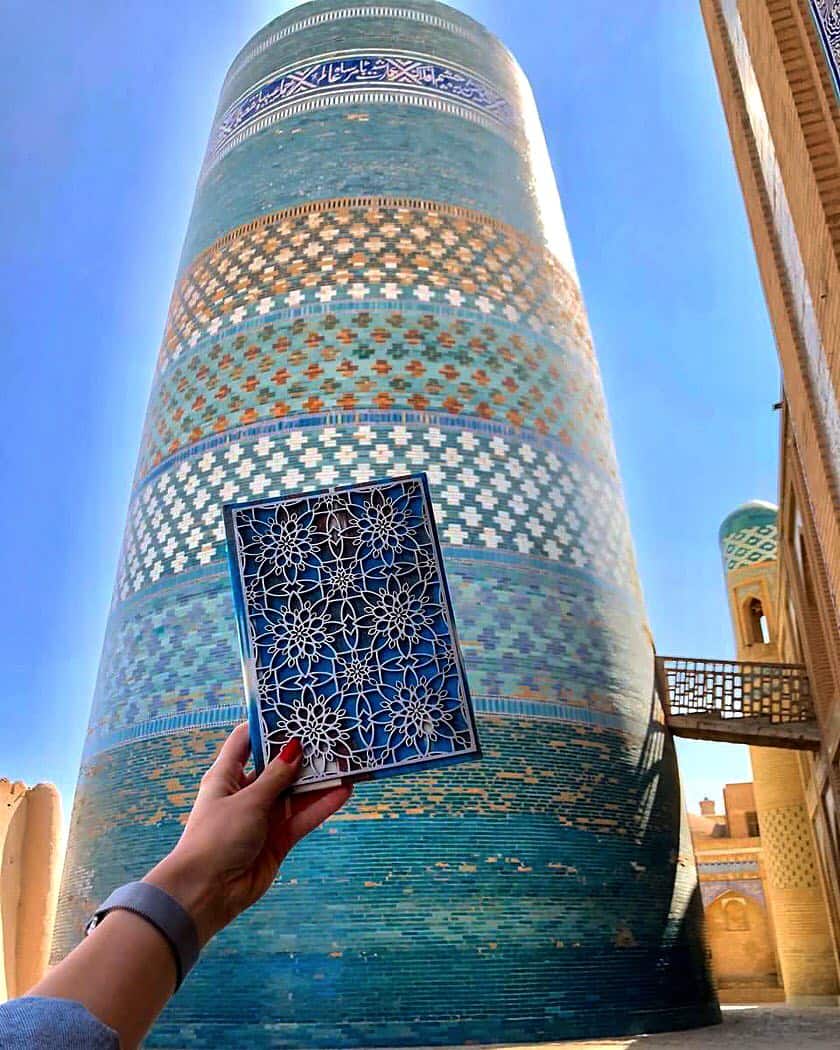
Its most recognisable building is unfinished. The ,Did you know? A 14-metre-wide base for a tower that stopped at 29 m Kalta-Minor was begun in 1852 and meant to reach 70–80 m, but work halted in 1855 at about 29 m when its khan died. It is said to be the only minaret covered entirely in glazed tiles. Read more → the «short minaret», was begun under Muhammad Amin-Khan in the middle of the 19th century. The khan died, the work stopped, and the wide turquoise tower stayed cut short. One legend says it was meant to be tall enough to see Bukhara from the top. You can walk the whole inner town in one unhurried day; our Itchan Kala guide has the route.
4. The Mushaf of Uthman and the metro, Tashkent
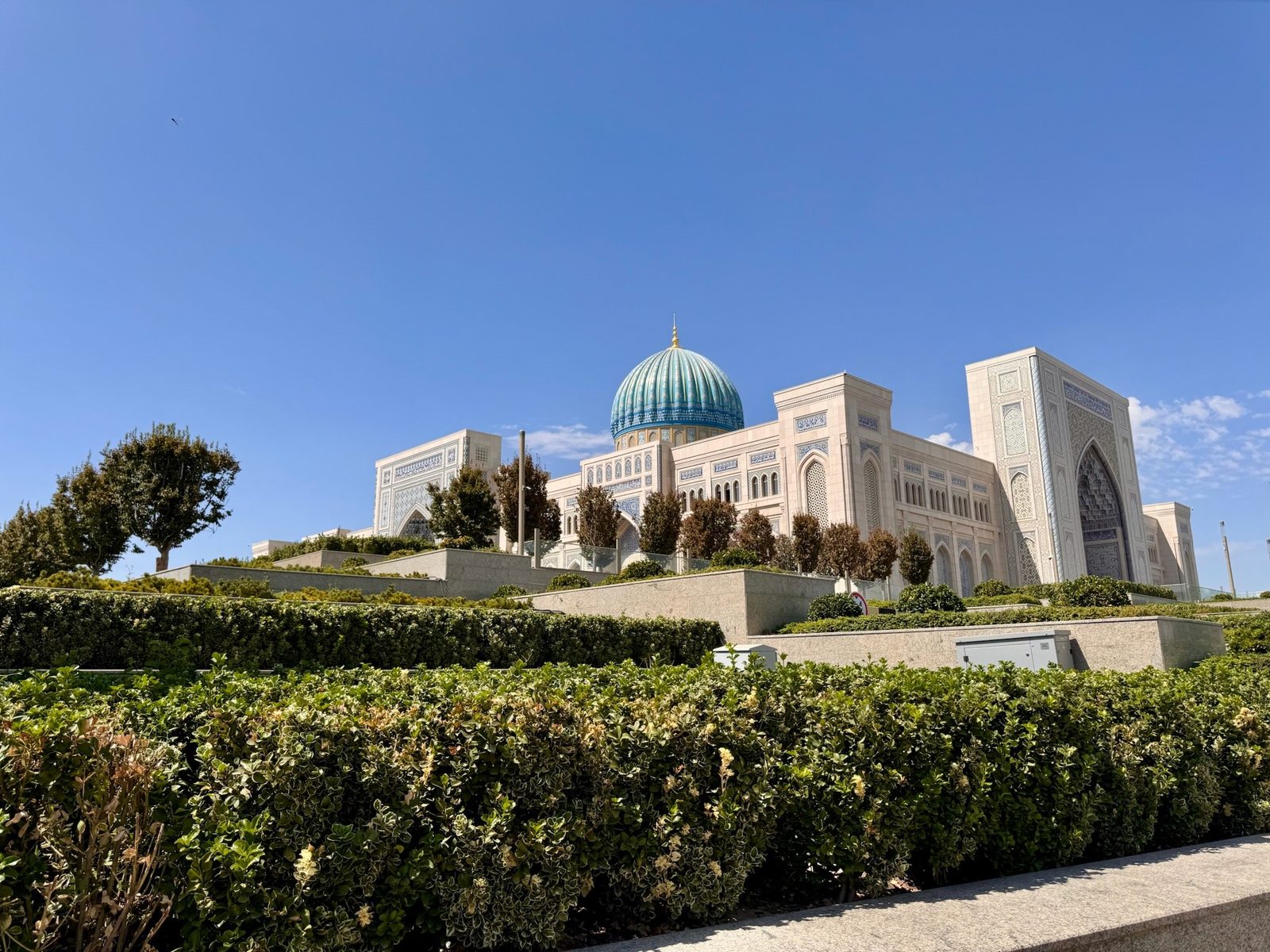
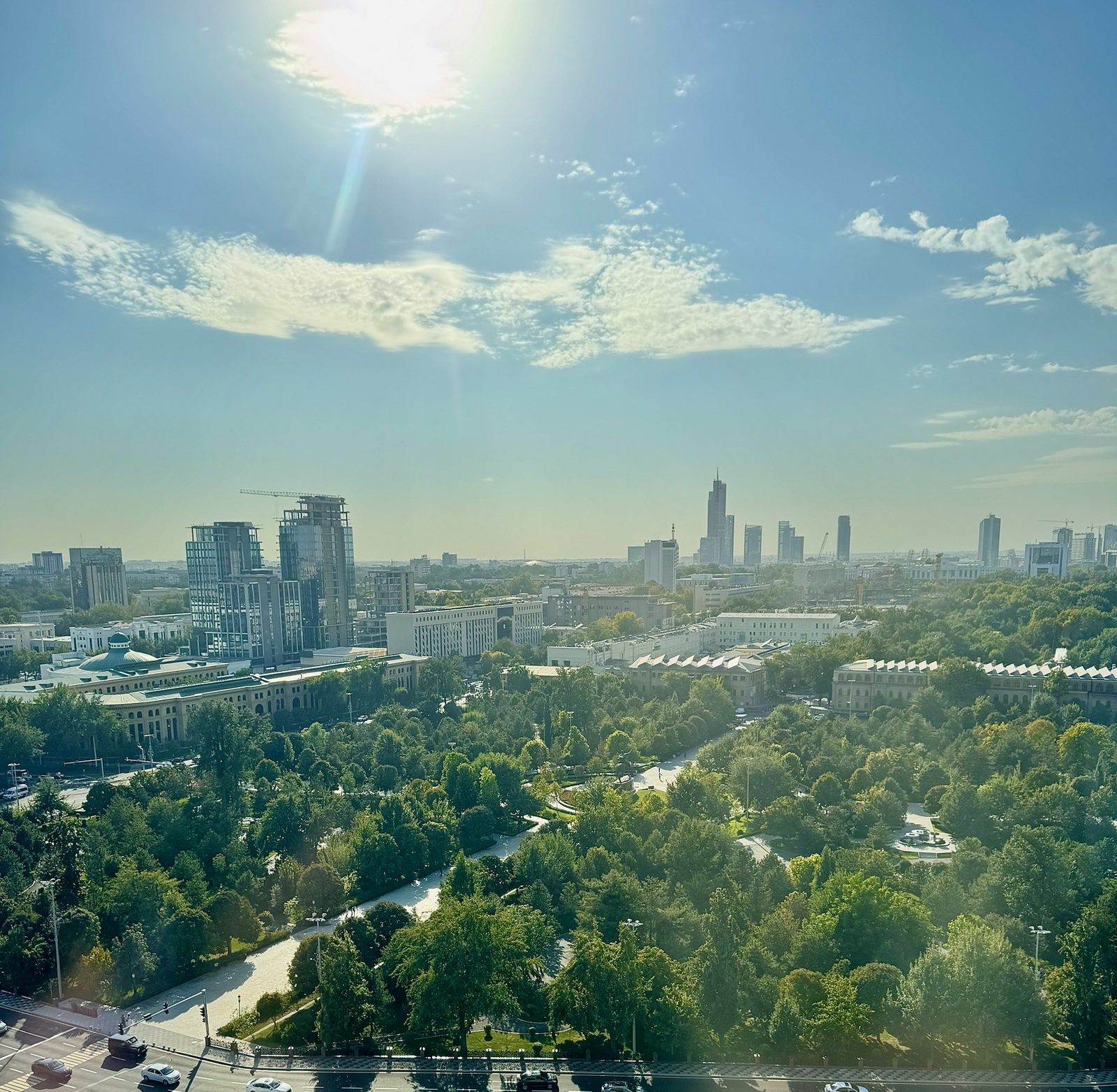
Many travellers rush through Tashkent on the way to Samarkand. That is a mistake. Since March 2026 the city has the Center of Islamic Civilization, and in its Qur'an Hall, under the great dome, lies the ,Did you know? Legend: Caliph Uthman's own Quran is kept in Tashkent Tradition holds that this huge parchment Quran is the personal copy of Caliph Uthman, and one story says Timur brought it to Samarkand. Radiocarbon dating gives 775–995, so it is more likely an early copy, yet still one of the oldest. Read more → a 7th-century Qur'an listed in UNESCO's Memory of the World Register. For years it was kept in a small library at the The religious heart of old Tashkent: madrasahs, a Friday mosque and mausoleums. Right next to it stands the new Center of Islamic Civilization, opened in 2026. Read more → ensemble across the square. The book has travelled: in 1869 it was taken from Samarkand to St Petersburg, and it came back to Central Asia in 1924. Book a timed slot; details are in our guide to the Center of Islamic Civilization.
In the evening, go down into the .Did you know? A metro designed to ride out a magnitude-9 earthquake The three original lines of the Tashkent Metro were built to withstand an earthquake of magnitude 9.0, and the tunnels lie unusually shallow, only 8–25 m below the street. Read more → It opened in 1977, and each station is decorated in its own way: marble, chandeliers, ceramic panels, no two alike. Photography has been allowed since 2018, so bring a camera. Our metro guide goes station by station.
5. Shah-i-Zinda, Samarkand: the street where people count the steps
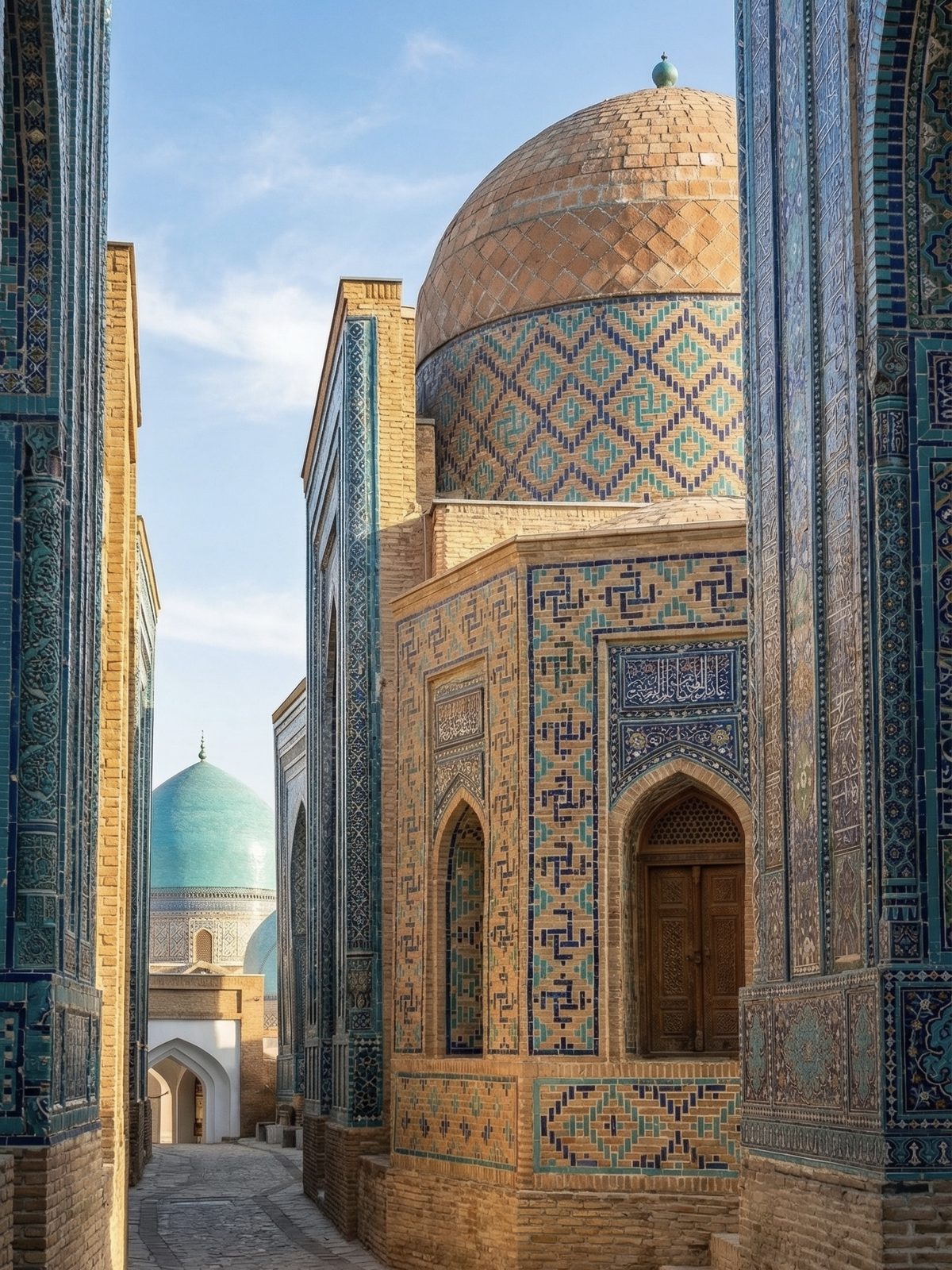
This is not one monument but a necropolis: a narrow street of mausoleums built over centuries, mostly for the Timurid nobility, each faced with tiles in its own pattern.
A steep staircase leads in, and a belief goes with it: count the steps on the way up and on the way down, and if the numbers match, your sins are forgiven. Did you know? Why Shah-i-Zinda means 'the Living King' The necropolis grew around the shrine of Qutham ibn Abbas, a cousin of the Prophet Muhammad. Legend says he did not die in battle but went down a deep well to a garden of paradise, where he lives on. Read more → is also a place of prayer, so dress modestly. The narrow street is best in low light, early or late; our Shah-i-Zinda page explains which tomb is which.
6. Ak-Saray, Shahrisabz: a palace of which only the gate is left
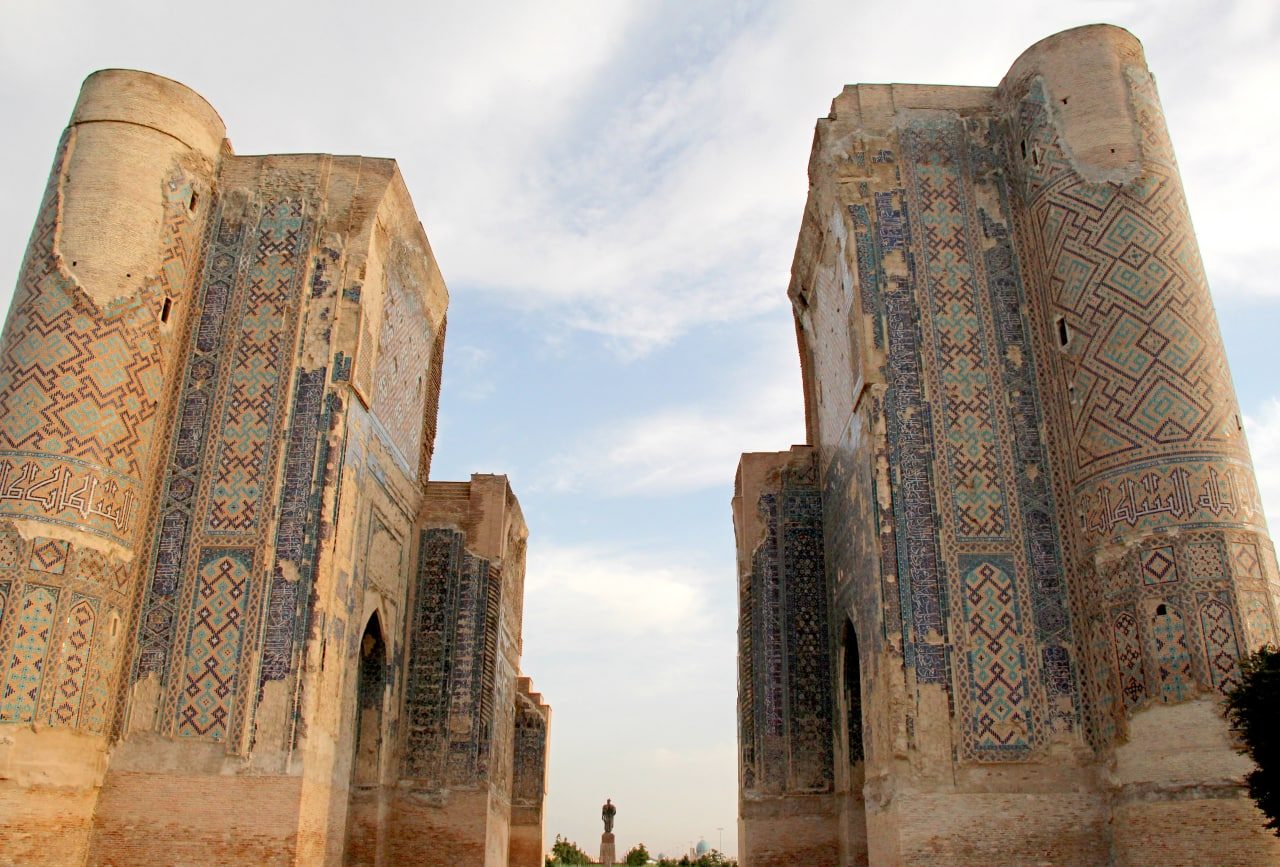
Shahrisabz is Amir Timur (Tamerlane, 1336–1405), founder of the Timurid empire, which had its capital in Samarkand. Born near Shahrisabz. Read more →'s home town, and here he built his most ambitious palace, ,The ruins of Amir Timur's palace in Shahrisabz, his home town. Only parts of the giant entrance arch still stand. Read more → from 1380 to 1404. In 1404 the Castilian envoy Ruy González de Clavijo came through, and he wrote that work was still going on.
The palace collapsed long ago. What remains are the two huge towers of the entrance portal, still tiled. A well-known translation of its inscription runs: «If you doubt our power, look at our buildings». Scholars debate its accuracy, but the point is clear. Shahrisabz is a day trip from Samarkand over the pass; see Ak-Saray and the Shahrisabz day.
7. Chimgan and the Tien Shan: mountains a day trip away
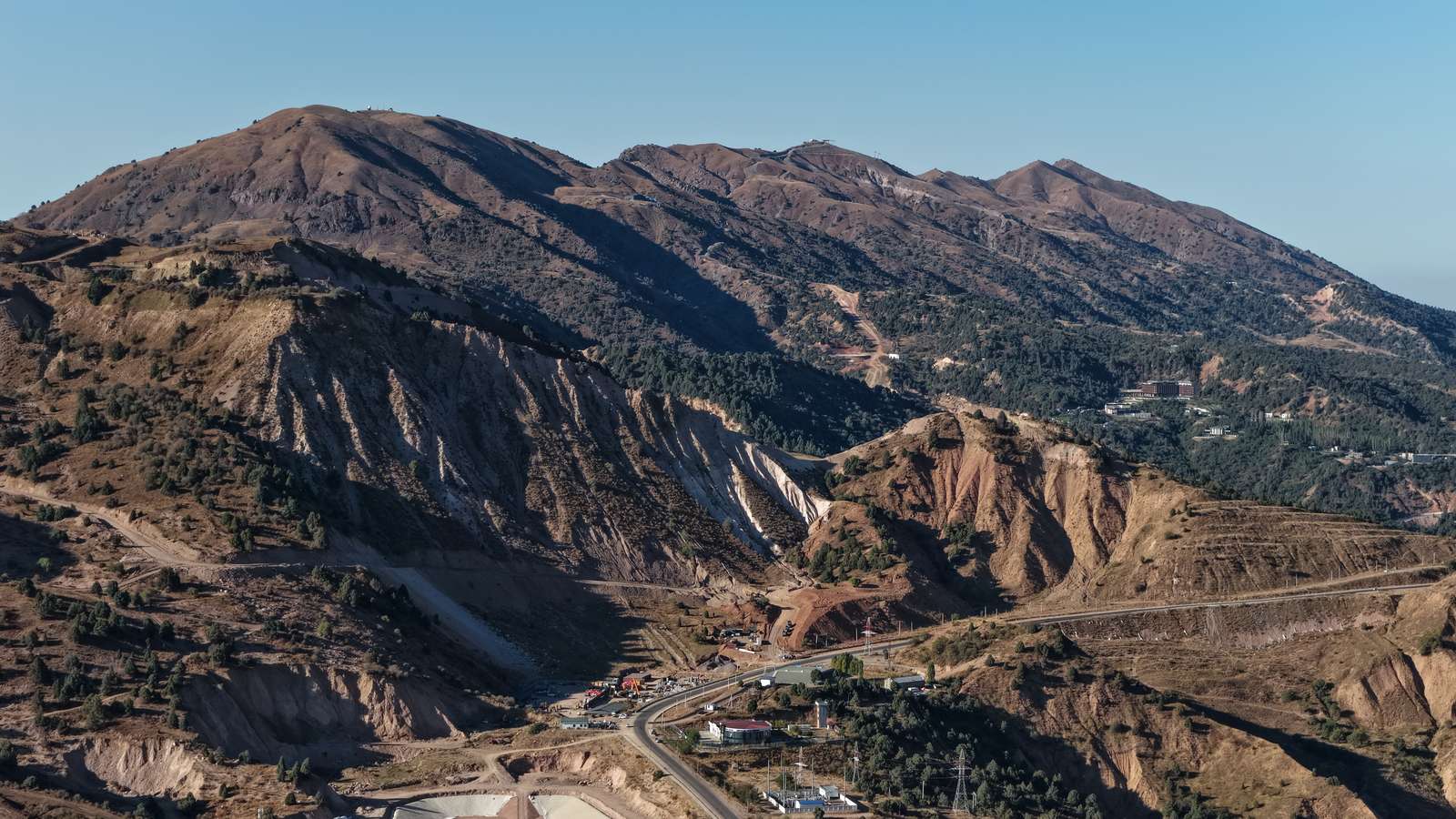
About an hour and a half from Tashkent, the plain ends and real mountains begin, the western spurs of the .Did you know? The tulip's family tree is said to begin in the Tien Shan Long before Ottoman gardens and Dutch bulb fields, wild tulips grew in Central Asia's mountains, and the Tien Shan is often named as their homeland. In April they flower on the slopes around Chimgan. Read more → Big Mountains of the Western Tien Shan about 80 km from Tashkent: hiking in summer, skiing in winter, the Charvak reservoir nearby. Read more → rises to 3,309 metres.
There are two resorts: old Chimgan and ,Did you know? Amirsoy drew about 150,000 visitors in its first three months Amirsoy opened in December 2019 on the northern slope of Mount Maygashkan in the Chatkal range, about 65 km from Tashkent. Some 150,000 visitors, mostly locals, came in its first three months, and its chalets get about 90% of their energy from the sun. Read more → which opened at the end of 2019. Lifts run in winter, trails open in summer. It is the fastest way to swap madrasahs for mountain air without leaving the capital for more than a day. Our Chimgan and Charvak day plan shows how.
8. Lyabi-Hauz, Bukhara: the pond that outlived its neighbours
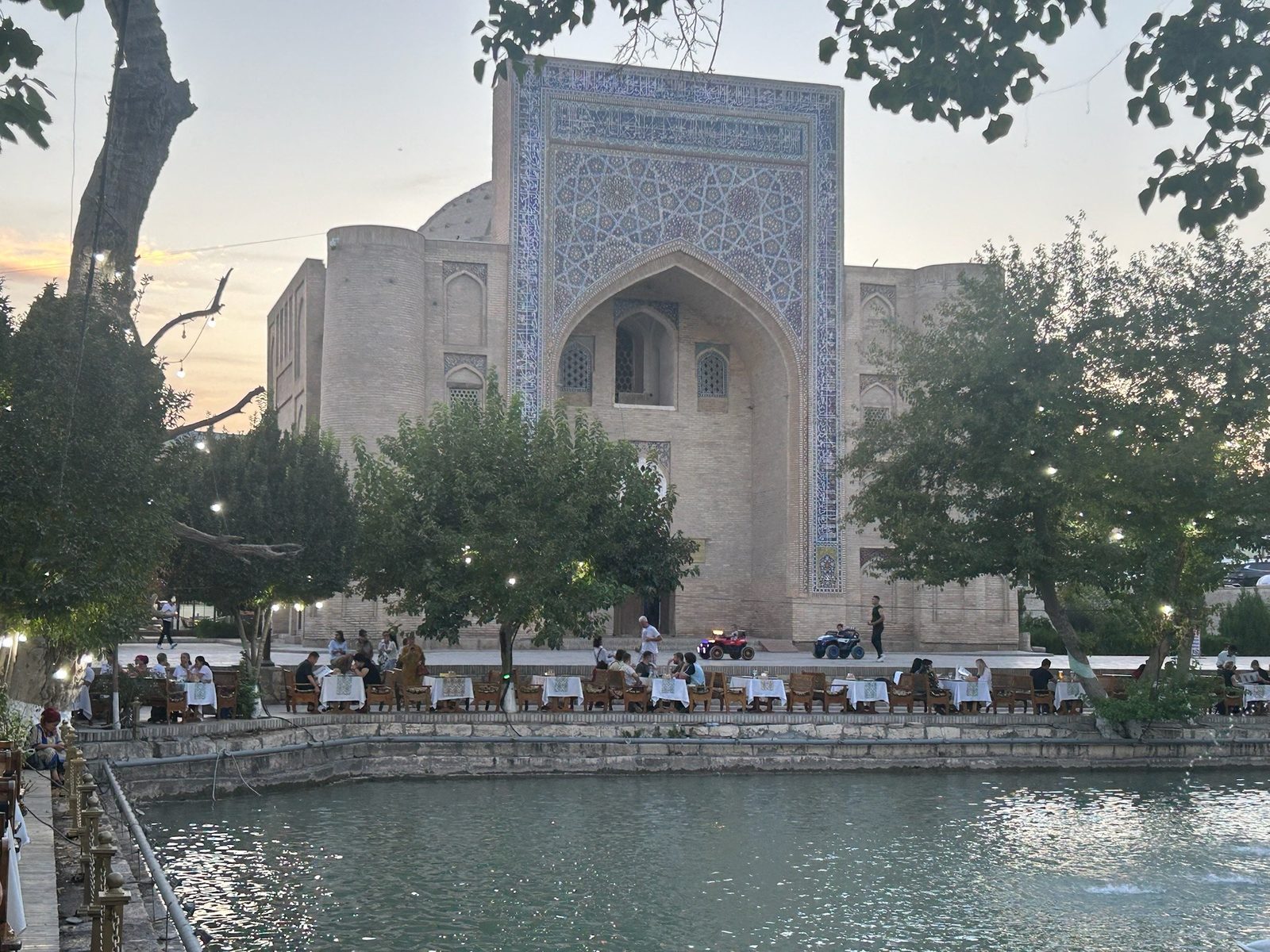
The name means «by the pond». Bukhara once had many such ponds, or hauz. The city drew water from them, and diseases bred in them too. In Soviet times most were filled in. ,Did you know? Bukhara's ponds were once its water supply Pools like Lyabi-Hauz, dug around 1620 and 46 × 36 m, were the city's main source of water. Most were filled in during the 1920s–30s because they spread disease; Lyabi-Hauz survived. Read more → dug in the early 17th century, is one of the few that survived.
Around it stand old mulberry trees, the Did you know? A madrasah that was an inn, a fort and a museum Tashkent's Kukeldash Madrasah, built around 1570, became a caravanserai in the 18th century, later a fortress and then a museum, before returning to teaching in the 1990s. Read more → and Did you know? A caravanserai that became a madrasah by a khan's word Nadir Divan-Begi built his 1622 building by Lyabi-Hauz as a caravanserai. At the opening Imam Quli Khan praised it as a fine madrasah, and a khan's word could not be taken back: a portal and cells were added, and a madrasah it became. Read more → madrasahs and a few teahouses, plus a statue of Did you know? Sit a child on Nasreddin's donkey for a happy life By Lyabi-Hauz stands a statue of Nasreddin, the trickster of tales told from Turkey to China, whom Uzbeks count as a Bukharan. Locals say a child placed on his donkey will have a life full of joy. Read more → on his donkey that gets more photos than the madrasahs. It is the best place in Bukhara to stop for an hour: order tea and watch the square. More in Lyabi-Hauz and Chor Minor.
9. Muynak and the Aral Sea: a place about what was lost
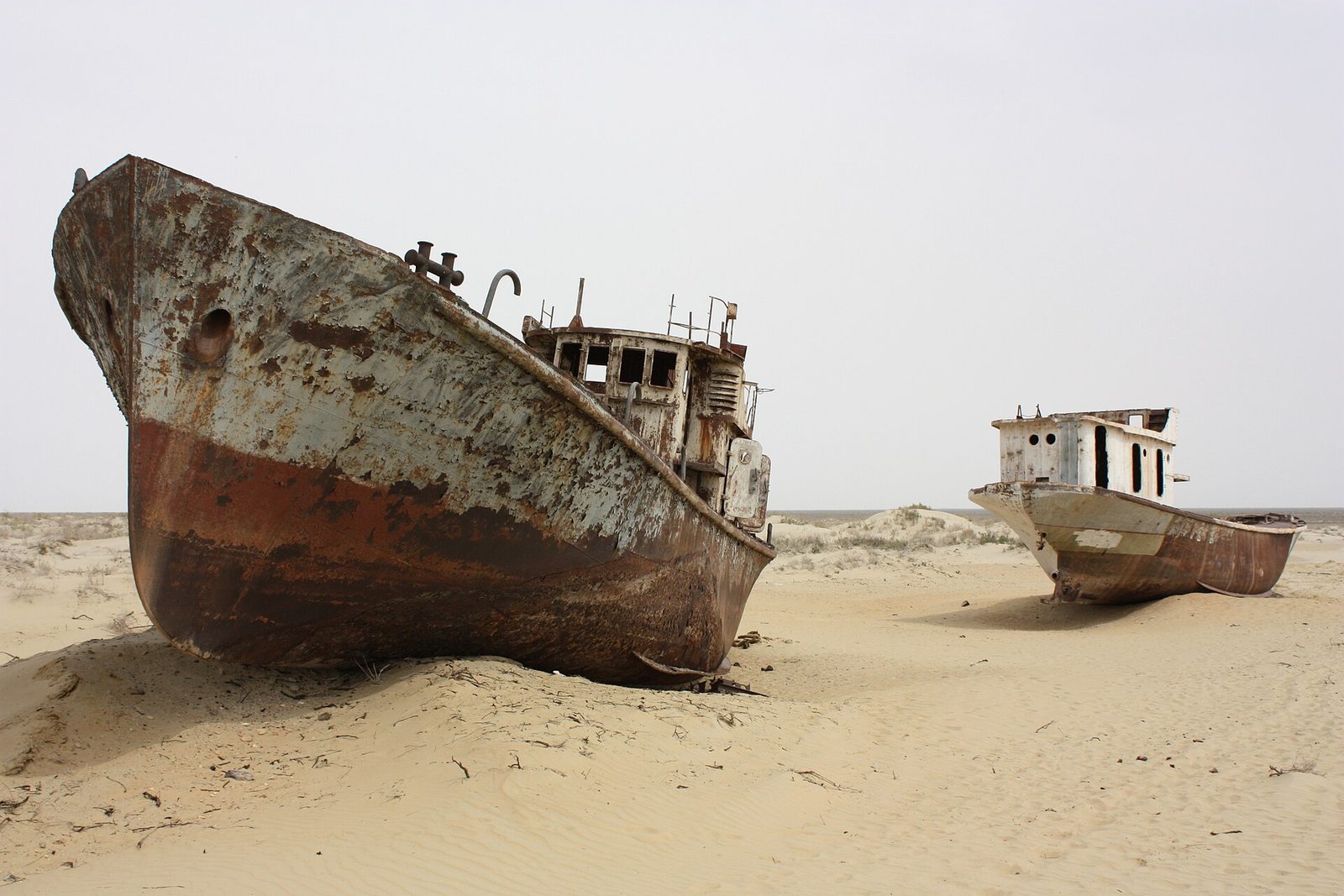
Every other place on this list is about what survived. Did you know? A music festival is held among Muynak's old fishing boats Since 2018 the Stihia festival of electronic music, art and science has gathered in Muynak, once a port on the Aral Sea, right beside the ships left on the sand. It ends by burning a 10-metre installation of the word SEA. Read more → is about what disappeared. It was once a fishing port; now the water is more than a hundred kilometres away, and rusting trawlers stand in the sand.
It is not a stop on the way but a separate detour of at least two days, usually from Nukus. Our Aral Sea extension covers it, and we wrote a longer guide to the Aral if you are considering the trip.
10. The fortresses of Khorezm: the land of fifty fortresses
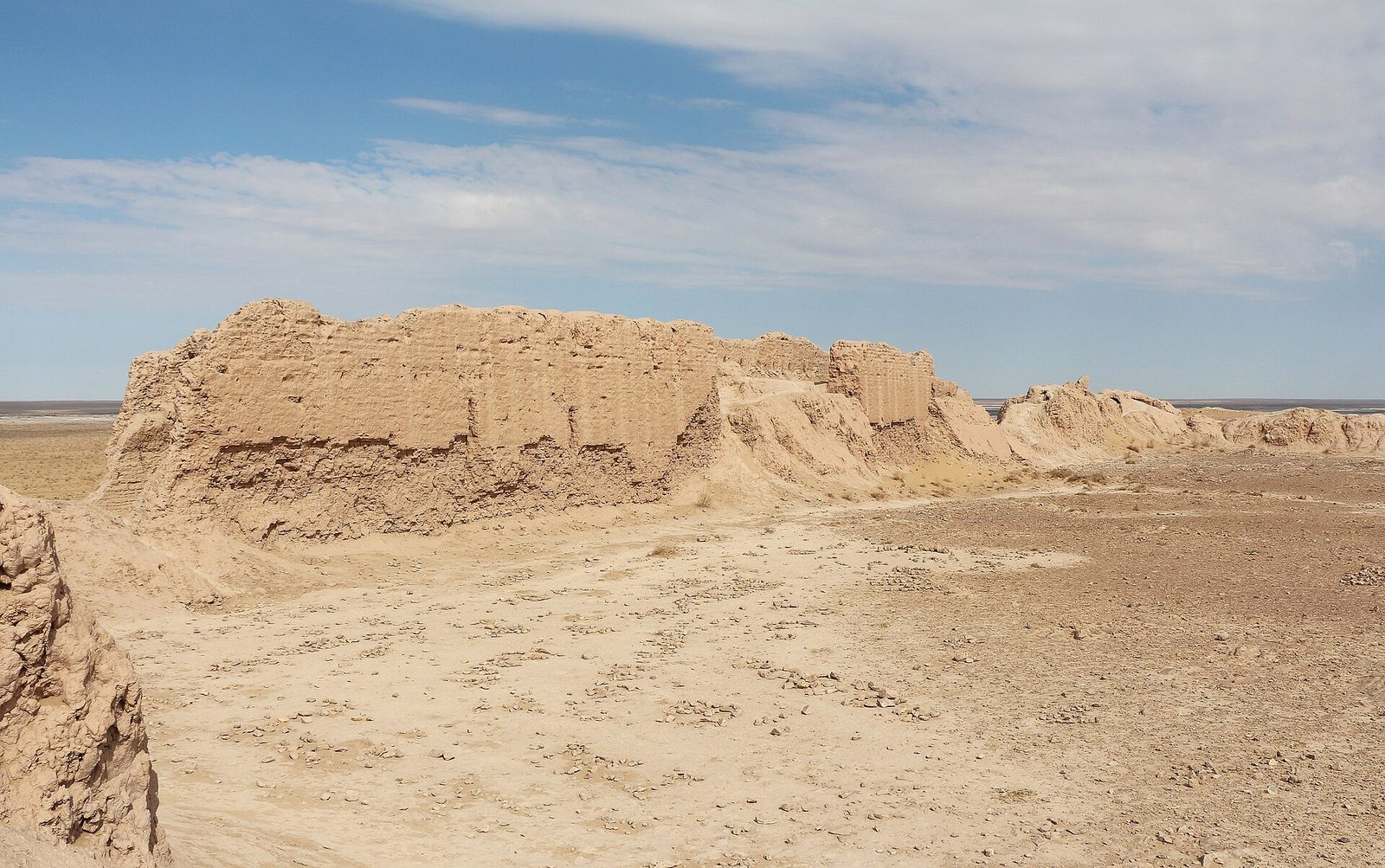
One district of Karakalpakstan is simply called ,Did you know? Ellikqala: a district named after “fifty fortresses” Across the Amu Darya from Khiva, a district of Karakalpakstan is called Ellikqala, from a phrase meaning roughly “fifty forts”. Its clay castles of ancient Khorezm, Ayaz-Kala among them, have been on Uzbekistan’s tentative UNESCO list since 2008. Read more → «fifty fortresses». In the desert across the Amu Darya from Khiva and Urgench lie the ruins of ancient Khorezmian towns. Did you know? Legend says a shepherd named Ayaz built Ayaz-Kala for a bride Legend says a Khorezm king promised his daughter to whoever built an unassailable fortress; the shepherd Ayaz began, the king broke his word, and the walls stayed unfinished. In fact the oldest fort here dates to the 4th–3rd century BC. Read more → is among the best preserved: its clay walls have stood for more than two thousand years on a hill at the edge of the oasis, where you can see what they guarded against.
There are few visitors, and that is the main argument. If Khiva is the end of your route, add a half-day: our trip to the Ayaz-Kala fortress includes a guide and tickets. The background is in Khorezm's desert fortresses.
In short
- All ten places fit into a 7–10 day trip around Uzbekistan; the Aral needs at least two more days. A good base is the 8-day classic tour.
- Follow the chain Tashkent, Samarkand, Bukhara, Khiva. Chimgan is a day out from Tashkent, Shahrisabz from Samarkand, the Khorezm fortresses from Khiva.
- The best light on the Registan and at Shah-i-Zinda is late in the day: plan two visits to each, not one.
- Leave free hours in Bukhara and Khiva; the old towns are best on foot and without a schedule.
- Ten places, about a week if you do not rush. The people who stayed on the Registan steps in the evening usually come back for more.
© Photos
- Ship cemetery, Muynak — Arian Zwegers / Wikimedia Commons · CC BY 2.0