
Places in this article: Samarkand · Tashkent
Tashkent in 1 or 2 days: Hazrati Imam, Chorsu, the metro and the way on to Samarkand
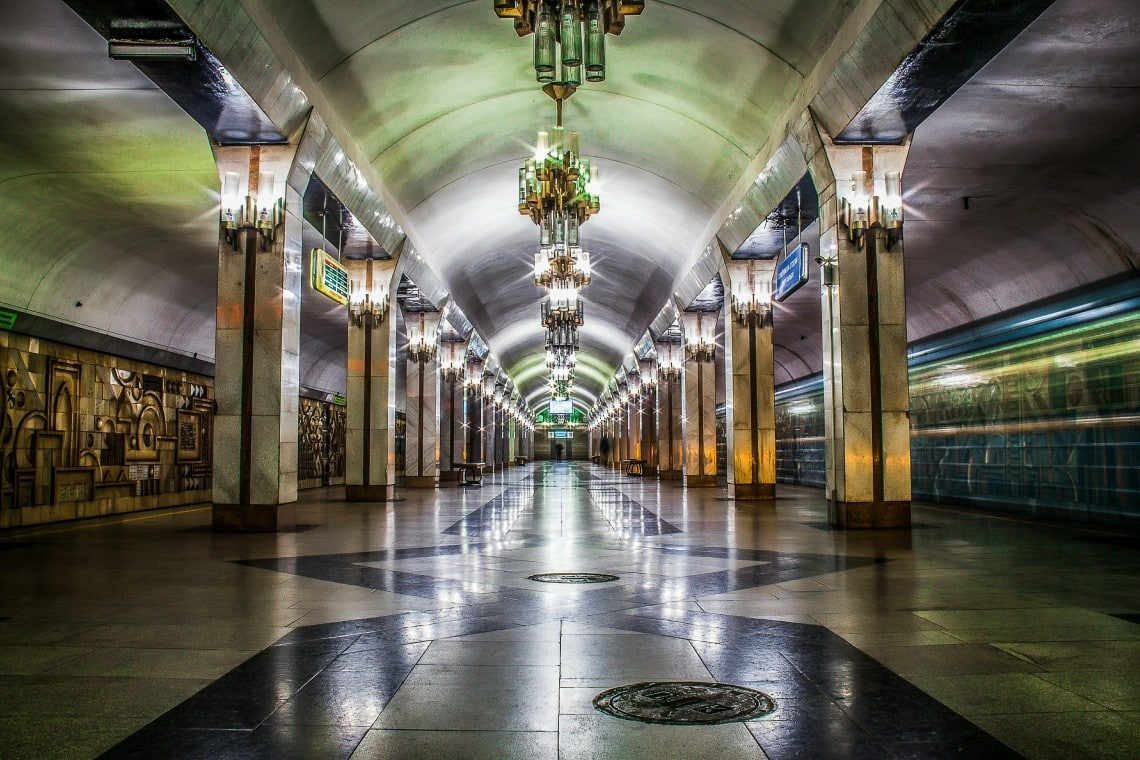
Until June 2018 you were not allowed to take a single photograph in the Did you know? A metro designed to ride out a magnitude-9 earthquake The three original lines of the Tashkent Metro were built to withstand an earthquake of magnitude 9.0, and the tunnels lie unusually shallow, only 8–25 m below the street. Read more →. Today one of its stations is part of a World Heritage site, and we send our guests underground on purpose. That is Tashkent in one line: the city most travellers treat as an airport and a train station repays a day or two of real attention.
We live and work here. This is our plan for one or two days, from landing to the Uzbekistan's high-speed train: Tashkent to Samarkand in 2 hours 30 minutes, Tashkent to Bukhara in about 4 hours. Tickets are tied to your passport. Read more → to Samarkand; the city’s history and districts are on our Tashkent page.
What is where
Tashkent is big: about 3.2 million people, and around 4 km from Tashkent's old bazaar under a big blue-green dome, not far from Hazrati Imam. Bring cash in so'm. Read more → to Amir Timur (Tamerlane, 1336–1405), founder of the Timurid empire, which had its capital in Samarkand. Born near Shahrisabz. Square. The old city around Chorsu and The religious heart of old Tashkent: madrasahs, a Friday mosque and mausoleums. Right next to it stands the new Center of Islamic Civilization, opened in 2026. Read more → is low houses, mosques and the bazaar. The centre, rebuilt after the 1966 earthquake, is avenues, parks and modernist buildings. The blue Uzbekistan line of the metro joins the two.
| Sight | What it is | Where |
|---|---|---|
| Hazrati Imam | Mosques and a An Islamic college: student cells and classrooms around a courtyard behind a grand portal. In the old towns many now house museums and craft workshops. around the tomb of a 10th-century scholar | old city |
| Center of Islamic Civilization | A museum under a 65-metre dome, opened in March 2026 | next to Hazrati Imam |
| Chorsu Bazaar | The old bazaar under a blue dome of 1980, with the Did you know? A madrasah that was an inn, a fort and a museum Tashkent's Kukeldash Madrasah, built around 1570, became a caravanserai in the 18th century, later a fortress and then a museum, before returning to teaching in the 1990s. Read more → madrasa at its edge | old city, Chorsu metro station |
| Alisher Navoi and Did you know? A metro station where Ulugh Beg meets Gagarin Kosmonavtlar station, opened in 1984, has ceramic medallions of Ulugh Beg, Galileo, Icarus, Gagarin and Tereshkova, and glass stars in the ceiling that hint at the Milky Way. Read more → | Two metro stations: ceramic reliefs under domes, and a space theme | Uzbekistan line |
| Amir Timur Square | The central square, with the Amir Timur Museum on its south side | centre |
| State Museum of History, Did you know? A diplomat's house that became a museum of crafts In 1896 diplomat Alexander Polovtsev bought a merchant's house and had it rebuilt in the Central Asian style. Today it is the Museum of Applied Arts, with over 7,000 pieces of folk craft. Read more → | Archaeology from the whole country; more than 7,000 pieces of folk craft | centre |
| Minor Mosque and the Did you know? A 375-metre tower with a viewing deck at 97 m The Tashkent TV Tower, begun in 1978 and operating since January 1985, rises 375 m to the tip of its spire. Its observation deck at about 97 m looks out over the whole city. Read more → | The white mosque on the Ankhor canal; a 375-metre tower with a viewing deck at about 97 m | north of the centre, by taxi |
Arriving by plane or train
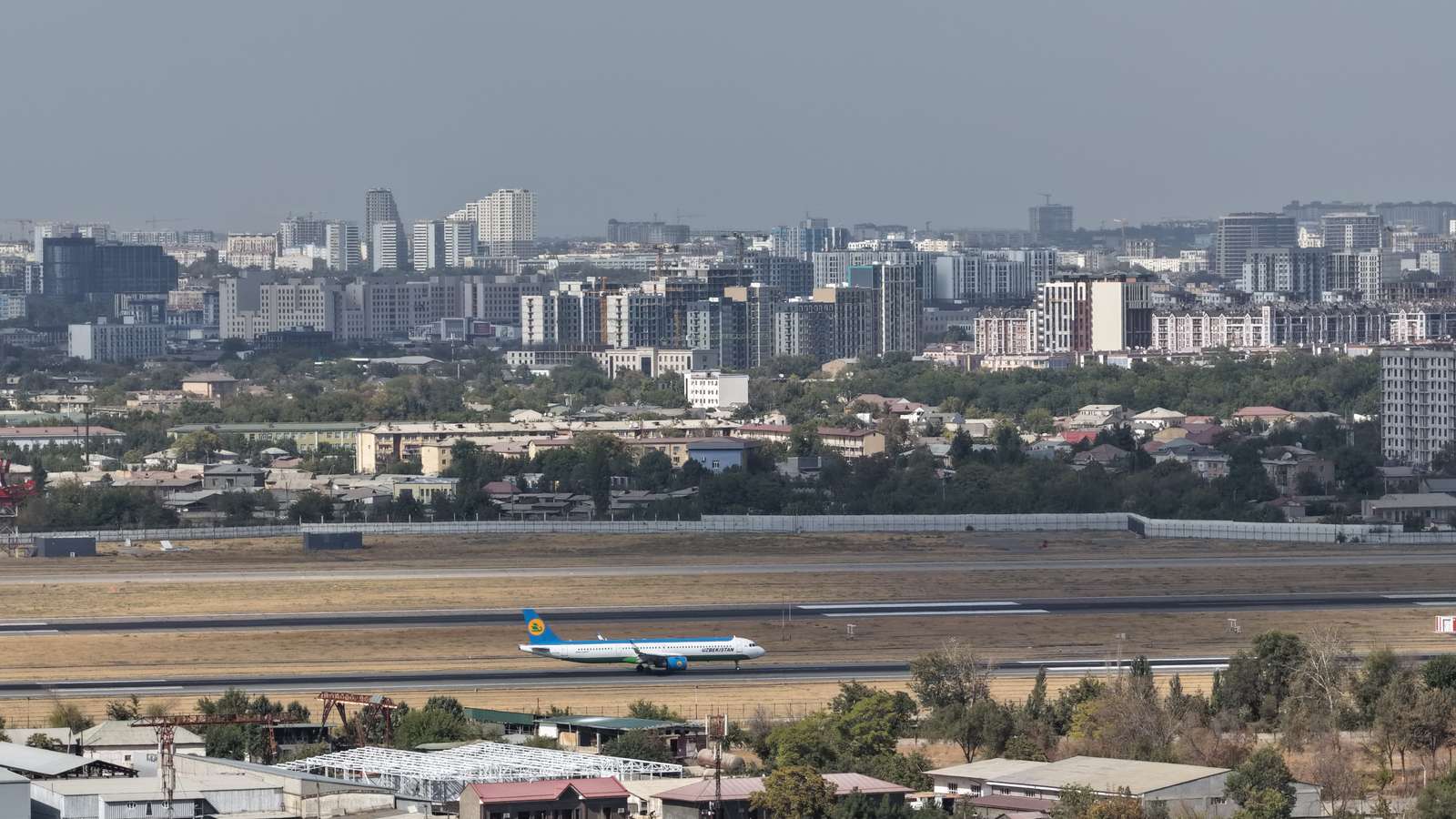
The airport is inside the city, south of the centre. International flights use Terminal 2 and domestic flights Terminal 3. They are about 4 km apart by road, with a free shuttle bus between them, which matters if you connect to a flight to Urgench or Bukhara. There is no metro to the airport: take a Yandex Go taxi or a transfer. See also flights to Uzbekistan.
By train you arrive at one of two stations. Tashkent Central, which locals call the North station, takes the Afrosiyob and the day trains, and the Toshkent metro station is next to it. The South station, about 7 km away, takes most overnight sleepers. Your ticket names the station.
Your hotel registers you on arrival (see registration and customs). Cards work in hotels, restaurants and shops in the centre; keep som in cash for the bazaar, as explained in cards, cash and tipping.
One day: the old city, the metro and the main square
Morning: Hazrati Imam
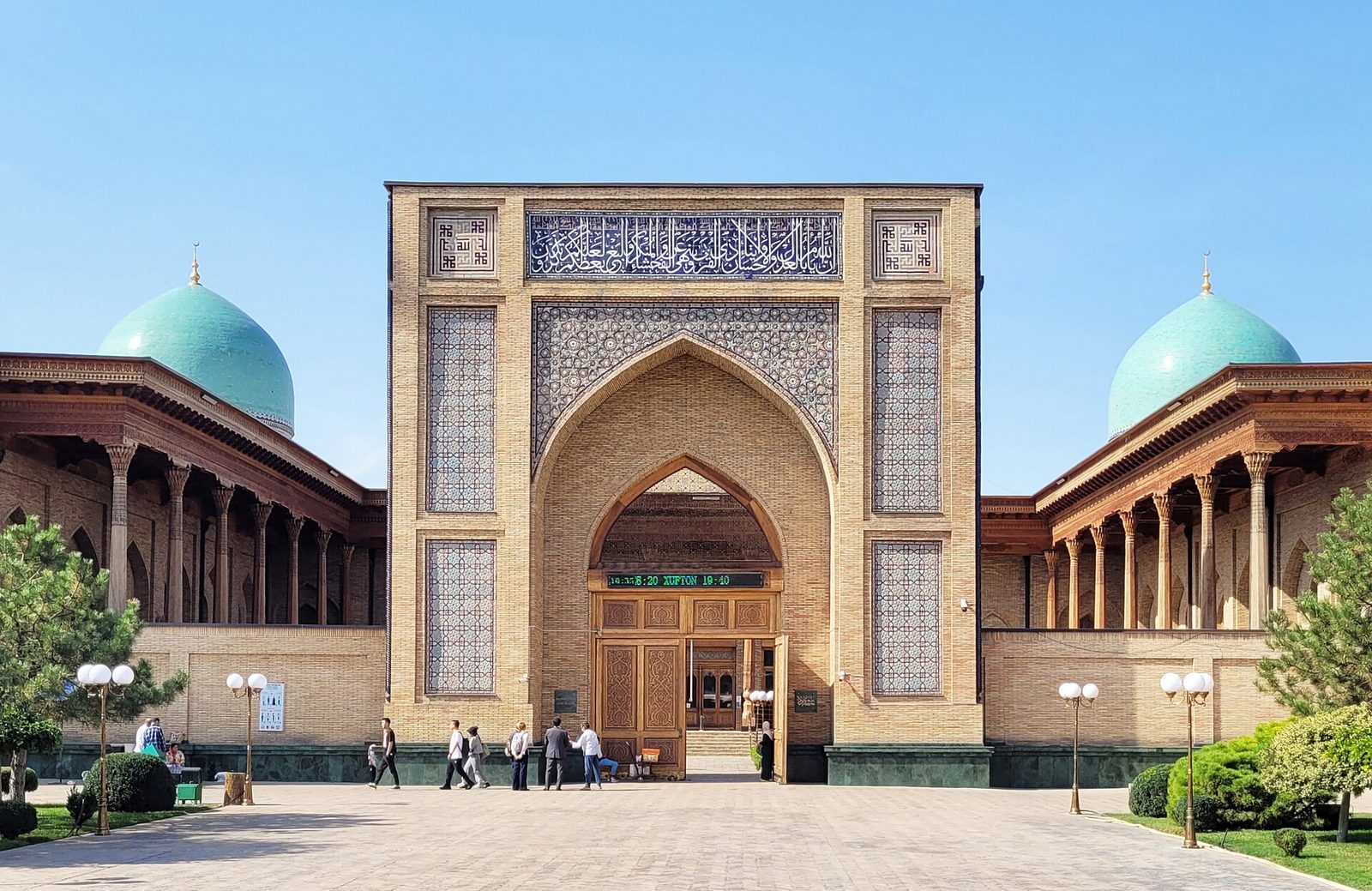
Start early, before the heat. The Hazrati Imam complex grew around the tomb of a 10th-century Tashkent scholar nicknamed Kaffal, the locksmith. Around its big square stand the 16th-century Barakhan madrasa, the Tillya Sheikh mosque and the Hazrati Imam mosque. This is a working religious site: cover shoulders and knees and bring a scarf, as described in what to wear.
The Center of Islamic Civilization
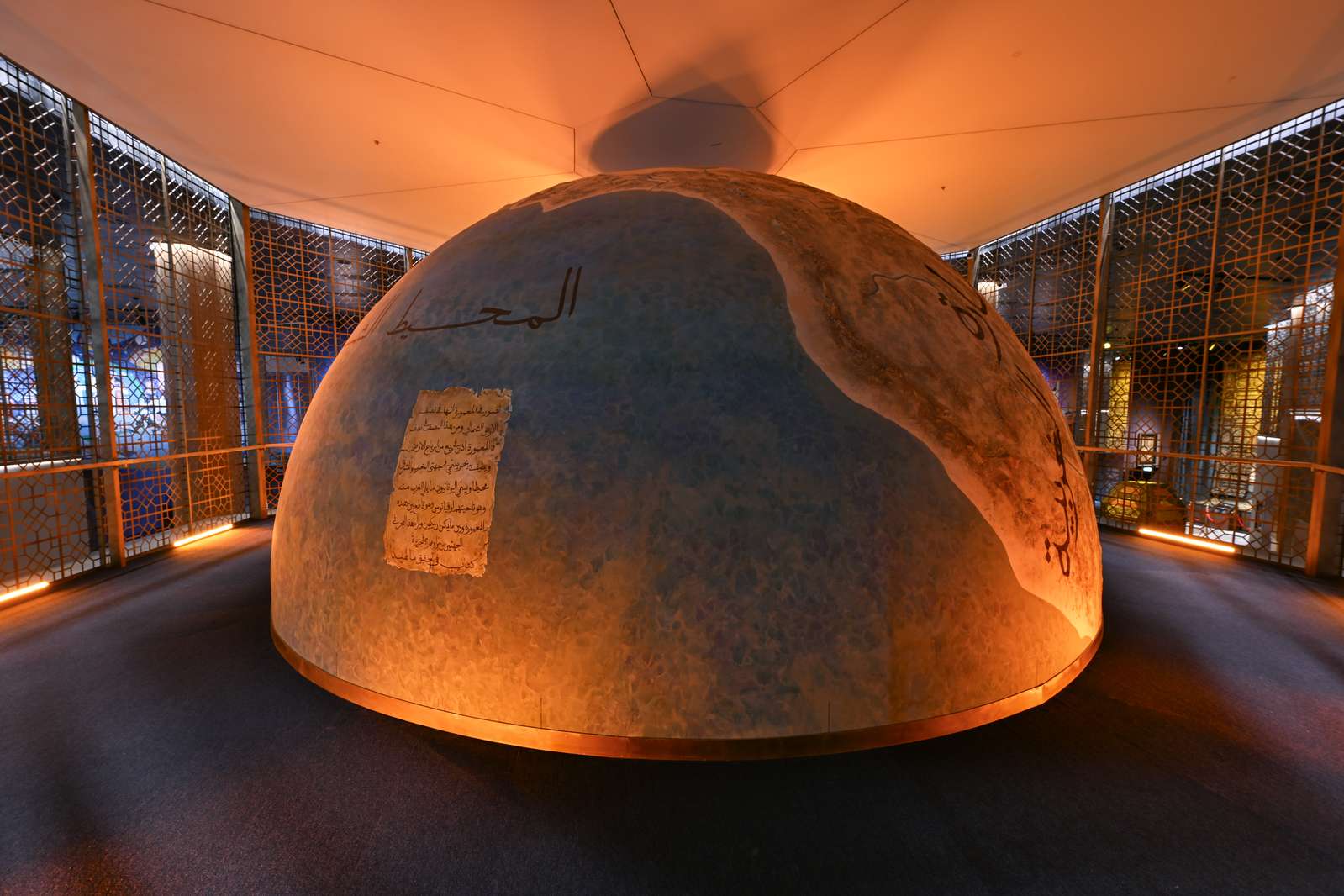
Behind the old domes rises a much bigger one. The Center of Islamic Civilization opened in March 2026: its halls run from Sogdiana to the Timurids, and in the Qur’an Hall under the 65-metre dome lies the Mushaf of Uthman, a 7th-century Qur’an. Allow two to three hours and book a timed slot in advance. It is open until 22:00, so you can also come back after dark for the lit-up façade. Tickets and the route are in our guide to the Center of Islamic Civilization.
Midday: Chorsu Bazaar
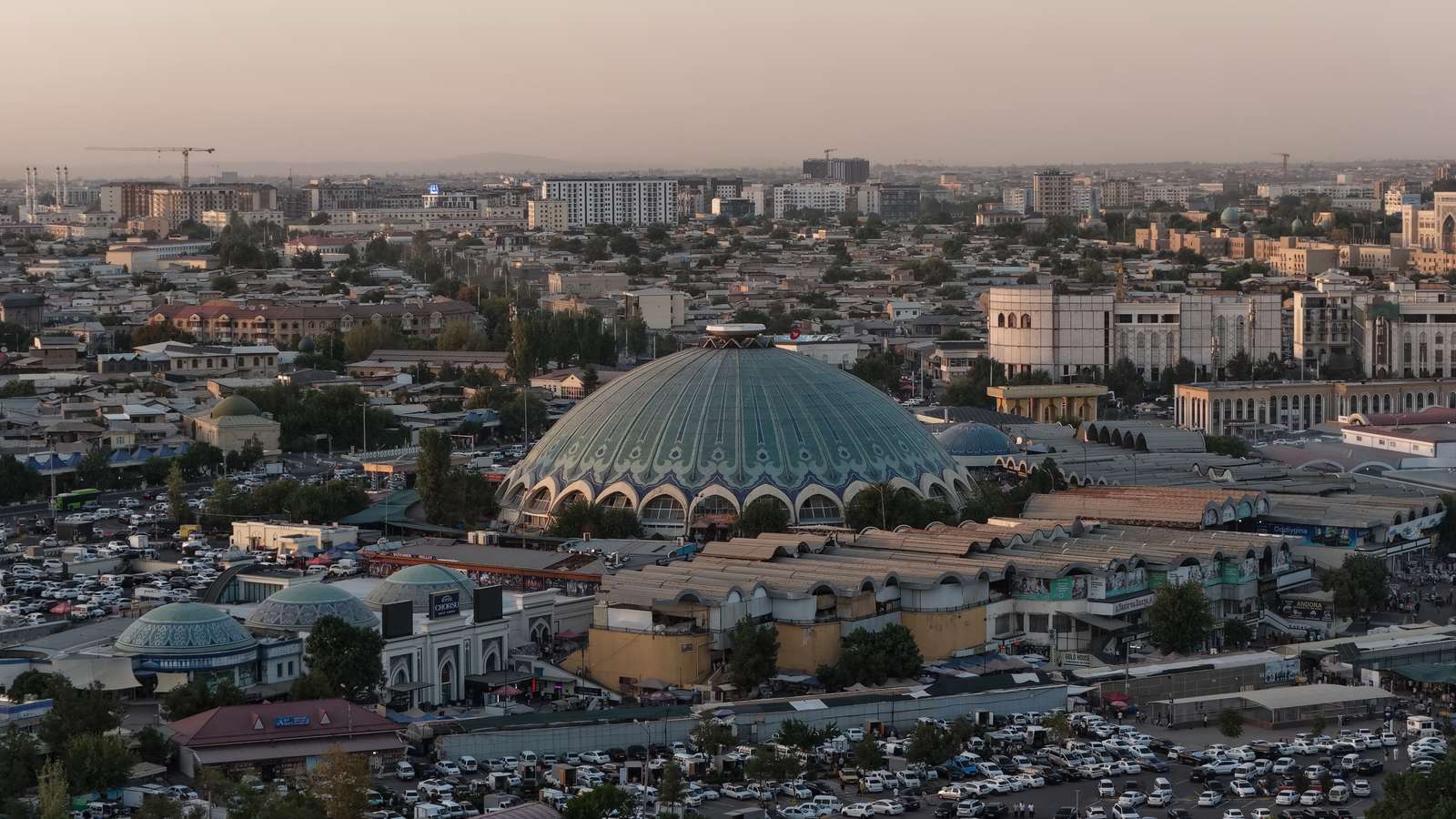
A short taxi ride away, Chorsu trades under a blue dome built in 1980, now one of the ten Tashkent buildings on the World Heritage List. Under the dome you find spices, dried apricots, raisins, nuts, bread and kurt, small balls of salted dried yoghurt. At the edge of the bazaar stands the Kukeldash madrasa of about 1570, which has been an inn, a fortress and a museum, and has been teaching again since the 1990s. Bring cash, and expect to bargain at the stalls; our guide to what to buy in Uzbekistan explains how.
Afternoon: the metro as a sightseeing line
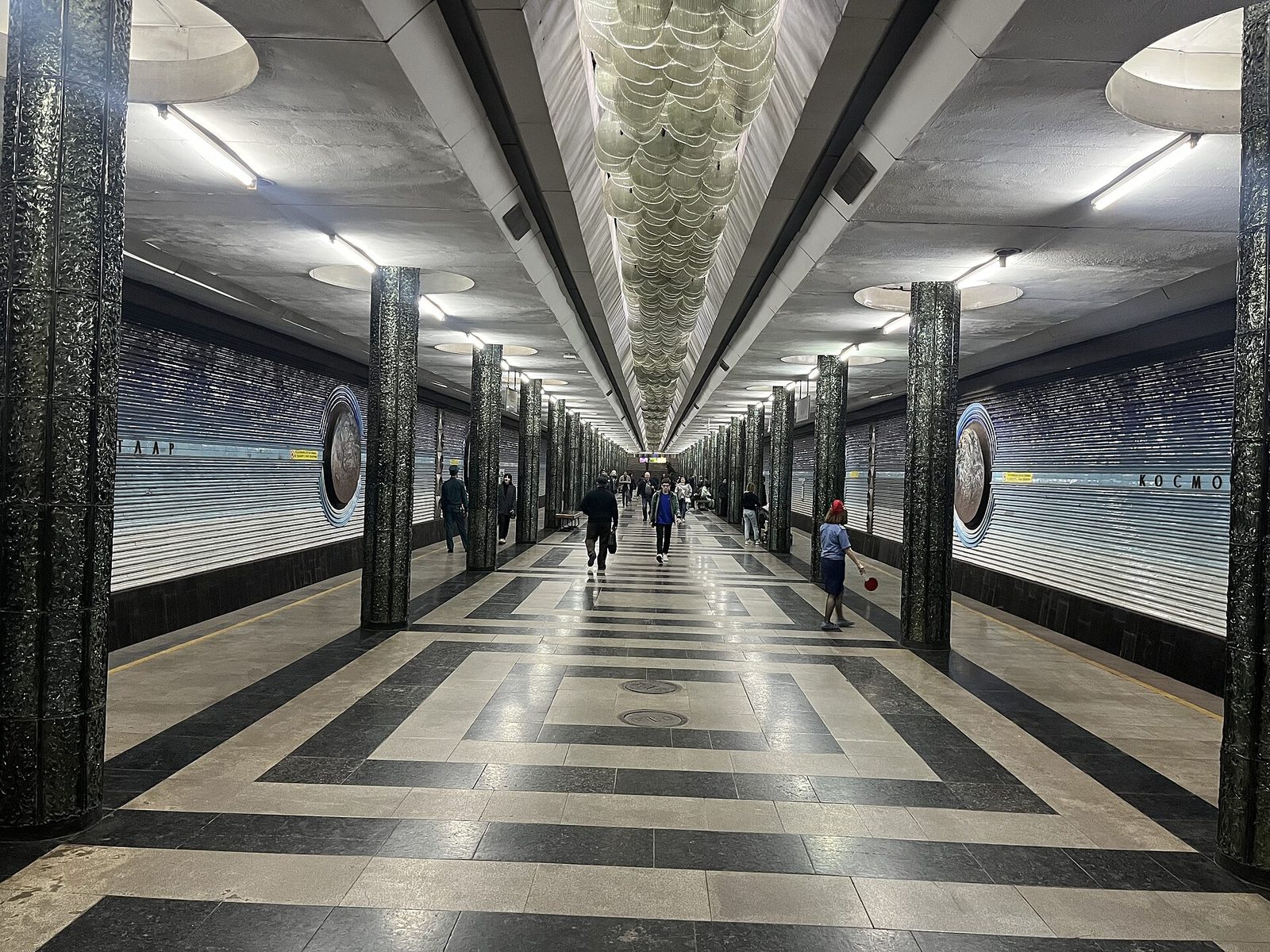
Go down into Chorsu station and ride the blue Uzbekistan line towards the centre. One flat fare covers any distance and any number of changes. Get off at Alisher Navoi: domes rest on tapered columns, and turquoise ceramic reliefs show scenes from the poems of Navoi. Two stops further is Kosmonavtlar, opened in 1984: walls that darken from blue to black, ceramic medallions of Did you know? Ulugh Beg measured the year to within 25 seconds Working at his Samarkand observatory, Ulugh Beg put the tropical year at 365 days 5 h 49 min 15 s, about 25 seconds too long, closer than Copernicus a century later. Read more →, Gagarin and Tereshkova, and glass stars in the ceiling. It is the only metro station on the UNESCO list. Let your train go and give each platform ten minutes; photography has been allowed since 2018.
Evening: Amir Timur Square
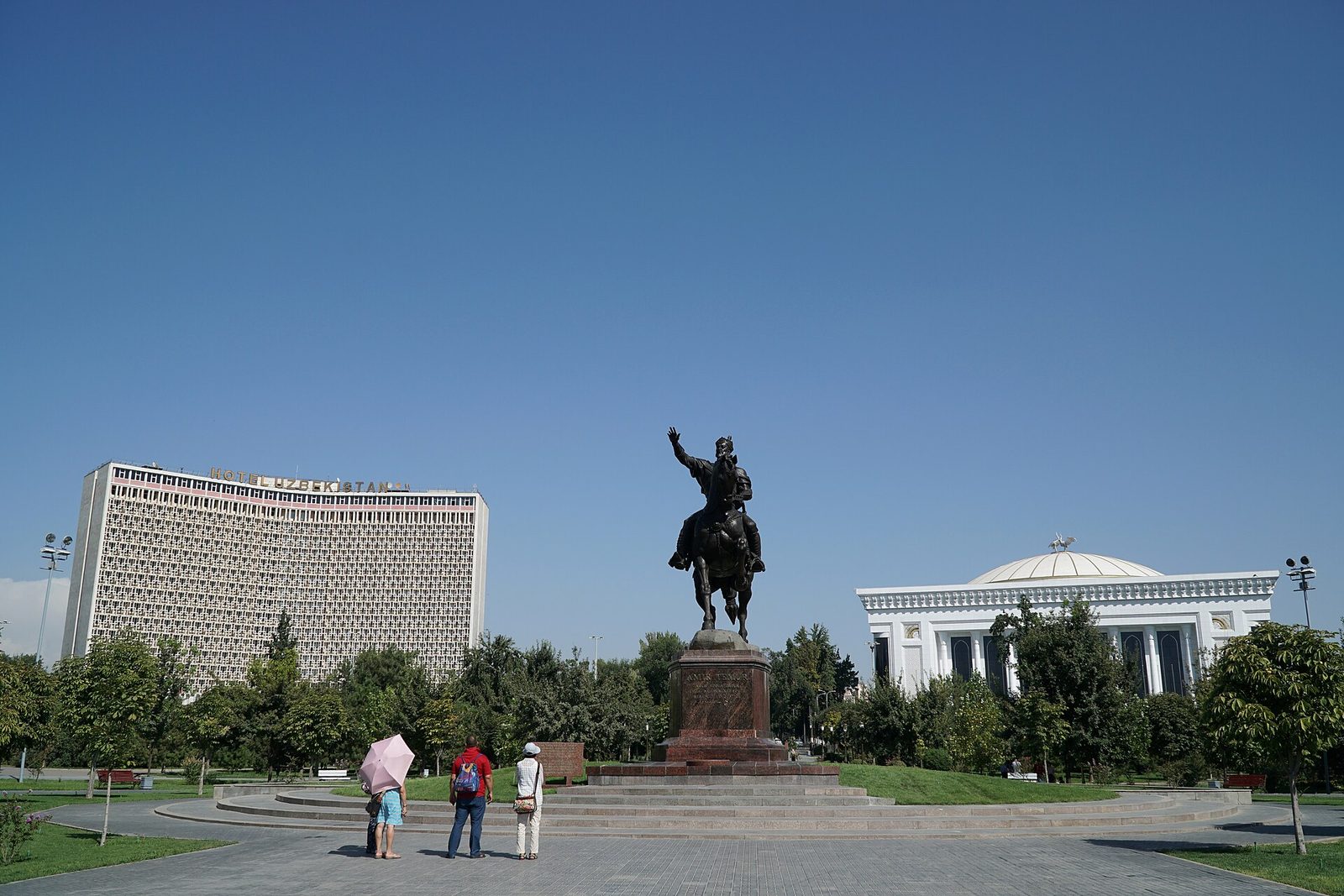
From Kosmonavtlar it is a short walk to Amir Timur Square. It began as a park in 1882 and got its name and the equestrian statue of Timur in 1994. The Amir Timur Museum, opened in 1996, stands on its south side, and the modernist Hotel Uzbekistan faces it from the east. Nearby is the Did you know? An opera house with a foyer for every region The Alisher Navoi Theatre, opened in 1947, has six halls carved in the styles of Tashkent, Fergana, Bukhara, Samarkand, Khiva and Termez, each led by a master of that school. Read more →, opened in 1947, with six foyers carved in the styles of six regions of the country. An opera or ballet ticket is the easiest way to see them.
If you would rather have a guide and a car for all this, it is our Tashkent highlights tour.
Two days: museums, the white mosque and the TV Tower
Morning: two museums
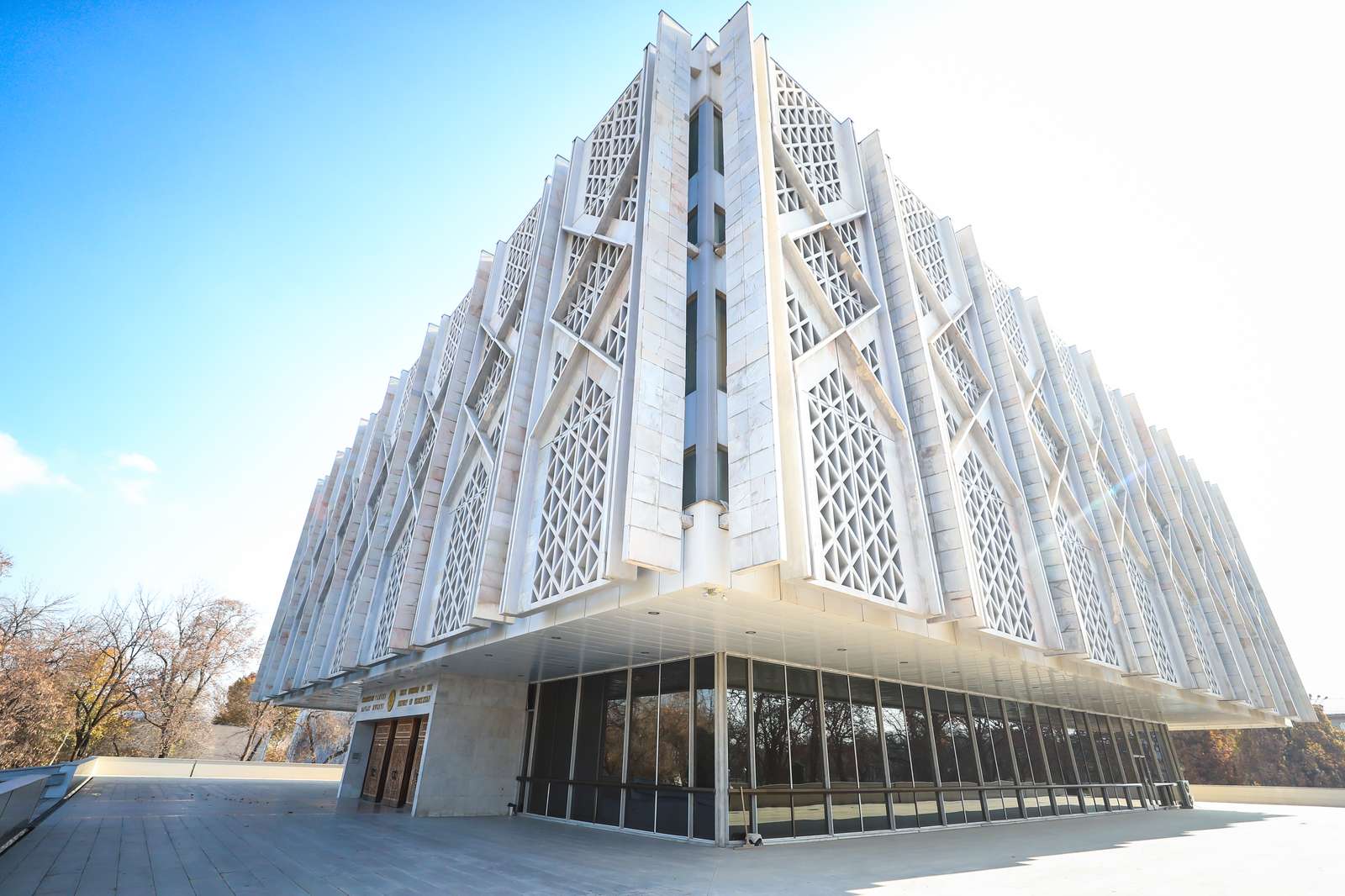
The State Museum of History, founded in 1876, reopened in July 2026 after two years of renovation, and its 1970 building is one of the ten on the World Heritage List. Among its treasures is a Buddhist relief from Fayaz Tepe near Termez; allow an hour for the archaeology halls.
Then go to the Museum of Applied Arts. In 1896 the diplomat Alexander Polovtsov bought a merchant’s house and had it rebuilt in the Central Asian style; today it holds more than 7,000 pieces of folk craft. See it before you shop in Samarkand and Bukhara: it trains your eye for good suzani and ceramics.
Afternoon and evening
Rice cooked in a kazan with carrots, onions and meat: the dish of every Uzbek celebration. Each region cooks it its own way. is a midday dish in Tashkent, and the big plov centre at the foot of the TV Tower cooks it in giant kazans in an open kitchen. After lunch, ride up the TV Tower: 375 m to the tip of the spire, with an observation deck at about 97 m that looks out over the whole city. End the day at the Minor Mosque on the Ankhor canal, opened in 2014: white marble, a sky-blue dome and two minarets, loveliest in the evening light. Visit outside prayer times.
Would you rather spend the second day out of town? The mountains are close: see our Chimgan and Charvak day trip.
What to eat in Tashkent

Have plov at lunch: by evening many kazans are empty. Try Tashkent naryn, the capital’s own dish: thin hand-cut noodles with finely chopped boiled horse meat, served cold with onion and slices of kazy sausage, or as a hot soup. More dishes are in Uzbek cuisine and plov in Uzbekistan.
Moving on to Samarkand
The Afrosiyob leaves Tashkent Central and reaches Samarkand in 2 hours 15 minutes to 2 hours 30 minutes; the 06:33 is there at 08:46. To Bukhara the fast train takes about 4 hours. Tickets go on sale 60 days ahead on eticket.railway.uz and the Afrosiyob sells out, so book early. Train, car and day tour are compared in Tashkent to Samarkand, and every train is in trains in Uzbekistan.
Short on nights? Our Samarkand in a day tour goes there and back from Tashkent. Once you arrive, our plan for Samarkand in 1, 2 or 3 days takes over. Tashkent is the first stop of our 8-day classic tour and the 11-day classic tour.
In short
- Day one: Hazrati Imam and the Center of Islamic Civilization in the morning, Chorsu at midday, the metro in the afternoon, Amir Timur Square in the evening.
- On the metro, get off at Alisher Navoi and Kosmonavtlar; one flat fare, and photos are allowed.
- Day two: the State Museum of History and the Museum of Applied Arts, plov at lunch, the TV Tower and the Minor Mosque at sunset.
- Cards work in the centre; carry som for Chorsu.
- Book the Afrosiyob to Samarkand as soon as your dates are fixed: at most 2 hours 30 minutes from Tashkent Central.
© Photos
- Kosmonavtlar metro station, Tashkent — Oqsaqol / Wikimedia Commons · CC BY-SA 4.0
- Amir Timur Square, Tashkent — Adam Harangozó / Wikimedia Commons · CC BY-SA 4.0