Places in this article: Samarkand · Bukhara · Khiva · Tashkent
Where to take photos in Uzbekistan: the best spots and the best light
The Did you know? Diggers went 13 m down and never found its base The Kalyan Minaret of 1127 rises about 46 m, and an excavation reached 13 m without finding the bottom of its foundations. Genghis Khan reportedly ordered it spared. Read more → in Bukhara is three different photographs in one day. Early in the morning the square at its foot is almost empty; in the late afternoon the low sun turns its brick gold; after dark it stands lit against a black sky. Most good pictures in Uzbekistan come down to the same thing: the right place at the right hour.
We are a Tashkent team, and we plan trips around light all the time. Here is where we send photographers in each city and beyond, what time of day works best, and the rules worth knowing before you raise a camera at a person, in a mosque, in the Did you know? A metro designed to ride out a magnitude-9 earthquake The three original lines of the Tashkent Metro were built to withstand an earthquake of magnitude 9.0, and the tunnels lie unusually shallow, only 8–25 m below the street. Read more → or with a drone.
The light: which hours work
For most of the year the sky here is clear, and that cuts both ways. From late morning to mid-afternoon the sun is high and hard: tiles look flat, shadows go black, and in summer the brick squares are hot to stand on. The good hours are at either end of the day.
- First light. Empty squares and lanes, soft light on walls and portals. The best time for architecture with nobody in the frame.
- The last hour before sunset. The low sun warms brick and clay and makes glazed tiles glow.
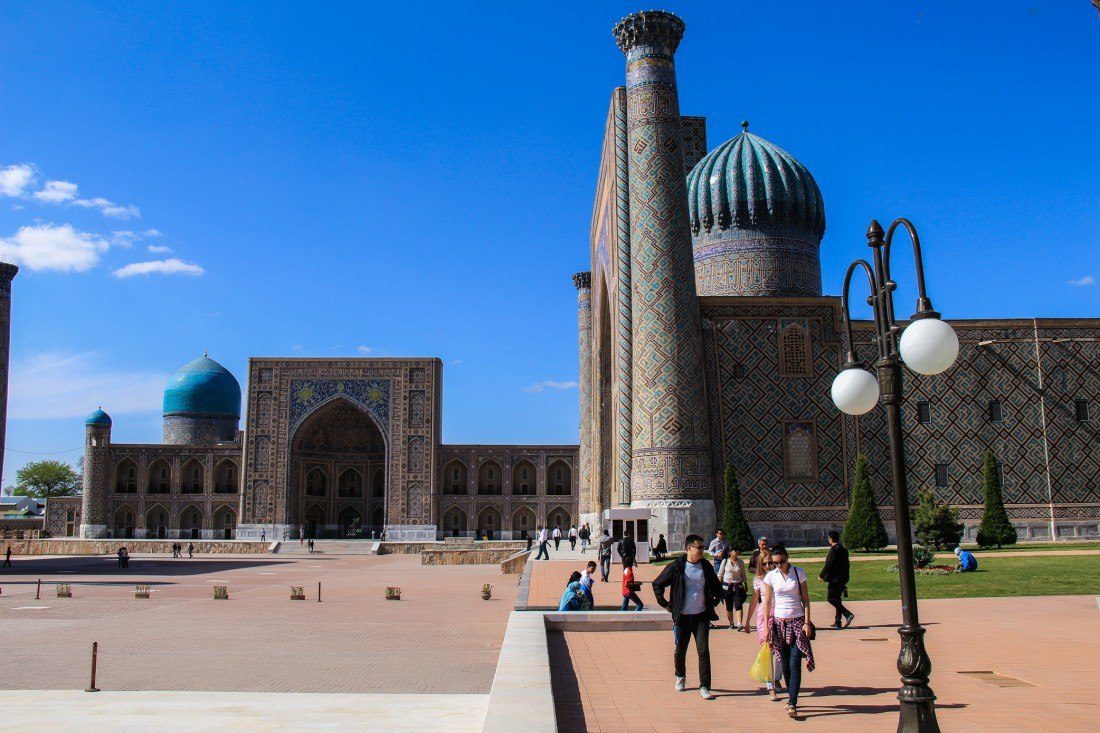
- After dark. The Did you know? The Registan's sun-carrying lion went on a banknote The Sher-Dor Madrasah (1619–1636) is named for the big cats with the sun on their backs on its portal. The image appeared on the reverse of Uzbekistan's 200-som note of 1997. Read more → in Samarkand and Did you know? Legend: the minaret's foundation was laid with camel milk Legend says master Bako laid the foundations of the Kalyan minaret with ganch plaster mixed with camel milk, then vanished for two years to let them harden, and only then built the tower. Locals still show a grave they say is his. Read more → in Bukhara are lit up, and the deep blue sky just after sunset is the moment to photograph them.
Keep the middle of the day for interiors, covered bazaars and workshops, where the light comes in through openings and windows. If photography is the point of your trip, our Uzbekistan photo tour is planned this way: 12 days in Tashkent, Samarkand, Bukhara and Khiva, with free afternoons and a free morning in Khiva for first light.
Samarkand: where to take photos
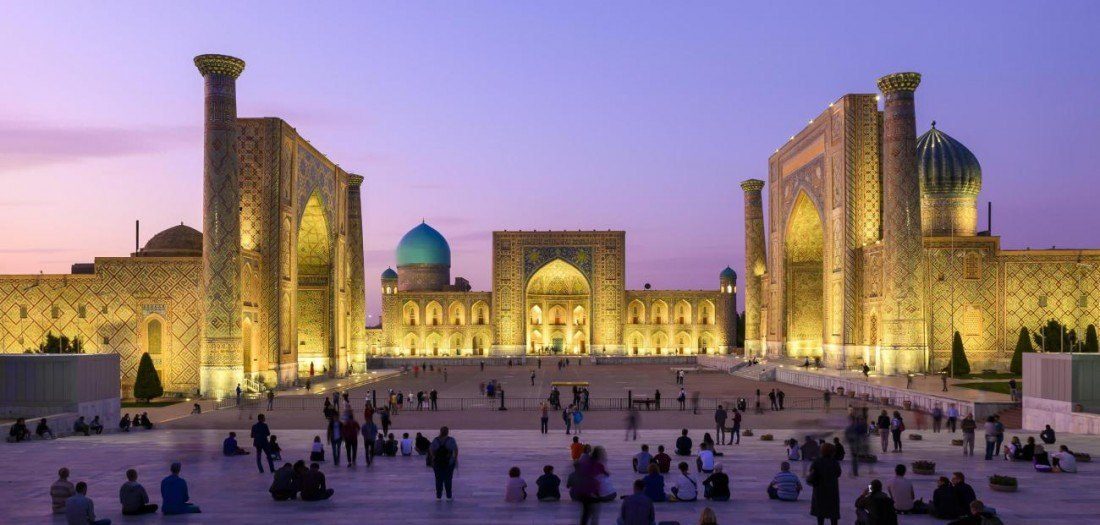
The Registan. Three madrasahs around one square: the frame everyone wants. Come in the late afternoon, when the light falls across the facades, and stay after dark, when all three are floodlit; on some evenings a sound-and-light show plays across the madrasahs. We can book the Registan with its evening lights for any evening of your stay.
.Did you know? Why Shah-i-Zinda means 'the Living King' The necropolis grew around the shrine of Qutham ibn Abbas, a cousin of the Prophet Muhammad. Legend says he did not die in battle but went down a deep well to a garden of paradise, where he lives on. Read more → A street of tiled mausoleums climbing a hillside, in places barely wider than a corridor. Go early, before the groups, when the lane is quiet and the carved tiles are in soft light. It is a place of pilgrimage, so keep your voice down and never photograph people at prayer.
Did you know? Timur's tombstone went to Persia and came back The dark-green jade slab on Timur's grave in Gur-e-Amir was carried off by Nader Shah in 1740. It broke, and on his advisers' urging he sent it back to Samarkand. Read more → and .Did you know? Legend says the architect asked the queen for a kiss Legend says the architect of Bibi-Khanym would finish on time only for a kiss from Timur's wife, and Timur punished him. In fact the mosque was Timur's own project; his wife Saray Mulk Khanum built her madrasah across the road. Read more → The ribbed dome of Gur-e-Amir is at its best against a deep blue sky, and the gilded interior calls for a wide-angle lens and patience with the light. The portal of Bibi-Khanym is so tall that you need to step well back to fit it into the frame. Opening hours and tickets are in Samarkand sights: tickets and hours.
Bukhara: the minaret, the pond and the domes
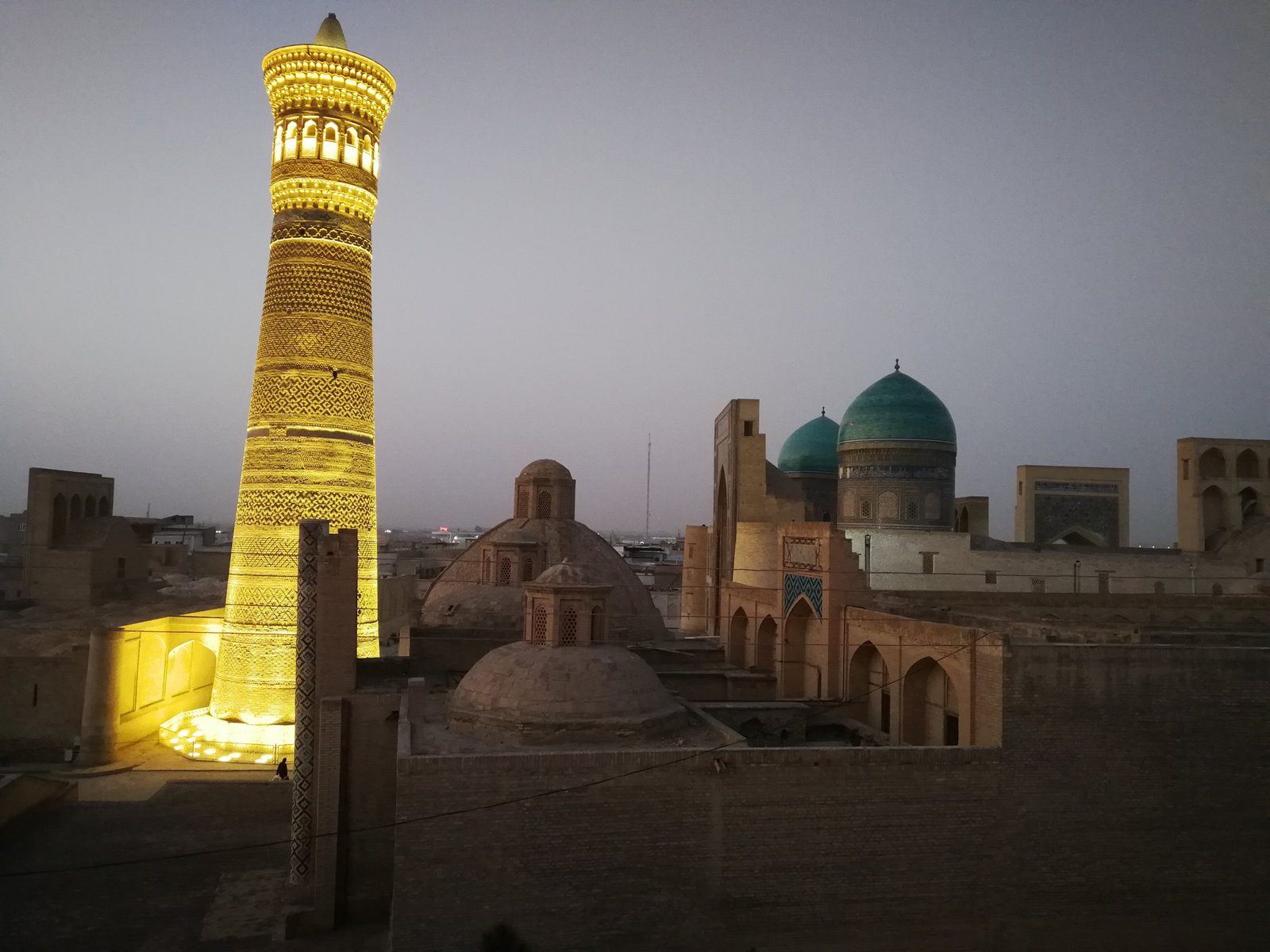
Poi-Kalyan. Plan to come at least twice. Early in the morning you can photograph the minaret between the two portals with nobody in the frame; in the late afternoon the low sun turns the brick gold and lights up the turquoise domes of .Did you know? A madrasah still teaching after almost 500 years Mir-i-Arab, built in the 1530s opposite the Kalyan Mosque, was one of only three Islamic schools that kept working through the Soviet period, and it still trains students today. Read more → Our guide to Poi-Kalyan has the details.
.Did you know? Bukhara's ponds were once its water supply Pools like Lyabi-Hauz, dug around 1620 and 46 × 36 m, were the city's main source of water. Most were filled in during the 1920s–30s because they spread disease; Lyabi-Hauz survived. Read more → This is where Bukhara spends its evenings: A teahouse: green tea, plov and conversation on wide wooden beds called topchan. tables along the water and the lights of the madrasahs reflected in the pond. Look up at the simurghs on the portal of the ,Did you know? A caravanserai that became a madrasah by a khan's word Nadir Divan-Begi built his 1622 building by Lyabi-Hauz as a caravanserai. At the opening Imam Quli Khan praised it as a fine madrasah, and a khan's word could not be taken back: a portal and cells were added, and a madrasah it became. Read more → best at sunset.
Did you know? Legend: four towers for four world religions? Chor Minor, a gatehouse of 1807, has four towers, each decorated differently. Guides say they stand for four world religions and look for a cross, a fish and a prayer wheel in the decor; others say four dynasties. All are interpretations. Read more → and .Did you know? The famous columns of Bolo-Hauz are barely a century old The Bolo-Hauz mosque opposite the Ark was completed in 1712, but its best-known feature, the tall, slender carved columns along the front of the iwan, was added only in 1917, together with the small minaret of 1916–1917. Read more → Chor Minor and its four blue-domed towers are best in the morning or the late afternoon, when the lanes are quiet. At Bolo-Hauz, the carved wooden columns of the iwan are reflected in the pond in front of the mosque. Under the ,Did you know? Under Bukhara's domes merchants changed money and gold Four 16th-century trading domes still stand over old crossroads. Toki Sarrafon was the money changers' dome, where merchants from India and China swapped coins; Toki Zargaron held jewellers' workshops, Toki Telpak Furushon sold caps. Read more → carpets and brass make good pictures, and the sellers are part of them, so ask first.
Khiva: a whole town inside its walls
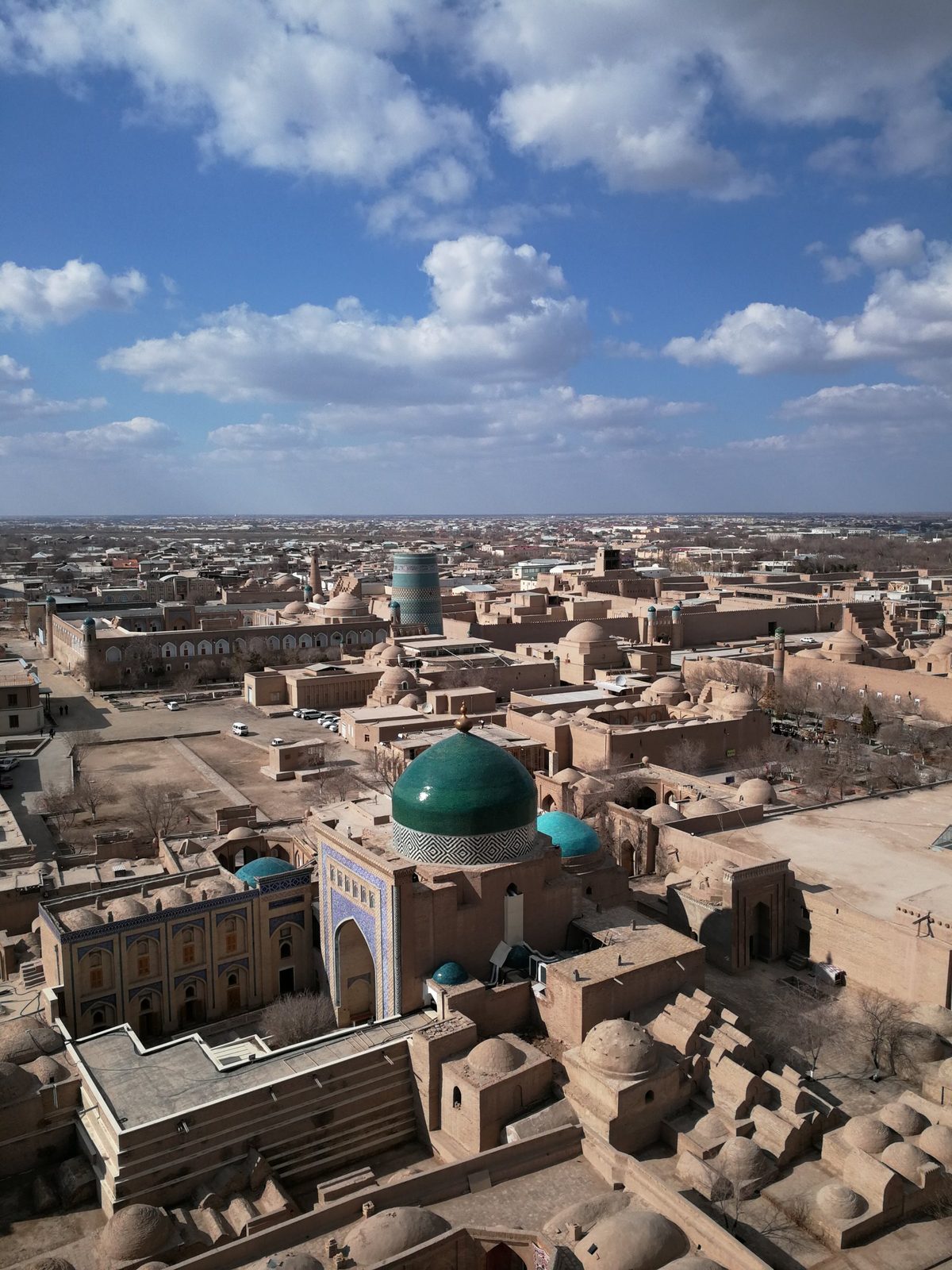
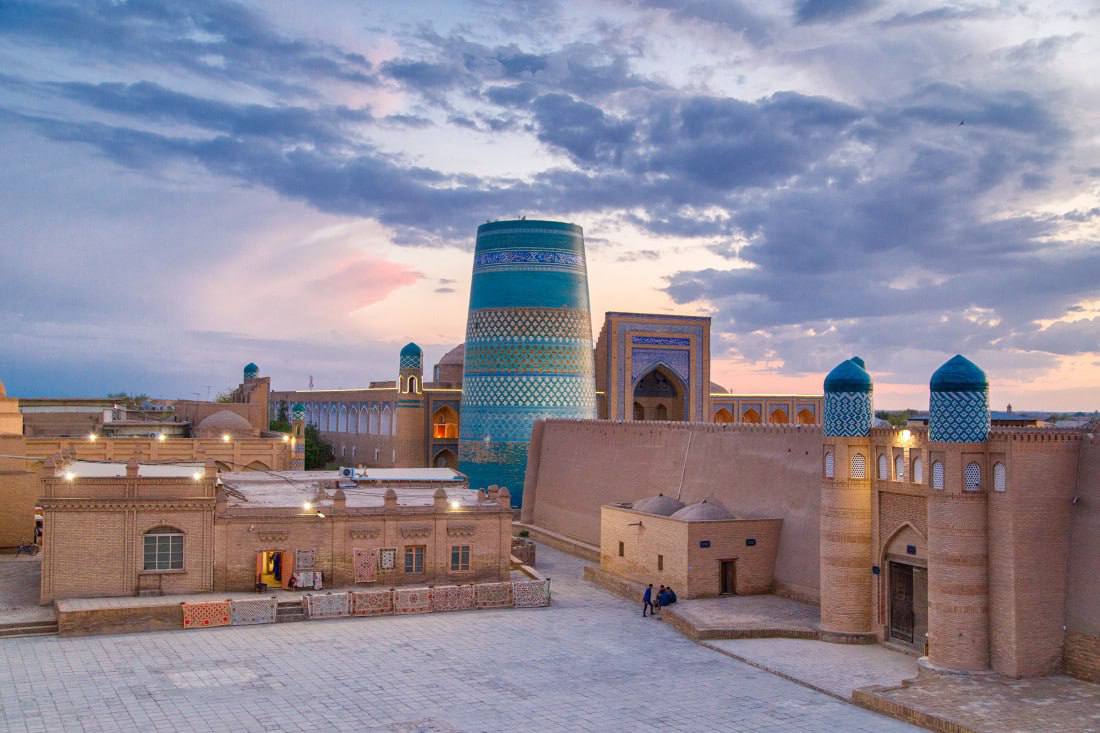
Did you know? People still live inside Khiva's museum city Itchan Kala packs more than 50 historic monuments and about 250 old houses inside clay walls 8–10 m high and 5–6 m thick, and families still live and work in its lanes. Read more → is small enough to photograph in a day, and it rewards an early start. At sunrise the lanes are empty and soft light falls on the clay walls. Around noon, sunlight comes through the openings in the roof of the Did you know? Khiva's Juma Mosque stands on 212 wooden columns Recorded as early as the 10th century and rebuilt in 1788, the Juma Mosque has no portal and no domes: its flat roof rests on 212 carved columns in 17 rows, and some of them are older than the building itself. Read more → and moves across its wooden columns. In the last hour of the day the tiles of the Did you know? A 14-metre-wide base for a tower that stopped at 29 m Kalta Minor was begun in 1852 and meant to reach 70–80 m, but work halted in 1855 at about 29 m when its khan died. It is said to be the only minaret covered entirely in glazed tiles. Read more → glow.
For the sunset view, climb the Did you know? Legend: a White Sheikh lived at the top of the Kunya-Ark Legend says a holy man, Ak Sheikh Bobo, the White Sheikh, lived in a cell on the highest point of the hill long before the khans. What is known: the citadel was first built in 1686–1688, and his cell later served as a watchtower and powder store. Read more → watchtower of the :Did you know? In the khan’s courtyard a round platform waited for a yurt The Kunya-Ark, the khans’ citadel, had its own mint, arsenal and harem. In the courtyard of its reception hall of 1804–1806 stands a round platform: a yurt was set up on it, and there the khan received envoys of the steppe nomads. Read more → from the top, the domes, minarets and flat clay roofs come together in one picture. Whether the Did you know? Khiva's tallest minaret is barely a century old The Islam Khoja Minaret was begun in 1908, near the very end of the khans' era. At 56.6 m it is one of the tallest in Central Asia; a spiral stair of 175 steps leads up to its windowed top. Read more → is open for climbing is decided on the day. One rule of the town: a house door is a private door, however photogenic.
With a private guide in Khiva for half a day or a full day, you set the pace and stop where the light is. More in our guide to Ichan-Kala.
Tashkent: the metro, the bazaar and modernism
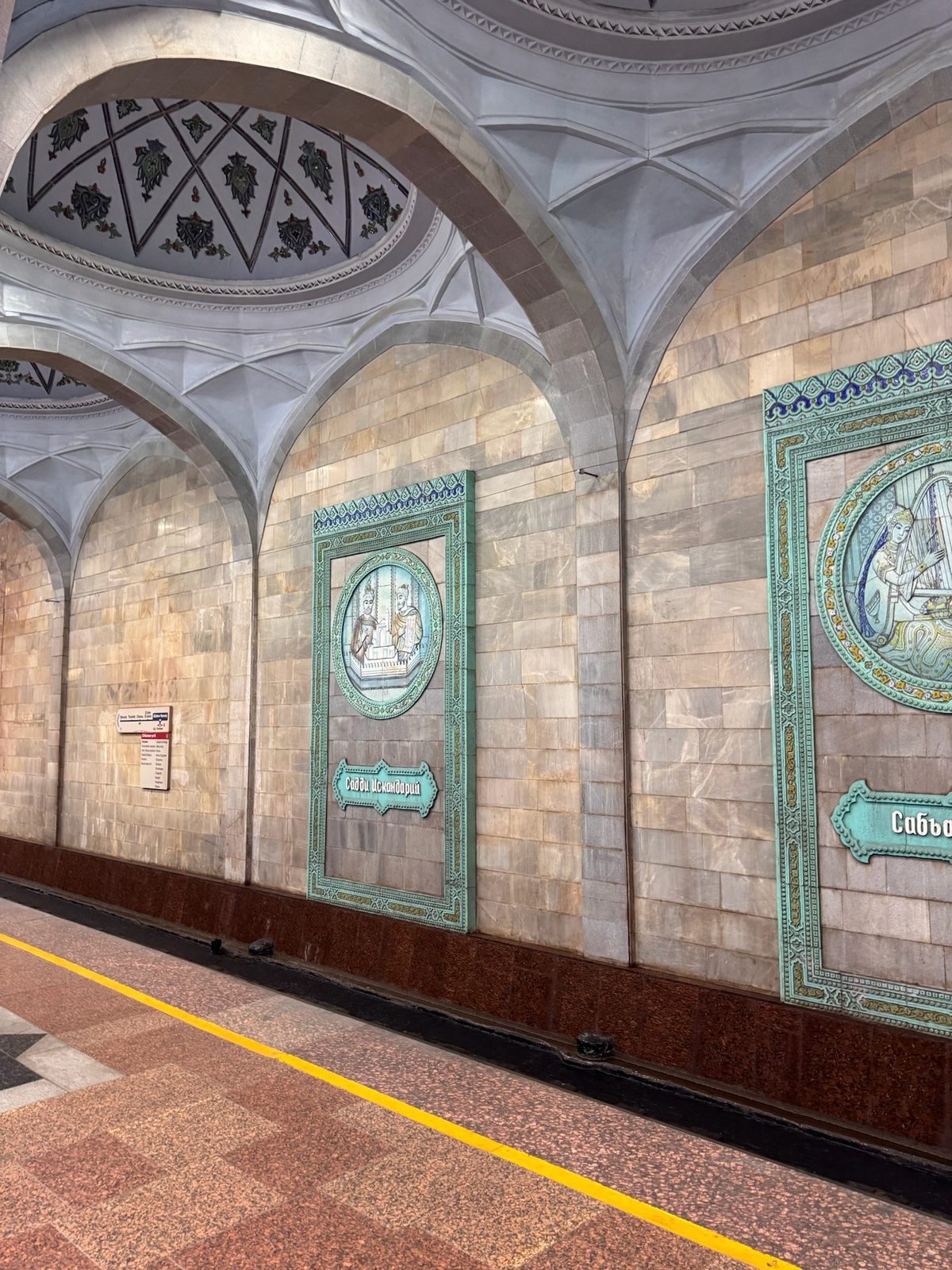
The Tashkent metro was closed to cameras for decades. Photography has been allowed since 1 June 2018, and the metro rules now give passengers the right to take amateur photos and video of the stations. Alisher Navoi, with its domes and ceramic panels from the poet’s works, and ,Did you know? A metro station where Ulugh Beg meets Gagarin Kosmonavtlar station, opened in 1984, has ceramic medallions of Ulugh Beg, Galileo, Icarus, Gagarin and Tereshkova, and glass stars in the ceiling that hint at the Milky Way. Read more → with its medallions of cosmonauts, are the two we never skip. The route and the stations are in our guide to the Tashkent metro.
Above ground, Did you know? Tashkent’s Chorsu dome is younger than the city’s metro Trade at the old crossroads is centuries old, but the domed building opened only in 1990, thirteen years after the metro. Architects Vladimir Azimov and Sabir Adylov gave it a main dome of 86 m ringed by seven smaller ones. Read more → is at its liveliest in the morning, under its blue dome; ask the sellers before you photograph them. The The religious heart of old Tashkent: madrasahs, a Friday mosque and mausoleums. Right next to it stands the new Center of Islamic Civilization, opened in 2026. Read more → ensemble in the old city is an active place of worship: dress modestly and ask before you photograph inside. For the concrete sun-screen of the Hotel Uzbekistan and the other buildings of the Soviet decades, see Tashkent modernism.
The Fergana Valley: craftsmen at work
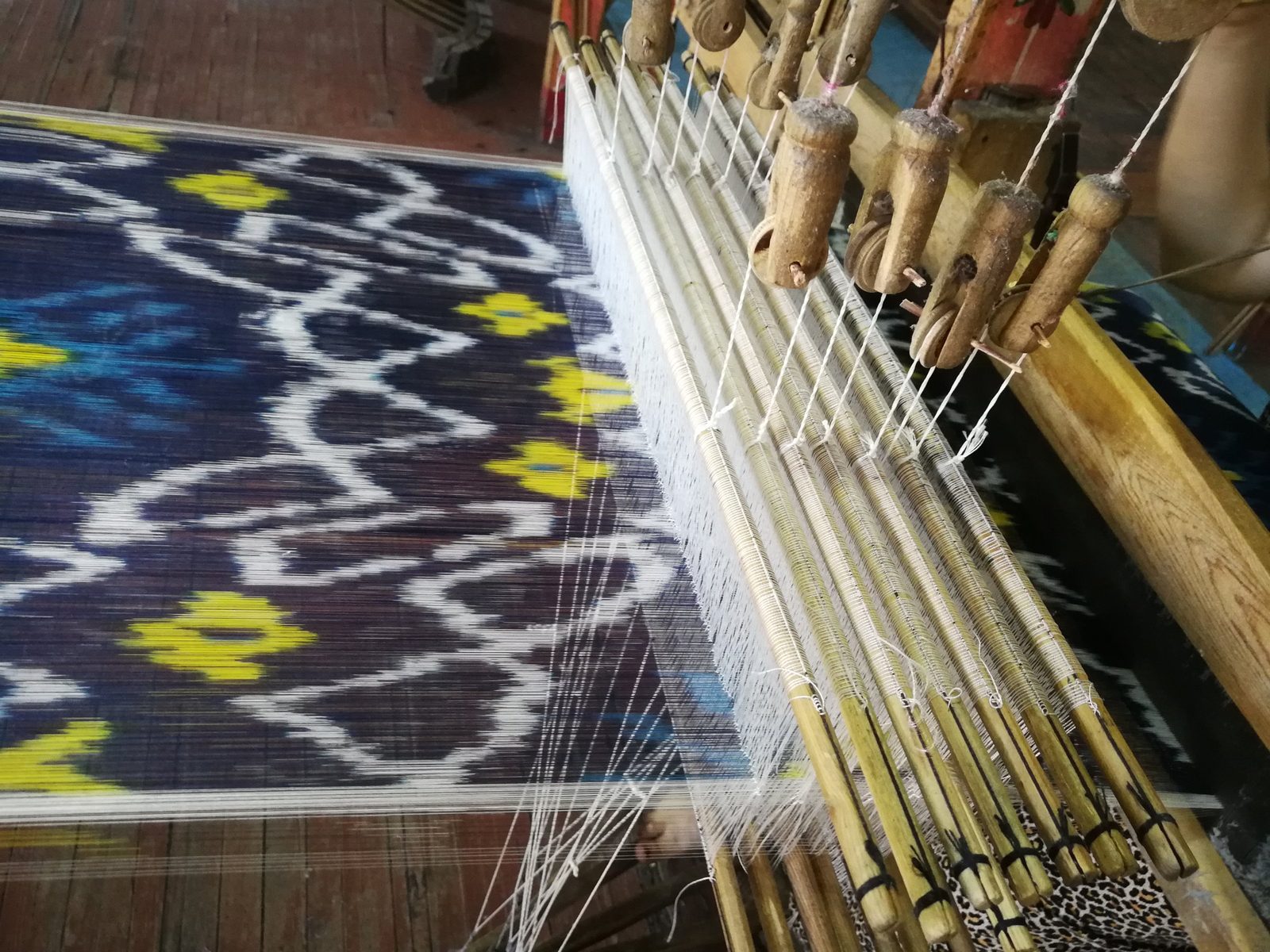
In the valley you photograph hands rather than domes. At the Yodgorlik silk factory in Did you know? Legend says Margilan is named after chicken and bread Legend says locals greeted Alexander the Great with chicken and bread, 'murg' and 'non', and the dish gave the town its name. In fact Alexander never reached here; the name Margilan is recorded from the 10th century. Read more → you can follow silk from the cocoons in hot water to the reeling machines, the marking of the ikat pattern on the warp and the hand looms. In ,Did you know? Legend says a Rishtan apricot made a great scholar praise God Legend says 12th-century Rishtan folk brought a new apricot to their countryman Burhan al-Din al-Marghinani in Samarkand; he tasted it and said 'Subhanallah' three times, so it is called subhoni. The scholar is real: he wrote al-Hidaya. Read more → potters throw and paint their bowls in their own workshops.
Workshops are lit through windows, so the middle of the day works well here. These are people at their jobs: ask the master before you photograph, and keep the flash off. Our Fergana Valley crafts tour gives the region four days, with a whole morning at Yodgorlik and a session at the potter’s wheel in Rishtan. What to look for is in Margilan silk and Rishtan ceramics.
Beyond the cities: mountains, desert and the Aral Sea
The mountains near Tashkent
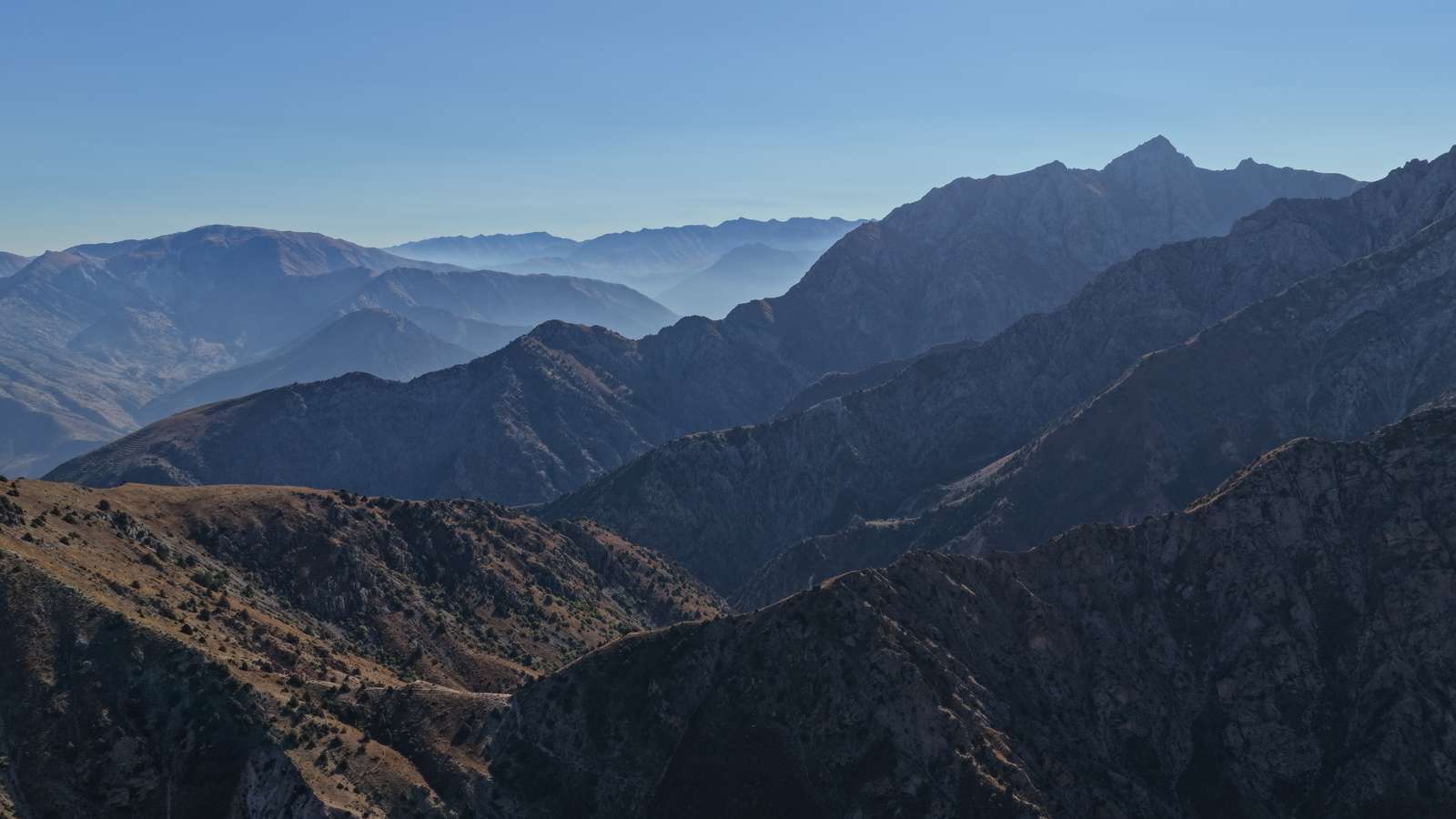
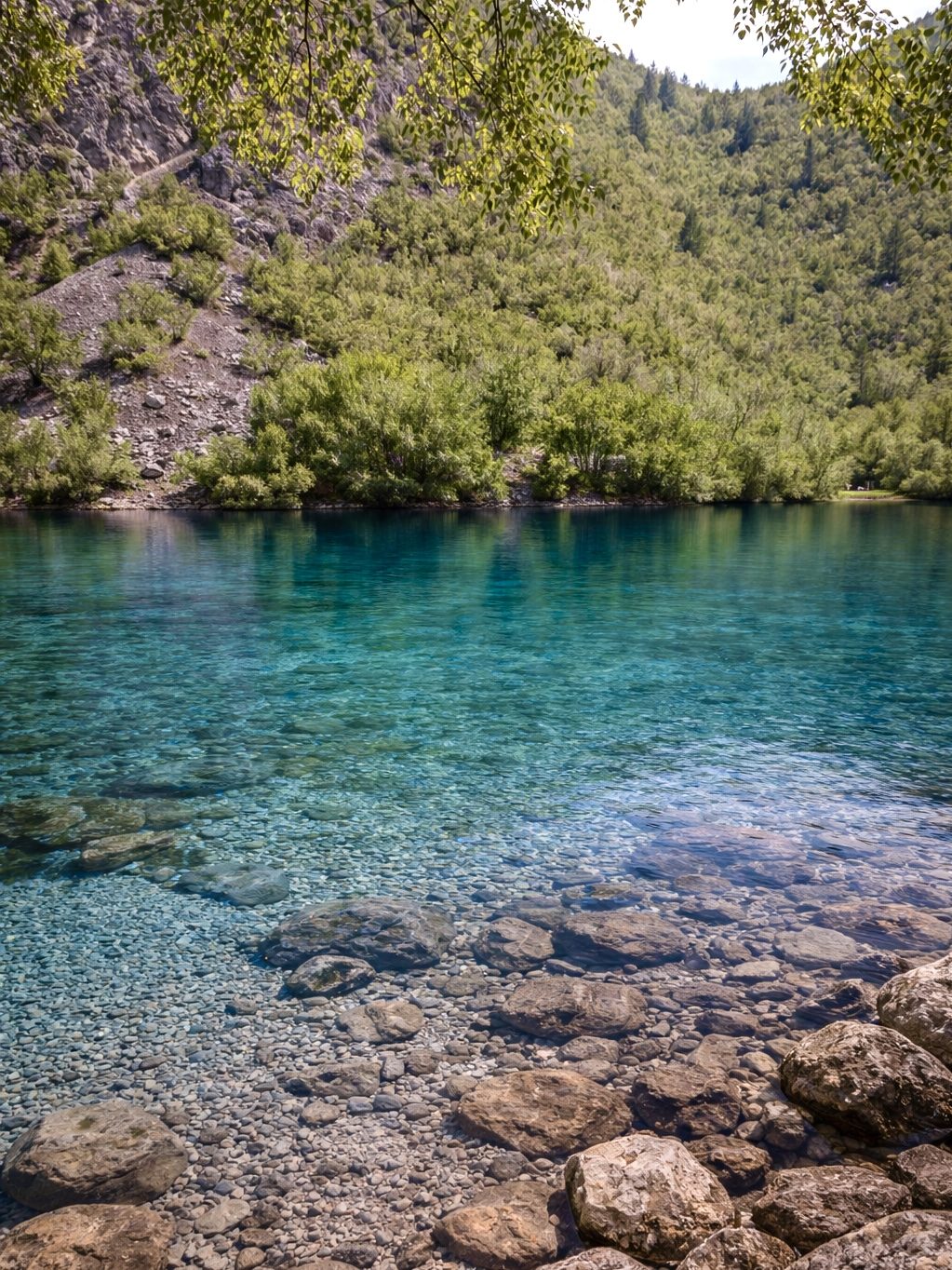
,Mountains of the Western Tian Shan about 80 km from Tashkent: hiking in summer, skiing in winter, the Charvak reservoir nearby. Read more → Amirsoy and Lake Did you know? The lake below Chimgan is held back by a 168-metre dam Charvak is a reservoir: a 168 m stone dam on the Chirchiq, built in 1964–1970, holds about 2 km³ of water from the Pskem, Koksu and Chatkal rivers. Its name is traced to the Persian chorbog, "four gardens". Read more → are a day trip from Tashkent. Take the gondola at Amirsoy up to 2,290 m in the morning, then come down to the lake for the afternoon. The plan is in our Chimgan and Charvak day trip.
The desert
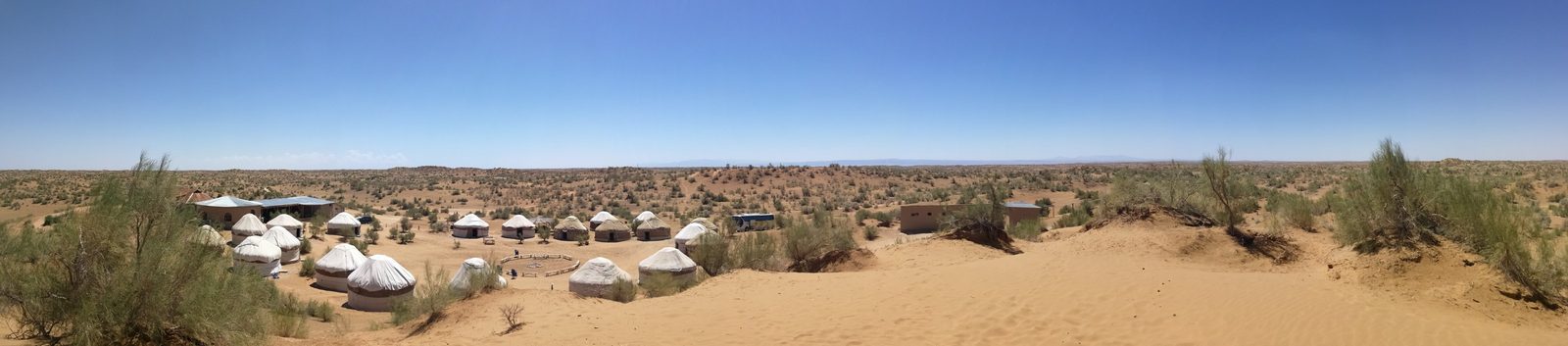
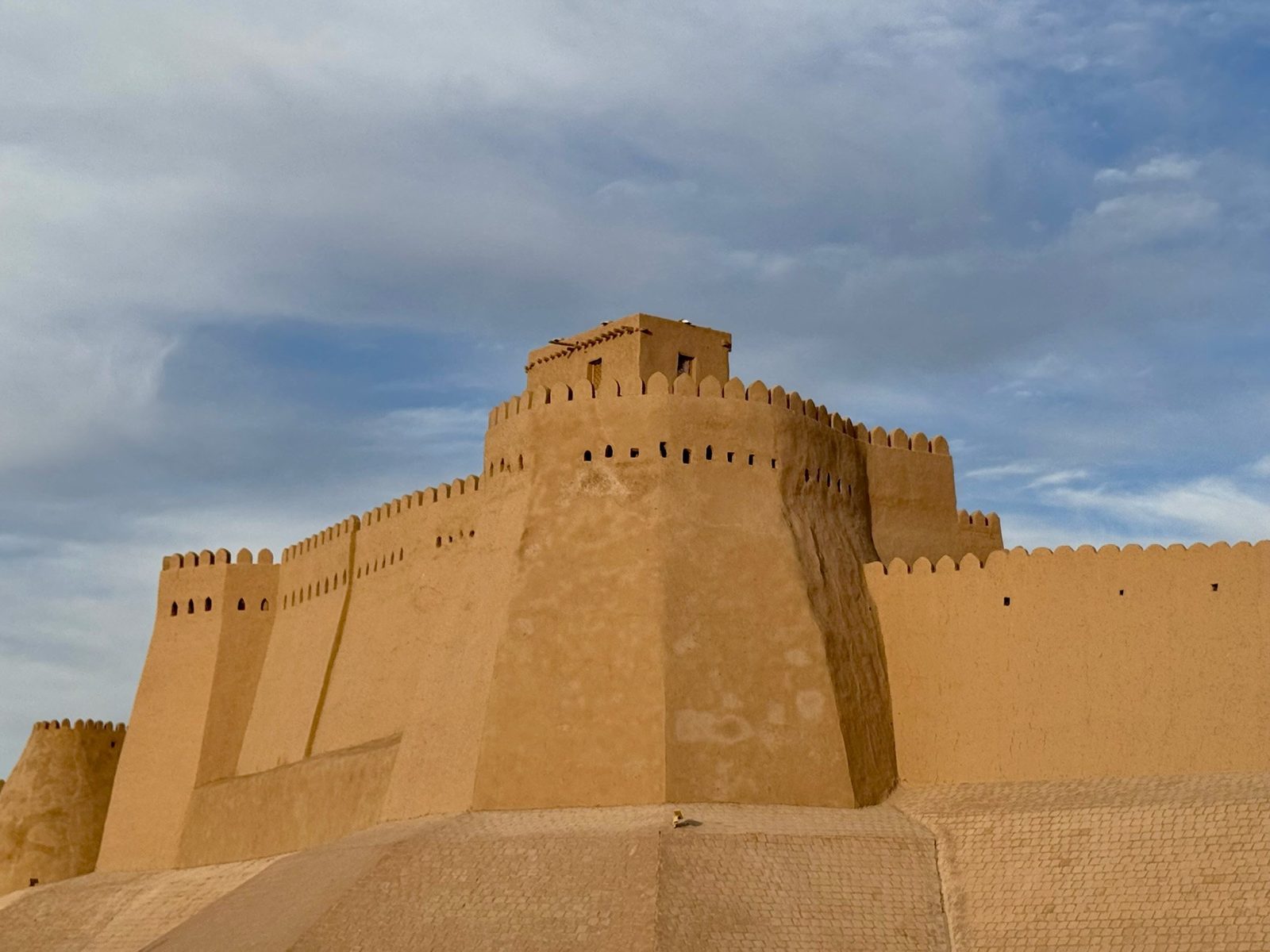
In the desert the light changes fastest, and the hour before sunset and the first hour after sunrise are what you come for, so stay the night. The yurt camps near Aydarkul, between Samarkand and Bukhara, stand far from city lights, and a night close to the new moon is the darkest for the stars. Near Khiva, our night in a yurt in the Karakum desert includes the Desert Sunset excursion, and the yurt camp by Ayaz-Kala lets you photograph the fortress walls at sunset and again at dawn.
The Aral Sea
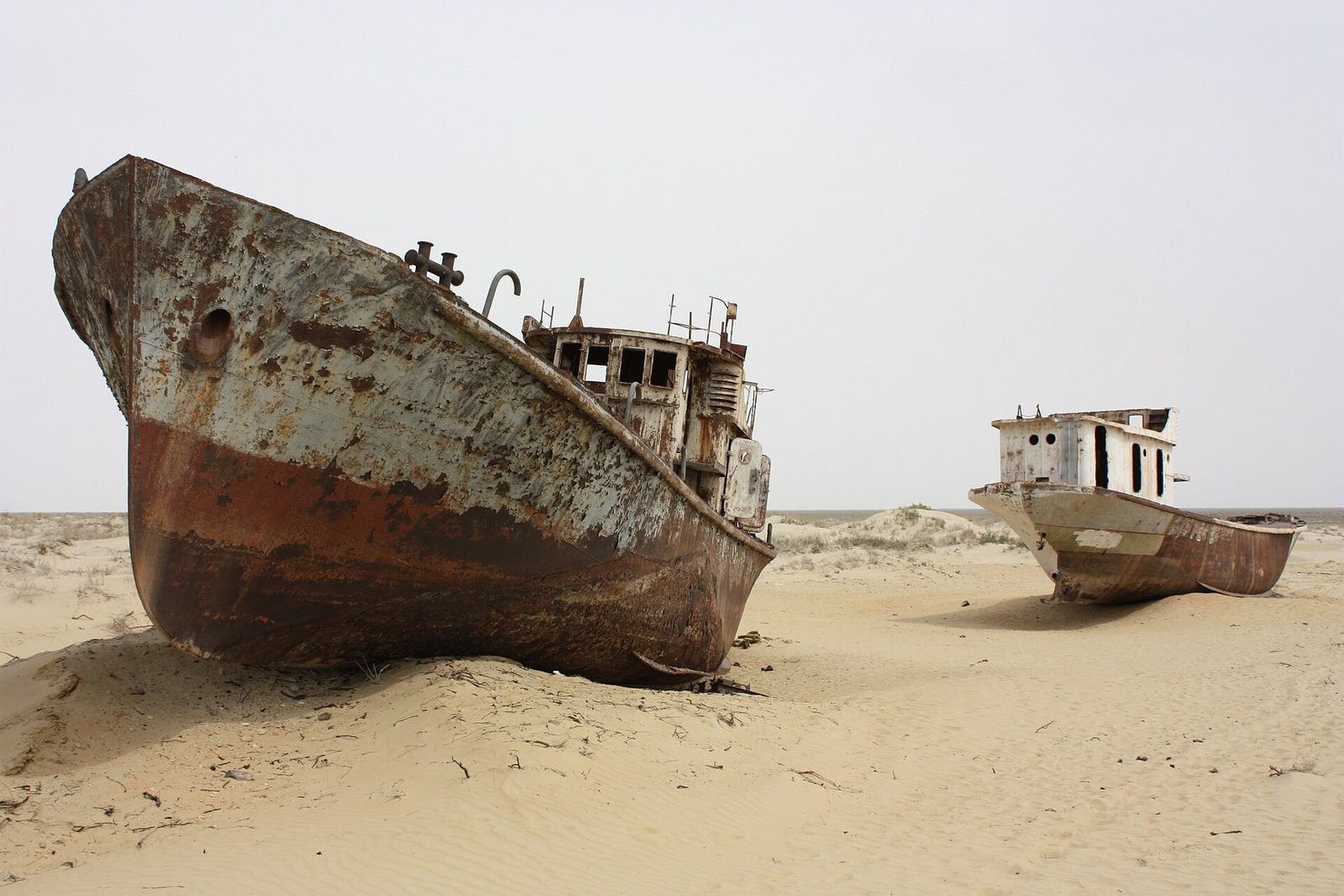
In ,Did you know? A music festival is held among Moynaq's old fishing boats Since 2018 the Stihia festival of electronic music, art and science has gathered in Moynaq, once a port on the Aral Sea, right beside the ships left on the sand. It ends by burning a 10-metre installation of the word SEA. Read more → once a fishing port, the old fishing boats rest on the sand where the harbour used to be. Further on come the cliffs of the Did you know? Giant stone “arrows” on the Ustyurt plateau were hunting traps Along the Ustyurt cliffs run low stone walls called arans, laid out as arrows, triangles and even stars. Saiga and gazelles run along a wall rather than over it, so hunters steered herds into pens. They were used from the Bronze Age on. Read more → and the shore of the Did you know? Part of the Aral Sea is coming back In 2005 the 12-km Kokaral dike was completed to keep the Syr Darya's water in the North Aral Sea. The level rose faster than expected, the water grew less salty, and fish and fishing returned. Read more → itself. It is a long way from Nukus, so our Aral Sea trip spends the night in a camp by the water, which gives you both the sunset and the sunrise there.
The rules: people, mosques, the metro and drones
- People. Ask before you photograph a person. Never photograph people at prayer.
- Mosques and shrines. In an active mosque or at a shrine, ask before you photograph, and dress as you would for a visit: shoulders and knees covered, a scarf for women.
- Fees. Almost all historic sites can be photographed, but some charge a separate photo or filming fee set by the site itself, so ask at the ticket office. Museums set their own rules too.
- Not to be photographed. Government buildings, military sites, airports and police stations.
- The metro. Amateur photos and video of the stations are allowed.
- Drones. Flying a drone needs prior permission from the Civil Aviation Agency or other relevant authorities; apply several weeks before your trip. Flying without permission is prohibited, especially near strategic sites and historic monuments, and can lead to a fine or the drone being confiscated. Without a permit, leave the drone at home.
Greetings, dress and the rest of our customs are in what to wear and how to behave in Uzbekistan.
In short
- When: plan each day around first light and the last hour before sunset; keep interiors, bazaars and workshops for midday.
- Samarkand: the Registan late in the day and after dark, Shah-i-Zinda early. Bukhara: Poi-Kalyan at dawn and again at sunset, Lyabi-Hauz in the evening. Khiva: empty lanes at sunrise, sunset from the Kunya-Ark.
- How long: a full day plus an evening in each city, and one night in the desert or at the Aral Sea for sunrise.
- Rules: ask before you photograph people and inside mosques; drones only with a permit; amateur photos in the metro are fine.
© Photos
- Ship cemetery, Muynak — Arian Zwegers / Wikimedia Commons · CC BY 2.0