
Places in this article: Samarkand · Bukhara · Khiva · Tashkent
Uzbekistan tours from Portugal: tiles of Samarkand and Khiva, flights from Lisbon and Porto, visa-free entry and 2027 holidays
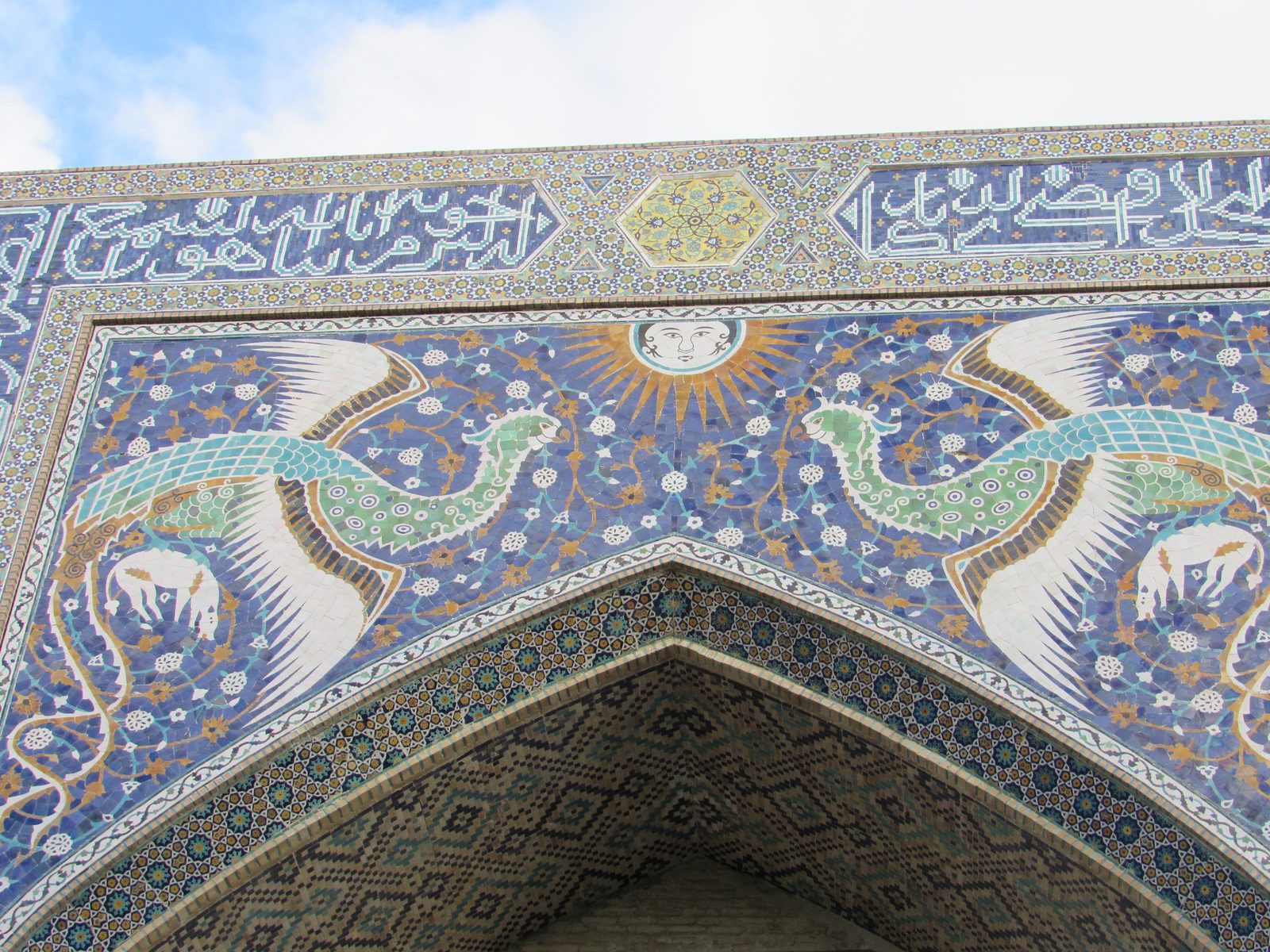
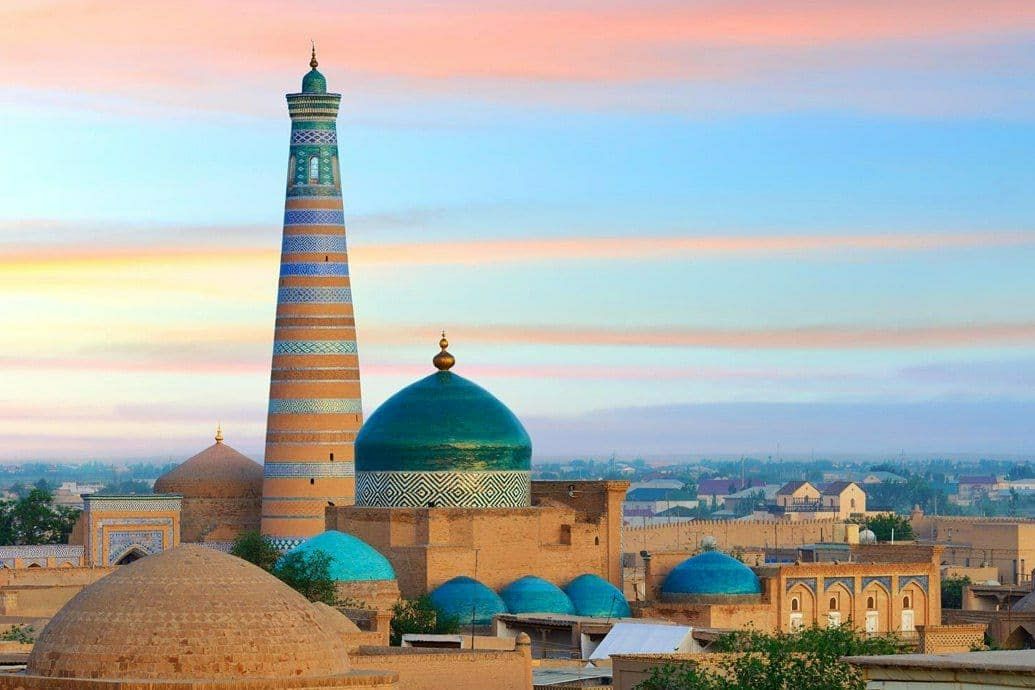
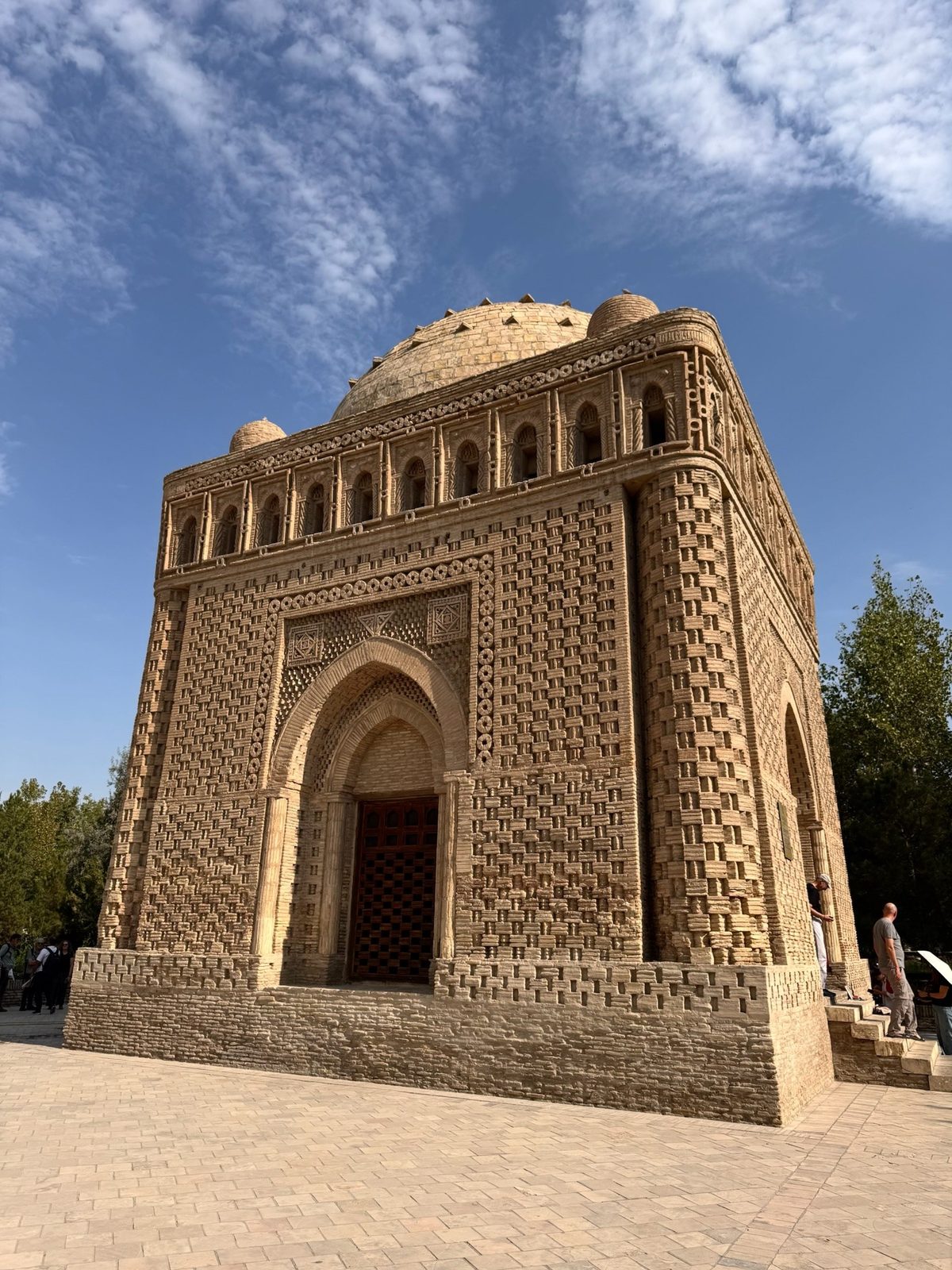
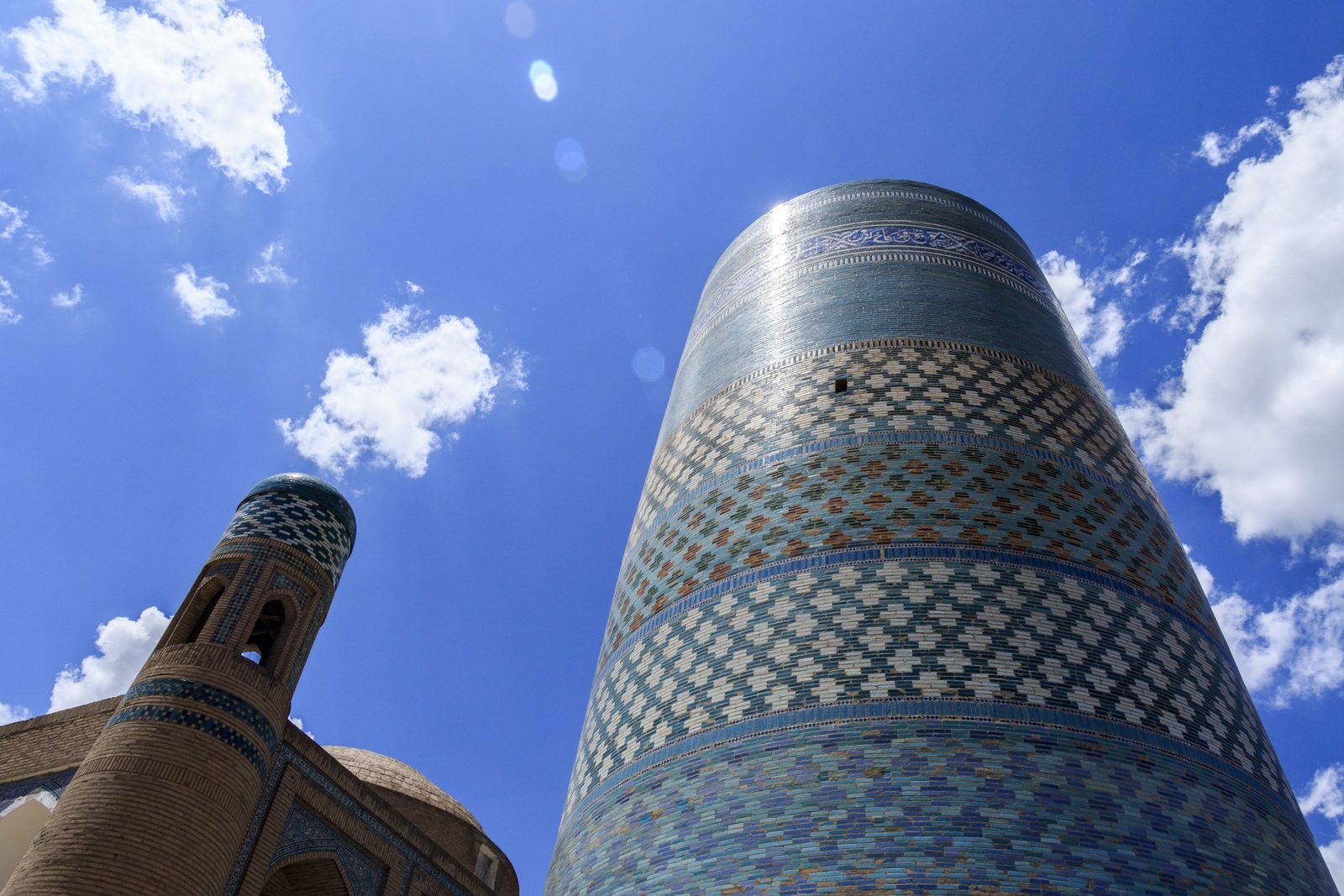
If you grew up in Lisbon or Porto, you already know how a wall of tiles can change a whole street. In Uzbekistan the tiles are turquoise and cobalt rather than blue and white, and they cover domes, minarets and gateways: the lane of mausoleums at Did you know? Why Shah-i-Zinda means 'the Living King' The necropolis grew around the shrine of Qutham ibn Abbas, a cousin of the Prophet Muhammad. Legend says he did not die in battle but went down a deep well to a garden of paradise, where he lives on. Read more → in Samarkand, the three madrasahs of the ,Did you know? The Registan's sun-carrying lion went on a banknote The Sher-Dor Madrasah (1619–1636) is named for the big cats with the sun on their backs on its portal. The image appeared on the reverse of Uzbekistan's 200-som note of 1997. Read more → the short, unfinished Did you know? Legend: the khan wanted to see Bukhara from his minaret Legend says Muhammad Amin-Khan wanted the Kalta-Minor so tall that Bukhara, some 400 km away, could be seen from the top. In reality work began in the 1850s and stopped in 1855, when the khan died, at a height of about 29 m. Read more → in Khiva. We are a tour operator in Tashkent, and this is our guide to Uzbekistan tours from Portugal: what to see if you love tilework, how to fly from Lisbon and Porto, entry without a ,Entry rules depend on your passport. Once you are here, each stay must be registered within three days, and hotels do it for you; customs and registration rules are in our guide. Read more → the best weeks of 2027 around Portuguese holidays and school breaks, and what to expect at the table.
Tiles: from azulejos to the turquoise of Samarkand
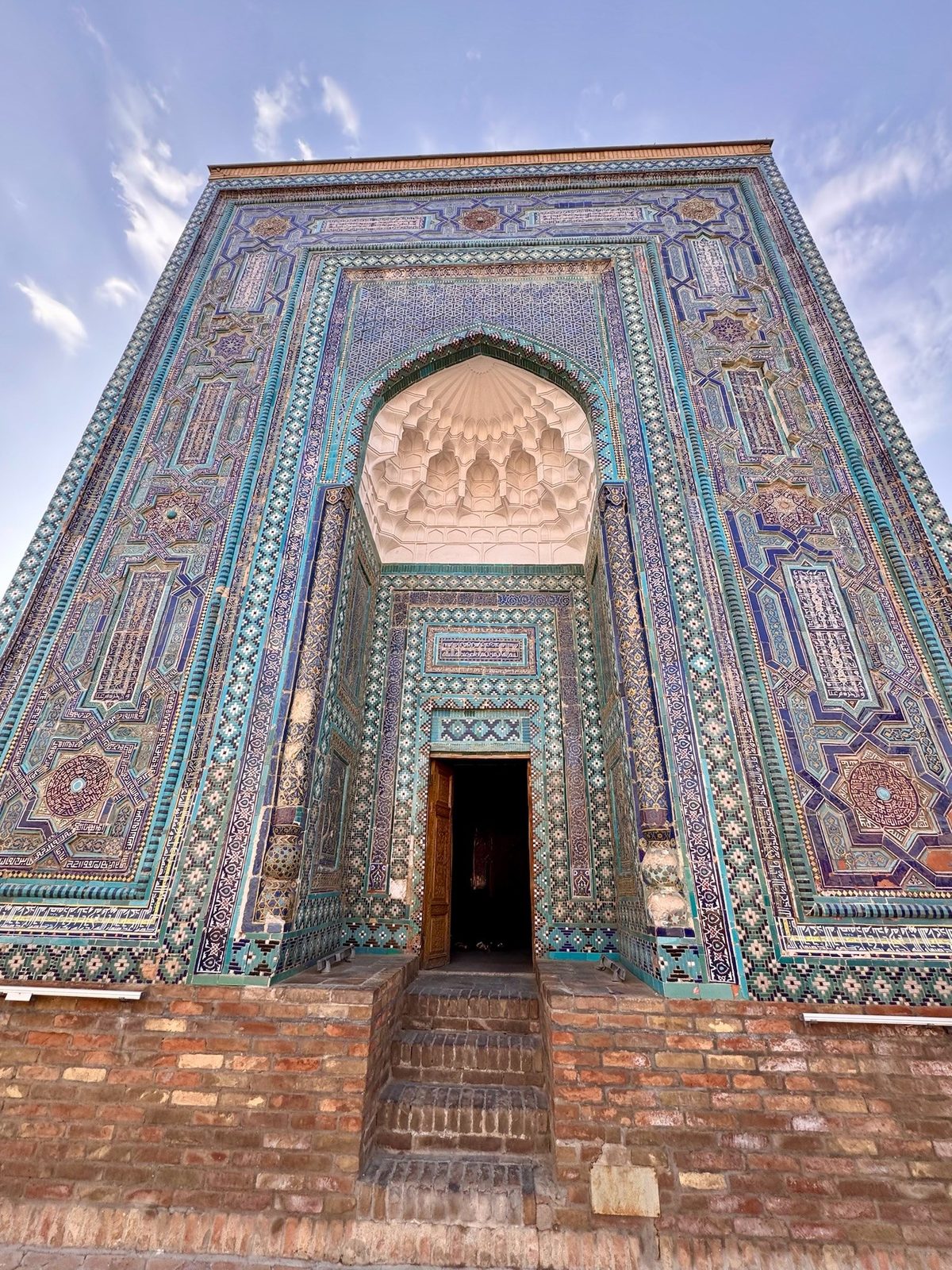
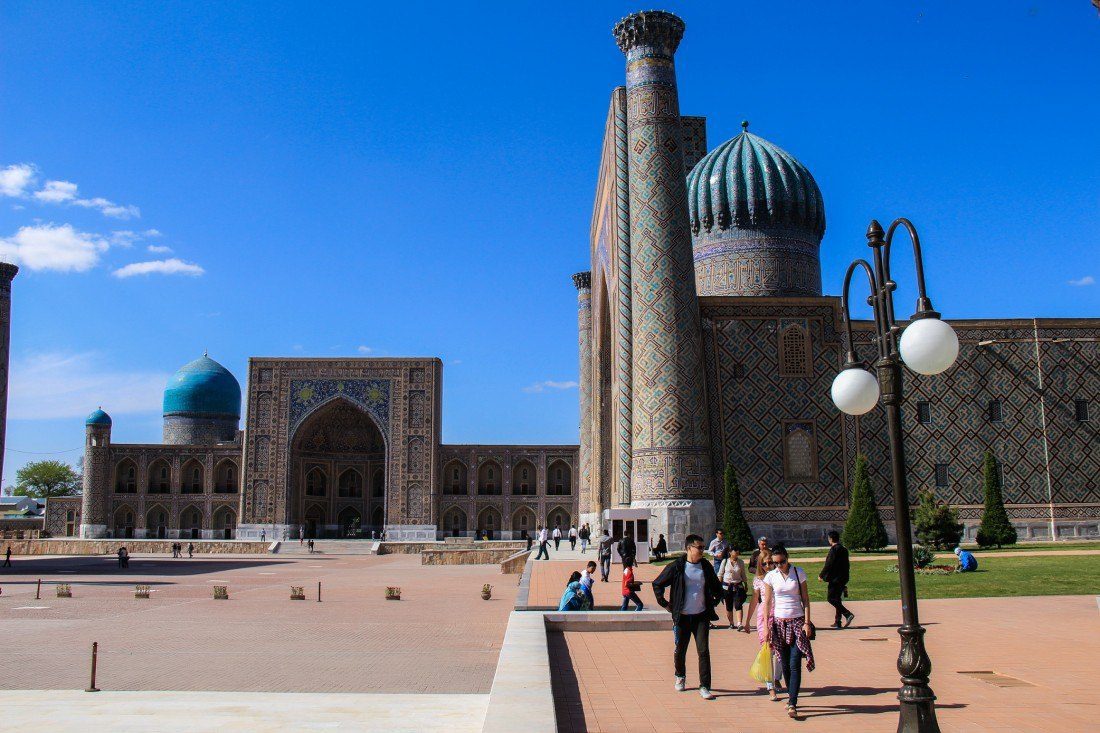
Start at Shah-i-Zinda. A narrow lane climbs a hillside past mausoleums built mostly in the 14th and 15th centuries for Amir Timur (Tamerlane, 1336–1405), founder of the Timurid empire, which had its capital in Samarkand. Born near Shahrisabz.’s relatives and the nobility of his court, and their portals show almost every technique the tile makers knew: carved glazed terracotta, majolica, mosaic. At the Registan, the madrasahs of Did you know? Ulugh Beg measured the year to within 25 seconds Working at his Samarkand observatory, Ulugh Beg put the tropical year at 365 days 5 h 49 min 15 s, about 25 seconds too long, closer than Copernicus a century later. Read more → (1417–1420), Sher-Dor (1619–1636) and Did you know? The 'gilded' mosque of the Registan Tilla-Kari, built in 1646–1660, means 'gilded'. With Bibi-Khanym in ruins, it served as Samarkand's main Friday mosque until the 1920s. Its prayer hall glows with kundal, relief painting finished in gold leaf, restored in 1979. Read more → (1646–1660) show the same craft across more than two centuries.
In Khiva the ,Did you know? A 14-metre-wide base for a tower that stopped at 29 m Kalta-Minor was begun in 1852 and meant to reach 70–80 m, but work halted in 1855 at about 29 m when its khan died. It is said to be the only minaret covered entirely in glazed tiles. Read more → begun in 1852 and left unfinished in 1855, is the only minaret covered entirely in glazed tiles, in bands of turquoise, green and white. The words for what you are looking at are explained in our guide on how to read Uzbek architecture, and the stories behind the buildings in our articles on Shah-i-Zinda and the Kalta-Minor.
Near Bukhara you can see the craft alive: our day in Gijduvan includes a ceramics workshop and lunch. For a whole trip built around tiles and the people who made them, see our ten-day tour Tiles and Master Builders.
An Iberian link: Clavijo at Timur’s court
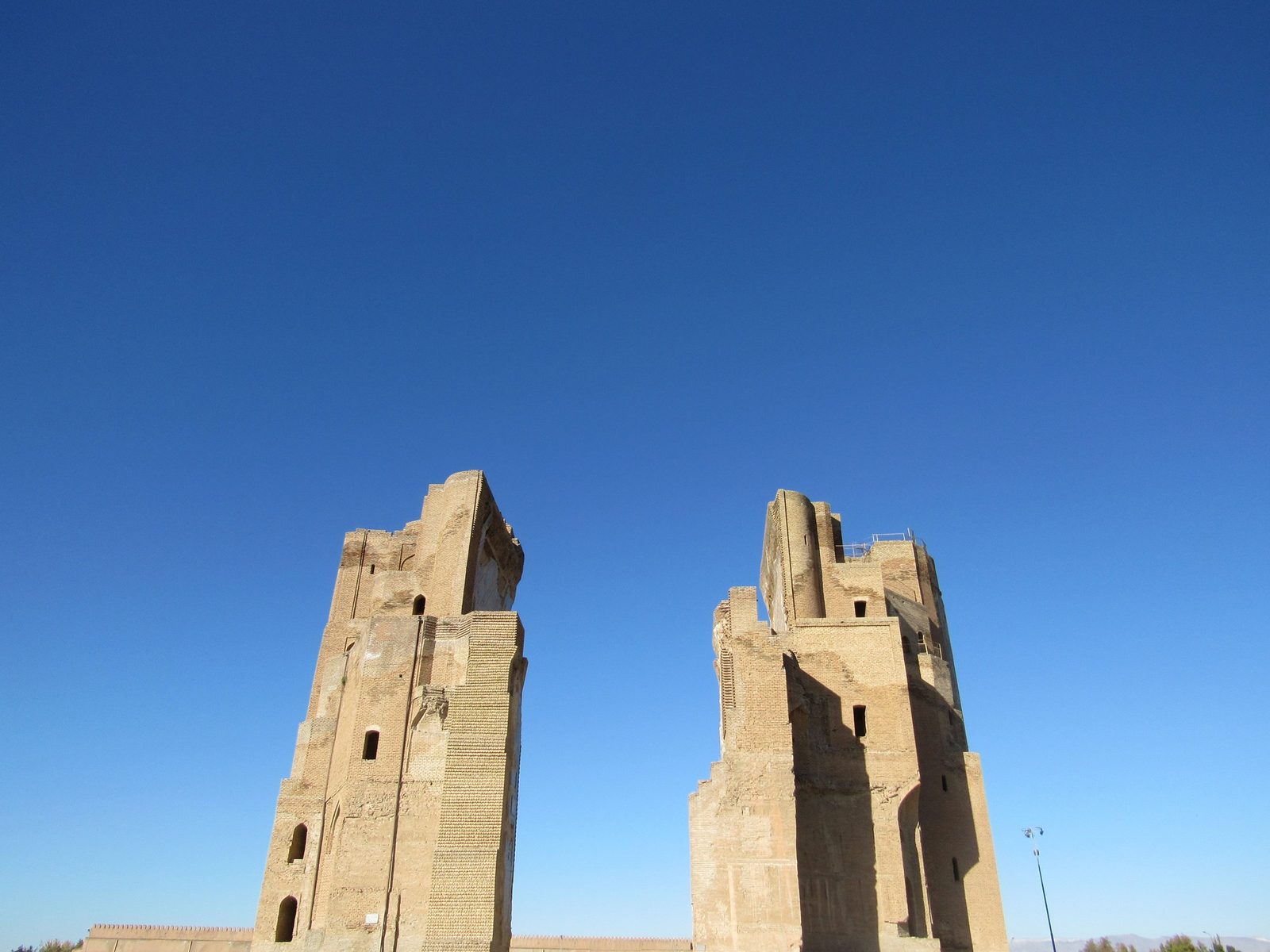
The nearest historical link is next door, in Castile. On 22 May 1403 Ruy González de Clavijo, an envoy of King Henry III of Castile, sailed from the Bay of Cádiz, and in September 1404 he reached Samarkand. He described the great mosque then rising in the city, now called ,Did you know? Legend says the architect asked the queen for a kiss Legend says the architect of Bibi-Khanym would finish on time only for a kiss from Timur's wife, and Timur punished him. In fact the mosque was Timur's own project; his wife Saray Mulk Khanum built her madrasah across the road. Read more → and Timur’s palace The ruins of Amir Timur's palace in Shahrisabz, his home town. Only parts of the giant entrance arch still stand. Read more → in Kesh, today’s Shahrisabz, still under construction, with a very high portal and blue and gold tilework. Two pylons of that gate still stand, about 38 metres high, and the blue is still on them.
The whole story is in our guide to Uzbekistan tours from Spain. Shahrisabz is about 90 km from Samarkand over the Takhtakaracha pass: book our trip to Shahrisabz with a guide, transfer and tickets, or follow the envoy for eight days on In the Footsteps of Clavijo.
Flights from Lisbon and Porto: one connection
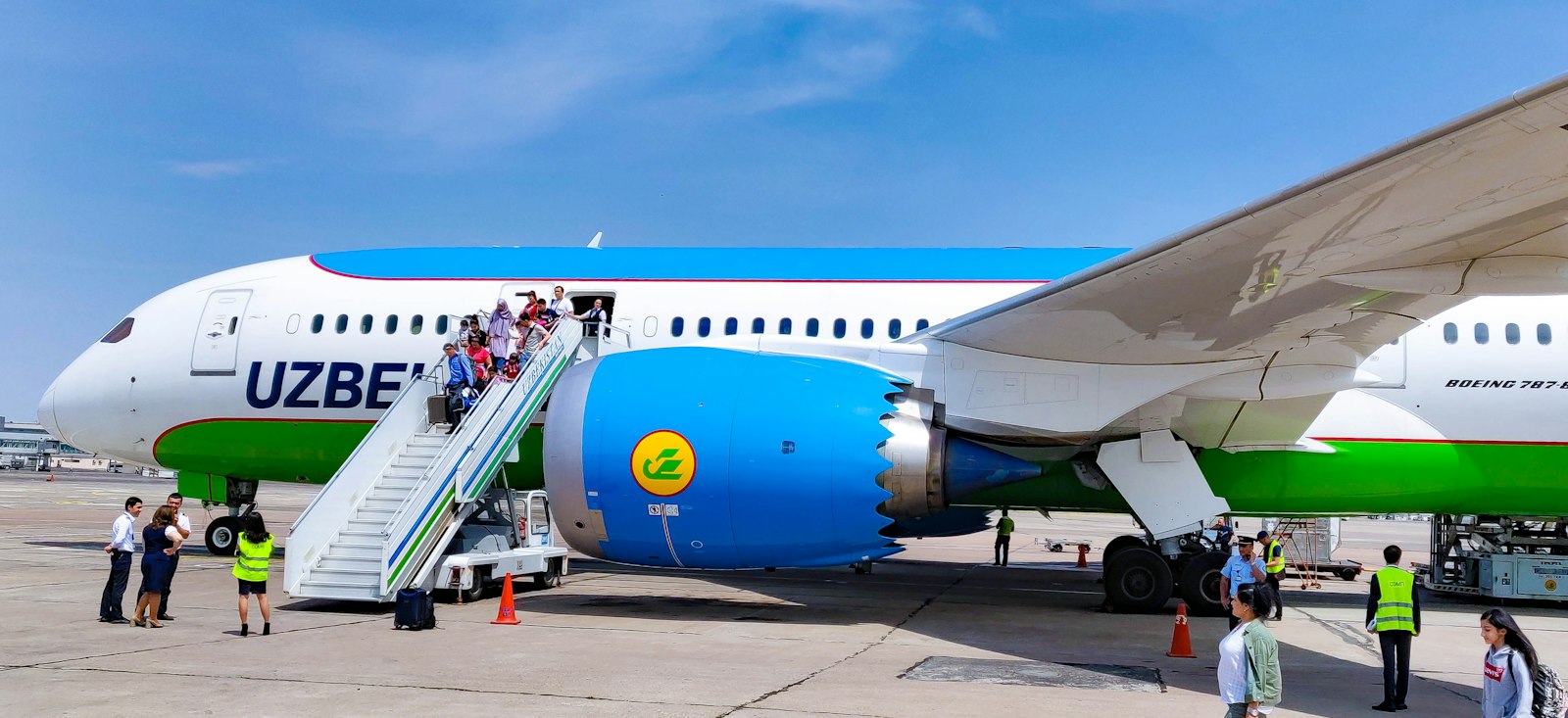
As of October 2026 there is no nonstop flight from Portugal to Uzbekistan. The simplest connection is Istanbul: Turkish Airlines flies there from Lisbon in about 4 h 45 min and from Porto in about 4 h 30 min, and the flight on to Tashkent takes 4 h 20 min to 4 h 50 min with Turkish Airlines, Uzbekistan Airways, Centrum Air or Qanot Sharq. From Istanbul, Turkish Airlines also flies to Samarkand, Bukhara and Urgench, the airport for Khiva, so you can start the trip in the middle of the country.
Via Frankfurt, Lufthansa flies from Lisbon in about 3 hours and from Porto in under 3 hours; from Frankfurt, Uzbekistan Airways, Qanot Sharq and Centrum Air reach Tashkent in about 6 h 20 min. Via Paris, Air France flies from Lisbon and Porto, and Uzbekistan Airways flies from Charles de Gaulle to Tashkent in about 6 h 45 min. From Madeira or the Azores, add a flight to Lisbon or Porto. Airports and connections are in our guide to flights to Uzbekistan.
Tashkent is on UTC+5 all year, with no summer time: five hours ahead of Lisbon in winter and four in summer, six and five hours ahead of the Azores. Arrival times vary with the connection, so we plan your first day around your actual flight and can arrange fast-track passport control and a car to your hotel.
Entry: 30 days without a visa
Since 1 February 2019, holders of a Portuguese passport, ordinary, service or diplomatic, have entered Uzbekistan without a visa for up to 30 days, counted from the day you cross the border. For a longer stay you need a visa before you travel. This is the rule as of October 2026; check it again before your trip.
Every stay of more than three days is registered. Hotels do it at check-in, so on a tour you will hardly notice; keep the registration slips with your passport. Bring your medicines in their original packaging, with the prescription, and declare cash and valuables on arrival, keeping the stamped form until you leave. Details are in our articles on registration and customs and visas.
Travelling with friends from Brazil? Their entry rules and routes are in our guide to Uzbekistan tours from Brazil and South America.
Uzbekistan tours from Portugal: routes for 7 to 10 days
You book the flight, and we arrange everything on the ground: hotels, train tickets, guides and transfers. While you travel, our office in Tashkent is in touch with you 24/7.
The classic route, 8 or 11 days. Tashkent, Samarkand, Bukhara and Khiva on the 8-day classic tour, or at an easier pace on the 11-day classic tour and the ten-day Classic Uzbekistan at a Gentle Pace. How we lay out such trips is in Uzbekistan in 7 days and Uzbekistan in 10 days.
Tiles, 10 days. Madrasahs, mausoleums and workshops on Tiles and Master Builders.
Clavijo’s route, 8 days. Tashkent, Samarkand, a day in Shahrisabz and two nights in Bukhara on In the Footsteps of Clavijo.
Wine and archaeology. Two wineries, outside Tashkent and outside Samarkand, on Wine Uzbekistan; the digs of Samarkand and Bukhara on Sogdiana Unearthed.
Your guide speaks Portuguese, and that is included in the price of our tours: tell us when you book, the earlier the better. For what applies to all of Europe, see Uzbekistan tours from Europe; not sure which route fits, try our tour finder.
When to go: the Easter break, long weekends and summer 2027
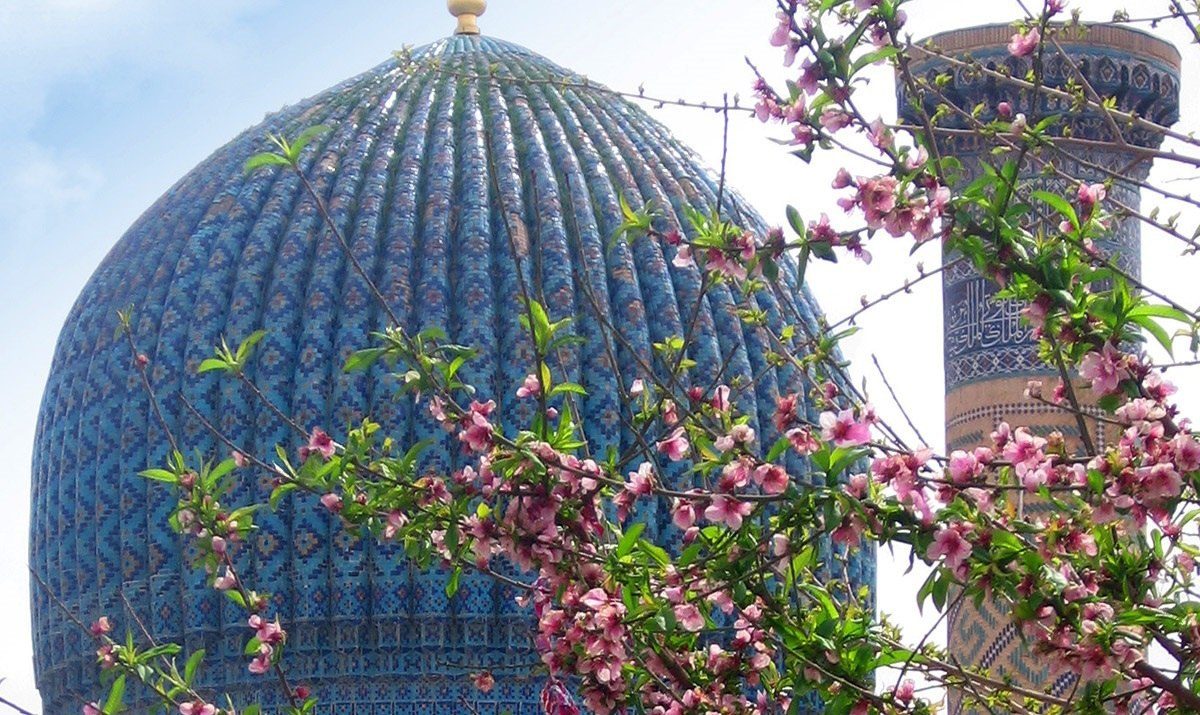
Easter. In mainland schools the Easter break runs from 22 March to 2 April 2027; Good Friday is 26 March and Easter Sunday 28 March. Navruz, the spring new year and a public holiday in Uzbekistan, falls on 21 March, the day before the break begins. Late March is cool and fresh, about 14–17 °C in the afternoon, with fruit trees in blossom: pack for rain. More in Uzbekistan in March, Navruz and Uzbekistan in spring.
Carnival. Schools break from 8 to 10 February 2027, and Carnival Tuesday is 9 February. February is winter here: about 10 °C in the afternoon in Tashkent, Samarkand and Bukhara, nights around zero, and the monuments are quiet. See Uzbekistan in February and Uzbekistan in winter.
Long weekends. Corpus Christi on Thursday 27 May and Portugal Day on Thursday 10 June 2027 each make a long weekend with one day of leave. June is hot, 32–36 °C in the afternoon, so we plan the sightseeing for the mornings and evenings; see Uzbekistan in June. In autumn, 5 October falls on a Tuesday and 1 November on a Monday; in December, 1 and 8 December are both Wednesdays. October is one of the best months; December is cold and quiet, 8–9 °C in the afternoon. Month by month: October, December and when to go.
Summer. Classes end on 4, 11 or 30 June 2027, depending on the school year. July and August are the hottest months, with afternoons of 35–37 °C in Samarkand and Bukhara in July, and the old towns are at their best after sunset; see Uzbekistan in summer. September is cooler and among the best months. Madeira and the Azores set their own school calendars, so check yours.
Food, wine, money, plugs and your phone
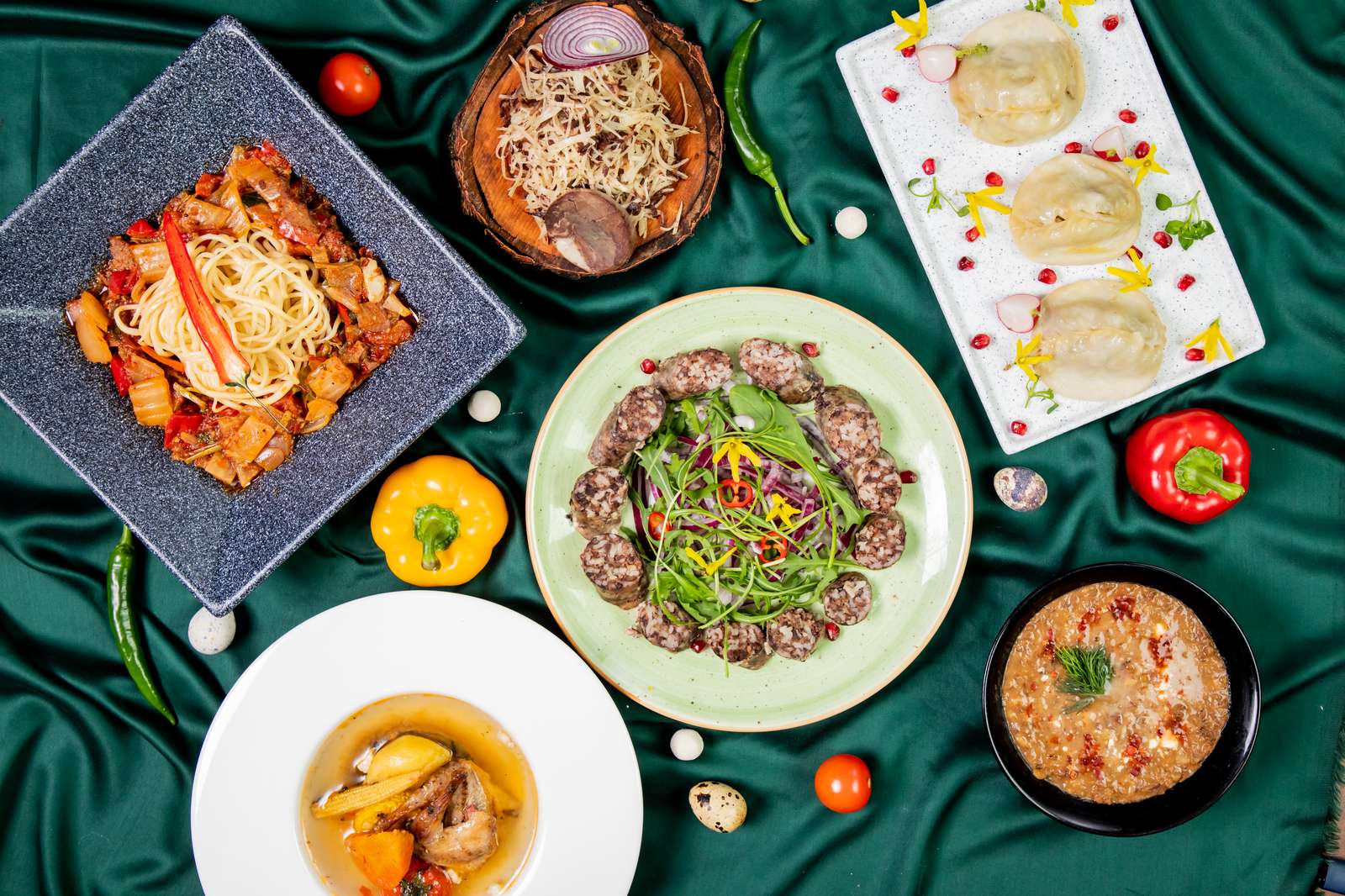
- At the table. Uzbek food is built around meat, mostly mutton, and around rice and bread. Rice cooked in a kazan with carrots, onions and meat: the dish of every Uzbek celebration. Each region cooks it its own way. is a midday dish: by evening the best cauldrons are empty. Tell us about allergies and diets, and we take them into account; see Uzbek cuisine and plov.
- Wine. If you drink Douro or Alentejo wines at home, try the local ones: our guide to Uzbek wine explains what to order, and near Samarkand you can add a tasting at the Bagizagan winery.
- Cards and euros. Visa and Mastercard work at most card terminals in hotels, restaurants, shops and stations. Banks and exchange offices change euros as easily as dollars; take your passport. Cash, in so’m, is for bazaars and street stalls. See cards, cash and tipping.
- Plugs. Sockets are types C and F at 230 V, the same as in Portugal: no adapter needed.
- Phone. Roaming works, and a local SIM card is sold against your passport. For a one- or two-week tour your phone needs no registration; see bringing a phone to Uzbekistan.
- Water. Drink bottled water; it is sold everywhere.
- At mosques and shrines. Cover shoulders and knees; women may want a scarf. More in what to wear.
In short
- For lovers of azulejos: Shah-i-Zinda and the Registan in Samarkand, the Kalta-Minor in Khiva and the ceramics workshops of Gijduvan.
- There is no nonstop flight from Portugal as of October 2026: connect in Istanbul, Frankfurt or Paris.
- Portuguese citizens need no visa for up to 30 days; for a longer stay, get a visa before you travel.
- The Easter break of 2027 (22 March – 2 April) is cool and green; in June, July and August, plan for heat; September and October are the easiest months.
- Tell us when you book that you want a Portuguese-speaking guide: it is included in the price.