
Places in this article: Samarkand · Bukhara · Khiva · Tashkent
Accessible travel in Uzbekistan: an honest guide for limited mobility
Uzbekistan Airways asks for one thing from a passenger who needs a wheelchair: tell the airline when you buy the ticket, and no later than 48 hours before the flight. That rule sums up travel here with limited mobility. Much is possible, but almost nothing happens by itself on the day.
We are a Tashkent team, and this is our honest guide for travellers who use a wheelchair, walk with a stick or simply cannot manage many steps. What is level and easy, what is hard, and how we plan around it. We will not call any city fully accessible: the old towns are centuries old, and they were not built for wheels.
The airport and flights
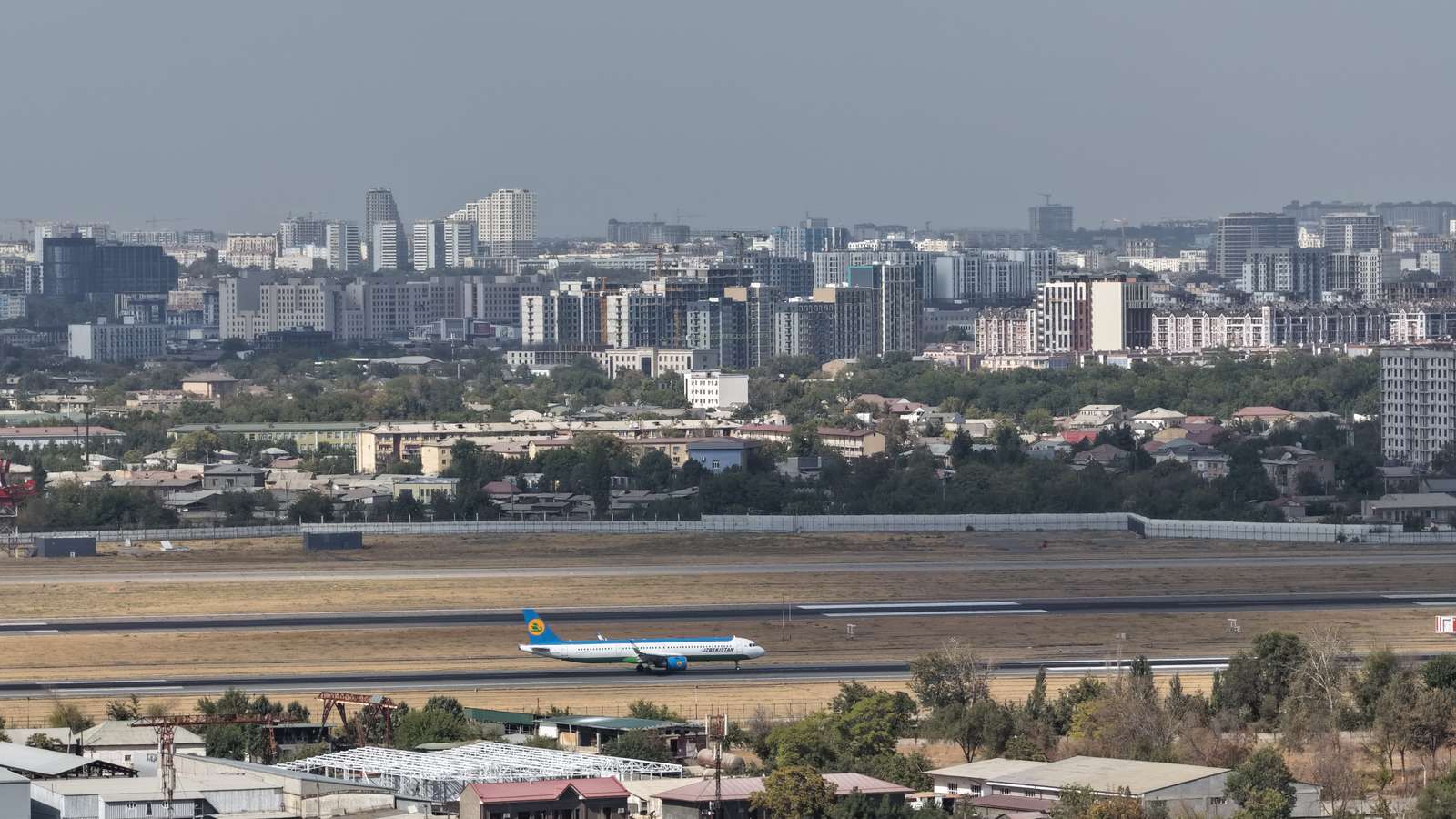
Since January 2026 Tashkent airport has 30 wheelchairs for passengers with reduced mobility, free of charge, in the international halls and in the domestic terminal. Uzbekistan Airways offers an escort at both airports, a wheelchair or an ambulift for passengers who cannot walk to the aircraft, priority boarding and getting off after the other passengers. All of it is on request: book it with the ticket. On other airlines, ask the airline in the same way.
After a night flight, our CIP Arrival service helps too: a staff member meets you, takes you through the fast-track passport lane and helps with the luggage, and our driver waits at the exit. Tell us about the wheelchair when you book, so that the car and the people meeting you are ready for it.
Trains: comfortable seats, but plan the stations
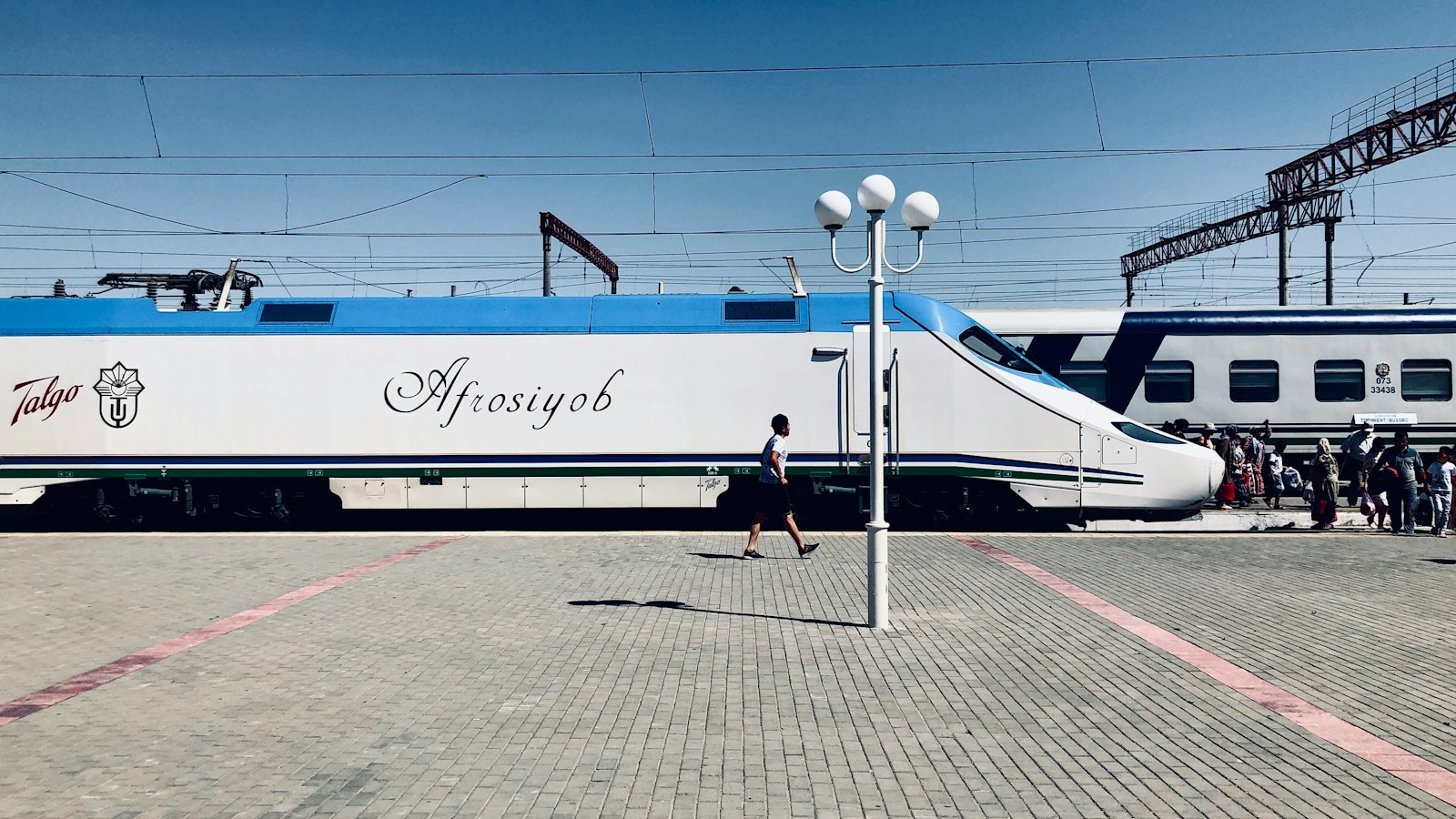
For many of our guests the Uzbekistan's high-speed train: Tashkent to Samarkand in about 2 hours 10 minutes, Tashkent to Bukhara in about 4 hours. Tickets are tied to your passport. Read more → is the easiest part of the trip. Tashkent to Samarkand takes about 2 hours 10 minutes, Samarkand to Bukhara under 2 hours, in a seat, with no airport queue. We book Business class and a morning train, so you arrive with the afternoon to rest.
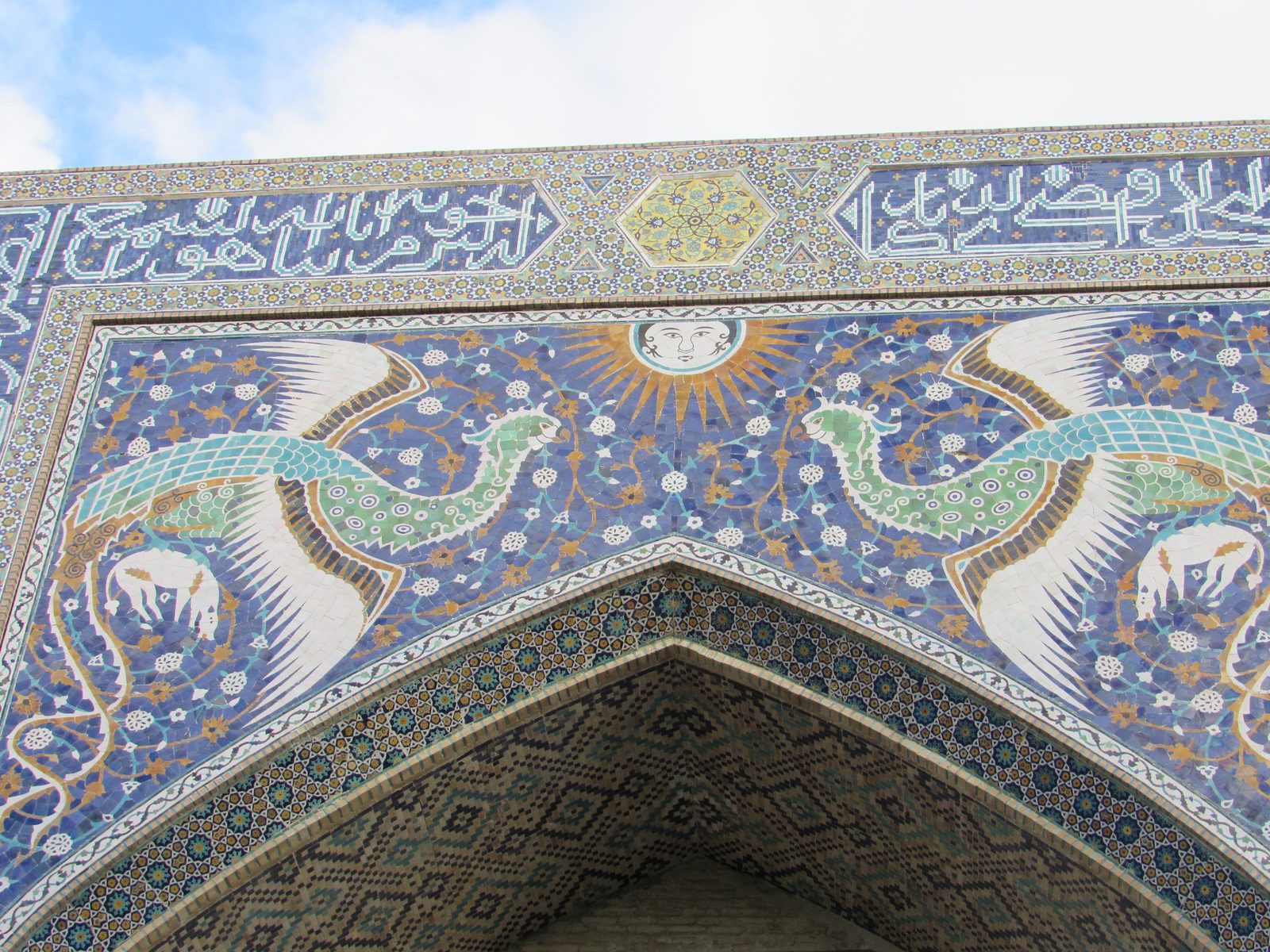
The harder part is the station: the entrance check, the platform and the step into the carriage. If you use a wheelchair, tell us when you book. We check the carriage and the help available at each station with the railway before we confirm the trip, and our guide or driver meets you on the platform. Stations are outside the old towns, more than 6 km from the Did you know? The Registan's sun-carrying lion went on a banknote The Sher-Dor Madrasah (1619–1636) is named for the big cats with the sun on their backs on its portal. The image appeared on the reverse of Uzbekistan's 200-som note of 1997. Read more → in Samarkand and about 12 km from the centre of Bukhara, so the car is part of every train day. How the trains work is in our guide to trains in Uzbekistan.
Tashkent: wide streets, a metro with stairs
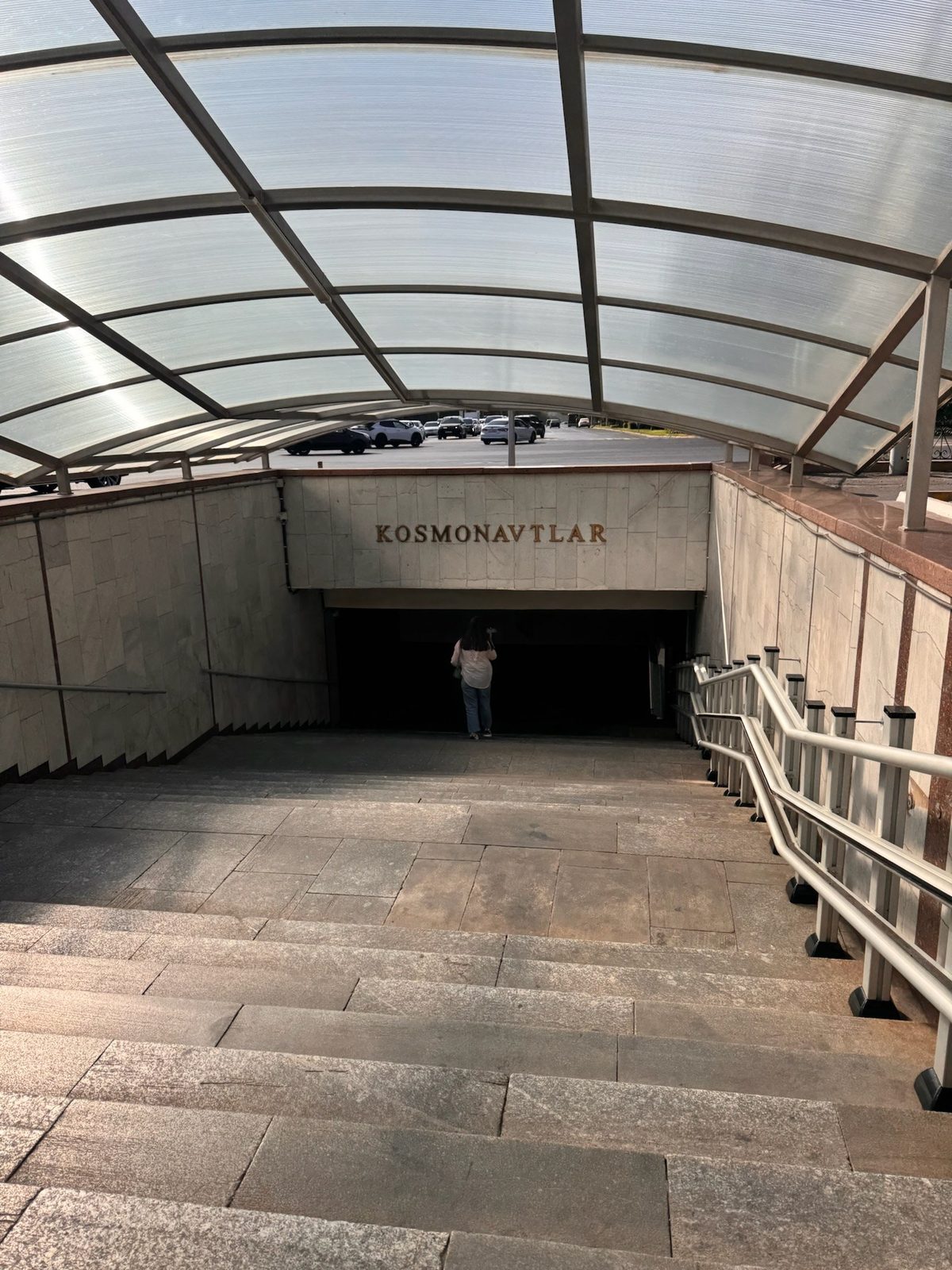
Tashkent is the easiest city on the route: a modern capital with broad avenues, big parks and large hotels. The Did you know? A metro designed to ride out a magnitude-9 earthquake The three original lines of the Tashkent Metro were built to withstand an earthquake of magnitude 9.0, and the tunnels lie unusually shallow, only 8–25 m below the street. Read more → is another matter. Most stations are reached by stairs, and lifts are being added only now: in September 2025, of 45 lifts planned at 16 stations, 32 were installed and 15 were working, with 30 more planned for 2026. For a wheelchair user we plan Tashkent by car, and we visit one or two stations of the Tashkent metro only if the stairs are manageable for you.
Samarkand: the Registan is the easy one
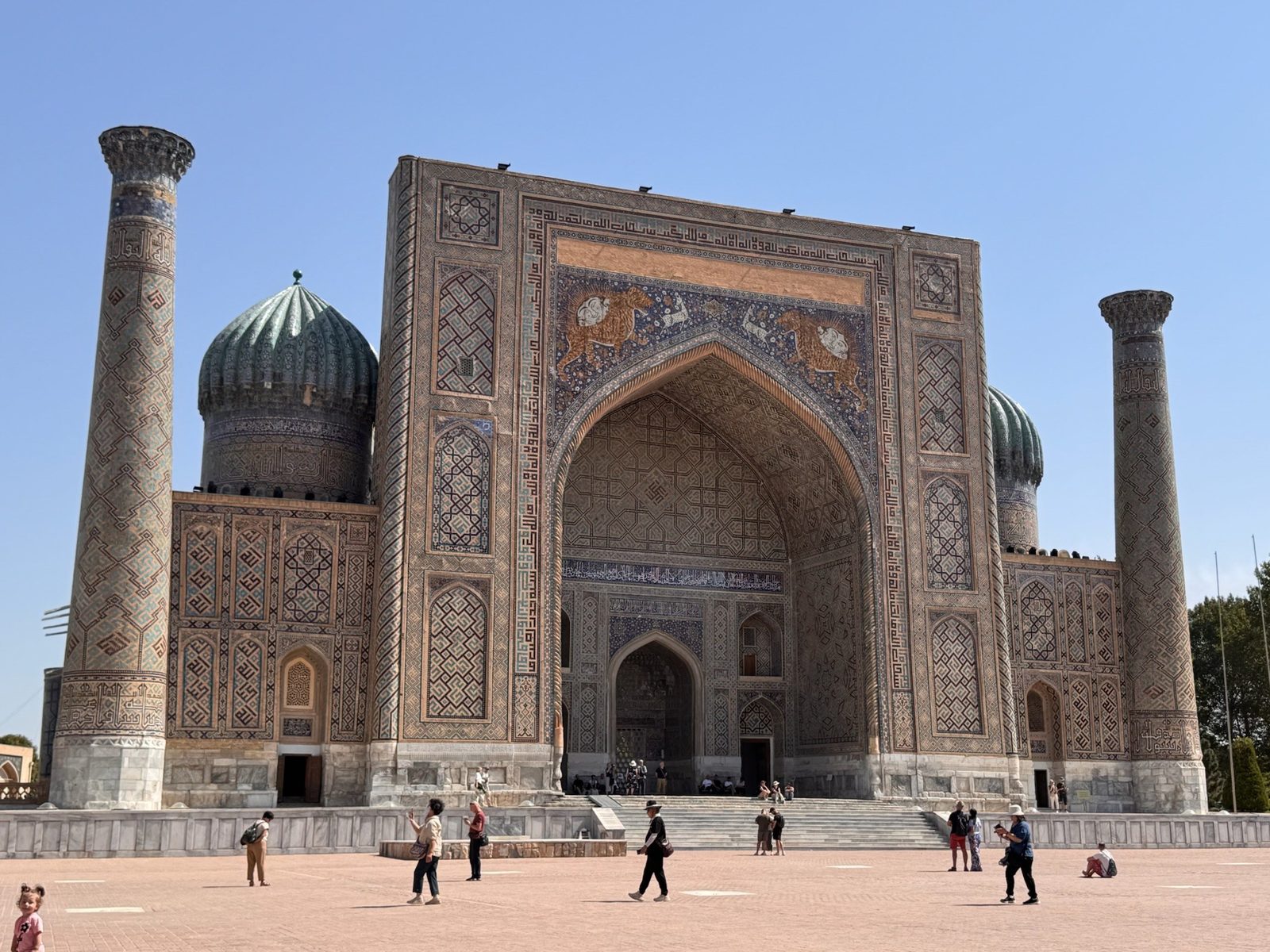
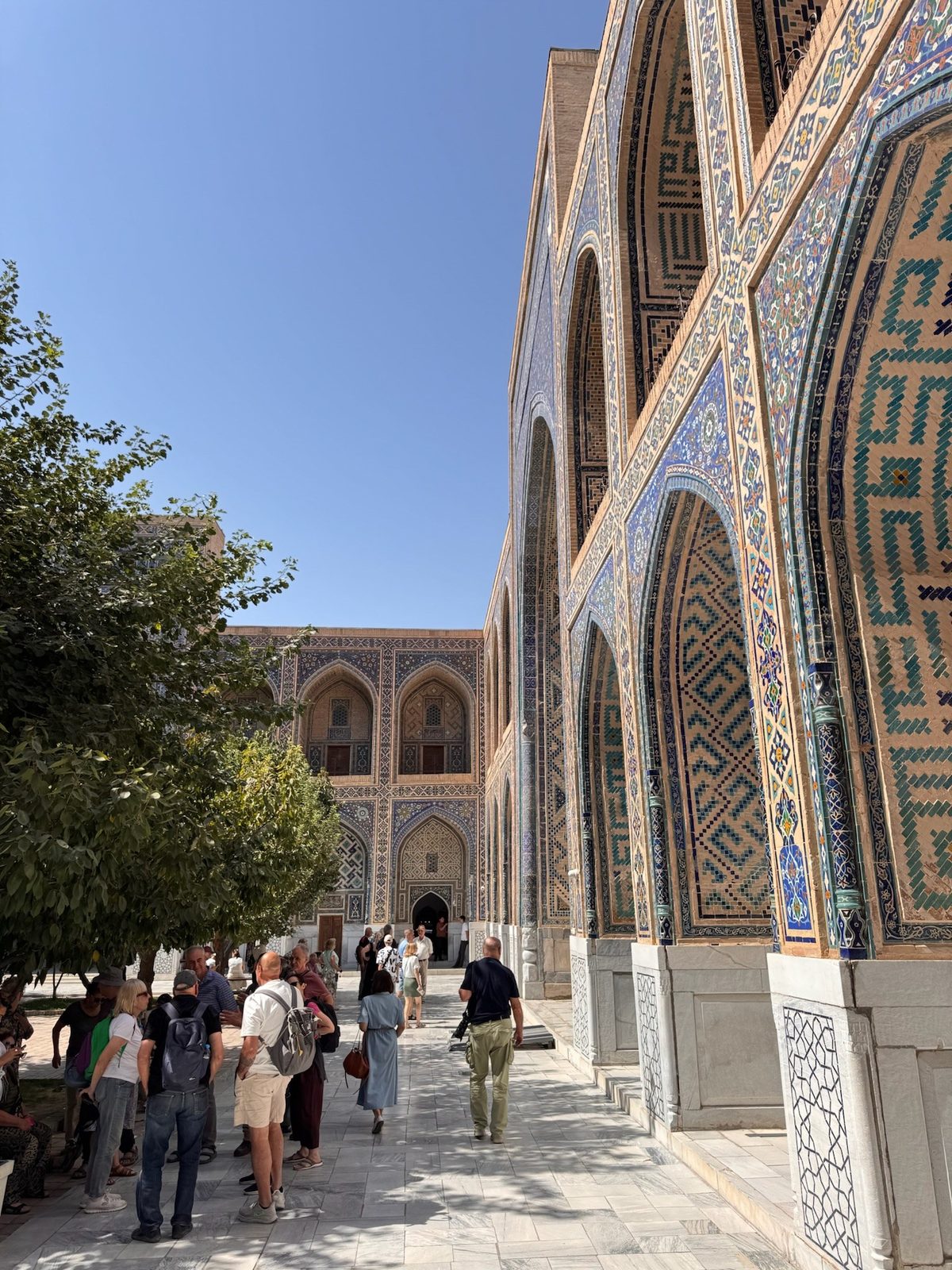
Of the great sights of Samarkand, the Registan is the friendliest to limited mobility. The three madrasahs face a large open square, and the best views are from the square itself, so you lose little if the courtyards inside are harder going. The sights of Samarkand are spread out, and we drive between them.
Did you know? Why Shah-i-Zinda means 'the Living King' The necropolis grew around the shrine of Qutham ibn Abbas, a cousin of the Prophet Muhammad. Legend says he did not die in battle but went down a deep well to a garden of paradise, where he lives on. Read more → is the difficult one: the street of mausoleums begins with a staircase of about 40 steps, and in a 2020 accessibility check there was no wheelchair route into it. Did you know? Timur's tombstone went to Persia and came back The dark-green jade slab on Timur's grave in Gur-e-Amir was carried off by Nader Shah in 1740. It broke, and on his advisers' urging he sent it back to Samarkand. Read more → has steps at the entrance too. With a stick and a handrail, many guests manage them slowly; with a wheelchair, we tell you honestly what you will see from outside and plan the day around it.
Bukhara and Khiva: compact but cobbled
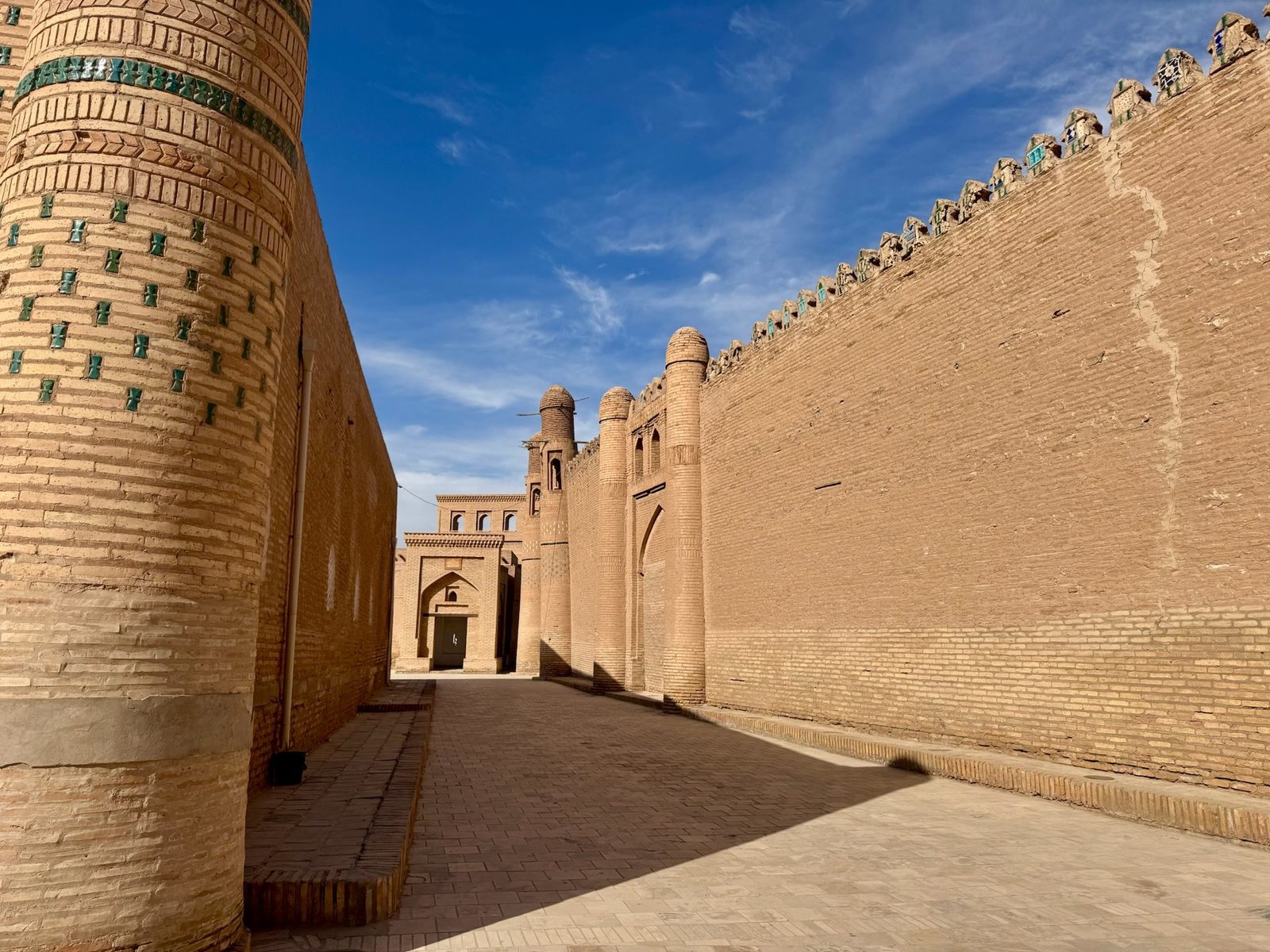
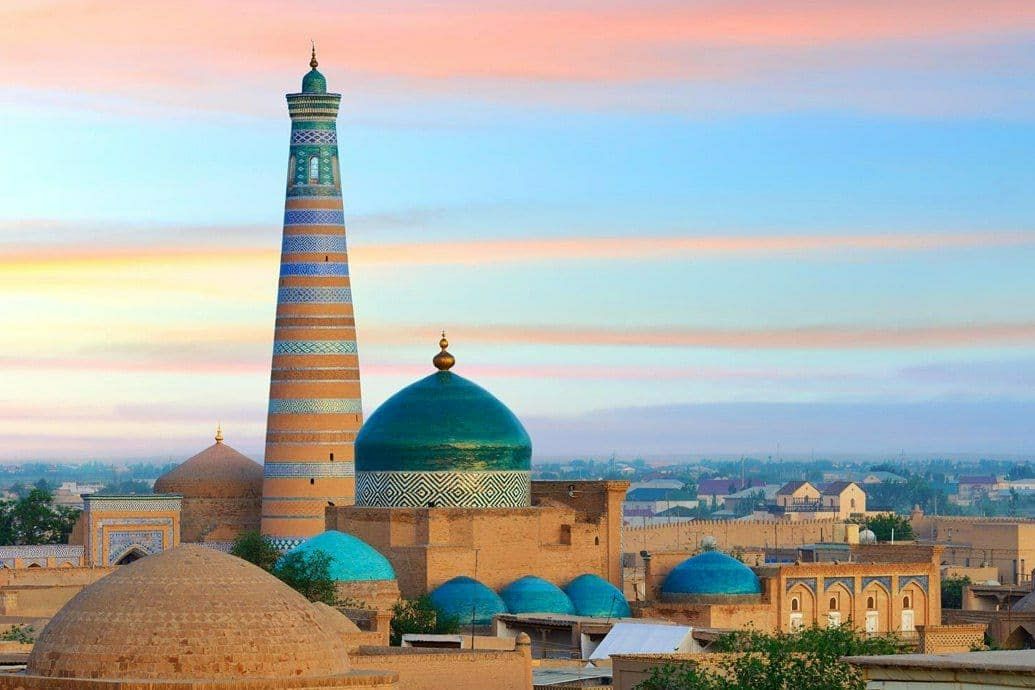
Both old towns are small, which helps: in Bukhara the main sights are a walk from ,Did you know? Bukhara's ponds were once its water supply Pools like Lyabi-Hauz, dug around 1620 and 46 × 36 m, were the city's main source of water. Most were filled in during the 1920s–30s because they spread disease; Lyabi-Hauz survived. Read more → and Did you know? People still live inside Khiva's museum city Itchan Kala packs more than 50 historic monuments and about 250 old houses inside clay walls 8–10 m high and 5–6 m thick, and families still live and work in its lanes. Read more → in Khiva is smaller still. But the paving is old brick and stone, uneven in places, and not every lane is open to cars, so the driver may stop a short walk from your hotel door. The Ark of Bukhara is entered up a long sloping brick ramp; take it slowly, with help.
Minarets are climbed by narrow, dark spiral staircases. Climbing is entirely optional, and nothing essential is lost from below: the towers are best seen from the street anyway.
Hotels: ask the right questions
Some international chain hotels in Tashkent list accessible rooms. Boutique hotels in the old towns of Bukhara and Khiva are often two-storey houses, and not all have a lift. Before we book, we ask the hotel about the things that matter: a lift or a ground-floor room, steps at the entrance, the width of the bathroom door, and whether the shower has a step. If the answer is not good enough, we choose another hotel, even if it is a short drive from the old town.
How we adapt a trip
We plan these trips as private tours, because a private tour can bend: the car waits outside each sight, the guide shortens a visit when you are tired, and an afternoon can simply be cancelled. Our rules of thumb:
- Pace: one move every two or three days, sightseeing in the morning, rest after lunch. Our 10-day Classic Uzbekistan at a Gentle Pace is built that way, and we adjust it further for you.
- Vehicle: a minivan with room for a folding wheelchair, on request.
- Season: April–May or September–October. The average high in Bukhara is about 24°C in April; in July it is above 37°C.
- Each sight in advance: we tell you before the trip where there are steps, ramps and long walks, so you choose with full information.
The guide speaks your language and is included in the price, and we are on call 24/7 during the trip. More advice for an unhurried trip is in Uzbekistan for older travellers.
In short
- Book airline assistance with the ticket, at least 48 hours ahead; Tashkent airport has free wheelchairs.
- The Afrosiyob is comfortable; tell us about a wheelchair when you book, so we arrange each station in advance.
- Tashkent is the easiest city; its metro is mostly stairs, so we plan the city by car.
- The Registan is level and open; Shah-i-Zinda starts with about 40 steps, and minarets are optional.
- Choose a private tour, spring or autumn, and a hotel checked for lifts and bathroom steps.