
Uzbek wedding traditions: what a guest should know
Early on a weekend morning, a long brass note rolls over the rooftops of the old quarter. It is the karnay, and with the surnay and the doira drum it announces a morning :Rice cooked in a kazan with carrots, onions and meat: the dish of every Uzbek celebration. Each region cooks it its own way. somewhere nearby, a wedding has begun, hours before the hotel breakfast opens.
An Uzbek wedding is not one evening but a chain of gatherings over several days, shared with relatives, neighbours, colleagues and friends. Here is how Uzbek wedding traditions unfold, as we explain them to our guests: when weddings happen, the morning plov, the dowry and its ,Did you know? One suzani was often stitched by several women at once A family member or a pattern drawer, the kalamkash, drew the design across strips of cotton. The strips went to different women of the family or neighbourhood, who embroidered them at the same time; sewn back together, they show slightly mismatched seams. Read more → the music and the dance, and what to do if someone invites you.
When weddings happen
The main wedding season is spring and autumn, when the weather is mild, and the best venues are booked about six months ahead. Guest lists often run into the hundreds, so the evening banquet usually takes place in a restaurant or a wedding hall, a to’yxona. If you travel in April–May or September–October, you will probably see a wedding party in the streets or hear the music from a hall, even without an invitation.
Preparations start long before. The families talk everything through at a family council, the maslahat, and the first official step is the engagement, fatiha-tuy: the groom’s family sends sweets and gifts to the bride’s home, and the two families break bread together.
Morning plov: the wedding before breakfast
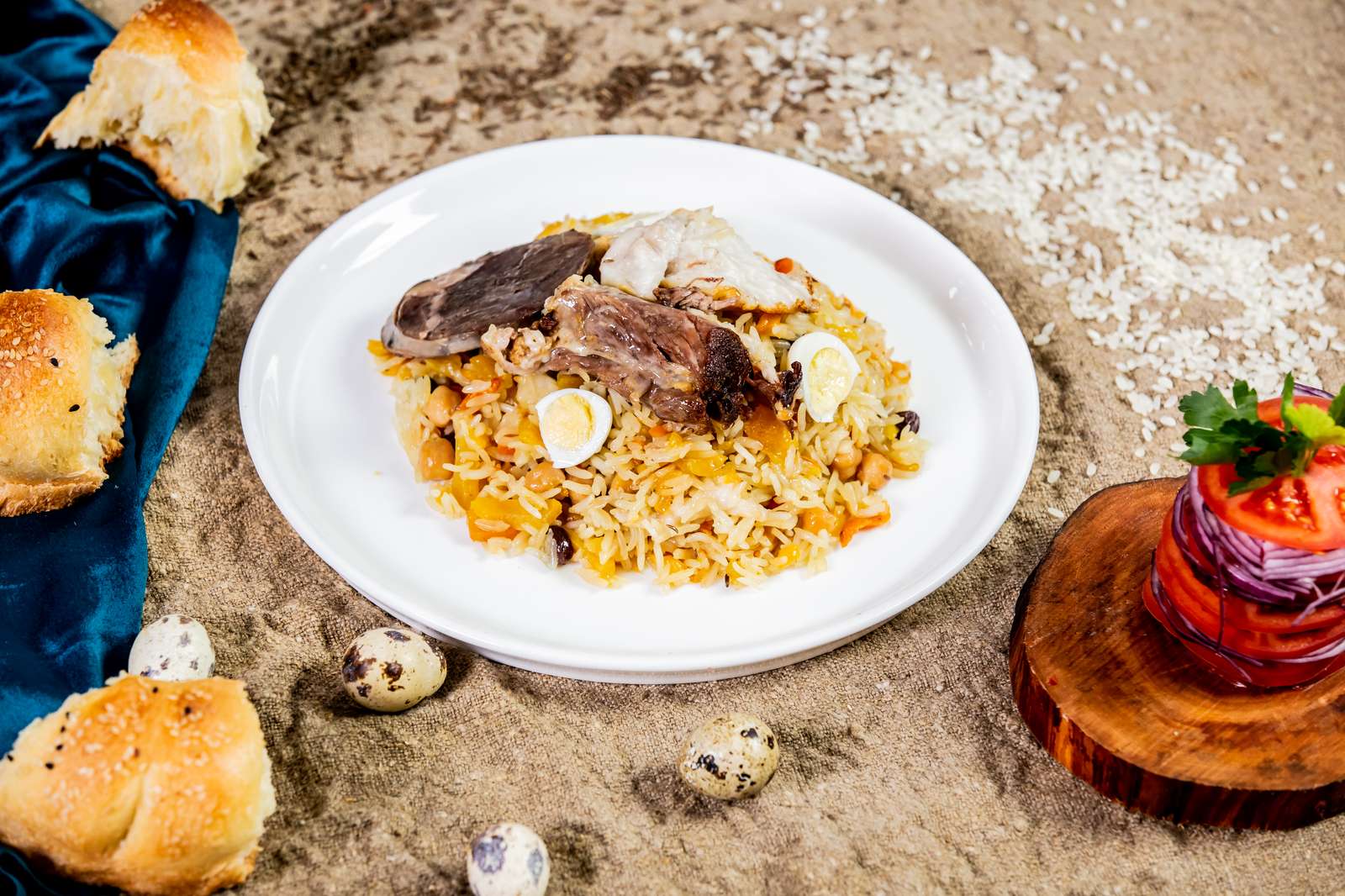
The evening before the wedding, men gather to chop carrots for the plov, a custom called sabzi tugrar, often with musicians. At dawn comes the most ceremonial plov of all, nahor oshi, the morning plov. Guests arrive between about 6 and 9 a.m., elders share out the tasks, and each large platter, a lagan, is shared by two people. It is traditionally a gathering of men, often 300 or more of them, and by the time the hotel breakfasts open, the wedding plov has been eaten.
Plov is more than food here. In 2016 UNESCO inscribed the plov culture of Uzbekistan as intangible heritage, and a saying sums up its role: a guest leaves the house only after plov has been offered. How it differs from city to city is in our guide to plov in Uzbekistan.
The dowry and its suzani
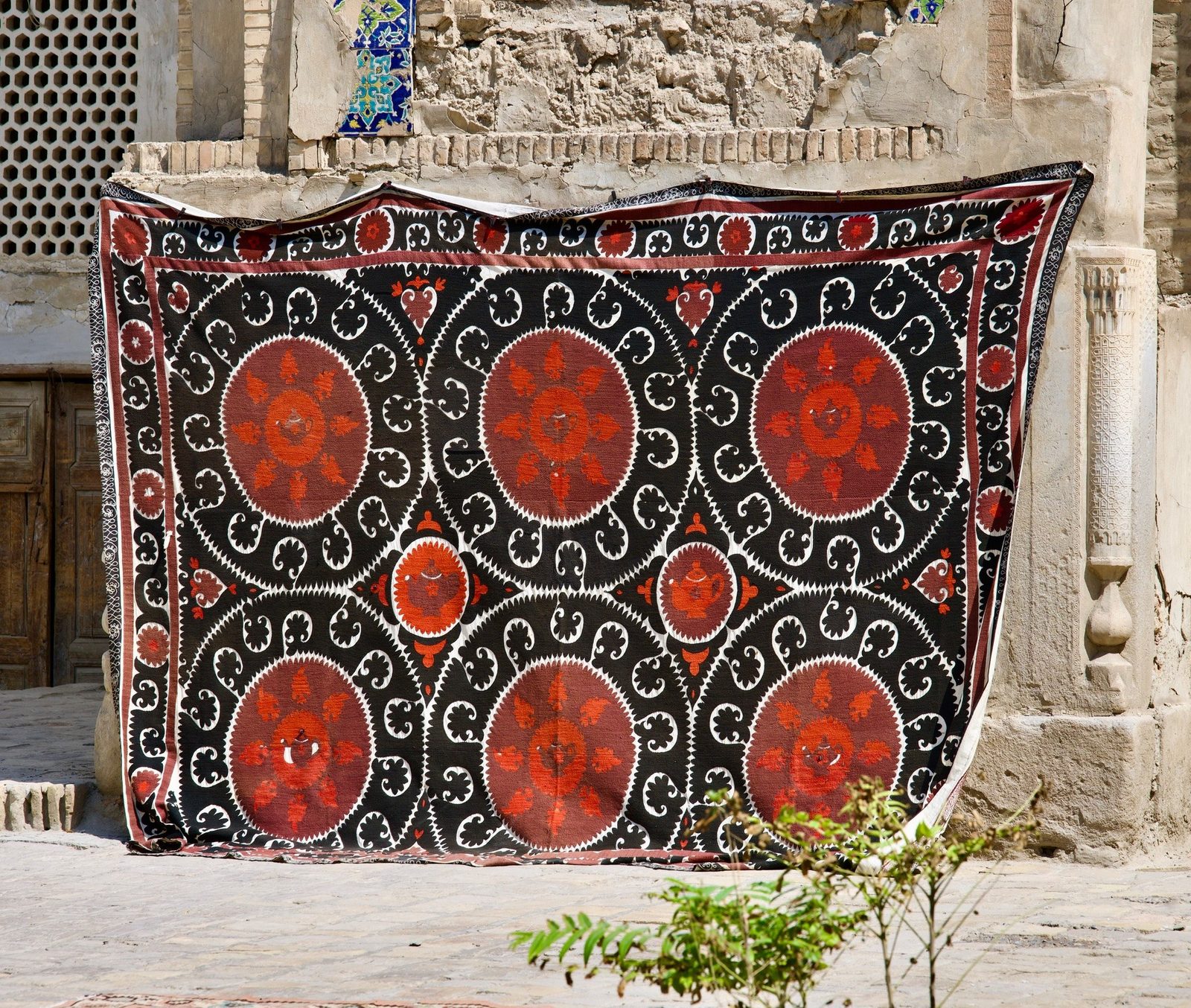
The bride’s family prepares the dowry, the sarpa: textiles, carpets, clothes, jewellery and things for the new home. The most famous part of it is the suzani, a large embroidered cloth, often several metres long, that a girl prepared for her dowry and that was shown on her wedding day. Suzani still decorate the room of the newlyweds. How to read the patterns and how to choose one is in our suzani guide.
Bread has its place too. At a wedding the bride and groom each bite two loaves placed face to face, and the loaves are finished at their first breakfast as a married couple; more about it in Uzbek bread.
Karnay, surnay and lazgi
The karnay is a long metal trumpet, the surnay a loud reed pipe, and together with the doira they are the sound of an Uzbek wedding. In the past they were an invitation in themselves: the whole mahalla heard them and knew it was welcome. The instruments and where to hear them are in music of Uzbekistan.
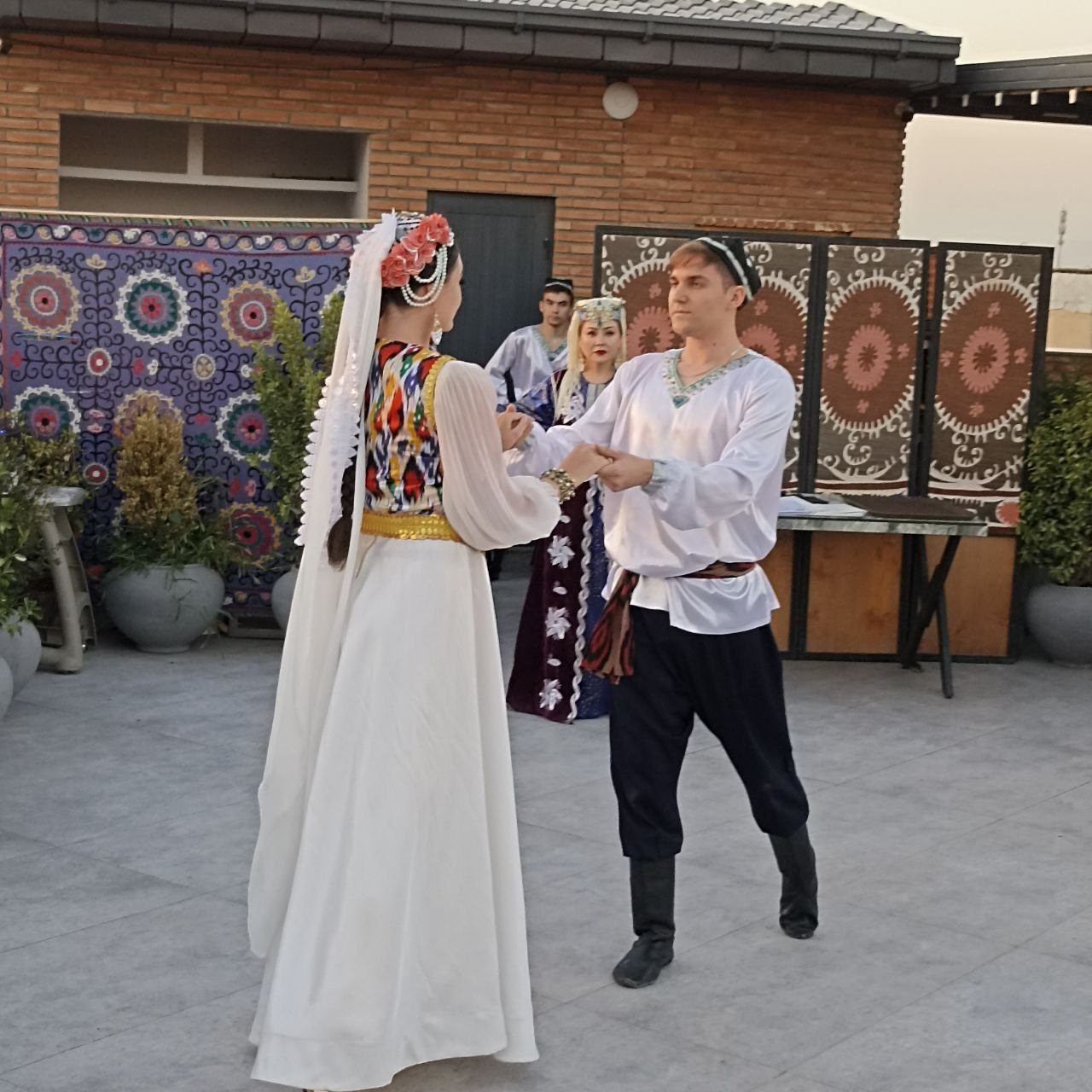
Songs and dances run from morning until late in the evening, and guests are encouraged to join in. Many weddings have the song Yor-yor, sung as the bride leaves her parents’ home. In Khorezm the dance is lazgi, inscribed by UNESCO in 2019: it is danced at family and community events, and spectators often start dancing themselves. The next morning comes kelin salom, “the bride’s greeting”: the young wife bows to her husband’s relatives, and they give her gifts and blessings.
If you are invited
An invitation to a wedding is a real honour, and people here mean it. A few things make the day easier:
- The gift. Guests usually give money or something for the home. We put cash in an envelope and hand it over with both hands.
- What to wear. Dress as for a celebration: smart, clean, nothing too revealing.
- Greet the elders first. A right hand on the heart and a slight nod works for everyone. Men shake hands; with a woman, wait for her to offer her hand.
- Accept what you are given. Tea, bread and plov keep coming. Try a little of everything, even if you are full.
- Join the dance. When someone pulls you into the circle, go. Nobody expects you to know the steps.
- Photos. Ask before you photograph people, the bride above all, and leave the official photographer the front row. In the morning plov and the family rites, keep the phone in your pocket unless the hosts invite you to film.
More on greetings, shoes at the door and table manners is in what to wear and how to behave, and a few words that win smiles are in our Uzbek phrases for travellers.
Elders, family and the mahalla
Behind every wedding stands a family and a neighbourhood. Respect for elders is the main feature of the Uzbek family: elders lead the family councils, share out the work at the morning plov and are greeted first. The mahalla, the old neighbourhood community, carries much of the load: the date of the morning plov is agreed with it, and neighbours cook, carry and serve alongside the relatives.
The A teahouse: green tea, plov and conversation on wide wooden beds called topchan. of the mahalla is where big family events are still held; how it works, and how to drink tea like a local, is in our guide to Uzbek tea and the chaikhana. The mahalla at its most festive is described in Navruz in Uzbekistan.
Seeing it as a traveller
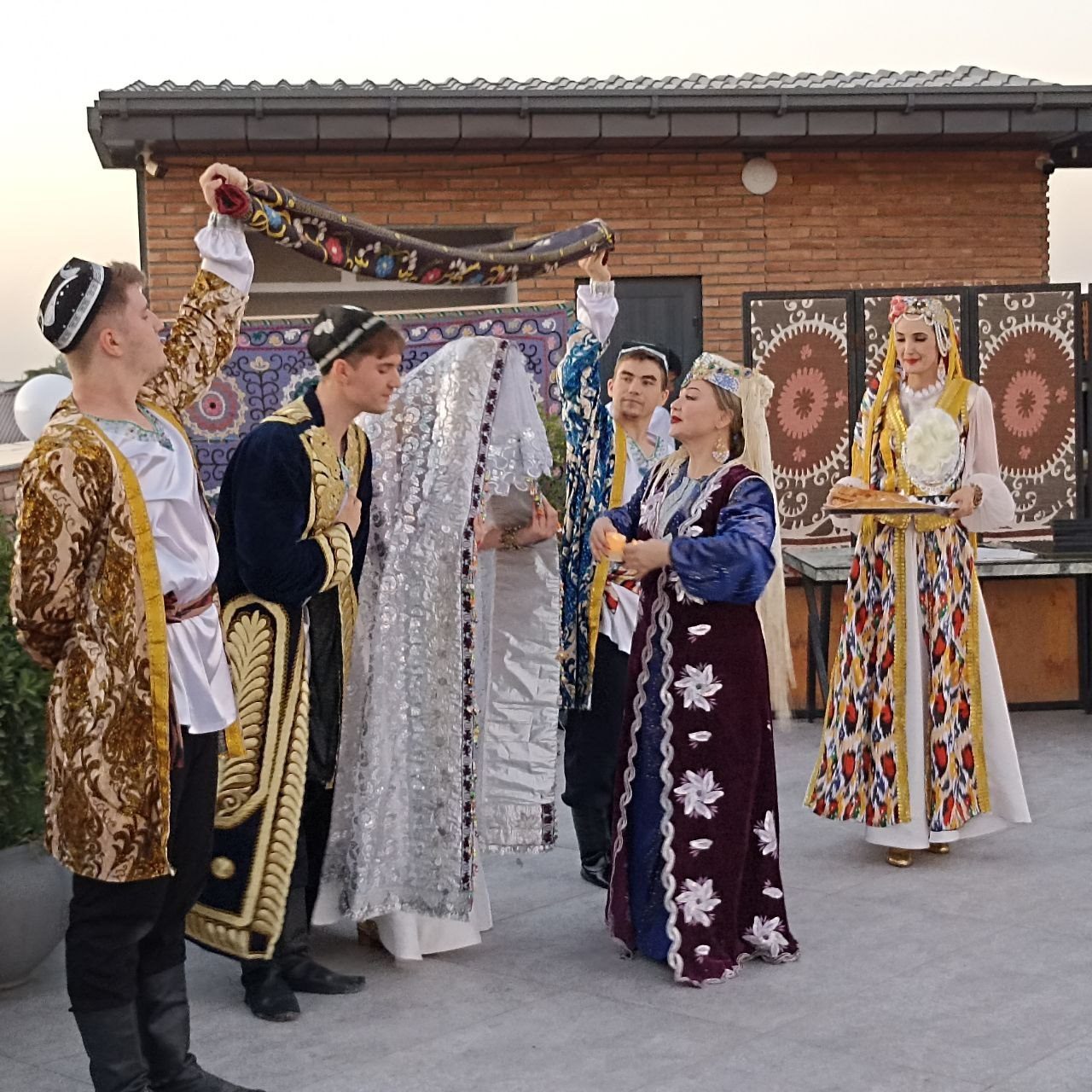
A wedding is a family occasion, so it cannot be booked. What we can arrange is the evening around it. In Bukhara we organise a dinner with a local family, and in Khiva the same evening with a Khiva family: the closest you get to Uzbek home life on a trip. For groups and MICE events in Samarkand, our folk show adds 30 minutes and nine performers to a dinner, with a wedding rite, the bride ransom, the plov dance and the Khorezm lazgi. In Khiva the International Did you know? Legend: lazgi is the music that brought the soul to life A Khorezm legend says that when the first human was shaped from clay, the soul was afraid to enter the body until it heard divine music. Fingers, wrists and shoulders came alive first: that music was lazgi. The name is linked to an old word for “tremble”. Read more → Festival is held every two years, from 25 to 30 April.
In short
- The main wedding season is spring and autumn; banquets are big, often hundreds of guests.
- The day starts at dawn with nahor oshi, the morning plov, one platter for two.
- The dowry, sarpa, has textiles and carpets, and suzani still decorate the newlyweds’ room.
- Karnay, surnay and doira announce the wedding; in Khorezm the dance is lazgi.
- If you are invited: money or a gift for the home, smart clothes, elders first, and ask before every photo.