
Places in this article: Tashkent
Chorsu Bazaar, Tashkent: the dome, the sections, what to try and how to get there
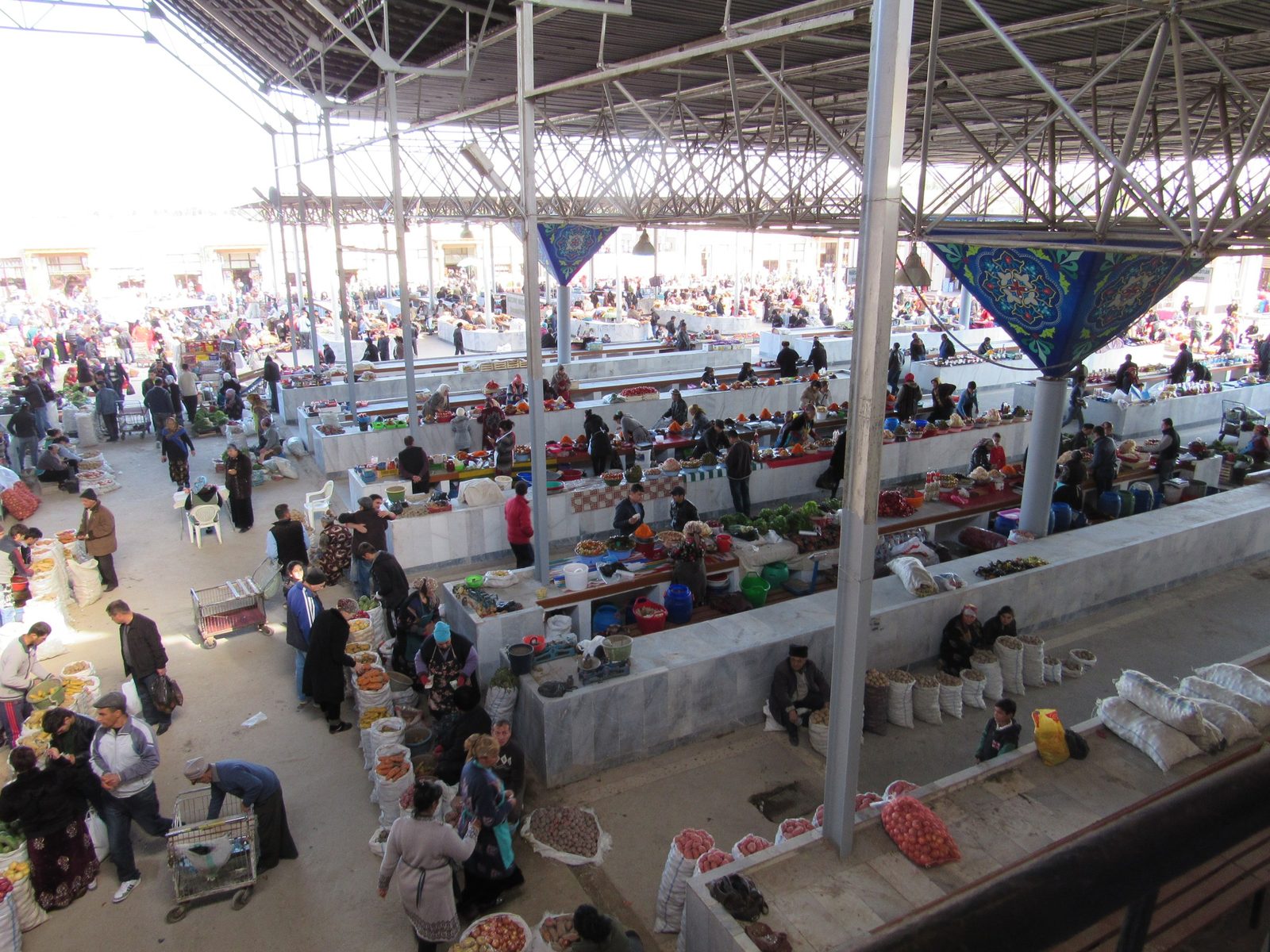
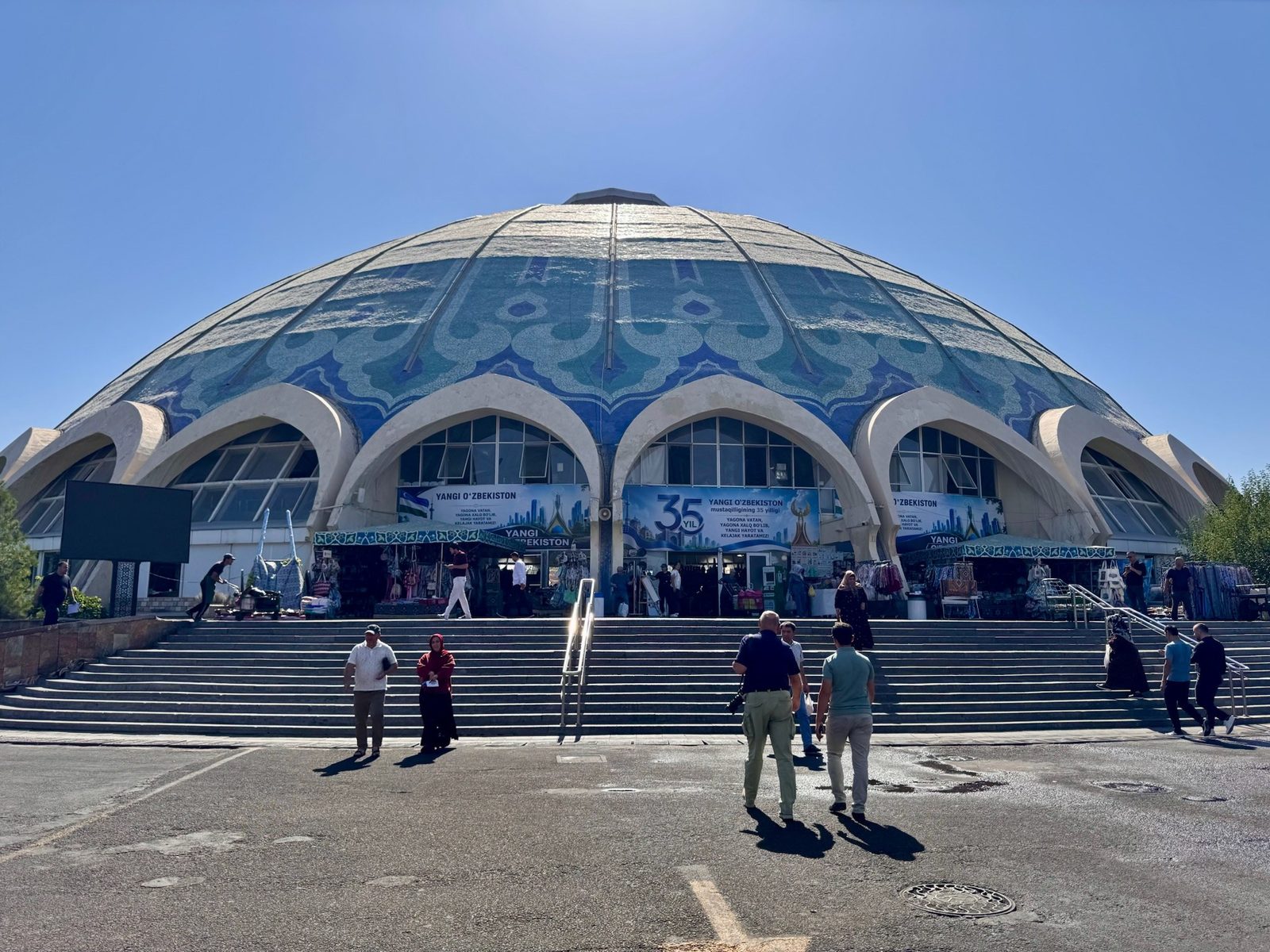
Come up the stairs of Tashkent's old bazaar under a big blue-green dome, not far from Hazrati Imam. Bring cash in so'm. Read more → Did you know? A metro designed to ride out a magnitude-9 earthquake The three original lines of the Tashkent Metro were built to withstand an earthquake of magnitude 9.0, and the tunnels lie unusually shallow, only 8–25 m below the street. Read more → station and the dome fills the sky in front of you: 86 metres of turquoise and blue tiles, with seven smaller domes around it like satellites. Underneath it, Tashkent buys its meat, its milk and its spices, much as the old city has done at this crossroads for centuries.
We live in Tashkent and shop here ourselves. Here is the story of the place, how the bazaar is laid out floor by floor, what to try, how to get there by metro and how to make the most of a morning at Chorsu.
Chorsu: the crossroads of old Tashkent
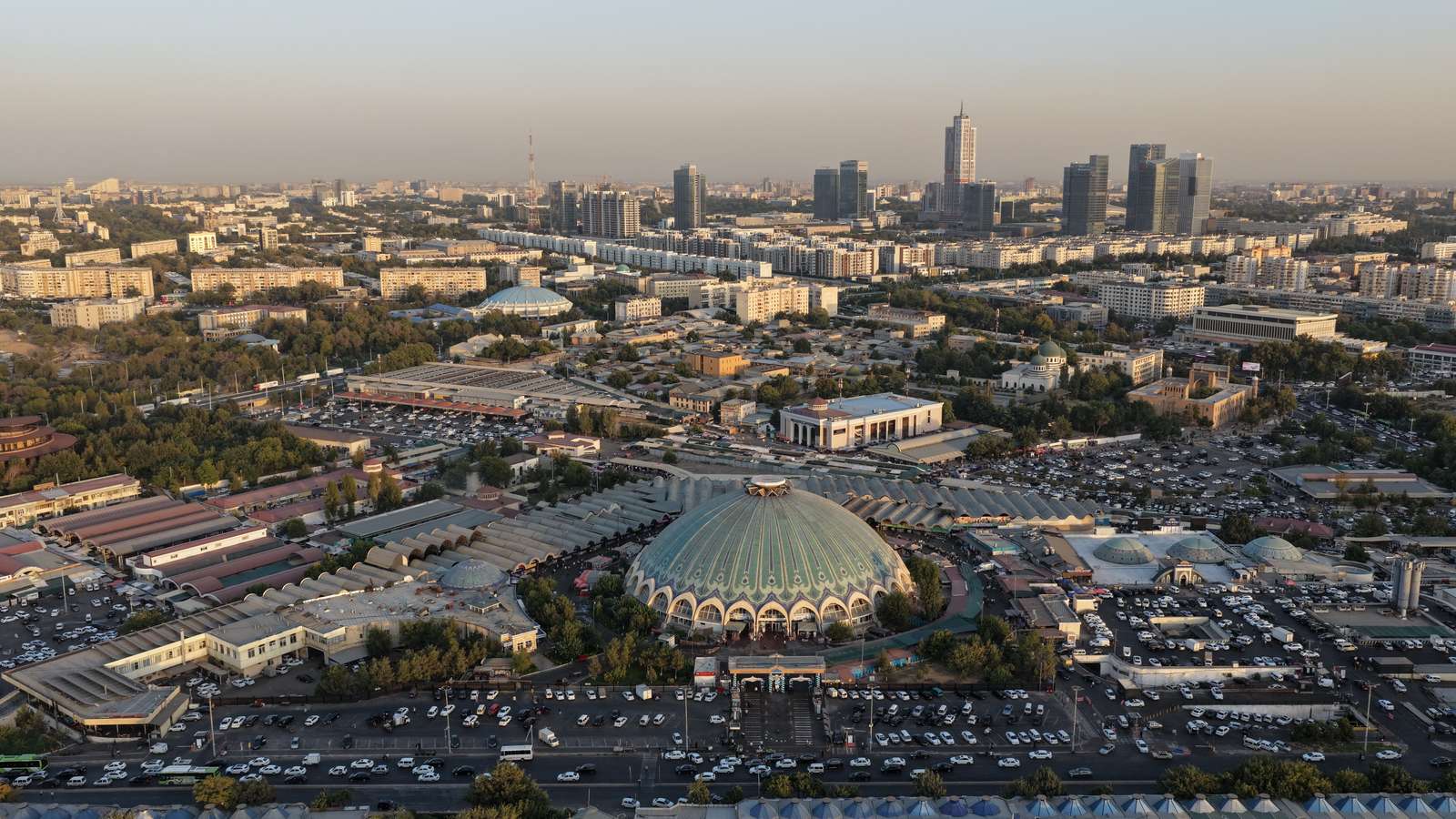
Chorsu means “crossroads”, “four streams” in Persian: this is where the roads of the old city met. The bazaar has another old name, Eski Juva, and it has been known since the Middle Ages, when caravanserais, bathhouses and trading rows stood on this ground.
The old city is still around it. At the edge of the bazaar rises the Did you know? A madrasah that was an inn, a fort and a museum Tashkent's Kukeldash Madrasah, built around 1570, became a caravanserai in the 18th century, later a fortress and then a museum, before returning to teaching in the 1990s. Read more → of about 1570. Next to it stands the Friday mosque founded in 1451 at the expense of Khoja Akhror, the 15th-century Naqshbandi sheikh, and rebuilt in modern times. The The religious heart of old Tashkent: madrasahs, a Friday mosque and mausoleums. Right next to it stands the new Center of Islamic Civilization, opened in 2026. Read more → complex and the Center of Islamic Civilization are a short taxi ride to the north, which is why we put Chorsu and Hazrati Imam into the same morning in our plan for Tashkent in one or two days.
The blue dome: a bazaar of 1990 on the World Heritage List
The building you see is modern. After the 1966 earthquake, the architect Andrey Did you know? Legend: Tashkent’s bazaar domes began at a desert cistern The story goes that architect Andrey Kosinsky, who came to rebuild Tashkent in 1966, saw how a medieval sardoba near Bukhara kept out the heat and took up domes. What is known: he proposed domed markets, and Chorsu got them in 1990. Read more → proposed covering the bazaar with domes; the idea was realised about twenty years later, when Vladimir Azimov and Sabir Adylov designed the new Chorsu in 1980. Work on the main dome went on at the same time as the digging of the metro station below the square, and the station opened on 6 November 1989.
The complex opened in 1990, and tiling the big dome took until 1993. The main dome is 86 metres across; the seven smaller domes around it are 10–15 metres each. In July 2026 Chorsu became one of the ten buildings of Tashkent’s modernist architecture inscribed on the UNESCO World Heritage List, together with stations of the metro such as .Did you know? A metro station where Ulugh Beg meets Gagarin Kosmonavtlar station, opened in 1984, has ceramic medallions of Ulugh Beg, Galileo, Icarus, Gagarin and Tereshkova, and glass stars in the ceiling that hint at the Milky Way. Read more →
Floor by floor: how Chorsu is laid out
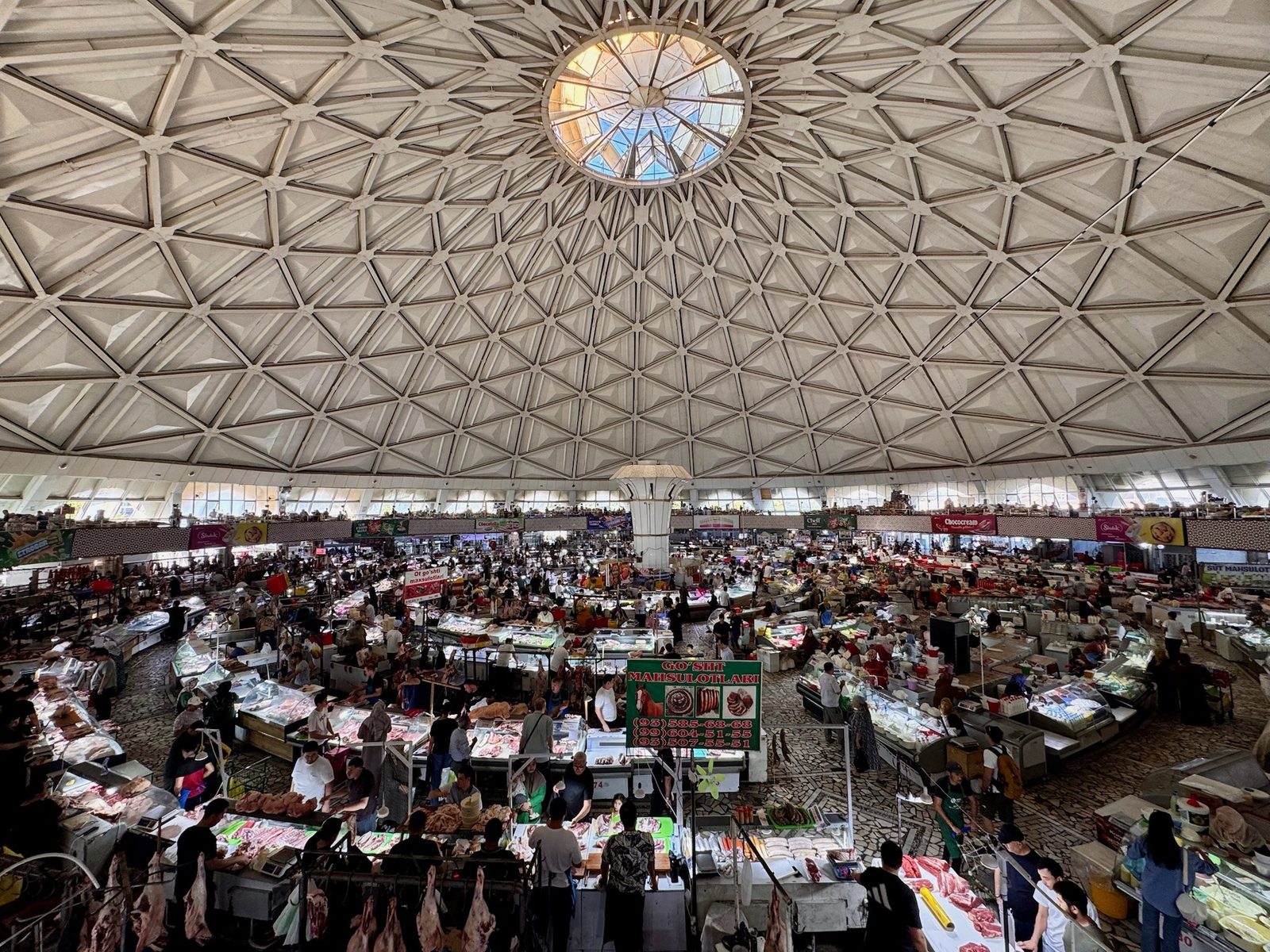
Under the dome, ground floor: meat and dairy, in a great ring of counters. This is where you find suzma, the thick strained yoghurt, and katyk, the sour milk.
The gallery upstairs: the spice sellers, with cumin for Rice cooked in a kazan with carrots, onions and meat: the dish of every Uzbek celebration. Each region cooks it its own way. and other spices sold by weight. From the gallery you look down over the whole ring of counters under the dome.
Below ground: service corridors and store rooms that the visitor never sees.
Around the dome: covered rows of fruit, vegetables, herbs, bread and sweets, and separate pavilions for clothes, household goods and crafts: musical instruments, carved boxes, knives and fabrics.
What to try at Chorsu
Tashkent non. Lighter and softer than Samarkand bread, with a radial pattern pressed into the rim. It stays fresh for only a few hours, so buy one warm and tear it by hand. More in Uzbek bread, non.
Samsa. The meat pastry baked in the same clay tandir as the bread; at Chorsu buy it hot.
Kurt. Small white balls of salted, dried sour milk, plain or with red pepper. Very sour, very salty: ask for one to try.
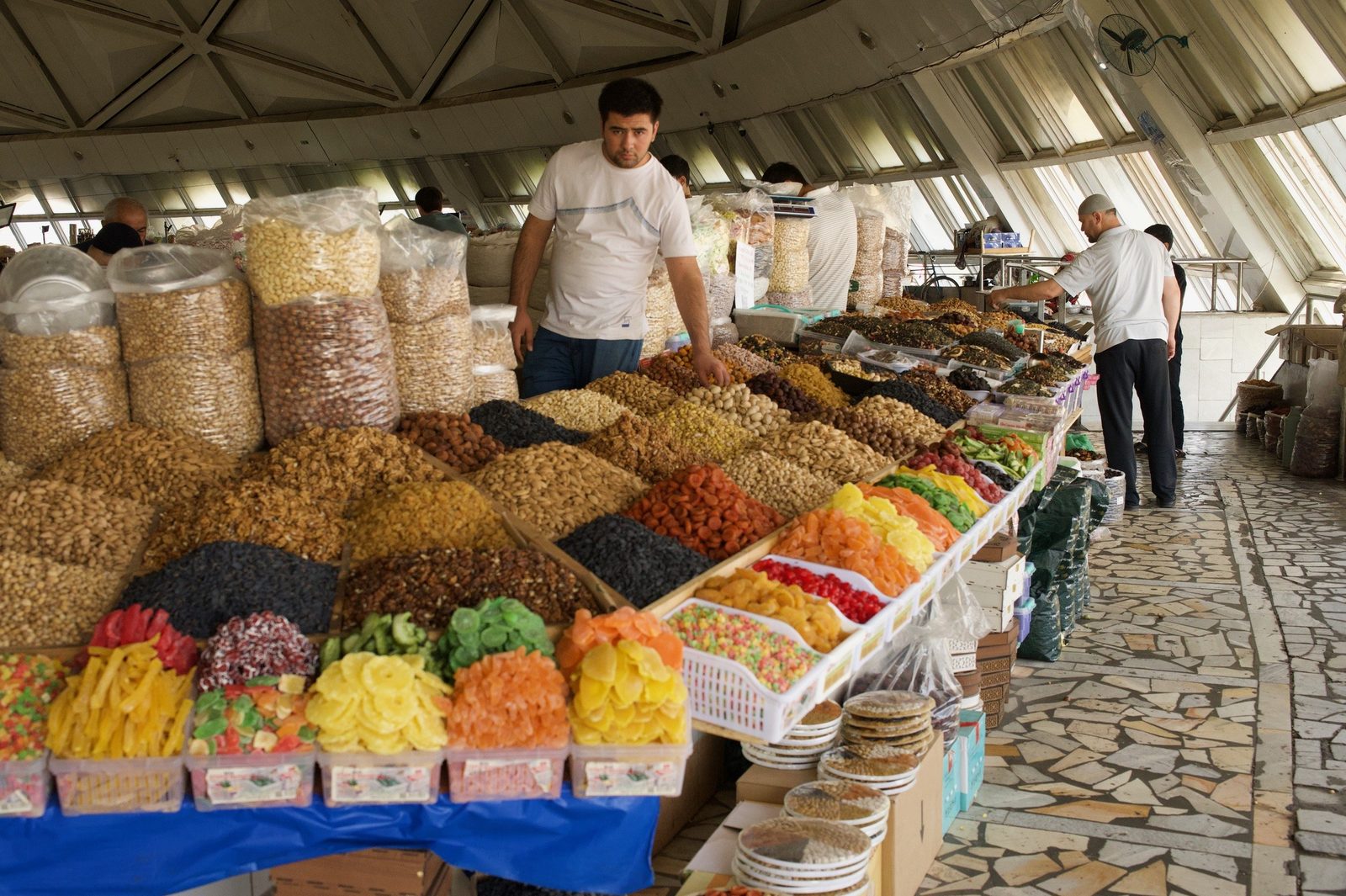
Salted apricot kernels and nuts. Kernels from apricot stones, salted, next to almonds, walnuts and pistachios.
Dried fruit and .Did you know? Navat: sugar grown on threads for your tea Uzbek tea is drunk without sugar in the cup; the sweetness sits beside it. Navat is sugar left to crystallise, often on cotton threads hung in thick syrup, and the crystals go straight into the tea. Threads of navat from the bazaar make a good present. Read more → Dried apricots, raisins in several colours, figs, and navat, the sugar crystals people here put in their tea. Sellers expect you to taste.
How to get to Chorsu by metro
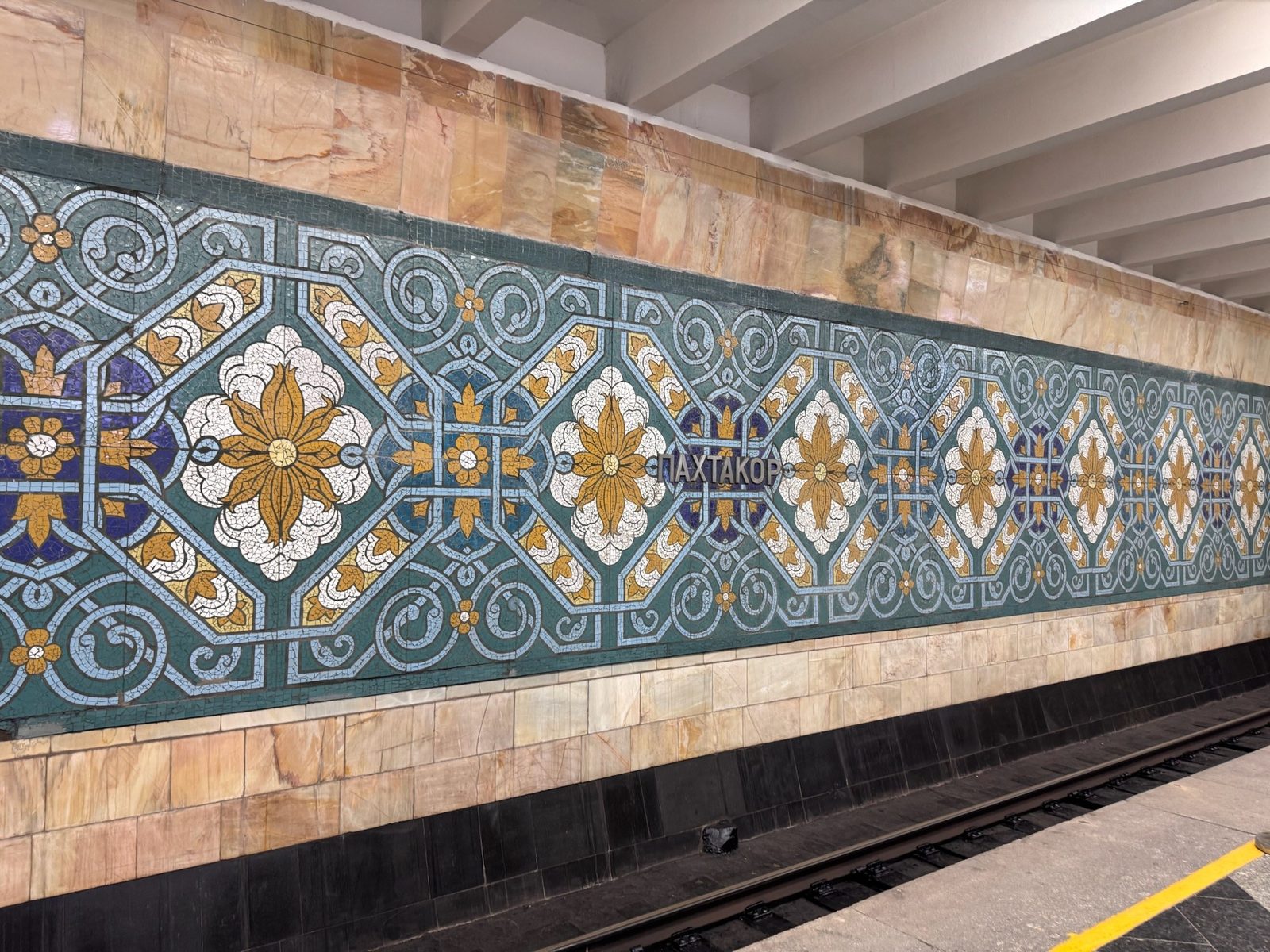
Chorsu has its own station on the blue ,Did you know? Central Asia’s first metro: free to photograph since 2018 Tashkent’s metro opened on 6 November 1977 with nine stations, the first in Central Asia. Since 1 June 2018 it can be photographed freely, richly decorated station halls included. Read more → and it was dug as an open pit right through the bazaar square while the bazaar itself was being rebuilt. From the centre, ride west with no change: Chorsu is two stops from Alisher Navoi, where the line meets the Chilonzor line, and four from Kosmonavtlar. The station is across the street from the bazaar.
Fare: one fare covers any distance. Since 1 October 2026 a ride costs 2,500 so’m with an ATTO transport card or a payment app, and 3,000 so’m with a paper QR ticket. Hours: the underground lines run from 5:00 to midnight. Ten stations worth getting off at are in our guide to the Tashkent metro.
Our tips for a morning at Chorsu
Come in the morning. The bread is warm, the counters are full and the heat has not set in. Trading winds down in the late afternoon, and pavilions keep their own hours, so plan Chorsu before lunch.
Bring so’m in small notes. The stalls work in cash. Cards and cash machines are covered in cards, cash and tipping.
Bargain with a smile for dried fruit, nuts, spices and crafts, and taste before you buy. Ask before you photograph a seller; the dome and the counters are yours to photograph.
One city tip: keep your phone and wallet in a front pocket in the crowd under the dome, as in any big market.
How Chorsu compares with Siab in Samarkand and the domes of Bukhara is in our guide to the bazaars of Uzbekistan. To see it with a guide, Chorsu is part of our Tashkent Highlights tour, and our culinary tour Taste of the Road starts here with hot samsa and tandir bread.
In short
- Chorsu means “crossroads”: a bazaar known since the Middle Ages, next to the Kukeldash madrasah of about 1570.
- The blue dome of 1990 is 86 metres across, and since July 2026 it is on the UNESCO World Heritage List.
- Meat and dairy under the dome, spices on the gallery, bread, fruit and crafts in the rows and pavilions around it.
- Try warm Tashkent non, samsa, kurt, salted apricot kernels and navat.
- Take the Uzbekistan metro line to Chorsu, come in the morning and bring so’m in small notes.