
Places in this article: Samarkand
Siab Bazaar, Samarkand: what to buy and taste, and how to visit
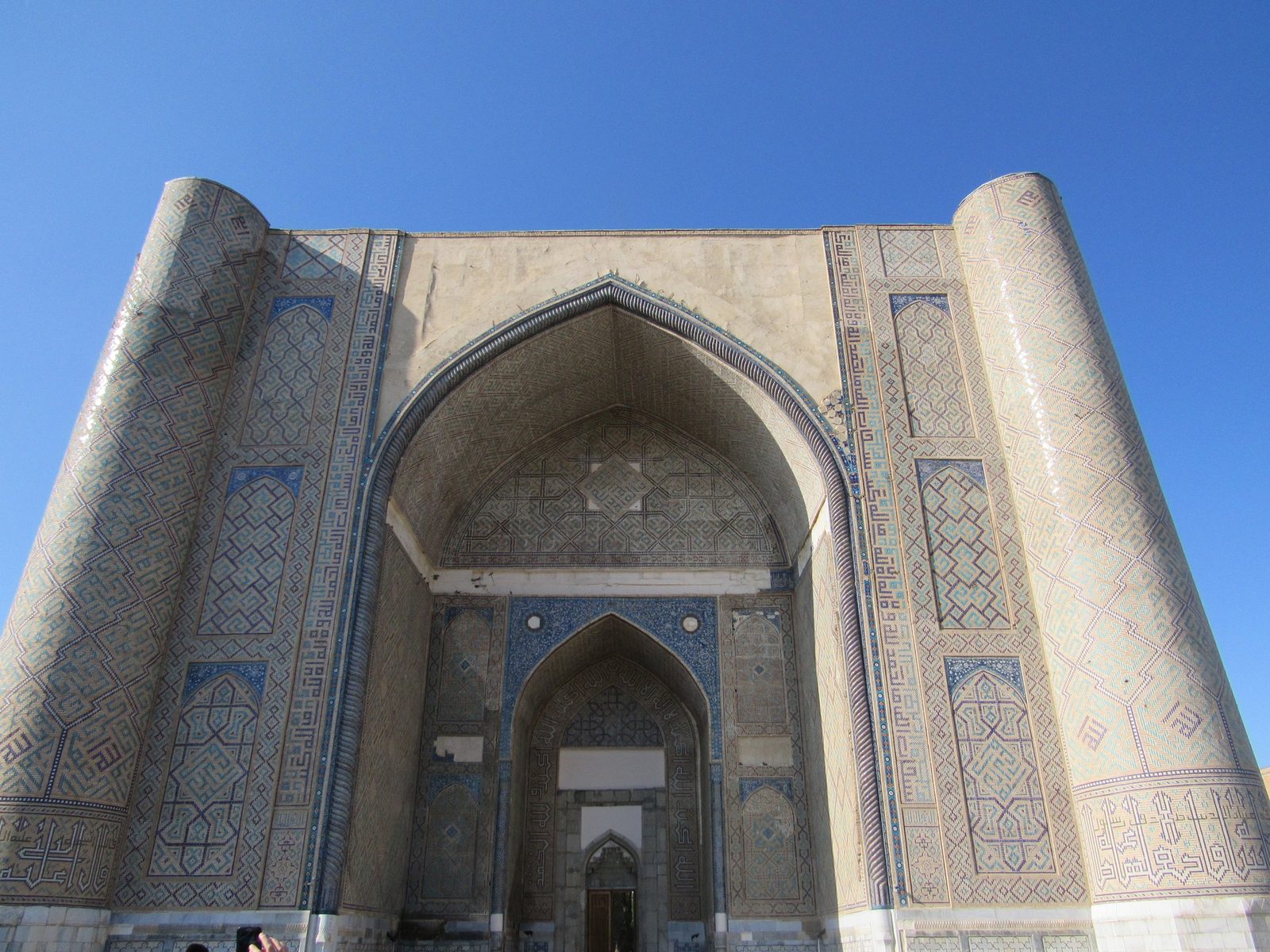
The bread comes first. By mid-morning, when most visitors reach the ,Did you know? 95 elephants hauled stone for Timur's great mosque Bibi-Khanym, begun in 1399 after Timur took Delhi, was the largest mosque of his empire. Some 200 stonecutters worked on site and 95 elephants brought from India hauled the loads; the courtyard was meant to hold 10,000 people. Read more → the round loaves of Samarkand have been stacked on the counters for hours, glossy on top, thin in the middle and heavy in the hand. Samarkand's main bazaar, right next to Bibi-Khanym: Samarkand bread, dried fruit, nuts and halva. Read more → trades right under the walls of Amir Timur (Tamerlane, 1336–1405), founder of the Timurid empire, which had its capital in Samarkand. Born near Shahrisabz. Read more →’s great mosque, and it is where Samarkand still buys its food every day.
We bring our guests here on almost every Samarkand day. Here is how the bazaar is laid out, what to buy and taste, how to bargain and take photos, and how to fit Siab into a walk with Did you know? Legend says the architect asked the queen for a kiss Legend says the architect of Bibi-Khanym would finish on time only for a kiss from Timur's wife, and Timur punished him. In fact the mosque was Timur's own project; his wife Saray Mulk Khanum built her madrasah across the road. Read more → and .Did you know? Why Shah-i-Zinda means 'the Living King' The necropolis grew around the shrine of Qutham ibn Abbas, a cousin of the Prophet Muhammad. Legend says he did not die in battle but went down a deep well to a garden of paradise, where he lives on. Read more →
Siab: the bazaar under Timur’s mosque
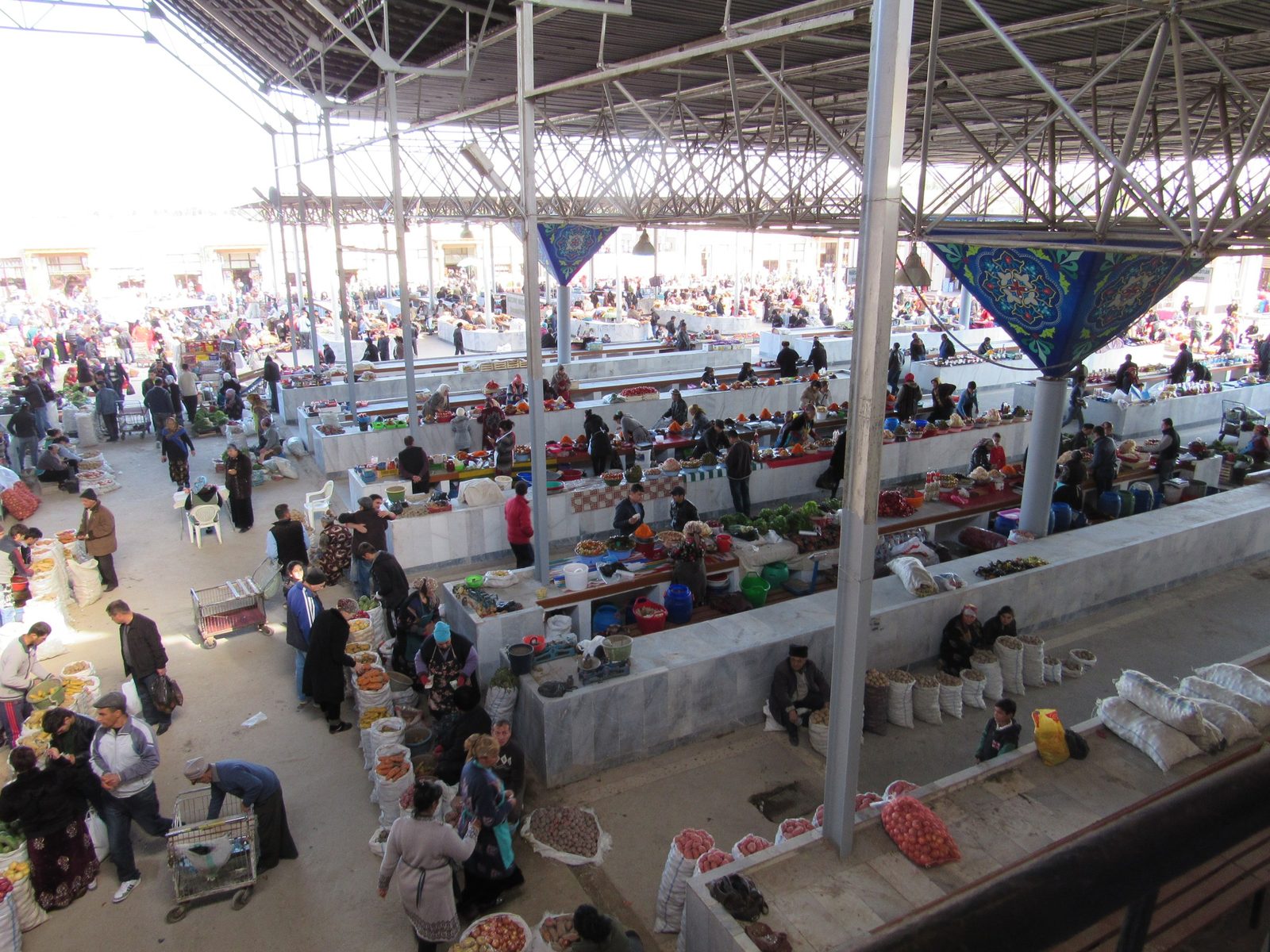
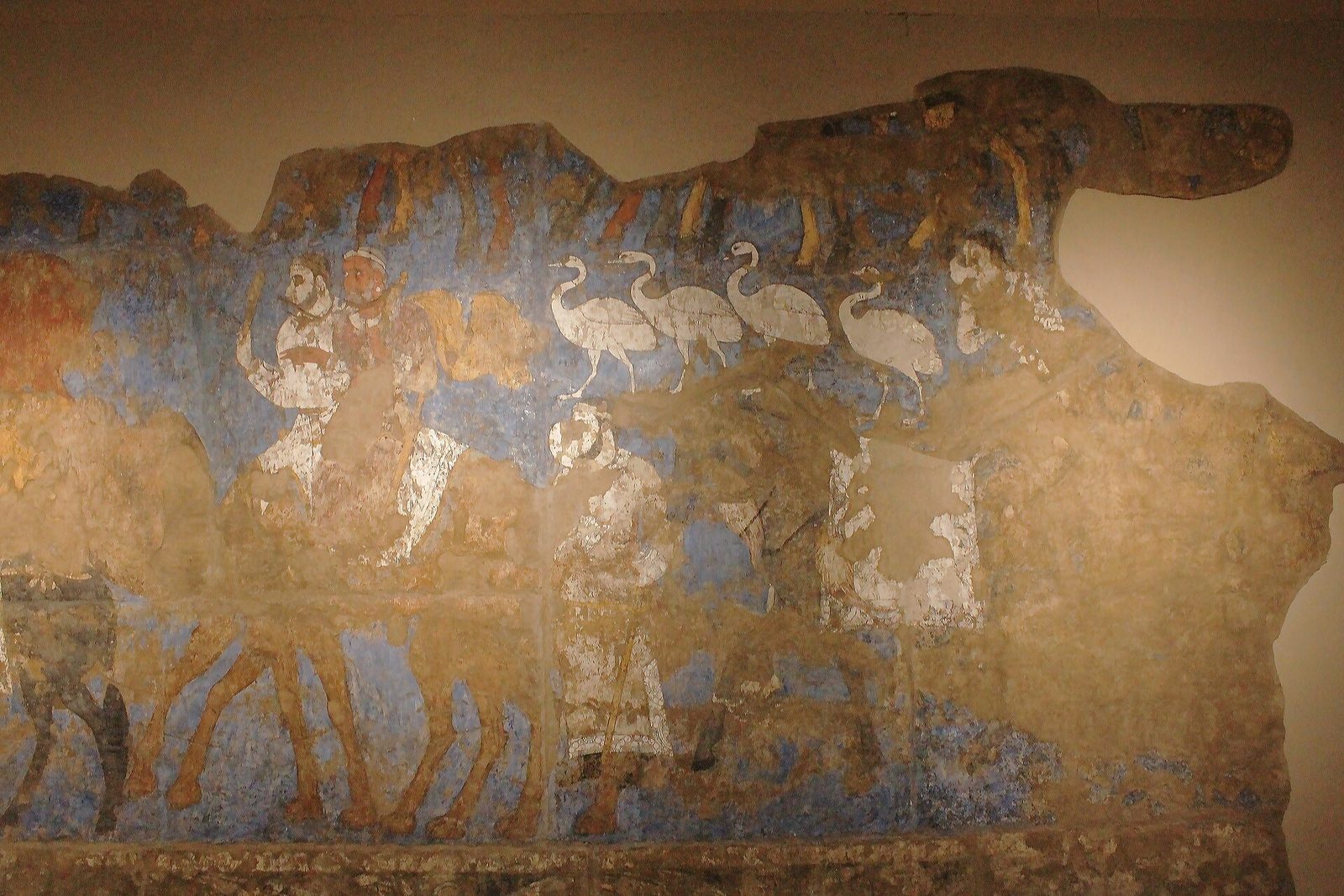
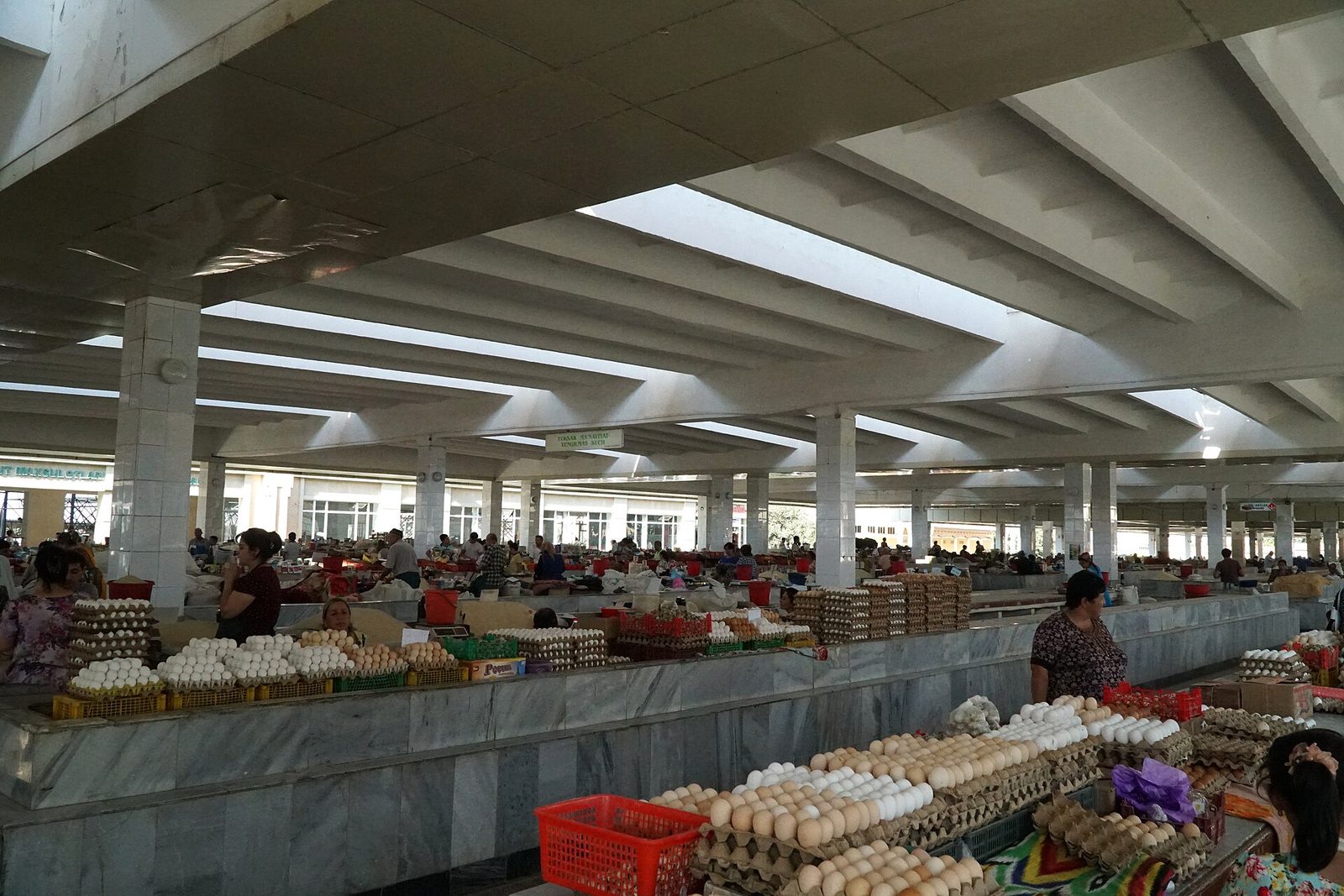
Siab is Samarkand’s largest bazaar: more than seven hectares, with seven large covered pavilions of long counters and more pavilions of shops around them. The main entrance is a triple arch faced with blue majolica. The name comes from the Siab, the “black water” stream that runs below the old city hill of .Did you know? A 7th-century mural shows envoys from Korea Uncovered by road builders in 1965, the Ambassadors' Painting at Afrasiyab shows delegations bearing gifts, Chinese with silk among them, and two men in feathered hats thought to be envoys from Korea's Goguryeo. Read more →
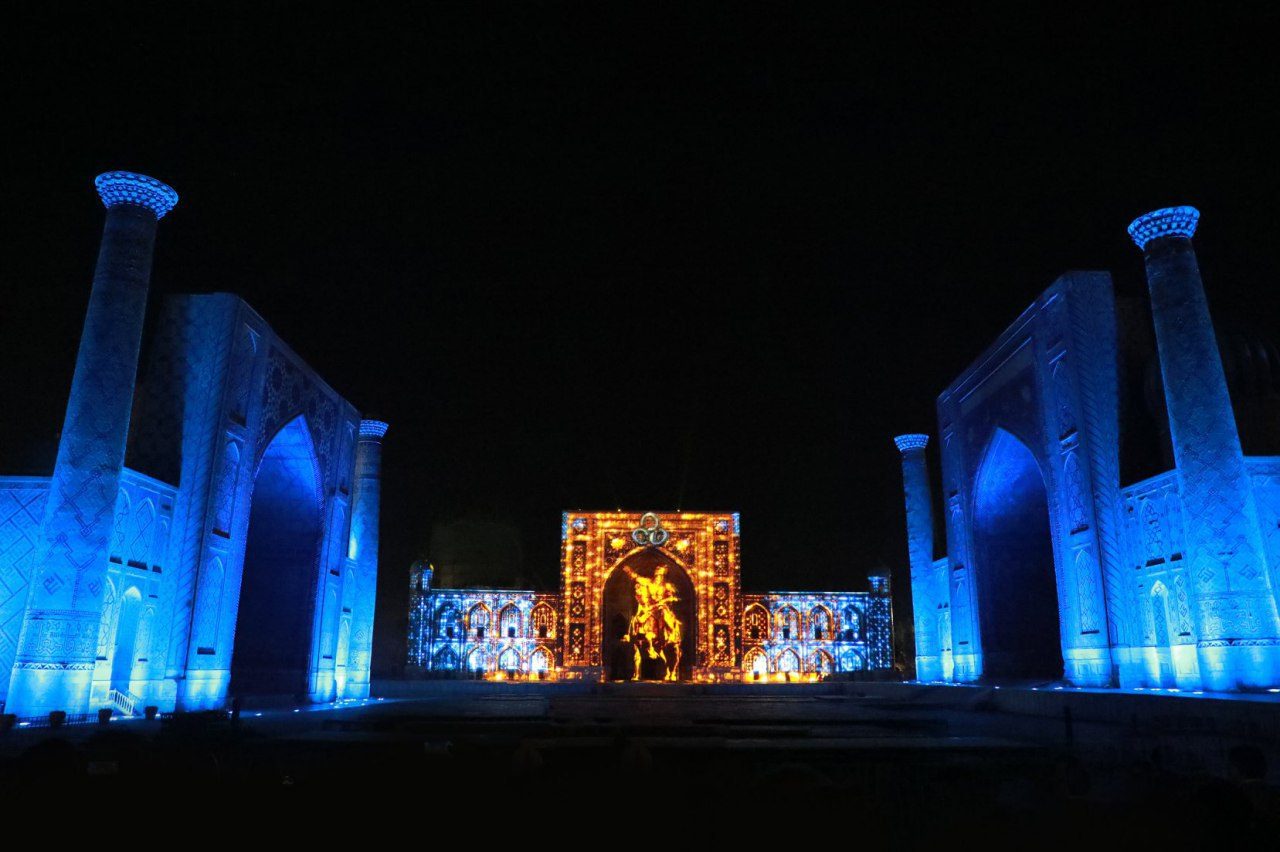
Trade has been at home here for a long time. In 1404 the Castilian envoy Clavijo watched Timur’s builders cut a new street of shops through the heart of Samarkand: shops on both sides, a roof of domes with windows for light, fountains along the way, and the whole street finished in twenty days. That street is gone, but the habit of trading in the centre, next to the Friday mosque Timur began in 1399, has stayed. The Did you know? The Registan's sun-carrying lion went on a banknote The Sher-Dor Madrasah (1619–1636) is named for the big cats with the sun on their backs on its portal. The image appeared on the reverse of Uzbekistan's 200-som note of 1997. Read more → is about a kilometre to the south, Shah-i-Zinda about 500 metres to the east and Afrasiyab about 2 km to the north.
How the bazaar is laid out
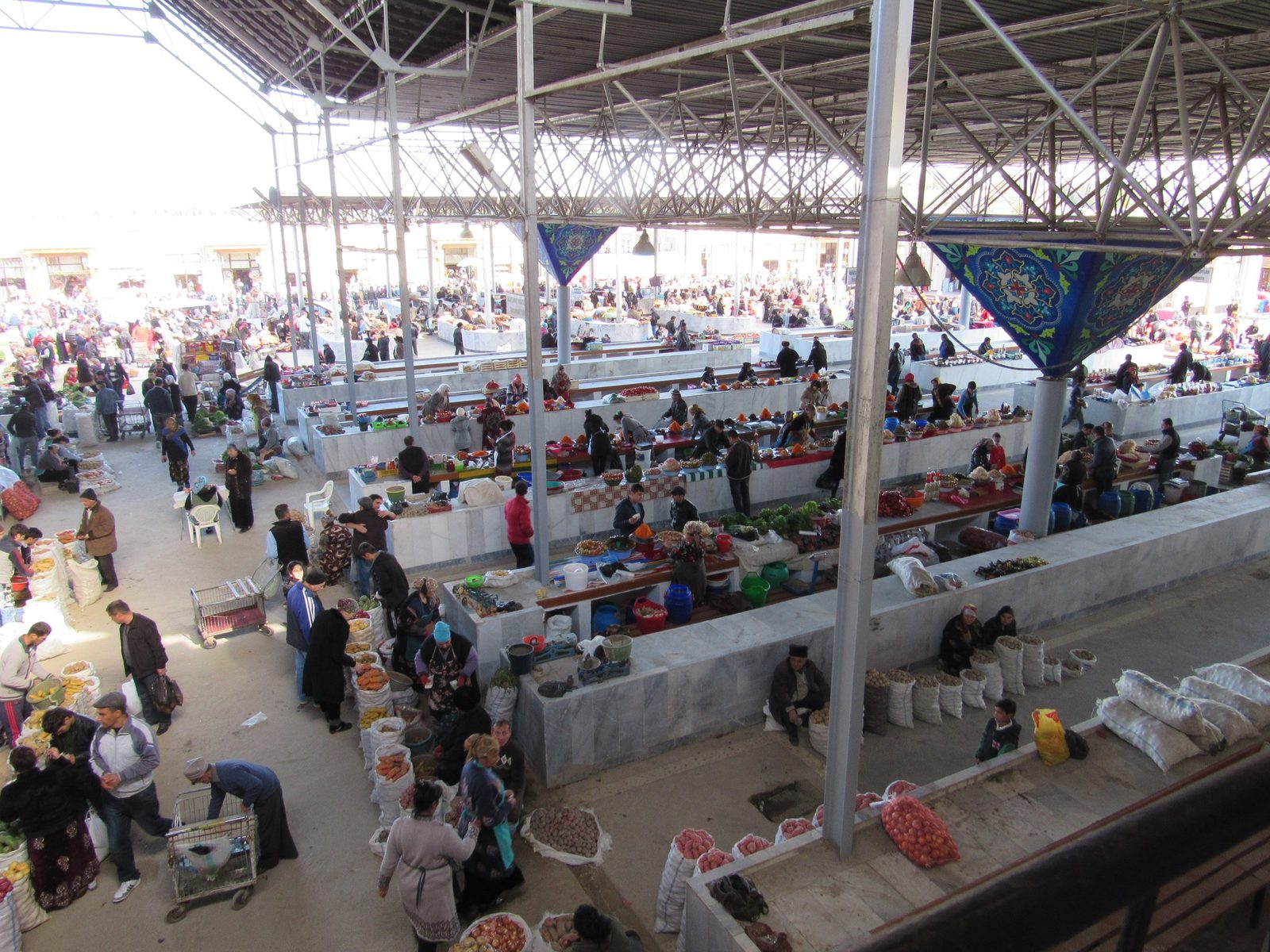
Under the roofs, the counters are grouped by what they sell, so the bazaar is easy to read after ten minutes. In one hall you find fruit and vegetables in season, herbs and eggs by the tray; in another, dried fruit and nuts; then the sweet sellers, the spice sellers, dairy, meat, and the bread rows. Household goods and clothes have their own shops around the edge.
The covered halls keep you out of the sun in summer and out of the rain in autumn, which makes Siab a good plan for the hottest hour of the day. Entry is free.
Samarkand non: the bread people carry home
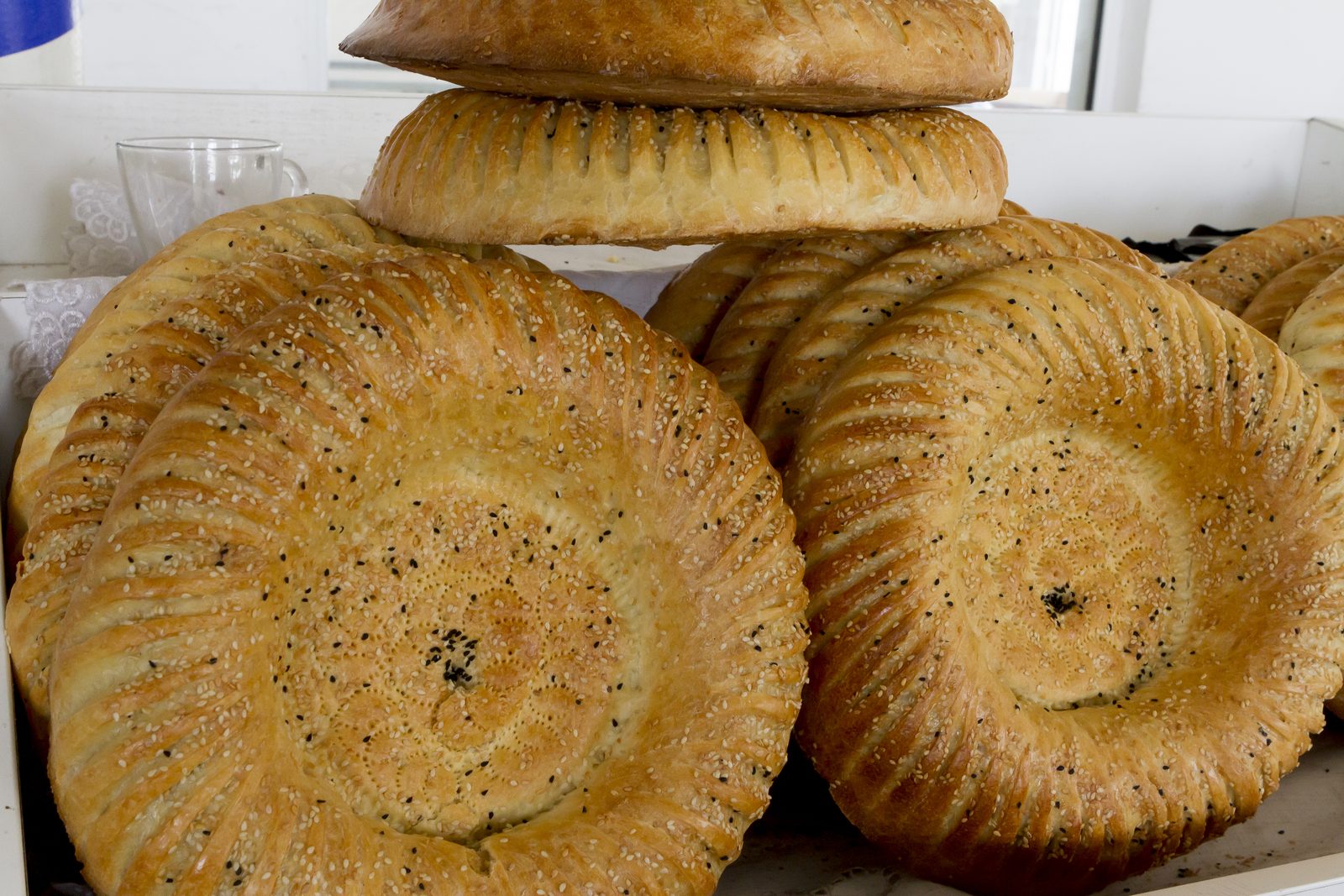
Siab sells more than seventeen kinds of flatbread, and the one to buy is .Did you know? Legend: Samarkand bread can't be baked anywhere else Legend says a Bukhara ruler brought Samarkand's best baker to his court with his oven, flour and water, yet the bread came out different. The missing ingredient, the baker said, was the air of Samarkand. The round loaves keep for a long time. Read more → It is baked on the wall of a clay tandir, denser and heavier than Tashkent bread, with a darker crust, a light sheen and a centre thinner than the rim. Some Samarkand dough ferments for 12–13 hours, where ordinary dough needs a few. In 2022 the city baked about 15,000 of these loaves a day, and since February 2025 “Samarkand non” has been a protected geographical indication.
This bread keeps for a long time, which is why travellers carry it home to other cities and abroad: sprinkle a dry loaf with water and warm it for a few minutes. The city’s favourite story about it, the khan of Bukhara and the baker who could not take the air of Samarkand with him, is in our legends of Samarkand. How non is baked and the customs around it are in Uzbek bread, non.
Halva, navat and other sweets
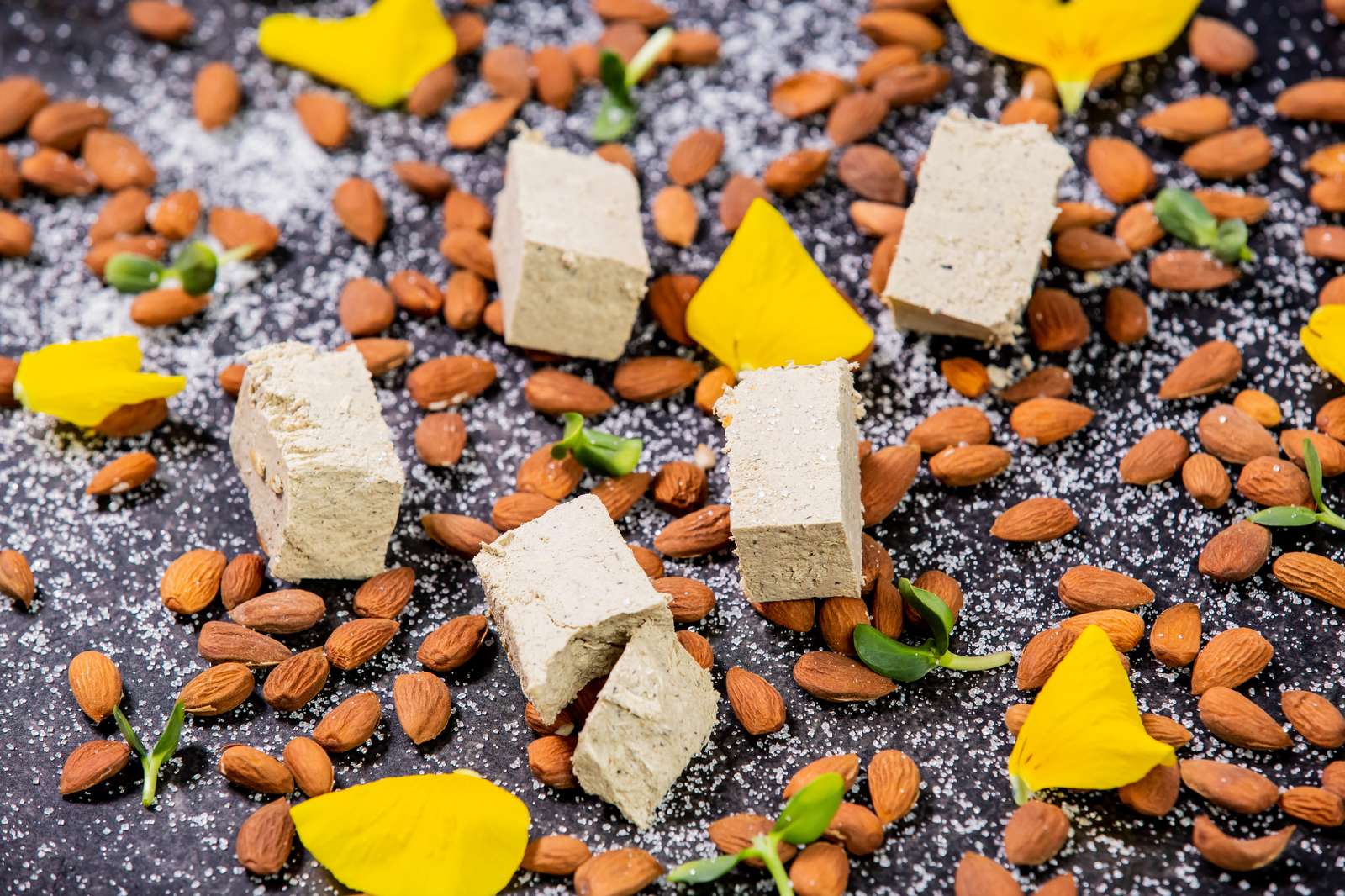
The sweet rows are where Siab is at its most generous. Samarkand halva looks more like a cake: a round, decorated with nuts and dried fruit, traditionally bought for weddings and engagements. It holds up in the summer heat, so it sits on open counters all day, and it is sold by weight.
Next to it hang threads of navat, amber crystals of sugar grown from grape juice and sugar syrup. People here drop a piece into their tea instead of a spoonful of sugar, and since navat is hard and light, it is one of the easiest presents to pack. Look also for parvarda, small pillows of pulled sugar candy dusted with flour. More on all of them, and on what survives the flight, is in Uzbek sweets and desserts.
Dried fruit, nuts and kurt
Dried apricots, raisins in several colours, dried figs, tart barberries, walnuts, almonds and pistachios: this part of the bazaar is there all year, whatever the season. Sellers expect you to taste, so take the apricot you are offered and compare two or three stalls before you buy.
Then try kurt, small white balls of salted, dried sour milk. They are very sour and very salty, and they surprise most people the first time: ask for one before you buy a bag. From early summer the fruit rows fill with apricots and cherries, then grapes and melons into the autumn.
Tasting, bargaining and photos: bazaar etiquette
Taste first. A seller who hands you a raisin or a slice of melon is not asking you to buy. Take it, thank them, and move on if you want to.
Bargain calmly. For dried fruit, nuts, sweets and spices, bargaining is part of buying. Ask the price, offer less with a smile, and meet in the middle. Buying several things from one seller is the easiest way to a better price.
Respect the bread. Never put a loaf face down or on the ground; if a piece falls, pick it up.
Ask before you photograph a person. The counters are yours to photograph; for a portrait of a seller, a gesture at the camera and a smile are enough, and most people say yes.
Pay in cash. Stalls work in so’m, so carry small notes. Wash fresh fruit before you eat it, and keep your phone in a front pocket in the crowd: our guide to the bazaars of Uzbekistan covers Chorsu, Bukhara and the Fergana Valley in the same way.
When to come, and how Siab sits next to Bibi-Khanym
When: trading starts at first light and quietens towards nightfall. Come in the morning, when the bread is fresh and the counters are full; in summer, the covered halls are the coolest place to be at midday.
The walk: from the Registan, follow the pedestrian street for about ten minutes to Bibi-Khanym. Visit the mosque, then cross to the bazaar beside it. From the far side of Siab, the Hazrat Khizr Mosque and Shah-i-Zinda are about 500 metres to the east, and Afrasiyab with its museum is a short taxi ride to the north: see the Afrasiyab Museum.
How long: an hour to walk through and taste, two if you want to shop. Bring a bag of your own.
To walk it with someone who knows the sellers, book a walking tour of Samarkand with a guide. For a whole trip built around food, our culinary tour Taste of the Road gives a Samarkand morning to Siab, its bread and its halva.
In short
- Siab is Samarkand’s largest bazaar, over seven hectares, right beside the Bibi-Khanym Mosque.
- Buy Samarkand non: dense, glossy and long-keeping, a protected name since 2025.
- Taste Samarkand halva, navat and kurt, and compare dried fruit at two or three stalls.
- Bargain with a smile, keep bread face up, ask before photographing a seller, carry so’m in small notes.
- Come in the morning and combine it on foot with the Registan, Bibi-Khanym and Shah-i-Zinda.
© Photos
- Siab Bazaar, Samarkand — Adam Harangozó / Wikimedia Commons · CC BY-SA 4.0
- Uzbek bread, obi non — Benjamin Goetzinger / Wikimedia Commons · CC BY-SA 4.0