
Cotton season in Uzbekistan: when it happens and how to see a field
Places in this article: Bukhara · Tashkent
Look closely at the state emblem of Uzbekistan. The wreath around the Humo bird is wheat ears on one side and cotton branches with open bolls on the other. For a few weeks every autumn you can see those bolls for real: from the train window, from the road, or standing at the edge of a field with the farmer who grew them. Here is when the harvest happens, what a field looks like in 2026 and how we arrange a visit.

When is the cotton harvest in Uzbekistan
The harvest moves from south to north. In 2026 the first to start picking were farmers in Surkhandarya, the southernmost region, at the end of August. By mid-September the season had officially opened across the country, and the main weeks are September and October.
The end date depends on the region and the weather. Farms try to get the cotton in before the autumn rains begin. By November the harvest is winding down; if you are travelling later, our guide to Uzbekistan in November shows what that month offers instead.
Cotton is sown in spring, so in summer the fields are green and the bolls are still closed. That is why we offer field visits only from mid-September to the end of October.
Where cotton grows: closer than you think
Cotton grows in almost every region of the country. In 2024 the largest harvest came from Kashkadarya (362,000 tonnes), followed by Bukhara region (320,000) and Khorezm (301,000). Tashkent region picked 167,000 tonnes. In 2025 Uzbekistan harvested about 4 million tonnes from 875,000 hectares.
So you do not need a special trip. Bukhara region, the second-largest producer, surrounds a city you are probably visiting anyway, and on the way from Khiva the desert ends in canals and cotton fields. We arrange field visits from Bukhara; on request we can also look for a farm in Tashkent region or the Fergana Valley.
What you will see in a cotton field in 2026
A ripe boll splits open and the white fibre sits on the plant in a soft tuft. A field at this stage looks dusted with snow, row after row.
How it is picked depends on the farm. Last season 52% of Uzbek cotton was harvested by machine, and the plan for 2026 is at least 70%. On one farm you may see a cotton harvester working the rows; on another, a team picking by hand. Which one you see is the farm's decision on the day, not ours.
We do not promise that you can pick cotton yourself. Pickers are paid by the kilogram, and the field is their workplace. If the farmer invites you to try, accept it as a kindness, and ask before you photograph anyone (more in our etiquette guide).
Who picks the cotton today
Travellers often ask about this, so here is the short answer. For years Uzbek cotton was linked to forced labour. That has changed. In March 2022 the International Labour Organization, which had monitored the harvest since 2015, reported that Uzbekistan's 2021 harvest was free of systemic forced labour and systemic child labour. On 10 March 2022 the Cotton Campaign, the coalition behind the international boycott, ended its call for a global boycott of Uzbek cotton.
The system changed too. Since 2020 the state no longer sets cotton quotas or buys the crop. Cotton is grown by private cotton-textile clusters: companies that grow the cotton and then turn it into yarn, fabric and clothing themselves. Checks continue every season. In 2026 national teams visit randomly chosen farms from 25 September to 31 October and check pickers' contracts and pay.
Cotton beyond the field
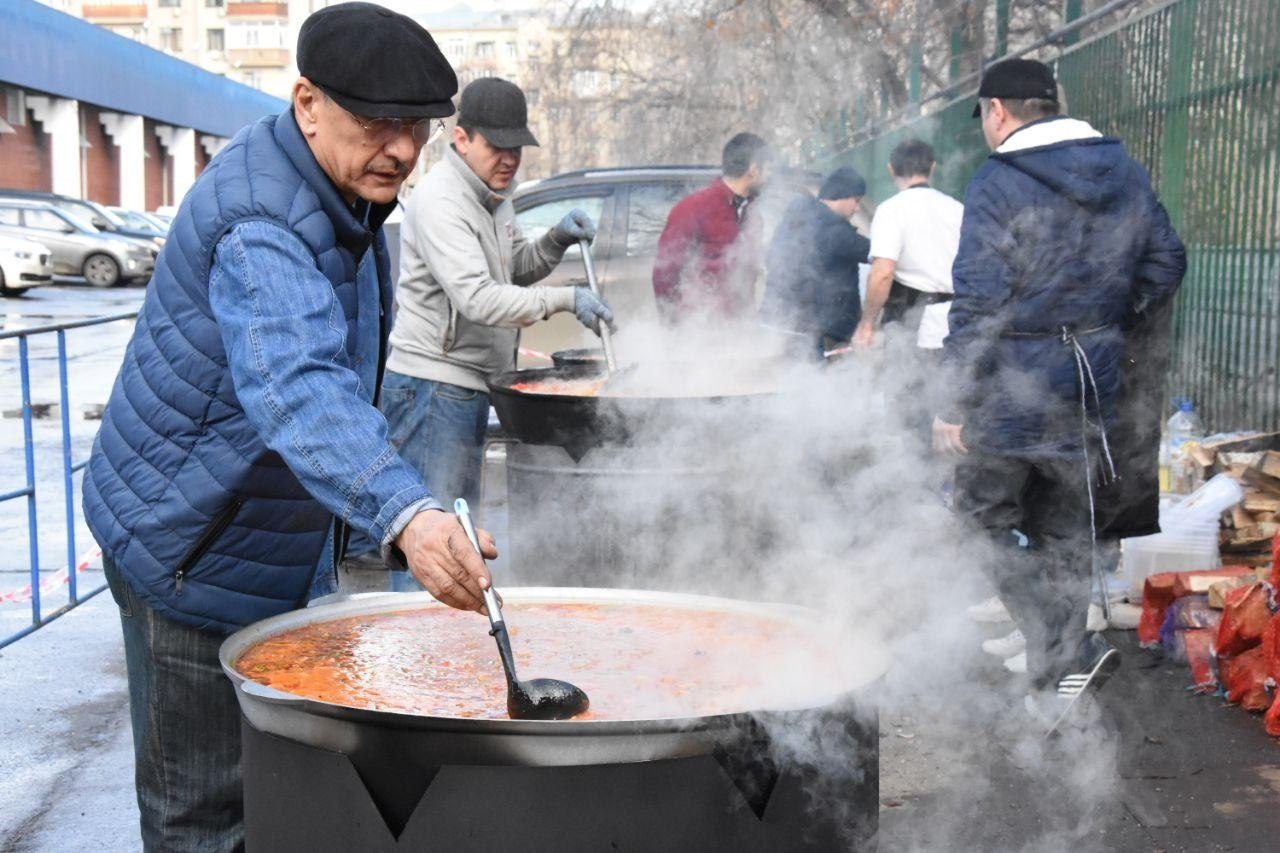
- Rice cooked in a kazan with carrots, onions and meat: the dish of every Uzbek celebration. Each region cooks it its own way.. Classic Uzbek plov is cooked in cottonseed oil, which the cook heats hard first to burn off its bitterness. You can watch it happen at a plov centre or on our culinary tour Taste of the Road.
- The Did you know? A metro designed to ride out a magnitude-9 earthquake The three original lines of the Tashkent Metro were built to withstand an earthquake of magnitude 9.0, and the tunnels lie unusually shallow, only 8–25 m below the street. Read more →. Paxtakor station in Tashkent is named after the cotton farmer, and its walls carry panels with cotton flowers in a traditional style. Cotton is still called oq oltin, "white gold".
- Porcelain. One of the best-known tea sets of the Tashkent porcelain factory was called «Pakhta», "cotton". More about the country's ceramics in our article on traditional crafts.
How to book a cotton field visit
The visit is part of Travel Moments, our list of things to add while you are already on the road: choose Bukhara and "I want to get out of town". Tell us your dates and how many of you there are.
We arrange it only during the harvest window, from mid-September to the end of October, and only with a farm that agrees to receive guests that day. Rain or the farm's own plans can move a visit; then we offer another day or another farm. There is no fixed price: we confirm it once the farm has said yes. Wear closed shoes and long sleeves, and bring a hat: September afternoons in the fields are still hot.
From Bukhara the same section also has a trip to the Gijduvan ceramics workshop, so the two make an easy autumn pair.
In short
- The harvest starts at the end of August in the far south; the main weeks are September and October.
- We arrange field visits only from mid-September to the end of October, on request, with the farm's consent and if the weather allows.
- Last season 52% of the cotton was machine-picked, and the 2026 target is 70%: you may see a harvester or hand pickers, and picking yourself is not guaranteed.
- The ILO found the 2021 harvest free of systemic forced and child labour, and the boycott ended in March 2022.
- Book through Travel Moments, Bukhara section.