
Ziyarat in Uzbekistan: Imam al-Bukhari, Bahauddin Naqshband and the shrines of Bukhara, Samarkand and Tashkent
Places in this article: Samarkand · Bukhara · Tashkent
Twenty-five kilometres from Samarkand, above the fields of Khartang village, four minarets now rise 75 metres high. They belong to the rebuilt Imam al-Bukhari complex, which reopened in March 2026. Its new mosque holds 10,000 worshippers, and the whole complex is designed for up to 65,000 visitors a day, against about 12,000 before. If you are planning ziyarat in Uzbekistan, this is the place to begin, and it is only one of the shrines worth the journey.
We are a Tashkent company, and we take guests to these places all year round. Here is what each shrine is, how we fit them into a trip, and the practical side: dress, Friday prayer, halal food and Ramadan. The wider story of Uzbekistan's holy places is in our older article on the power places of Uzbekistan.
Imam al-Bukhari complex near Samarkand
Muhammad ibn Ismail al-Bukhari was born in Bukhara in 810. He travelled to Mecca, Medina, Basra and Damascus to collect hadith, and spent about sixteen years compiling his Sahih, a collection of about 7,000 hadith that Sunni Muslims regard as the most authentic. He died in 870 in Khartang, near Samarkand, and was buried there.
A small mausoleum stood over the grave from the 16th century. A new memorial was built in 1998, and from 2021 the site was rebuilt again on a much larger scale. Today it covers 45 hectares: the mosque, a 154-column aivan in the national style, fourteen blue domes and a museum of nine pavilions. The museum tells the life of Imam al-Bukhari, the 25 prophets named in the Qur'an, the life of the Prophet Muhammad in Makkah and Madinah, and how hadith were collected and written down.
Next to the complex is a new 15-hectare visitor area with hotels, 22 family guesthouses and a restaurant run on halal principles. Allow three to four hours for the visit. On a private tour we add the complex to a Samarkand day; the drive from the city is short.
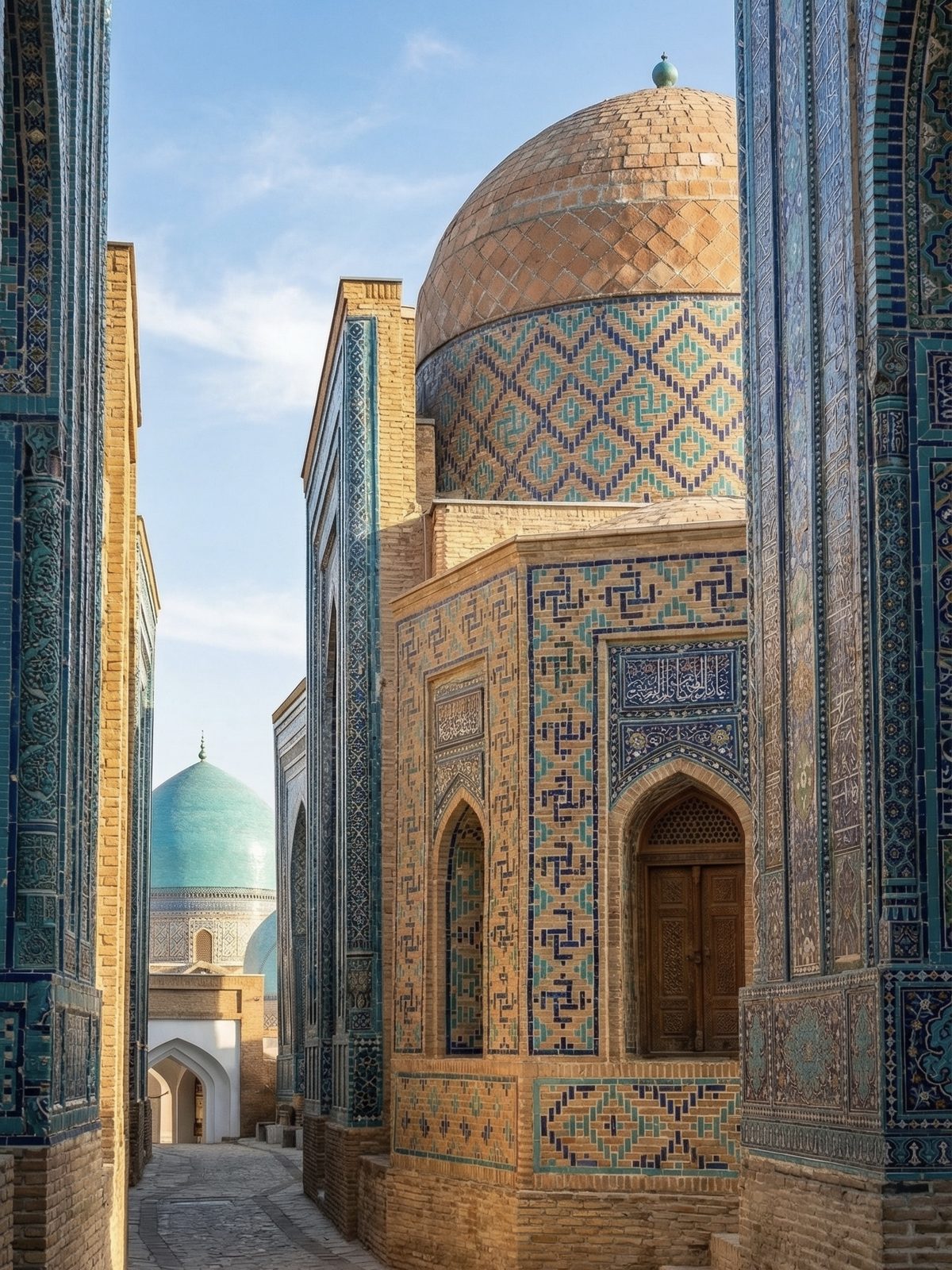
Shah-i-Zinda: the shrine of Qusam ibn Abbas
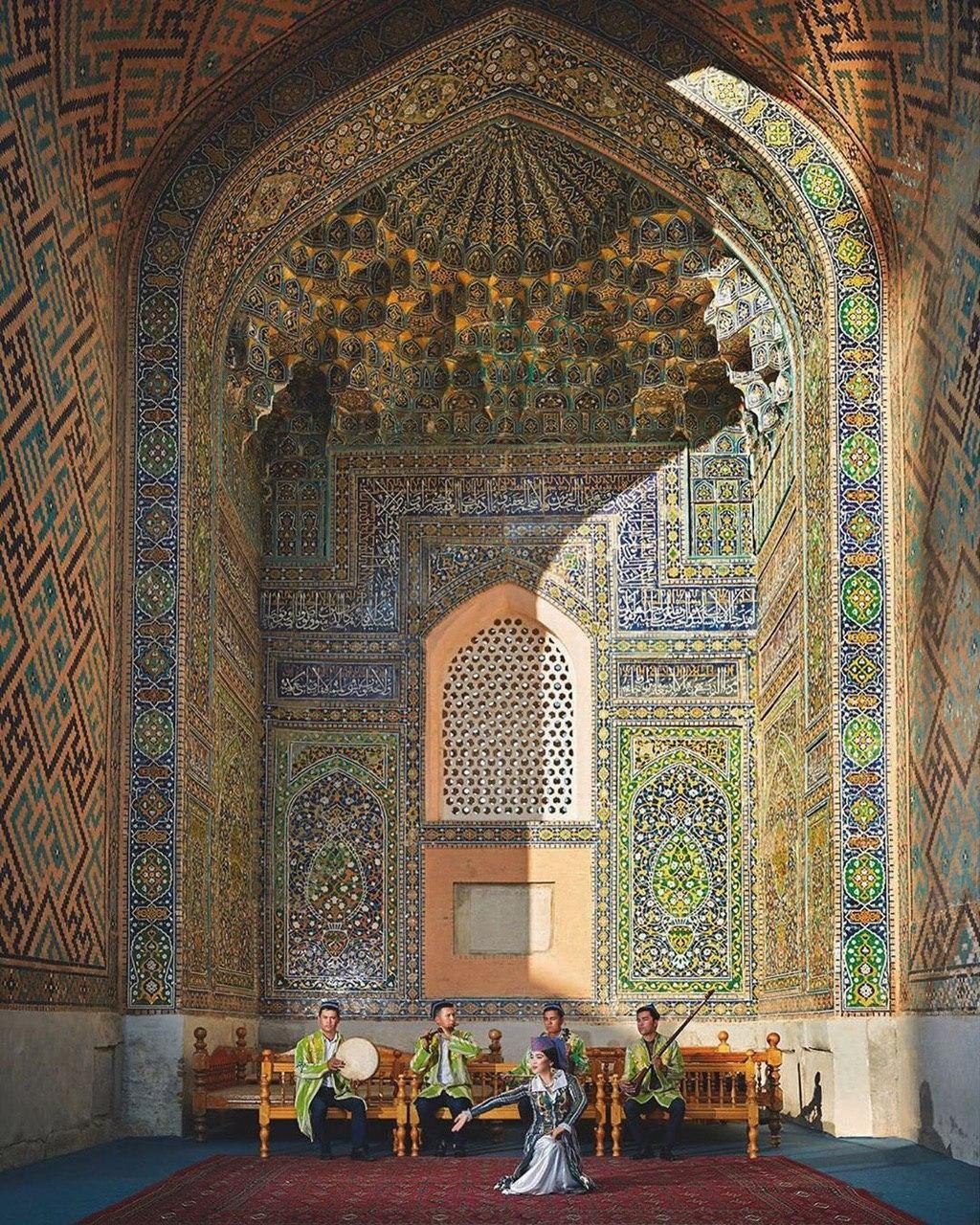
Inside Samarkand, the oldest shrine is Did you know? Why Shah-i-Zinda means 'the Living King' The necropolis grew around the shrine of Qutham ibn Abbas, a cousin of the Prophet Muhammad. Legend says he did not die in battle but went down a deep well to a garden of paradise, where he lives on. Read more →. By tradition it holds the grave of Qusam ibn Abbas, a cousin of the Prophet Muhammad, who came to Samarkand with the first Arab campaigns of the 7th century. The name means "the Living King", from the legend that he did not die but lives on.
Around his tomb grew a street of about two dozen mausoleums. Most were built in the 14th and 15th centuries, many for women of Amir Timur (Tamerlane, 1336–1405), founder of the Timurid empire, which had its capital in Samarkand. Born near Shahrisabz.'s family, and Did you know? Ulugh Beg measured the year to within 25 seconds Working at his Samarkand observatory, Ulugh Beg put the tropical year at 365 days 5 h 49 min 15 s, about 25 seconds too long, closer than Copernicus a century later. Read more → added the entrance gateway in 1434–35. Shah-i-Zinda is a place of prayer as well as a monument, so we come early in the morning, before the tour groups. Our Samarkand highlights tour includes it.
Bahauddin Naqshband and the seven pirs of Bukhara
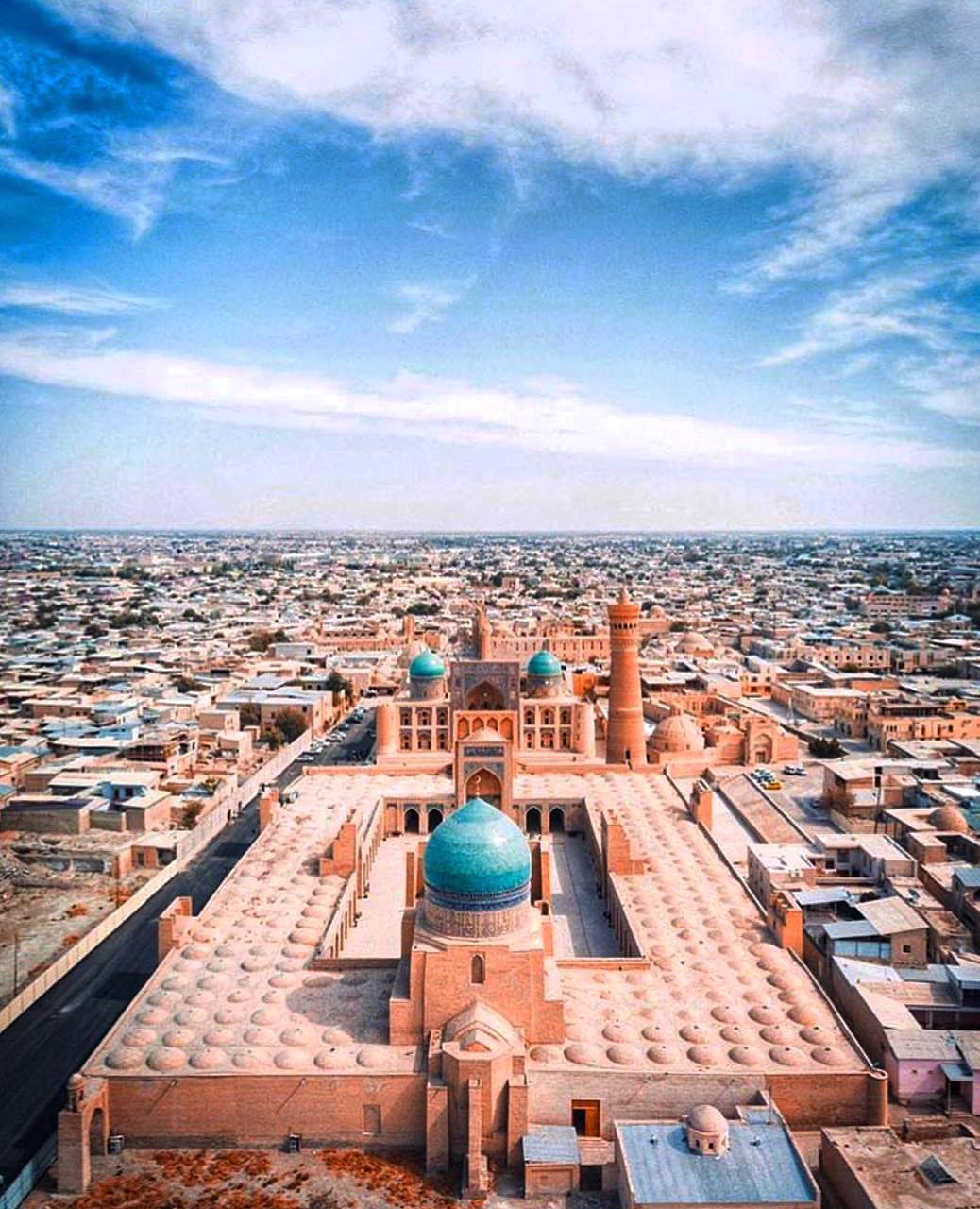
Bahauddin Naqshband (1318–1389) gave his name to the Naqshbandi Sufi order. He was born near Bukhara and buried in Qasri Orifon, about 12 km from the city. In 1544 Abdulaziz Khan built a tomb over his grave, and the complex kept growing for almost four centuries: a khanqah for Sufi gatherings, mosques, a minaret, a small An Islamic college: student cells and classrooms around a courtyard behind a grand portal. In the old towns many now house museums and craft workshops. and a museum about his life. Later the rulers of Bukhara were buried here too. Since 2023 the complex has been part of the UNESCO Silk Roads: Zarafshan-Karakum Corridor.
In Bukhara, a visit here is often the last stop of the seven pirs, the seven masters of the Khwajagan Sufi tradition buried around the oasis. The traditional route goes like this:
- Abdulkhaliq Gijduvani, in Gijduvan, regarded as the first of the seven.
- Muhammad Arif Revgari, in Shofirkon district.
- Mahmud Anjir Faghnavi, in the village of Anjirbog.
- Ali Romitani, in Romitan district.
- Muhammad Baba Samasi, in the village of Simas.
- Sayyid Amir Kulol, in the village of Sukhar. He was the teacher who brought Bahauddin into the Khwajagan tradition.
- Bahauddin Naqshband, in Qasri Orifon.
Gijduvan is about 45 km from Bukhara, and the shrines are spread across several districts, so the seven take a full day by car. If you have only half a day, our Bukhara Discovery tour includes the Bahauddin Naqshband complex.
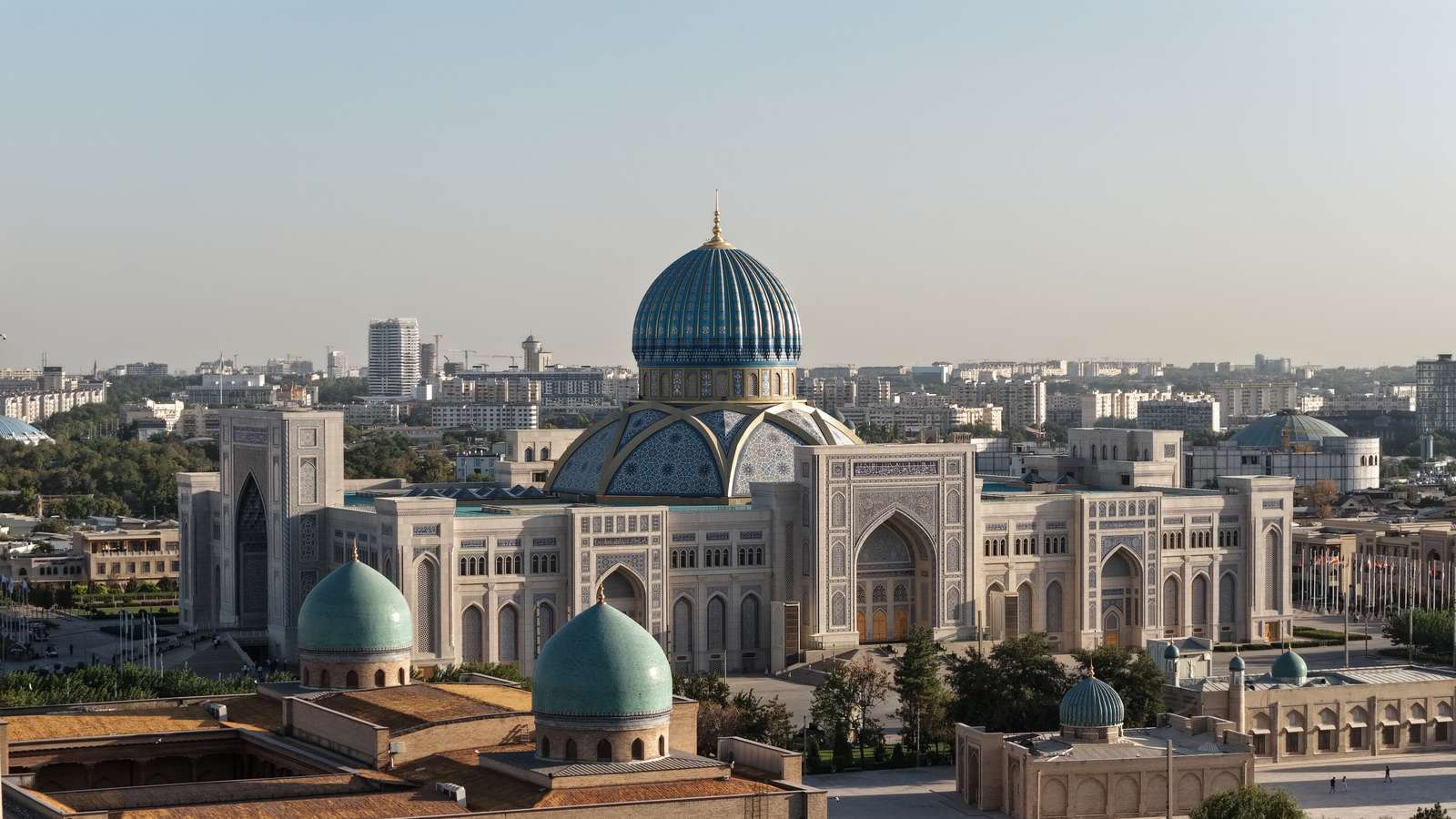
Tashkent: Hazrati Imam and the Center of Islamic Civilization
If your trip starts in Tashkent, begin at The religious heart of old Tashkent: madrasahs, a Friday mosque and mausoleums. Right next to it stands the new Center of Islamic Civilization, opened in 2026. Read more →. The square is named after Abu Bakr Kaffal Shashi, a 10th-century scholar of Tashkent who died in 976. His mausoleum was built in 1541–42, and around it stand the 16th-century Barak Khan and Muyi Muborak madrasas, the Tilla Sheikh mosque and the Friday mosque of Hazrati Imam.
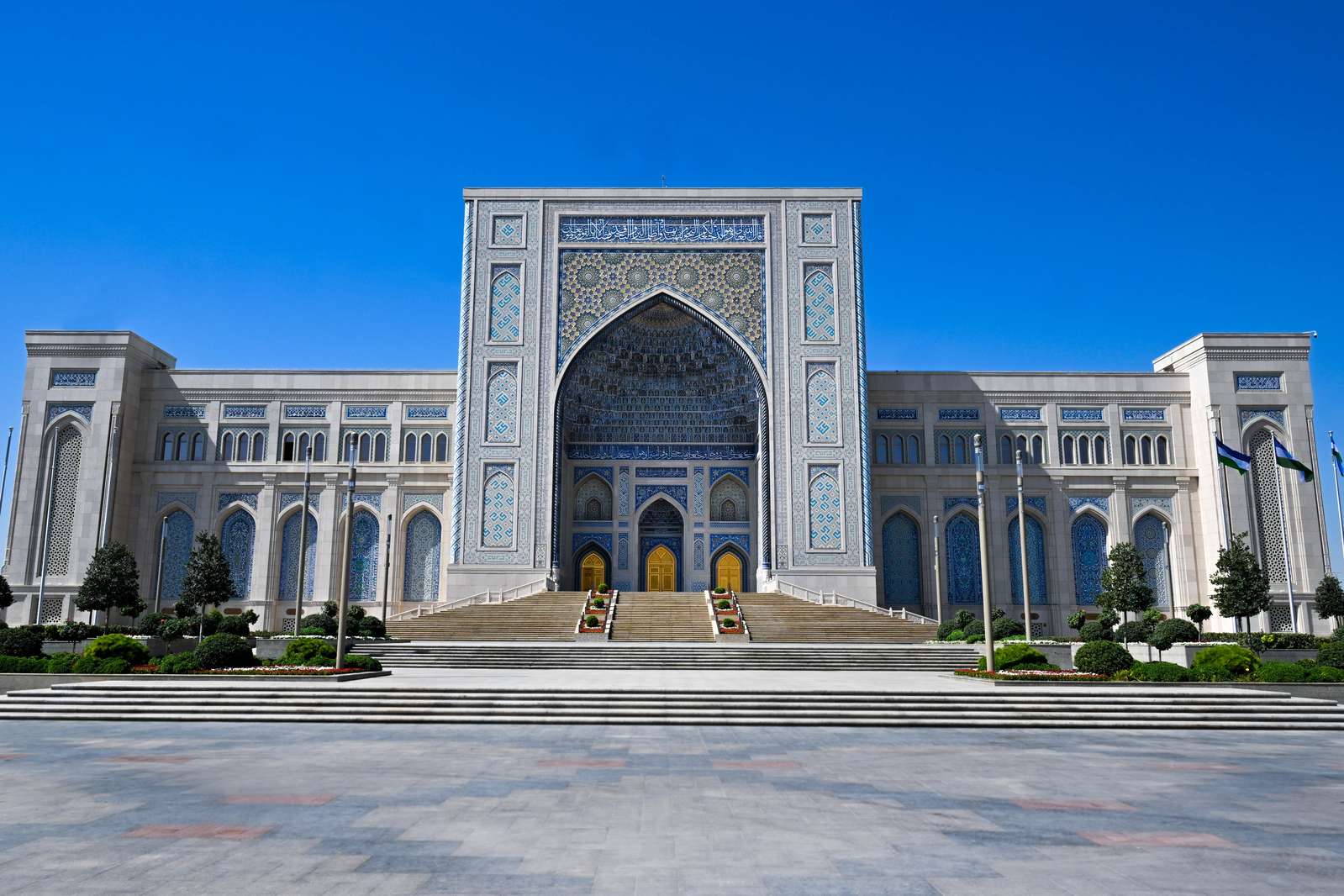
Across the square is the Center of Islamic Civilization, which opened on 17 March 2026. Under its dome lies the Mushaf of Uthman, a 7th-century Qur'an that used to be kept at Hazrati Imam. Allow two to three hours; what is inside and how tickets work is in our article on the Center of Islamic Civilization. Both places are part of our Tashkent highlights tour.
Etiquette: dress, prayer times and Friday
At every shrine the rules are the same. Shoulders and knees covered, for men and women alike; women cover their hair before entering a mosque or mausoleum. Shoes come off on the carpets. Speak quietly, do not walk in front of people who are praying, and never photograph them. Our guide to what to wear in Uzbekistan has the details.
Prayer times shift through the year with the sun, and the large mosques fill up for each of them. On Friday the midday prayer is the big one: the courtyards of Hazrati Imam and the Imam al-Bukhari complex are at their busiest. If you want to pray Juma at a particular mosque, tell us in advance and we will build the day around it. If some of your group are not praying, we plan the museum or the bazaar for that hour.
Halal food, prayer rooms and Ramadan
Close to nine in ten Uzbeks are Muslim, and halal is the norm in ordinary restaurants: the meat is lamb, beef or chicken. If you want to be sure, ask "halolmi?", which means "is it halal?" in Uzbek. Rice cooked in a kazan with carrots, onions and meat: the dish of every Uzbek celebration. Each region cooks it its own way., shashlik and fresh bread are on every table; our list of Uzbek dishes to try will help you order.
International airports and railway stations have prayer rooms with space for ablution, and Tashkent airport has a prayer room open 24 hours. Mosques are never far away in the old towns of Samarkand and Bukhara.
Ramadan 2027 is expected to begin around 8 February, with Eid al-Fitr on 9 or 10 March, depending on the moon. Ramazon hayiti (Eid al-Fitr) and Qurbon hayiti (Eid al-Adha) are public holidays in Uzbekistan, usually with several days off in a row, so we book trains and hotels for those dates early. During Ramadan, cafés stay open in the daytime, and iftar in the restaurants starts right after sunset.
For a longer trip that covers all three cities, see our 11-day classic tour, which includes the Bahauddin Naqshband complex and Shah-i-Zinda, or tell us your dates through the tour finder. Check entry rules for your passport in our article do you need a visa for Uzbekistan.
In short
- The Imam al-Bukhari complex, 25 km from Samarkand, reopened in March 2026: a mosque for 10,000, four 75-metre minarets and a museum of nine pavilions. Allow three to four hours.
- In Samarkand, Shah-i-Zinda holds the shrine of Qusam ibn Abbas; come early in the morning.
- Around Bukhara, the seven pirs take a full day by car and end at Bahauddin Naqshband, 12 km from the city.
- In Tashkent, Hazrati Imam and the Center of Islamic Civilization with the Mushaf of Uthman stand on one square.
- Cover shoulders and knees, scarves for women, shoes off; halal is the norm, and on Friday plan the day around the midday prayer.