
 Deutsch
 English
 Español
 Français
 Italiano
 Polski
 Português
 Suomi
 Svenska
 Türkçe
 Ελληνικά
 Български
 Русский
 עברית
 한국어
 中文
 日本語
Places in this article: Bukhara · Khiva
Kyzylkum Desert: red sand, yurt camps and the road from Bukhara to Khiva
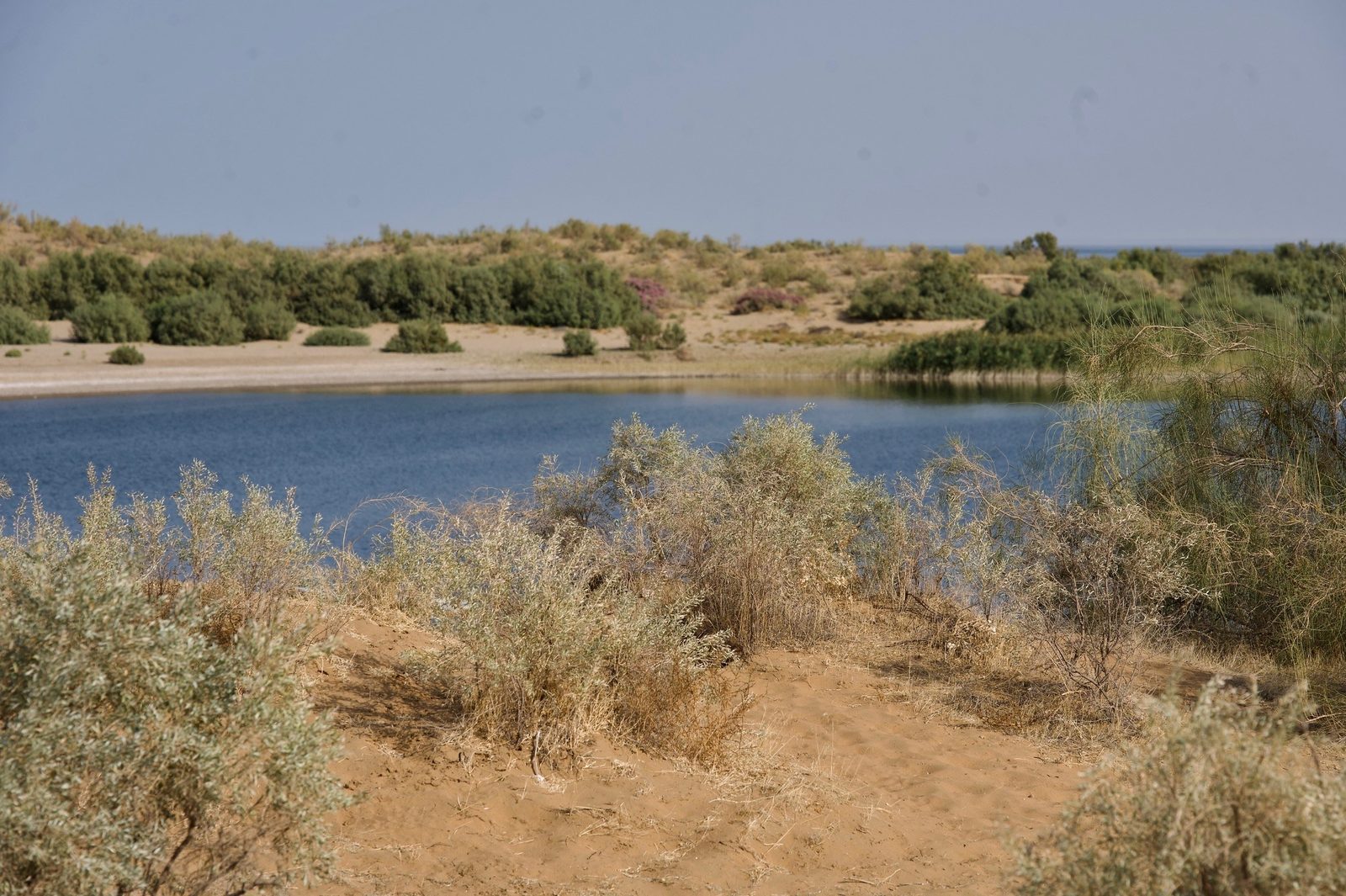
Ninety million years ago a tyrannosaur three to four metres long hunted where the The Kyzylkum, or Red Sands: the desert between the Amu Darya and Syr Darya rivers that the road and the railway cross on the way to Khiva. is now. Its braincase came out of the desert rock of Navoi region, and in 2016 scientists named the animal Timurlengia, after .Amir Timur (Tamerlane, 1336–1405), founder of the Timurid empire, which had its capital in Samarkand. Born near Shahrisabz. Read more →
We are a tour operator from Tashkent, and the Kyzylkum Desert is on almost every route we build. You cross it between Bukhara and Khiva, sleep in it by Did you know? Aydarkul is a wetland of international importance In 2008 the Aydar-Arnasay lake system, about 527,000 ha, became a Ramsar site. It lies where two great bird flyways cross and shelters Dalmatian pelicans and the rare white-headed duck. Read more → lake and look out over it from the walls of .Did you know? Legend says a shepherd named Ayaz built Ayaz-Kala for a bride Legend says a Khorezm king promised his daughter to whoever built an unassailable fortress; the shepherd Ayaz began, the king broke his word, and the walls stayed unfinished. In fact the oldest fort here dates to the 4th–3rd century BC. Read more → Here is what the desert is like and how we show it to our guests.
In short
- The Kyzylkum, “Red Sand”, covers about 298,000 km² between the Amu Darya and the Syr Darya, in Uzbekistan, Kazakhstan and Turkmenistan.
- The road from Bukhara to Khiva runs through it: about 450 km, 6 to 7 hours by car with a driver.
- The simplest night in the desert is a yurt camp by Aydarkul lake, between Samarkand and Bukhara.
- On the Khorezm side the clay fortresses of Ayaz-Kala stand on its edge, with a yurt camp next to them.
- Spring and autumn are the seasons for it. Our Karakalpakstan and desert fortresses tour is private, and the price is on request.
Contents
What the Kyzylkum Desert is
The name means “Red Sand” in the Turkic languages. The desert is a plain up to 300 m above sea level and covers about 298,000 km², which makes it the 15th largest desert in the world. Uzbekistan shares it with Kazakhstan and Turkmenistan.
Do not expect bare dunes from horizon to horizon. Much of the sand is held in place by saxaul, a shrub or small tree from 1 to 8 m tall that nomads have always burned as firewood. Between the bushes lives the Central Asian tortoise, which can spend up to nine months of the year dormant, and the desert monitor, a large lizard. About 40 km from Bukhara the Jeyran ecocentre, set up in 1977, breeds goitered gazelles. We write more about the wildlife in our guide to nature reserves.
Under the sand there is gold, uranium and gas. The open pit at Muruntau is one of the largest gold mines in the world, and the desert towns of Navoi, Zarafshan and Uchkuduk grew up around mining. They are working industrial towns, and our routes pass them by.
The road from Bukhara to Khiva
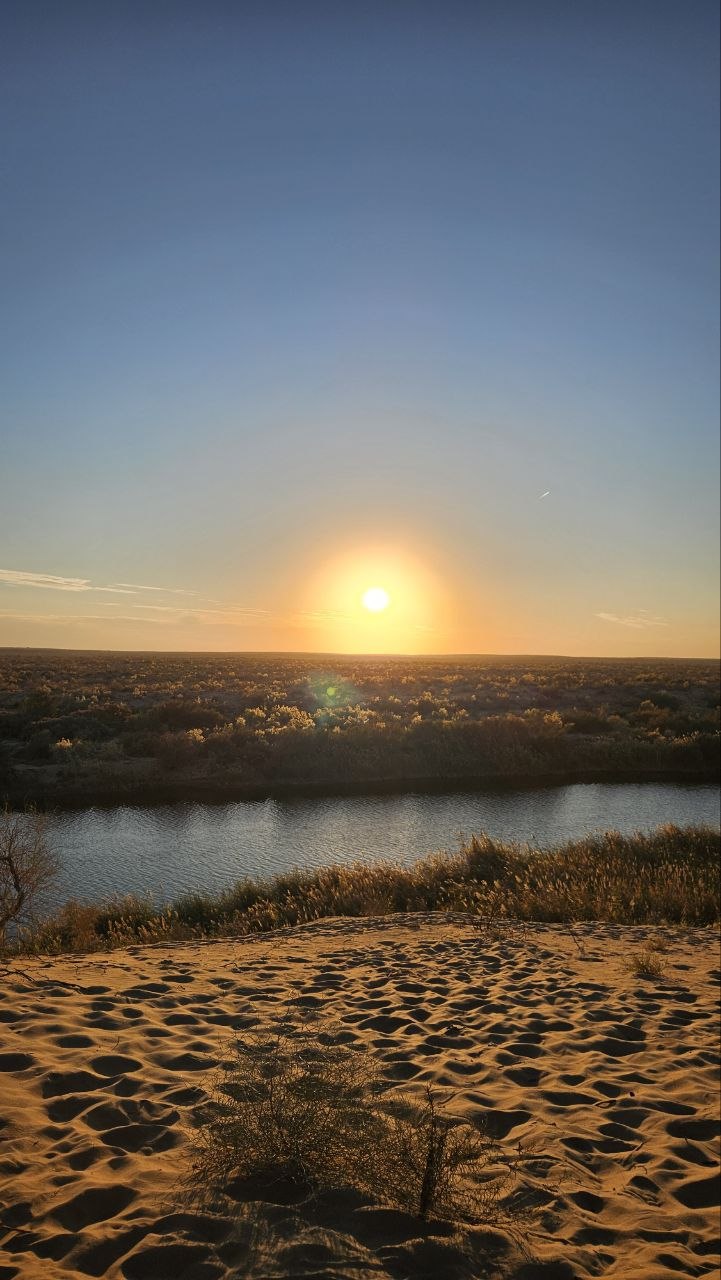
Most of our guests meet the Kyzylkum here. By road it is about 450 km between the two cities, and the drive takes 6 to 7 hours with short stops. For hours there are no towns at all. Then the Amu Darya appears, and beyond the river the sand gives way to the canals, cotton fields and melon plots of Khorezm.
We do not send guests across the desert on their own. They go by car with our driver, on a private transfer between Khiva and Bukhara: he fills up before the empty stretch and knows where to stop. If you are short of time, the fast train covers the same distance in about three and a half hours, and we buy the tickets for you. The details are in our article on getting from Khiva to Bukhara.
A night in a yurt camp by Aydarkul
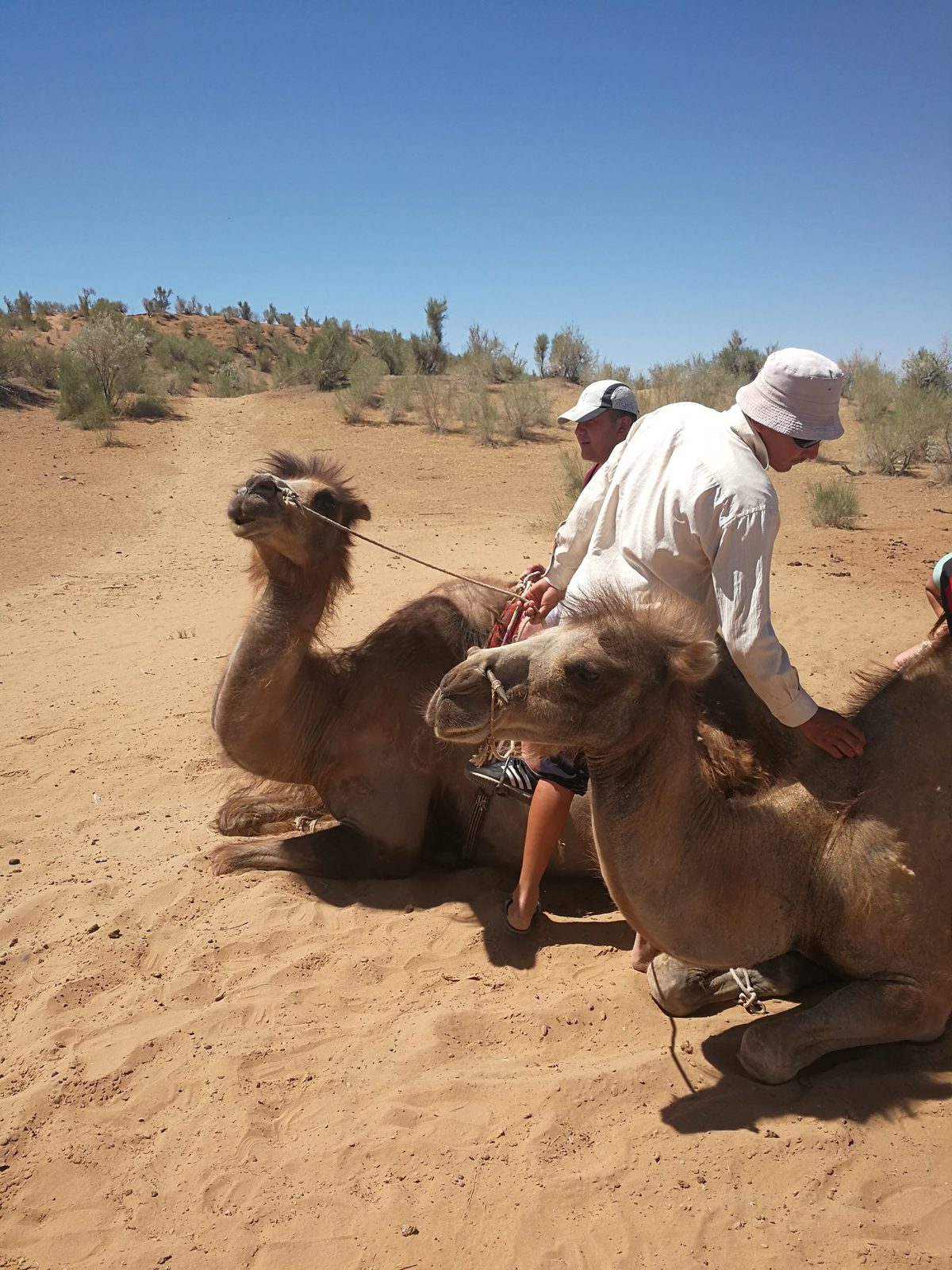
Aydarkul is a lake that did not exist before 1969. That year flood water from the Syr Darya was let into a lowland on the edge of the Kyzylkum, and it never drained away. Today the lake is nearly 250 km long and up to 15 km wide. The yurt camps stand about 60 km beyond ,Did you know? Legend credits Alexander with Nurata's underground canals Legend says Alexander the Great founded Nur in 327 BC and laid its kariz, underground channels with wells dug a few metres apart for cleaning. Whoever built them, parts of the kariz near Nurata still carry water today. Read more → and Nurata is about 180 km from Samarkand and 175 km from Bukhara, so the lake is a natural overnight stop between the two cities.
A typical evening in the camp is a camel ride on the sand, dinner by the fire, folk music and a night in a felt yurt, with the morning by the water. The camps do not work in winter. We book the camp and the car with a driver (a private transfer from Samarkand), and the Nuratau Mountains extension adds two days in the villages of the ridge south of the lake. For the darkest sky we plan the Stars of Uzbekistan tour close to the new moon. What the camp is like inside, we describe in the Aydarkul guide.
The fortresses on the edge of the desert
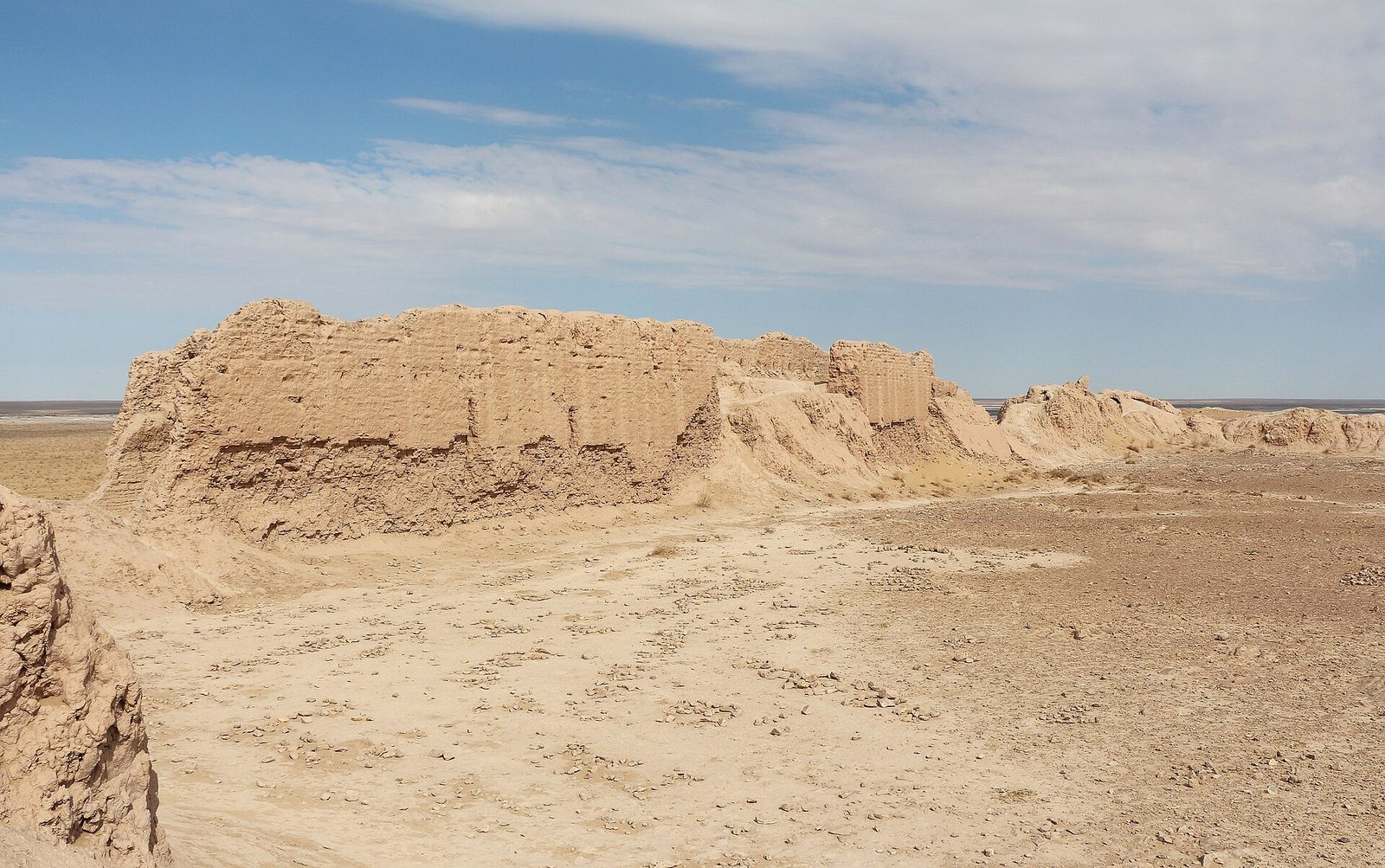
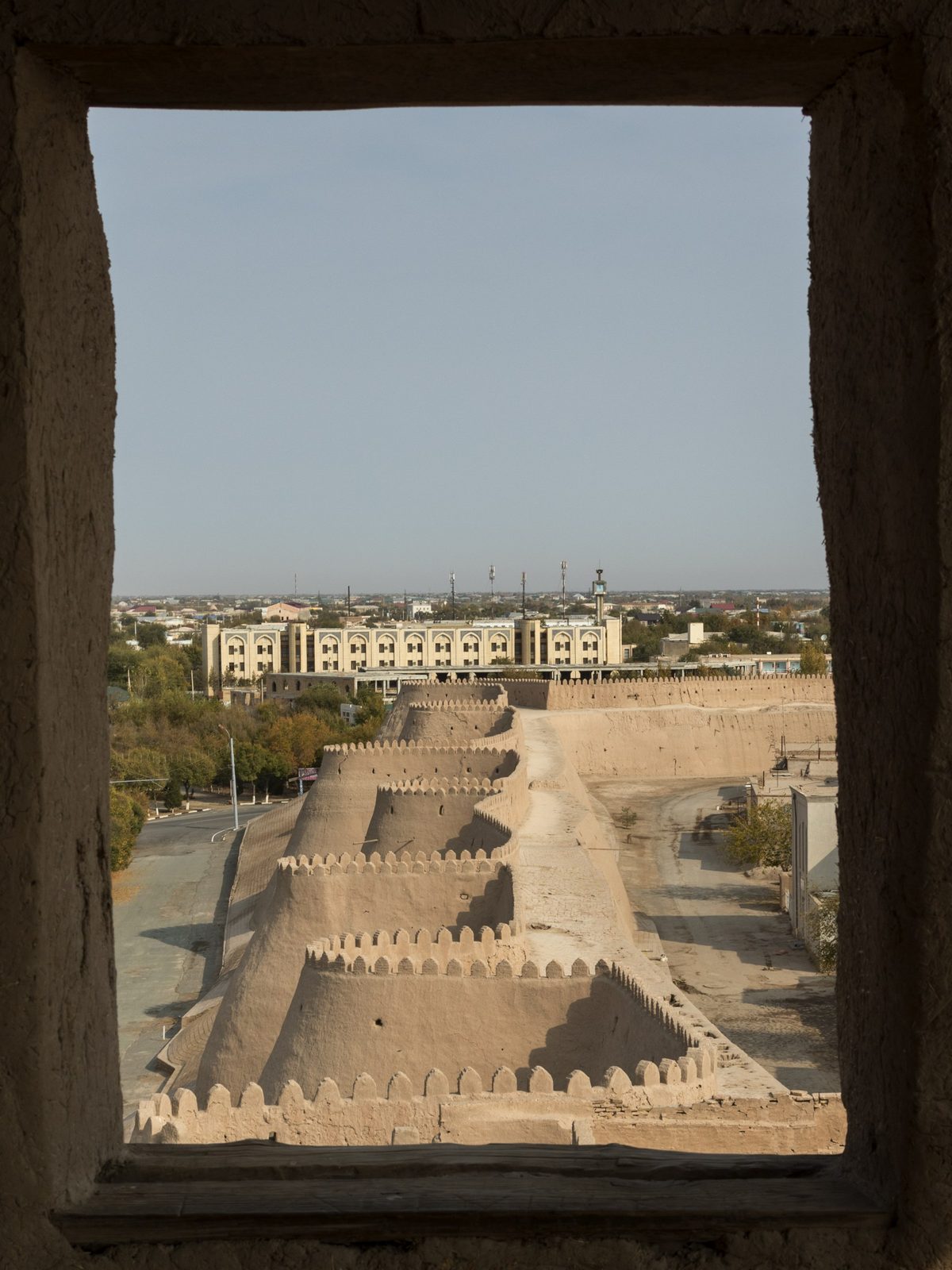
On its western side the Kyzylkum stops at the fields of ancient Khorezm. To guard that farmland, the rulers of Khorezm built a chain of clay forts along the edge of the sand. The best known, Ayaz-Kala, is about 100 km from Khiva. From its walls you see the salt lake Ayazkul and the desert running to the horizon, and a yurt camp stands on a hill close by.
From Khiva we arrange it as a day trip to Ayaz-Kala by car. In our five-day Karakalpakstan and desert fortresses tour you stay the night in the yurt camp and see the walls at sunset and again at dawn. The forts themselves are the subject of our article on the desert fortresses of Khorezm.
When to go and what to take
April and October are the comfortable months, with about 20–22 °C by day. The heat lasts from mid-May to mid-September, and a July afternoon is about 36 °C. The desert cools quickly after sunset, even in autumn.
- A warm layer for the evening.
- A hat, sunglasses and sunscreen in any season.
- A torch for the walk between the yurt and the washrooms.
- Bottled water: it is sold in every town on the way, so stock up before the desert stretch.
Most travellers see the Kyzylkum only through the window of a car or a train. A night in a yurt camp adds one day to the route. Tell us your dates, and we will fit the desert into your route.