
Places in this article: Tashkent
Andijan and Namangan: what to see in the east of the Fergana Valley
At 07:20 the morning electric train leaves Tashkent for the .Did you know? Legend says Fergana's 'heavenly horses' sweated blood Legend says the horses of Dayuan, as Chinese chronicles called Fergana, sweated blood, and around 102 BC Emperor Wu of Han sent an army to bring some home. The 'blood' was most likely a skin parasite that causes tiny bleeding spots. Read more → At 09:56 it stops at Pop, on the Namangan side of the valley, and at 11:42 it reaches the end of the line in Andijan, the town where Did you know? The founder of the Mughal Empire was born in Andijan Babur was born in Andijan on 14 February 1483 and, at twelve, took the throne of Fergana in its capital Akhsikath. Later he founded the Mughal Empire in India; his memoir, the Baburnama, still describes the valley's towns. Read more → was born in 1483. Andijan and Namangan are the two big cities of the eastern valley, 68.5 km apart by road: Namangan on the north side of the valley, Andijan on its southeastern edge.
This guide is about the east: what to see in Andijan and Namangan, how to get there, and how to add them to a Fergana Valley trip. ,Did you know? Kokand's Friday mosque stands on 98 columns from India Muhammad Umar Khan built Kokand's Juma Mosque in 1812–1818. Its 100-metre iwan rests on 98 carved red-wood columns brought from India, and its minaret is 22 m tall. Inside is a small museum of applied arts. Read more → Did you know? Legend says a Rishtan apricot made a great scholar praise God Legend says 12th-century Rishtan folk brought a new apricot to their countryman Burhan al-Din al-Marghinani in Samarkand; he tasted it and said 'Subhanallah' three times, so it is called subhoni. The scholar is real: he wrote al-Hidaya. Read more → and ,Did you know? Legend says Margilan is named after chicken and bread Legend says locals greeted Alexander the Great with chicken and bread, 'murg' and 'non', and the dish gave the town its name. In fact Alexander never reached here; the name Margilan is recorded from the 10th century. Read more → further west, have their own guides, and our Fergana Valley guide puts the whole valley on one page.
Andijan: Babur’s home town and Bogishamol hill
Babur, the founder of the Mughal dynasty, was born in Andijan, and the city keeps him close. In his memoirs, the ,Did you know? The Baburnama opens in the Fergana Valley with a boy of twelve Babur wrote his memoirs in his native Chagatai Turkic. The book opens: “In the month of Ramadan of the year 899 [1494], in the twelfth year of my age, I became ruler in the country of Farghana.” A Persian translation followed in 1589–90. Read more → he wrote about a garden on a hill outside the town, which he visited before leaving his homeland. That hill is Bogishamol, about 7 km from the centre.
In 1973 the land on the hill was set aside as a park, and in 1992, for the 510th anniversary of Babur’s birth, it was renamed after him. Today it covers 357 ha. People here simply call it Bogi Bobur, Babur’s Garden. Three things are worth the climb:
- The symbolic tomb. A marble vault of 1993 holds earth brought from Babur’s grave in Kabul.
- The museum. Rare books and manuscripts on the Timurids and the Baburids, and the writings of Babur and his descendants, among them his daughter Gulbadan Begum.
- The cable car. A 3.5 km line runs to the top of the hill, with the city and the valley below.
Give it half a day. We like to come in the late afternoon, when the light softens over the valley.
The Jame complex: a 123-metre madrasah
In the old part of Andijan stands the Jame complex, built in 1883–1890: a mosque, a An Islamic college: student cells and classrooms around a courtyard behind a grand portal. In the old towns many now house museums and craft workshops. and a minaret. The madrasah is 123 m long. It was once U-shaped and open to the sky, and its arched portals carry the blue and green tiles typical of the Fergana Valley. The minaret, 32 m high, is the tallest in the valley.
The complex was damaged in the earthquake of 1902 and restored in 1971–1974 and again in 1999–2000. The mosque is active, so we admire the facades and the minaret from outside and plan the visit around prayer times. A large new mosque with two 54-metre minarets now stands beside the old complex.
Bazaar, patir and devzira plov
Andijan’s Jahon bazaar, about 4 km north of the city, is one of the biggest open-air markets in the valley. It trades every day and is busiest on Thursdays and Sundays. More on market days across the country is in our guide to the bazaars of Uzbekistan.
Look for Did you know? Andijan’s patir can weigh several kilograms Andijan is known for patir, a large rich flatbread made with milk and butter that can weigh several kilograms. The dough is made in the evening, shaped and decorated, then baked over several hours; patir goes to weddings and stays fresh for a long time. Read more → at the bread stalls. Andijan is known for this large, rich flatbread made with milk and butter, which can weigh several kilograms; the dough is made in the evening and the bread bakes for hours. How Uzbek bread is made, city by city, is in our article on Uzbek bread.
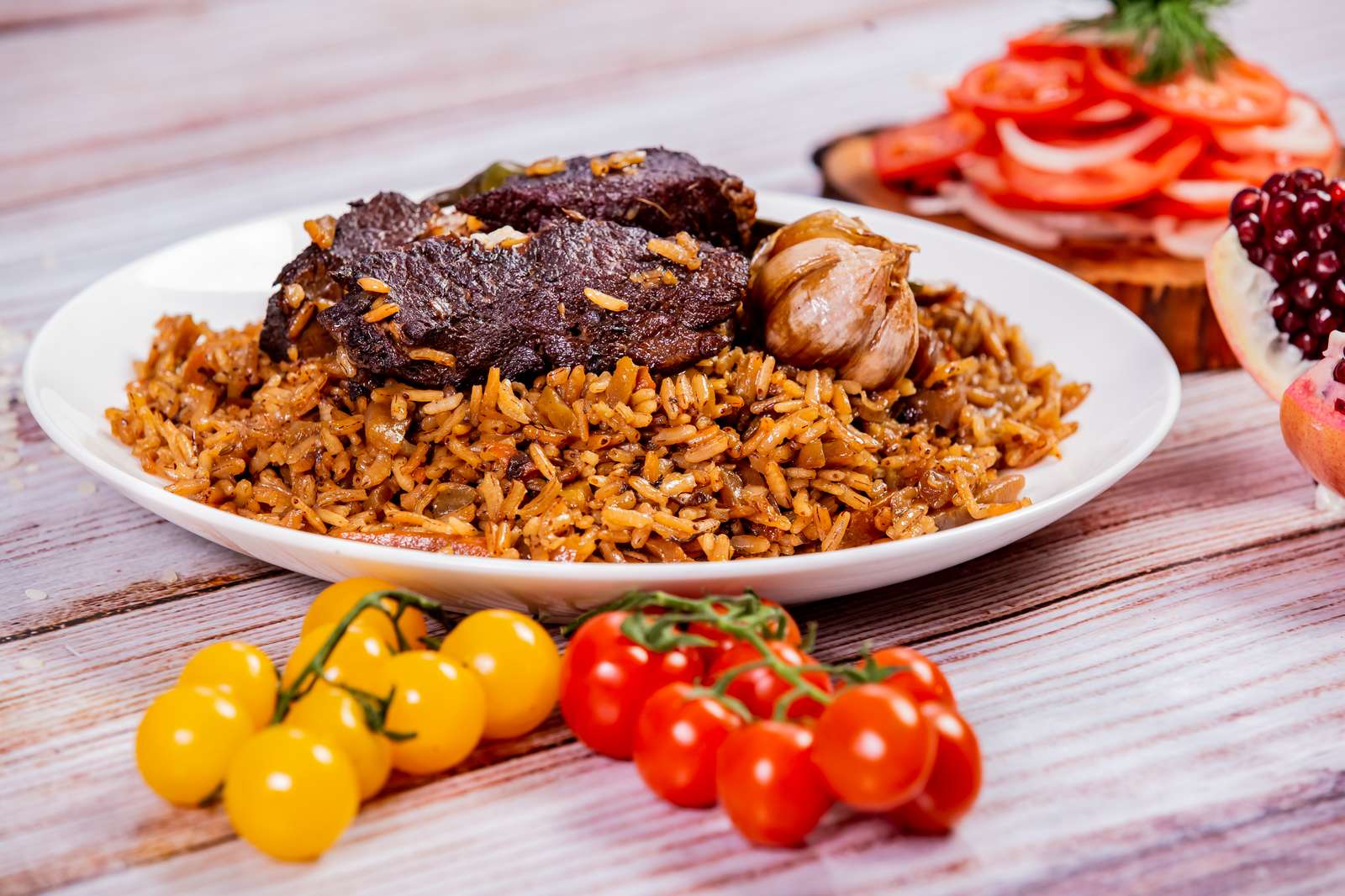
Lunch is .Rice cooked in a kazan with carrots, onions and meat: the dish of every Uzbek celebration. Each region cooks it its own way. The valley cooks it with devzira, a reddish, dense rice grown here, and in June 2026 Andijan devzira plov was registered as a geographical indication. People in Andijan are proud of both, and a guest who praises the bread and the plov will rarely leave without another cup of tea. The rest of the story is in our plov guide.
What to see in Namangan: Babur Park and the flower festival
Namangan lies on the north side of the valley, 290 km by road from Tashkent. Just outside its southern edge the Naryn and the Qoradaryo meet and become the Syr Darya. The city has its own Babur: the Zahiriddin Muhammad Babur Park of Culture and Recreation, named after him, is its green centre and the home of the flower festival.
Namangan has held its flower festival since 1961. The 65th, international edition ran from 24 May to 12 July 2026. It opened with a parade of more than 200 cars decorated with fresh flowers, driving over 10 km from the airport to Babur Park, where the flower compositions were set out. In one month about 30 million seedlings were planted in and around the park, and Namangan entered the Guinness World Records for it.
The organisers announce the dates in spring. If you want to catch the festival, tell us early and we build your valley days around it. Out of season, Babur Park is a shady place for an evening walk.
Khoja Amin and Mullo Kirgiz: old Namangan
In the centre, next to the busy city market, stands the mausoleum of Khoja Amin, also known as Khojamni Kabri. Its facade and dome date from the 18th century. Legend says it holds the grave of Amin Khoja, an heir of the famous sheikhs of Did you know? Legend: Timur healed his leg at a Tashkent spring Legend says Timur treated a wounded leg in Tashkent with water from the Zem-Zem spring and, in gratitude, ordered a mausoleum for the city's most revered Sufi, Sheikh Khovendi at-Takhur (13th–14th c.). The Shaykhontohur district bears his name. Read more → in Tashkent.
Look closely at the portal. The wide bands around the arch are carved terracotta, the narrow ones carved alabaster, and green and orange glazed bricks run along the arch. Carved terracotta had largely gone out of use after the 14th century, which makes this facade rare. An inscription above the entrance names the master: Muhammad Ibrahim, son of Abduraim. Lines from the Quran are carved on the portal. We view the mausoleum as heritage, from outside and quietly.
A short walk away is the Mullo Kirgiz madrasah of 1910, with geometric patterns and calligraphy on its facade. From Namangan, the ruins of Akhsikent, the old capital of the valley, are about 22 km southwest on the bank of the Syr Darya; one or two hours there fit easily into a Namangan day.
Chust: knives and skullcaps
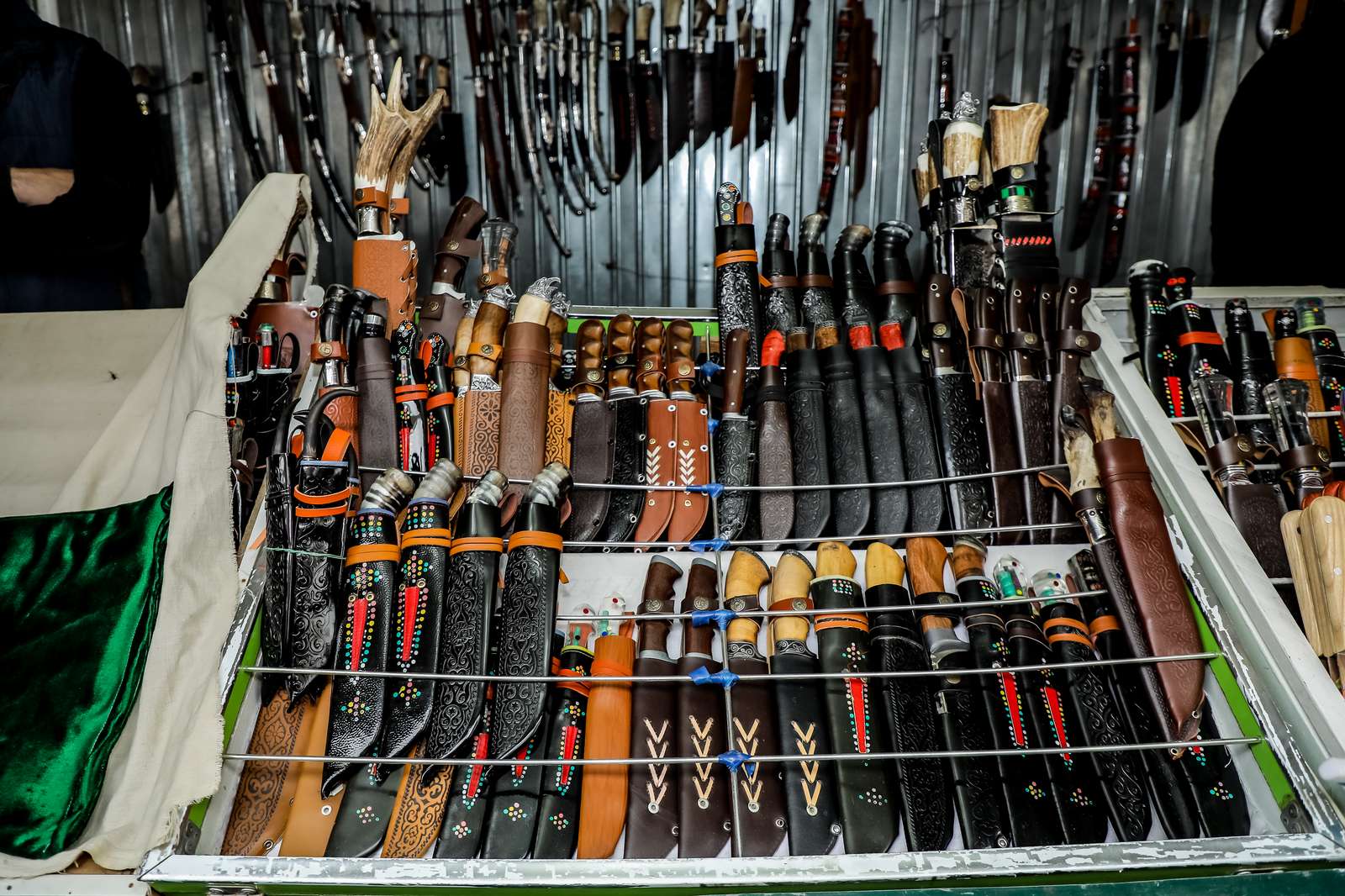
Chust, about 41 km west of Namangan, is the town of the pichoq, the Uzbek knife. Smiths forge the blades, temper, grind and polish them, and every master stamps his own hallmark on the steel as a guarantee. Handles are made of horn, bone or antler, and a tin-and-lead alloy called gulband seals the joint between blade and handle. The most richly decorated knife is the guldor pichoq, “the decorated knife”. The old blacksmiths’ quarter of the town is still called Suzangaron.
Chust is just as proud of its doppi, the skullcap: black velvet embroidered with white silk, with the almond and pepper patterns, the pepper repeated four times for protection. The town holds a special skullcap market once a week. Tell us if you want to shop, and we plan the Chust stop around it. Pack knives in your checked luggage; more tips on buying crafts are in what to buy in Uzbekistan.
How to get to Andijan and Namangan
By train. Since 1 October 2026 the electric train No. 730 leaves Tashkent every day at 07:20 and calls at Pop at 09:56, Kokand at 10:26 and Margilan at 11:02, reaching Andijan at 11:42. No. 729 goes back: Andijan 15:33, Margilan 16:10, Kokand 16:45, Pop 17:16, Tashkent 19:55. On the way the line runs 19.2 km through the Kamchik tunnel under the mountains. For Namangan, we meet you at Pop and drive you on. How to buy tickets is in our guide to trains in Uzbekistan.
By air. Uzbekistan Airways flies from Tashkent to Andijan and to Namangan in under an hour, but not every day, so we check the schedule for your dates.
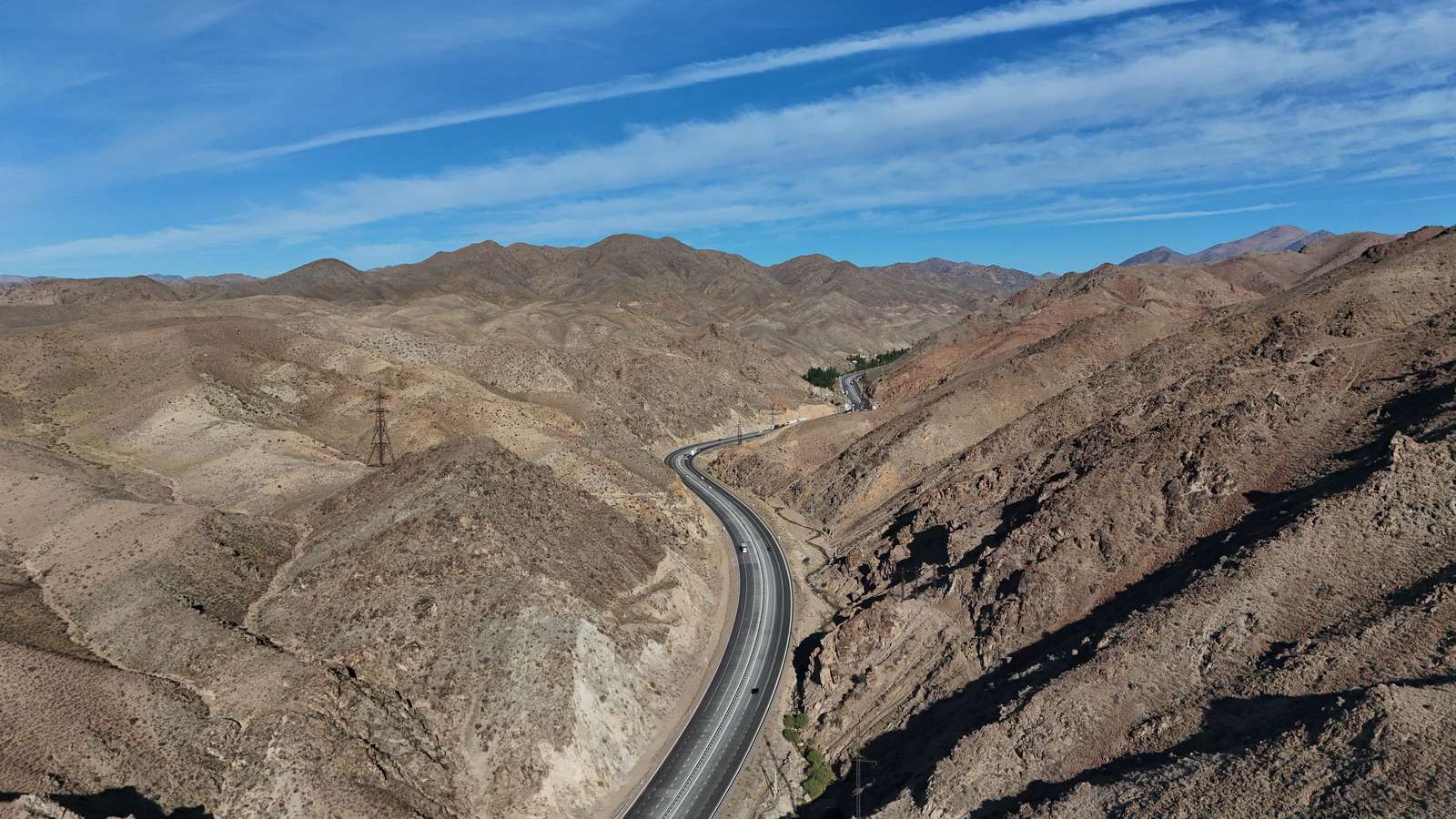
By road. The A373 climbs to 2,268 m over the Kamchik pass, and in winter it can close because of avalanche risk. From December to March we put our travellers on the train.
How many days, and how to fit them into a valley trip
Give each city a day. A classic valley trip starts in the west: the morning train to Kokand, the potters of Rishtan, a night in Fergana or Margilan, the silk of Margilan the next day. Then add one day for Andijan, and one for Namangan with Chust or .Did you know? Akhsikent steel was prized as far away as Baghdad Akhsikath was not only a caravan stop on the road from Kashgar but a workshop town: crucible steel smelted here in kaolin-lined furnaces was famous as far as Baghdad and Damascus. Read more → Train No. 729 calls at Pop at 17:16, so a Namangan day can end at the station and take you back to Tashkent the same evening.
Our four-day Fergana Valley crafts tour already gives a day to Andijan, and on request we take you to Namangan instead. The Fergana Valley extension adds the valley to a classic route. On our tours a guide in your language is included in the price, and our office is on call 24/7 while you travel. For a plan of your own, start with the tour finder, or see the region at a glance on the Fergana Valley page.
Spring and autumn are the best seasons. In Namangan the average afternoon is 23.4 °C in April and 29.0 °C in May, 29.2 °C in September and 21.9 °C in October. The flower festival falls in late spring and early summer, when the days are already warm.
In short
- Andijan is Babur’s home town: the park and symbolic tomb on Bogishamol hill, the Jame complex with its 123 m madrasah, the Jahon bazaar, patir and devzira plov.
- Namangan is the city of flowers: Babur Park, a festival held since 1961, the 18th-century mausoleum of Khoja Amin and the Mullo Kirgiz madrasah.
- Chust, 41 km from Namangan, is for knives and skullcaps; Akhsikent is 22 km away.
- Since 1 October 2026 train No. 730 leaves Tashkent at 07:20: Pop 09:56, Andijan 11:42; No. 729 leaves Andijan at 15:33.
- Give each city a day on top of Kokand, Rishtan and Margilan; go in April–May or September–October.