
Places in this article: Samarkand · Bukhara · Tashkent
Alisher Navoi: the poet behind every Navoi street, and where to find him in Uzbekistan
Spend a week in Uzbekistan and you will meet the same name a dozen times: a street in Tashkent, a Did you know? A metro designed to ride out a magnitude-9 earthquake The three original lines of the Tashkent Metro were built to withstand an earthquake of magnitude 9.0, and the tunnels lie unusually shallow, only 8–25 m below the street. Read more → station, an opera house, a national park, a library, a whole city and its region. Every town has its Navoi street. The man behind the name died more than five hundred years ago in Herat, and he never lived in most of the places that honour him.
Here is who Alisher Navoi was, why Uzbekistan treats him as its national poet, and where you can feel his presence on a trip, from the Did you know? An opera house with a foyer for every region The Alisher Navoi Theatre, opened in 1947, has six halls carved in the styles of Tashkent, Fergana, Bukhara, Samarkand, Khiva and Termez, each led by a master of that school. Read more → in Tashkent to the city that carries his name.
A poet of the Timurid court
Nizamiddin Alisher was born on 9 February 1441 in Herat, a capital of the Timurid world, today in Afghanistan. He went to school with Husayn Bayqara, a Timurid prince. In the late 1460s Alisher lived and studied in Samarkand, and in 1469, when Husayn Bayqara took power in Herat, he returned to serve him.
He served for the rest of his life: from 1472 he sat on the sultan’s supreme council, and he remained the ruler’s adviser. Under Husayn Bayqara Herat became one of the great cultural courts of the age, a city of poets, historians, musicians and painters, and Navoi was at its centre. He died there on 3 January 1501 and is buried in Herat.
Two pen names, two languages
Like every educated man of his time, Navoi knew Persian, the language of high literature, and he wrote Persian verse under the pen name Fani. But his life’s work was in Turkic, in the literary language now called Chagatai, and for those poems he chose the pen name Navoi, from navo, “melody”. He is considered the greatest poet of Chagatai literature, and modern Uzbek grew out of that literary language.
In 1499, near the end of his life, he wrote Muhakamat al-Lughatayn, “The Judgement of Two Languages”. In it he argued that Turkic was in no way poorer than Persian as a language of poetry, and pointed to its richness and precision. Coming from a man who wrote fine Persian verse himself, it was a statement about what his own language could do.
The Khamsa and the four divans
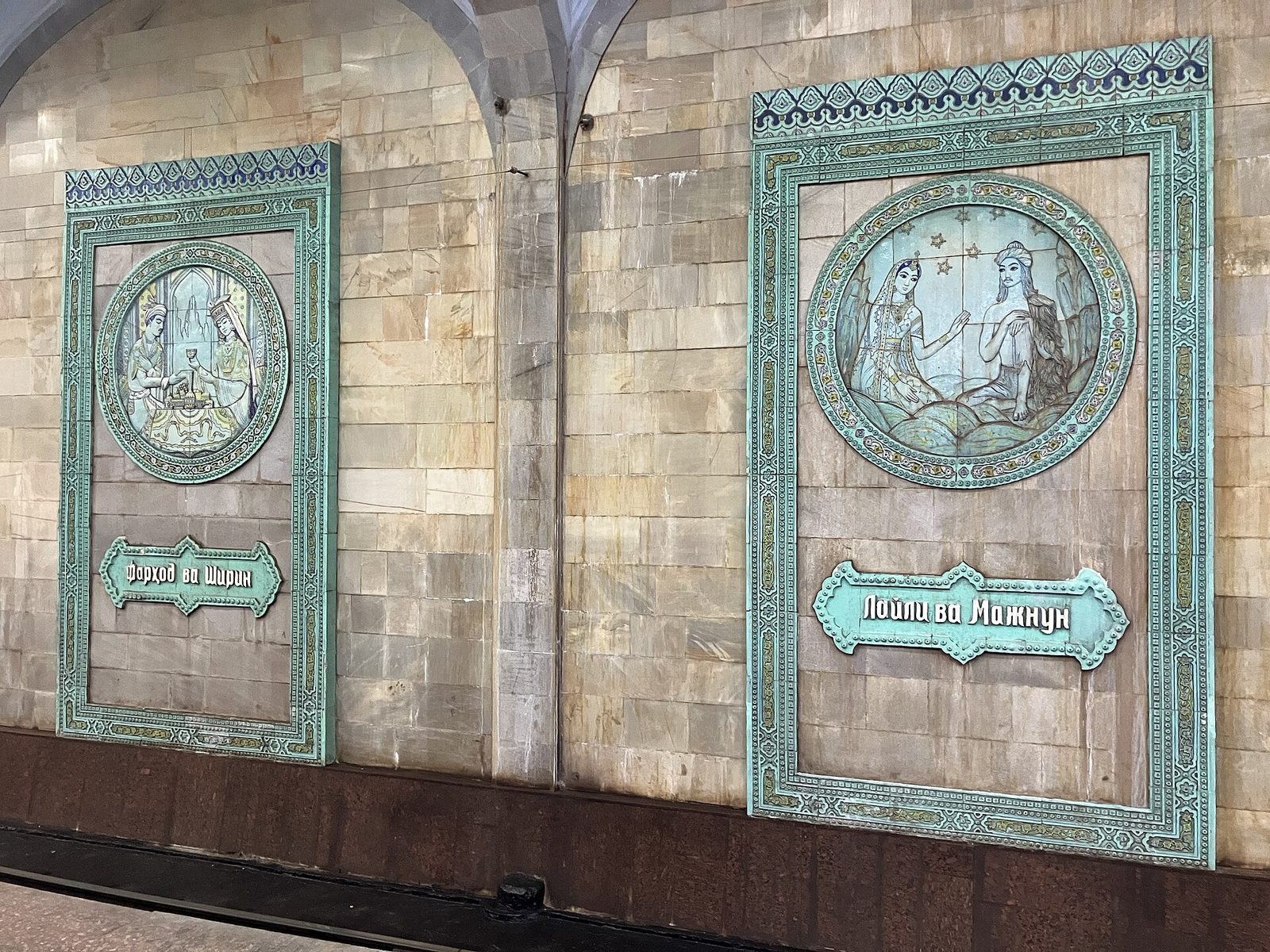
His best-known work is the Did you know? Navoi signed his Turkic poems “Navoi” and his Persian ones “Fani” Alisher Navoi wrote in two languages and used two pen names: Navoi for his poetry in Chagatai Turkic and Fani for his poems in Persian. His Khamsa, written in 1483–1485, is five long poems in Chagatai, among them Farhad and Shirin and Layli and Majnun. Read more →, five long poems written in 1483–1485 as an answer to the Khamsa of the Persian poet Nizami: Hayrat al-Abrar, “The Wonder of the Righteous”; Farhad and Shirin; Layli and Majnun; Sab’ai Sayyor, “The Seven Planets”; and Saddi Iskandari, “The Wall of Alexander”. In his Farhad and Shirin of 1484 the hero Farhad is a Chinese prince, and the story of the stonecutter who cuts through a mountain for love is still told in Uzbekistan today.
He gathered his lyric poems into four divans, finished in 1498 and arranged by the ages of a life: the wonders of childhood, the rarities of youth, the marvels of middle age and the benefits of old age. He also wrote Majalis al-Nafais, short portraits of the poets of his time, and Lisan al-Tayr, “The Language of the Birds”, a reply to the Persian poem of Attar.
Patron and builder
Navoi spent his wealth on the city. He is credited with founding or restoring about 370 mosques, madrasahs, libraries, hospitals and caravanserais in Khorasan, and in Herat alone with caravanserais, bathhouses, bridges and pools. He supported his friend, the poet Jami, the historians Mirkhond and Khondamir, and the painter Kamoliddin Behzad, who headed the royal book workshop from 1486. The Herat school of painting that grew around them shaped book art in Bukhara and beyond; more on that in Uzbek crafts in wood, metal and gold and in the Timurid heritage of Uzbekistan.
Why every city has a Navoi street
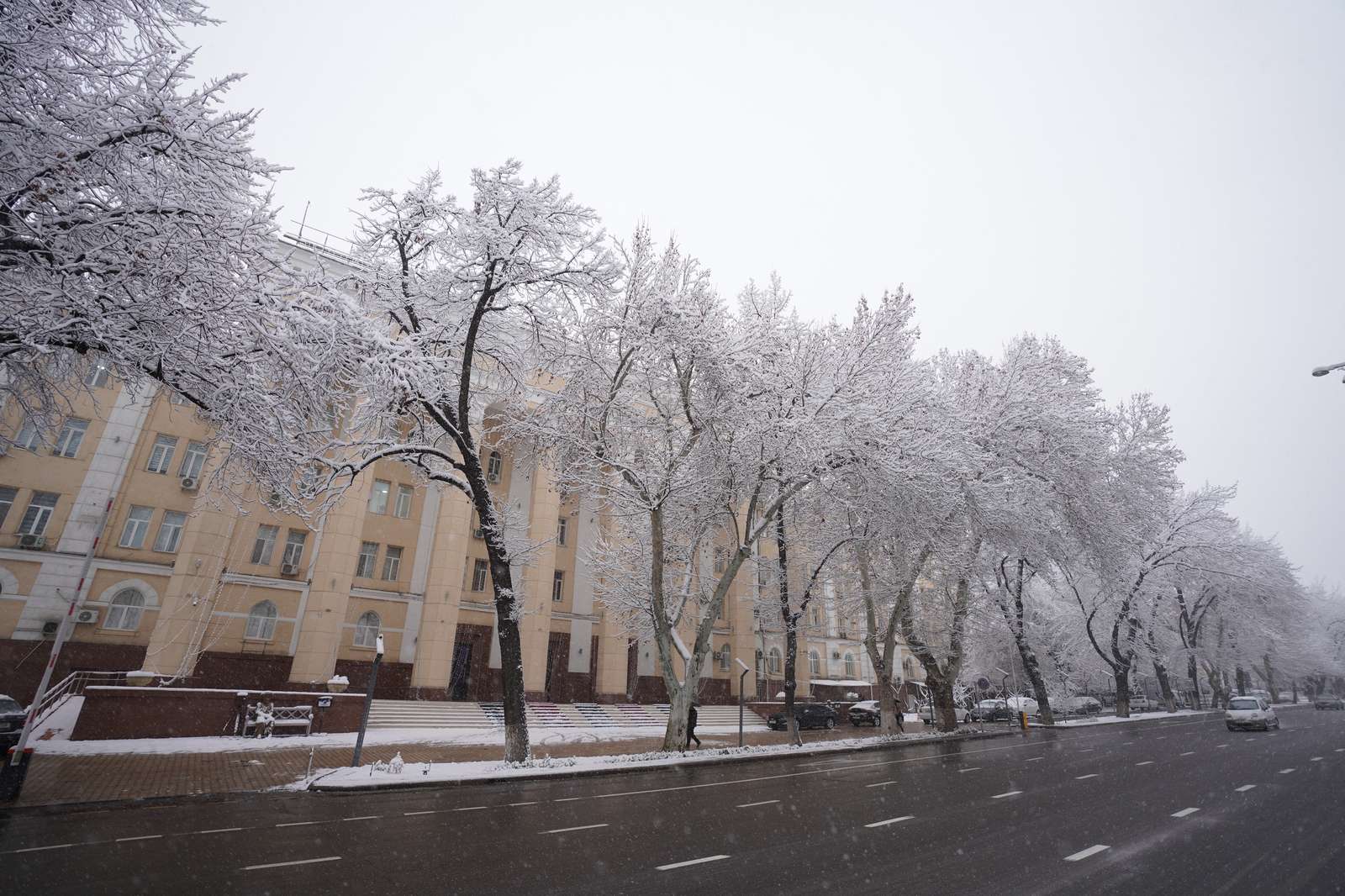
In Uzbekistan Navoi is the classic with whom the national literature begins, the poet who showed what the language could do. Every year on his birthday, 9 February, flowers are laid at his monuments, and actors and students read his ghazals aloud.
His name was given to the country’s main stage, the National Library, the old Panorama cinema in Tashkent, renamed in 1991, a metro station, an airport, a region and its capital. Big anniversaries left their mark too: an exhibition prepared in 1939 for his 500th anniversary grew into the Museum of Literature, and the 550th in 1991 gave Tashkent its national park.
Navoi in Tashkent: the theatre, the park and the metro
The Alisher Navoi Theatre. Designed by Alexey Shchusev, the opera and ballet house opened in November 1947 and was named after the poet in 1948. It seats about 1,400. Its six side halls are each decorated in the style of one region: Tashkent, Fergana, Bukhara, Samarkand, Khiva and Termez. In the Bukhara hall carved ganch is laid over mirrors, the Khiva hall is carved in wood, the stage curtain was embroidered in gold by Bukhara masters, and paintings in the foyer take their subjects from Navoi’s poems. The best way in is a performance; see Tashkent in the evening.
The Alisher Navoi National Park. In 1991 the old central park was enlarged and renamed for the 550th anniversary. On a hill in the middle stands the poet’s statue under an open pavilion with a blue ribbed dome on eight columns, and from it runs the Alley of Writers, created in 2017, with monuments to more than 20 Uzbek poets and scholars. The park reopened in 2022 after renewal, with a restored lake.
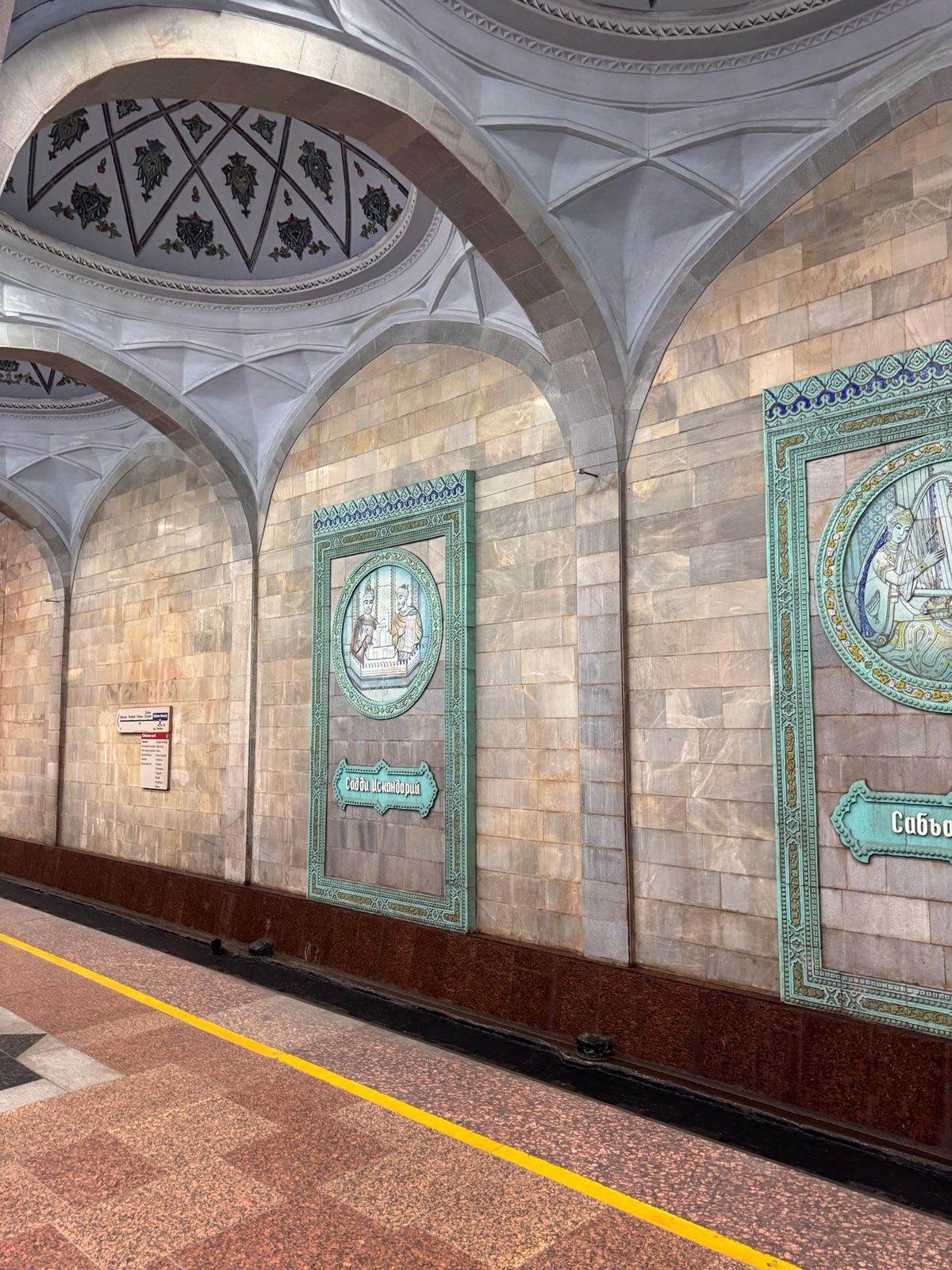
The metro station. Alisher Navoi station on the ,Did you know? Central Asia’s first metro: free to photograph since 2018 Tashkent’s metro opened on 6 November 1977 with nine stations, the first in Central Asia. Since 1 June 2018 it can be photographed freely, richly decorated station halls included. Read more → opened in 1984, has domes on tapered columns and ceramic panels with scenes from the Khamsa. It is on our list of the best stations in the Tashkent metro.
The Museum of Literature, named after Navoi, keeps manuscripts of his works, among them a copy of the Khamsa made in Did you know? Kokand's Friday mosque stands on 98 columns from India Muhammad Umar Khan built Kokand's Juma Mosque in 1812–1818. Its 100-metre iwan rests on 98 carved red-wood columns brought from India, and its minaret is 22 m tall. Inside is a small museum of applied arts. Read more → in 1842. In 2026 it is temporarily closed while it prepares to move to a new building; other museums of the city are in Tashkent museums.
Samarkand and the city of Navoi
In Samarkand, Navoi was a student in the late 1460s, in the city of Did you know? Ulugh Beg measured the year to within 25 seconds Working at his Samarkand observatory, Ulugh Beg put the tropical year at 365 days 5 h 49 min 15 s, about 25 seconds too long, closer than Copernicus a century later. Read more →’s An Islamic college: student cells and classrooms around a courtyard behind a grand portal. In the old towns many now house museums and craft workshops. Read more → and observatory, a generation after the astronomer’s death. Walking the Did you know? The Registan's sun-carrying lion went on a banknote The Sher-Dor Madrasah (1619–1636) is named for the big cats with the sun on their backs on its portal. The image appeared on the reverse of Uzbekistan's 200-som note of 1997. Read more → with a guide is the closest you can come to the Samarkand he knew.
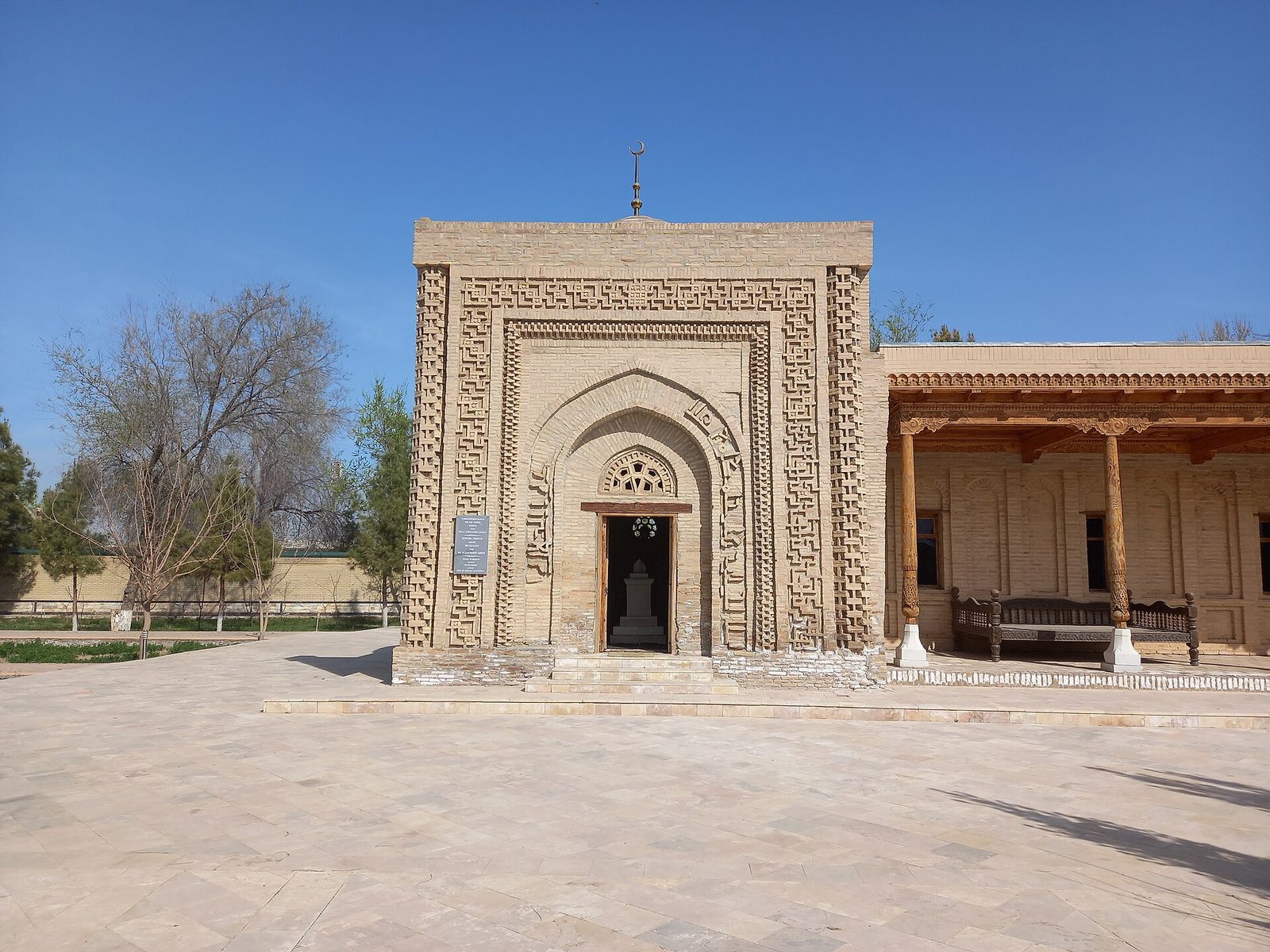
The city of Navoi, between Samarkand and Bukhara, was founded in 1958 next to the old town of Karmana and named after the poet. It is a modern industrial city, and for travellers it is the base for the brick mausoleums of Karmana, the Did you know? Legend says a nomad chief built Rabat-i Malik Local tradition, recorded by a traveller in the 19th century, remembered the ruin as the castle of a khan and his heirs, built by a nomad chief called Malik Khan. What is known: the Karakhanids raised it around 1078–1079 on the road from Bukhara. Read more → caravanserai on the Bukhara road and the rock carvings of :Did you know? One gorge near Navoi holds some 10,000 rock carvings Sarmysh gorge in the Karatau hills has about 10,000 petroglyphs: the oldest show wild bulls, later ones argali, riders and even Arabic script. It is on Uzbekistan’s UNESCO Tentative List, valued for both its rock art and its nature. Read more → see Sarmysh and the Navoi region.
To follow Navoi through the whole country, our 9-day Turkic Heritage of the Silk Road tour starts in Navoi’s Tashkent and continues to Samarkand, Bukhara and Khiva, with the guide in your language included.
In short
- Alisher Navoi (1441–1501) was a poet and statesman of the Timurid court in Herat and the greatest poet of Chagatai Turkic literature.
- He wrote in Turkic as Navoi and in Persian as Fani; his Khamsa of 1483–1485 answers Nizami’s five poems.
- In 1499 he argued that Turkic was fully fit for poetry; modern Uzbek grew out of his literary language.
- In Tashkent, see the Navoi Theatre with its six regional halls, the monument in the national park and Alisher Navoi metro station.
- His birthday, 9 February, is marked every year with flowers at his monuments and readings of his ghazals.