
Places in this article: Tashkent
Akhsikent: the ancient capital of Fergana on the Syr Darya
“In all Fergana no fort is so strong as Akhsi.” Babur wrote that about the town where his father kept his court. Stand on the edge of the ruins and you see why: the Syr Darya runs below, and deep ravines cut into the bank do the work of a moat.
Akhsikent, also written Akhsikath, lies on the right bank of the river about 22 km southwest of Namangan, in the Turakurgan district. It is the largest archaeological site in the Fergana Valley, and these days you walk through it on covered wooden walkways. Here is what you are looking at and how to fit it into a trip to the valley.
From Fergana to Akhsikath: nearly two thousand years of one city
The city was founded in the 3rd century BC, and its name changed more than once. Until the middle of the 9th century medieval texts simply called it Fergana, after the valley. From the second half of the 9th century it was Akhsikath, and only late in the Middle Ages did people start saying Akhsikent.
In the 9th and 10th centuries Akhsikath was the capital of the Fergana Valley, and coins struck here circulated across the Samanid state. At its height, in the 10th–12th centuries, it had a Friday mosque, a festive prayer ground, an emir’s palace, a prison and gardens. Water came from the Kosonsoy river, some 14–15 km away, along an underground channel.
In 1219 the city was sacked by Jebe, one of Genghis Khan’s commanders. It recovered: in the 15th century it was again the seat of the rulers of Fergana. The end came in 1620, when an earthquake left it in ruins. The survivors moved to nearby Namangan.
Citadel, shahristan and rabad
Like most cities of the region, Akhsikath had three parts. The citadel, or ark, held the ruler’s palace and the prison and was cut off from the rest by its own wall. Around it lay the shahristan, the inner city with the Friday mosque and the main market. Outside lay the rabad, the craftsmen’s outer town.
Archaeologists have uncovered a blacksmith’s workshop, a 10th–13th-century bathhouse, barracks, the Friday mosque, the fortress walls and the ruler’s palace. The surviving ruins cover about 60 hectares. Since 2008 the site, listed as Ahsiket, has been on Uzbekistan’s tentative list for UNESCO World Heritage.
What you see today
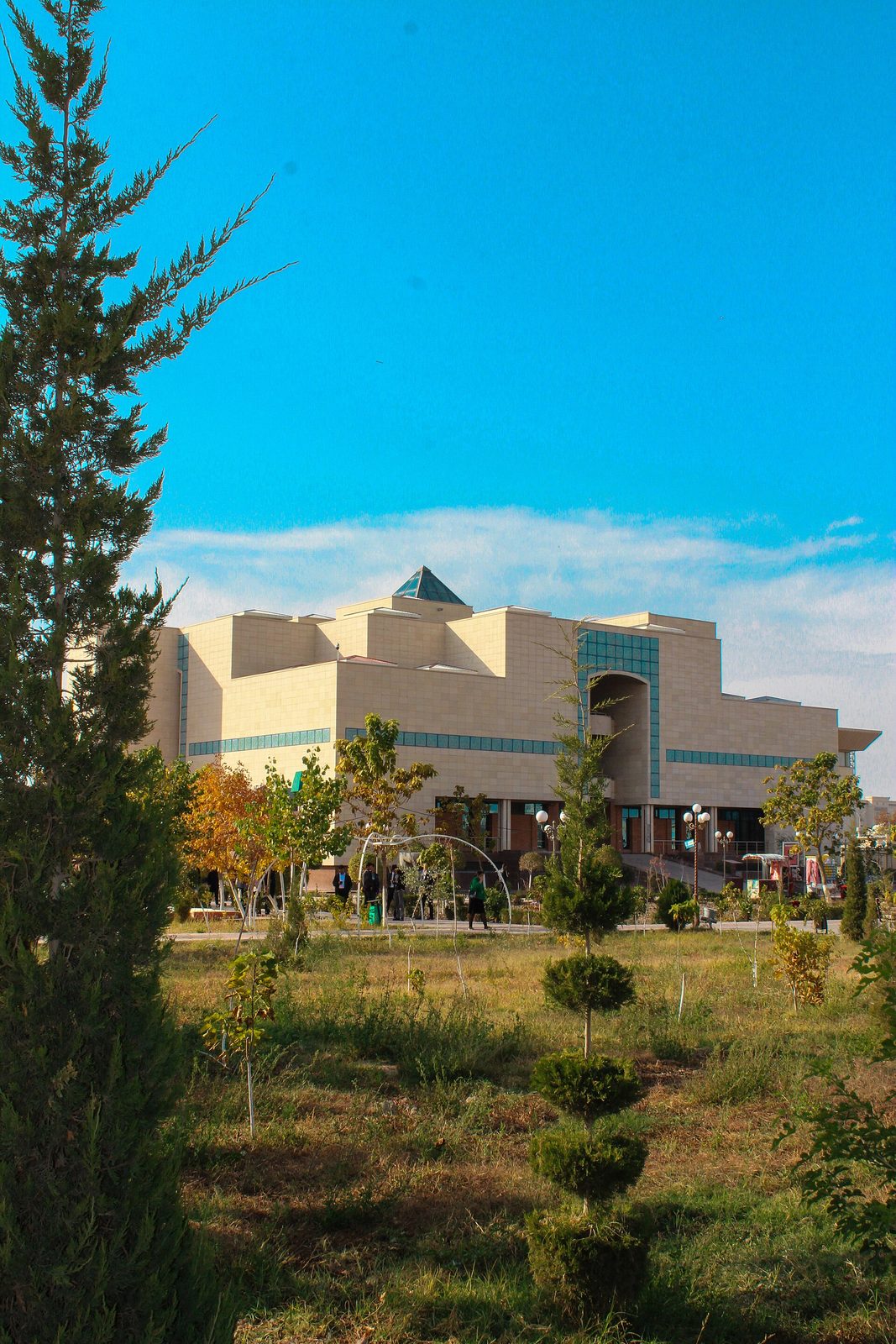
The first excavations here were made in 1885. Since 2019 part of the ancient city has been open as an open-air museum, and more excavated objects have been added to it over the years. You do not scramble over loose earth: you follow the walkways, and the most fragile parts are under a roof.
The covered walkways
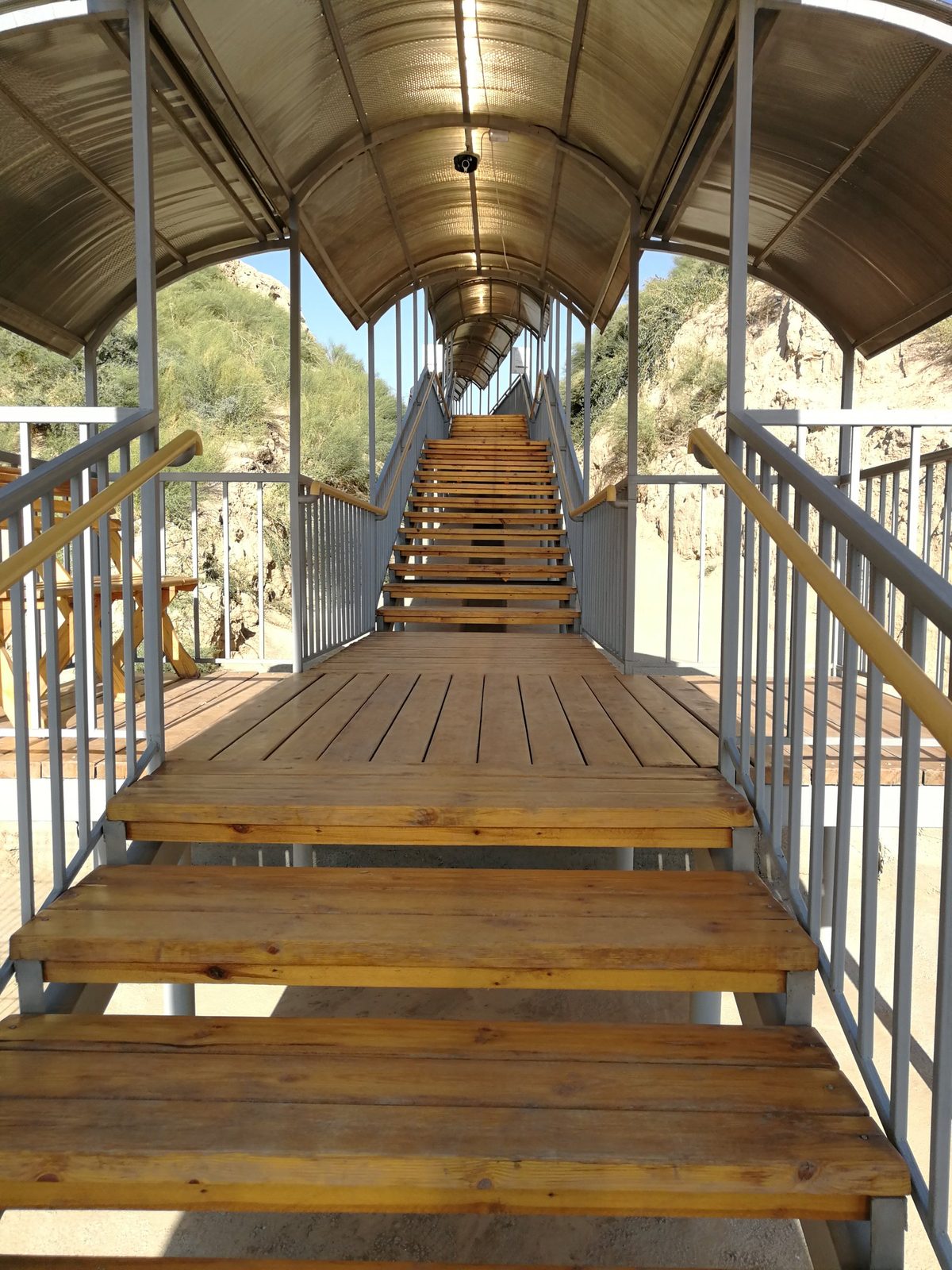
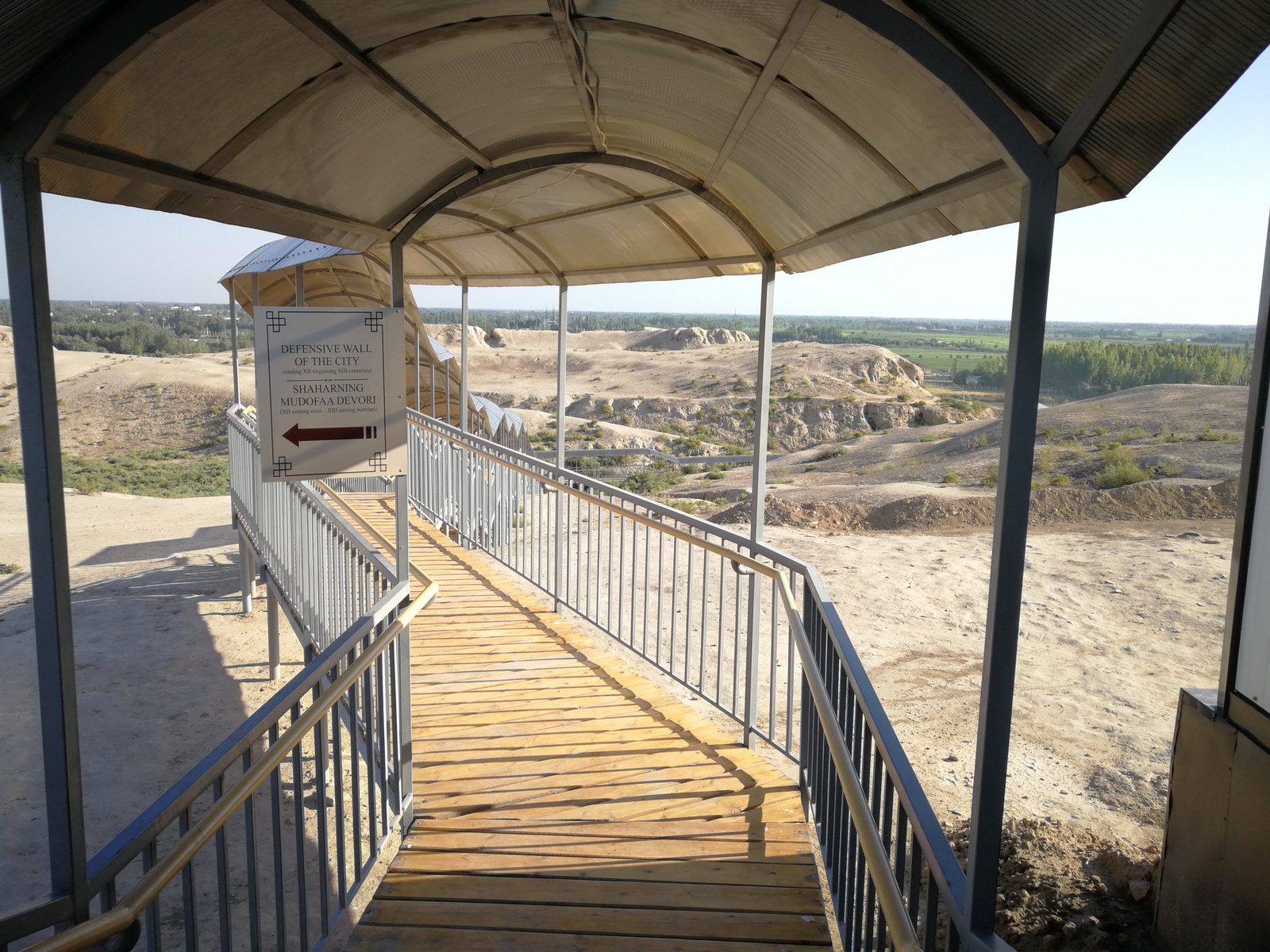
Wooden walkways with railings and a curved translucent roof run over the hills of the old city, with steps where the ground drops into a ravine. They keep you off the walls and out of the summer sun.
Signs along the way, in Uzbek and English, point to individual objects. One of them leads to the defensive wall of the city, dated to the end of the 12th and the beginning of the 13th century: the wall the city had when the Mongols came in 1219.
The excavation under the roof
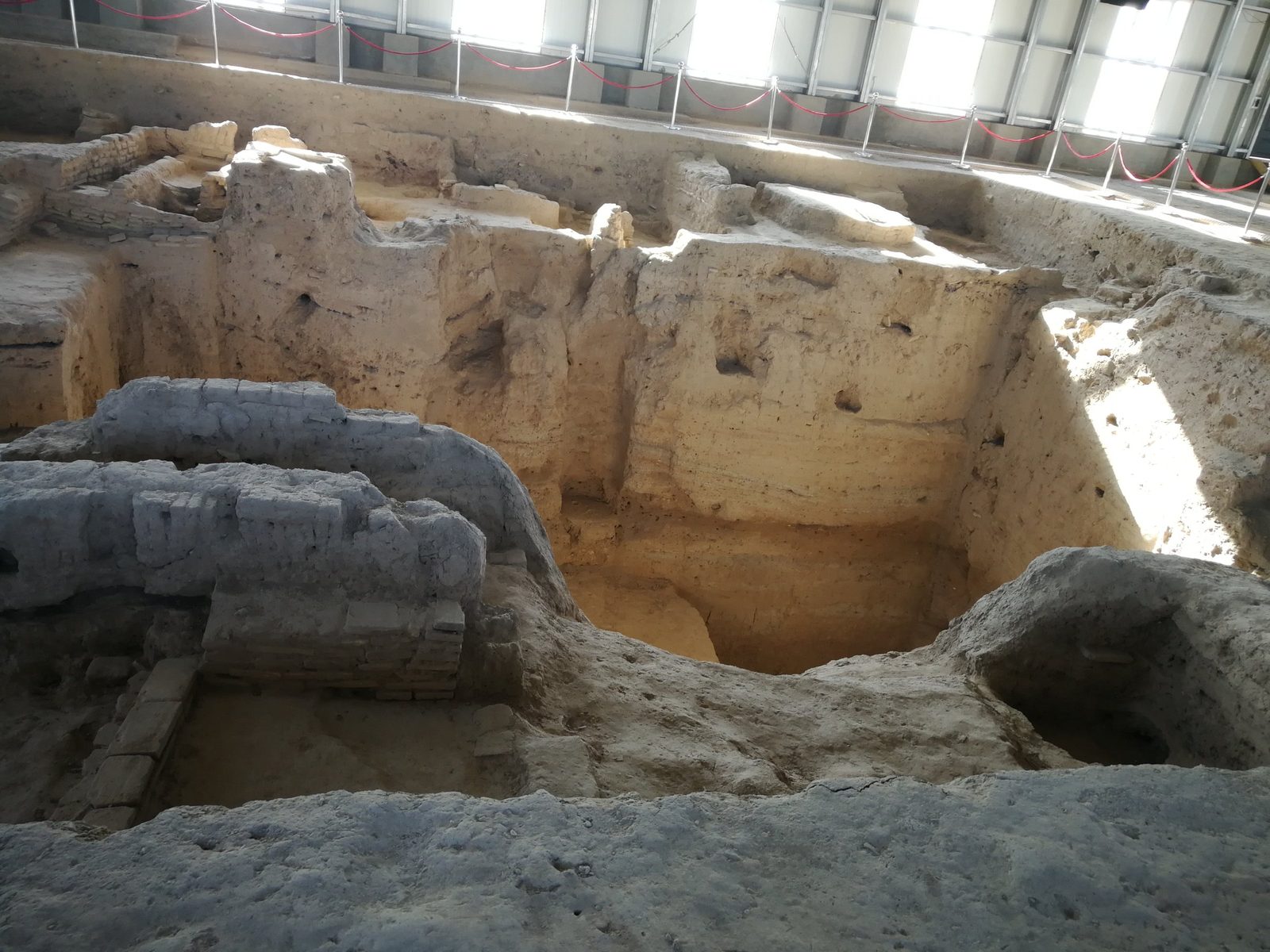
The highlight is a large hall built straight over an excavated quarter. You walk around the edge behind a rope barrier and look down into the trench: mud-brick walls, vaulted brick structures, round pits and, in the cut sides of the dig, the layers of earth that each century left behind.
Boards along the walls show what else has been studied here, such as vaulted brick channels and stairways going down into the ground.
Steel, glaze and a jar from the dig
Akhsikath was a city of craftsmen: glassmakers, potters, blacksmiths and armourers. Its best-known product was crucible steel. From the 9th to the 12th century its smiths sealed iron together with wood or other organic matter in clay crucibles and fired them at around 1,400–1,500 °C until the metal melted into a clean steel ingot. Archaeologists have found thousands of crucible fragments, the remains of production on an industrial scale. It ended with the Mongol invasion.
A British-Uzbek expedition studied the crucibles in 2002, and metallurgists now call this way of making steel the Ferghana Process.
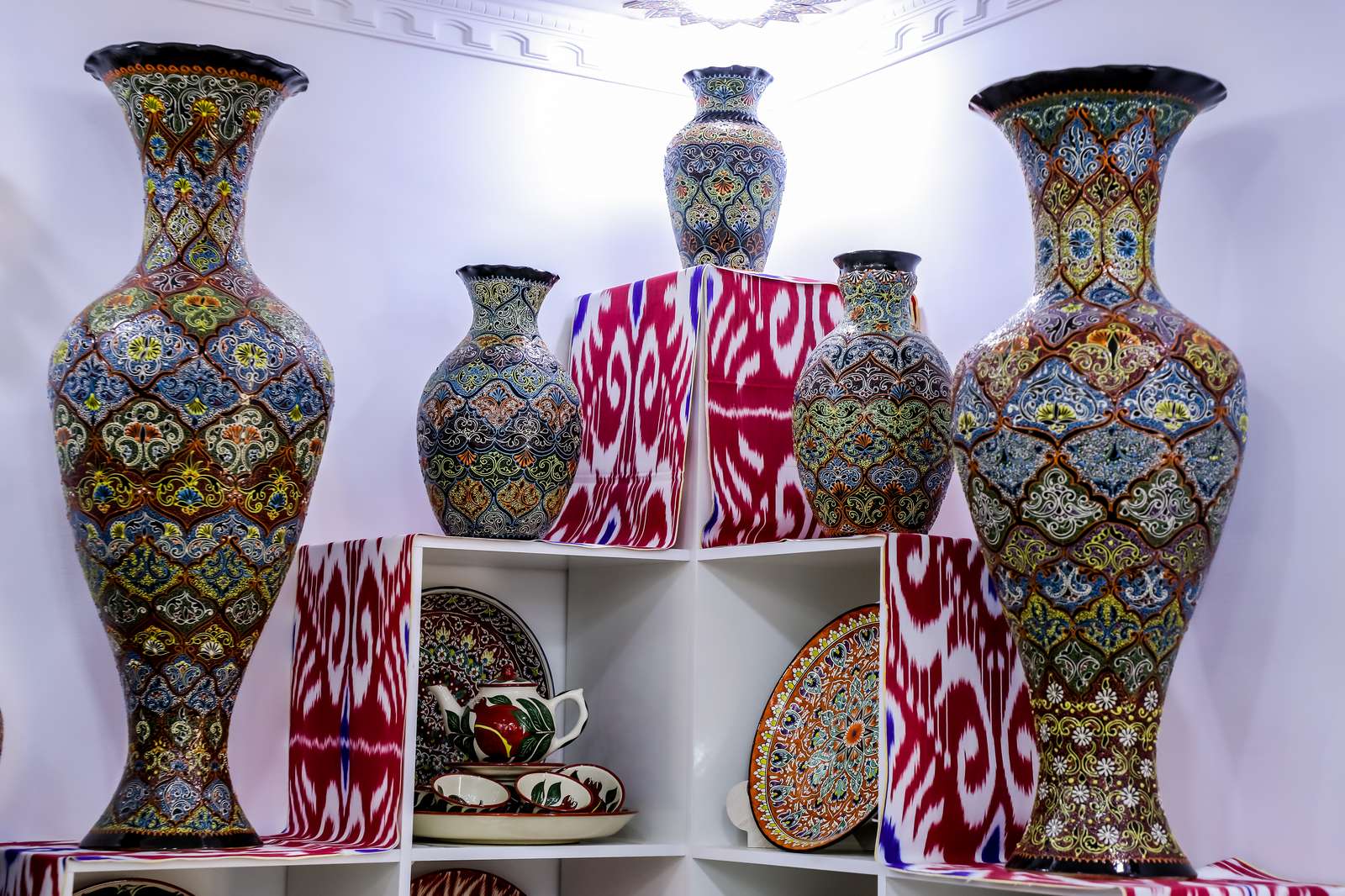
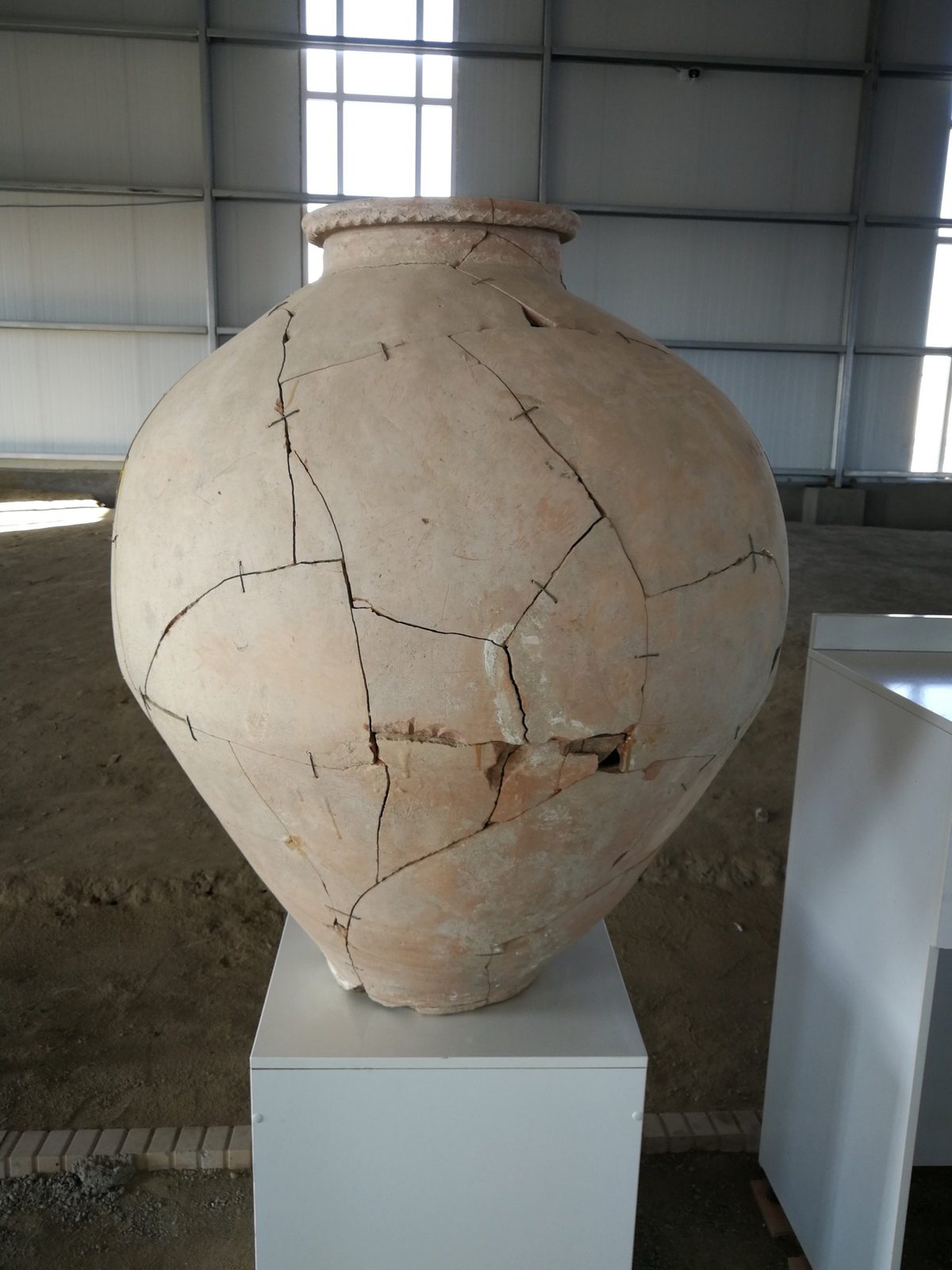
The potters were no less skilled. Glazed bowls painted in green and turquoise come from the site, and one board in the hall shows painted bowls, a fragment with a long-billed bird and two glazed jugs. In one recent season archaeologists recorded about 4,000 objects, among them an intact red-slipped jug of the 1st–2nd century AD and vessels of the 11th–12th century that probably held mercury. In the hall stands a large clay jar, put back together from its pieces with metal staples.
Babur’s Akhsi
Babur, the founder of the Mughal dynasty, was born in Andijan in 1483, and his memoirs, the Baburnama, describe Akhsi in detail. After Andijan, he wrote, no town in Fergana was larger. His father, Umar Shaikh Mirza, made it his capital and had extra ravines dug beyond the outer ones. The suburbs, Babur noted, ran some two miles beyond the walls.
He was proud of its melons. One variety, the Mir Timuri, he thought might have no equal in the world. At a feast in Samarkand he had them served next to melons from Bukhara, and Bukhara’s could not compare.
In 1494 Umar Shaikh Mirza was tending his pigeons when the dovecote, built over the ravine below the palace, collapsed and fell. His eleven-year-old son became ruler of Fergana.
How to get to Akhsikent
From Namangan. The site is about 22 km southwest of the city, on the bank of the Syr Darya. We bring our guests by car, with a driver and a guide. An hour on site is enough for the walkways and the covered dig; give it two if you want to follow the walkways out to the city wall.
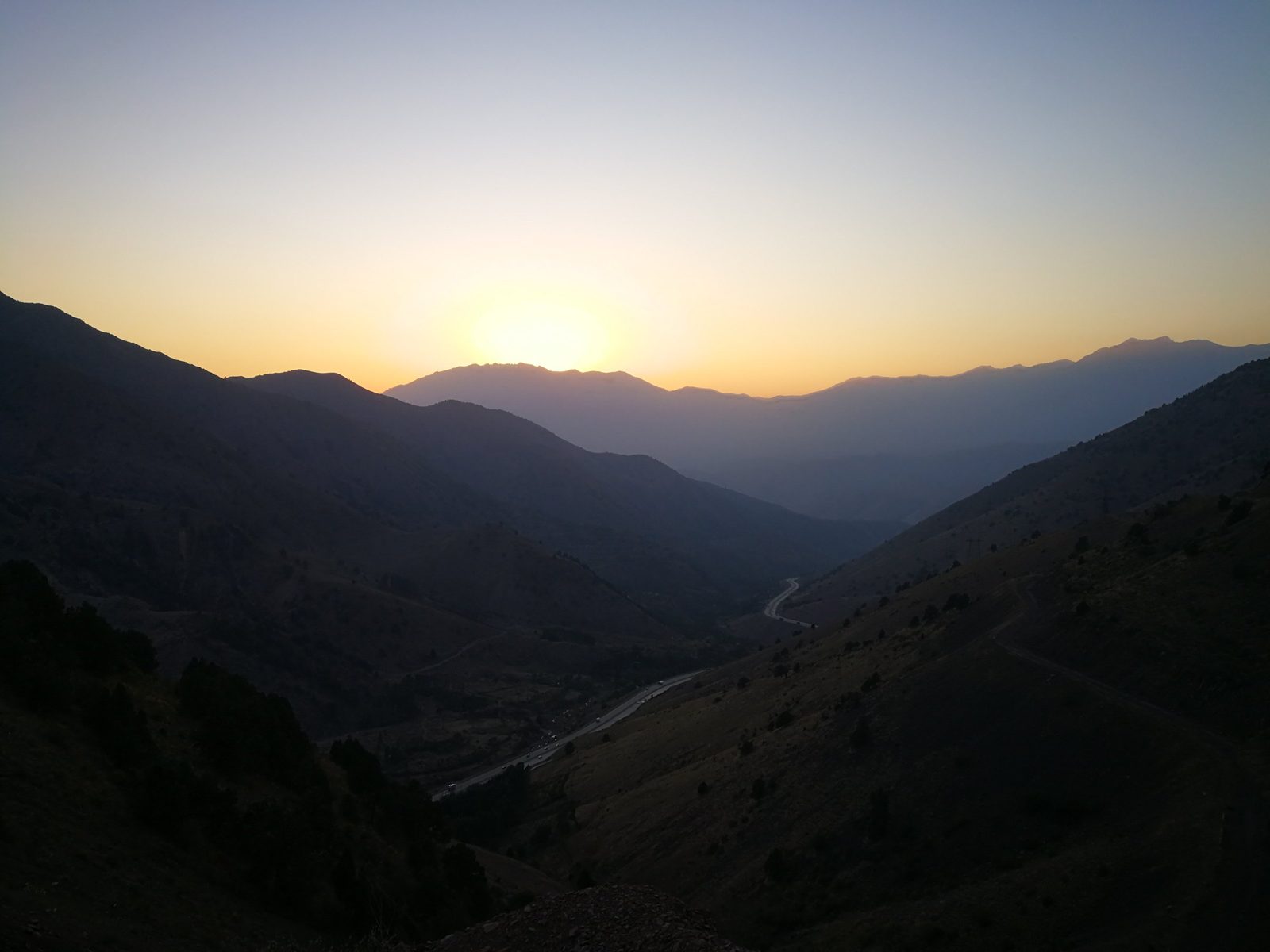
From Tashkent. The road to the valley crosses the Kamchik pass, where the A373 climbs to 2,268 m. In winter the pass can close because of avalanche risk, and then we use the train. Uzbekistan Airways flies from Tashkent to Namangan in about an hour, and the daily train reaches Kokand at 12:28, from where our driver takes you across the valley. A day trip from Tashkent is long; we prefer a night in Namangan, and if you do drive back the same day, you cross the mountains at sunset.
Combine it with Namangan, Kokand and Margilan
Akhsikent fits easily into a Fergana Valley trip. Spend the rest of the day in Namangan, then head south across the river to Kokand and the palace of Khudoyar Khan, to the potters of Rishtan and to Margilan, where ikat silk is still dyed and woven by hand. Our Fergana Valley guide covers them all, and what to buy in Uzbekistan explains how to tell handmade silk and ceramics.
Our Fergana Valley crafts tour runs four days by train from Tashkent and back, and the Fergana Valley extension adds the valley to a classic route. Tell us you want Akhsikent and we add it to the plan, with a guide who speaks your language.
In short
- Akhsikent, about 22 km southwest of Namangan, was founded in the 3rd century BC and was the capital of the Fergana Valley in the 9th–10th centuries.
- The city recovered after the Mongols sacked it in 1219 and was finally ruined by an earthquake in 1620; its people moved to Namangan.
- Its smiths made crucible steel on an industrial scale from the 9th to the 12th century.
- Babur called it the strongest fort in Fergana; his father made it his capital and died here in 1494.
- Covered walkways and a roofed excavation make it an easy visit: one or two hours, best combined with Namangan, Kokand and Margilan.