Places in this article: Samarkand · Bukhara · Khiva
Music of Uzbekistan: maqom, dutar, doira and where to hear it live
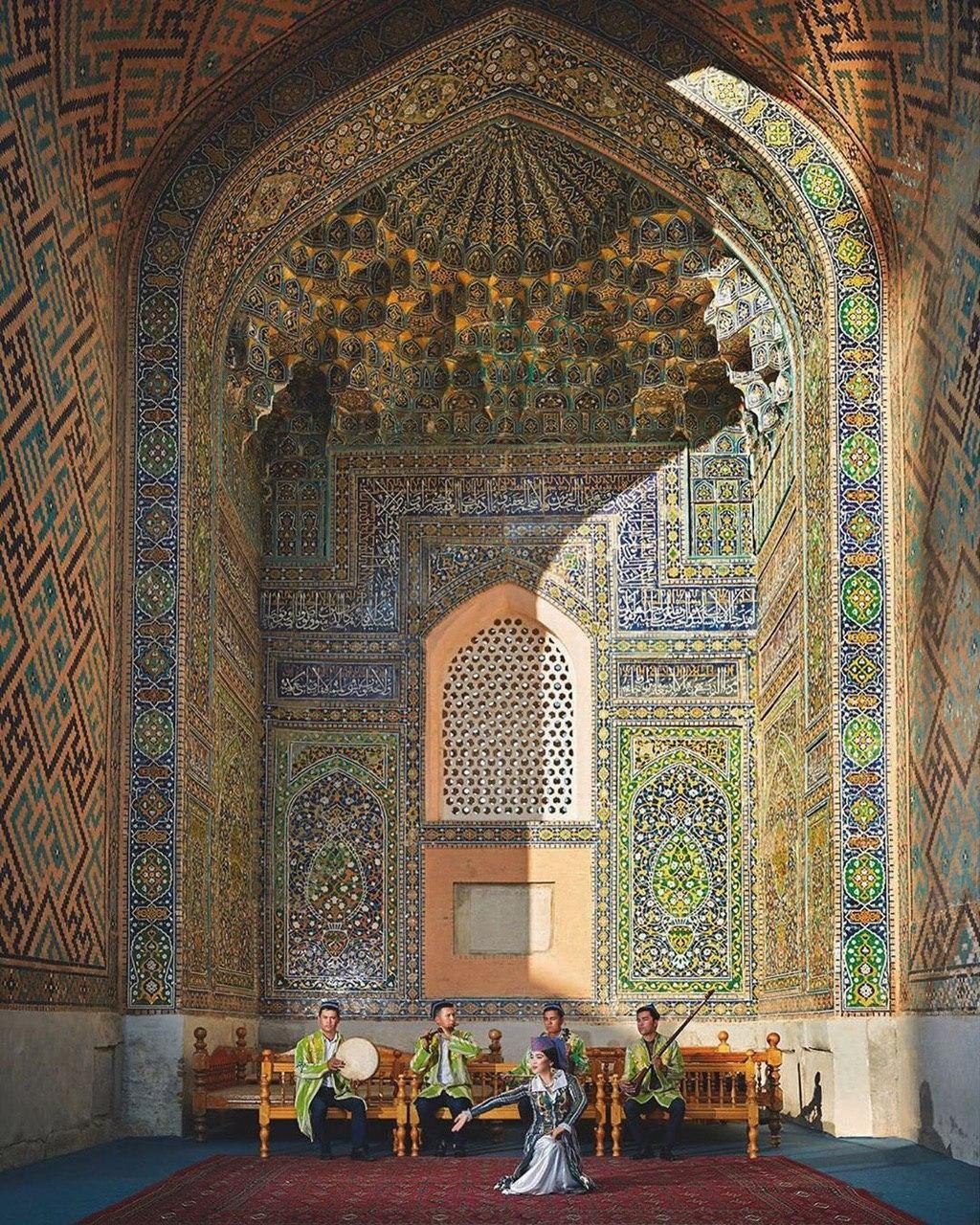
In Bukhara's Ark, musicians once played maqoms from a pavilion at set hours of the day, and the city told the time by them. Those suites are still learned from master to pupil, by ear, because written notes record only their skeleton. That is the first thing to know about the music of Uzbekistan: most of it lives in the memory of performers, and you meet it best live.
We live in Tashkent and plan evenings around concerts and festivals for our guests. Here is what to listen for, which instruments you will see on stage, which festivals are worth building a trip around, and where to hear Uzbek music on an ordinary evening.
Shashmaqom: the classical suites of Bukhara
Did you know? Shashmaqom is learned by ear: notes keep only its outline Shashmaqom, “six maqoms”, is the classical music of Bukhara: long suites of song, poetry and instruments. Written notes record only its basic framework, so it still passes from master to pupil. UNESCO proclaimed it a masterpiece of oral heritage in 2003. Read more → means "six maqoms": six large suites, each built on its own mode. UNESCO proclaimed it a masterpiece of intangible heritage in 2003 and inscribed it on its Representative List in 2008, jointly for Uzbekistan and Tajikistan. Its historical heart is Bukhara, and it grew up in the old cities of the region, Samarkand and Shakhrisabz among them.
A performance opens with an instrumental introduction. Then comes the nasr, the main vocal part, sung by one singer or a group to lutes, fiddles, frame drums and flutes. The words are classical poetry, and a song often starts low, climbs to a high climax and returns to where it began. The story of the fortress where those musicians played is in our guide to the Ark.
This is a living tradition, not a museum piece. In June 2026 Namangan hosted the third International Maqom Art Forum, with guests from 83 countries expected; the first was held in Shakhrisabz in 2018 and the second in Zomin in 2024. A national institute of musical art named after Yunus Rajabiy, founded in 2020, trains maqom performers, bakhshis and katta ashula singers.
Katta ashula: the big song of the Fergana Valley
Katta ashula, literally "big song", belongs to the Fergana Valley and has been on the UNESCO list since 2009. It is performed by two to five singers, it leaves room for improvisation, and its subjects run from love to the order of the universe and nature. UNESCO describes it as a blend of singing, instrumental music, Eastern poetry and sacred rite, passed on from master to pupil.
If the valley is on your route, our Fergana Valley guide covers Kokand, Margilan and Rishtan, and we can look for a concert on your dates.
Bakhshi: epic singers of the south and the west
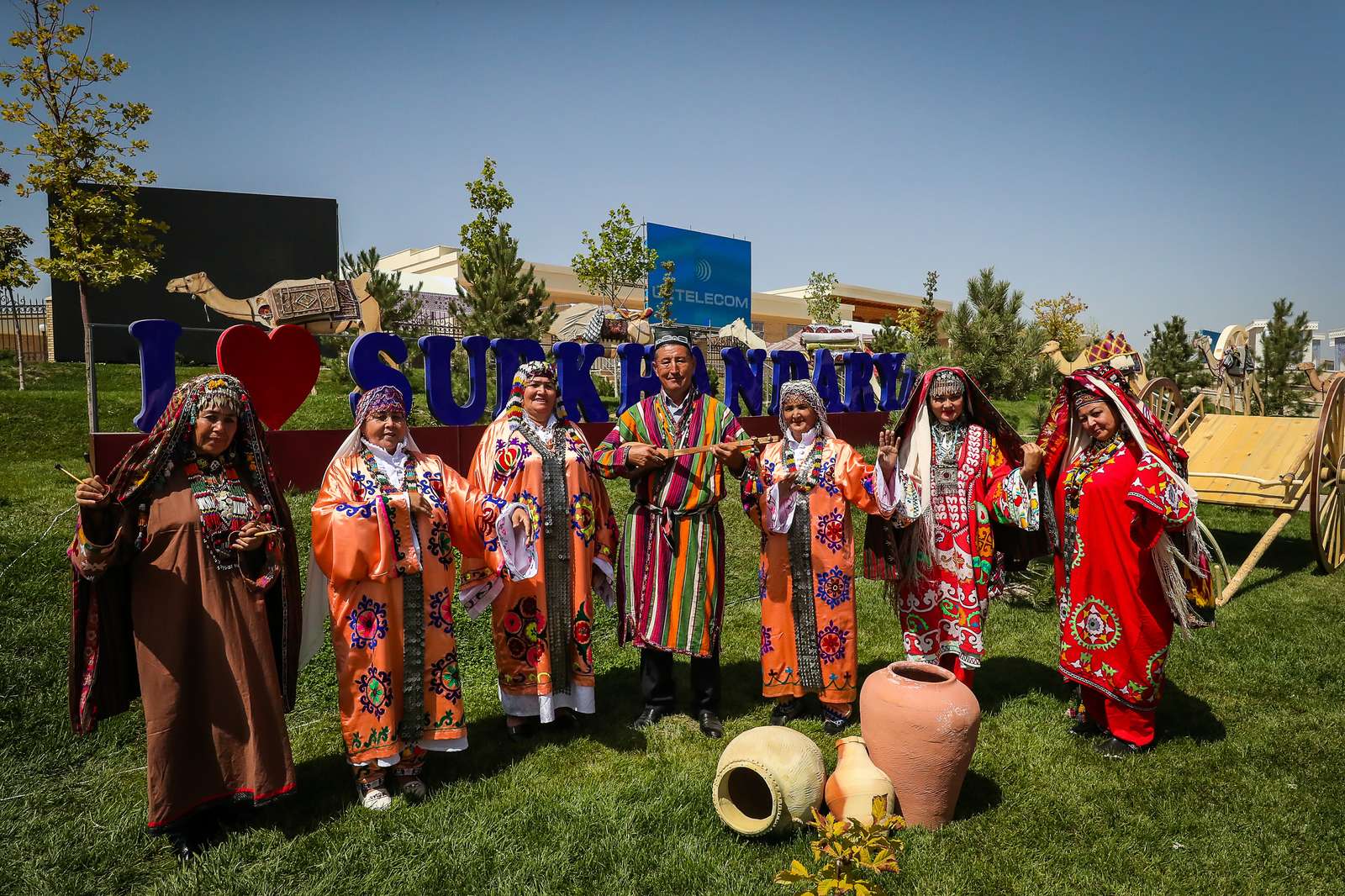
A bakhshi sings dostons, long epic poems built on myths, legends and folk tales, about love, friendship and loyalty to one's land. They are recited from memory to the sound of the dombra, a plucked string instrument, or the kobuz, a bowed one. A good bakhshi holds a room with wordplay, proverbs and invention. UNESCO added bakhshi art to its list in 2021. The craft passes within families and through bakhshi schools, and women bakhshis have performed since the 19th century.
Each region keeps its own school. In Surkhandarya, in the far south, the bakhshis of the Sherabad school sing to the dombra, and Termez, the regional capital, hosted the first International Bakhshi Art Festival in 2019. In Karakalpakstan, storytellers called zhyrau perform epics to the ,Did you know? The Karakalpak kobyz has two strings of horsehair The Karakalpak kobyz is a bowed instrument with an arched, leather-covered body and two horsehair strings, played with a horsehair bow. Storytellers called zhyrau sing epics to it; in 2025 UNESCO put it on its urgent safeguarding list. Read more → a bowed instrument with two horsehair strings. In 2025 UNESCO put the art of making and playing the kobyz on its list of heritage in need of urgent safeguarding. For the south, start with our Termez guide.
The instruments: what you will see on stage
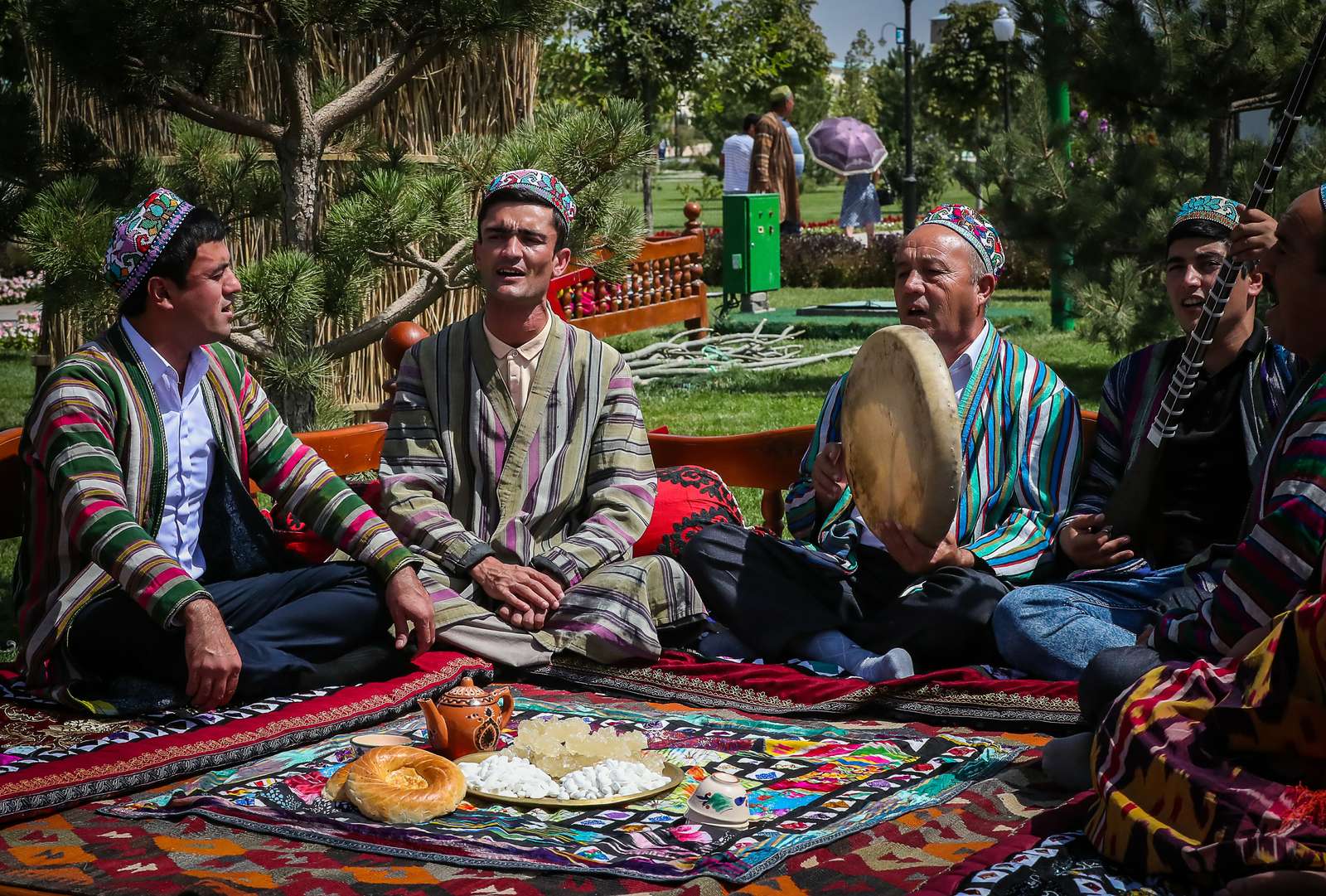
- Dutar. A long-necked lute with two strings; the name is Persian for "two strings".
- Tanbur. Also long-necked and fretted, and a lute you will see in classical ensembles.
- Rubab. A string instrument carved from mulberry wood. In 2024 the art of making and playing it joined the UNESCO list, shared by Uzbekistan, Tajikistan, Afghanistan and Iran.
- Gijak. A spike fiddle played with a bow.
- Doira. A frame drum with metal rings fixed inside the frame, so every stroke also rings. One doira sets the rhythm for a whole ensemble or a dance.
- Surnay and karnay. The outdoor pair. The surnay is a loud reed pipe and the karnay a long metal trumpet; they sound at weddings, holidays and festival openings.
Festivals worth planning a trip around
Sharq Taronalari, Samarkand. The international music festival, founded in 1997, is held every two years at the end of August. For years its stage stood on the ,Did you know? The Registan's sun-carrying lion went on a banknote The Sher-Dor Madrasah (1619–1636) is named for the big cats with the sun on their backs on its portal. The image appeared on the reverse of Uzbekistan's 200-som note of 1997. Read more → between the madrasahs; the 13th edition, on 26–30 August 2024, moved to the Eternal City complex on the edge of town and brought performers from about 80 countries. The organisers announce the dates of each edition in advance, and we confirm them when we plan your trip. The square is in our guide to the Registan.
International Bakhshi Art Festival. It moves around the country: Termez in 2019, Nukus in 2021, and Khiva for the fourth edition, on 26–28 April 2025, when about 200 participants from more than 40 countries gathered at .Did you know? People still live inside Khiva's museum city Itchan Kala packs more than 50 historic monuments and about 250 old houses inside clay walls 8–10 m high and 5–6 m thick, and families still live and work in its lanes. Read more →
The doira in Bukhara. In October 2026 the Kukeldash madrasah at Did you know? Bukhara's ponds were once its water supply Pools like Lyabi-Hauz, dug around 1620 and 46 × 36 m, were the city's main source of water. Most were filled in during the 1920s–30s because they spread disease; Lyabi-Hauz survived. Read more → hosted Bukhoro doira sadolari, a festival of the frame drum, with doira masters and ensembles from across the region. The details are in our news story.
Did you know? Khorezm's Lazgi dance is on UNESCO's heritage list Lazgi, the dance of Khorezm, was inscribed by UNESCO in 2019. It mirrors the sounds of nature and feelings of love and joy, and paintings at the ancient site of Toprak-Kala suggest centuries-old roots. Read more → in Khiva. The dance of Khorezm has been on the UNESCO list since 2019, and its international festival returns to Khiva every two years. Dates for this and the other events are in our calendar of festivals in Uzbekistan.
Where to hear live music on an ordinary evening
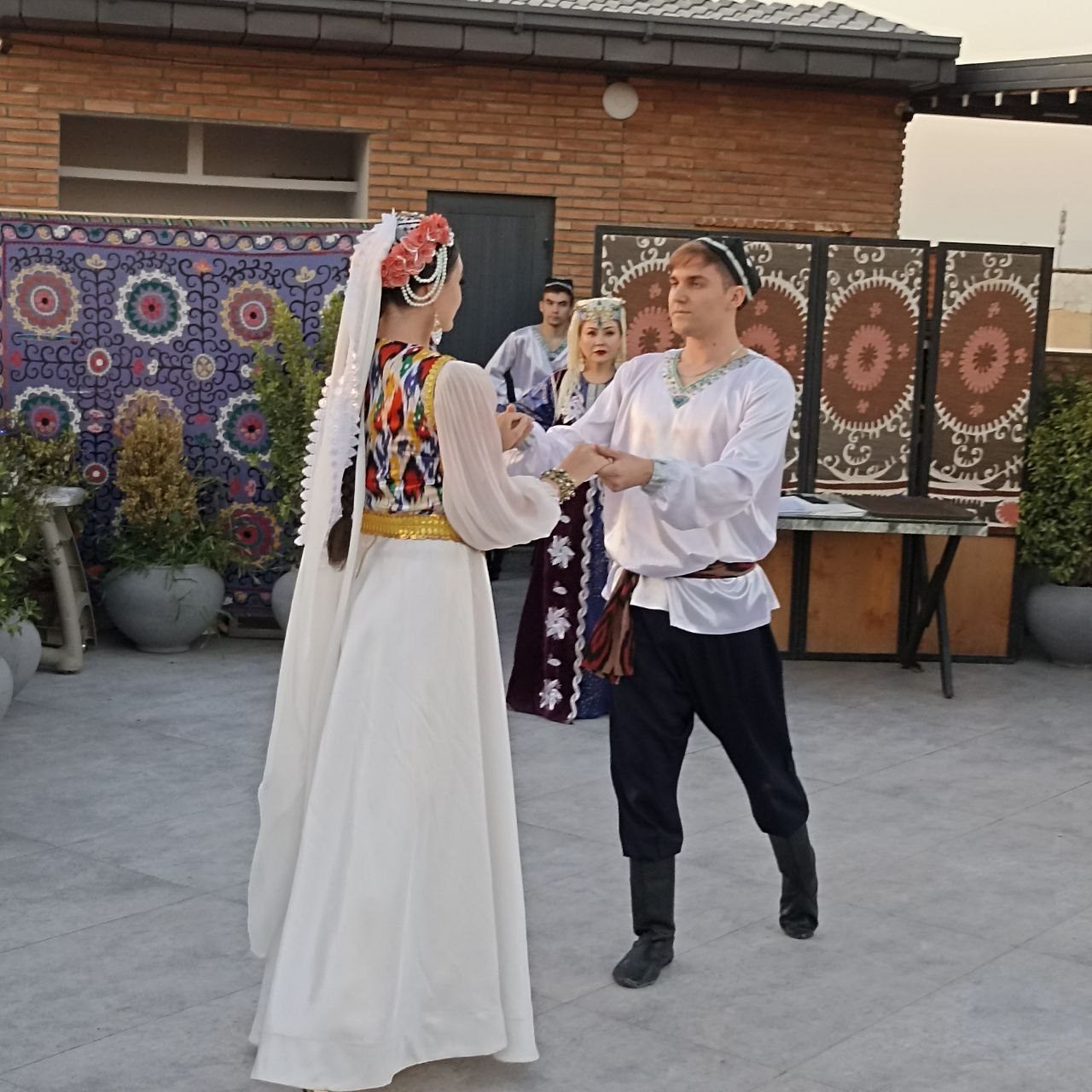
Festivals depend on dates; an evening of music is easier to find. In Tashkent, the theatres, concert halls and the philharmonic stage classical, folk and maqom programmes, and we check their posters for your dates before you fly.
In Bukhara, a An Islamic college: student cells and classrooms around a courtyard behind a grand portal. In the old towns many now house museums and craft workshops. courtyard on Lyabi-Hauz hosts a folklore show every evening in the high season, from April to June and from August to October: dances from Bukhara, Khorezm and the Fergana Valley to live music, with costume shows between the numbers. Most Bukhara evenings begin on that square anyway; see our Lyabi-Hauz guide.
In Samarkand we bring the music to you. Our folk show for groups takes 30 minutes and nine performers and is added to a dinner or an evening event: the jug dance, the Rice cooked in a kazan with carrots, onions and meat: the dish of every Uzbek celebration. Each region cooks it its own way. dance, a wedding rite, the tulip dance and the Khorezm lazgi are part of it. Celebrating something? Our birthday tour in Samarkand ends with a festive dinner in a madrasah courtyard or a caravanserai, with live music and dance.
Practical tips
- Keep the evenings free. Concerts and folk shows start in the evening, so see the monuments in the morning and the afternoon.
- Build the route around the festival. Festival dates are often announced only a few weeks ahead; arrive the day before and keep one spare day.
- Ask before filming close up. Performers are used to cameras at shows, but a word first is always welcome.
- Add music to a classic route. Our 8-day classic tour covers Samarkand, Bukhara and Khiva, and we can add a concert or a folk show to any evening.
In short
- Shashmaqom, the classical suites of Bukhara, has been on the UNESCO list since 2008, katta ashula since 2009 and bakhshi art since 2021.
- The instruments to know: dutar, tanbur, rubab, gijak, doira, and the surnay and karnay outdoors.
- Sharq Taronalari in Samarkand is held every two years at the end of August; the bakhshi festival moves from city to city.
- For an ordinary evening: a folklore show in Bukhara in season, the posters in Tashkent, and our folk show in Samarkand.