
Places in this article: Bukhara · Tashkent
How to read an Uzbek menu: 30 dish names explained, beyond plov
The menu arrives, and half of it is in Uzbek, half in Russian, with perhaps a line of English at the bottom. Sho’rva, xonim, qozon kabob, moshkichiri: the words are unfamiliar, but behind them are excellent everyday dishes of Central Asia. Once you know thirty of them, you can order anywhere, from a roadside A teahouse: green tea, plov and conversation on wide wooden beds called topchan. to a restaurant in Samarkand.
We are a tour operator in Tashkent and read these menus every day with our guests. This is how to read an Uzbek menu: how it is laid out, thirty dish names explained with their Uzbek and Russian spellings, what to order when, and what suits vegetarians. The ten classics, from Rice cooked in a kazan with carrots, onions and meat: the dish of every Uzbek celebration. Each region cooks it its own way. to lagman, are in our list of ten dishes; here we go further down the menu.
How an Uzbek menu is laid out
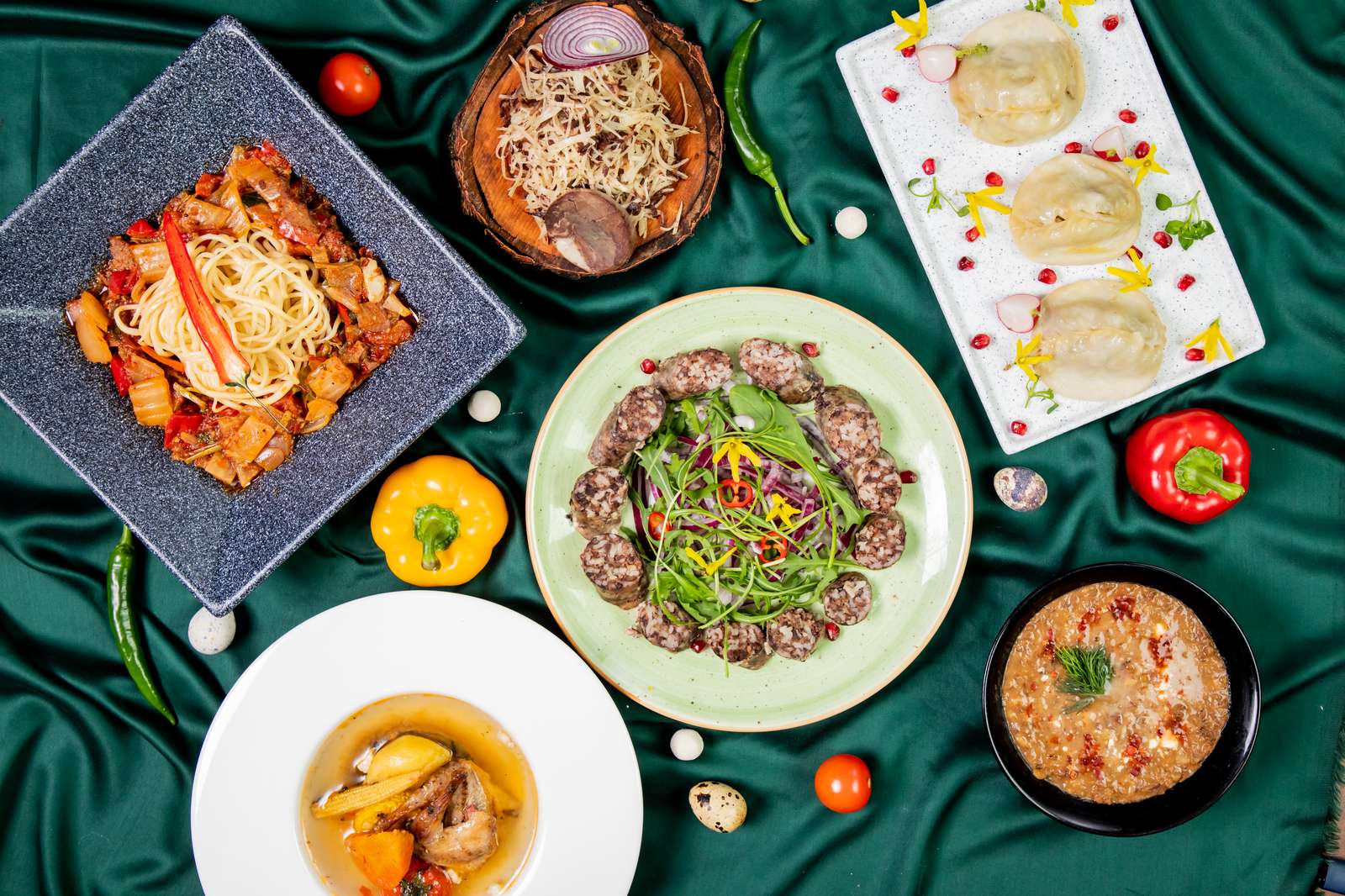
Most menus follow the order of a meal. First come salads (salatlar, салаты), then first courses, which here means soups (birinchi taomlar, первые блюда), then second courses, the hot mains (ikkinchi taomlar, вторые блюда), with a separate page for kebabs (kaboblar, шашлыки). Bread, non, is ordered on its own and comes first; tea is ordered by the pot, a choynak.
Uzbek is written in Latin letters, so o’ and g’ with an apostrophe are separate letters, and x sounds like the “ch” in Scottish “loch”: xonim is said “honim”. Russian menus spell the same dishes in Cyrillic, and English menus borrow either form, so one dish can appear as shurpa, shorva or sho’rva. For more words for the table, see our Uzbek phrases for travellers.
Salads: what comes before the hot dishes
- Achchiq-chuchuk (аччик-чучук): thinly sliced tomato and onion, often with hot pepper. It is the salad served with plov and shashlik, and it is vegetarian.
- Anor va turp: Did you know? Legend says Margilan is named after chicken and bread Legend says locals greeted Alexander the Great with chicken and bread, 'murg' and 'non', and the dish gave the town its name. In fact Alexander never reached here; the name Margilan is recorded from the 10th century. Read more → radish with pomegranate seeds, a salad of the winter months.
- Rediska va tuxum: radishes and egg with herbs, dressed with sour cream, a salad of early spring.
- Karam va qalampir: cabbage with sweet pepper, dressed with oil.
Soups: the first courses
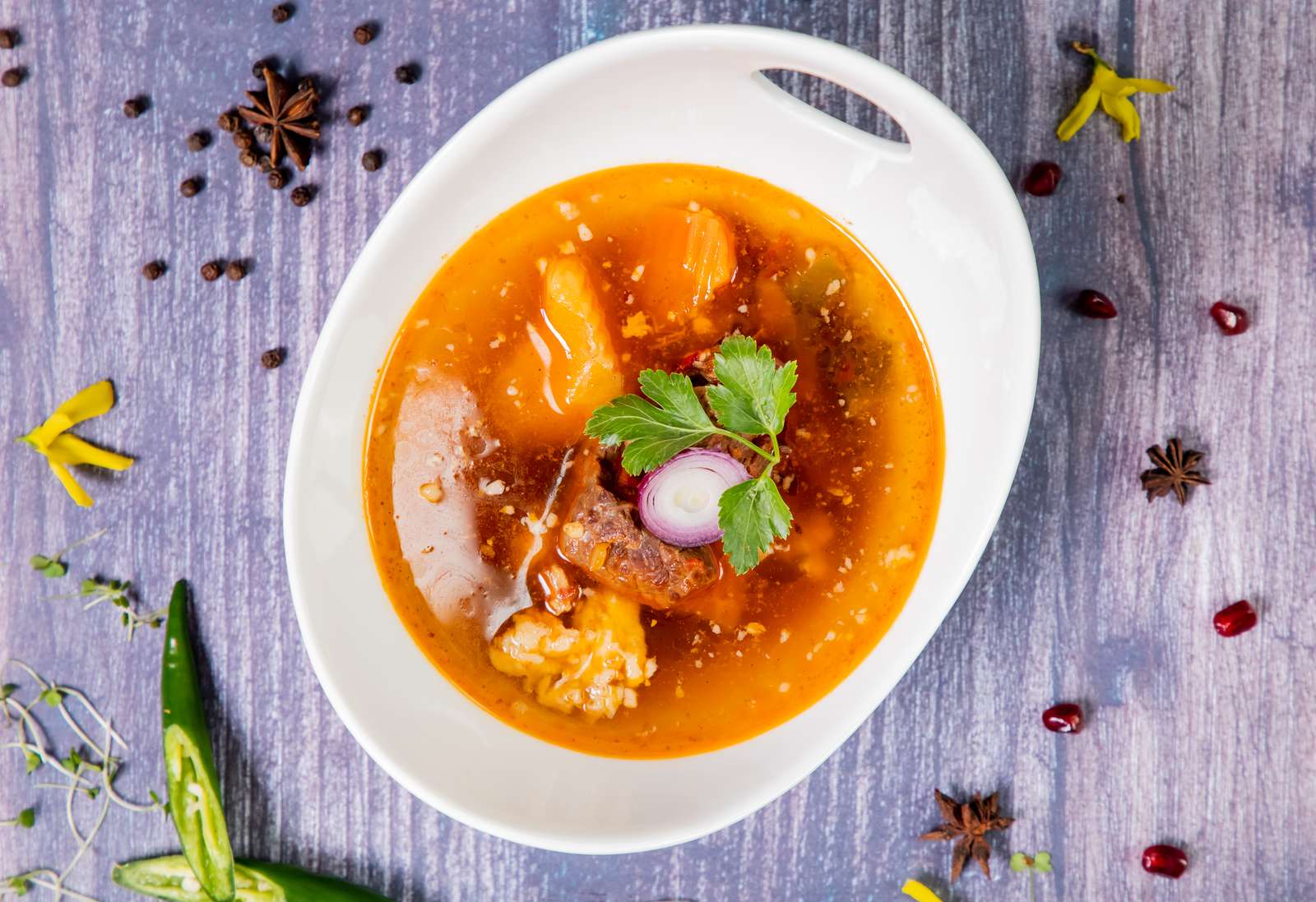
- Sho’rva (шурпа): a thick soup of mutton or beef with onion, potato and tomato. The word also simply means “soup”, so read the next word: qaynatma sho’rva is boiled, qovurma sho’rva is made with fried meat.
- Mastava (мастава): rice soup with vegetables, usually served with a spoonful of qatiq, soured milk. It is customarily cooked on meat broth.
- Mashxo’rda (машхурда): a soup of rice and mung beans, mosh, thick and filling on a cold evening.
- Chalop (чалоп): a cold soup of qatiq diluted with water, with cucumber, dill and coriander. In the heat of July it is the dish to order, and it is vegetarian.
Lagman, the hand-pulled noodles, can come as a soup or as a drier main course; it is in our ten dishes.
Dough dishes: somsa, manti and xonim
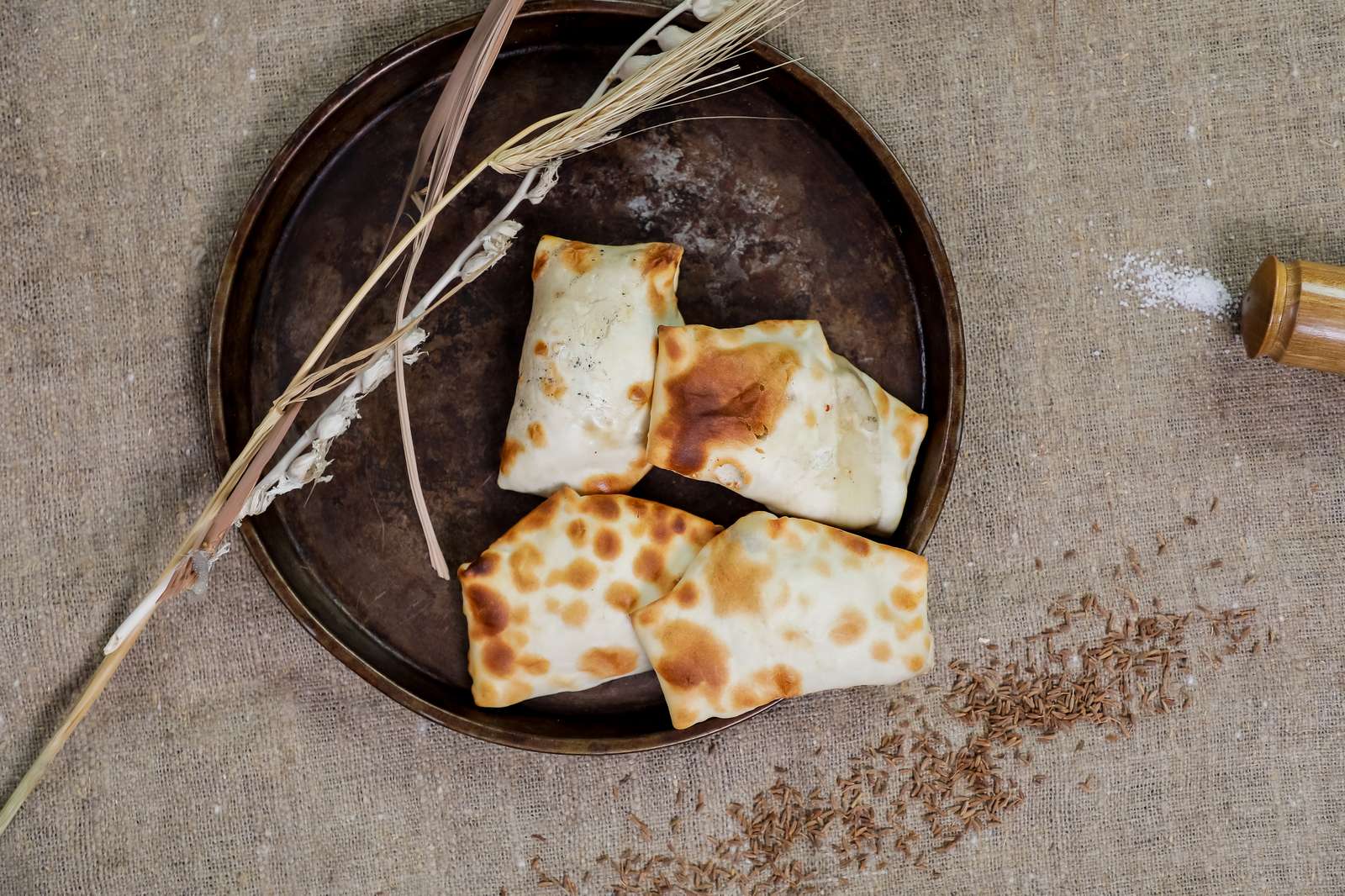
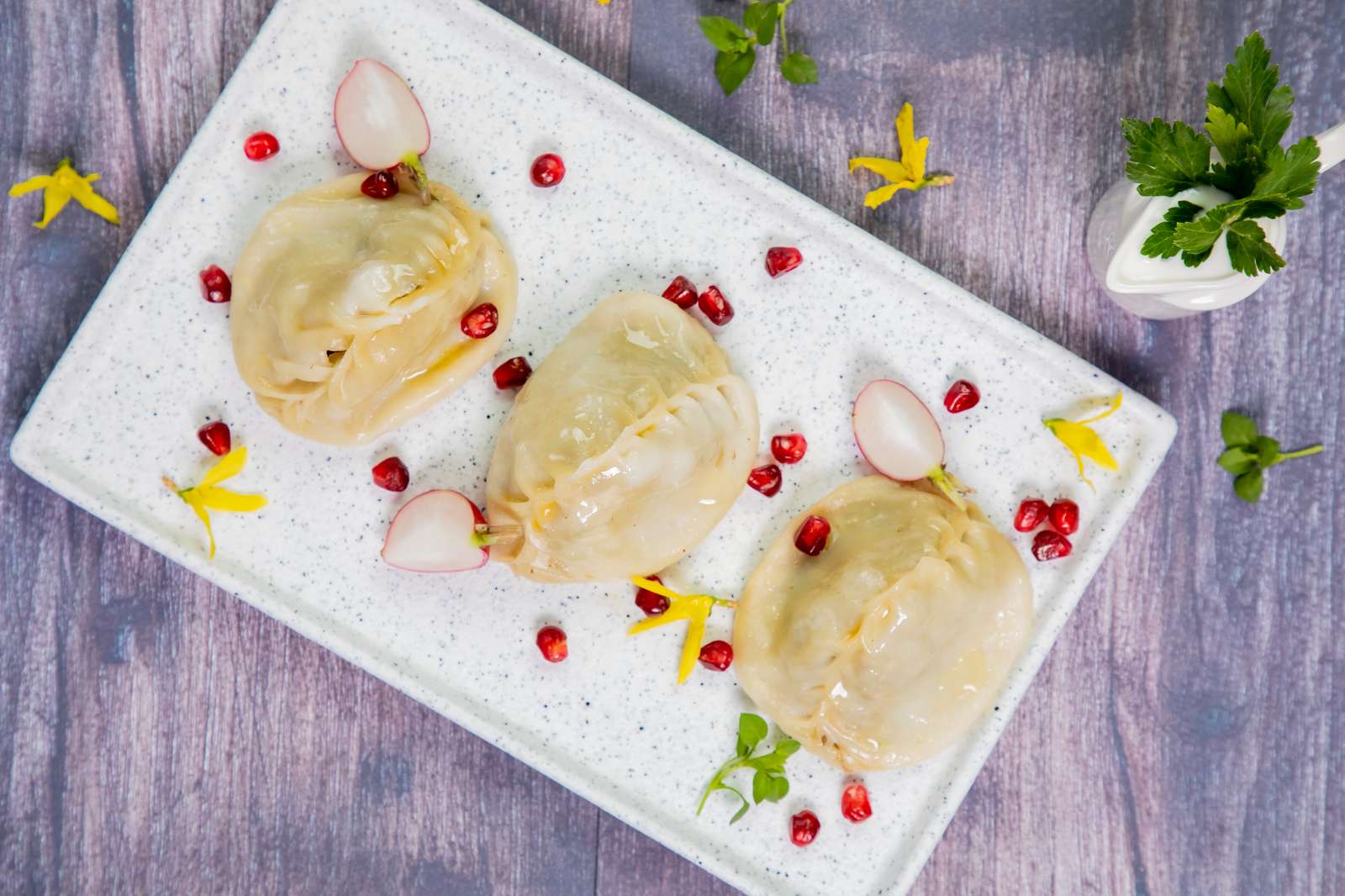
- Xonim (ханум): a roll of thin dough filled with meat or potato, onion and pumpkin, steamed in the same tiered pot as manti and cut into slices.
- Mayda manti (майда-манты): small manti, often with potato; good for vegetarians when the filling is potato or pumpkin.
- Ko’k somsa (кук-самса): somsa with greens and spinach, one of the spring dishes of Navruz.
- Somsa by region: the Jizzakh somsa is large and filled with meat; the Bukhara one is triangular; the Alat somsa, from the Bukhara region, has very thin dough and a juicy filling; the Karshi somsa is finger-shaped; and in Khorezm somsa is fried rather than baked.
- Chuchvara (чучвара): small dumplings, boiled and served in broth or with sour cream.
Two famous dough dishes belong to particular regions: naryn, fine noodles with sliced horse meat, in Tashkent, and tuxum barak, egg-filled dumplings, in Khorezm. Both are in Uzbek food by city.
Kebabs: how to read the shashlik page
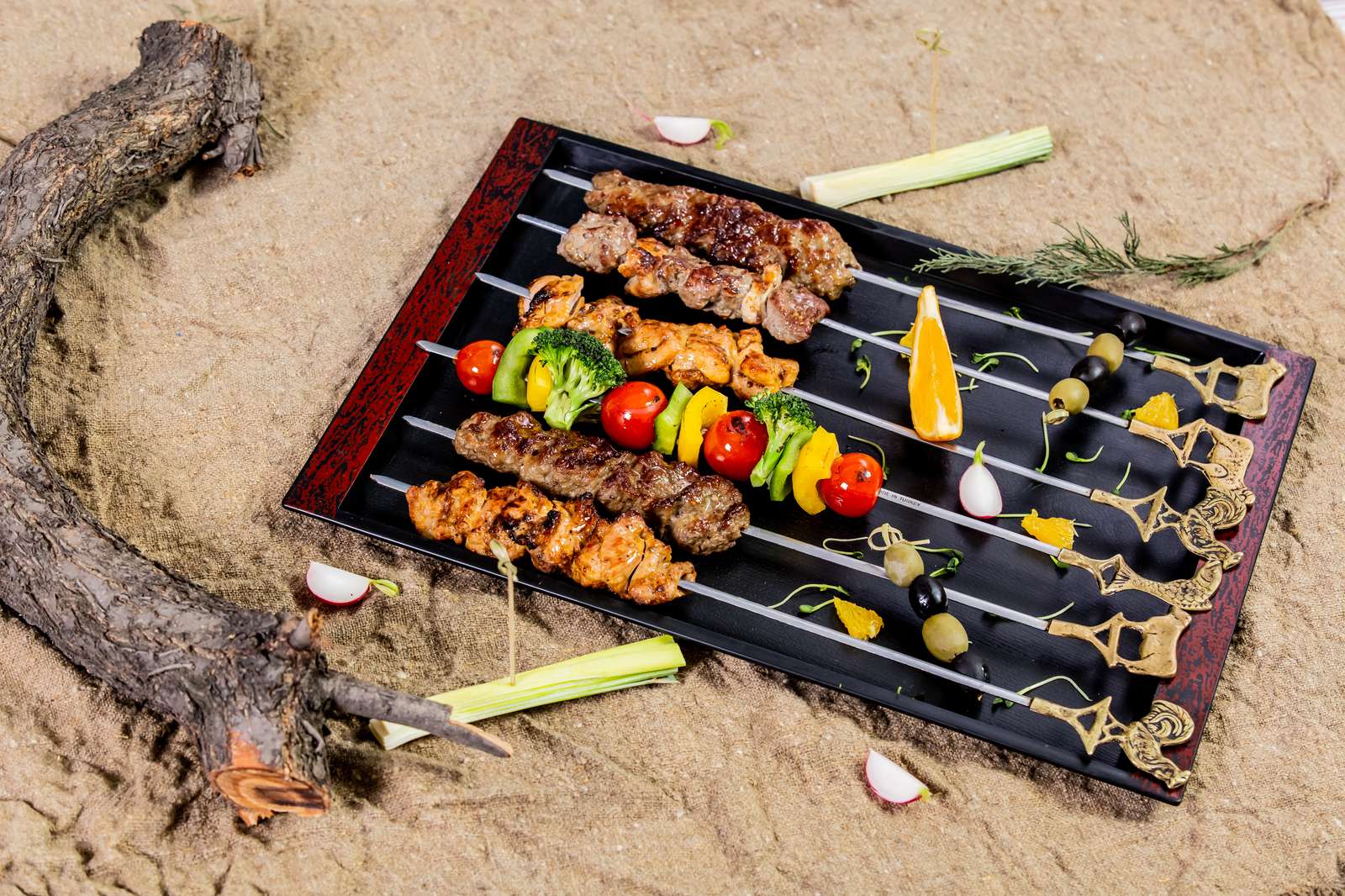
- Classic shashlik: chunks of mutton marinated with spices, with pieces of tail fat, dumba, between them.
- Qiyma kabob (кийма): minced lamb shaped around the skewer, the one many local people order first.
- Jigar kabob (джигар): beef liver.
- Tovuq kabob (товук): chicken.
- Charvi kabob (чарви): meat wrapped in a thin layer of fat.
- Beshpanja (бешпанджа): a kebab built on five skewers at once, a dish for a table of friends.
Shashlik is usually ordered by the skewer and comes with raw onion and bread. The shashlik of Gijduvan, near Bukhara, has been a registered geographical indication since 2023.
Meat and rice: the second courses
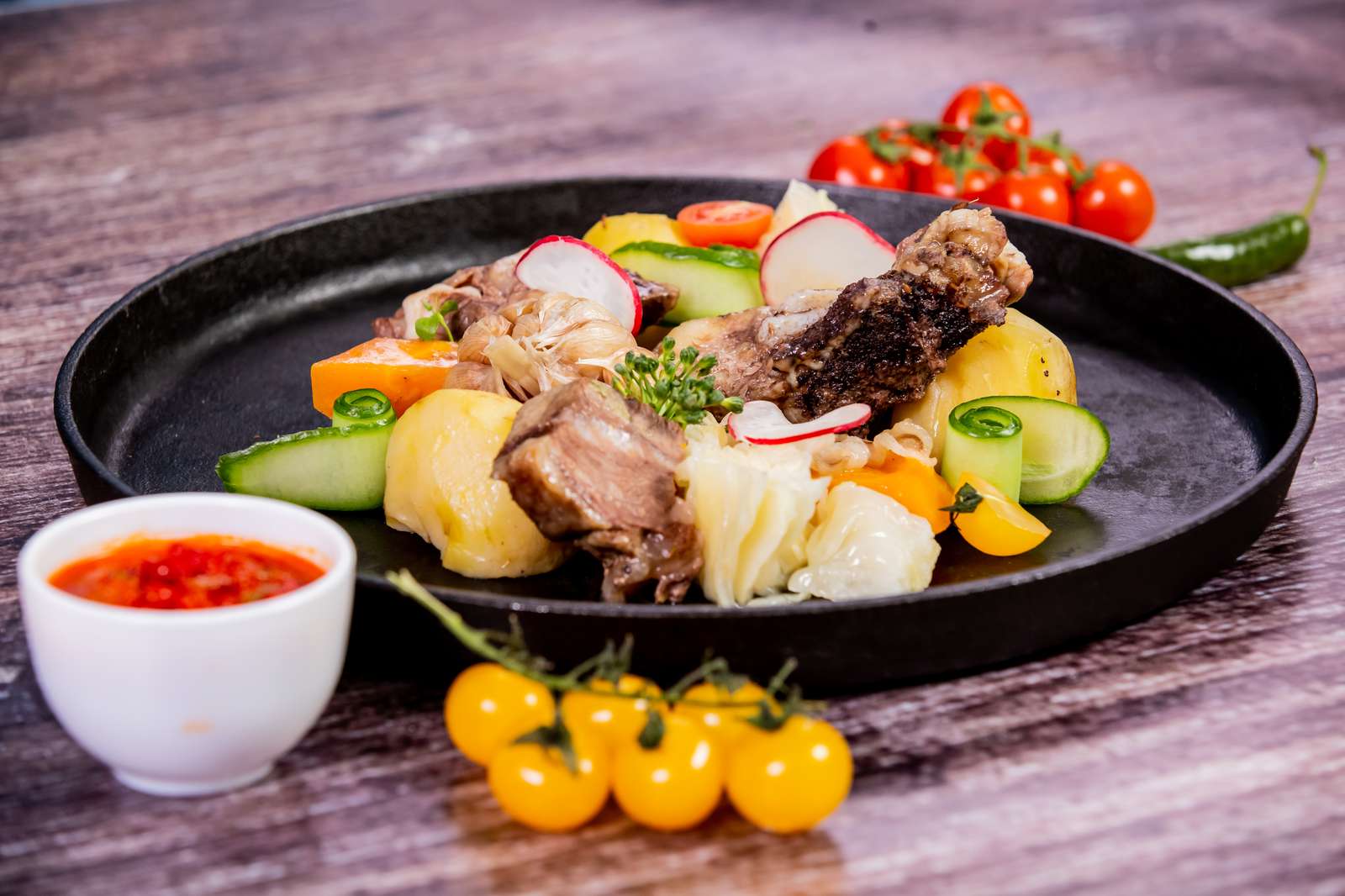
- Qozon kabob (казан-кабоб): pieces of beef or lamb with potatoes, cooked in the kazan until the potatoes turn golden.
- Dimlama (димлама): meat and vegetables stewed in layers in their own juices.
- Tandir go’sht (тандыр-гушт): lamb slow-cooked in a clay tandir. In Jarkurgan, in the Surkhandarya region, it is made with Hisor lamb over a fire of juniper branches, and the name is a registered geographical indication.
- Qazi (казы): horse-meat sausage, served in slices as a cold starter and laid on top of festive plov.
- Moshkichiri (мошкичири): a thick porridge of rice and mung beans, often with meat.
- Osh (плов): on the menu you may see to’y oshi, wedding plov, or choyxona oshi, teahouse plov. How the versions differ is in plov in Uzbekistan.
Breakfast and dairy
An Uzbek breakfast, nonushta, is fresh bread with qaymoq (каймак), a thick cream, honey and tea, with fruit or dried fruit; in summer and autumn there will be grapes on the table. Qatiq (катык) is soured milk, suzma (сузьма) the thick curd strained from it, and qurt (курт) small salted balls of dried suzma that you will see at every bazaar. Ayran is suzma diluted with cold water, a drink for hot days. What vegetarians can order is in vegetarian in Uzbekistan, and how bread is baked is in Uzbek bread.
Drinks
- Ko’k choy: green tea, unsweetened, the most popular drink. Qora choy is black tea, the one most people pour in Tashkent.
- Shirchoy (ширчой): salty tea with milk and butter, served on festive occasions.
- Water: order bottled water, gazsiz for still and gazli for sparkling.
Tea has its own customs, from the small bowls to pouring it back into the pot three times; see tea and the chaikhana. Halva, Did you know? Navat: sugar grown on threads for your tea Uzbek tea is drunk without sugar in the cup; the sweetness sits beside it. Navat is sugar left to crystallise, often on cotton threads hung in thick syrup, and the crystals go straight into the tea. Threads of navat from the bazaar make a good present. Read more → and the other sweets that end a meal are in Uzbek sweets.
How to order: five tips
- Plov is for lunch. Plov centres cook in the morning, and the choice is widest around midday; for dinner, order kebabs, soups or dough dishes.
- Bread comes first. Order one round of non for two or three people, and break it by hand.
- Portions are generous. A soup, a salad and a shared dough dish make a full meal for two.
- Without meat: say go’shtsiz, “without meat”, and ask whether the soup is cooked on meat broth.
- The bill: many restaurants add a service charge of 10–15%, so check it before tipping; more in cards, cash and tipping.
If food is the reason for your trip, our culinary tour Taste of the Road takes you through Tashkent, Samarkand, Bukhara and Khiva with bazaars, cooking and family meals. Tell us about your diet in advance, and we plan the meals around it.
In short
- Menus run in the order of a meal: salads, first courses (soups), second courses (mains) and kebabs; bread and tea are ordered separately.
- Soups to know: sho’rva, mastava, mashxo’rda and, in summer, the cold chalop.
- Dough dishes: xonim, mayda manti, ko’k somsa and the somsa of each region.
- Kebabs: qiyma, jigar, tovuq, charvi and the classic mutton shashlik; mains: qozon kabob, dimlama, tandir go’sht, qazi and moshkichiri.
- Vegetarian picks: achchiq-chuchuk, chalop, ko’k somsa, potato or pumpkin manti, bread with qaymoq; drink green tea and bottled water.