
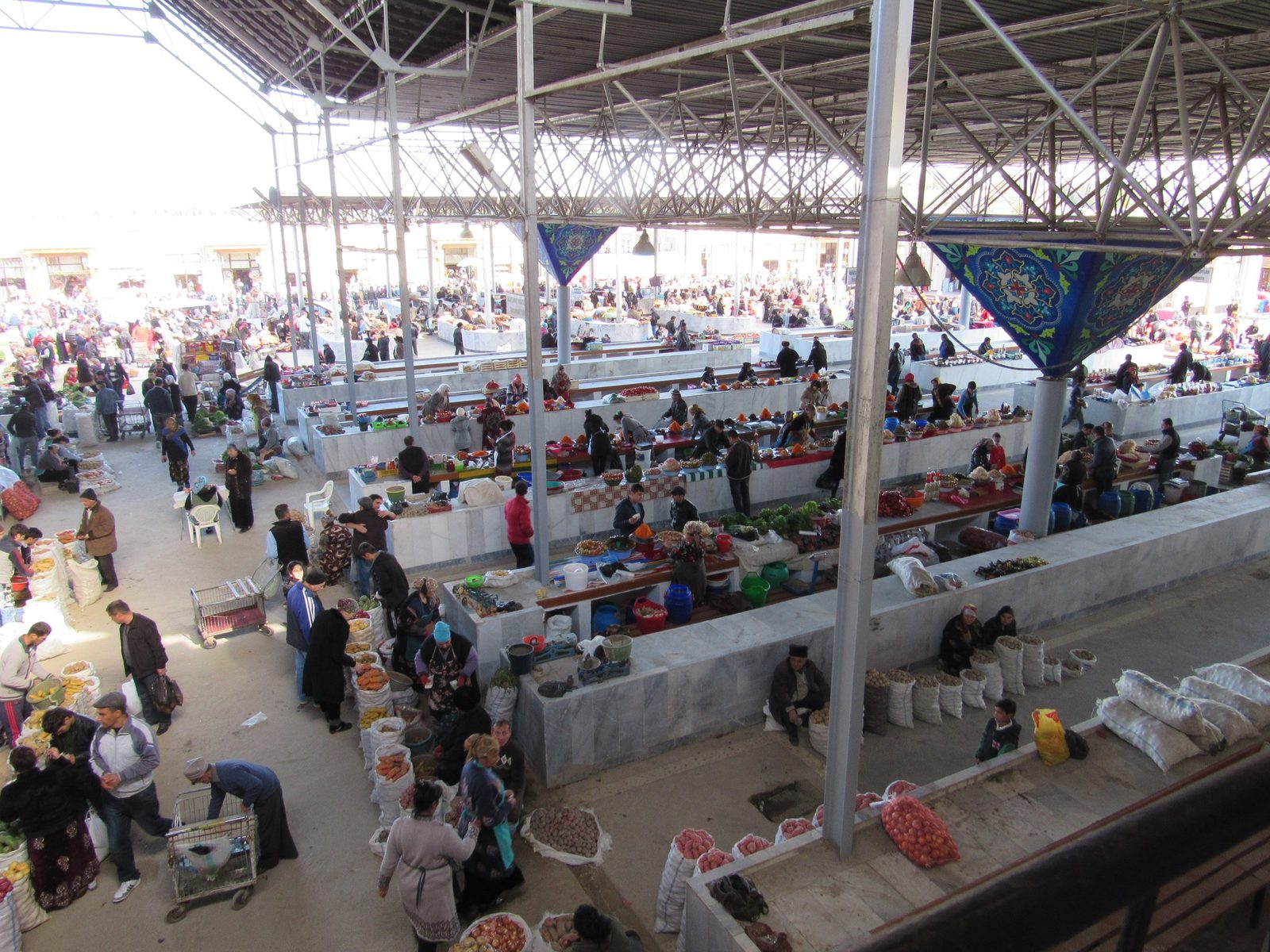
Uzbek words and phrases for travellers: a pocket phrasebook
Three words carry a traveller through most of a day in Uzbekistan: assalomu alaykum in the morning, qancha? at the bazaar and rahmat on the way out. Add the numbers from one to ten, a word for “cheaper” and a way to say “stop here” to a taxi driver, and you can handle the ,A teahouse: green tea, plov and conversation on wide wooden beds called topchan. the market and the ride back to the hotel on your own.
We are a tour operator in Tashkent, and this is the pocket phrasebook we would give a friend before the trip: short tables by situation, the Uzbek phrases for travellers in the official Latin spelling you see on signs, an easy way to say them and, where it helps, the Russian. How the alphabet works and which languages people speak where is in our guide to the languages of Uzbekistan.
In the tables, the middle column is the Uzbek spelling. The last column is our respelling for English speakers: read it syllable by syllable, as it looks. “Kh” stands for the Uzbek x, a throaty sound as in the Scottish “loch”, and “k” in words like kan-cha is the Uzbek q, said deeper in the throat. Nobody expects a visitor to sound like a local; the effort is what counts.
Greetings, thanks and the hand on the heart
Here the greeting comes before everything else: before a question, a price or a request. The full form is assalomu alaykum; with people your own age or younger, and once you know someone, salom is enough. A question about how you are usually follows, and it is polite to ask in return.
| Meaning | In Uzbek | Say it |
|---|---|---|
| Hello (polite) | Assalomu alaykum | as-sa-lo-mu a-lay-kum |
| The reply to it | Va alaykum assalom | va a-lay-kum as-sa-lom |
| Hi | Salom | sa-lom |
| How are you? | Yaxshimisiz? | yakh-shi-mi-siz |
| Fine, thank you | Yaxshi, rahmat | yakh-shi, rah-mat |
| Good morning | Xayrli tong | khayr-li tong |
| Thank you | Rahmat | rah-mat |
| Thank you very much | Katta rahmat | kat-ta rah-mat |
| You’re welcome | Arzimaydi | ar-zi-may-di |
| Please | Iltimos | il-ti-mos |
| Excuse me, sorry | Kechirasiz | ke-chi-ra-siz |
| Goodbye | Xayr | khayr |
| See you | Ko'rishguncha | ko-rish-gun-cha |
The gesture matters as much as the words. A right hand on the heart with a slight nod is how people greet and thank each other, and it works for everyone. Men usually shake hands; with a woman, wait: if she offers her hand, shake it, and if not, the hand on the heart is the right greeting. When a host pours your tea, a hand on your heart and rahmat say everything. More on everyday customs is in our guide to what to wear and how to behave in Uzbekistan.
Yes, no and “I don’t understand”
| Meaning | In Uzbek | Say it |
|---|---|---|
| Yes | Ha | ha |
| No | Yo'q | yok |
| No, thank you | Yo'q, rahmat | yok, rah-mat |
| OK, all right | Mayli | may-li |
| I don’t understand | Tushunmadim | tu-shun-ma-dim |
| I don’t know | Bilmayman | bil-may-man |
| Do you speak English? | Inglizcha gapirasizmi? | in-gliz-cha ga-pi-ra-siz-mi |
| Do you speak Russian? | Ruscha gapirasizmi? | rus-cha ga-pi-ra-siz-mi |
| More slowly, please | Sekinroq, iltimos | se-kin-rok, il-ti-mos |
Tushunmadim literally means “I did not understand”, and it is the phrase you will use most. It is polite, and it invites the other person to try again, more slowly or with gestures. If a conversation gets stuck, a translation app with Uzbek and Russian downloaded for offline use does the rest; we list the ones that work here in useful apps for Uzbekistan.
In the teahouse
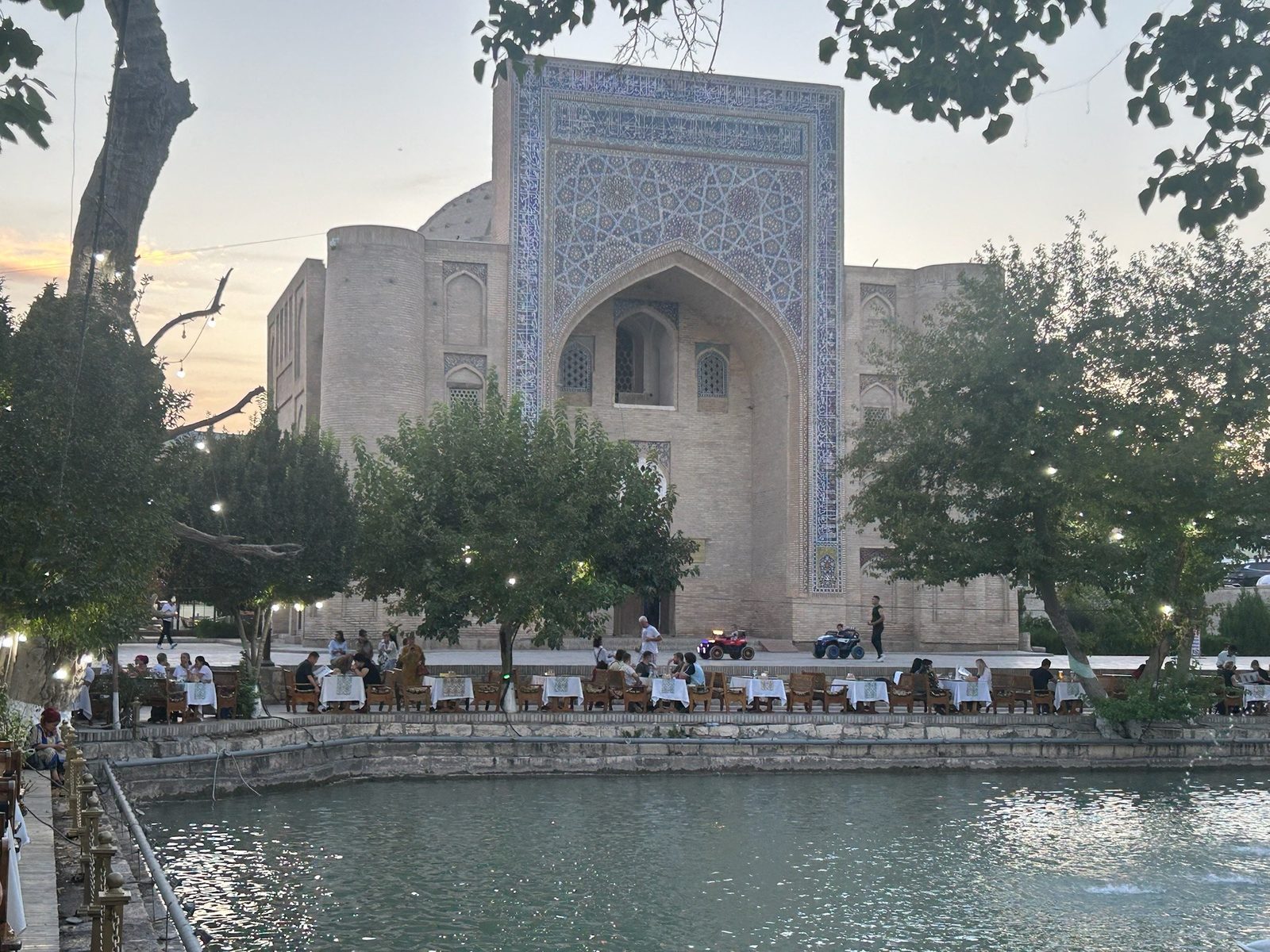
The choyxona, the teahouse, is where a few Uzbek words pay off fastest. Tea comes first, bread is on the table before you ask, and the menu is often in Uzbek and Russian.
| Meaning | In Uzbek | Say it |
|---|---|---|
| Tea | Choy | choy |
| Green tea | Ko'k choy | kok choy |
| Black tea | Qora choy | ko-ra choy |
| Bread | Non | non |
| Water | Suv | suv |
| Rice cooked in a kazan with carrots, onions and meat: the dish of every Uzbek celebration. Each region cooks it its own way. | Osh | osh |
| Delicious! | Mazali! | ma-za-li |
| Very tasty | Juda mazali | ju-da ma-za-li |
| The bill, please | Hisob, iltimos | hi-sob, il-ti-mos |
Mazali is the best compliment you can pay a cook, and the word you will want most at every meal. How tea is poured, and why your bowl comes back only a third full, is in our story of tea and the chaikhana. If you do not eat meat, the key word is go'shtsiz, “without meat”; the full set of phrases for ordering is in our guide for a vegetarian in Uzbekistan.
At the bazaar: prices and calm bargaining
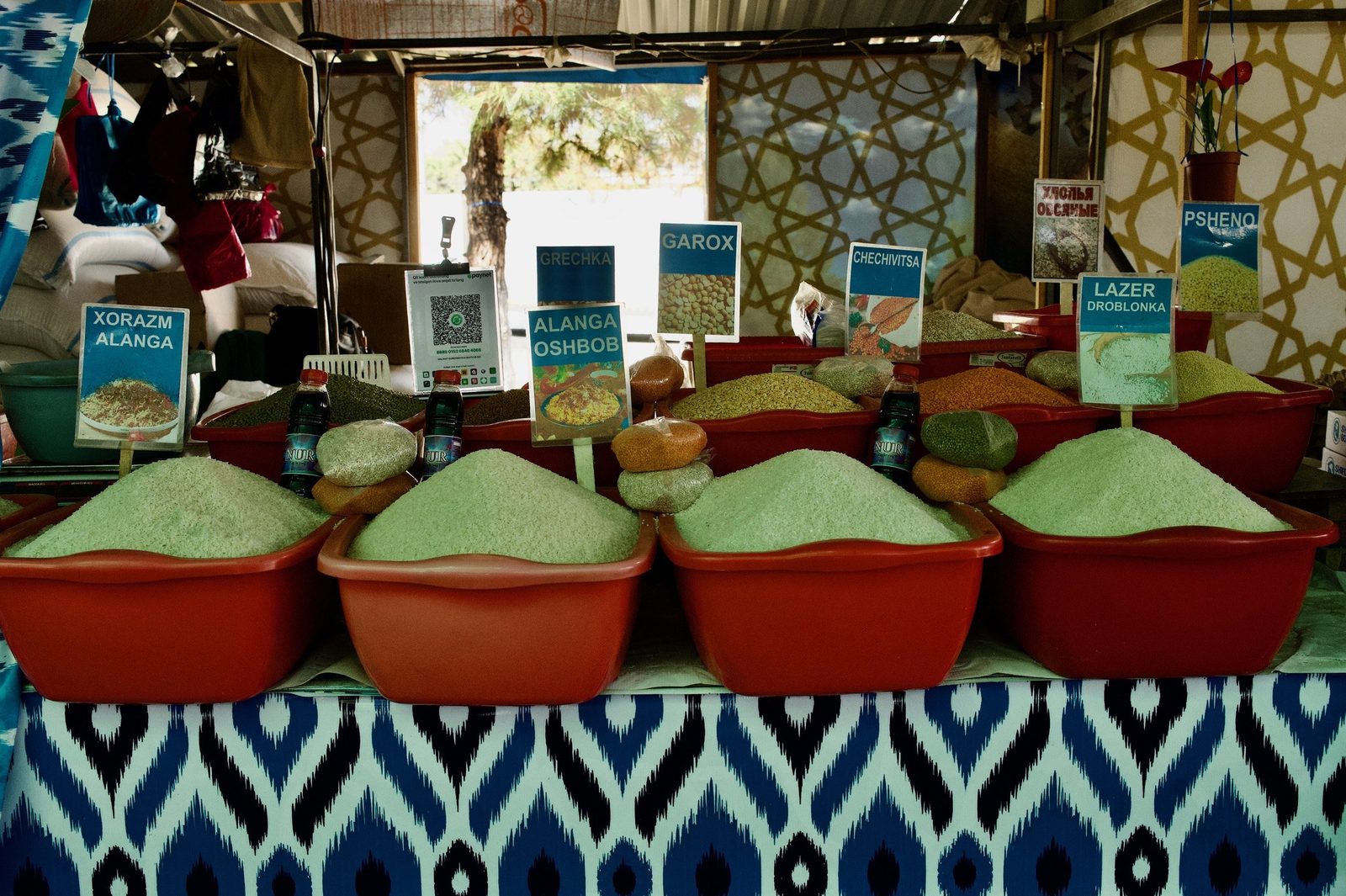
At the bazaar every price starts with one word, qancha?, “how much?”. Bargaining is part of buying, especially for dried fruit, nuts, spices and crafts, and it is a calm, friendly conversation rather than a contest. Ask the price, offer less with a smile and meet somewhere in between. Buying several things from one seller is the easiest way to a better price. In shops with price tags and in supermarkets, prices are fixed.
| Meaning | In Uzbek | Say it |
|---|---|---|
| How much? | Qancha? | kan-cha |
| How much is this? | Bu qancha? | bu kan-cha |
| Expensive | Qimmat | kim-mat |
| Cheaper | Arzonroq | ar-zon-rok |
| Can it be cheaper? | Arzonroq bo'ladimi? | ar-zon-rok bo-la-di-mi |
| One kilo | Bir kilo | bir ki-lo |
| I don’t need it, thank you | Kerak emas, rahmat | ke-rak e-mas, rah-mat |
| Beautiful! | Chiroyli! | chi-roy-li |
Sellers often hand you an apricot or a few nuts to try. Take it, say rahmat, and do not feel you must buy. Pay in so'm, in small notes, so you do not wait for change. Where to go and what to taste at each market is in our guide to the bazaars of Uzbekistan.
Numbers from 1 to 10, 100 and 1000
Prices in so'm run into thousands, so the numbers are worth ten minutes before the flight. They are regular: once you know one to ten, plus yuz and ming, you can follow most prices.
| Number | In Uzbek | Say it |
|---|---|---|
| 1 | bir | bir |
| 2 | ikki | ik-ki |
| 3 | uch | uch |
| 4 | to'rt | tort |
| 5 | besh | besh |
| 6 | olti | ol-ti |
| 7 | yetti | yet-ti |
| 8 | sakkiz | sak-kiz |
| 9 | to'qqiz | tok-kiz |
| 10 | o'n | on |
| 100 | yuz | yuz |
| 1000 | ming | ming |
Bigger numbers are built the way they sound: o'n ming is ten thousand, yuz ming a hundred thousand and ikki yuz two hundred. If a price gets lost in the noise of the bazaar, ask the seller to type it on a phone; that is a perfectly normal request.
In the taxi
In the cities the easiest option is a taxi app: Yandex Go shows the price before the ride, and you type the address instead of saying it. A street taxi is fine too; agree on the price before you get in. Many drivers speak Russian and fewer speak English, so these words help either way.
| Meaning | In Uzbek | Say it |
|---|---|---|
| To the airport | Aeroportga | a-e-ro-port-ga |
| To the railway station | Vokzalga | vok-zal-ga |
| To the hotel | Mehmonxonaga | meh-mon-kho-na-ga |
| Left | Chapga | chap-ga |
| Right | O'ngga | ong-ga |
| Straight on | To'g'riga | togh-ri-ga |
| Stop here, please | Shu yerda to'xtang, iltimos | shu yer-da tokh-tang, il-ti-mos |
| How much will it be? | Necha pul bo'ladi? | ne-cha pul bo-la-di |
The ending -ga means “to”. Add it to a name, and Registonga, Chorsuga or Eski shaharga, “to the old town”, take you where you need to go. How to pay the driver is in cards, cash and tipping in Uzbekistan.
Where Russian helps
Russian has no official status, but in Tashkent and the other big cities it is still widely understood, in shops, offices and taxis. Outside the cities, Uzbek words go further. If you already know a little Russian, use it; if not, these are the phrases worth having:
| Meaning | Russian, in Latin letters |
|---|---|
| Hello | Zdravstvuyte |
| Thank you | Spasibo |
| Please | Pozhaluysta |
| How much is it? | Skolko stoit? |
| I don’t understand | Ya ne ponimayu |
| Stop here, please | Ostanovite zdes, pozhaluysta |
| Delicious | Vkusno |
| Goodbye | Do svidaniya |
On our tours the guide speaks your language and is already included in the price, so you will need these words mostly in free evenings and on walks of your own.
At the table: toasts and compliments
At a family dinner or a celebration, the host may say a few warm words to the guests. You do not need a speech in return. A short reply is enough, with whatever is in your glass or bowl, tea included:
| Meaning | In Uzbek | Say it |
|---|---|---|
| To your health! | Salomatligingiz uchun! | sa-lo-mat-li-gi-ngiz u-chun |
| To our friendship! | Do'stligimiz uchun! | dost-li-gi-miz u-chun |
| To the hosts! | Mezbonlar uchun! | mez-bon-lar u-chun |
| Thank you for the meal | Dasturxoningizga rahmat | das-tur-kho-nin-giz-ga rah-mat |
| Everything was delicious | Hammasi mazali edi | ham-ma-si ma-za-li e-di |
The best place to try all of this at once is our dinner with a local family in Bukhara or the family dinner in Khiva. And at a master class, such as the ceramics workshop in Gijduvan, one chiroyli!, “beautiful!”, for the work in front of you says more than a long speech.
In short
- Start with the greeting, assalomu alaykum, and a hand on the heart.
- Rahmat, mazali and qancha? cover the teahouse and the bazaar; arzonroq opens a calm bargain.
- Learn the numbers from 1 to 10 plus yuz (100) and ming (1000): prices run into thousands of so'm.
- In a taxi, say the place with -ga on the end, then shu yerda to'xtang.
- Russian works in the big cities; on our tours the guide speaks your language.