
 Deutsch
 English
 Español
 Français
 Italiano
 Özbekça
 Polski
 Português
 Suomi
 Svenska
 Türkçe
 Ελληνικά
 Български
 Русский
 עברית
 한국어
 中文
 日本語
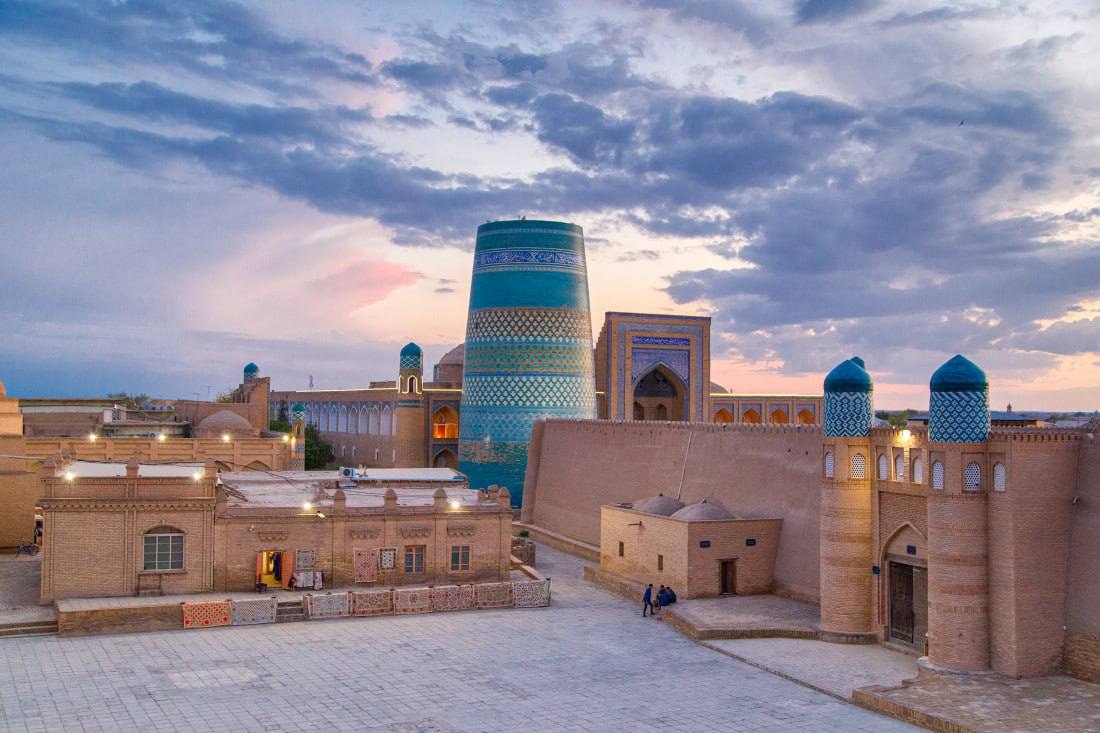
Places in this article: Samarkand · Bukhara · Khiva · Tashkent
Uzbekistan in 9 days: two nights in every city, one flight and the train east
Nine days is the first trip length where no city gets just one night. Tashkent, Khiva, Bukhara and Samarkand get two nights each, and the ninth day is for going home. The route runs one way: you fly west to Khiva once, then ride the railway back east and never cover the same stretch twice.
We are a tour operator in Tashkent. This is how we lay out Uzbekistan in 9 days, day by day, with the train times we work with this season.
In short
- Nine days give two nights in each of the four cities: Tashkent, Khiva, Bukhara and Samarkand.
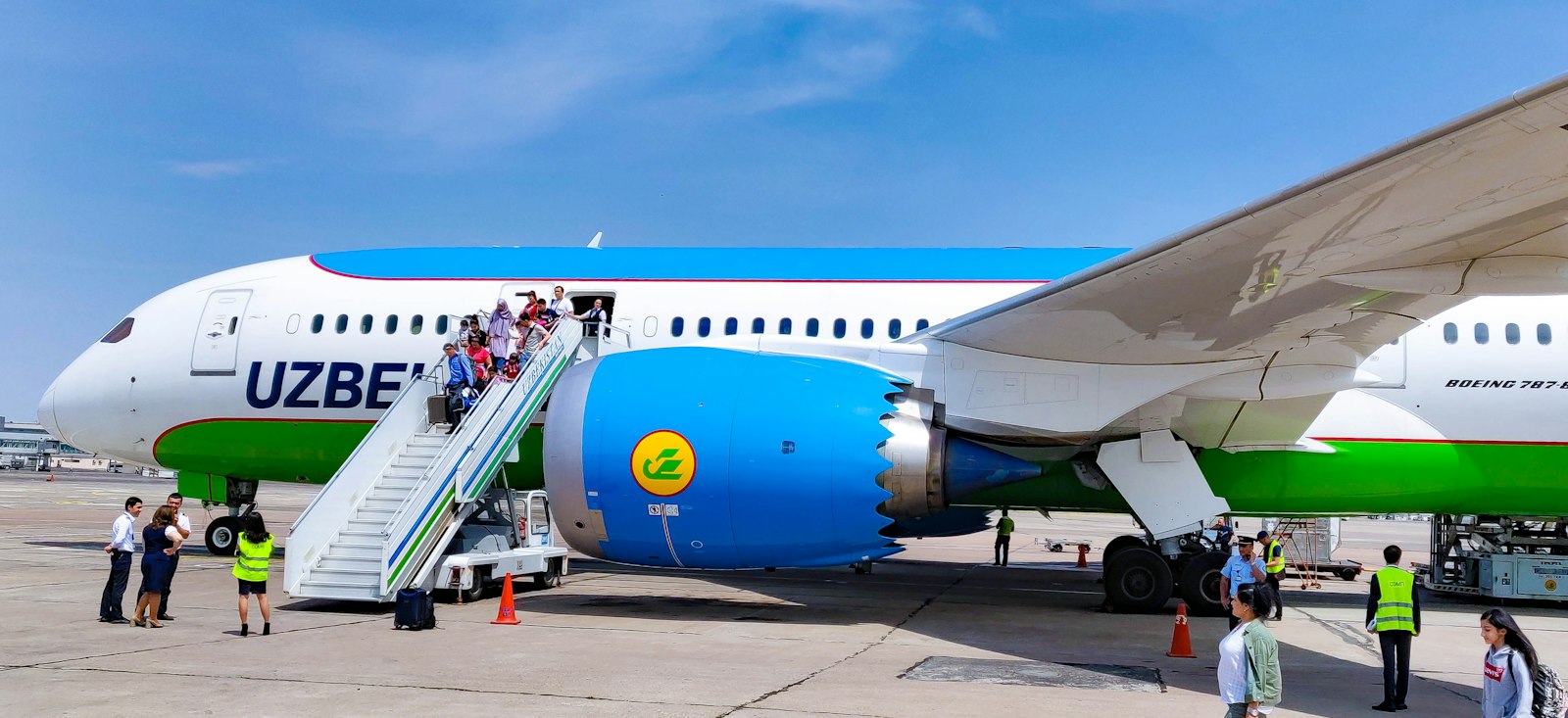
- On day 3 you fly from Tashkent to Urgench, about 1 h 30 min, and Khiva is some 30 km from the airport.
- From then on it is trains: Khiva to Bukhara on the morning high-speed train in about three and a half hours, Bukhara to Samarkand on the Uzbekistan's high-speed train: Tashkent to Samarkand in about 2 hours 10 minutes, Tashkent to Bukhara in about 4 hours. Tickets are tied to your passport. Read more → in under two.
- Every old city has one guided day and one half-day that stays free.
- You fly home from Samarkand, or take the train back to Tashkent on day 9. We run this route as the small-group tour Slow Uzbekistan Premium and as a private trip on your dates, price on request.
Contents
The nine days at a glance
| Day | Where | How the day goes |
|---|---|---|
| 1 | Tashkent | Arrival; Did you know? Tashkent’s Chorsu dome is younger than the city’s metro Trade at the old crossroads is centuries old, but the domed building opened only in 1990, thirteen years after the metro. Architects Vladimir Azimov and Sabir Adylov gave it a main dome of 86 m ringed by seven smaller ones. Read more → and The religious heart of old Tashkent: madrasahs, a Friday mosque and mausoleums. Right next to it stands the new Center of Islamic Civilization, opened in 2026. Read more → in the afternoon |
| 2 | Tashkent | The Did you know? A metro designed to ride out a magnitude-9 earthquake The three original lines of the Tashkent Metro were built to withstand an earthquake of magnitude 9.0, and the tunnels lie unusually shallow, only 8–25 m below the street. Read more → with your guide; the evening at Tashkent City |
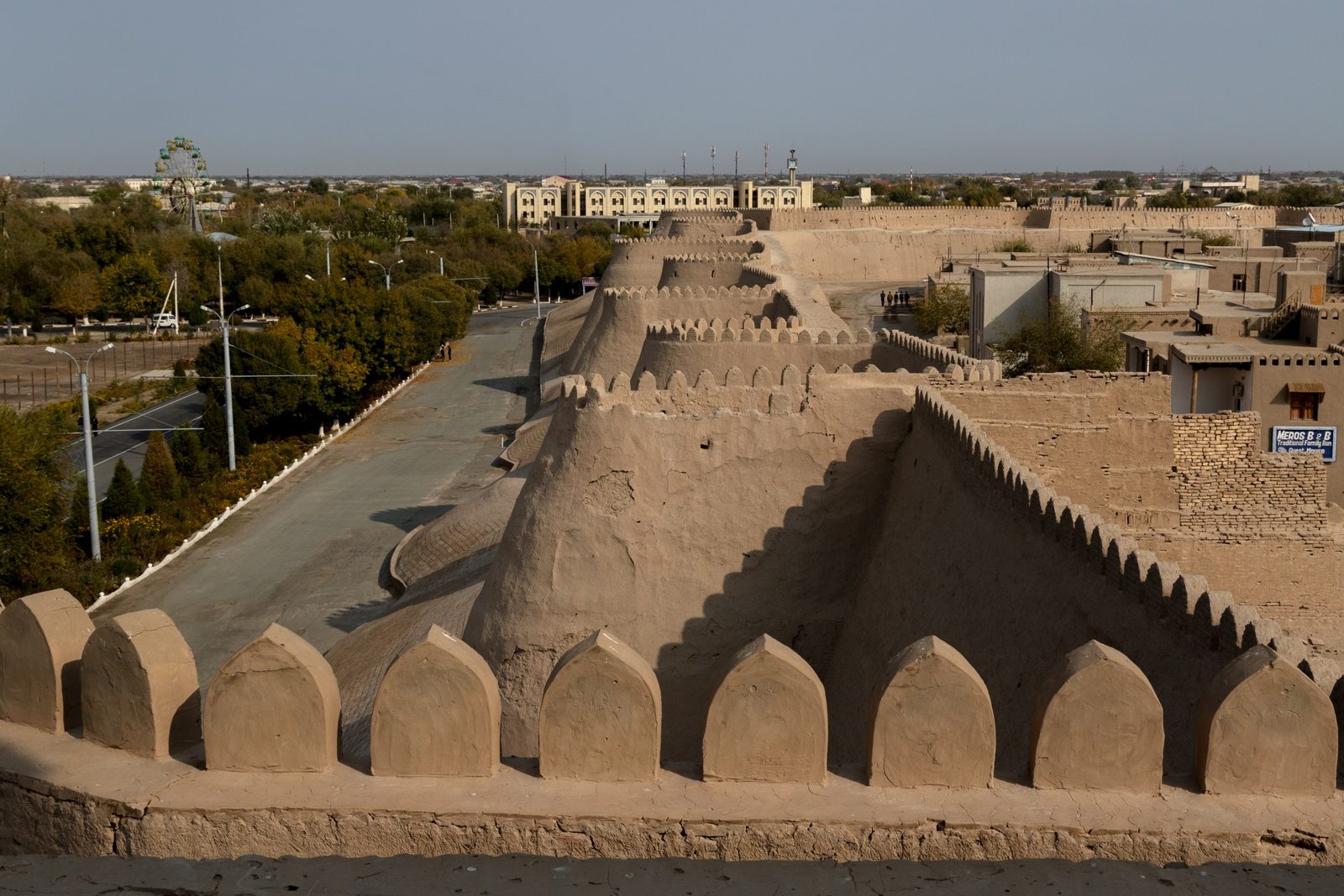
| 3 | Tashkent → Khiva | The flight to Urgench; Did you know? People still live inside Khiva's museum city Itchan Kala packs more than 50 historic monuments and about 250 old houses inside clay walls 8–10 m high and 5–6 m thick, and families still live and work in its lanes. Read more → after dark |
| 4 | Khiva | Itchan Kala with your guide; a free afternoon |
| 5 | Khiva → Bukhara | The 07:20 high-speed train; Did you know? Bukhara's ponds were once its water supply Pools like Lyabi-Hauz, dug around 1620 and 46 × 36 m, were the city's main source of water. Most were filled in during the 1920s–30s because they spread disease; Lyabi-Hauz survived. Read more → and the Did you know? Under Bukhara's domes merchants changed money and gold Four 16th-century trading domes still stand over old crossroads. Toki Sarrafon was the money changers' dome, where merchants from India and China swapped coins; Toki Zargaron held jewellers' workshops, Toki Telpak Furushon sold caps. Read more → |
| 6 | Bukhara | The ,Did you know? Buried in mud, this tomb escaped Genghis Khan The 10th-century Samanid Mausoleum, one of the oldest monuments of Islamic Central Asia, was covered by flood mud and sand before the Mongols came in 1220. Hidden for centuries, its brick lacework survived intact. Read more → ,The fortress-residence of the rulers of Bukhara on a high artificial hill: the oldest structure in the city. Read more → ;Did you know? Legend: the minaret's foundation was laid with camel milk Legend says master Bako laid the foundations of the Kalyan minaret with ganch plaster mixed with camel milk, then vanished for two years to let them harden, and only then built the tower. Locals still show a grave they say is his. Read more → a free afternoon |
| 7 | Bukhara → Samarkand | The emir's summer palace; the Afrosiyob; the Did you know? The Registan's sun-carrying lion went on a banknote The Sher-Dor Madrasah (1619–1636) is named for the big cats with the sun on their backs on its portal. The image appeared on the reverse of Uzbekistan's 200-som note of 1997. Read more → lit up |
| 8 | Samarkand | The Registan, ,Did you know? Legend says the architect asked the queen for a kiss Legend says the architect of Bibi-Khanym would finish on time only for a kiss from Timur's wife, and Timur punished him. In fact the mosque was Timur's own project; his wife Saray Mulk Khanum built her madrasah across the road. Read more → ,Did you know? Why Shah-i-Zinda means 'the Living King' The necropolis grew around the shrine of Qutham ibn Abbas, a cousin of the Prophet Muhammad. Legend says he did not die in battle but went down a deep well to a garden of paradise, where he lives on. Read more → Did you know? Timur's tombstone went to Persia and came back The dark-green jade slab on Timur's grave in Gur-e-Amir was carried off by Nader Shah in 1740. It broke, and on his advisers' urging he sent it back to Samarkand. Read more → |
| 9 | Samarkand | The flight home from Samarkand, or the train to Tashkent |
Days 1 and 2: Tashkent without a rush
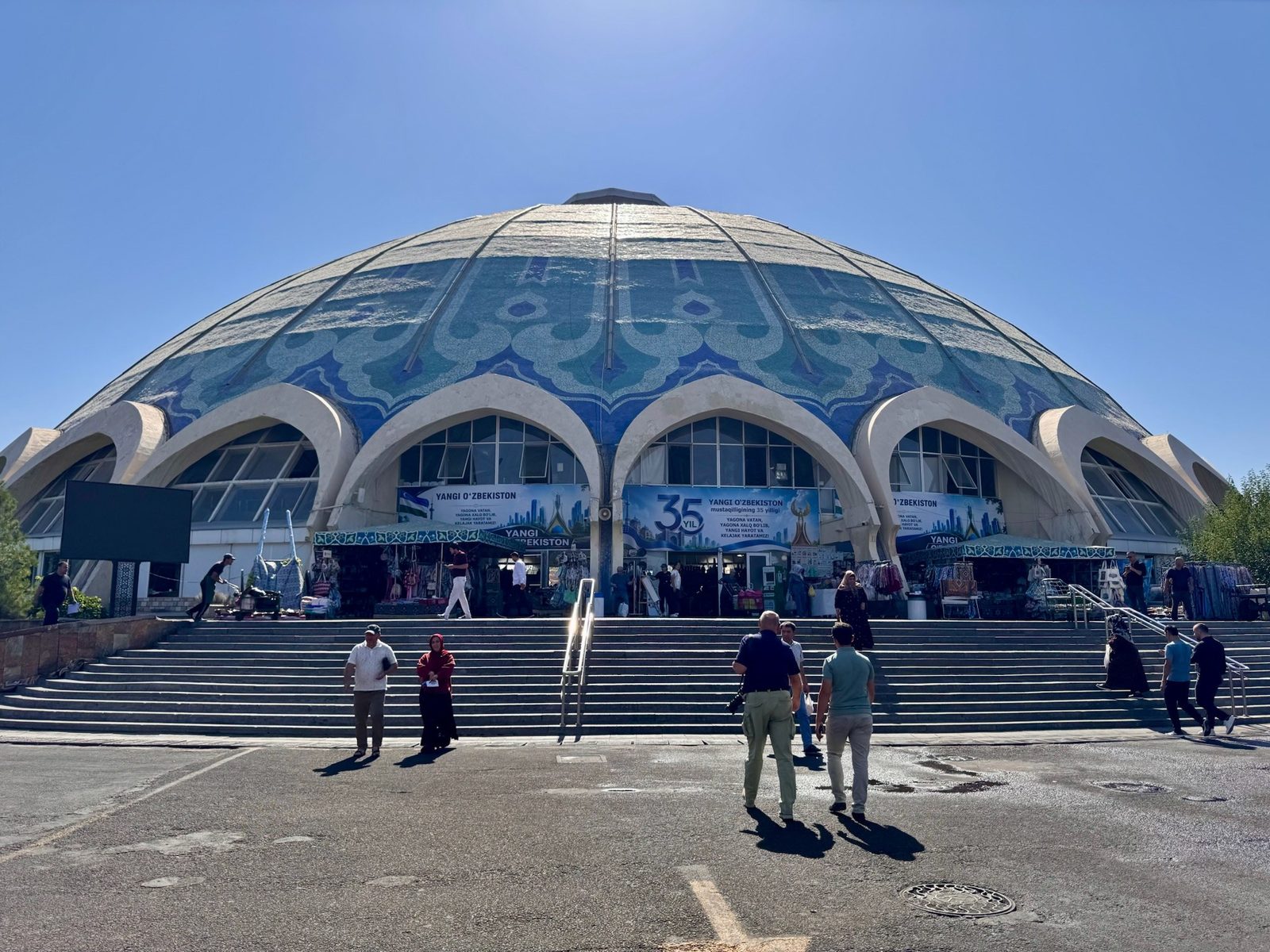
If you land at night or early in the morning, day 1 starts with sleep: we book the room from the night before, so you go straight to bed. In the afternoon your guide takes you to Chorsu bazaar, where the spice and dried-fruit rows sit under one large blue dome, and on to the Hazrati Imam square in the old city.
Day 2 begins underground. The metro opened in 1977, the first in Central Asia, and you have been allowed to take photos in it since June 2018; we ride a few stations, each in its own style. In the evening you go to Tashkent City, the new district around a lake where a musical fountain plays after dark. If you only have one evening in the capital, our article on Tashkent in the evening lists the rest.
Days 3 and 4: one flight west, two nights in Khiva
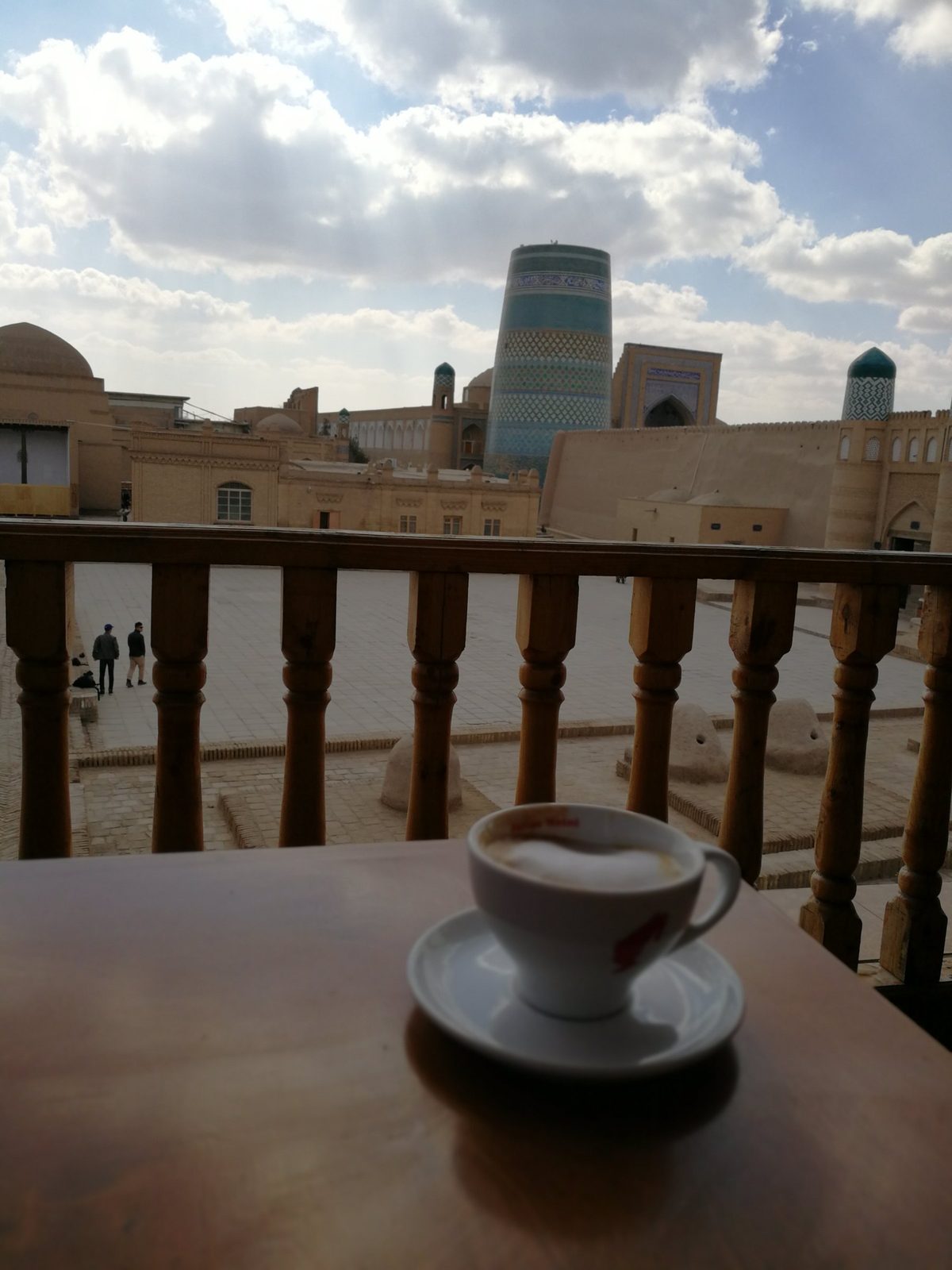
On day 3 we drive you to the domestic terminal for the flight to Urgench, about 1 h 30 min in the air. Urgench airport is some 30 km from Khiva, under an hour by car, and our driver meets you there with the transfer to Khiva. By the evening you are walking through Itchan Kala, the walled inner town, under its lights.
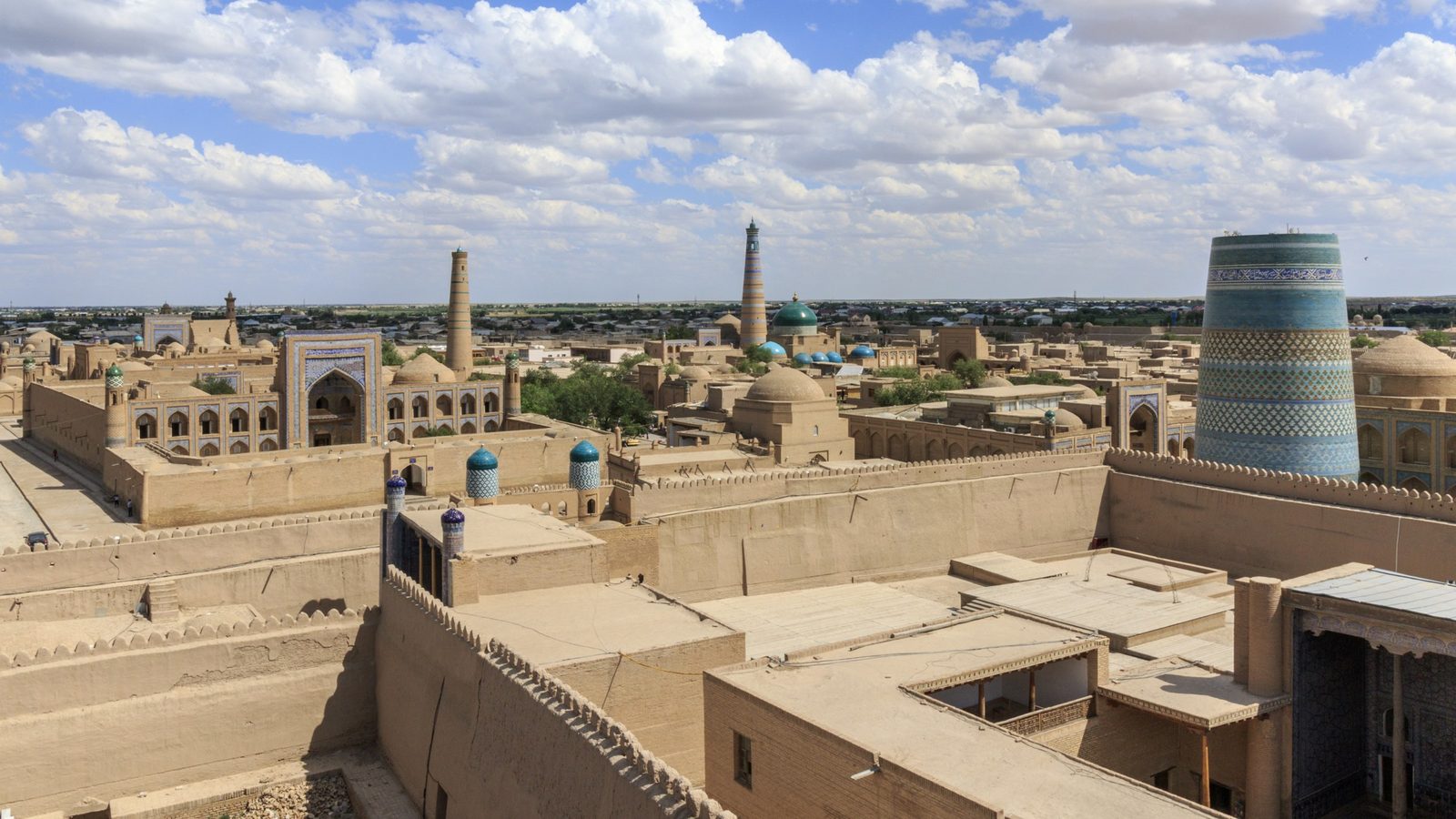
Day 4 is Khiva with your guide. You start at the ,Did you know? A 14-metre-wide base for a tower that stopped at 29 m Kalta-Minor was begun in 1852 and meant to reach 70–80 m, but work halted in 1855 at about 29 m when its khan died. It is said to be the only minaret covered entirely in glazed tiles. Read more → the tiled minaret left unfinished at 29 m when its khan died in 1855, then the Did you know? In the khan’s courtyard a round platform waited for a yurt The Kunya-Ark, the khans’ citadel, had its own mint, arsenal and harem. In the courtyard of its reception hall of 1804–1806 stands a round platform: a yurt was set up on it, and there the khan received envoys of the steppe nomads. Read more → citadel and the Did you know? Khiva's tallest minaret is barely a century old The Islam Khoja Minaret was begun in 1908, near the very end of the khans' era. At 56.6 m it is one of the tallest in Central Asia; a spiral stair of 175 steps leads up to its windowed top. Read more → of 1908 to 1910, 56.6 m high and the tallest in town. Itchan Kala was the first place in Uzbekistan on the UNESCO World Heritage List, in 1990. By lunch the tour is over. The afternoon is free for the walls at sunset or a terrace above the rooftops, and in the evening we can arrange dinner with a Khiva family.
Days 5 and 6: the morning train across the Kyzylkum to Bukhara
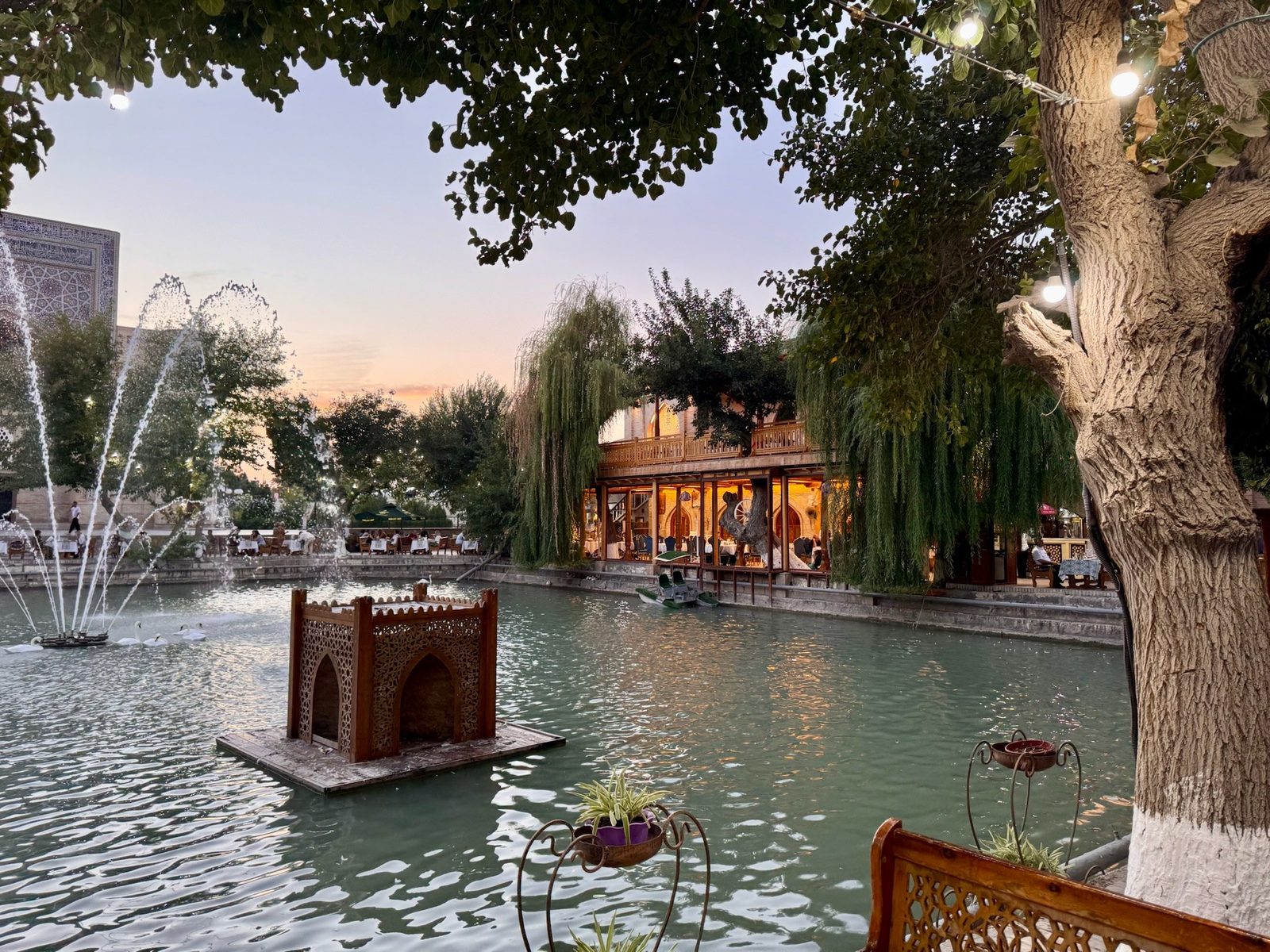
In the current timetable the high-speed train leaves Khiva at 07:20 and reaches Bukhara at about 11:00, after three and a half hours of desert. That gives you a whole afternoon on day 5: Lyabi-Hauz, the old pond with teahouses along its edge, and the domed trading arcades where money changers, jewellers and hat sellers once worked. Train tickets go to each passenger by name, so we ask for passport details when you book and buy the ticket from Khiva as soon as sales open.
Day 6 is the guided day in Bukhara. The Samanid mausoleum is a small 10th-century cube of baked brick laid in patterns. The Ark is the emirs' fortress, and at Poi Kalyan the Did you know? Diggers went 13 m down and never found its base The Kalyan Minaret of 1127 rises about 46 m, and an excavation reached 13 m without finding the bottom of its foundations. Genghis Khan reportedly ordered it spared. Read more → has stood since 1127. You are free from mid-afternoon. More on the way across the desert is in Khiva to Bukhara.
Days 7 to 9: Samarkand, and a flight home from there
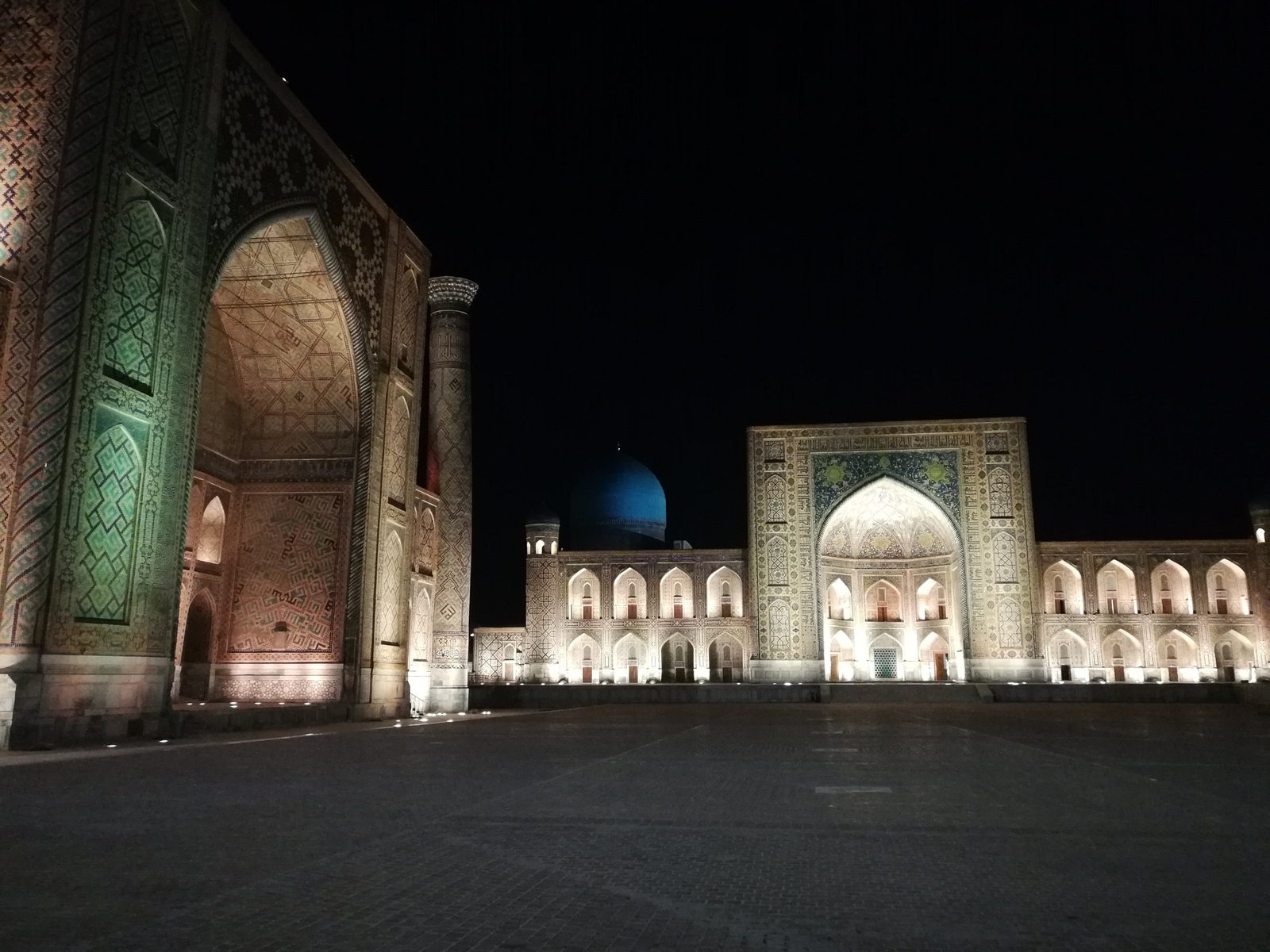
On the morning of day 7 we drive out to ,Did you know? Legend: the emir's palace site was chosen with meat Legend says that when Emir Nasrullah wanted a summer palace in the mid-19th century, sheep carcasses were hung in several places around Bukhara, and the spot where the meat spoiled last was chosen. Sitorai Mohi-Hosa there today dates from 1912–1918. Read more → the summer palace built in 1912 to 1918 for the last emir of Bukhara. After lunch the Afrosiyob takes you to Samarkand in under two hours. That evening we take you to the Registan with its evening lights.
Day 8 is the full day. In daylight the Registan shows its three madrasahs: Did you know? Ulugh Beg measured the year to within 25 seconds Working at his Samarkand observatory, Ulugh Beg put the tropical year at 365 days 5 h 49 min 15 s, about 25 seconds too long, closer than Copernicus a century later. Read more →'s of 1417 to 1420, Sher-Dor of 1619 to 1636 and Did you know? The 'gilded' mosque of the Registan Tilla-Kari, built in 1646–1660, means 'gilded'. With Bibi-Khanym in ruins, it served as Samarkand's main Friday mosque until the 1920s. Its prayer hall glows with kundal, relief painting finished in gold leaf, restored in 1979. Read more → of 1646 to 1660. Then comes the ,Did you know? 95 elephants hauled stone for Timur's great mosque Bibi-Khanym, begun in 1399 after Timur took Delhi, was the largest mosque of his empire. Some 200 stonecutters worked on site and 95 elephants brought from India hauled the loads; the courtyard was meant to hold 10,000 people. Read more → which Amir Timur (Tamerlane, 1336–1405), founder of the Timurid empire, which had its capital in Samarkand. Born near Shahrisabz. Read more → built from 1399 to 1405, with Samarkand's main bazaar, right next to Bibi-Khanym: Samarkand bread, dried fruit, nuts and halva. Read more → next door. In the afternoon you walk up Shah-i-Zinda and finish at Gur-e-Amir, the mausoleum of 1404 where Timur lies. If the stars interest you more than the bazaar, swap it for the Ulugh Beg Observatory: built in the 1420s, its marble arc was found again in 1908.
On day 9 you leave. Samarkand has its own international airport, with nonstop flights to Istanbul and Moscow, so you can fly home from here without going back to the capital. If your flight leaves from Tashkent, the midday high-speed train reaches the capital at about 15:00 in the current timetable.
A group date or a private trip
If a fixed date suits you, Slow Uzbekistan Premium follows this plan with a group of ten at most. It departs on Fridays from March to October 2027, with upper-category hotels, an English-speaking guide and three evenings out included. On your own dates we arrange the same nine days as a private tour. With one more day, Classic Uzbekistan at a Gentle Pace covers the four cities in ten. For poets and scholars, Turkic Heritage of the Silk Road spends its nine days on Navoi, Ulugh Beg and .Did you know? The founder of the Mughal Empire was born in Andijan Babur was born in Andijan on 14 February 1483 and, at twelve, took the throne of Fergana in its capital Akhsikath. Later he founded the Mughal Empire in India; his memoir, the Baburnama, still describes the valley's towns. Read more →
What we take care of
We book the domestic flight and the train tickets, the hotels with breakfast and a car with driver for every airport and station. We also arrange a guide in each city and the entrance tickets. If you would rather pick the hotels yourself, start with our hotels. We quote the price for your dates.
Eight, nine or ten days?
With eight days you take the train both ways and sleep on the night train back from Khiva: see Uzbekistan in 8 days. Ten days add a third night in Samarkand and a day trip to Shahrisabz, as in Uzbekistan in 10 days. Nine days is the shortest plan with two nights in every city and no night train.