
 Deutsch
 English
 Español
 Français
 Italiano
 Özbekça
 Polski
 Português
 Suomi
 Svenska
 Türkçe
 Ελληνικά
 Български
 Русский
 עברית
 한국어
 中文
 日本語
Places in this article: Samarkand · Bukhara · Khiva · Tashkent
Uzbekistan in 12 days: four cities, a day in the mountains and a night in a desert yurt
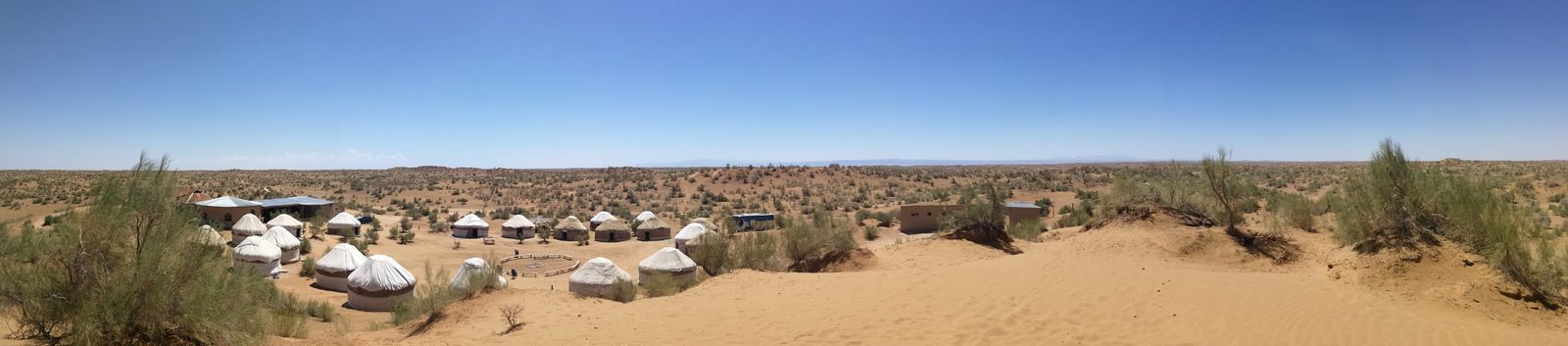
Twelve days is enough for the four old cities and for two days that look nothing like them. One is a day in the mountains an hour and a half from Tashkent. The other ends in a felt yurt on ,Did you know? Lake Aydarkul appeared by accident in 1969 In the flood year of 1969 the Chardara reservoir on the Syr Darya had to release so much water that it was sent into the Arnasay depression in the desert. The water stayed, and Lake Aydarkul is now a large lake with fish, birds and yurt camps. Read more → a lake in the The Kyzylkum, or Red Sands: the desert between the Amu Darya and Syr Darya rivers that the road and the railway cross on the way to Khiva. desert that did not exist before 1969. The rest is the classic line from east to west: Samarkand, Bukhara and Khiva, then one flight back to the capital.
We are a tour operator in Tashkent. This is how we plan Uzbekistan in 12 days, day by day, with the distances and train times we work with this season.
In short
- Twelve days give three nights in Tashkent, two in Samarkand, one in a yurt camp, two in Bukhara, two in Khiva and a last night back in Tashkent.
- Day 3 is the mountains: Did you know? Amirsoy drew about 150,000 visitors in its first three months Amirsoy opened in December 2019 on the northern slope of Mount Maygashkan in the Chatkal range, about 65 km from Tashkent. Some 150,000 visitors, mostly locals, came in its first three months, and its chalets get about 90% of their energy from the sun. Read more → is 65 km from Tashkent and Mountains of the Western Tien Shan about 80 km from Tashkent: hiking in summer, skiing in winter, the Charvak reservoir nearby. Read more → about 85 km, and you are back in the city for dinner.
- Between Samarkand and Bukhara you go by car: 180 km to ,Did you know? Legend credits Alexander with Nurata's underground canals Legend says Alexander the Great founded Nur in 327 BC and laid its kariz, underground channels with wells dug a few metres apart for cleaning. Whoever built them, parts of the kariz near Nurata still carry water today. Read more → about 60 km more to the yurt camp, and the next day 175 km from Nurata to Bukhara.
- From Bukhara to Khiva you take the high-speed train, about three and a half hours; from Khiva you fly back to Tashkent from Urgench, 1 h 20 min at the shortest.
- We run this route as a private trip on your dates, price on request. In summer there is also a group date with the same yurt night: Summer in Uzbekistan with a Yurt Camp.
Contents
The 12-day Uzbekistan itinerary at a glance
| Day | Where | How the day goes |
|---|---|---|
| 1 | Tashkent | Arrival and rest; Did you know? Tashkent’s Chorsu dome is younger than the city’s metro Trade at the old crossroads is centuries old, but the domed building opened only in 1990, thirteen years after the metro. Architects Vladimir Azimov and Sabir Adylov gave it a main dome of 86 m ringed by seven smaller ones. Read more → and The religious heart of old Tashkent: madrasahs, a Friday mosque and mausoleums. Right next to it stands the new Center of Islamic Civilization, opened in 2026. Read more → in the afternoon |
| 2 | Tashkent | The Did you know? A metro designed to ride out a magnitude-9 earthquake The three original lines of the Tashkent Metro were built to withstand an earthquake of magnitude 9.0, and the tunnels lie unusually shallow, only 8–25 m below the street. Read more → and the city centre with your guide; the evening at Tashkent City |
| 3 | Tashkent → mountains → Tashkent | Amirsoy or Chimgan in the morning, lunch by Lake ,Did you know? The lake below Chimgan is held back by a 168-metre dam Charvak is a reservoir: a 168 m stone dam on the Chirchiq, built in 1964–1970, holds about 2 km³ of water from the Pskem, Koksu and Chatkal rivers. Its name is traced to the Persian chorbog, "four gardens". Read more → back by the evening |
| 4 | Tashkent → Samarkand | The morning ;Uzbekistan's high-speed train: Tashkent to Samarkand in about 2 hours 10 minutes, Tashkent to Bukhara in about 4 hours. Tickets are tied to your passport. Read more → the Did you know? The Registan's sun-carrying lion went on a banknote The Sher-Dor Madrasah (1619–1636) is named for the big cats with the sun on their backs on its portal. The image appeared on the reverse of Uzbekistan's 200-som note of 1997. Read more → in the afternoon |
| 5 | Samarkand | ,Did you know? Timur's tombstone went to Persia and came back The dark-green jade slab on Timur's grave in Gur-e-Amir was carried off by Nader Shah in 1740. It broke, and on his advisers' urging he sent it back to Samarkand. Read more → ,Did you know? Legend says the architect asked the queen for a kiss Legend says the architect of Bibi-Khanym would finish on time only for a kiss from Timur's wife, and Timur punished him. In fact the mosque was Timur's own project; his wife Saray Mulk Khanum built her madrasah across the road. Read more → ,Samarkand's main bazaar, right next to Bibi-Khanym: Samarkand bread, dried fruit, nuts and halva. Read more → Did you know? Why Shah-i-Zinda means 'the Living King' The necropolis grew around the shrine of Qutham ibn Abbas, a cousin of the Prophet Muhammad. Legend says he did not die in battle but went down a deep well to a garden of paradise, where he lives on. Read more → |
| 6 | Samarkand → Nurata → Did you know? Aydarkul is a wetland of international importance In 2008 the Aydar-Arnasay lake system, about 527,000 ha, became a Ramsar site. It lies where two great bird flyways cross and shelters Dalmatian pelicans and the rare white-headed duck. Read more → | By car through Nurata to the yurt camp; a camel ride and dinner by the fire |
| 7 | Aydarkul → Bukhara | A morning by the lake; Bukhara in the late afternoon |
| 8 | Bukhara | The ,Did you know? Buried in mud, this tomb escaped Genghis Khan The 10th-century Samanid Mausoleum, one of the oldest monuments of Islamic Central Asia, was covered by flood mud and sand before the Mongols came in 1220. Hidden for centuries, its brick lacework survived intact. Read more → ,The fortress-residence of the rulers of Bukhara on a high artificial hill: the oldest structure in the city. Read more → ,Did you know? Legend: the minaret's foundation was laid with camel milk Legend says master Bako laid the foundations of the Kalyan minaret with ganch plaster mixed with camel milk, then vanished for two years to let them harden, and only then built the tower. Locals still show a grave they say is his. Read more → the Did you know? Under Bukhara's domes merchants changed money and gold Four 16th-century trading domes still stand over old crossroads. Toki Sarrafon was the money changers' dome, where merchants from India and China swapped coins; Toki Zargaron held jewellers' workshops, Toki Telpak Furushon sold caps. Read more → |
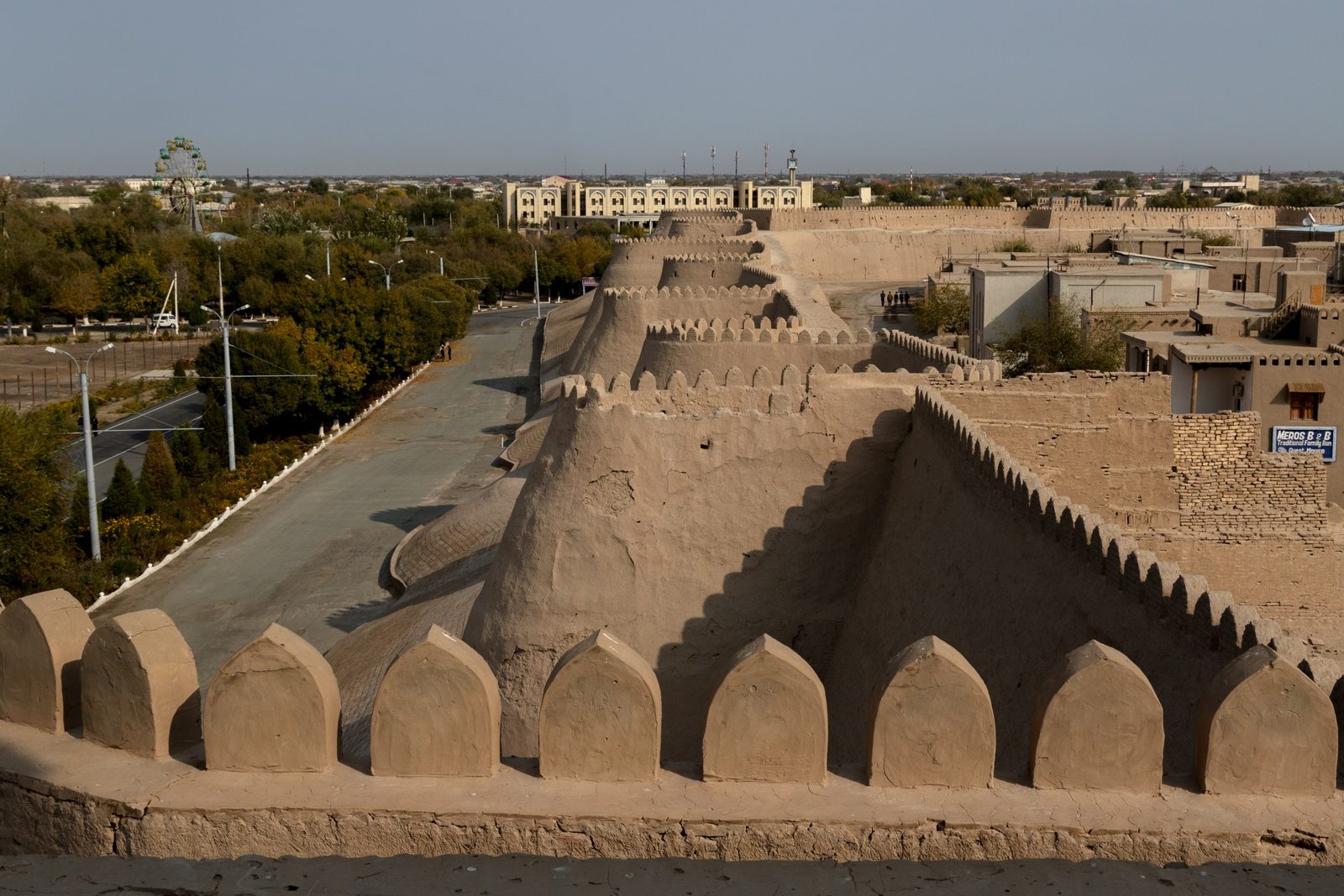
| 9 | Bukhara → Khiva | The 10:54 high-speed train; Did you know? People still live inside Khiva's museum city Itchan Kala packs more than 50 historic monuments and about 250 old houses inside clay walls 8–10 m high and 5–6 m thick, and families still live and work in its lanes. Read more → in the evening |
| 10 | Khiva | Itchan Kala with your guide; a free afternoon |
| 11 | Khiva → Tashkent | The flight from Urgench; a last evening in the capital |
| 12 | Tashkent | Transfer to the airport and the flight home |
Days 1 to 3: Tashkent and a day in the mountains
Day 1 is for landing and sleep. In the afternoon your guide takes you to Chorsu bazaar and on to the Hazrati Imam square in the old city. On day 2 you ride the metro, which opened on 6 November 1977 as the first in Central Asia, and spend the evening at Tashkent City, the new district around a lake.
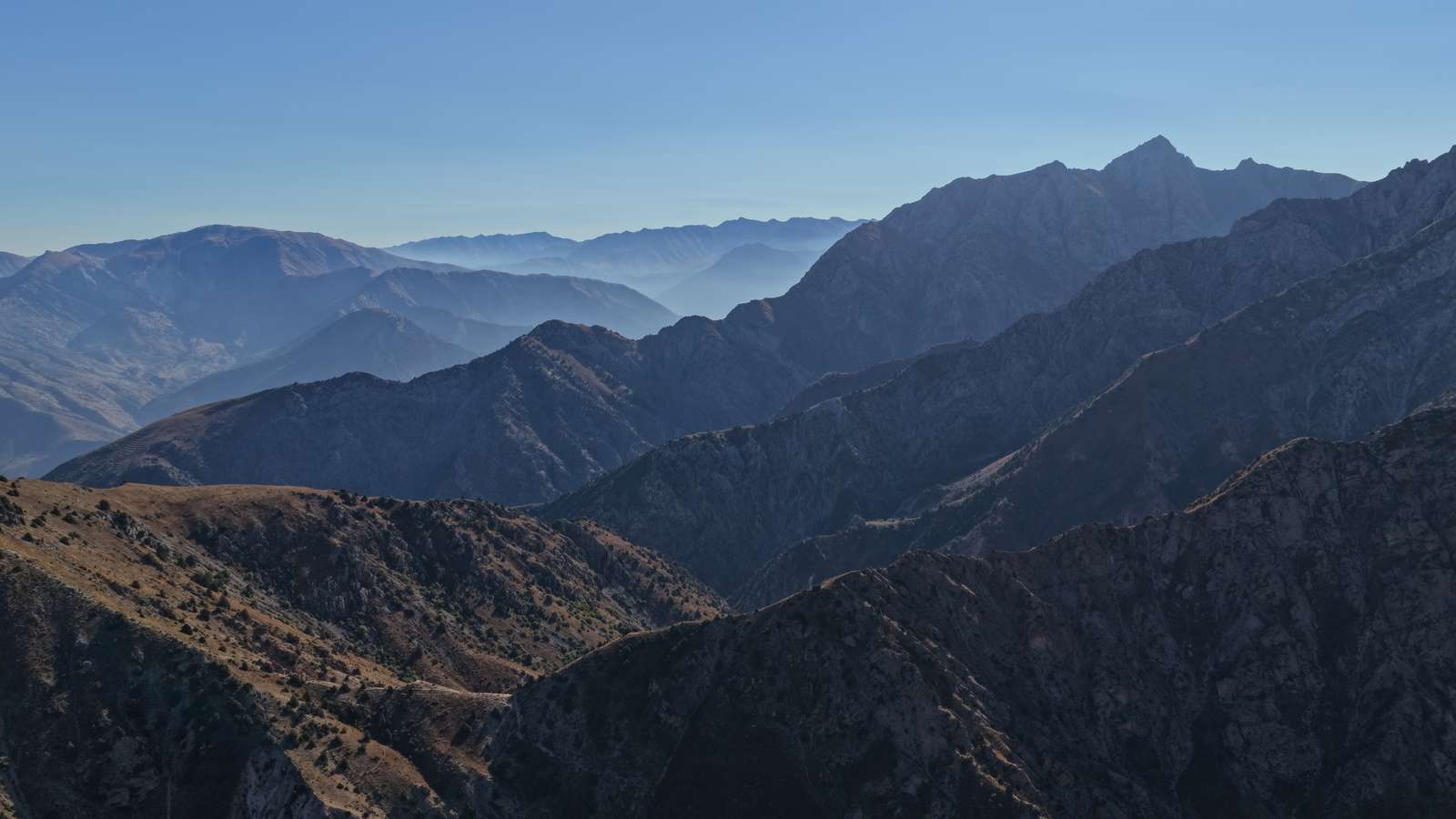
On day 3 we pick you up at eight and drive into the .Did you know? Wild walnut and apple forests, now World Heritage Since 2016 the Western Tien Shan, shared by Uzbekistan, Kazakhstan and Kyrgyzstan, has been a UNESCO World Heritage Site. Its lower slopes hold wild walnut and apple forests and the wild relatives of apricot, pear and cherry. Read more → Amirsoy, the resort that opened in December 2019, is 65 km east of the city, and its gondolas take you up the slope in the morning, before the wind picks up. Lunch is by Lake Charvak, a reservoir with a long shore of summer villages. If you would rather walk than ride a lift, we take you to Chimgan, about 85 km from Tashkent, for a couple of hours on the trails. You are back at your hotel by the evening. We book this day as the mountains with lunch and a cable car; the timings are in our Chimgan and Charvak day trip. In winter the same day becomes a ski day at Amirsoy. If one day in the mountains is not enough, Mountains and Spa near Tashkent gives them three, with a resort hotel and its spa.
Days 4 and 5: Samarkand
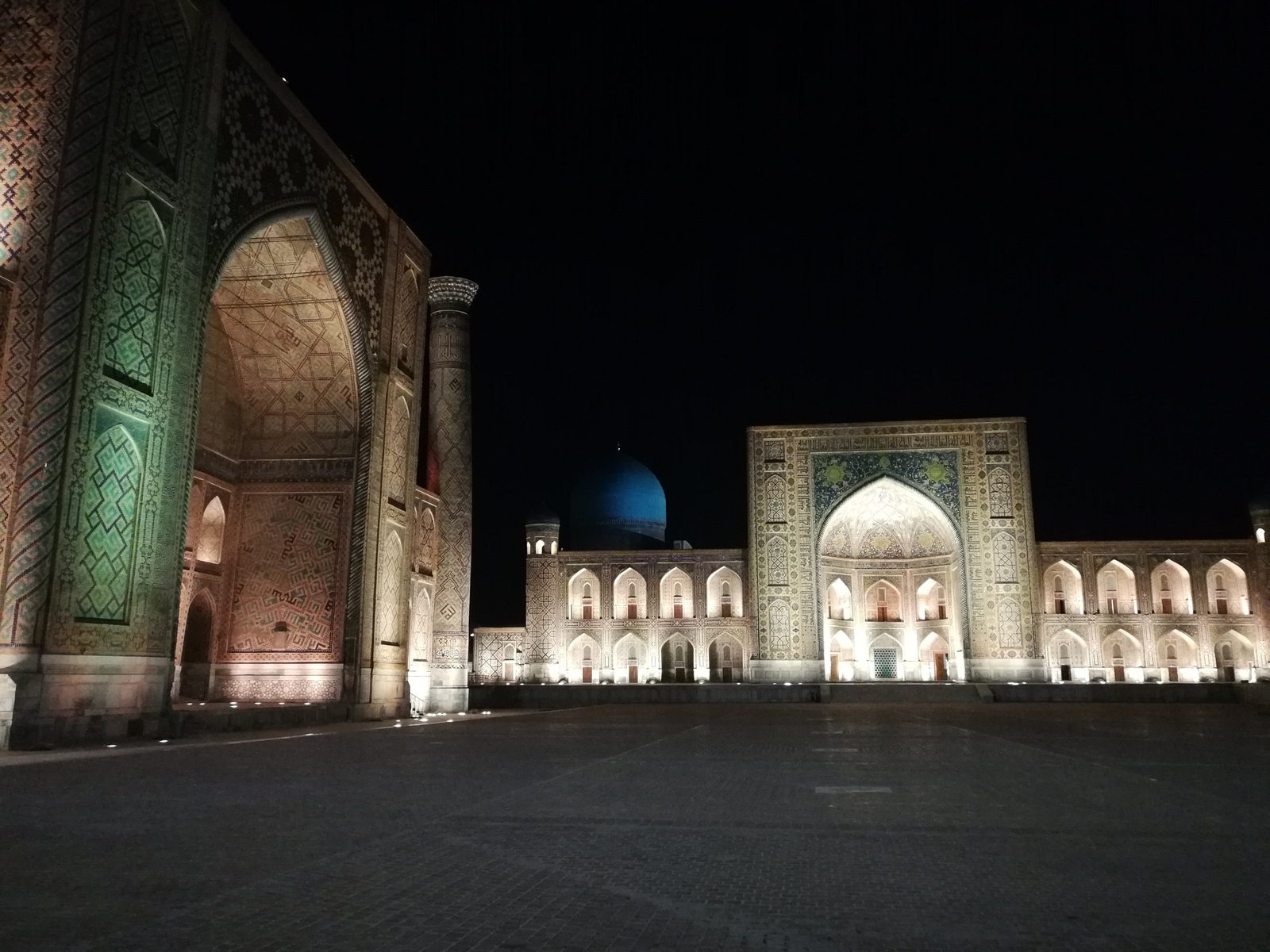
In the current timetable the morning Afrosiyob takes a little over two hours from Tashkent to Samarkand, so the Registan fits into the afternoon of day 4. Its three madrasahs were built two centuries apart: Did you know? Ulugh Beg measured the year to within 25 seconds Working at his Samarkand observatory, Ulugh Beg put the tropical year at 365 days 5 h 49 min 15 s, about 25 seconds too long, closer than Copernicus a century later. Read more →'s in 1417 to 1420, Sher-Dor in 1619 to 1636 and Did you know? The 'gilded' mosque of the Registan Tilla-Kari, built in 1646–1660, means 'gilded'. With Bibi-Khanym in ruins, it served as Samarkand's main Friday mosque until the 1920s. Its prayer hall glows with kundal, relief painting finished in gold leaf, restored in 1979. Read more → in 1646 to 1660.
Day 5 starts at Gur-e-Amir. The mausoleum was begun in 1403 for Amir Timur (Tamerlane, 1336–1405), founder of the Timurid empire, which had its capital in Samarkand. Born near Shahrisabz. Read more →'s grandson ,Did you know? Timur's tomb was built for his grandson Gur-e-Amir was begun in 1404 for Muhammad Sultan, Timur's grandson and chosen heir. Timur had a crypt ready in his home town of Shahrisabz, but when he died in 1405 he was laid in Samarkand, in the tomb meant for the young prince. Read more → and Timur himself was buried here in 1405 only because snow had closed the passes to his tomb in Shahrisabz. From there you walk to the Did you know? 95 elephants hauled stone for Timur's great mosque Bibi-Khanym, begun in 1399 after Timur took Delhi, was the largest mosque of his empire. Some 200 stonecutters worked on site and 95 elephants brought from India hauled the loads; the courtyard was meant to hold 10,000 people. Read more → and Siab bazaar next to it. In the afternoon you climb the street of Shah-i-Zinda, where more than twenty mausoleums went up between the 11th and the 19th century.
Days 6 and 7: a night in a yurt by Lake Aydarkul
On day 6 our driver takes you north-west from Samarkand, 180 km to the small town of Nurata. Stop at the :Did you know? Legend says Nurata’s spring was born of a falling star Legend says a meteorite fell here and shone with light, and a healing spring rose where it struck — hence Nur, “light”, in the town’s name. The Chashma spring is real enough: it is full of sacred marinka fish that nobody catches. Read more → the spring under the Juma mosque stays at about 20 °C all year, and the fish in it may not be fed, caught or eaten. The yurt camp is about 60 km further, near the shore of Aydarkul. The lake appeared in 1969, when flood water from the Syr Darya was let out of the Shardara reservoir into the Arnasay lowland and never drained away. Today it is nearly 250 km long.
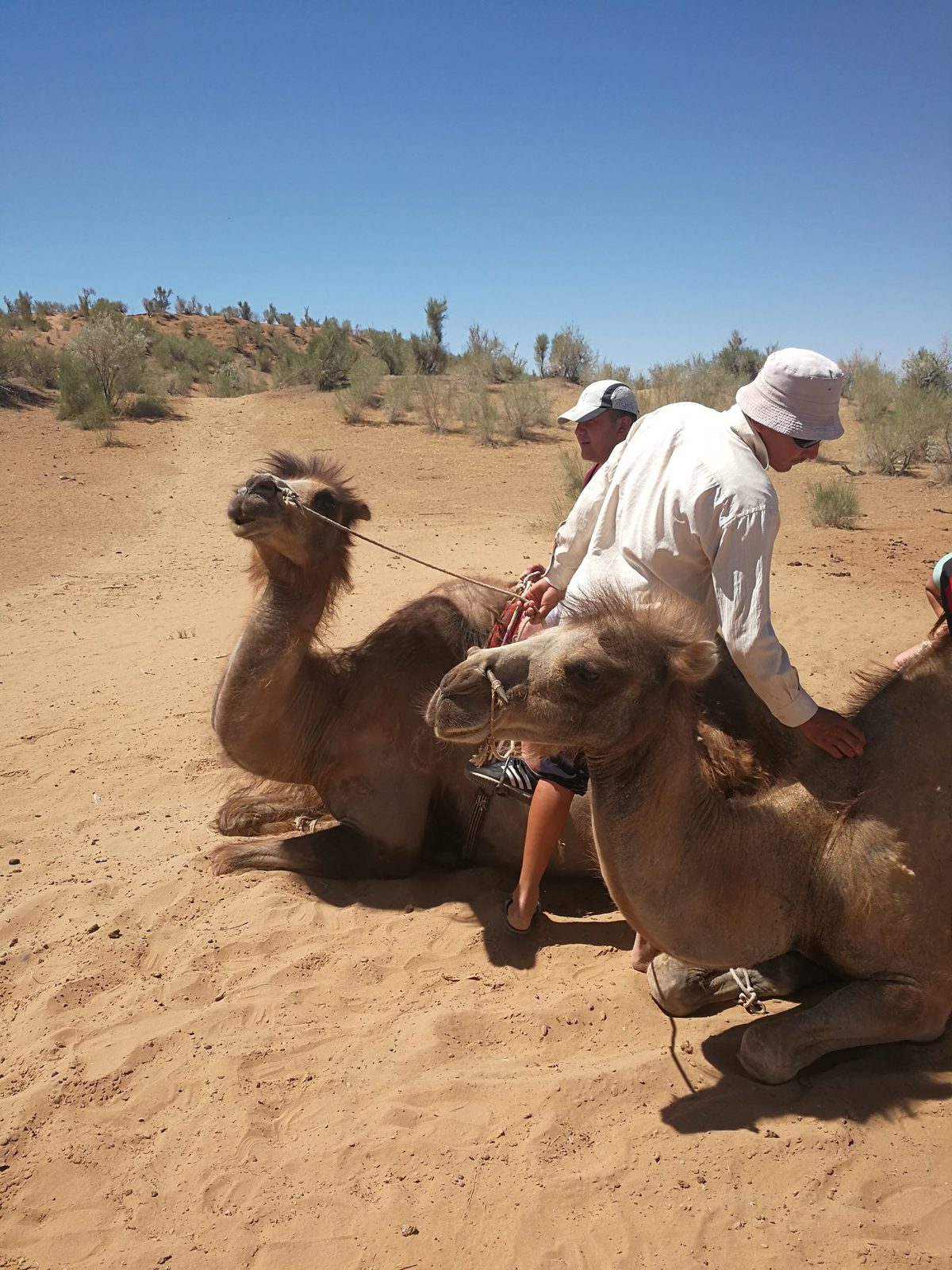
The afternoon goes to a camel ride on the sand. Dinner is by the fire, often with folk music, and the night is in a felt yurt. Conditions in the camps are basic, and the camps we work with serve dinner and breakfast. On the morning of day 7 you walk along the lake, then drive back through Nurata and on to Bukhara, 175 km from there, and reach the old town by the late afternoon. Everything about the camp is in Aydarkul and Nuratau. If you want more of the desert and the villages, Hiking Uzbekistan: Chimgan, Nuratau and Samarkand adds two nights with families in the Did you know? The Nuratau ridge protects a rare wild sheep The Nurata Nature Reserve was set up on the Nuratau ridge in 1975 to protect wild walnut groves and Severtsov's argali, an endemic wild sheep on the Red List. Golden eagles and bearded vultures are protected here too. Read more → mountains.
Days 8 to 10: Bukhara, then the train to Khiva
Day 8 is the guided day in Bukhara. The Samanid mausoleum is a 10th-century cube of baked brick, the Ark was the emirs' fortress, and at Poi Kalyan the Did you know? Diggers went 13 m down and never found its base The Kalyan Minaret of 1127 rises about 46 m, and an excavation reached 13 m without finding the bottom of its foundations. Genghis Khan reportedly ordered it spared. Read more → has stood 45.6 m high since 1127. Between them you walk through the domed trading arcades.
On day 9 the high-speed train leaves Bukhara at 10:54 in the current timetable and reaches Khiva at 14:31, after three and a half hours across the Kyzylkum. Tickets go to each passenger by name, so we take your passport details when you book and buy the train ticket from Bukhara as soon as sales open. By the evening you are inside Itchan Kala, the walled inner town.
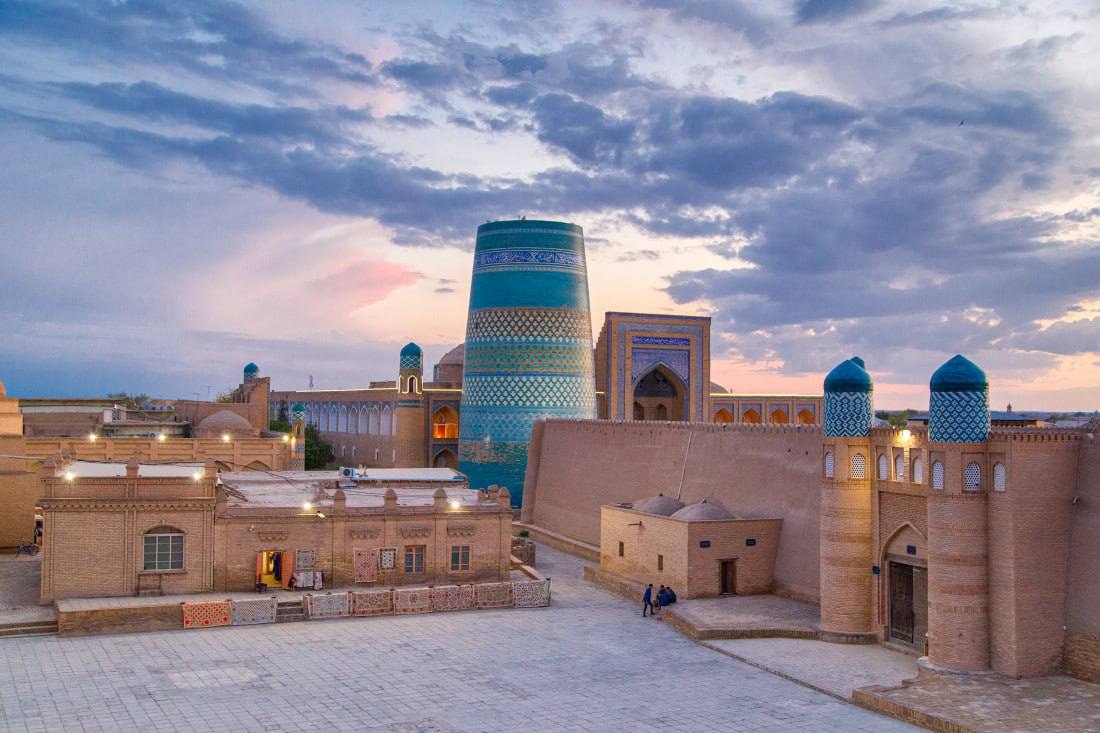
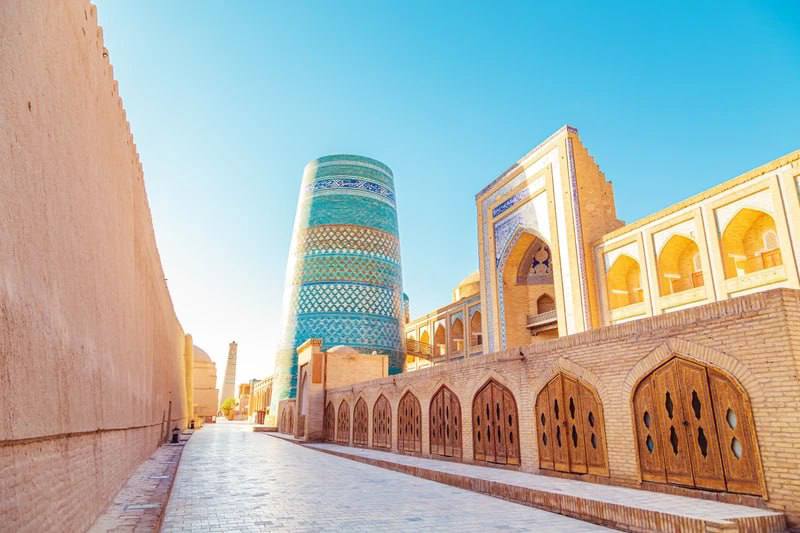
Day 10 is Khiva with your guide. You start at the ,Did you know? A 14-metre-wide base for a tower that stopped at 29 m Kalta-Minor was begun in 1852 and meant to reach 70–80 m, but work halted in 1855 at about 29 m when its khan died. It is said to be the only minaret covered entirely in glazed tiles. Read more → the tiled minaret begun in 1852 and left at 29 m when its khan died in 1855, then go on to the Did you know? In the khan’s courtyard a round platform waited for a yurt The Kunya-Ark, the khans’ citadel, had its own mint, arsenal and harem. In the courtyard of its reception hall of 1804–1806 stands a round platform: a yurt was set up on it, and there the khan received envoys of the steppe nomads. Read more → citadel and the madrasahs along the main street. Itchan Kala has been on the UNESCO World Heritage List since 1990. The afternoon is free for the walls at sunset.
Days 11 and 12: one flight back to Tashkent
On day 11 our driver takes you 35 km to Urgench airport, and the flight to Tashkent takes 1 h 20 min at the shortest. We buy the Urgench–Tashkent ticket for you together with the train tickets. You land in time for a last evening in the capital, and on day 12 we drive you to the airport for the flight home.
When the yurt camps are closed
The camps close for the winter. In the cold months we take the Afrosiyob from Samarkand to Bukhara on day 6, under two hours, and give day 7 to Gijduvan and its ceramics workshop, about 40 km from Bukhara. The mountain day on day 3 stays, with skis instead of trails if you like.
A group date or a private trip
If a fixed date suits you, Summer in Uzbekistan with a Yurt Camp is a ten-day small-group tour that departs on Wednesdays from June to August 2027, with the same night by Aydarkul between Samarkand and Bukhara and a pool at every hotel. Without the desert, Classic Uzbekistan at a Gentle Pace covers the four cities in ten unhurried days. On your own dates we arrange the twelve days above as a private tour.
What we take care of
We buy the train tickets and the domestic flight, book the hotels with breakfast and the yurt camp, and give you a car with driver for every station, airport and the two desert days. We also arrange a guide in each city and the entrance tickets. If you would rather pick the hotels yourself, start with our hotels. We quote the price for your dates.
Ten, twelve or fourteen days?
Ten days cover the four cities with a day trip to Shahrisabz: see Uzbekistan in 10 days. Fourteen days add the Fergana Valley and the desert fortresses of Khorezm, as in Uzbekistan in 14 days. Uzbekistan in 12 days is the plan for those who want the four cities plus one day of mountains and one night in the desert.