
 Deutsch
 English
 Español
 Français
 Italiano
 Polski
 Português
 Suomi
 Svenska
 Türkçe
 Русский
 עברית
 한국어
 中文
 日本語
Places in this article: Bukhara
Bukhara, the Open-Air Museum City: Nine Centuries in One Walk
From Did you know? Bukhara's ponds were once its water supply Pools like Lyabi-Hauz, dug around 1620 and 46 × 36 m, were the city's main source of water. Most were filled in during the 1920s–30s because they spread disease; Lyabi-Hauz survived. Read more → to the Did you know? Diggers went 13 m down and never found its base The Kalyan Minaret of 1127 rises about 46 m, and an excavation reached 13 m without finding the bottom of its foundations. Genghis Khan reportedly ordered it spared. Read more → is about 500 metres, a seven-minute walk. On the way you pass a pond dug around 1620, Did you know? Under Bukhara's domes merchants changed money and gold Four 16th-century trading domes still stand over old crossroads. Toki Sarrafon was the money changers' dome, where merchants from India and China swapped coins; Toki Zargaron held jewellers' workshops, Toki Telpak Furushon sold caps. Read more → of the 16th century, a mosque whose facade goes back to the 12th, and a minaret of 1127. Few cities let you cross nine centuries in one short stroll, with tea at both ends.
That is why Bukhara is called an open-air museum. We are a tour operator in Tashkent and bring guests here every week, and this guide reads the old town the way a museum is read: room by room, century by century. Where you need tickets, hours and a day-by-day plan, we link to our detailed pages.
Why Bukhara stayed in one piece
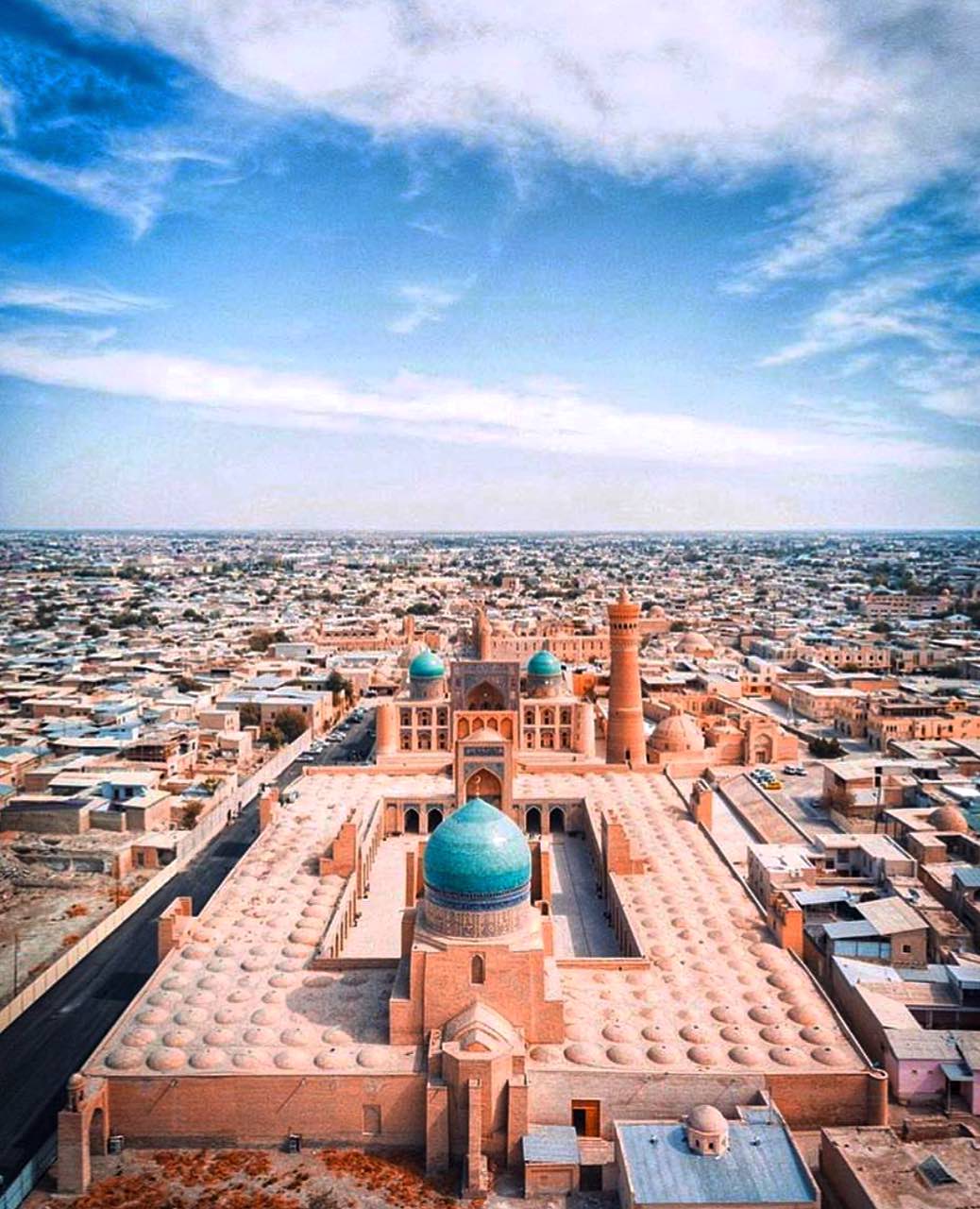
Bukhara is more than two thousand years old, and its historic centre, on the UNESCO World Heritage List since 1993, holds about 140 listed monuments from the 9th to the 19th century. What makes it unusual is density. Rulers came and went, but the city kept building inside the same compact core, so the layers sit side by side rather than one on top of another.
The result is a centre you can cross on foot in half an hour. Almost everything lies on a short line from Lyabi-Hauz in the east to the Samanid park in the west, and only three sights need a car. Our plan for Bukhara in 1, 2 or 3 days puts them in order.
The 10th century: a brick tomb in the park
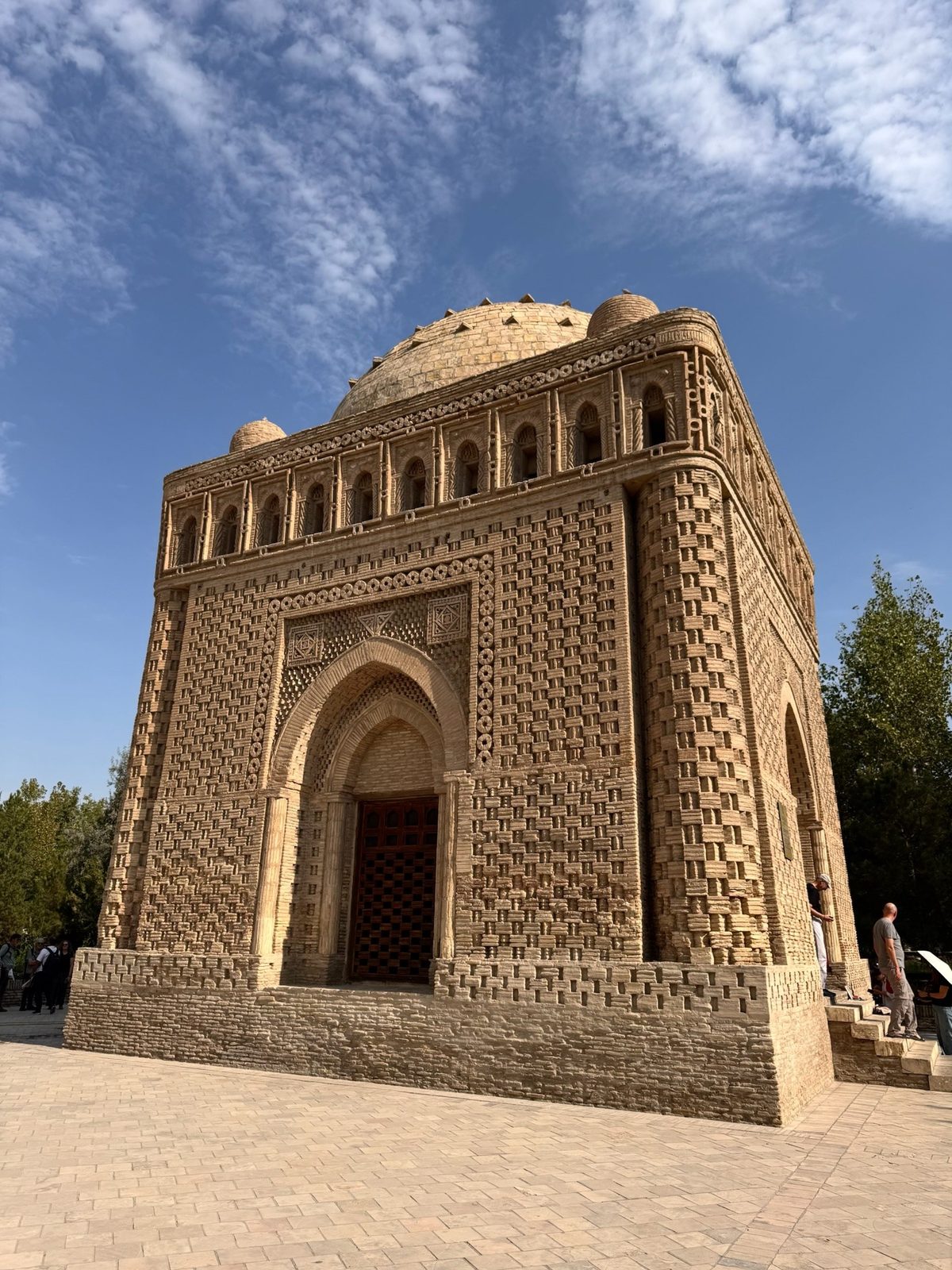
The oldest room of the museum is the ,Did you know? Buried in mud, this tomb escaped Genghis Khan The 10th-century Samanid Mausoleum, one of the oldest monuments of Islamic Central Asia, was covered by flood mud and sand before the Mongols came in 1220. Hidden for centuries, its brick lacework survived intact. Read more → the family tomb of the dynasty that ruled from Bukhara in the 9th and 10th centuries. It is a cube of fired brick laid in patterns, so that the walls look woven. Side light in the morning brings the pattern out best.
The story goes that the tomb survived the Mongols in 1220 because floods had already buried it. A few steps away stands ,Did you know? A cone-shaped dome over Job's spring Chashma-Ayub, 'Job's Spring', has a conical dome in the Khorezm style, rare in Bukhara. Legend says Job struck the ground with his staff and water flowed; inside is a museum of Bukhara's water supply. Read more → built over a spring that legend links to the prophet Job; inside is a small museum of water supply. Both are in our page on the Samanid Mausoleum and Bolo-Hauz.
The 12th century: the minaret that outlived the Mongols
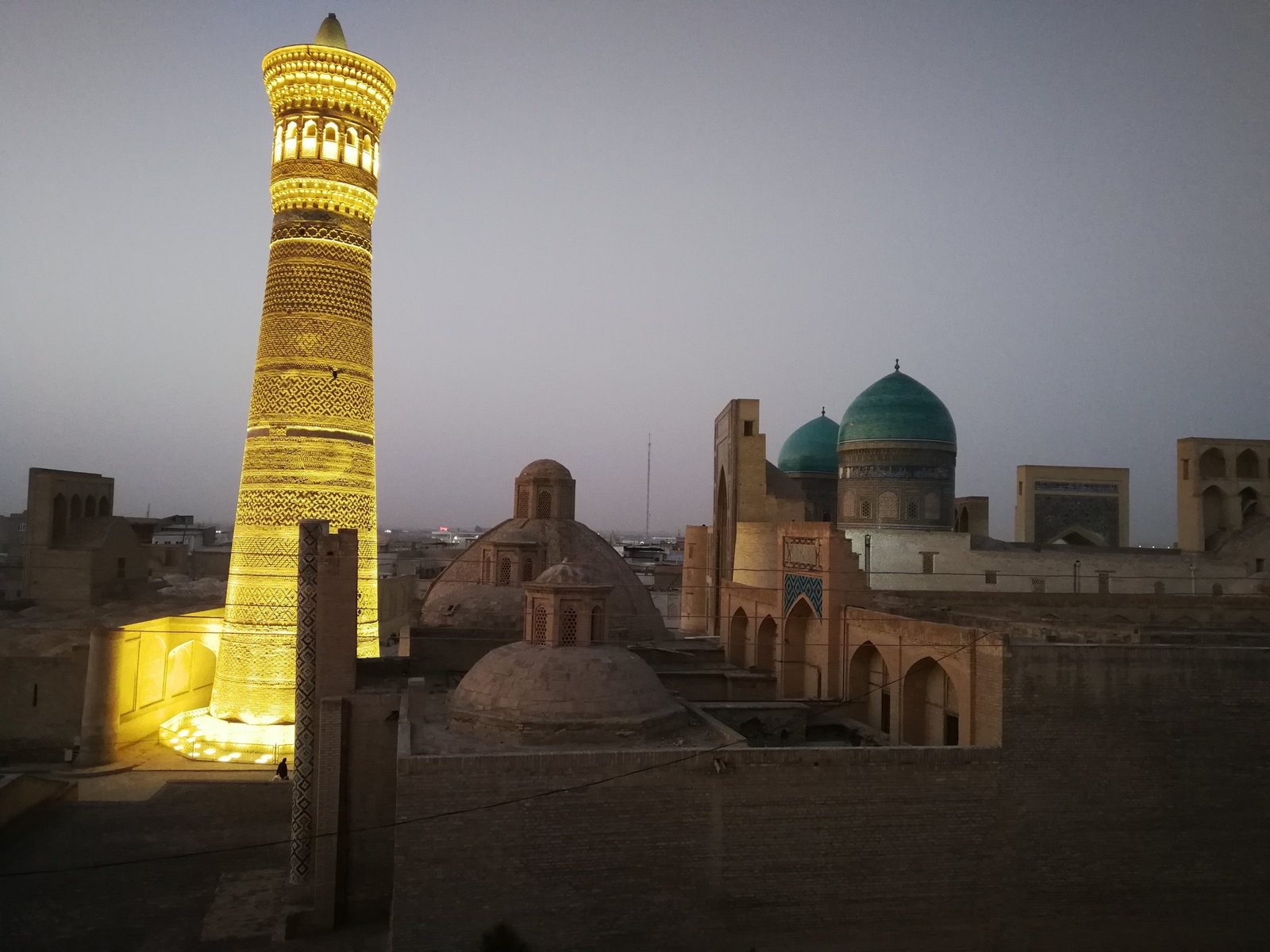
The Kalyan minaret was built in 1127 and rises about 46 metres. Archaeologists dug 13 metres down without reaching the bottom of its foundations. The legend says Genghis Khan, who took the city in 1220, ordered it spared; true or not, it is one of the very few buildings in Bukhara older than the Mongol invasion.
The same century gave the city the facade of the Did you know? Magoki-Attori: a mosque 'in the pit' Magoki-Attori means roughly 'in the pit': even in the 10th century it lay below street level. Beneath it lie remains of a pre-Islamic temple. Read more → mosque, which now sits below the level of today's street between the trading domes, a sign of how much the ground has risen around it. Inside is a carpet museum. The square at the foot of the minaret, ,Did you know? Legend: the minaret's foundation was laid with camel milk Legend says master Bako laid the foundations of the Kalyan minaret with ganch plaster mixed with camel milk, then vanished for two years to let them harden, and only then built the tower. Locals still show a grave they say is his. Read more → is in our page on Poi Kalyan.
The 15th and 16th centuries: madrasahs and domes
The Did you know? Central Asia's oldest surviving madrasah has a motto on its door Ulugh Beg's madrasah in Bukhara, built in 1417, is the oldest preserved in Central Asia. Its carved door reads: 'Education is obligatory for every Muslim man and woman.' Read more → of 1417 is the oldest preserved An Islamic college: student cells and classrooms around a courtyard behind a grand portal. In the old towns many now house museums and craft workshops. Read more → in Central Asia; its carved door says that learning is a duty for every Muslim man and woman. Inside is a museum of the history of calligraphy. Opposite the minaret, the Did you know? A madrasah still teaching after almost 500 years Mir-i-Arab, built in the 1530s opposite the Kalyan Mosque, was one of only three Islamic schools that kept working through the Soviet period, and it still trains students today. Read more → madrasah of the 16th century still trains students: it was one of only three that kept teaching in Soviet times.
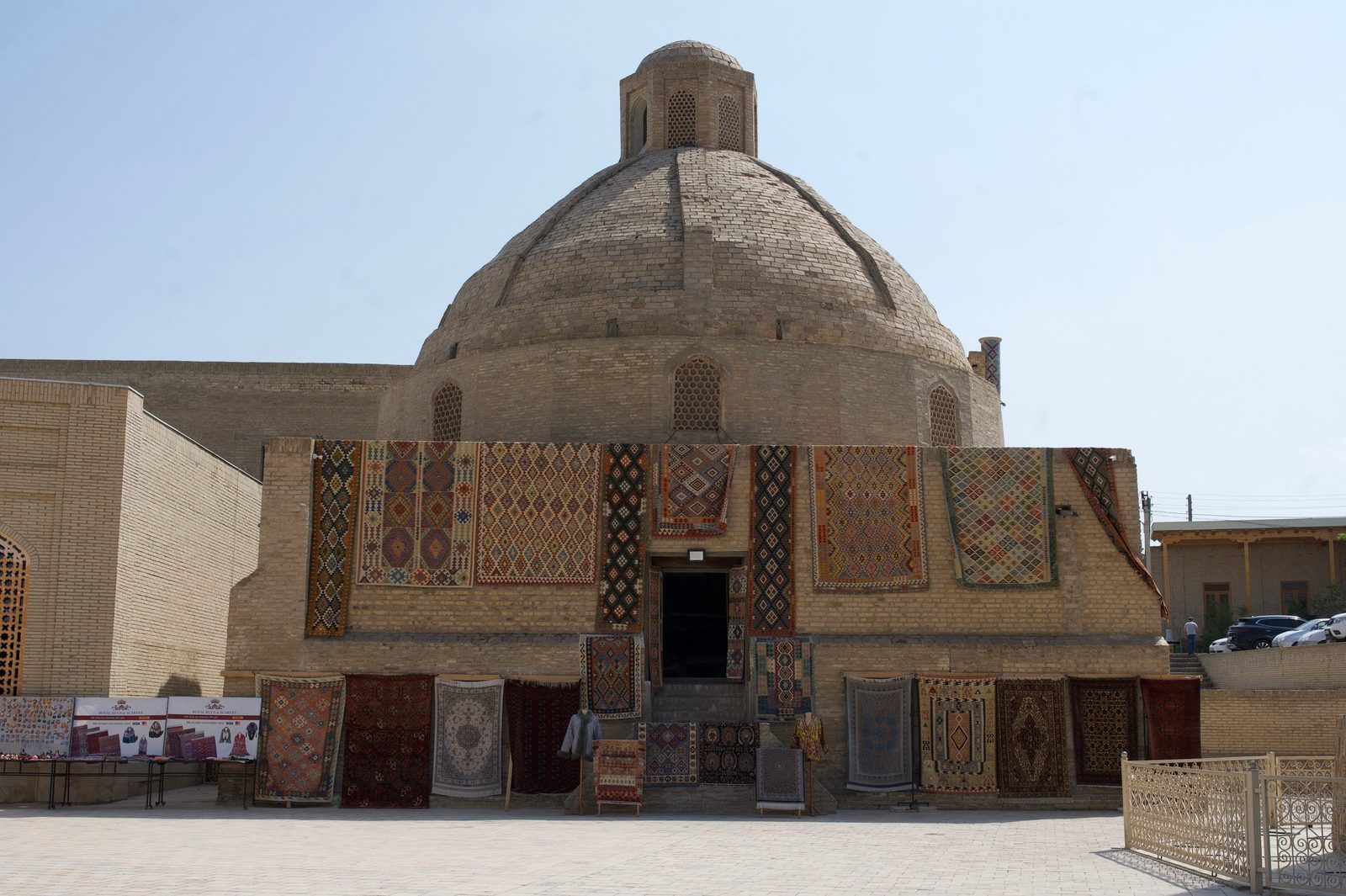
The trading domes belong to the same century. Each had its trade: Toki Sarrafon for the money-changers, Toki Zargaron for the jewellers, Toki Telpak Furushon for the hat-sellers. They were built over old street crossings, so you walk under them simply by walking through town, and in the hottest hours their shade is the best place to be.
The 17th century: a pond and two birds
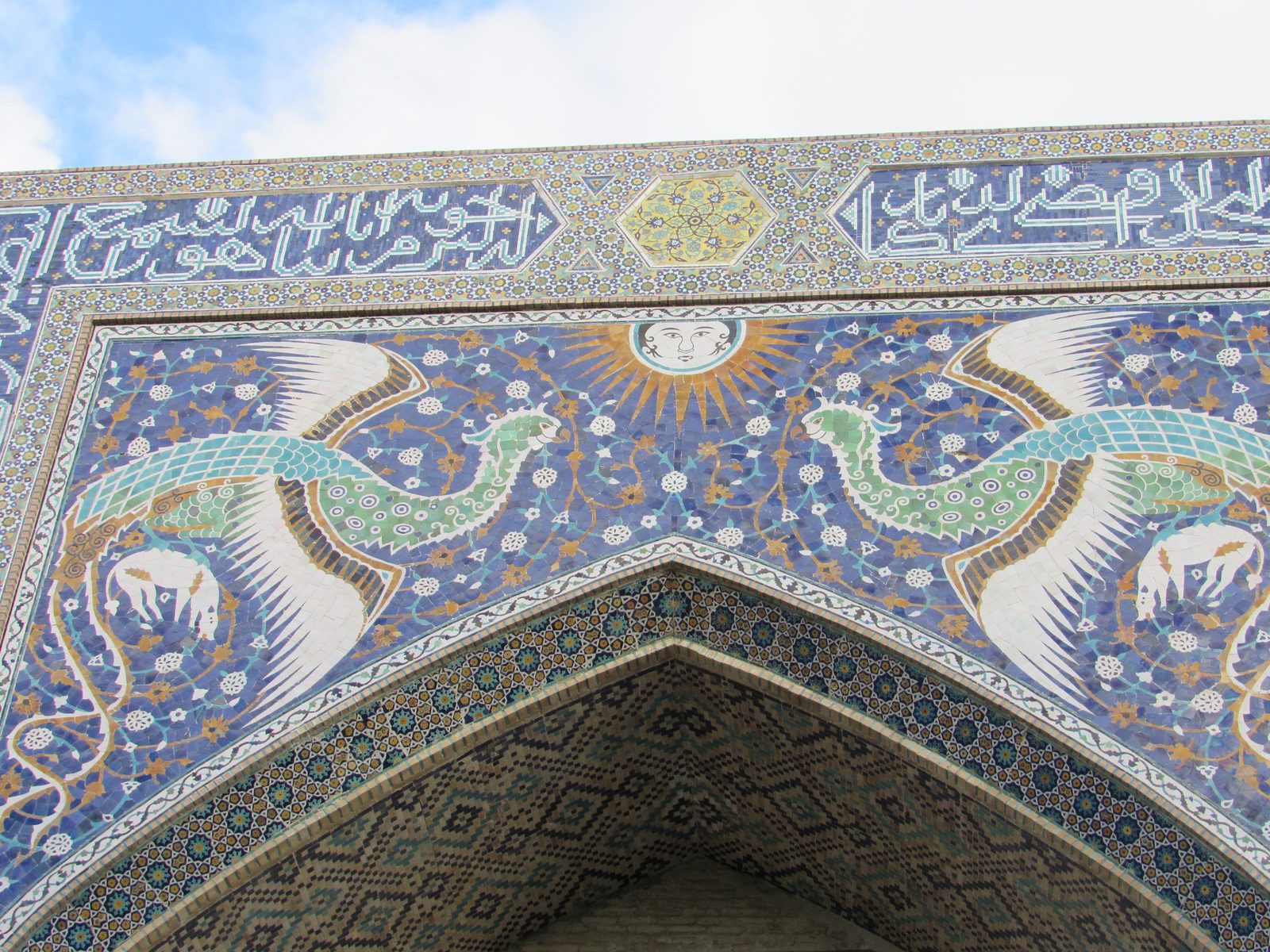
Lyabi-Hauz, the square around a pond of about 1620, is the living room of the old town: madrasahs on three sides, teahouses with wide wooden beds by the water. Look up at the portal of the :Did you know? A caravanserai that became a madrasah by a khan's word Nadir Divan-Begi built his 1622 building by Lyabi-Hauz as a caravanserai. At the opening Imam Quli Khan praised it as a fine madrasah, and a khan's word could not be taken back: a portal and cells were added, and a madrasah it became. Read more → two simurgh birds carry white deer towards a sun with a human face. Images like that are rare on Islamic buildings, and guides always stop here.
The 17th-century madrasah of Abdulaziz Khan, near Timur's grandson, ruler of Samarkand and an astronomer. He built a madrasah on the Registan and an observatory whose star catalogue was used for centuries. Read more →'s, now holds a museum of woodcarving. The square, its pond and the stories around it are in Lyabi-Hauz and Chor Minor.
From the 18th to the 20th century: columns, towers and an emir's palace
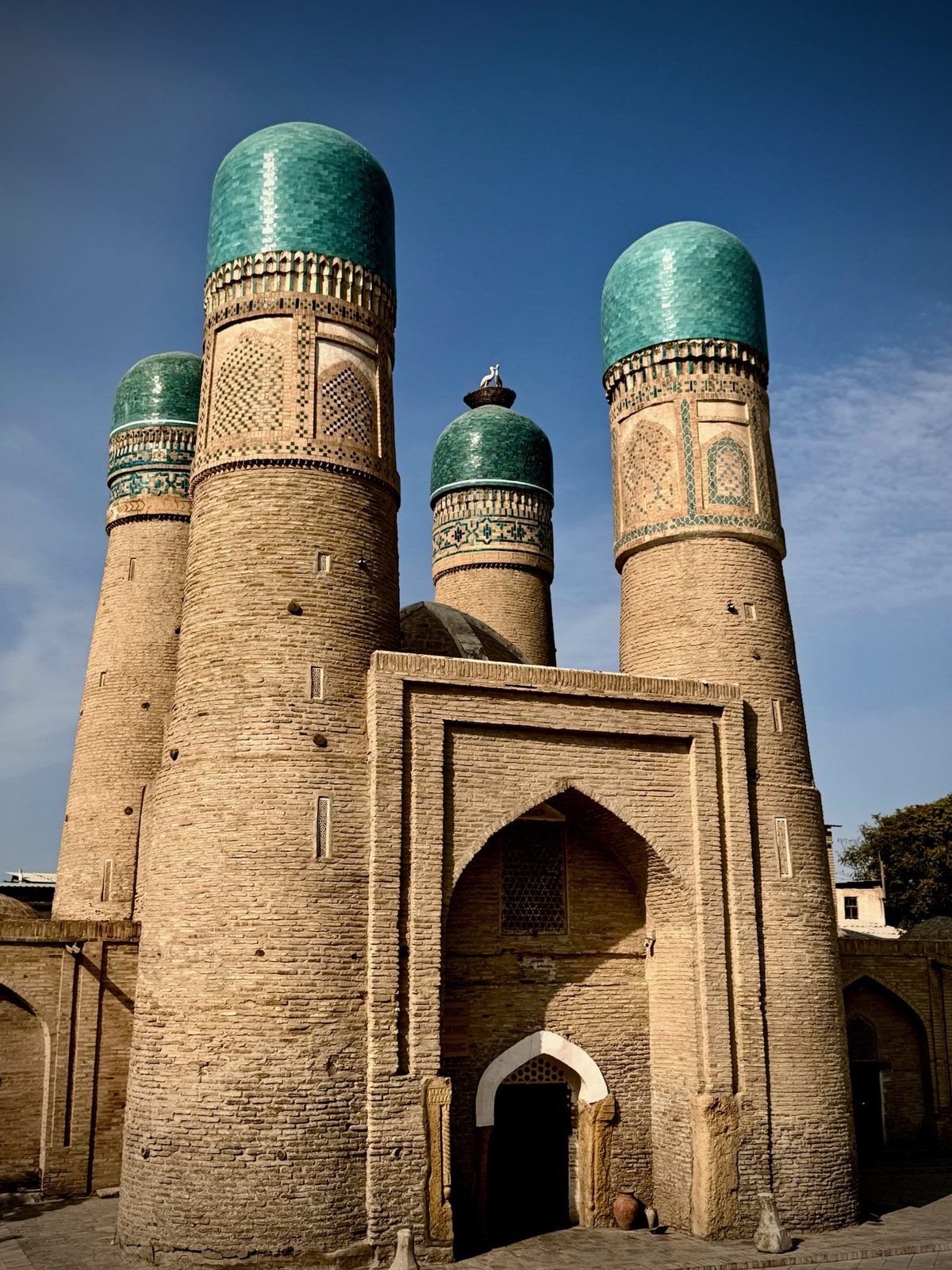
Opposite The fortress-residence of the rulers of Bukhara on a high artificial hill: the oldest structure in the city. Read more → stands the Did you know? The famous columns of Bolo-Hauz are barely a century old The Bolo-Hauz mosque opposite the Ark was completed in 1712, but its best-known feature, the tall, slender carved columns along the front of the iwan, was added only in 1917, together with the small minaret of 1916–1917. Read more → mosque of 1712, whose twenty carved wooden columns are reflected in its pond. Ten minutes east of Lyabi-Hauz, through quiet residential lanes, is ,Did you know? Legend: four towers for four world religions? Chor Minor, a gatehouse of 1807, has four towers, each decorated differently. Guides say they stand for four world religions and look for a cross, a fish and a prayer wheel in the decor; others say four dynasties. All are interpretations. Read more → a gatehouse of 1807 with four turquoise-domed towers. The lanes are half the reason to go.
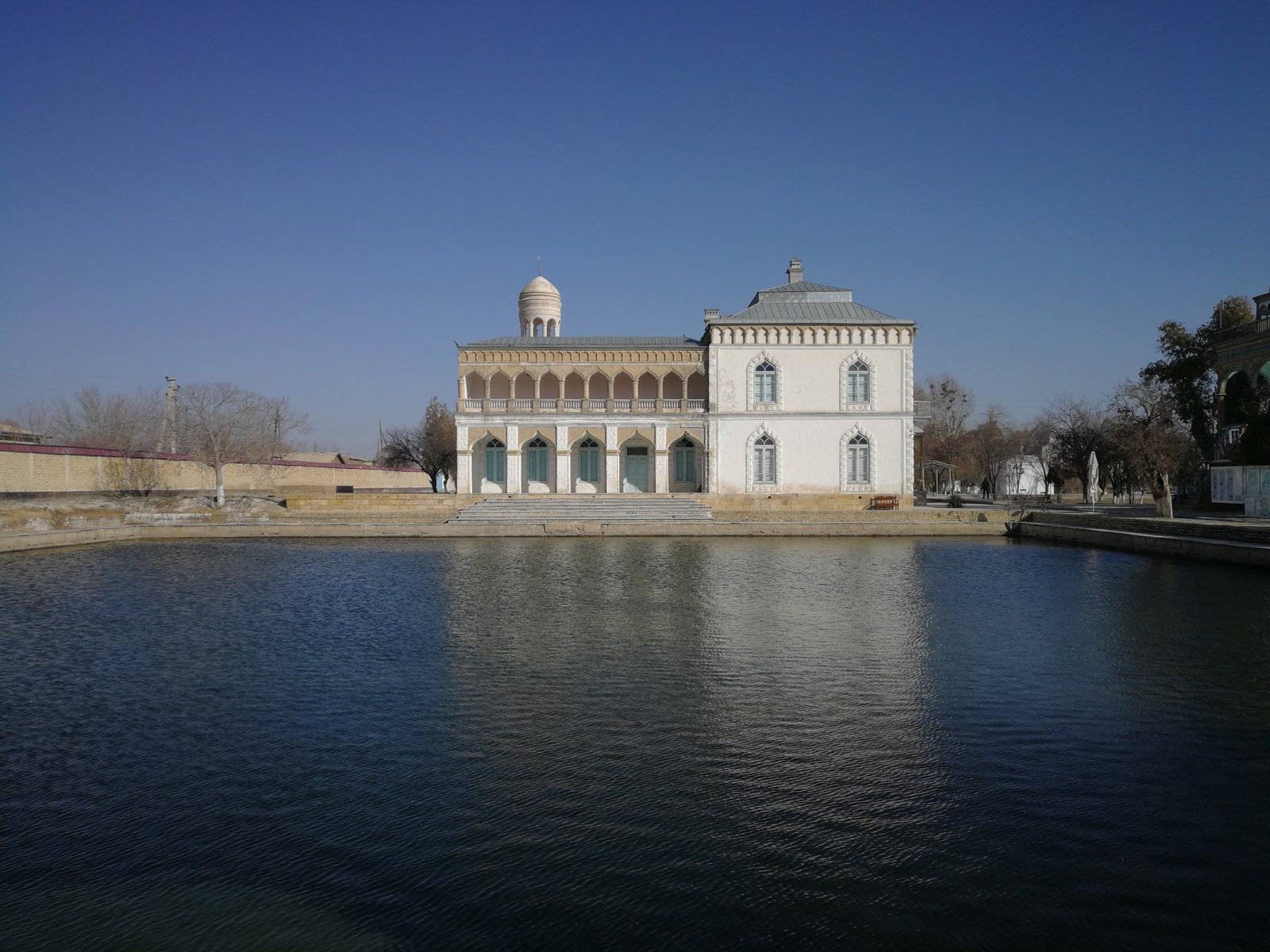
The Ark itself, on its hill with walls 16 to 20 metres high, was the seat of Bukhara's rulers until 1920; its history is in our page on the Ark of Bukhara. The last room of the museum is outside the old town: ,Did you know? Legend: the emir's palace site was chosen with meat Legend says that when Emir Nasrullah wanted a summer palace in the mid-19th century, sheep carcasses were hung in several places around Bukhara, and the spot where the meat spoiled last was chosen. Sitorai Mohi-Hosa there today dates from 1912–1918. Read more → the summer palace built in 1912–1918 for Emir ,Did you know? The emir’s summer palace is European outside, Eastern inside The country residence of Alim Khan, the last emir of Bukhara, was built in 1912–1918: European in style outside, with Eastern interiors. Local master craftsmen worked on it with two Russian engineers of the court, and since 1927 it has been a museum. Read more → European outside and Bukharan inside.
Museums inside the monuments
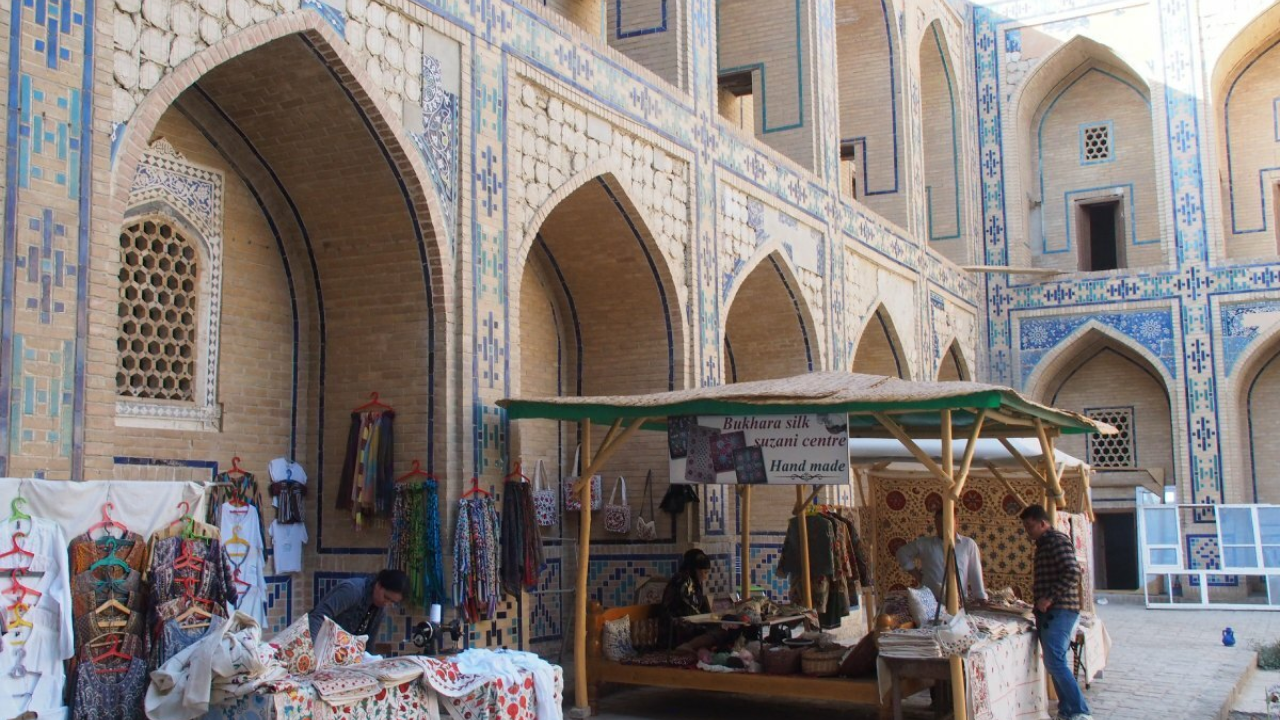
Many of Bukhara's monuments are museums in their own right, run by the Bukhara State Museum-Reserve: carpets in Magoki-Attori, water supply in Chashma-Ayub, woodcarving in the Abdulaziz Khan madrasah, calligraphy in the Ulugh Beg madrasah, ceramics in the khanqah of Nadir Divan-Begi. Each takes twenty to thirty minutes. The largest museum is inside the Ark.
The museum-reserve works without days off. Carry some cash in som for the small ticket desks and for the separate photo fees. Tickets and hours for every sight are in Bukhara and Khiva sights: tickets and hours, and the city's stories in the legends of Bukhara.
How long to stay and how to get there
Bukhara's station is in Kagan, about 12 km from the old town, so plan a taxi or a transfer. The fast train from Samarkand takes under two hours; from Tashkent it takes a little over four. One day covers the core if Bukhara sits between Samarkand and Khiva; two days is what we plan for most guests.
With a guide, the first day is our Bukhara highlights tour. From Tashkent there is Bukhara in 2 days by night train. And for an evening away from the monuments, we arrange a dinner with a local family.
In short
- Bukhara's old town is a museum you can walk in half an hour: the 10th-century Samanid Mausoleum, the Kalyan minaret of 1127, madrasahs and domes of the 15th and 16th centuries, Lyabi-Hauz of about 1620, Chor Minor of 1807.
- Only three sights need a car: Sitorai Mohi-Hosa, the Did you know? A village renamed in honour of a Sufi master Bahauddin Naqshband (1318–1389), who gave his name to one of the largest Sufi orders, was born and buried near Bukhara in Qasr-i Hinduvan. The village was later renamed Qasri Orifon in his honour; the tomb over his grave dates from 1544. Read more → complex and .Did you know? A necropolis named after four men called Abu Bakr Chor-Bakr, 5 km from Bukhara, grew from 1559 around the grave of Abu Bakr Said, who died in 970 and was one of four Abu Bakrs, hence the name. Its 25 buildings joined UNESCO's list in 2023 in the Zarafshan-Karakum Corridor. Read more →
- The best order: the Ark at opening time, the domes at midday, Poi Kalyan at sunset, Lyabi-Hauz after dark.
- The station is in Kagan, 12 km out; the fast train from Samarkand takes under two hours.
- Plan two days if you can, and cover shoulders and knees at Poi Kalyan.