
Places in this article: Bukhara
Sitorai Mohi-Hosa, Bukhara: the last emir’s summer palace and its museum
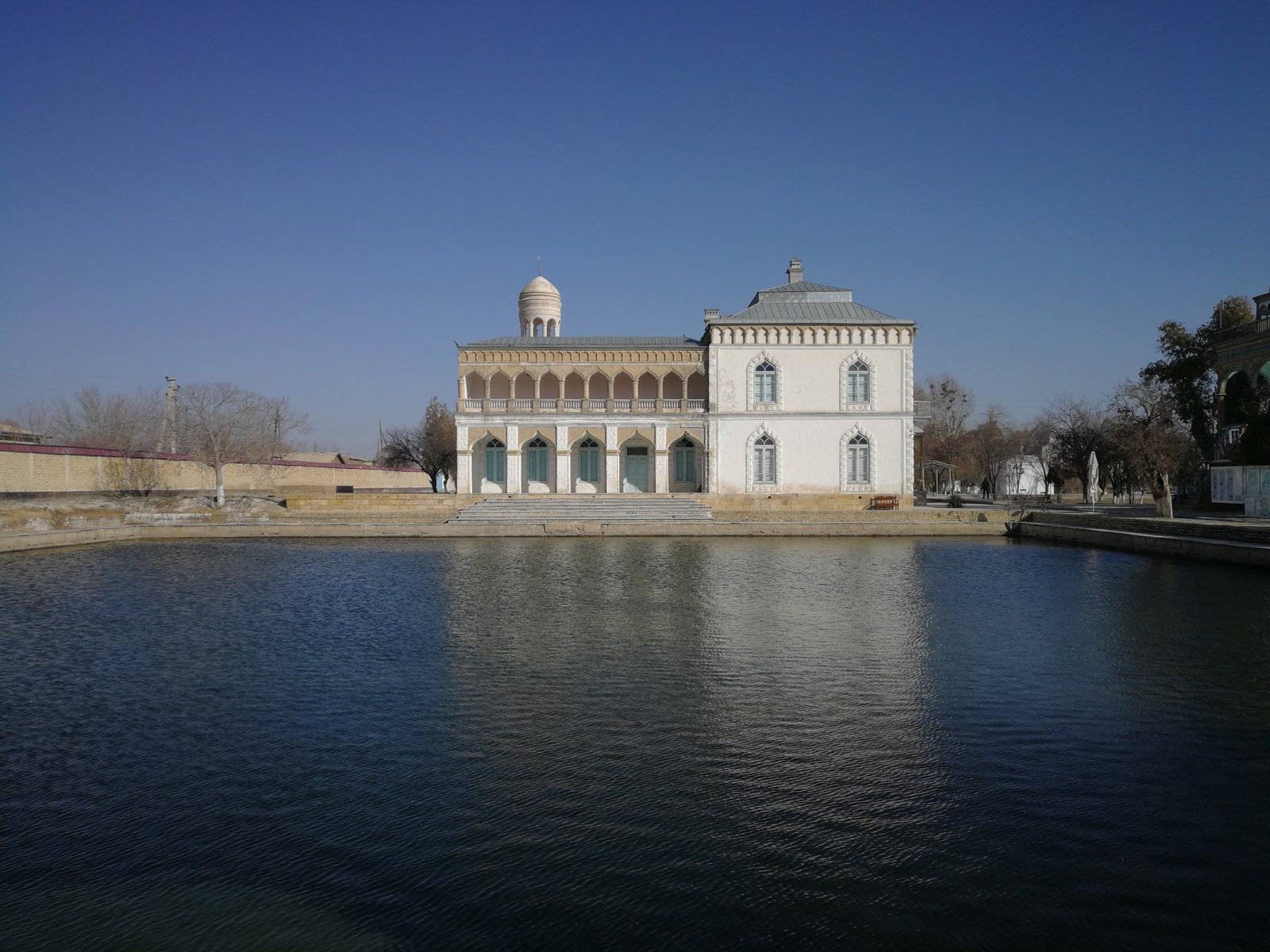
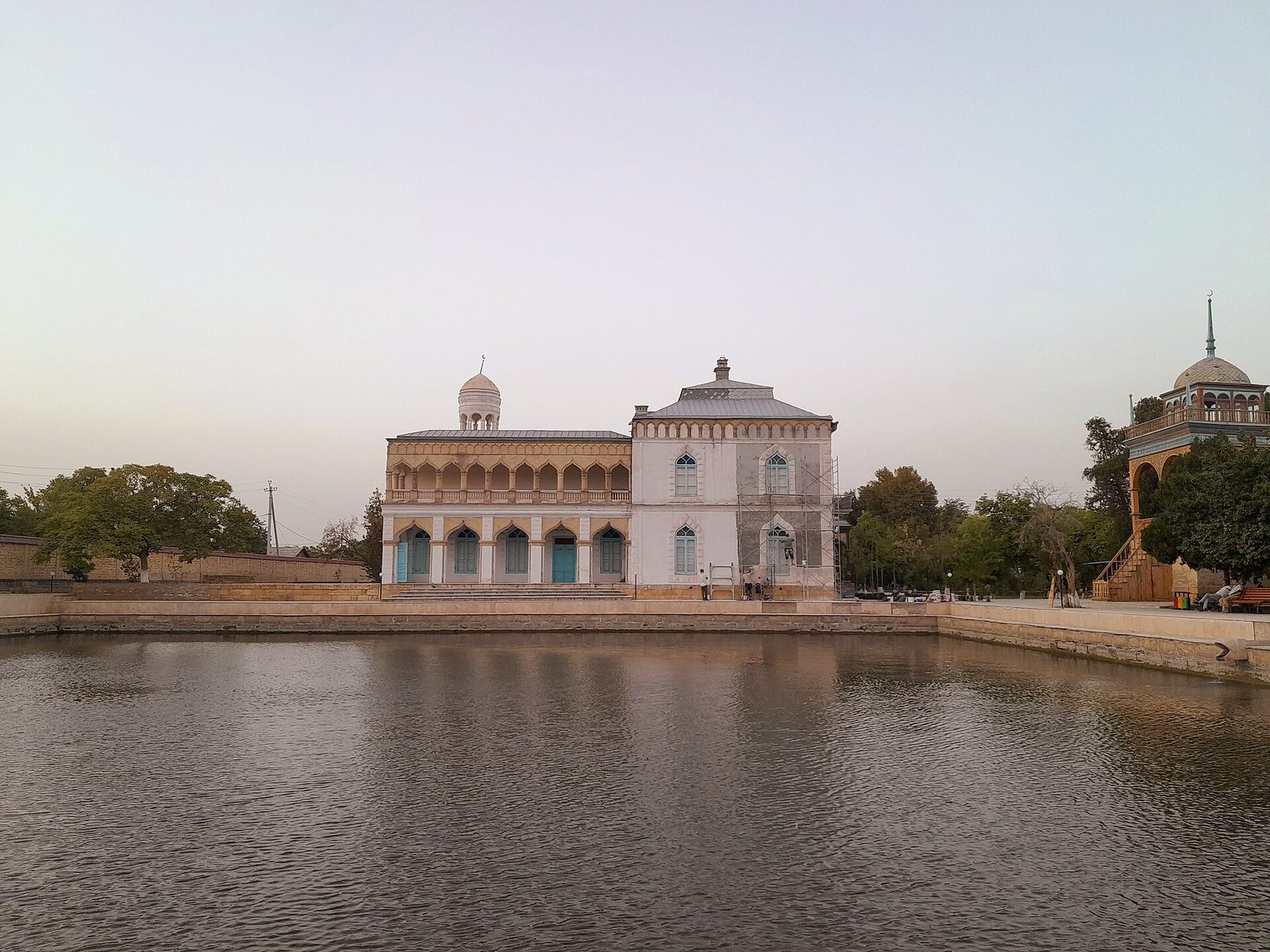
From the drive, the palace looks as if it belonged on the outskirts of a Russian provincial town: a pale facade, tall windows, a porch with columns. Step inside and you are in Bukhara: carved and painted plaster, a hall of mirrors under white ganch lace, ceilings that took craftsmen years. ,Did you know? Legend: the emir's palace site was chosen with meat Legend says that when Emir Nasrullah wanted a summer palace in the mid-19th century, sheep carcasses were hung in several places around Bukhara, and the spot where the meat spoiled last was chosen. Sitorai Mohi-Hosa there today dates from 1912–1918. Read more → the summer palace of the last emir, is the place where those two worlds met in the early 20th century.
Here is the story of the palace, how to read its blend of Russian and Bukharan styles, what the museum keeps, and how to fit it into a day outside the old town.
A palace four kilometres from the Ark
The name means “a star like the moon”. The emirs of Bukhara had a country residence here, about 4 km north of the city, from the 18th century, though nothing of that time survives. The site has its legend: an emir, the story goes, hung sheep carcasses in different corners around the city and built where the meat stayed fresh longest: there, the story says, the air was healthiest.
Emir Abdulahad Khan began building in the second half of the 19th century, and he sent Bukharan masters to work in St Petersburg and Yalta. His son ,Did you know? The emir’s summer palace is European outside, Eastern inside The country residence of Alim Khan, the last emir of Bukhara, was built in 1912–1918: European in style outside, with Eastern interiors. Local master craftsmen worked on it with two Russian engineers of the court, and since 1927 it has been a museum. Read more → who had studied in St Petersburg for three years from the age of 13, became emir in 1911 and built the palace you see in 1912–1918. He was the last emir of Bukhara: in 1920 he left the city, and he died in Kabul in 1944. How the emirs lived the rest of the year is told at the Ark of Bukhara, the fortress they ruled from.
Russian outside, Bukharan inside
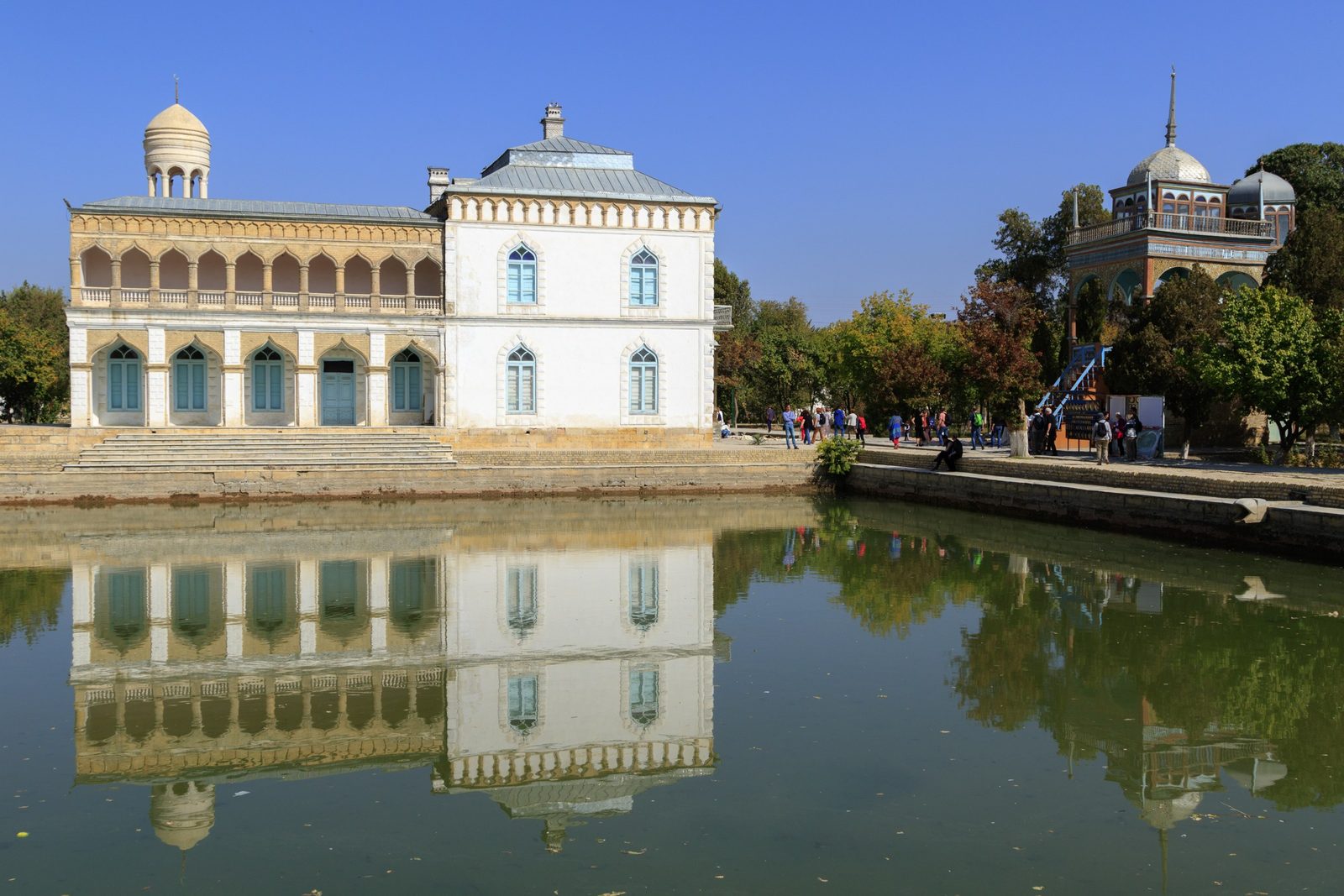
Two Russian engineers who served at the emir’s court, Margulis and Sakovich, worked on the new palace, and so did the leading Bukharan masters of the time: Usta Shirin Muradov, Hasanjon Umarov, Abdullo Gafurov, Rahim Khaitov, Ibrahim Khafizov, Karim Samadov and others. The result is European in its plan and facade and Eastern in every room.
Like a traditional Bukharan house, the palace is divided into a men’s half and a women’s half. Inside, carved ganch, wall painting and gold embroidery sit next to European furniture, curtains and mirrors, and that mix is what most visitors remember.
The White Hall
The palace’s showpiece is the White Hall, made under the direction of Usta Shirin Muradov. Thirty masters worked on it for two years. The walls are covered with carved ganch laid over mirrors, so the white lace of the plaster seems to float on light, and the patterns are said not to repeat anywhere in the room. A monument to Shirin Muradov stands in the palace grounds.
Compare it with the summer tea room: where the other halls are decorated with flowers and leaves, this one is all coloured geometry and stained glass. Two schools of ornament sit a few steps apart.
The museum and its collections
The palace became a museum in 1927, and today it is the Museum of Decorative and Applied Arts. Most of the collections date from the 19th and 20th centuries:
- Porcelain: Chinese and Japanese pieces, from the 14th to the 20th century.
- Textiles: ,Did you know? One suzani was often stitched by several women at once A family member or a pattern drawer, the kalamkash, drew the design across strips of cotton. The strips went to different women of the family or neighbourhood, who embroidered them at the same time; sewn back together, they show slightly mismatched seams. Read more → embroidered pillow covers (takyapush) and curtains (chimilik), gold-embroidered panels, robes and saddlecloths.
- Jewellery of Bukhara, and objects of Russian palace art.
- Furniture of the 19th and 20th centuries, and photographs of the late emirate.
- Clothes: in a separate octagonal pavilion, the dress of Bukharan townspeople from a century ago.
Around the buildings lie the garden, a pond and carved iwans; the garden wall and pavilions have been restored. If the suzani rooms catch your eye, our guide to suzani explains the patterns and where to buy them.
Visiting Sitorai Mohi-Hosa: tickets, hours and our tips
Ticket: 60,000 so’m for a foreign adult, by the official tariffs of the Bukhara museum-reserve in force since 1 January 2025. Photographing the exhibits costs 30,000 so’m and filming 100,000 so’m; an audio guide is 20,000 so’m.
Hours: 9:00–18:00 as a rule, with longer hours in the high season (at our last check in October 2026). Check on the day.
Time: about an hour and a half for the palace, the pavilions and the garden.
Getting there: the palace is outside the old town, so take a taxi or a car. Go at opening time and combine it with the Did you know? A village renamed in honour of a Sufi master Bahauddin Naqshband (1318–1389), who gave his name to one of the largest Sufi orders, was born and buried near Bukhara in Qasr-i Hinduvan. The village was later renamed Qasri Orifon in his honour; the tomb over his grave dates from 1544. Read more → complex and the Did you know? A necropolis named after four men called Abu Bakr Chor-Bakr, 5 km from Bukhara, grew from 1559 around the grave of Abu Bakr Said, who died in 970 and was one of four Abu Bakrs, hence the name. Its 25 buildings joined UNESCO's list in 2023 in the Zarafshan-Karakum Corridor. Read more → necropolis in one morning: that is our Bukhara Discovery tour. Distances, times and the other places outside the city are in what to see around Bukhara, and the stories the city tells about its emirs and saints are in the legends of Bukhara.
In short
- Sitorai Mohi-Hosa, “a star like the moon”, is the summer palace of the emirs, 4 km north of Bukhara.
- The palace you see was built in 1912–1918 for Alim Khan, the last emir, by Russian engineers and Bukharan masters.
- Do not miss the White Hall: carved ganch over mirrors by Shirin Muradov, made by thirty masters in two years.
- The museum, open since 1927, keeps porcelain, suzani, gold embroidery, jewellery and Bukharan dress.
- Ticket 60,000 so’m for a foreign adult; pair it with Bahauddin Naqshband and Chor-Bakr in one morning.