
Uzbekistan in January: weather, skiing and winter tips
Places in this article: Samarkand · Bukhara · Khiva · Tashkent
On 31 January the sun sets over Tashkent at 17:39, forty minutes later than in the darkest week of December. January is the coldest month of the year here, but the days are already getting longer, the old towns are at their quietest, and an hour and a half from the capital the ski season is in full swing.
We live in Tashkent and work through the winter. January is not a month for long afternoons on a café terrace. It is a month for empty An Islamic college: student cells and classrooms around a courtyard behind a grand portal. In the old towns many now house museums and craft workshops. courtyards in the morning, Rice cooked in a kazan with carrots, onions and meat: the dish of every Uzbek celebration. Each region cooks it its own way. at lunch and fresh snow at the weekend. Here is what to expect and how we plan it.
Weather in Uzbekistan in January
Average daytime highs and night lows from the long-term climate normals (1991–2020), the same figures we use across this site. Khiva's numbers come from the weather station in Urgench, 35 km away.
| City | Day | Night | Rain in the month |
|---|---|---|---|
| Tashkent | 7 °C | −1 °C | 55 mm |
| Samarkand | 7 °C | −1 °C | 41 mm |
| Bukhara | 7 °C | −2 °C | 17 mm |
| Khiva | 3 °C | −6 °C | 13 mm |
In Tashkent, Samarkand and Bukhara a January afternoon averages about 7 °C, and nights drop just below zero. Sunny days feel warmer than the numbers; grey, damp days in Tashkent feel colder. February is a little milder, about 9–10 °C in the afternoon.
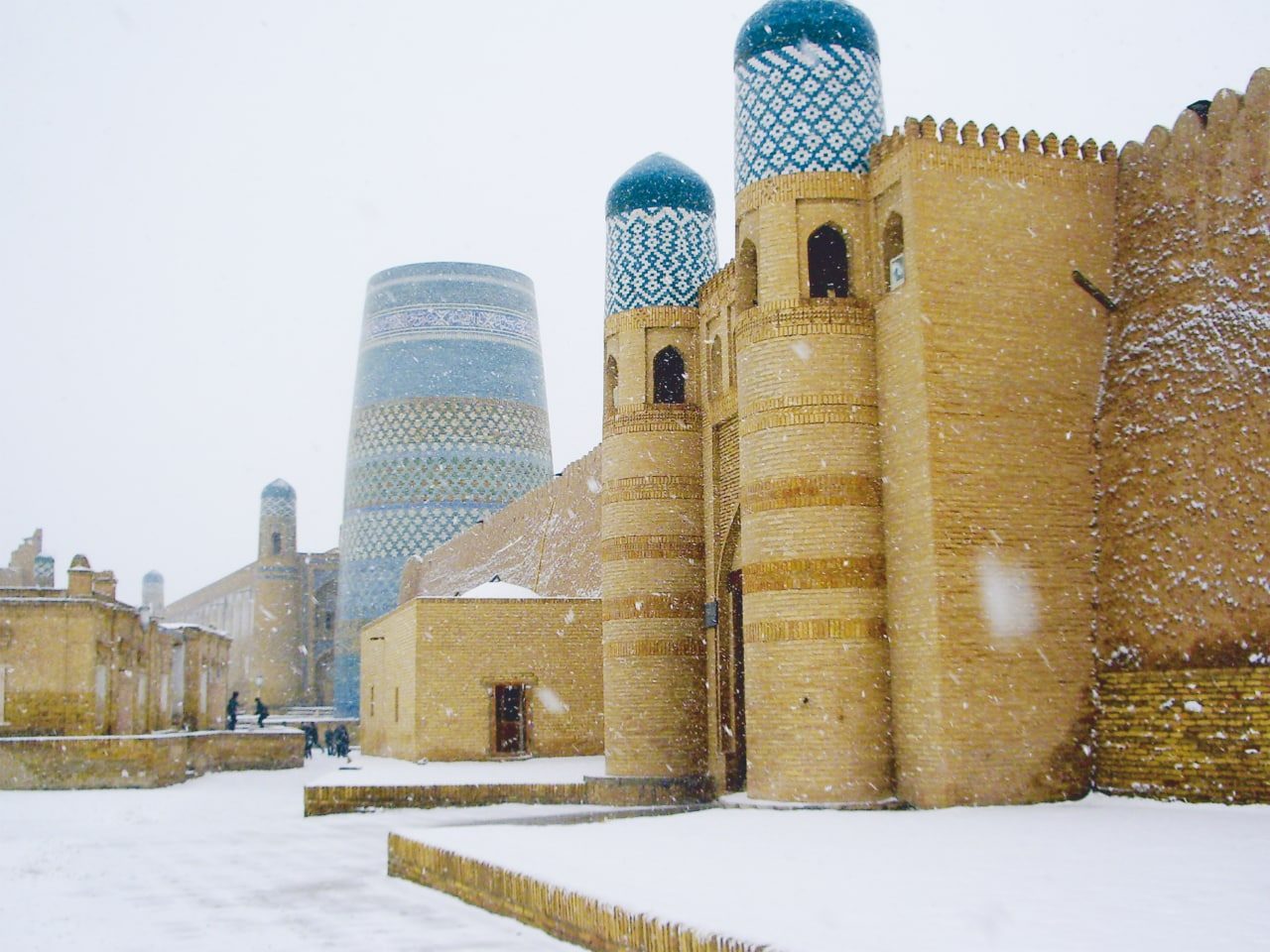
Khiva is the real winter of the four: about 3 °C by day and −6 °C at night. It is also dry, with about 13 mm in the whole month, so the sky is often clear. When snow does fall, it stays on the flat roofs of Did you know? People still live inside Khiva's museum city Itchan Kala packs more than 50 historic monuments and about 250 old houses inside clay walls 8–10 m high and 5–6 m thick, and families still live and work in its lanes. Read more →, and that is the picture of Khiva most visitors never see.
Daylight: the days grow longer
Uzbekistan runs on one time zone, UTC+5, with no daylight saving, so in Khiva the sun rises and sets about 35 minutes later than in Tashkent.
- Tashkent, 1 January: sunrise 07:47, sunset 17:06, about 9 hours 20 minutes of daylight.
- Tashkent, 31 January: sunrise 07:34, sunset 17:39, just over 10 hours.
- Khiva, the same dates: sunrise 08:23 and 08:10, sunset 17:41 and 18:14.
Mornings are dark until almost eight, so we start city walks at about nine, when the sun has taken the edge off the frost. The fast train from Tashkent leaves at 07:00 every day except Sunday and reaches Khiva at about 14:30; by the end of January that leaves almost four hours of daylight inside the walls. Details are in our guide to trains in Uzbekistan.
Holidays in January
1 January is a public holiday, and the first days of the year are still festive: trains and hotels are busy until the holiday ends, so if your trip starts in early January, book as you would for New Year. Train tickets go on sale 60 days before departure.
14 January is Defenders of the Homeland Day. It marks the creation of the national armed forces on 14 January 1992, but it is a working day, so nothing closes and nothing changes for a traveller.
Low season: quiet sights and a wide choice of hotels
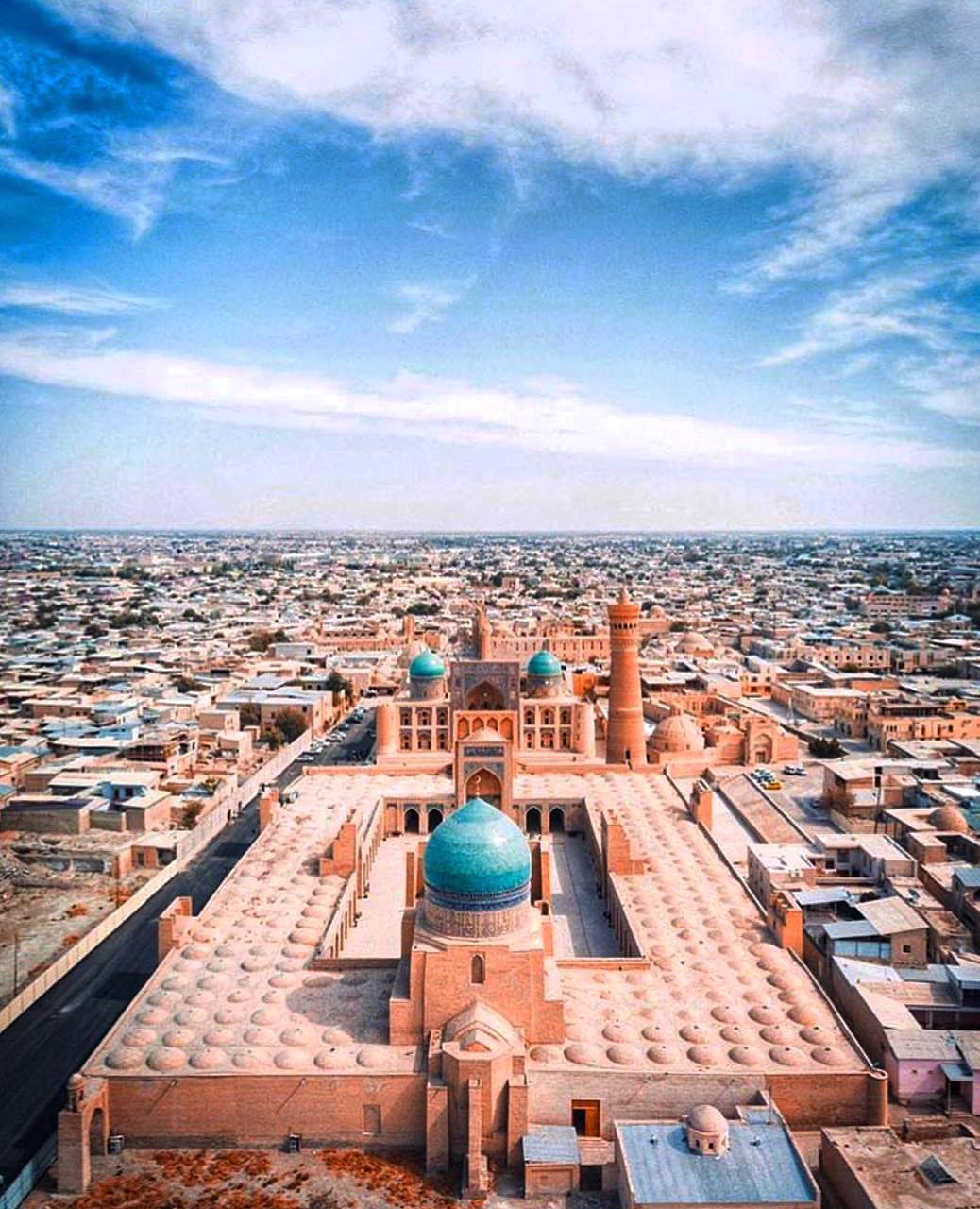
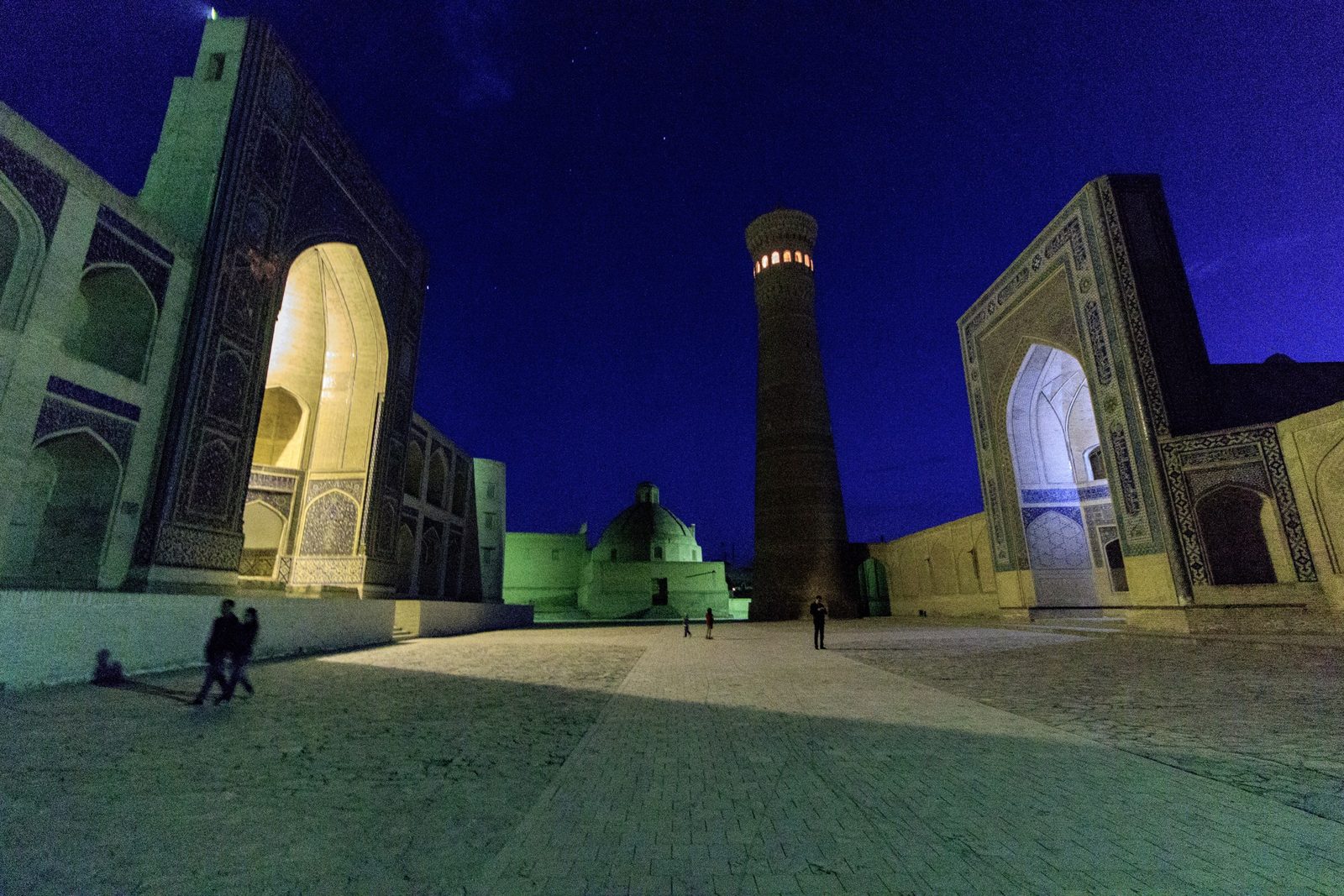
After the first week, January is the quietest month of the year in Samarkand, Bukhara and Khiva. In our experience the Did you know? The Registan's sun-carrying lion went on a banknote The Sher-Dor Madrasah (1619–1636) is named for the big cats with the sun on their backs on its portal. The image appeared on the reverse of Uzbekistan's 200-som note of 1997. Read more →, the The heart of old Bukhara: the Kalyan Minaret of 1127, the Kalyan Mosque and the Mir-i-Arab Madrasah facing each other across one square. Read more → courtyard and the walls of Ichan-Kala are calm enough in the morning to photograph without waiting for a gap in the crowd. Winter is low season for hotels, so the choice of rooms in the historic centres is wider and rates are generally lower than in spring and autumn.
Tashkent works well in January too. The Did you know? A metro designed to ride out a magnitude-9 earthquake The three original lines of the Tashkent Metro were built to withstand an earthquake of magnitude 9.0, and the tunnels lie unusually shallow, only 8–25 m below the street. Read more →, the museums and the big covered halls of Tashkent's old bazaar under a big blue-green dome, not far from Hazrati Imam. Bring cash in so'm. Read more → keep you out of the cold, and the Khumo Arena ice rink holds public skating sessions.
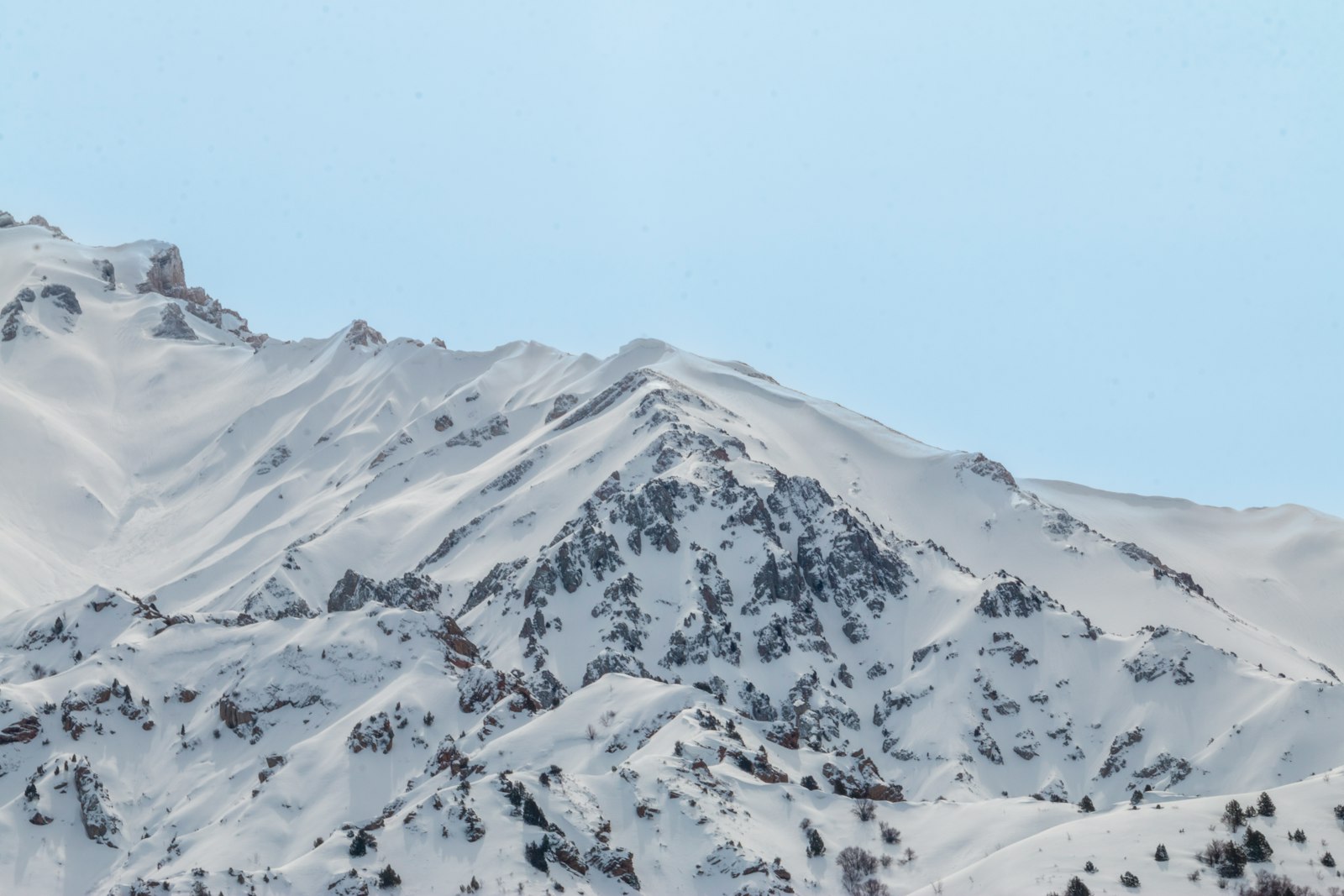
Skiing at Amirsoy, Beldersay and Chimgan
January is the heart of the ski season in the mountains 65–85 km from Tashkent. At Mountains of the Western Tian Shan about 80 km from Tashkent: hiking in summer, skiing in winter, the Charvak reservoir nearby. Read more → the average is 1.2 °C in the afternoon and −5.6 °C at night, while the city below stays above zero by day.
- Amirsoy is the closest, 65 km away, with 11 easy and intermediate runs between 1,630 and 2,286 m. It suits families and beginners. In 2025 it had more than 800,000 visitors, and over a fifth of them came from abroad.
- Beldersay has a longer vertical, from 1,506 to 2,307 m, and a ten-seat gondola. Beldersoy Resort and Spa opened beside it in July 2026, so this is its first ski season.
- Chimgan is the old-school option, with snowmobiles, tubing and horse rides for those who do not ski.
Our ski weekend in the Tashkent mountains takes you from your hotel to the slope of your choice and back, with a night at the resort and help with passes and rental. For a single day, see Chimgan and Charvak in a day; for the lifts, cable cars in Uzbekistan; for the whole area, the mountains near Tashkent.
Routes that work in January
- The 8-day classic tour through Samarkand, Bukhara, Khiva and Tashkent, with Khiva in the middle of the trip on a sunny forecast.
- The 8-day independent tour, with hotels, trains and transfers arranged, if you like to set your own pace.
- Samarkand in a day from Tashkent, if you come for skiing and want one day of history.
A good winter week: three days in Samarkand and Bukhara, then a weekend on the snow near Tashkent before you fly home.
What to pack for January
- A warm winter coat, a hat, a scarf and gloves: nights are below zero everywhere, and Khiva reaches −6 °C.
- Thermal layers and sunglasses if you plan to ski; the sun on snow is strong.
- Waterproof boots with a good grip for icy pavements and courtyards.
- A light scarf for mosques and mausoleums; the rules are in our guide to what to wear and etiquette.
- A card and some cash for bazaars and small shops: see cards, cash and tipping.
In short
- January is the coldest month: about 7 °C in the afternoon in Tashkent, Samarkand and Bukhara, 3 °C in Khiva, nights below zero.
- Days are short but growing: sunset in Tashkent moves from 17:06 to 17:39 during the month.
- 1 January is a public holiday; book the first days of the year early. 14 January is a working day.
- After the holidays, the old towns are at their quietest and hotels have the widest choice.
- It is the best month for skiing near Tashkent. For the rest of the year, see when to visit Uzbekistan.