
Places in this article: Samarkand
Afrasiyab Museum, Samarkand: the ancient city and the Ambassadors’ Painting
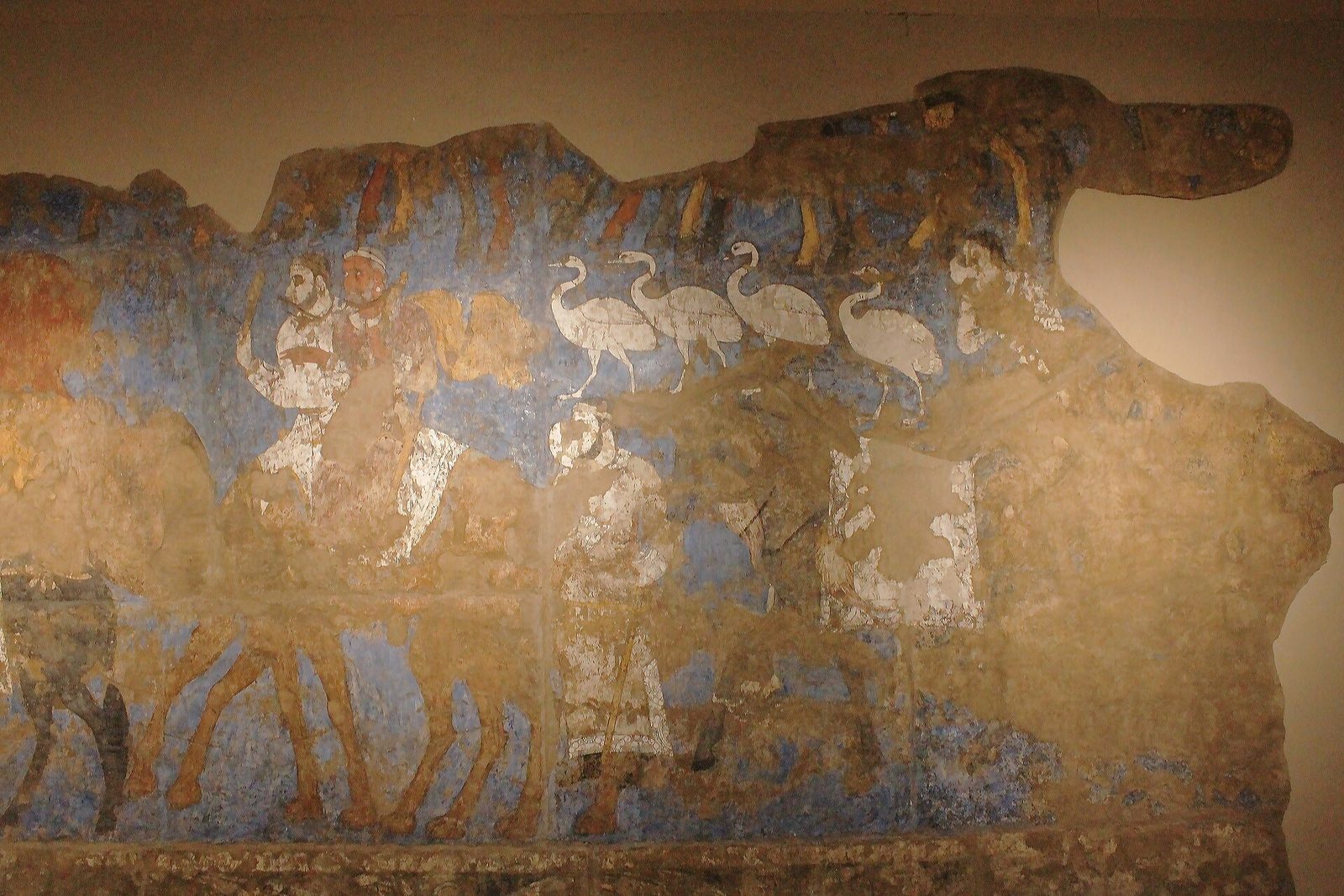
In 1965 a road was being cut across the hill of ,Did you know? A 7th-century mural shows envoys from Korea Uncovered by road builders in 1965, the Ambassadors' Painting at Afrasiyab shows delegations bearing gifts, Chinese with silk among them, and two men in feathered hats thought to be envoys from Korea's Goguryeo. Read more → on the northern edge of Samarkand. The bulldozers sliced into a buried room and took off the top of its walls. Below that line the plaster was painted: riders, camels, a white elephant and a long line of foreign envoys carrying gifts. That room is now the heart of the Afrasiyab Museum, and the reason we bring our guests up the hill.
Here is our guide to Afrasiyab: the plateau where Samarkand stood for some seventeen centuries, the museum built on it, how to read the Ambassadors’ Painting wall by wall, what else to see on the hill in the same morning, and how to plan the visit.
Afrasiyab: the city before Samarkand moved
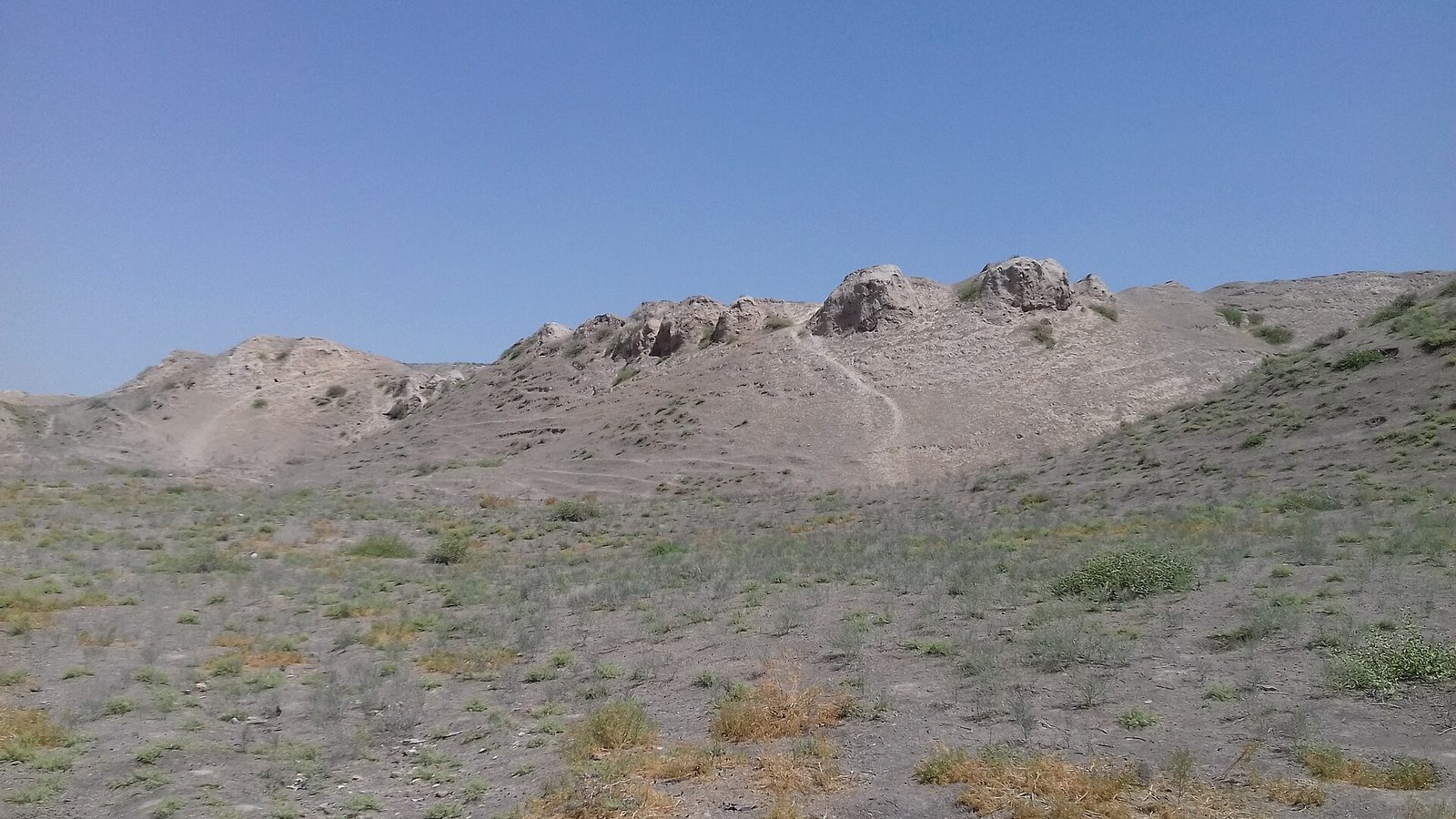
Afrasiyab is not a ruin next to the old city. It is the old city: a plateau of about 220 hectares above the Samarkand's main bazaar, right next to Bibi-Khanym: Samarkand bread, dried fruit, nuts and halva. Read more → stream, with a citadel, an inner town and suburbs, lived in from around the 7th–6th century BC until 1220. This is the Did you know? Legend: Alexander found Samarkand more beautiful than told Alexander the Great took Maracanda, ancient Samarkand, in 329 BC. Legend credits him with saying that all he had heard of the city was true, except that it was even more beautiful. No ancient author records the words. Read more → that Alexander the Great took in 329 BC, the capital of Sogd, and the Samarkand of the Samanids and the Karakhanids.
In 1220 the army of Genghis Khan took the city and left it in ruins. When Samarkand came back to life, it grew to the south, where Amir Timur (Tamerlane, 1336–1405), founder of the Timurid empire, which had its capital in Samarkand. Born near Shahrisabz. Read more → later built his capital, and the plateau was never built over again. That is why it survived: under the grass and the loess lie the streets of a city that simply moved down the road.
Archaeologists have been digging here since 1874. They found houses and bathhouses of the 9th–10th centuries, a mosque of the Abbasid period, a palace of the Karakhanids, glazed pottery, glass and a fire altar of the 2nd–3rd century AD, and coins from Sasanian to Mongol times, many of them Samanid. The people who built the oldest layers were the Sogdians, the merchants of the :A network of caravan routes between China and the Mediterranean. Samarkand, Bukhara and Khiva grew rich as stops along it. their story is in who the Sogdians were.
The museum on the hill
The museum opened in 1970, the year Samarkand marked its 2,500th anniversary, and it stands on the plateau itself, next to the excavations. Its collection holds more than 20,000 objects from the middle of the 1st millennium BC to the early 13th century: ceramics, glass, stone, metal and bone, weapons and coins, and Sogdian ossuaries, the clay chests in which the bones of the dead were laid to rest.
Most visitors walk straight past them to the painted hall, and that is a pity. Spend ten minutes with the bowls and ossuaries first: they show the same world the painting shows, at the scale of a household.
The painting itself has had a lot of care. From 2014 to 2017 French specialists and restorers of the Institute of Archaeology in Samarkand restored the panels, and Korean specialists made a 3D film that rebuilds the hall and the city as they may have looked in the 6th–7th centuries. The film runs in the museum; we suggest watching it before you look at the walls. In March 2024 the halls on the ground floor reopened after a two-year renovation supported by Korea’s Cultural Heritage Administration.
The Ambassadors’ Painting, wall by wall
The paintings were made in the middle of the 7th century for ,Did you know? The Ambassadors’ Painting was found by road builders The murals of about 650 for King Varkhuman came to light in 1965, when a road was cut through the Afrasiyab hill; the bulldozers had already taken their upper part. A Sogdian inscription on one envoy’s robe names him: Pukarzate, chancellor of Chaganian. Read more → king of Samarkand, whom the Chinese emperor Gaozong recognised as ruler of Sogdiana in the 650s. They covered the four walls of one room, and they read like a state chronicle. Each wall has its own subject.
West wall: the ambassadors. Envoys of many lands come to the ruler with gifts. A Sogdian inscription on the robe of one of them speaks in his own voice: he is Pukarzate, chancellor of Chaganian, sent to King Varkhuman, and the text also names the chancellor of Chach, the land of today’s Tashkent. Look for the Chinese envoys with silk and a string of silkworm cocoons, and for two men with two feathers standing up from their caps: they are usually identified as envoys from Goguryeo, a kingdom in Korea. The figure at the centre is lost, and scholars still argue over who it was.
South wall: the procession. A larger-than-life Varkhuman rides a horse at the head of a long procession: women on horseback, men on camels, and a white elephant with a bell. Behind come a riderless horse and four geese, led by masked priests: animals for a sacrifice. Some read the scene as a rite for the royal ancestors at Navruz, others as the wedding procession of a princess from Chaganian.
North wall: China. A Chinese scene: an emperor hunting on horseback, and an empress on a boat on the water.
East wall: India? The least preserved wall; some scholars see scenes of India on it.
Remember the bulldozers: the top of every wall was lost in 1965, so what you see is the lower part of each composition. Stand back in the middle of the hall first and let the four walls come together, then step close to the west wall for the faces and the inscription. Samarkand has its legends too, and the city tells them with a straight face; ours are collected in the legends of Samarkand.
What else to see around Afrasiyab
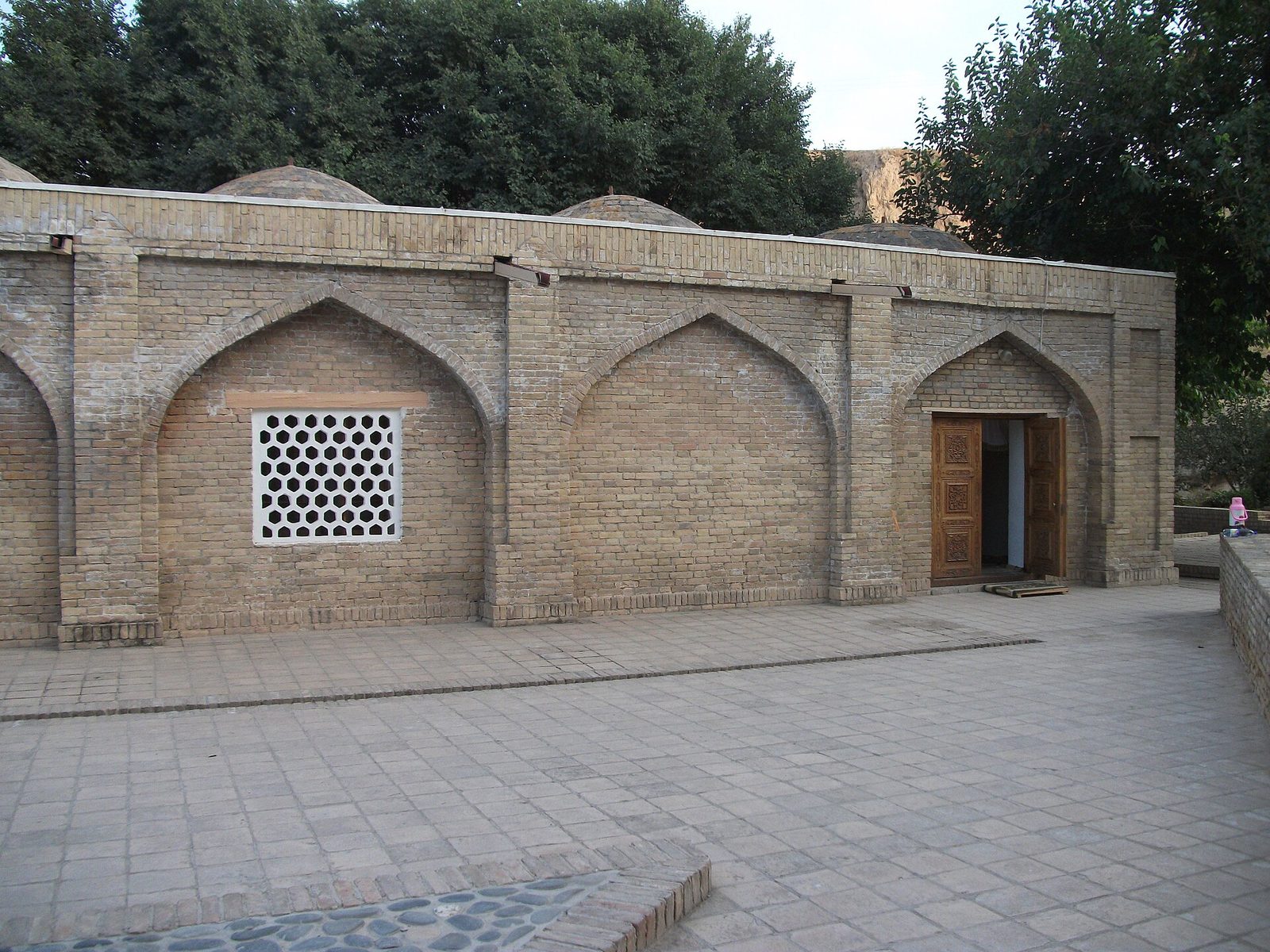
Khoja Doniyor. On the east side of the hill, above the Siab stream, five domes cover a grave about 18 metres long, which the city connects with the prophet Daniel. People come here to pray, so dress modestly and keep your voice low. A spring runs below it.
Hazrat Khizr Mosque. On the southern edge of the plateau, opposite ,Did you know? Why Shah-i-Zinda means 'the Living King' The necropolis grew around the shrine of Qutham ibn Abbas, a cousin of the Prophet Muhammad. Legend says he did not die in battle but went down a deep well to a garden of paradise, where he lives on. Read more → stands a mosque of the mid-19th century, built on the site of a much older one. Shah-i-Zinda is just across the road, so the two make an easy pair on foot.
The .Did you know? Ulugh Beg measured the year to within 25 seconds Working at his Samarkand observatory, Ulugh Beg put the tropical year at 365 days 5 h 49 min 15 s, about 25 seconds too long, closer than Copernicus a century later. Read more → About 1.5 km further, on the Kuhak hill, the marble arc of Ulugh Beg’s sextant lies in its trench: our observatory guide explains it.
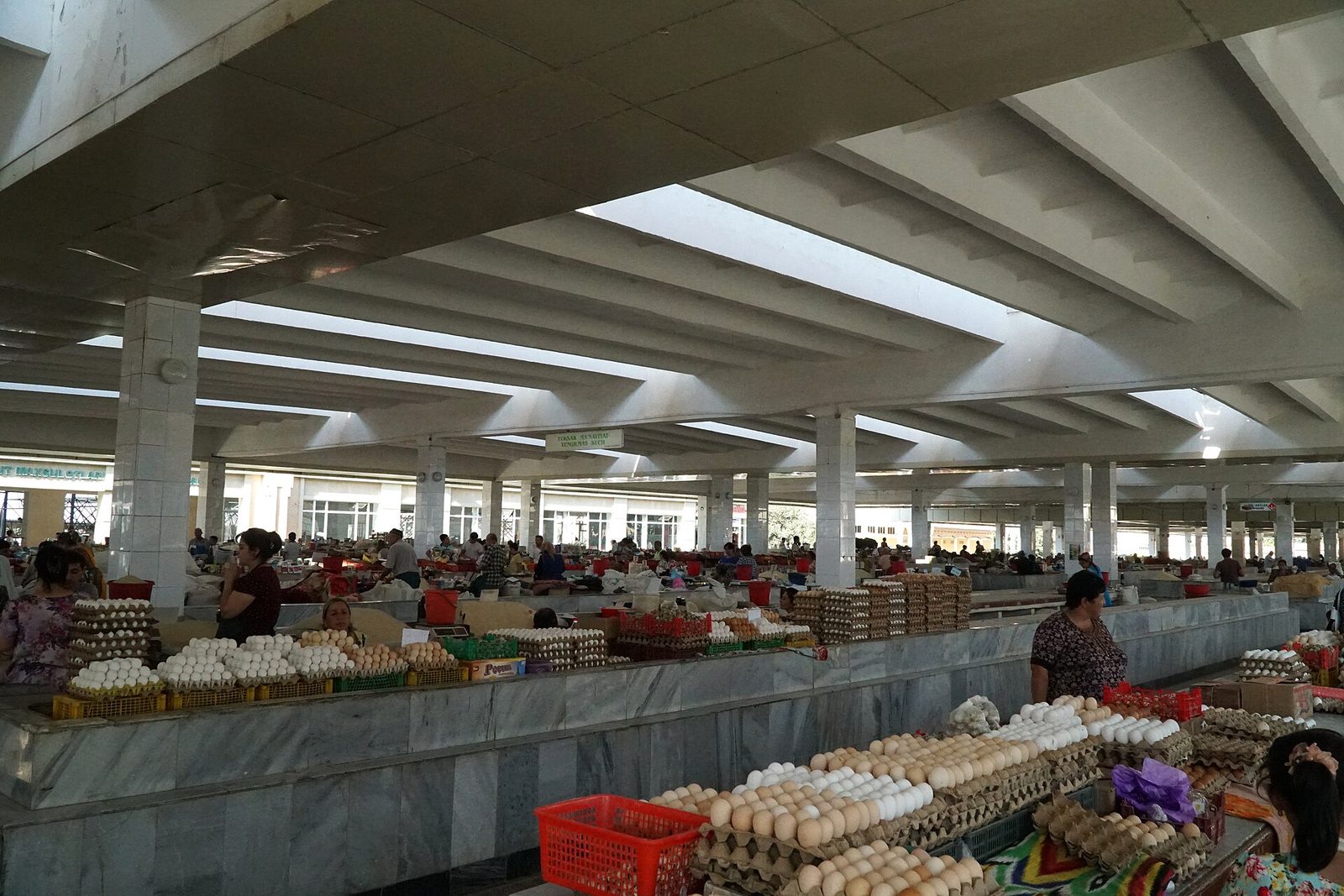
Siab Bazaar and .Did you know? Legend says the architect asked the queen for a kiss Legend says the architect of Bibi-Khanym would finish on time only for a kiss from Timur's wife, and Timur punished him. In fact the mosque was Timur's own project; his wife Saray Mulk Khanum built her madrasah across the road. Read more → About 2 km south of the hill, at its foot, the city’s main bazaar trades next to Timur’s great mosque. It is the natural place to finish the morning, with bread and halva: see Siab Bazaar.
Visiting Afrasiyab: hours, tickets and our tips
Hours: the museum opens Monday to Saturday, 9:00–17:00 (at our last check in October 2026). Hours can change around holidays, so check on the day.
Ticket: paid at the desk. Prices change, so ask there; tickets and hours for every other sight in the city are in Samarkand sights, tickets and hours.
Time: allow an hour for the museum, half an hour more to walk out on the plateau. There is little shade up there, so in summer go in the morning and bring a bottle of water.
Getting there: the hill is a short taxi ride from the .Did you know? The Registan's sun-carrying lion went on a banknote The Sher-Dor Madrasah (1619–1636) is named for the big cats with the sun on their backs on its portal. The image appeared on the reverse of Uzbekistan's 200-som note of 1997. Read more → Afrasiyab, the observatory and Khoja Doniyor fit into one ride, and with A village near Samarkand where paper is made by hand from mulberry bark, the old way, at a working mill on the stream. they make the route of our Samarkand Discovery tour. For a whole trip around the painting, see The Ambassadors of Afrasiyab; for the archaeology of Samarkand and Bukhara, Sogdiana Unearthed.
In short
- Afrasiyab is the site of Samarkand itself, lived in from the 7th–6th century BC until the Mongols in 1220.
- The museum of 1970 keeps more than 20,000 finds; give the ossuaries and bowls ten minutes before the painted hall.
- The Ambassadors’ Painting of the mid-7th century: envoys on the west wall, the procession with the white elephant on the south, China on the north.
- Watch the 3D film first, then read the walls; the top of each wall was lost in 1965.
- Open Monday to Saturday, 9:00–17:00; combine it with the observatory and Khoja Doniyor in one ride.
© Photos
- The 7th-century Ambassadors' Painting in the Afrasiyab Museum, Samarkand — Nassima Chahboun / Wikimedia Commons · CC BY-SA 4.0
- Afrasiyab ancient settlement, Samarkand — Akhemen / Wikimedia Commons · CC BY-SA 4.0