
 Deutsch
 English
 Español
 Français
 Italiano
 Polski
 Português
 Suomi
 Svenska
 Türkçe
 Ελληνικά
 Български
 Русский
 עברית
 한국어
 中文
 日本語
Places in this article: Samarkand · Bukhara · Tashkent · Tajikistan
What to see in Dushanbe: museums, Rudaki Avenue and the Hisor fortress, from Uzbekistan
Ismoil Somoni, the Samanid ruler buried in the brick mausoleum you visit in Bukhara, stands under a tall arch on the main square of .Did you know? Tajikistan’s capital is literally called “Monday” Dushanbe means “Monday” in Tajik — literally “the second day after Saturday”. By tradition, a lively market was held here every Monday. The first records of a village with this name date from the 17th–18th centuries. Read more → The poet ,Did you know? Legend says the first great Persian poet was born blind Legend, via the historian Awfi, says Rudaki (c. 858–941), honoured as the father of Tajik literature, was born blind. Scholars doubt it: his verses paint nature too vividly. He came from Panjrud, near Penjikent. Read more → who served at the same Samanid court, gave his name to the city’s main street. Fly an hour south from Tashkent and you find the other half of a story you started in Bukhara.
We are a tour operator in Tashkent, and Dushanbe is where our longest Tajikistan routes end. Here is what to see in Dushanbe in a day or two, what is worth the drive out of town, and how our 12-day Tajikistan and Silk Road tour brings you there through the .Did you know? The Fann Mountains have about a hundred peaks The Fann Mountains, between the Zarafshan and Gissar ranges, have about a hundred peaks, eight of them over 5,000 m. The highest is Chimtarga (5,489 m), and among them lie the Kulikalon and Alauddin lakes and Iskanderkul. Read more →
In short
- Dushanbe is about an hour from Tashkent by air, and the clocks show the same time: both cities are on UTC+5.
- The centre fits into one day: Dousti Square with the Ismoil Somoni monument, Rudaki Avenue, Rudaki Park and the 165 m flagpole.
- The National Museum of Antiquities keeps a 13-metre clay Buddha and the Sogdian murals of .Did you know? Penjikent's walls showed Rustam long before Ferdowsi From the 5th to the 8th century the Sogdian houses of ancient Penjikent were painted with feasts, gods and the hero Rustam, centuries before Ferdowsi wrote the Shahnameh. Many murals are now in the Hermitage and in Dushanbe. Read more →
- The Hisor fortress is in the town of Hisor, about 15 km west of the city, an easy half day.
- We reach Dushanbe by road from Samarkand through the mountains, or you fly in from Tashkent.
Contents
Dousti Square and the flagpole
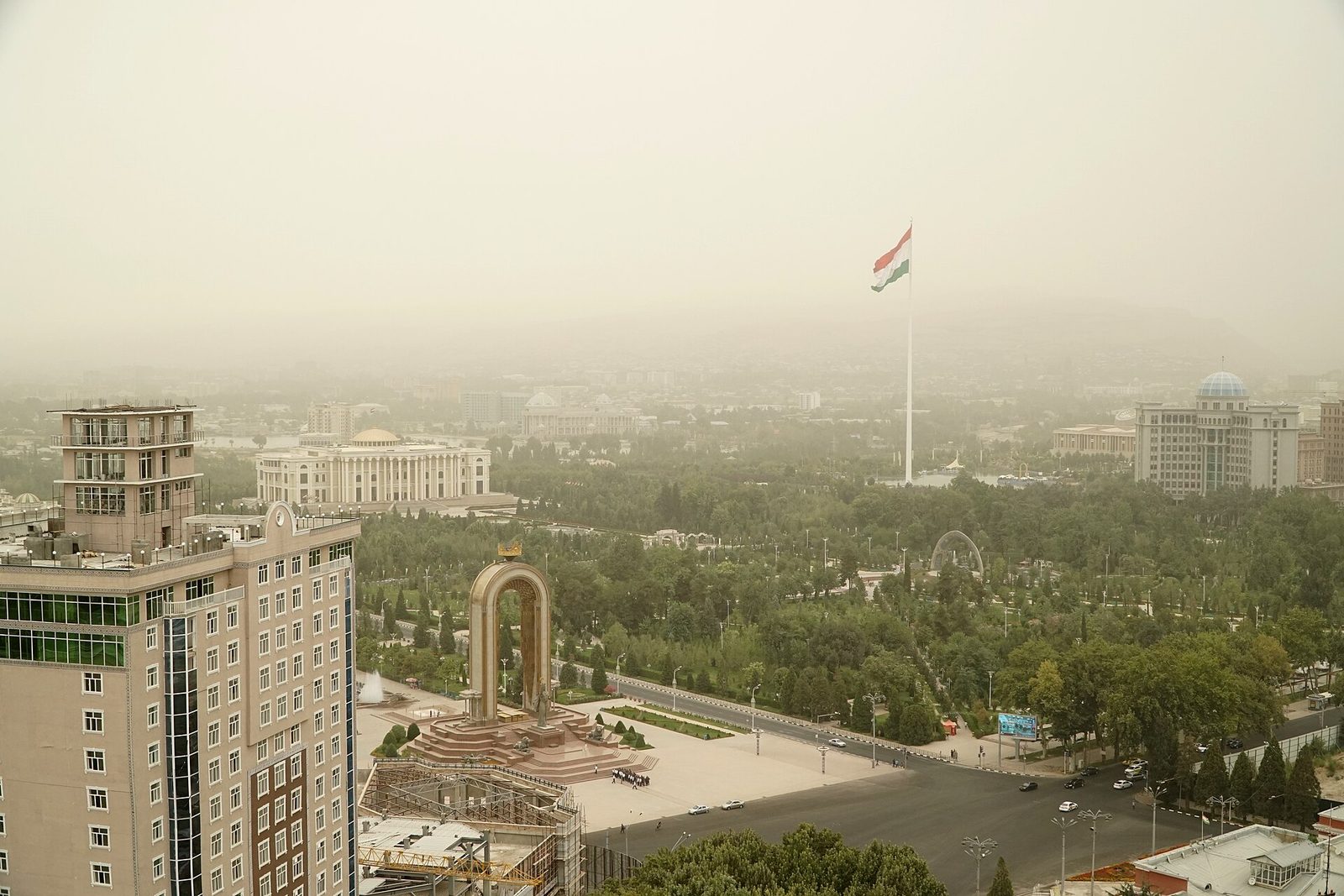
The name of the city is a weekday: dushanbe means “Monday”, the day the old bazaar met. The market village became a capital in 1924, and today Dushanbe is home to more than 1.2 million people in the green Hisar Valley, at 750 to 930 metres above sea level.
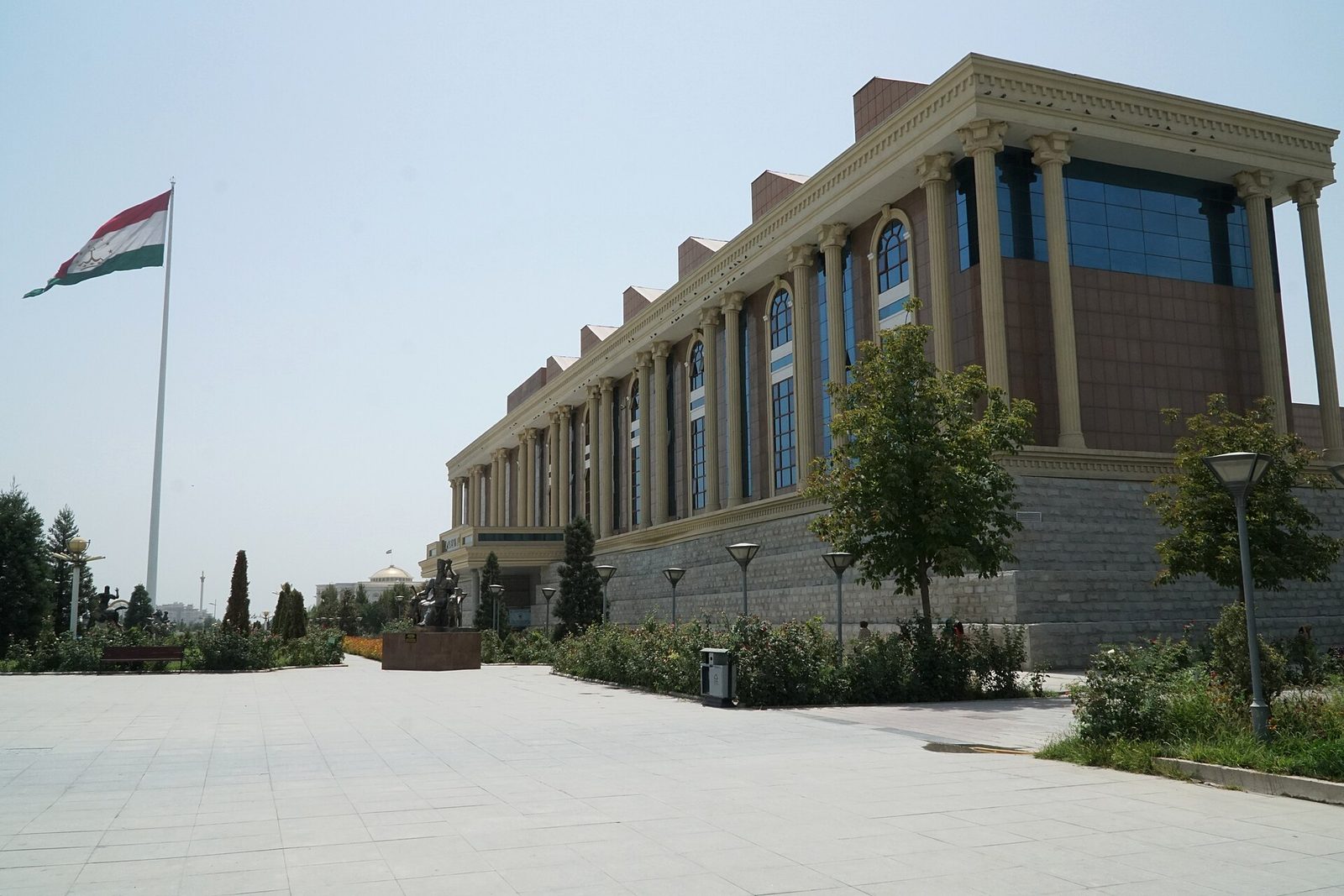
Start on Dousti Square, the largest square in the city. The Ismoil Somoni monument went up here in 1999, for the 1100th anniversary of the Samanid state. The national currency, the somoni, carries his name too. A short walk away rises the Dushanbe Flagpole: 165 metres, the tallest flagpole in the world from 2011 to 2014. Its flag measures 30 by 60 metres and weighs 700 kg.
Rudaki Avenue and Rudaki Park
Rudaki Avenue is the main street of Dushanbe and has carried the poet’s name since 1992. Rudaki lived from about 858 to 940 and is counted as the first major poet of New Persian; he worked at the Samanid court. Walk the avenue from Dousti Square to Rudaki Park: this is the centre of the capital, with the Palace of the Nation across the park and the flagpole beyond it.
Two museums for one day
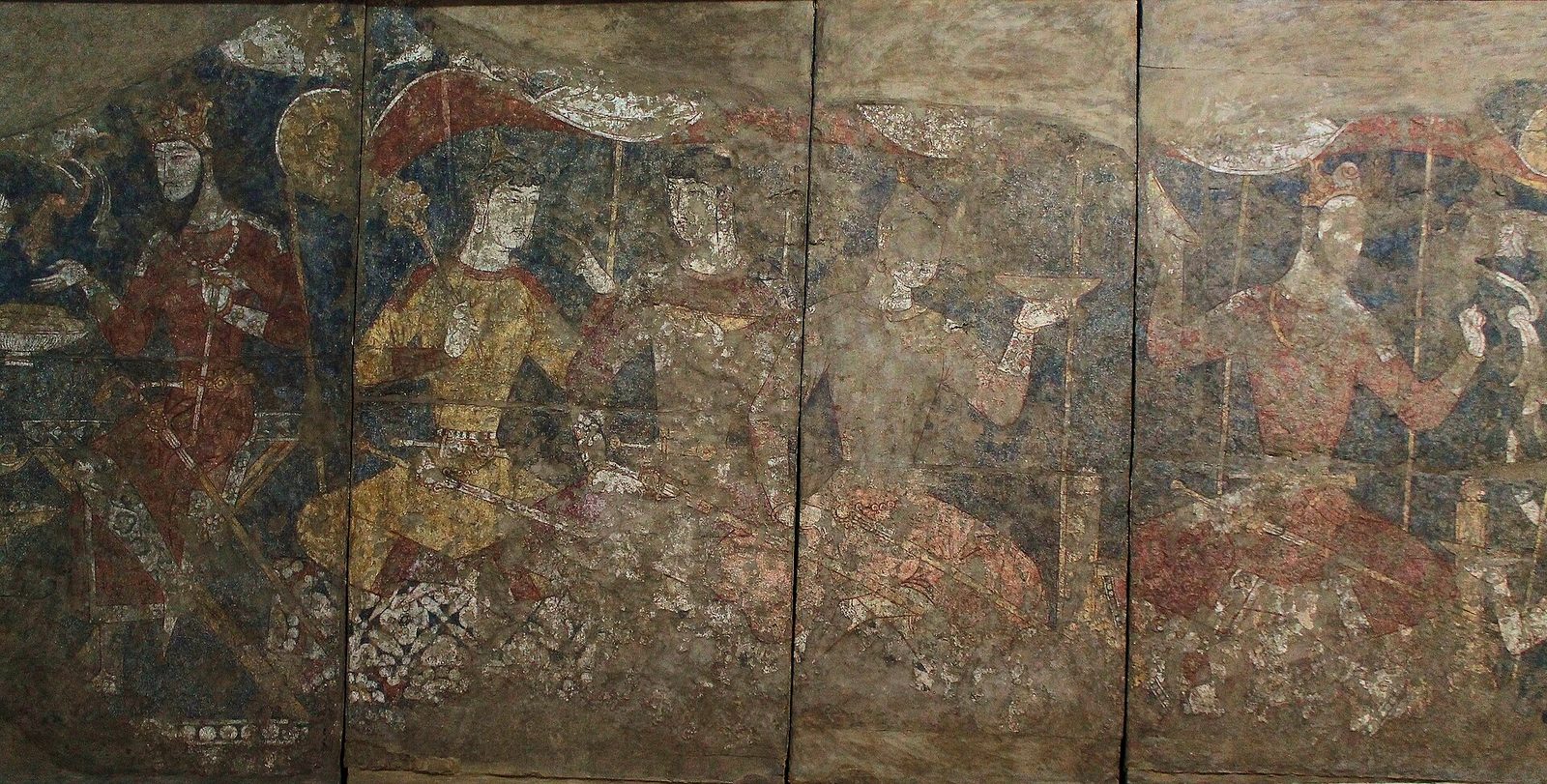
In the National Museum of Antiquities, two things deserve most of your time. The first is the Buddha in Nirvana, a reclining clay figure 13 metres long, excavated in the 1960s at Ajina-Tepa in the Vakhsh valley in the south of the country. Restorers from the Hermitage brought it to Dushanbe in 43 pieces, and the largest hall of the museum was given to it. The second is the murals of Penjikent, the Sogdian town on the road from Samarkand, painted in the 6th to 8th centuries.
The National Museum of Tajikistan stands beside the flagpole. It covers 24,000 m², more than 15,000 of them exhibition halls, in four departments: nature, ancient and medieval history, modern history, and fine and applied arts. Choose the departments you care about, with your guide; two hours are enough for most people. If you have seen Did you know? A 7th-century mural shows envoys from Korea Uncovered by road builders in 1965, the Ambassadors' Painting at Afrasiyab shows delegations bearing gifts, Chinese with silk among them, and two men in feathered hats thought to be envoys from Korea's Goguryeo. Read more → in Samarkand, the Sogdian rooms will feel familiar: see our article on the Sogdians.
Hisor: the fortress west of the city
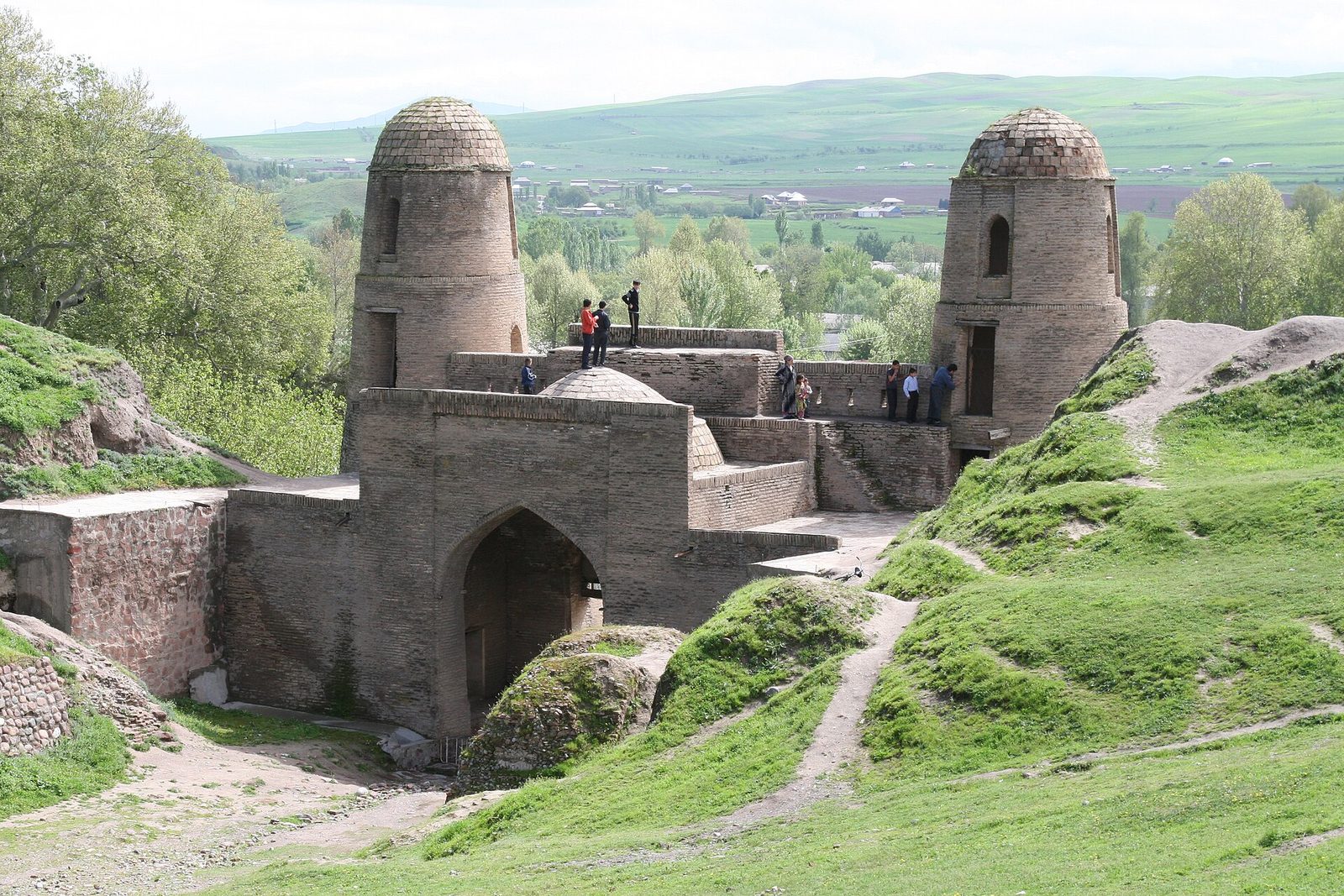
The town of Hisor is about 15 km west of Dushanbe, and its fort was the seat of the governor sent from Bukhara. Today its gate between two round towers is the picture to take. Half a day is enough, and it pairs well with an afternoon in the city. On our 12-day route it is the last visit before your flight home.
How to get there, and how long to stay
From Tashkent the flight takes about an hour. Our guests usually come the long way, by road: on our 12-day Tajikistan and Silk Road tour you start in Bukhara and Samarkand, cross into Tajikistan near Penjikent, spend hiking days at the Did you know? Each of the Seven Lakes has its own name and colour The Haftkul lakes climb from about 1,600 m to 2,400 m. Their names mean 'eyelashes', 'shadow', 'vigilance' and 'small', among others; the largest is Marguzor, and the highest, Hazorchashma, means 'a thousand springs'. Read more → and Did you know? Legend says Alexander's horse still comes out of Iskanderkul Legend says Bucephalus plunged into the lake and on full-moon nights comes out to graze; another tells that Alexander turned a river onto a rebel village. In fact the lake, 2,195 m up and 72 m deep, was dammed by a landslide. Read more → in the Fann Mountains, and reach Dushanbe through the Anzob tunnel. On the 23-day Silk Road tour across five countries Dushanbe gets two nights, with the museums and Hisor.
One full day covers the centre and the museums; add half a day for Hisor. Spring and autumn are the most comfortable seasons for walking, and the city is open all year. The entry rules for Tajikistan depend on your passport; we check them for you before booking, as we explain in our Tajikistan travel guide.
Dushanbe with AroundCA
We plan the border crossing, the car with driver and an English-speaking guide on the Tajik side, and the hotels along the route, and on request we book your flight home from Dushanbe. A day or two in Dushanbe on its own, after Samarkand, we plan on request. The price is on request: it depends on your dates, the route and the size of your group.
Most routes start in Uzbekistan: for the nights before the border, see our hotels in Samarkand. If you have only one day for Tajikistan, read about the Seven Lakes from Samarkand.
© Photos
- The National Museum of Tajikistan and the Dushanbe Flagpole, Dushanbe — Adam Harangozó / Wikimedia Commons · CC BY-SA 4.0
- Dousti Square with the Ismoil Somoni monument and the Dushanbe Flagpole, Dushanbe, Tajikistan — Adam Harangozó / Wikimedia Commons · CC BY-SA 4.0
- The gate of the Hisor fortress near Dushanbe, Tajikistan — Maris Teteris / Wikimedia Commons · CC BY 3.0