
Places in this article: Tashkent
A Kazakhstan and Kyrgyzstan loop from Tashkent: Turkestan to Issyk-Kul, Charyn and Almaty
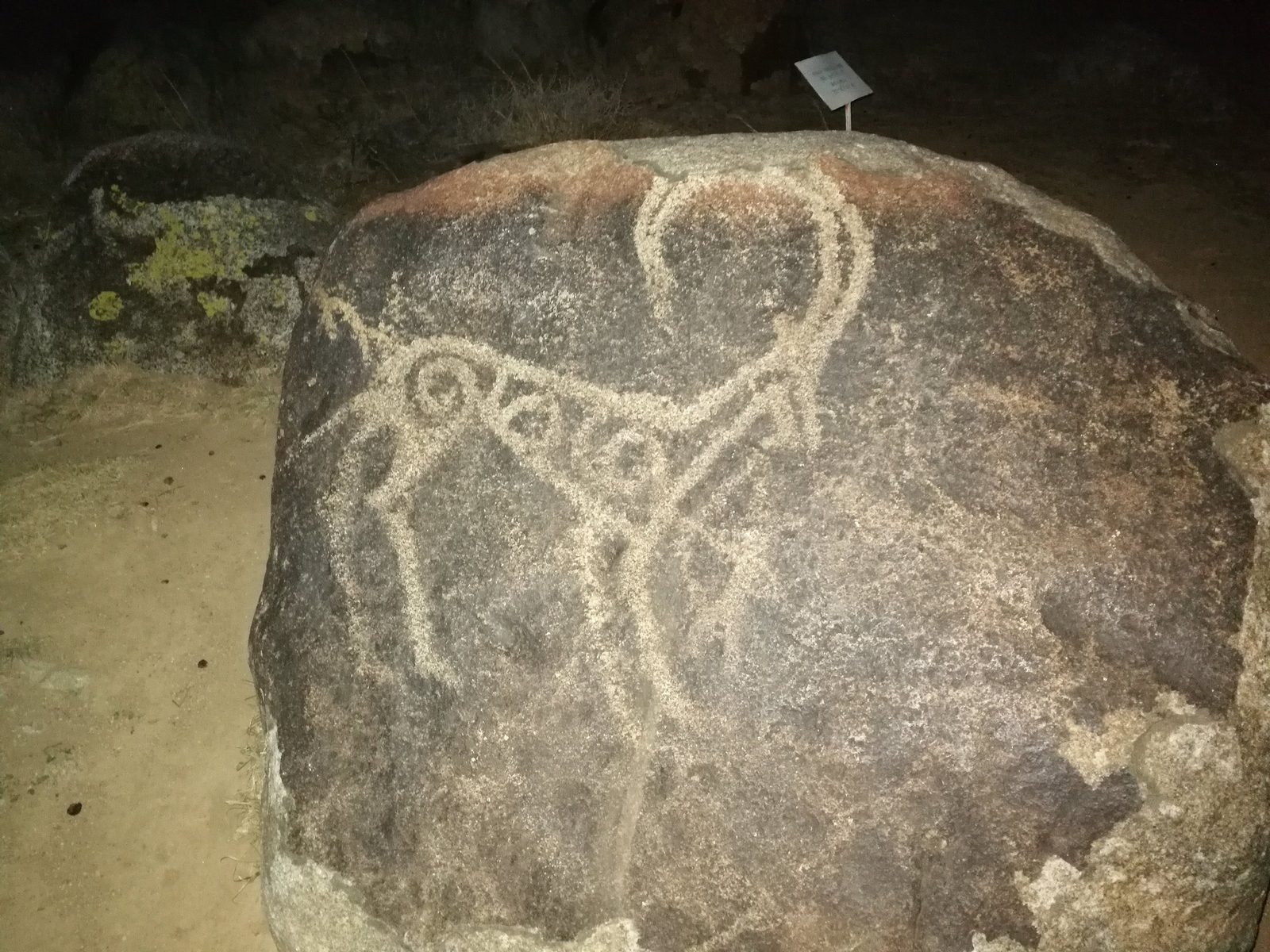
At six in the evening on the north shore of Issyk-Kul, the light was almost gone. We walked between boulders with a torch, and out of the dark came an ibex, its horns curling back over its spine, cut into the stone by hand. That evening was the middle of a loop we drove in November 2019: from Tashkent through southern Kazakhstan to Kyrgyzstan, around the lake and back across the border to Almaty. Here is the route stage by stage.
Stage 1: Tashkent to Turkestan and the Yasawi mausoleum
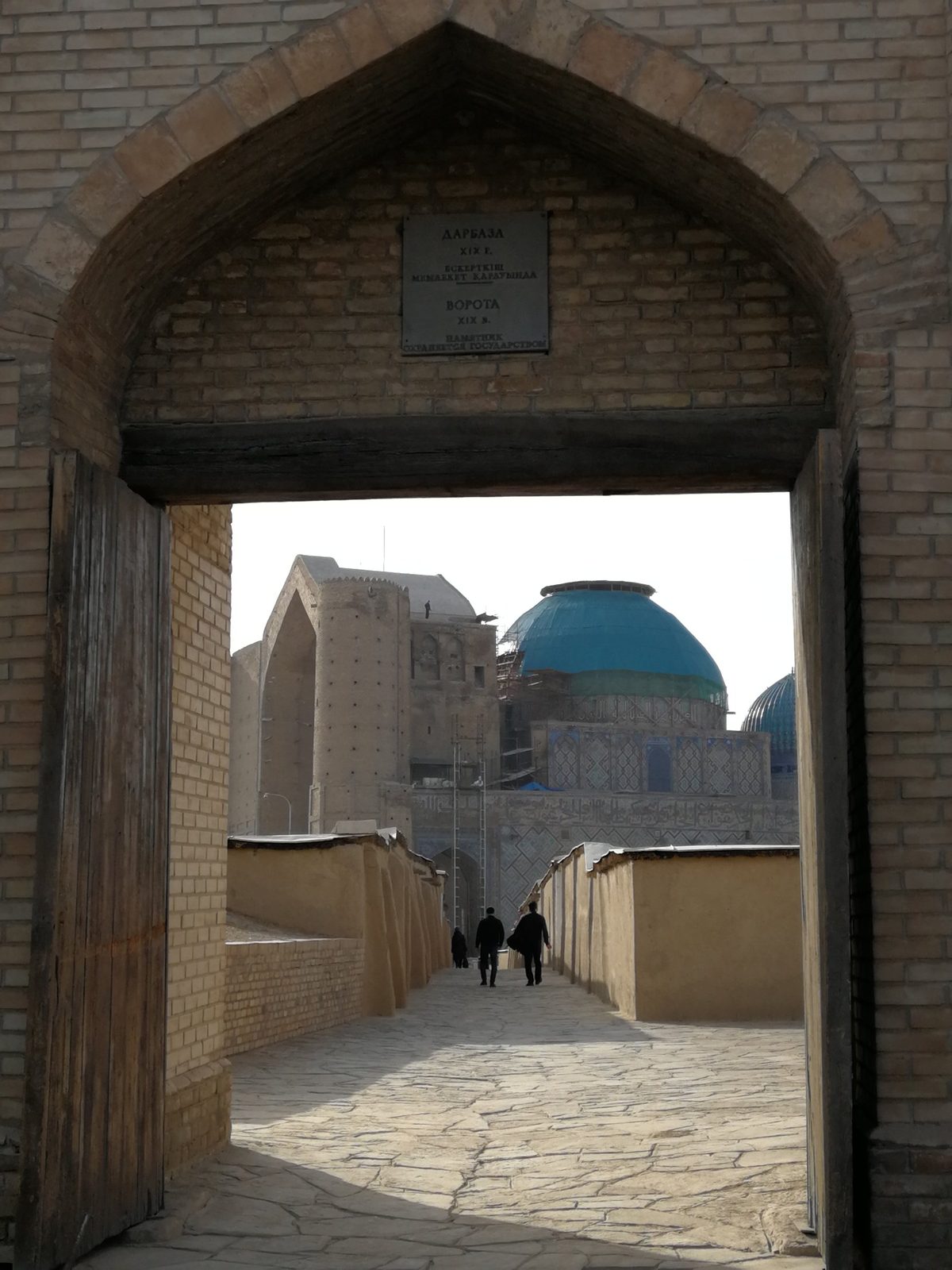
Turkestan is about 300 km from Tashkent, via Shymkent, with one border crossing on the way. The goal is the mausoleum of Khoja Ahmed Yasawi, which Amir Timur (Tamerlane, 1336–1405), founder of the Timurid empire, which had its capital in Samarkand. Born near Shahrisabz. ordered in 1389. Work stopped when he died in 1405, and the main portal is still bare brick with wooden beams sticking out. Inside, the dome over the main hall is 18.2 m across, the largest surviving brick dome in Central Asia. The mausoleum has been on the UNESCO World Heritage List since 2003.
Stay the night: the complex is at its best in the morning light. Everything about this first stage is in our article Turkestan from Tashkent.
Stage 2: Taraz and the Aisha Bibi mausoleum
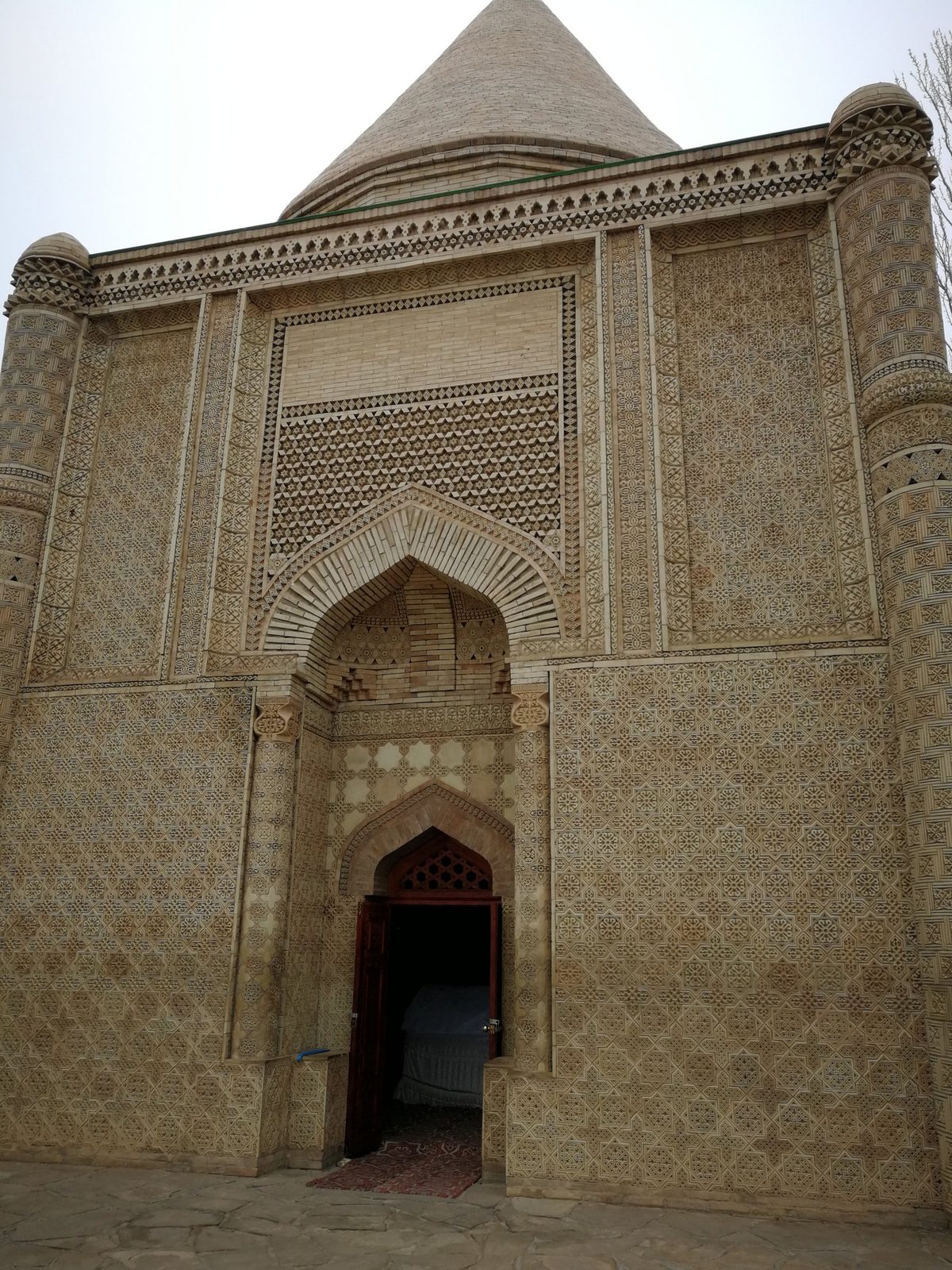
From Shymkent the road runs 176 km east to Taraz. Stop 18 km before the city, in the village of Aisha Bibi. The small 11th–12th-century mausoleum there has no glaze and no colour, only carved terracotta tiles in more than sixty patterns. Go when the sun is low and the walls throw a net of shadow over themselves.
The legend of the girl who crossed six rivers but not the seventh is in our article on the Aisha Bibi mausoleum.
Stage 3: Bishkek, the Burana tower and the balbals
From Taraz you cross into Kyrgyzstan and drive on to Bishkek for the night. Next morning, the first stop is on the way to the lake.
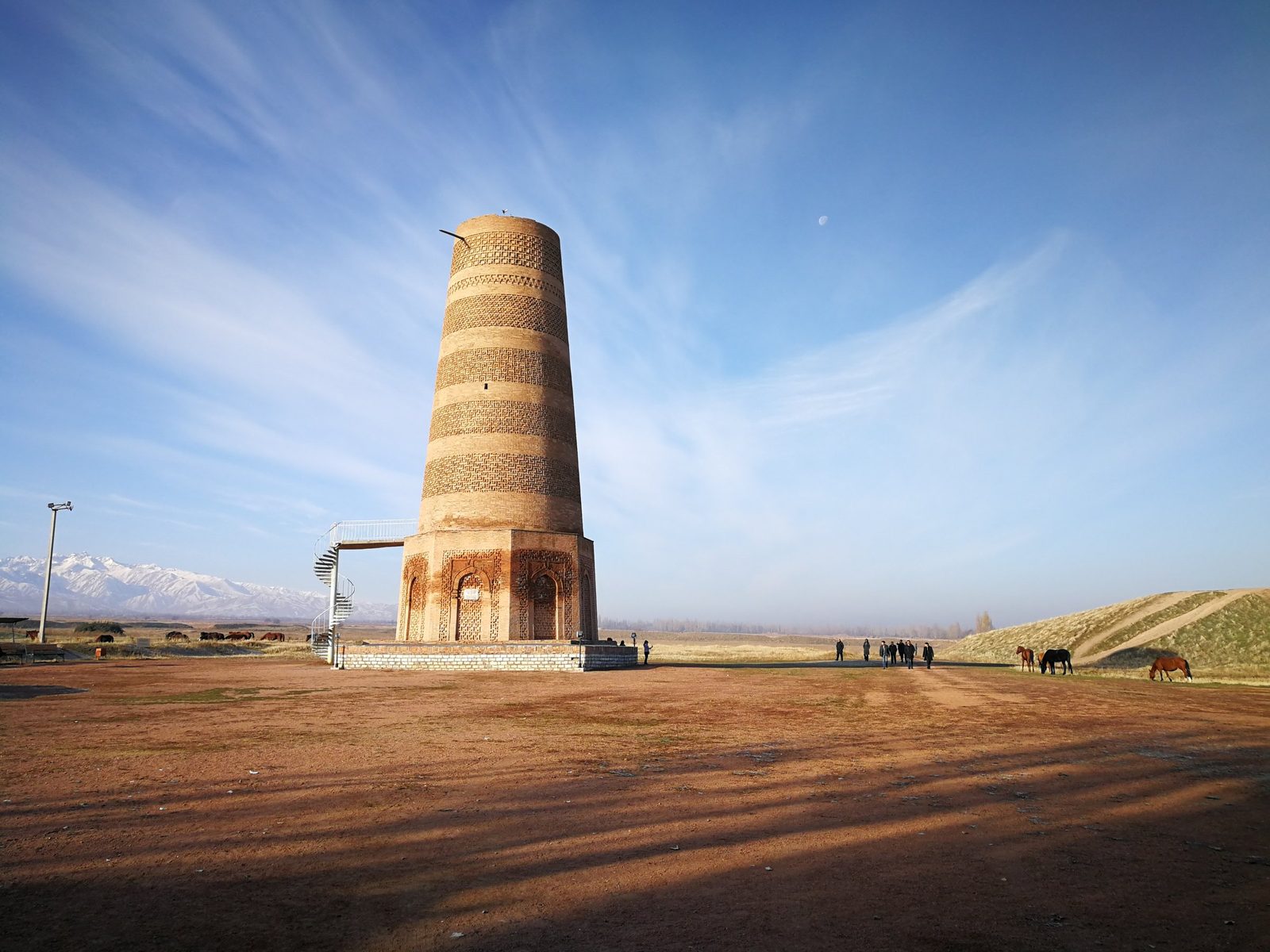
The Burana tower stands in a field about 80 km east of Bishkek, near Tokmok. It is an 11th-century minaret of Balasagun, a city of the Karakhanids. It was once about 45 m tall; an earthquake in the 15th century left 25 m. A narrow staircase inside takes you to the top, with the snowy Kyrgyz range across the valley.
Around the tower stand balbals, stone grave markers of the Turkic nomads from the 6th to the 10th centuries. Balasagun is part of the UNESCO Silk Roads site of the Chang'an–Tianshan corridor.
Stage 4: Issyk-Kul north shore and the Cholpon-Ata petroglyphs
Issyk-Kul lies at 1,607 m and is the second-largest mountain lake in the world after Titicaca. Thanks to its salty water it rarely freezes, even in winter. The road follows the north shore past beaches and resort villages to Cholpon-Ata.
On the edge of the town is a field of boulders with about 2,000 ,Did you know? Mountain goats carved on rocks thousands of years ago Near the village of Khodjikent, about 70 km from Tashkent, more than 90 petroglyphs line the rocks above the Chirchik River, mostly mountain goats. The finest date from the 4th–3rd millennia BC. Read more → dating from around 800 BC to 1200 AD. Most of them are ibex with long, swept-back horns; on one stone, hunters set tame snow leopards on a herd. Come late in the afternoon: most stones face west or south, and the low sun makes the lines stand out. We came at dusk, which is beautiful, but bring a torch.
Stage 5: Karakol
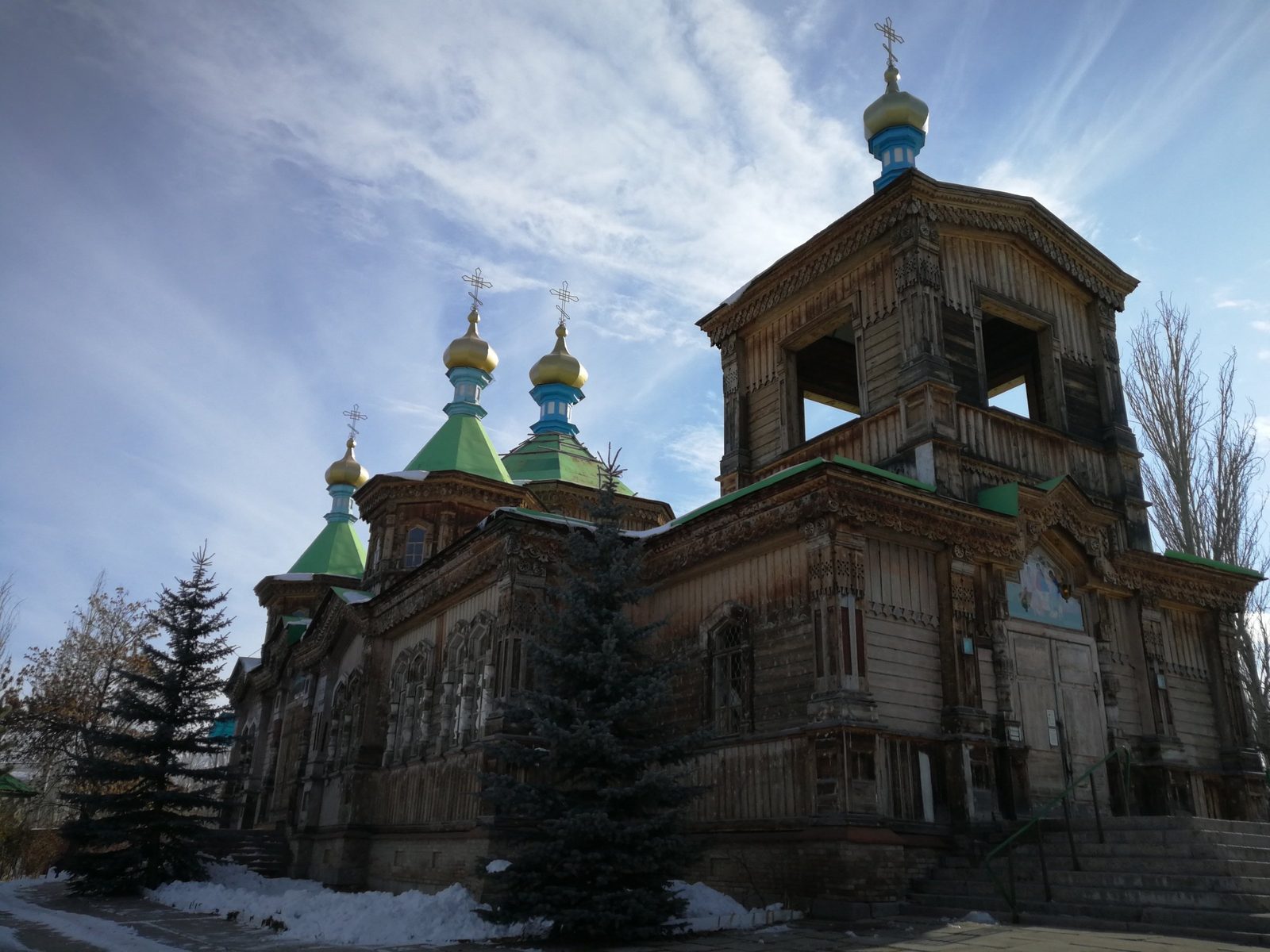
Karakol sits near the eastern end of the lake, about 380 km from Bishkek. Its two best-known buildings are both wooden.
The Holy Trinity Cathedral was finished in 1895, after an earthquake destroyed the earlier stone church. In this earthquake-prone region they built in wood on purpose. In Soviet times it served as a school, a sports hall and a theatre, and in 1991 it was returned to the Church.
The Dungan mosque
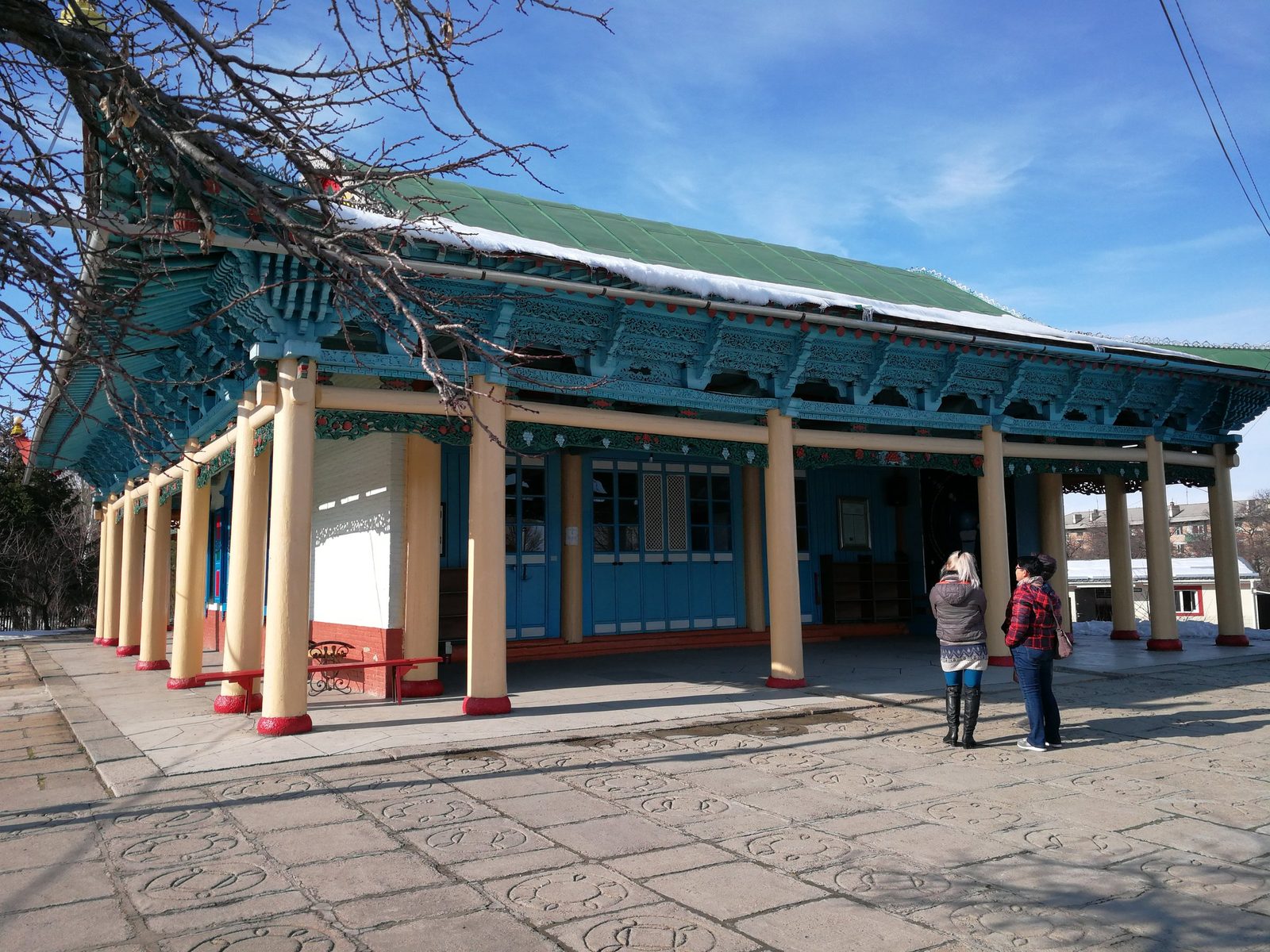
A few streets away stands a mosque that looks like a Chinese temple. It was built for the Dungans, Chinese-speaking Muslims who settled in Karakol, by an architect from Beijing and a team of craftsmen, and finished in 1910. It has 42 wooden pillars, a multi-tiered cornice carved with fruit and flowers, and not a single nail. It is still a working mosque, so dress modestly.
Stage 6: Jeti-Oguz and the Skazka canyon
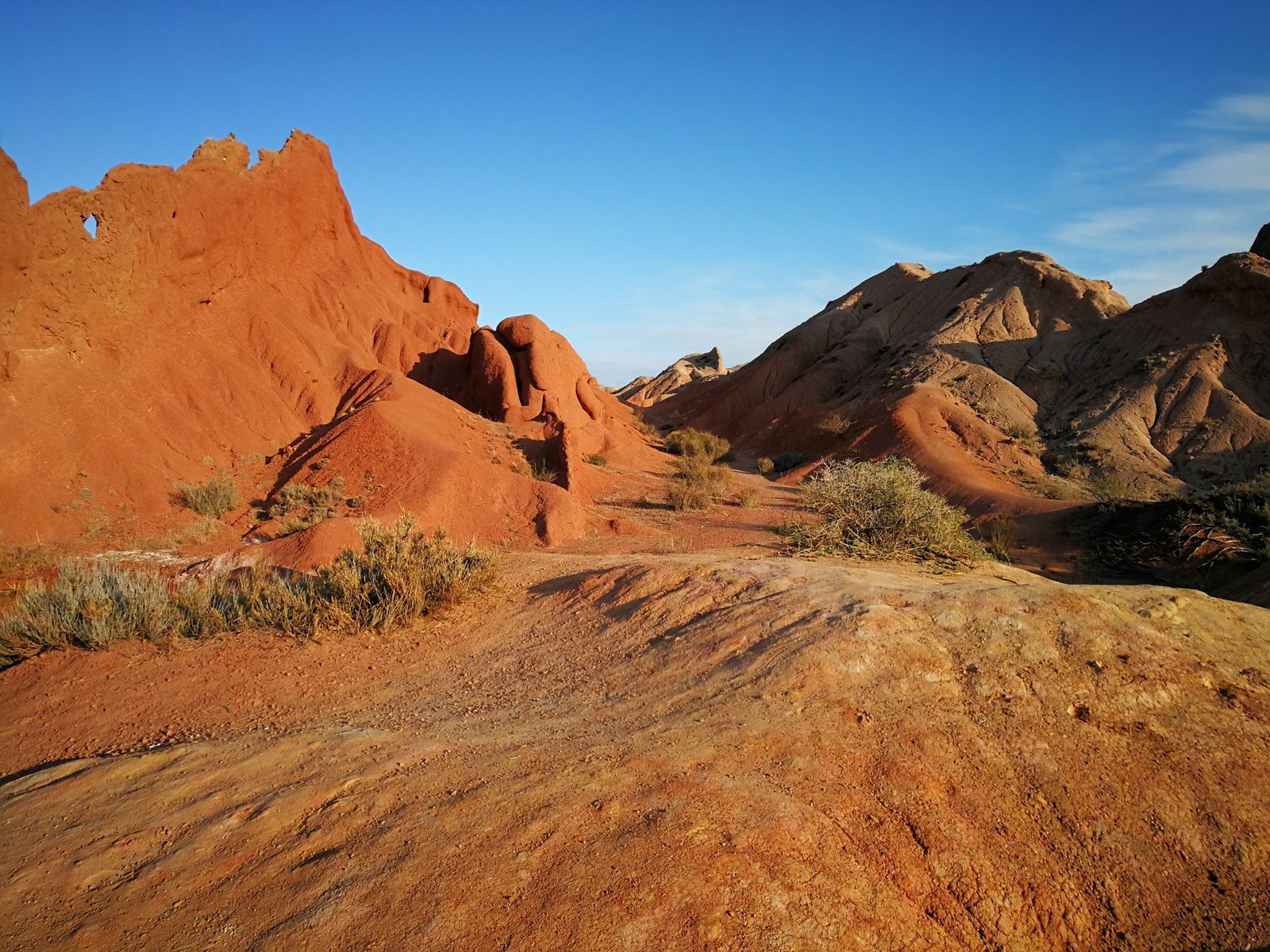
Southwest of Karakol, the Jeti-Oguz valley opens with cliffs of red conglomerate. One ridge is called the Seven Bulls, and another rock is the Broken Heart. The cliffs have been a protected nature monument since 1975.
Further west on the south shore, near the village of Tosor, is Skazka, the Fairy Tale canyon. Wind and water have cut the red and striped clay into walls, towers and dragons. The walk is short and easy.
Stage 7: Charyn Canyon and the Valley of Castles
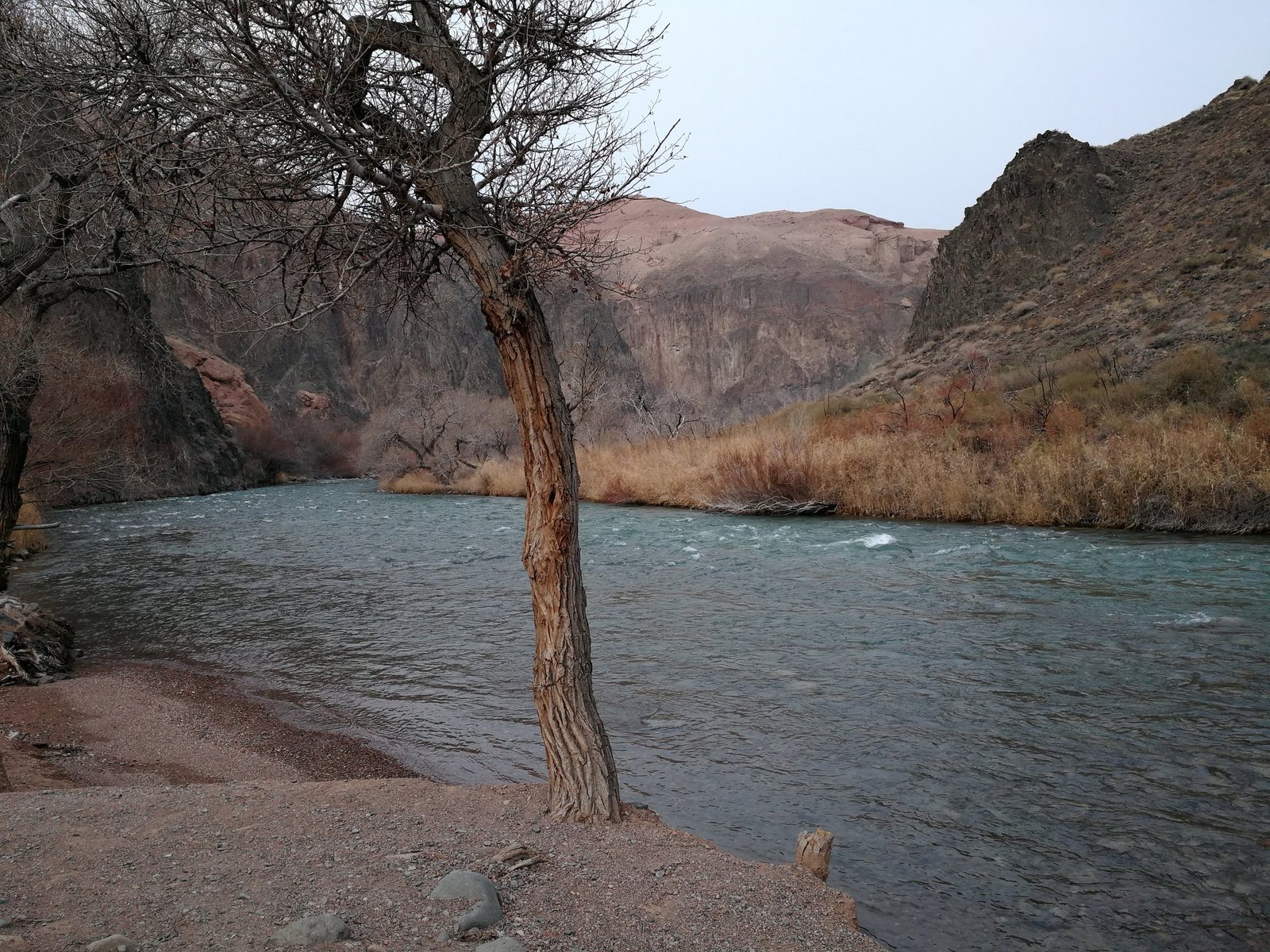
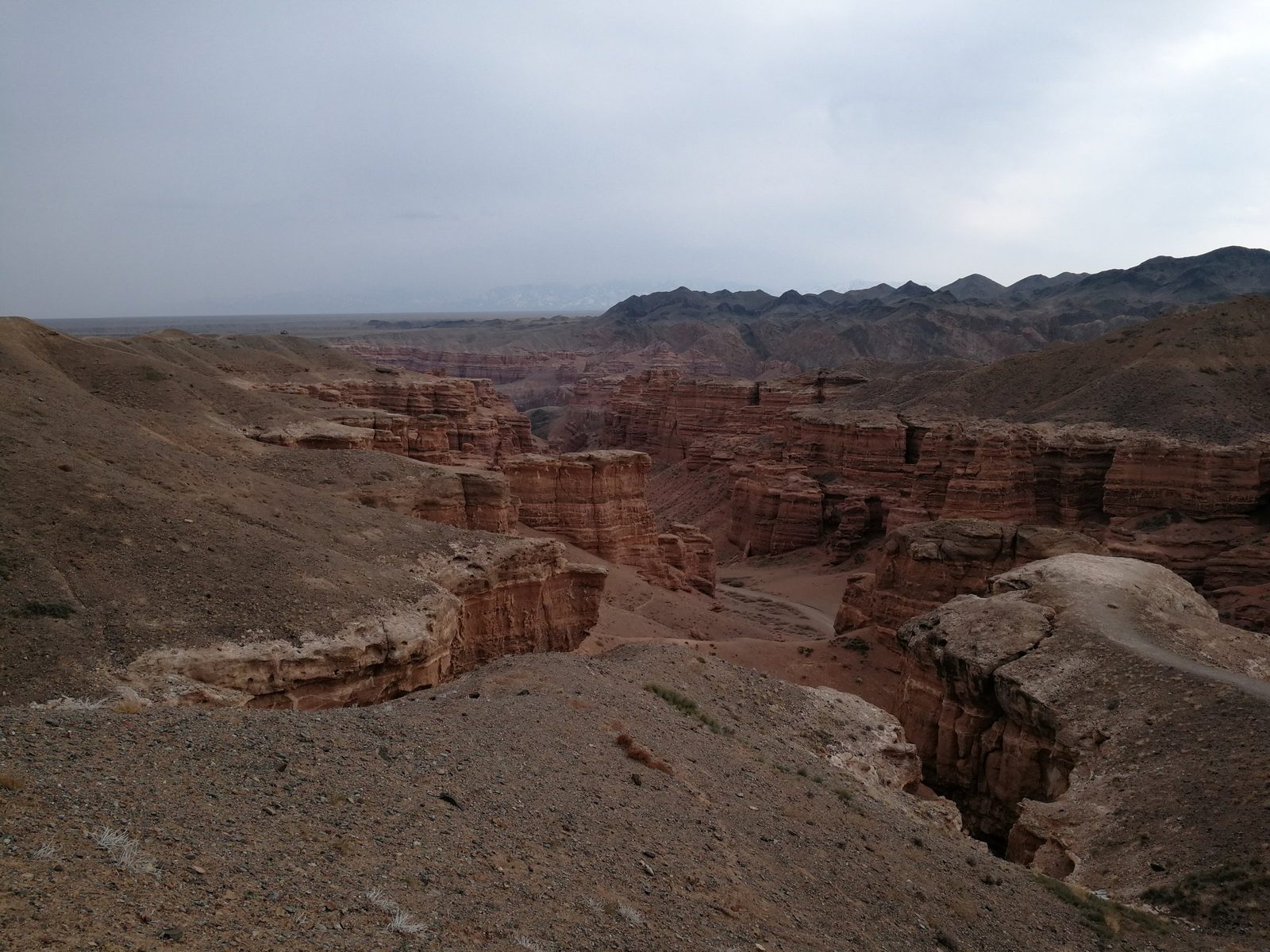
Back in Kazakhstan, Charyn Canyon lies about 200 km east of Almaty, in a national park created in 2004. In places the walls are 150 to 300 m high.
The Valley of Castles is a side canyon about 3 km long, between walls of orange and grey layered rock. A path runs along its floor and ends at the Charyn river, fast and green even in November. Wear proper shoes: the way back up is steeper.
Stage 8: Almaty and the Museum of Kazakh Folk Musical Instruments
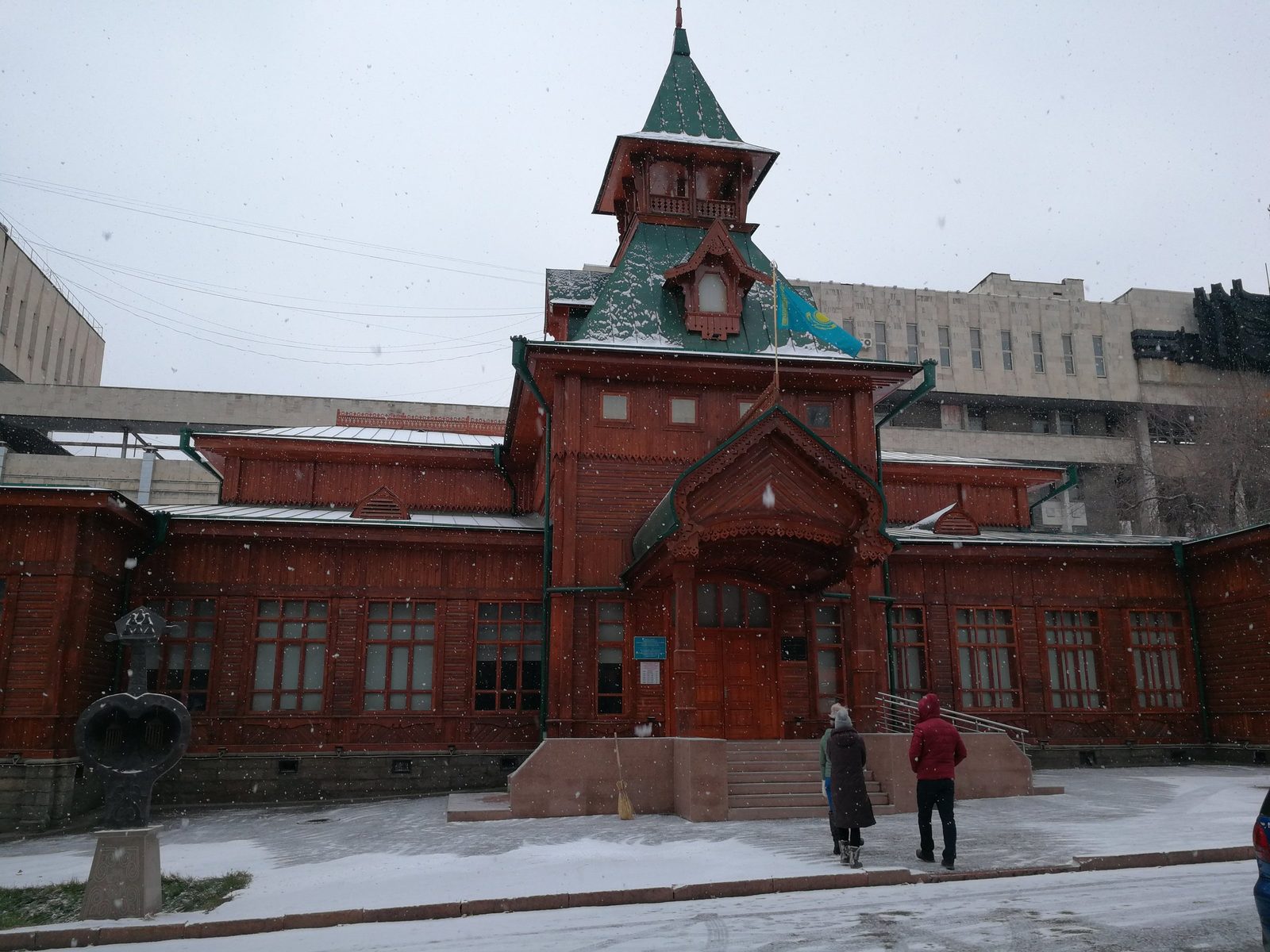
We finished in Almaty, in the snow. In Panfilov Park stands a red wooden building from 1908, once the officers' assembly. Since 1980 it has housed the Museum of Kazakh Folk Musical Instruments: more than 1,000 items, the oldest from the 17th century. There are kobyz and dombras, harps and horns, and instruments that belonged to Abai, Zhambyl and Dina Nurpeisova. After the canyons, it is a warm, quiet morning.
How many days and in what order
We drove the loop in about a week. It was tight. For a comfortable pace, we suggest 11 days:
| Day | Route |
|---|---|
| 1 | Tashkent → Turkestan |
| 2 | Turkestan in the morning → Taraz, Aisha Bibi |
| 3 | Taraz → Bishkek |
| 4 | Bishkek → Burana → Cholpon-Ata, petroglyphs in the late afternoon |
| 5 | Cholpon-Ata → Karakol |
| 6 | Karakol and Jeti-Oguz |
| 7 | Along the south shore, Skazka → Bishkek |
| 8 | Bishkek → Almaty |
| 9 | Charyn Canyon, a day trip from Almaty |
| 10 | Almaty |
| 11 | Back to Tashkent on the overnight train, or onward by air |
From May to October there is a shortcut: the seasonal Karkara crossing links the Karakol side with the road to Charyn, and you can skip the return through Bishkek. Out of season it is closed.
Border crossings
On the full loop you cross a border four times: Uzbekistan to Kazakhstan, Kazakhstan to Kyrgyzstan, Kyrgyzstan back to Kazakhstan, and Kazakhstan to Uzbekistan if you return. Between Bishkek and Almaty the usual crossing is Korday, open around the clock. On a crossing day we plan nothing tight, and on the other side you change to a local car and driver.
Entry rules depend on your passport, so check them for Kazakhstan and Kyrgyzstan before you book. For Uzbekistan, see our guide do you need a visa for Uzbekistan. If you come back into Uzbekistan on an e-,Entry rules depend on your passport. Once you are here, each stay must be registered within three days, and hotels do it for you; customs and registration rules are in our guide. Read more → you need a double- or multiple-entry one.
Best season
We went in November, and we will be honest: it is cold. There was snow in Karakol and Almaty, the days are short, and by six it is dark. The upside: the canyons and the petroglyphs were almost empty.
For this loop we prefer late May to early October. In June and September the lake and the canyons are pleasant, the Karkara crossing works, and the cities of Uzbekistan are not too hot either.
How to combine it with Uzbekistan
The loop starts and ends in Tashkent, so it fits naturally before or after the A network of caravan routes between China and the Mediterranean. Samarkand, Bukhara and Khiva grew rich as stops along it. cities. Spend a day in the capital first, see Tashkent in 1–2 days. From Almaty, the daily Talgo train brings you back to Tashkent overnight in about 18 hours, or you fly in about an hour and a half. Then continue to Samarkand, Bukhara and Khiva.
More ways to combine Uzbekistan with its neighbours are in our guide to Central Asia tours. If you want all five countries, look at our 23-day Silk Road tour, which includes Bishkek and Almaty. We plan this loop as a private trip; tell us your dates in the tour finder.
In short
- The loop: Tashkent, Turkestan, Taraz, Bishkek, Burana, Issyk-Kul, Karakol, Jeti-Oguz and Skazka, Charyn, Almaty.
- We did it in a week; 11 days is the comfortable pace.
- See the Cholpon-Ata petroglyphs late in the afternoon, and the Aisha Bibi tiles in low sun.
- Four border crossings: check the entry rules for your passport and take a multiple-entry Uzbek e-visa if you return.
- Late May to early October is the easy season; November is cold and dark early, but quiet.