
Places in this article: Samarkand · Bukhara · Khiva
Samarkand, Bukhara and Khiva at night: what to do after sunset
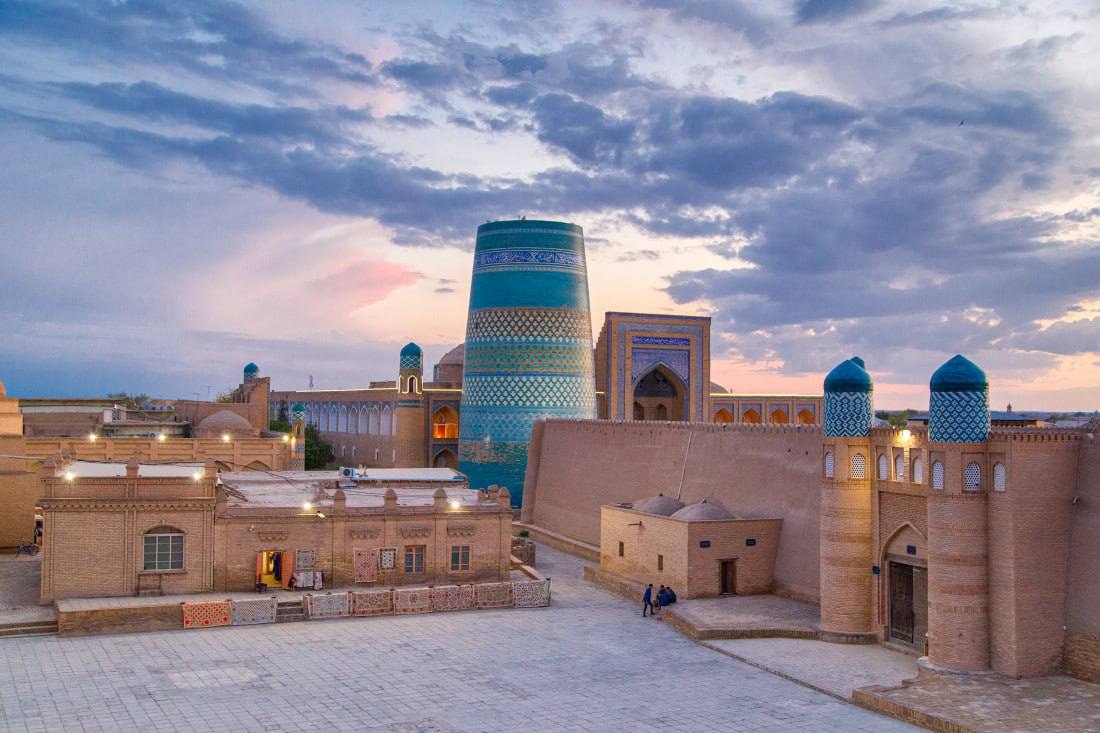
At sunset the day groups leave the old towns, the heat lets go and the floodlights come on. The Did you know? The Registan's sun-carrying lion went on a banknote The Sher-Dor Madrasah (1619–1636) is named for the big cats with the sun on their backs on its portal. The image appeared on the reverse of Uzbekistan's 200-som note of 1997. Read more → turns gold against a dark sky, families sit on the steps around ,Did you know? Bukhara's ponds were once its water supply Pools like Lyabi-Hauz, dug around 1620 and 46 × 36 m, were the city's main source of water. Most were filled in during the 1920s–30s because they spread disease; Lyabi-Hauz survived. Read more → and the lanes of Did you know? People still live inside Khiva's museum city Itchan Kala packs more than 50 historic monuments and about 250 old houses inside clay walls 8–10 m high and 5–6 m thick, and families still live and work in its lanes. Read more → go quiet enough to hear your own footsteps. For many travellers the evenings are what they remember best from Samarkand, Bukhara and Khiva.
We live here and plan these evenings for our guests every week. This is what to do after sunset in the three cities: the squares under lights, a folk show, a family dinner, the best places for the last light, and what to wear when the air cools. For the capital, see our separate guide to Tashkent in the evening.
Evenings in three cities at a glance
| City | At sunset | After dark |
|---|---|---|
| Samarkand | Did you know? Timur's tombstone went to Persia and came back The dark-green jade slab on Timur's grave in Gur-e-Amir was carried off by Nader Shah in 1740. It broke, and on his advisers' urging he sent it back to Samarkand. Read more → and Did you know? Legend says the architect asked the queen for a kiss Legend says the architect of Bibi-Khanym would finish on time only for a kiss from Timur's wife, and Timur punished him. In fact the mosque was Timur's own project; his wife Saray Mulk Khanum built her madrasah across the road. Read more → in the low light | The Registan under lights, the Eternal City, a folk show for groups |
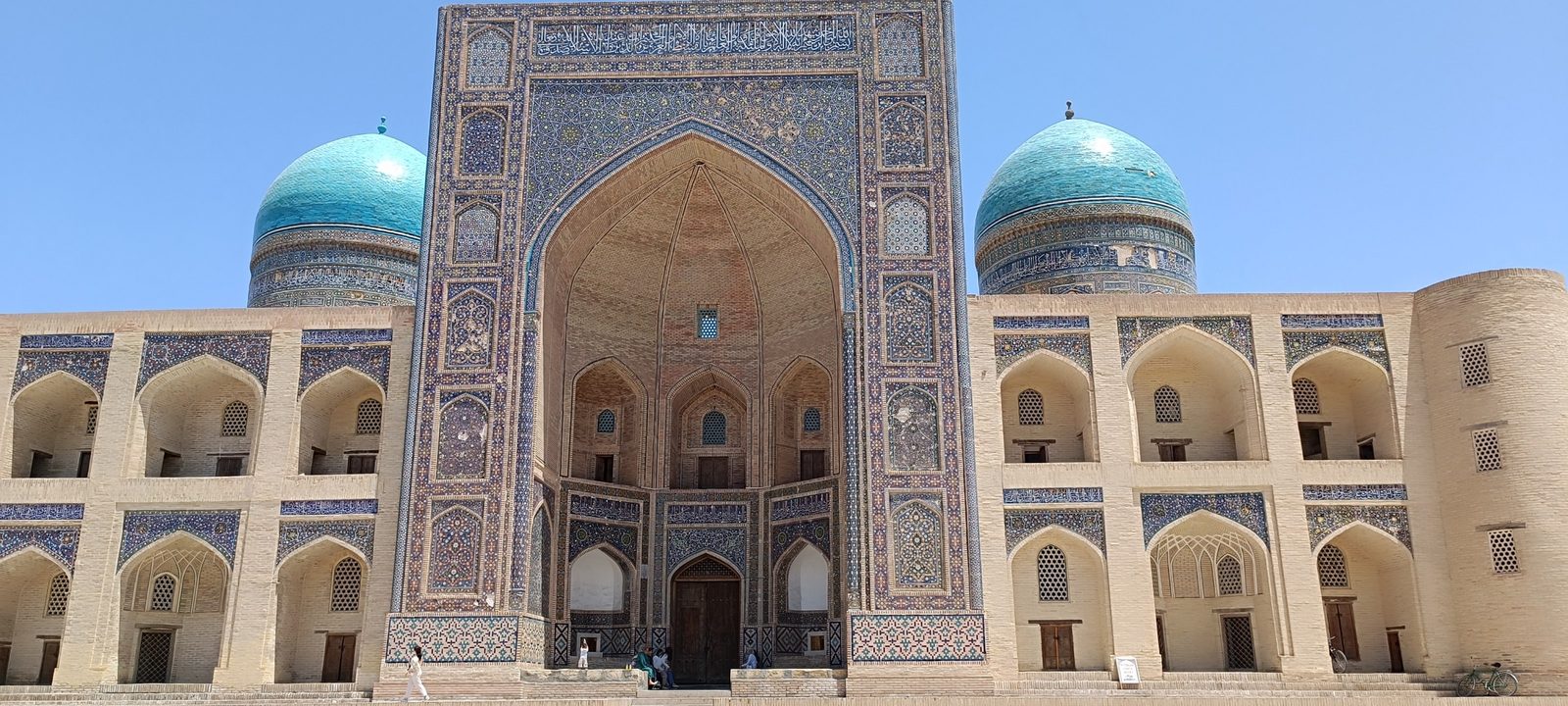
| Bukhara | The Did you know? A caravanserai that became a madrasah by a khan's word Nadir Divan-Begi built his 1622 building by Lyabi-Hauz as a caravanserai. At the opening Imam Quli Khan praised it as a fine madrasah, and a khan's word could not be taken back: a portal and cells were added, and a madrasah it became. Read more → portal and Did you know? Legend: the minaret's foundation was laid with camel milk Legend says master Bako laid the foundations of the Kalyan minaret with ganch plaster mixed with camel milk, then vanished for two years to let them harden, and only then built the tower. Locals still show a grave they say is his. Read more → in gold | Lyabi-Hauz, a folklore show in a ,An Islamic college: student cells and classrooms around a courtyard behind a grand portal. In the old towns many now house museums and craft workshops. Poi Kalyan floodlit, dinner with a family |
| Khiva | The Did you know? Legend: a White Sheikh lived at the top of the Kunya-Ark Legend says a holy man, Ak Sheikh Bobo, the White Sheikh, lived in a cell on the highest point of the hill long before the khans. What is known: the citadel was first built in 1686–1688, and his cell later served as a watchtower and powder store. Read more → watchtower, the ,Did you know? Khiva's tallest minaret is barely a century old The Islam Khoja Minaret was begun in 1908, near the very end of the khans' era. At 56.6 m it is one of the tallest in Central Asia; a spiral stair of 175 steps leads up to its windowed top. Read more → the walls | The quiet lanes of Itchan Kala, a terrace dinner, A new tourist complex on the shore of Lake Govuk, a short drive from Itchan Kala, opened in May 2025: 17 hotels and guest houses, a 3,000-seat amphitheatre, restaurants, a bazaar under domes and a canal with gondolas. Read more → |
Samarkand: the Registan after dark
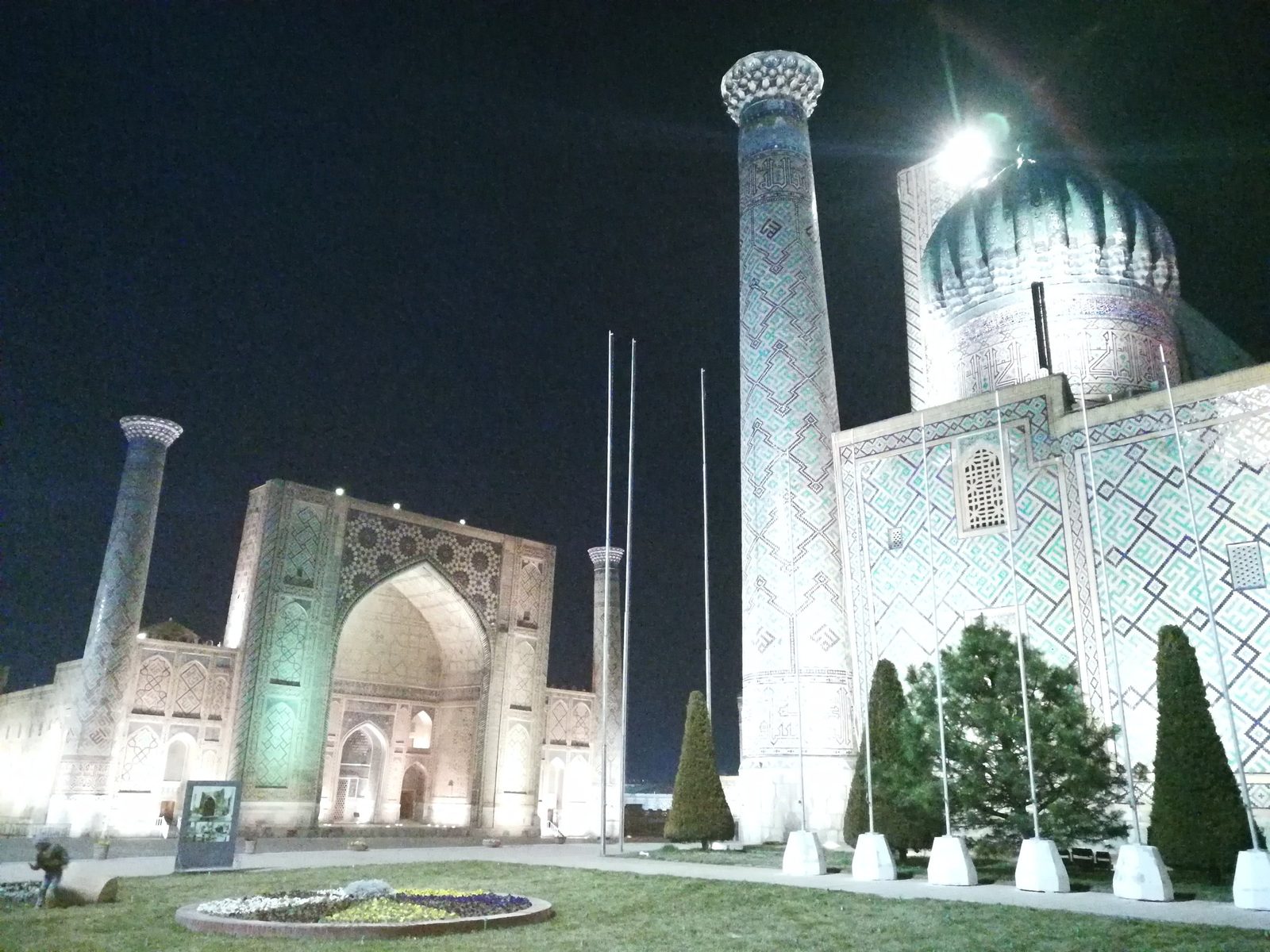
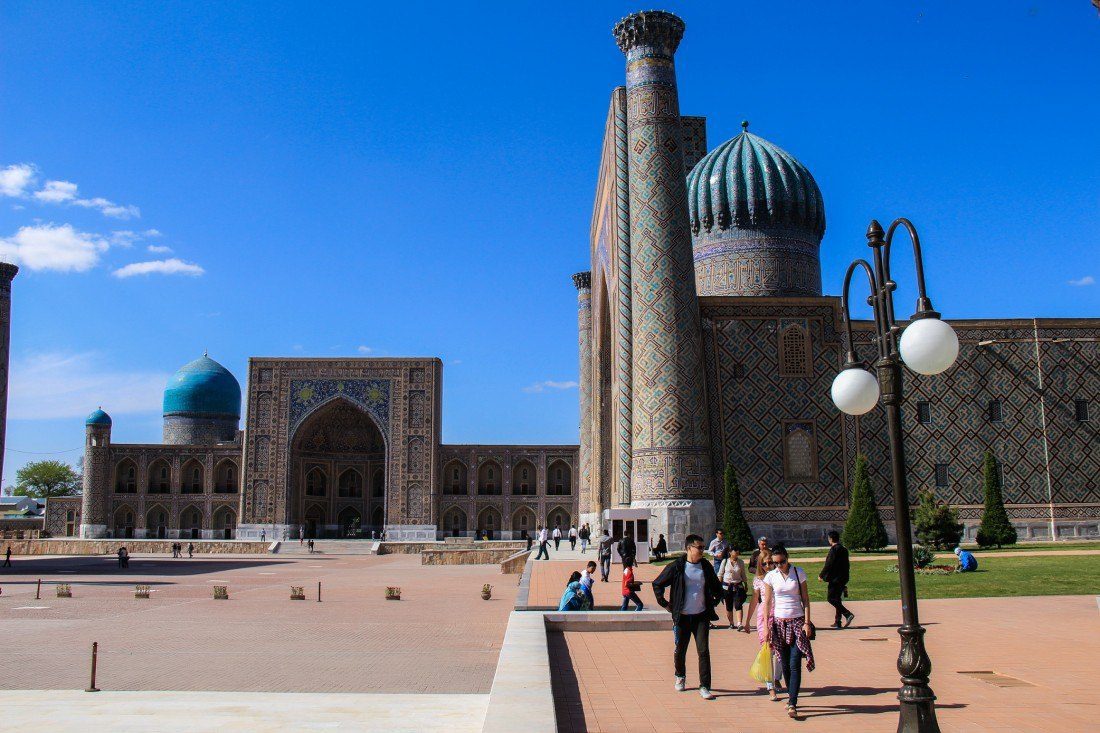
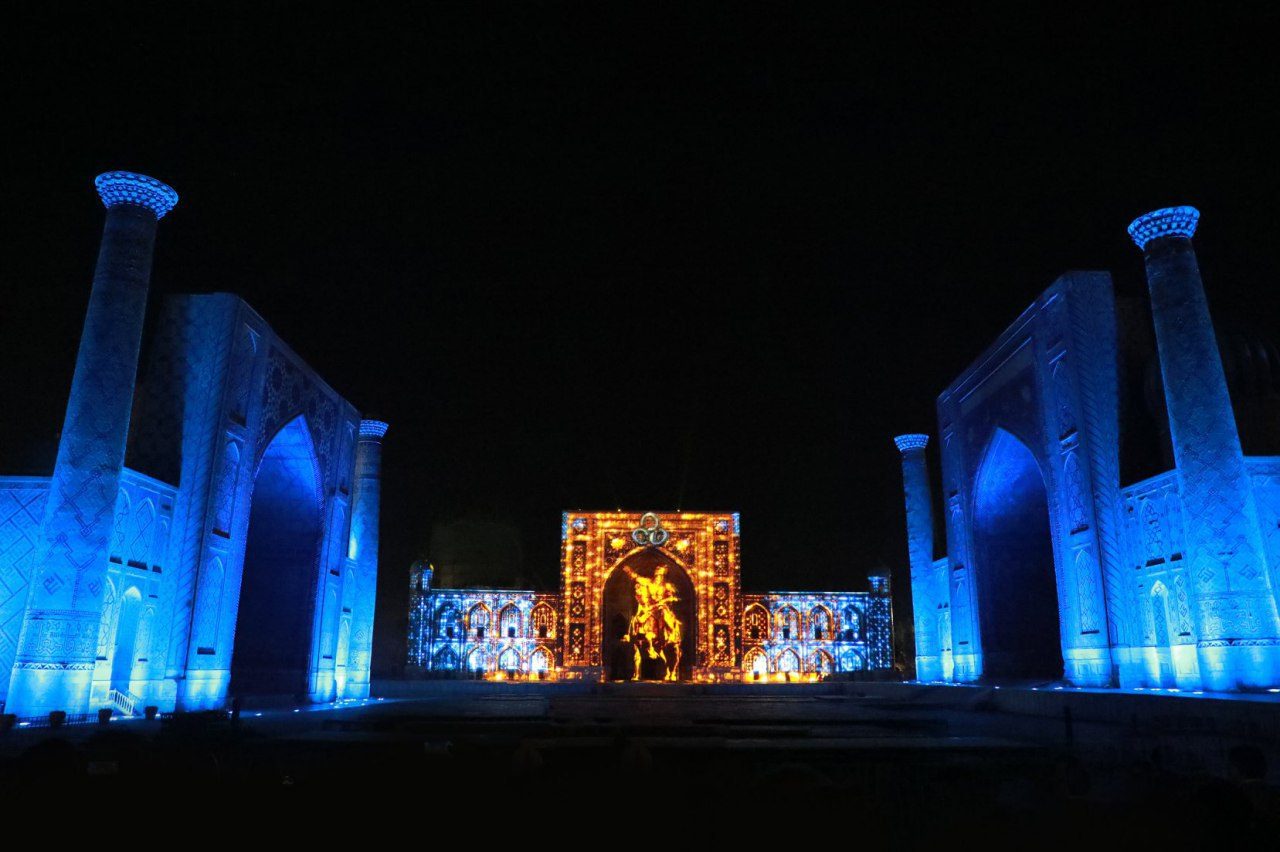
The three madrasahs of the Registan are floodlit every evening, and the square looks like a different place from the one you saw in the morning. In the season, from late February to late November, the ensemble stays open until midnight, and a music show plays on the square at 21:00. In winter the hours are shorter, and the sound-and-light show can pause while its equipment is serviced, so we check the evening programme on the day.
Come twice: at opening time for the empty courtyards and the morning sun on Did you know? Ulugh Beg measured the year to within 25 seconds Working at his Samarkand observatory, Ulugh Beg put the tropical year at 365 days 5 h 49 min 15 s, about 25 seconds too long, closer than Copernicus a century later. Read more →’s madrasah, and again after dinner for the lights. We arrange an evening visit to the Registan for any day of your stay, and for a slower evening we book a terrace dinner with wine and a view of the Registan. The history of the square and the stories of its three madrasahs are in our guide to the Registan.
Samarkand: a folk show, the Eternal City and late museums
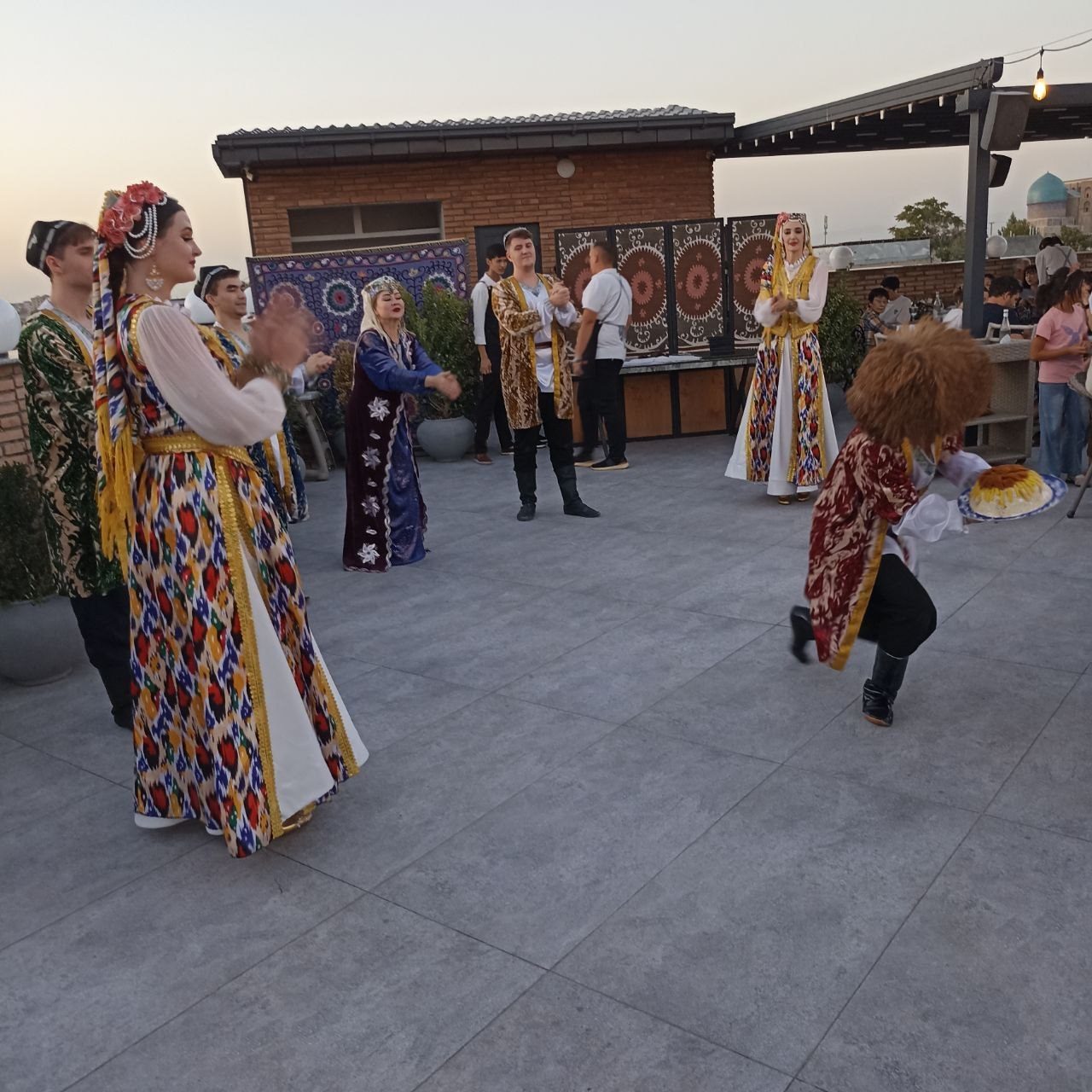
Samarkand in the evening is no longer only about the Registan. Since September 2026 the city has kept its main sights open later: Gur-e-Amir, the ,Did you know? 95 elephants hauled stone for Timur's great mosque Bibi-Khanym, begun in 1399 after Timur took Delhi, was the largest mosque of his empire. Some 200 stonecutters worked on site and 95 elephants brought from India hauled the loads; the courtyard was meant to hold 10,000 people. Read more → the Did you know? A 7th-century mural shows envoys from Korea Uncovered by road builders in 1965, the Ambassadors' Painting at Afrasiyab shows delegations bearing gifts, Chinese with silk among them, and two men in feathered hats thought to be envoys from Korea's Goguryeo. Read more → Museum and the Ulugh Beg Observatory welcome visitors until 23:00, and Samarkand's main bazaar, right next to Bibi-Khanym: Samarkand bread, dried fruit, nuts and halva. Read more → trades until midnight. Gur-e-Amir is at its best at dusk, when the ribbed blue dome is lit against the last of the sky.
On the edge of town, the Eternal City inside the A network of caravan routes between China and the Mediterranean. Samarkand, Bukhara and Khiva grew rich as stops along it. Samarkand tourist centre is an 11-hectare quarter built in the old style: lanes of workshops under turquoise domes, teahouses, restaurants and an amphitheatre. It stays open until 22:00 from Monday to Thursday and until 23:00 from Friday to Sunday, and many of its roughly 30 workshops, from ceramics and embroidery to calligraphy, are still working after dark.
For a group or a company event, we add a folk show to a dinner: 30 minutes, nine performers, the jug dance, the Rice cooked in a kazan with carrots, onions and meat: the dish of every Uzbek celebration. Each region cooks it its own way. dance, a wedding rite and the Khorezm lazgi. More about the dances and where to hear live music is in our article on the music of Uzbekistan.
Bukhara: Lyabi-Hauz and a folklore show in a madrasah
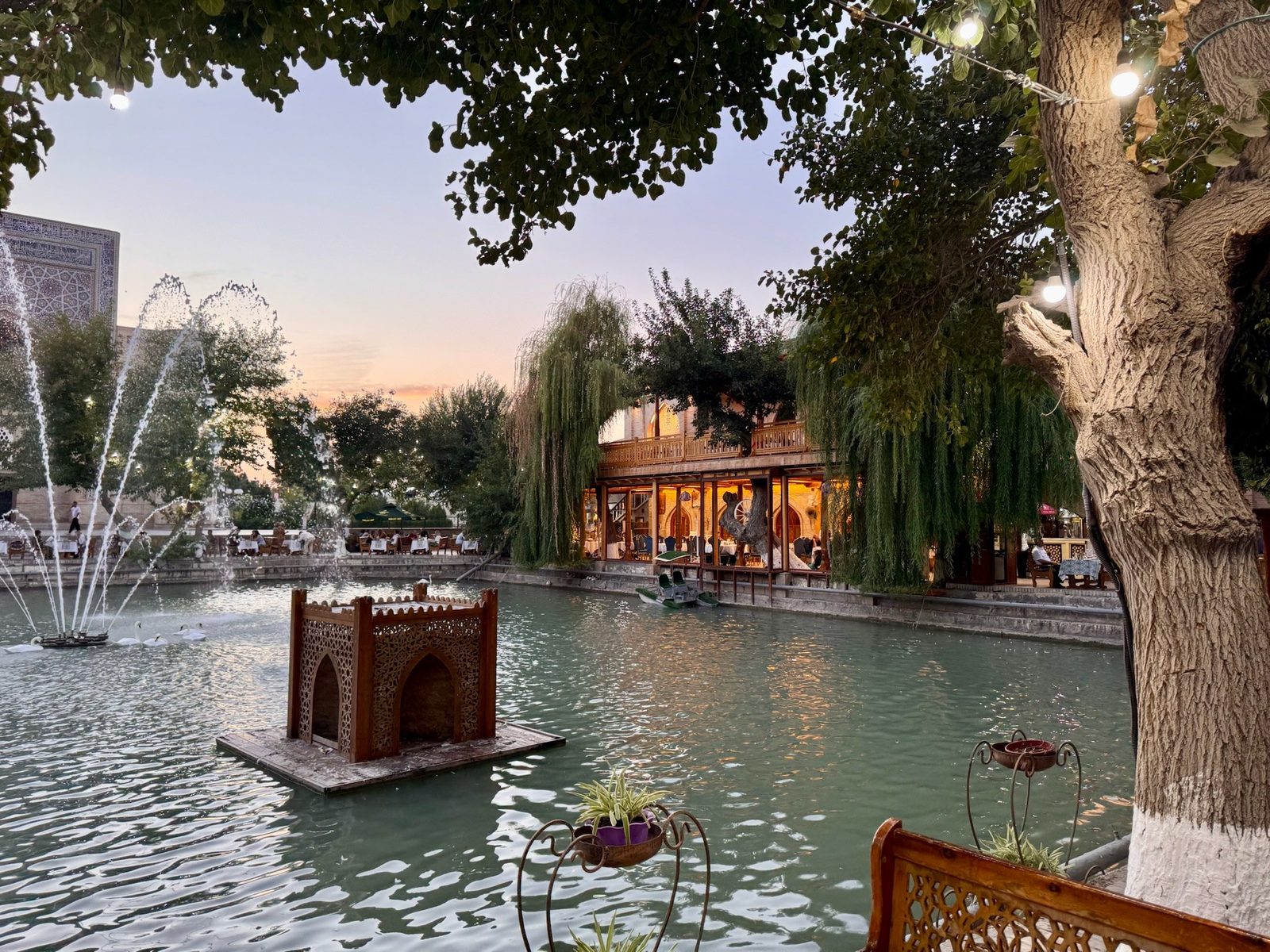
Bukhara spends its evenings around a pond. Lyabi-Hauz was dug in about 1620, and today A teahouse: green tea, plov and conversation on wide wooden beds called topchan. tables stand along its edge under old mulberry trees, with the madrasahs of Kukeldash and Nadir Divan-Begi on two sides. Come a little before sunset: the low light falls on the Nadir Divan-Begi portal, where two simurgh birds carry white deer towards a sun with a human face.
In the season, from April to June and from August to October, the courtyard of the Nadir Divan-Begi madrasah hosts a folklore show of about an hour every evening: dances from Bukhara, Khorezm and the Fergana Valley to live music, with costume shows between the numbers. You can watch with dinner or without, and we book places for our guests in advance. The pond, its legends and the buildings around it are in our Lyabi-Hauz guide.
Bukhara: Poi Kalyan under lights and dinner with a family
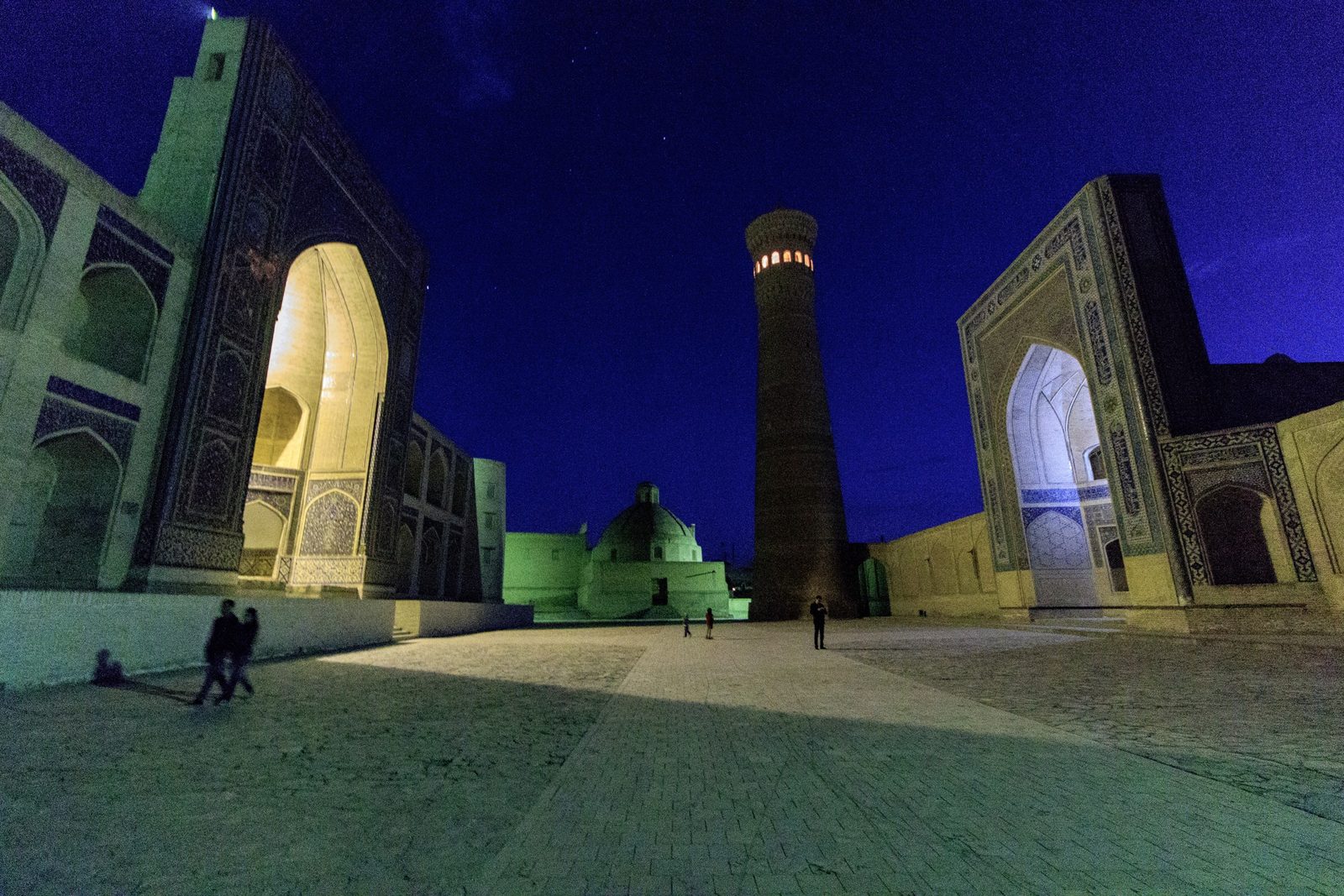
From Lyabi-Hauz it is about 500 metres along the Did you know? Under Bukhara's domes merchants changed money and gold Four 16th-century trading domes still stand over old crossroads. Toki Sarrafon was the money changers' dome, where merchants from India and China swapped coins; Toki Zargaron held jewellers' workshops, Toki Telpak Furushon sold caps. Read more → to Poi Kalyan. See it twice: at sunset, when the brick of the ,Did you know? Diggers went 13 m down and never found its base The Kalyan Minaret of 1127 rises about 46 m, and an excavation reached 13 m without finding the bottom of its foundations. Genghis Khan reportedly ordered it spared. Read more → standing since 1127, turns gold, and again after dinner, when the minaret and the portals are floodlit and the square is almost empty. Rooftop cafés around the old town look out over the lit domes, and many craft and embroidery shops stay open into the evening.
For an evening at a home table rather than a café, we arrange dinner with a local family, with the transfer included; tell us in advance about any food restrictions. The history and legends of the minaret are in our guide to Poi Kalyan, and a day-by-day plan is in Bukhara in 1, 2 or 3 days.
Khiva: sunset from the walls and the minaret
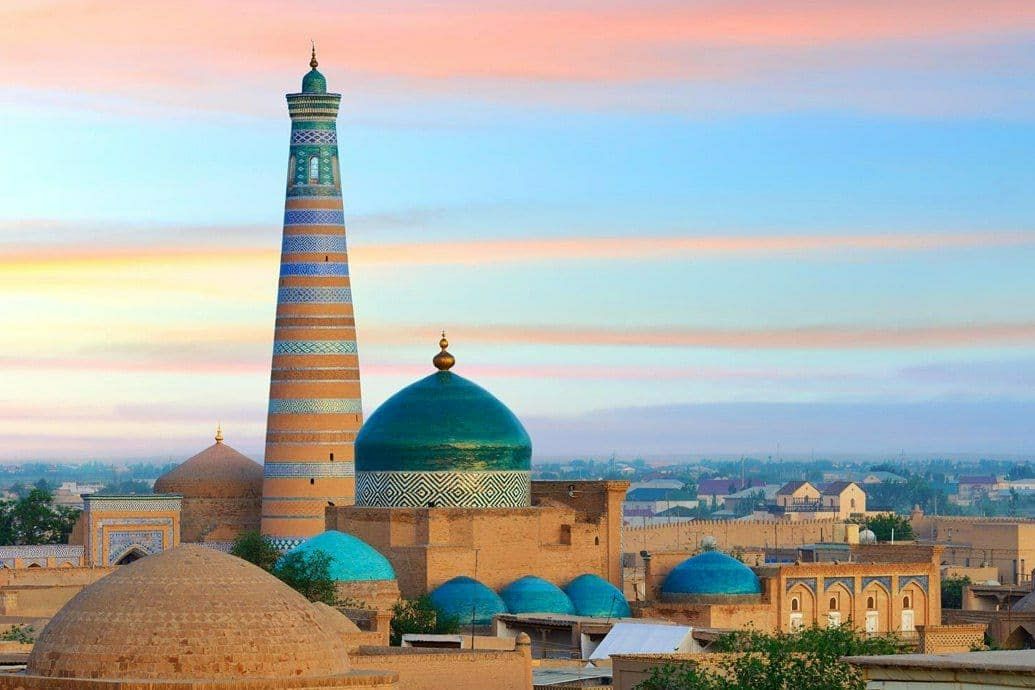
Khiva is small enough that the whole of Itchan Kala fits into one sunset view. The classic place is the Ak Sheikh Bobo watchtower of the :Did you know? In the khan’s courtyard a round platform waited for a yurt The Kunya-Ark, the khans’ citadel, had its own mint, arsenal and harem. In the courtyard of its reception hall of 1804–1806 stands a round platform: a yurt was set up on it, and there the khan received envoys of the steppe nomads. Read more → from the top, the domes, the minarets and the flat clay roofs come together into one picture as the sun goes down behind the walls.
The Islam Khoja minaret, built in 1908–1910 and 56.6 metres tall, is the highest point of the old town, with 175 steps to the top. The clay walls give another view across the rooftops. Whether the minaret and the walls are open for climbing, and until what time, is decided on the day at the ticket office, so we never promise the climb in advance. If it is closed, the watchtower or a roof terrace gives a similar view. More on the two minarets is in our guide to Kalta-Minor and Islam Khoja.
Khiva: Itchan Kala after dark and dinner
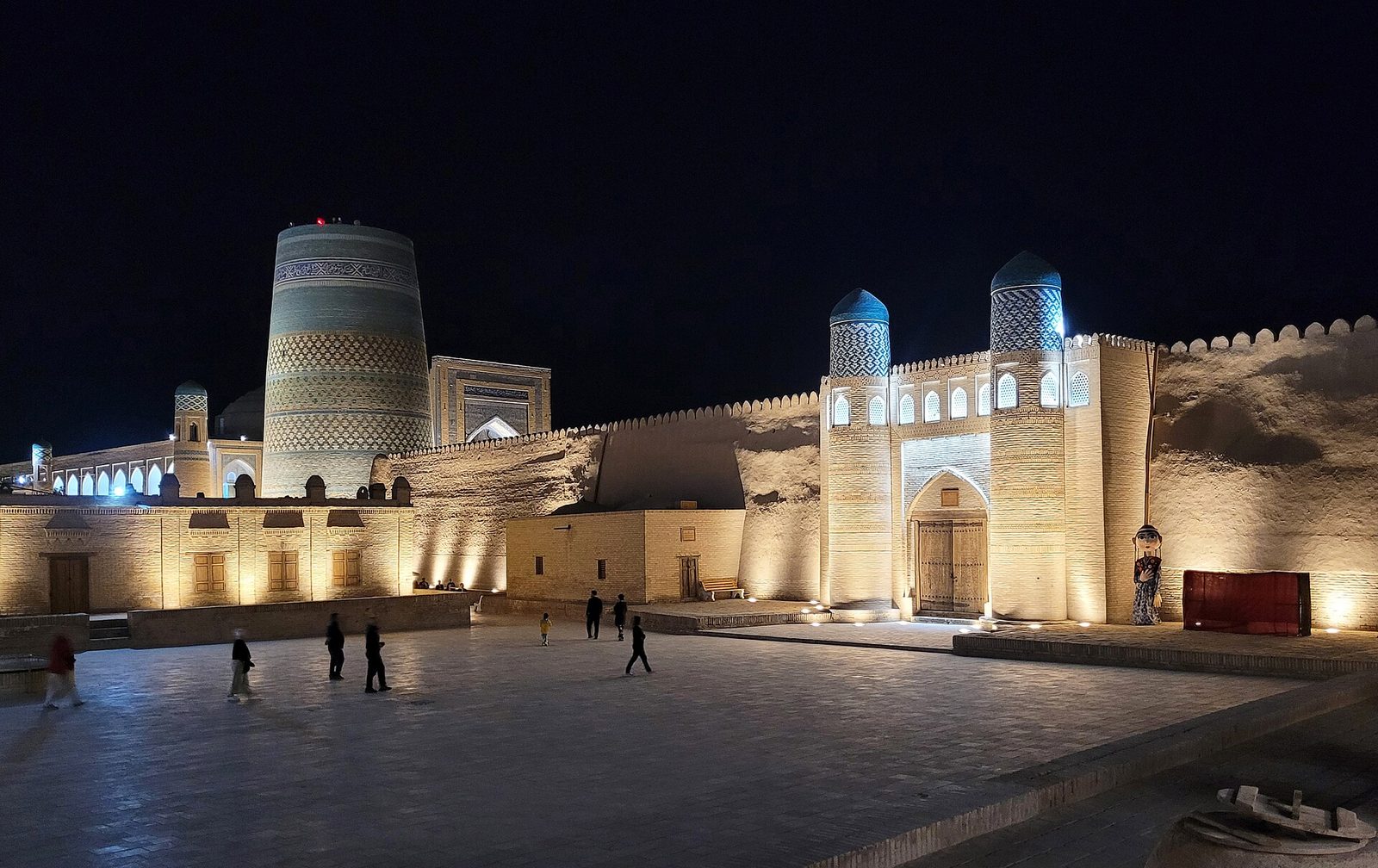
When the day groups leave, Itchan Kala belongs again to the people who live there and to the guests staying inside the walls. The monuments are lit, the lanes are quiet, and the lighting picks out details of brick and tile that you miss in the daytime. The ,Did you know? A 14-metre-wide base for a tower that stopped at 29 m Kalta-Minor was begun in 1852 and meant to reach 70–80 m, but work halted in 1855 at about 29 m when its khan died. It is said to be the only minaret covered entirely in glazed tiles. Read more → the unfinished turquoise minaret by the West Gate, is the last stop of our evening walks.
For dinner, we arrange an evening as guests of a local family, or a terrace dinner with wine and a view of Itchan Kala. On a second evening, take a taxi to Arda Khiva, the new quarter on Lake Govuk opened in May 2025, with a promenade, a bazaar under domes and an amphitheatre by the water. For groups and company events, we also arrange an evening in the desert near Khiva.
What to wear in the evening
The gap between day and night is wide in all three cities. In April the average night is 9–11 °C, in October 5–8 °C, and Khiva is the coolest of the three: an October afternoon of 20 °C there turns into a night of about 5 °C. In spring and autumn, take a sweater, a fleece or a light jacket for the evening, even after a warm afternoon. Summer evenings stay warm, and the hours after sunset are the most pleasant of the day.
Wear comfortable shoes: the old towns are paved with uneven brick and stone, and the steps of minarets and watchtowers are steep. Around working mosques and madrasahs, cover shoulders and knees in the evening as in the daytime. More in what to wear in Uzbekistan.
Planning your evenings
- Sunset: from about 17:00 in December to after 20:00 in June. Plan the monuments for the morning and the afternoon, and keep the evenings free.
- How long: two to three hours for an evening walk with dinner; add an hour for a folk show.
- One evening in each city: the Registan under lights in Samarkand, Lyabi-Hauz and Poi Kalyan in Bukhara, sunset from the watchtower in Khiva. The 8-day classic tour of Uzbekistan covers all three cities, and we can add any of these evenings to it.
- Getting around: the old towns of Bukhara and Khiva are best on foot; in Samarkand the Registan, Gur-e-Amir and Bibi-Khanym are close together, and the Eternal City is a short taxi ride.
- Calm evenings: the squares fill with local families after sunset, and the usual city sense is all you need. Our office is on call 24/7 while you travel, so if you want to change the evening plan, just write to us.