
 Deutsch
 English
 Español
 Français
 Italiano
 Polski
 Português
 Suomi
 Svenska
 Türkçe
 Ελληνικά
 Български
 Русский
 עברית
 한국어
 中文
 日本語
Places in this article: Tashkent
What to see at Lake Issyk-Kul: Cholpon-Ata, Karakol and Jeti-Oguz, from Tashkent
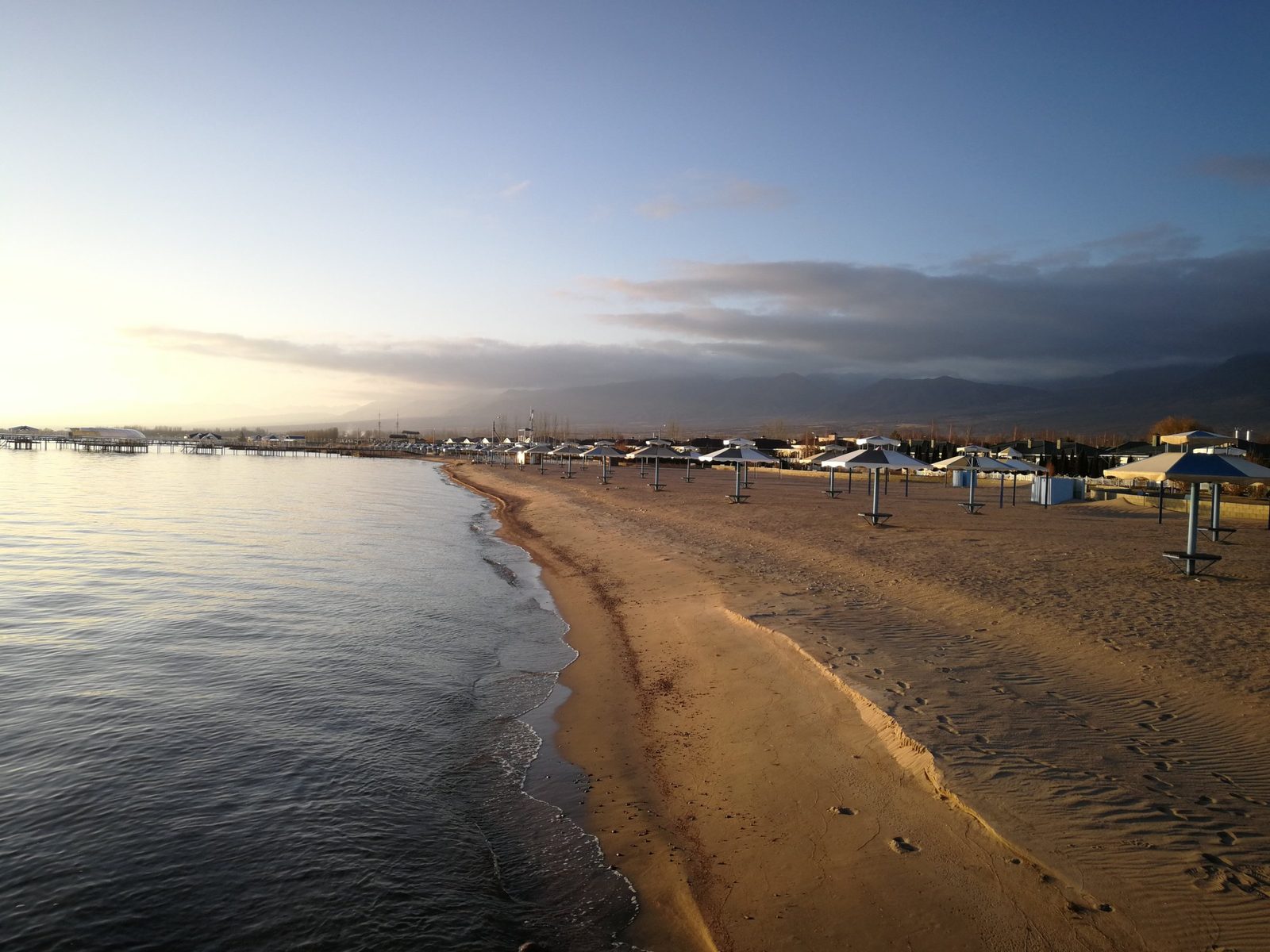
Lake Did you know? Issyk-Kul means 'hot lake', and it rarely freezes At 1,607 m, with harsh winters all around, Issyk-Kul rarely freezes because its water is slightly salty. It is 182 km long and up to 668 m deep, the second-largest mountain lake in the world after Titicaca. Read more → lies 1,607 metres up in the ,Did you know? The tulip's family tree is said to begin in the Tien Shan Long before Ottoman gardens and Dutch bulb fields, wild tulips grew in Central Asia's mountains, and the Tien Shan is often named as their homeland. In April they flower on the slopes around Chimgan. Read more → and in winter, when mountain lakes around it turn to ice, it stays open water. It is slightly salty, about 118 rivers run into it and none run out. From Tashkent you reach it with a flight of about an hour and ten minutes to Bishkek and a drive east.
We are a tour operator in Tashkent, and Issyk-Kul is the trip our guests most often add to Uzbekistan when they want mountains and water after the cities of the .A network of caravan routes between China and the Mediterranean. Samarkand, Bukhara and Khiva grew rich as stops along it. Here is what to see around the lake, how much time it takes, and how our 5-day Bishkek, Issyk-Kul and Karakol tour puts it together.
In short
- Issyk-Kul is the second-largest mountain lake in the world after Titicaca: 6,236 km² of water, up to 668 metres deep, with snowy ranges on both shores.
- On the north shore, Did you know? On the rocks of Cholpon-Ata, ibex are hunted with snow leopards The open-air petroglyph field at Cholpon-Ata holds about 2,000 carvings on glacial boulders, most from the Saka era (8th c. BC – 1st c. AD). The best-known panel shows ibex being hunted with tame snow leopards. Read more → has about 2,000 rock carvings made between 800 BC and 1200 AD; at the eastern end, Karakol has two wooden landmarks from 1895 and 1910.
- Near Karakol rise the red cliffs of Jeti-Oguz, the Seven Bulls; on the way from Bishkek stands the 11th-century Did you know? Legend says a khan built the Burana tower to guard his daughter Legend says a seer foretold a spider bite, so a khan kept his daughter high in this tower, yet a spider reached her in a basket of fruit. In fact Burana is an 11th-century minaret of Balasagun, once 45 m tall, cut to 25 m by an earthquake. Read more → tower.
- Five days are enough to go round the whole lake: along the north shore, back along the south. Late May to September is the best time.
Contents
The lake itself: why it does not freeze
Issyk-Kul covers 6,236 square kilometres and goes down to 668 metres, so from the shore it looks like a sea, with no far bank on a hazy day. The Kungey range rises along the north shore and the Terskey range along the south, both part of the Tien Shan.
The water is about 0.6% salt, roughly a sixth of the ocean, and that is why the lake rarely freezes even in hard winters. The name is usually translated as “warm lake”. In summer the north shore is a string of beaches and resort villages; the south shore is quieter, with red earth and few buildings.
Cholpon-Ata: a hillside of carved stones
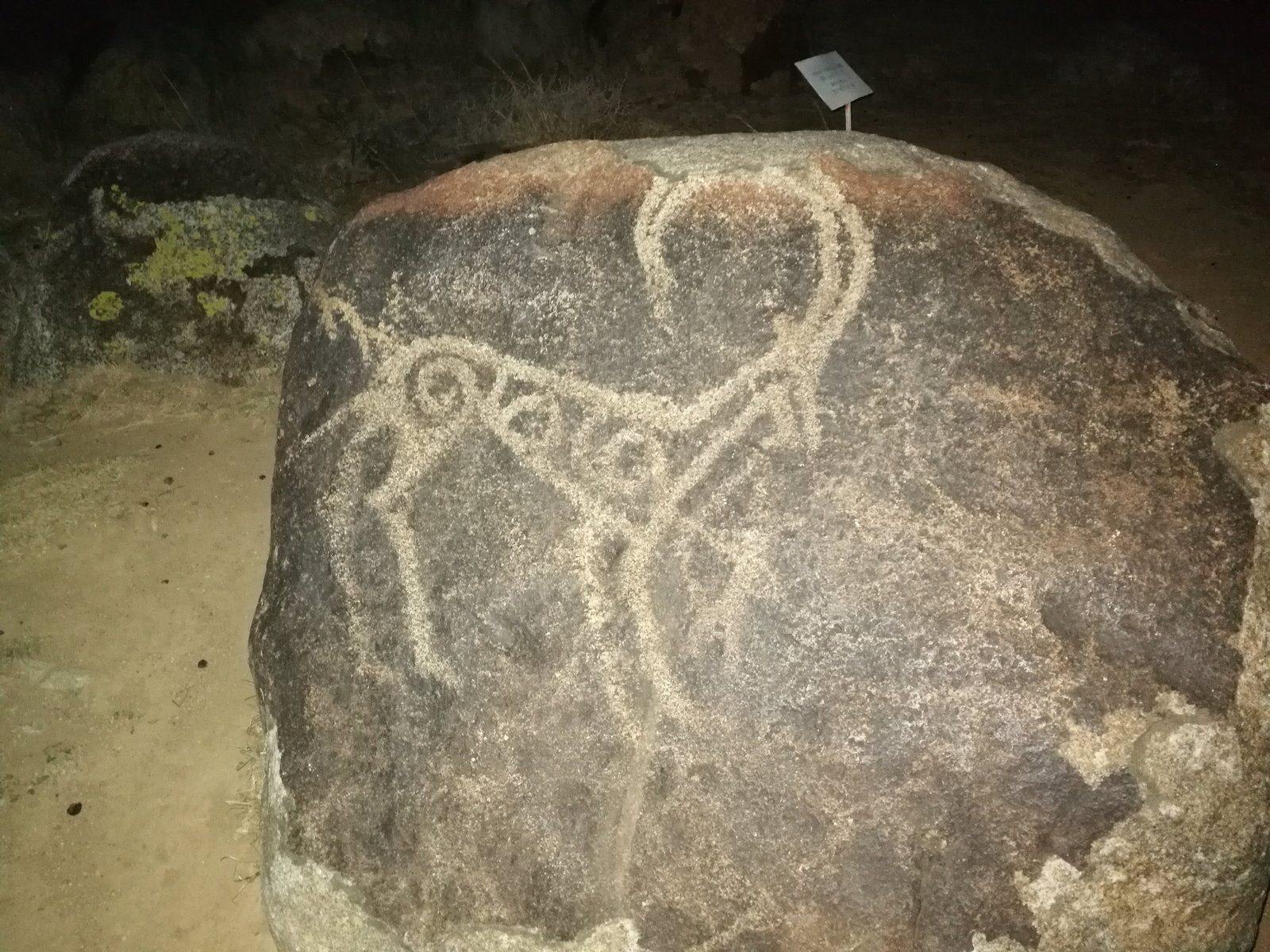
Above the resort town of Cholpon-Ata, on the north shore, is a slope covered with boulders, and about 2,000 of them carry carvings. They were made over two thousand years, between about 800 BC and 1200 AD. Most show ibex with long horns swept back over their bodies; look also for deer and hunters.
The field is open ground with no shade and uneven stones. Wear shoes with a good grip and bring sun protection; in the morning and late afternoon the low light makes the lines easier to see. On our tour you stop here on the way from the Chon-Kemin valley to Karakol.
Karakol and the red rocks of Jeti-Oguz
Karakol stands near the eastern tip of the lake, at 1,745 metres, about 380 km from Bishkek. The town is known for two wooden buildings a few streets apart: the Holy Trinity Cathedral, finished in 1895 after an earthquake destroyed the stone church before it, and a mosque in Chinese style built between 1904 and 1910, by tradition without a single nail. Both are working places of worship, so dress modestly.
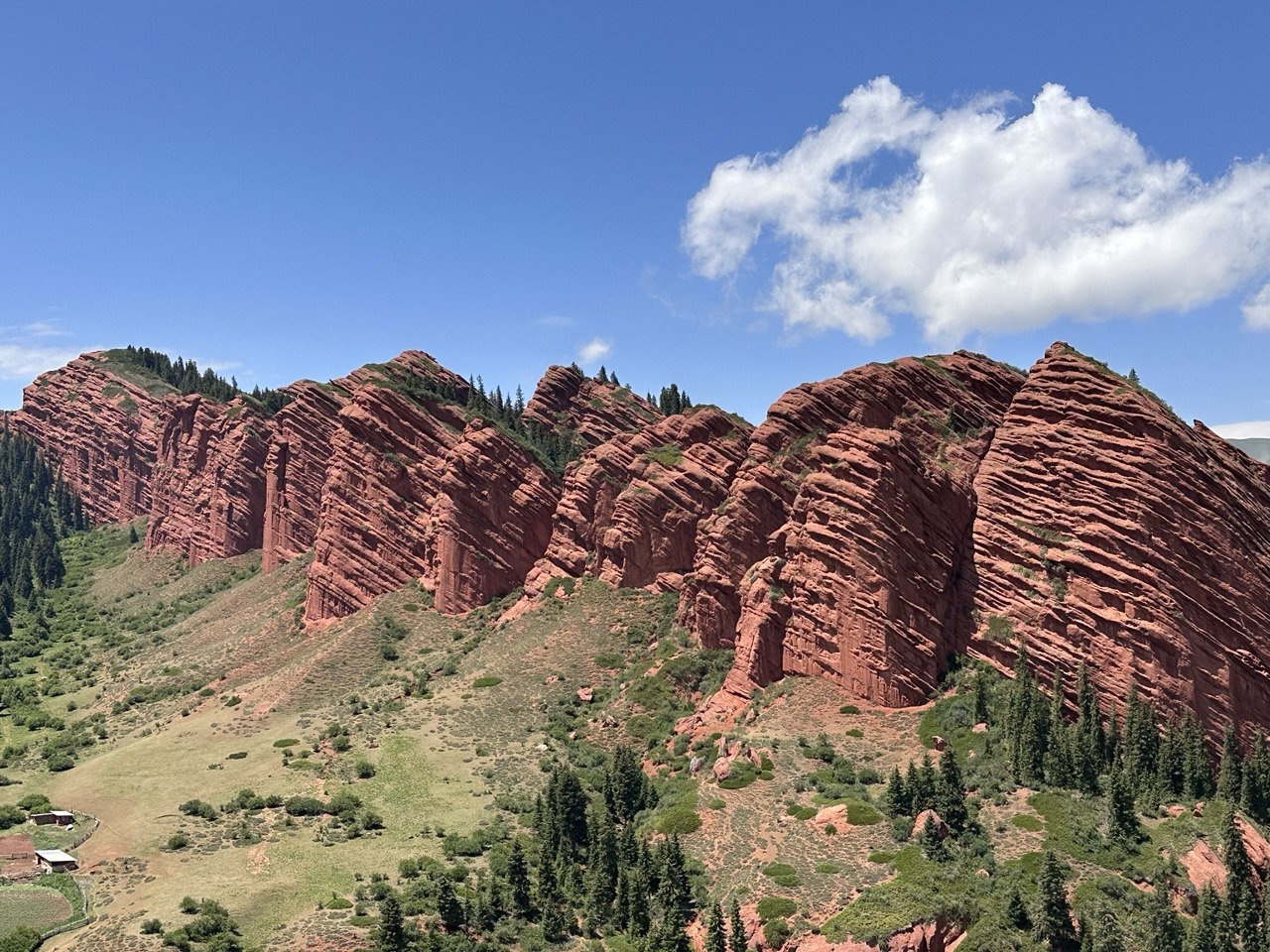
South-west of Karakol, the Jeti-Oguz valley opens with a ridge of red rock above green slopes and spruce. The cliffs are called the Seven Bulls, and close by is the Broken Heart, a rock split in two. They have been protected as a nature monument since 1975. On our tour you stop here on the way from Karakol back towards Bishkek.
The south shore and the Burana tower
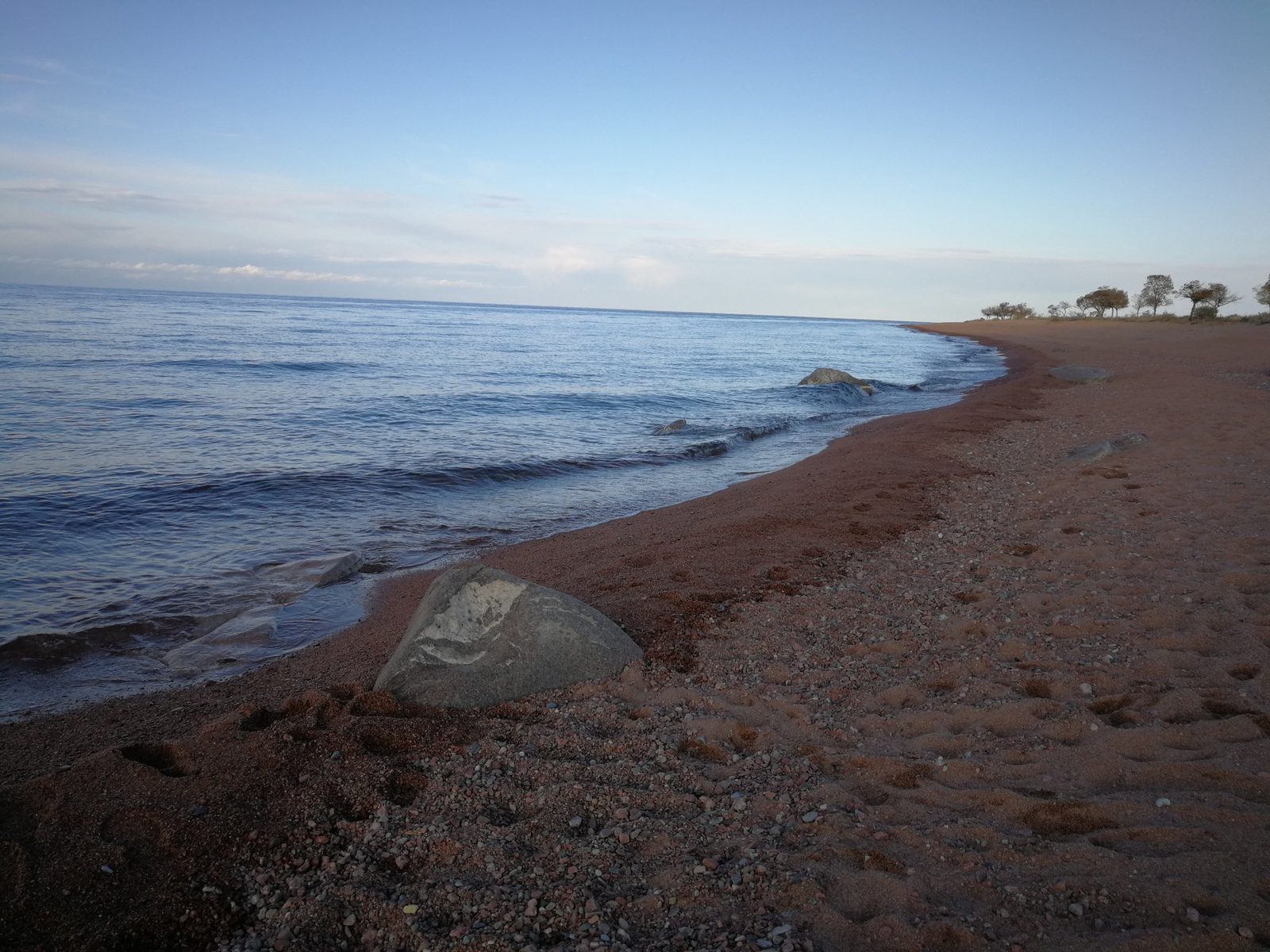
The road back to Bishkek along the south shore is the quieter half of the trip, with long empty beaches of red sand. Near Bokonbaevo a berkutchi, an eagle hunter, can show how he works with his golden eagle; on our tour this is an optional extra.
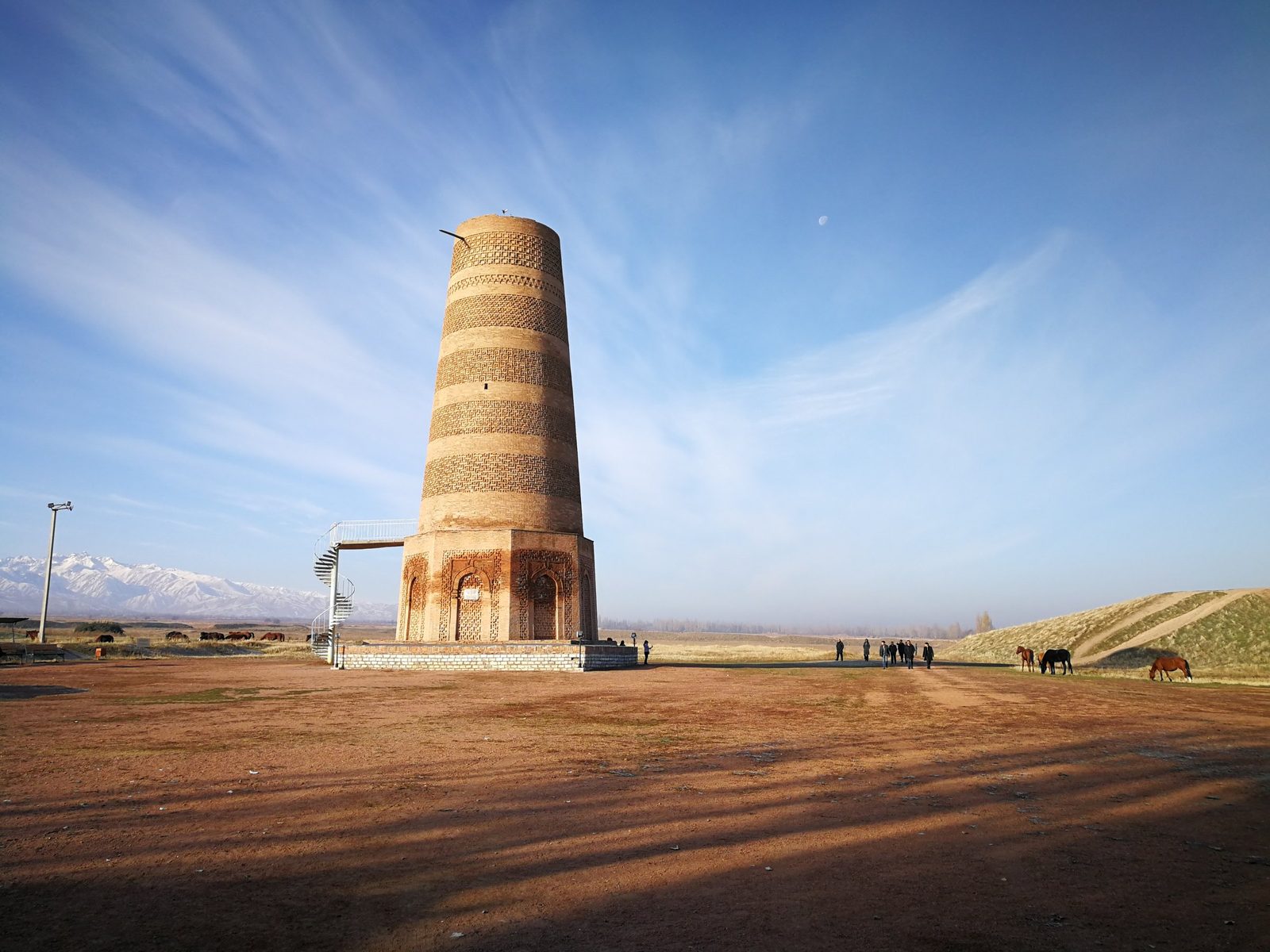
On the way between Bishkek and the lake, about 80 km east of the capital, stands the Burana tower. The brick minaret was built in the 11th century and was once 45 metres high; an earthquake in the 15th century brought it down to the 25 metres you see today. Around it stand balbals, old stone grave markers with carved faces. More about the capital is in our article What to see in Bishkek.
When to go and how long you need
Late May to September is the season: the valleys are green and the beaches on the north shore are open. In spring and autumn the lake is calm and empty, and mornings are cold. Kyrgyzstan is one hour ahead of Tashkent, on UTC+6.
Going round the lake takes at least two long days on the road, so plan five days from Tashkent: one to fly in and see Bishkek, three for the lake, one to fly back. For a week with yurts, Did you know? Song-Kul, at 3,016 m, is Kyrgyzstan’s largest freshwater lake Song-Kul lies at 3,016 m. It is the second-largest lake in Kyrgyzstan after Issyk-Kul and the largest of fresh water. In winter its ice grows to about a metre thick and melts only by late May; some 190 bird species have been recorded here. Read more → and the caravanserai of ,Did you know? Tash Rabat may have begun as a monastery The stone 'lodging' at 3,200 m has 31 domed rooms. Some researchers date it to the 10th century and see a former Nestorian or Buddhist monastery; others, a 15th-century caravanserai on the road towards China. Read more → read our guide to Kyrgyzstan in summer from Uzbekistan.
Issyk-Kul with AroundCA
On our Bishkek, Issyk-Kul and Karakol tour we meet you at Bishkek airport and drive you round the lake in a car with driver, a 4x4 for two or a minivan for three or four, with an English-speaking guide. You spend two nights in Bishkek, one in a guest house in the Chon-Kemin valley and one in Karakol, and entrance fees on the programme are included. We book the flights from Tashkent and back on request and plan the first and last days around their real times. The price is on request: it depends on your dates, the hotels and the size of your group.
If you have more time, our 9-day Kyrgyzstan in Summer from Tashkent adds Song-Kul and the yurt camps. Most guests fly to Bishkek after Uzbekistan; for the night before the flight, see our hotels in Tashkent.