

Bukhara
Uma cidade antiga cheia de vida: o minarete Kalyan, a fortaleza Ark, as cúpulas comerciais e o Lyabi-Hauz, tudo a poucos passos um do outro.
- 2–3 dias, de preferência a pé
- Cerca de 1,5 hora de Samarcanda de trem de alta velocidade
- Nos arredores: as montanhas Nuratau e casas de hóspedes em vilarejos
Encontrar um roteiro sob medida → Todos os roteiros para Bukhara (13)
Sobre Bukhara
Bukhara is a city of about 300,000 people, but the part you come for is small enough to walk end to end in half an hour. The historic centre has been on the UNESCO list since 1993, and it is not a museum quarter: people live in its lanes, and the trading domes still trade. The modern city wraps around it, and the railway station is 12 km away, in Kagan.
For most of a thousand years Bukhara was a capital: of the Samanids in the 9th and 10th centuries, of the Uzbek khans from the 16th, and of the emirs until 1920. That is why one small old town holds a fortress, a royal square, a summer palace and buildings from every century between the 10th and the 20th.
História em poucas linhas
- 850By the middle of the 9th century Bukhara is the capital of the Samanid state. Their 10th-century family tomb still stands in the city park.
- 1220Genghis Khan besieges Bukhara for 15 days and destroys it. The Samanid tomb survives because floods had already buried it in silt and sand.
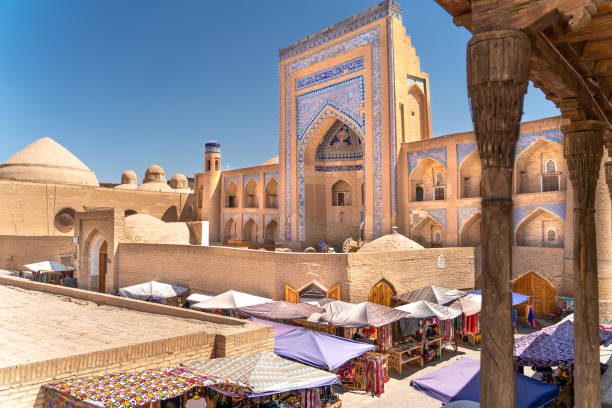
- 1562Abdullah Khan II makes Bukhara the permanent capital of his khanate. The Kukeldash Uma escola islâmica: celas de estudantes e salas de aula em torno de um pátio, atrás de um portal imponente. Nas cidades antigas, muitas hoje abrigam museus e oficinas de artesanato. and the jewellers' trading dome date from his reign.
- 1785The Manghit dynasty comes to power, and the state becomes the Emirate of Bukhara.
- 1873After a lost war with the Russian Empire in 1868, the emirate becomes a Russian protectorate, with the emirs still on the throne.
- 1920The emirate ends, and the Bukharan People's Soviet Republic takes its place; in 1924 Bukhara becomes part of Soviet Uzbekistan.
- 1993The historic centre of Bukhara joins the UNESCO World Heritage List.
O que ver
Carregando o mapa…
Mapa: © colaboradores do OpenStreetMap
-
1Poi Kalyan
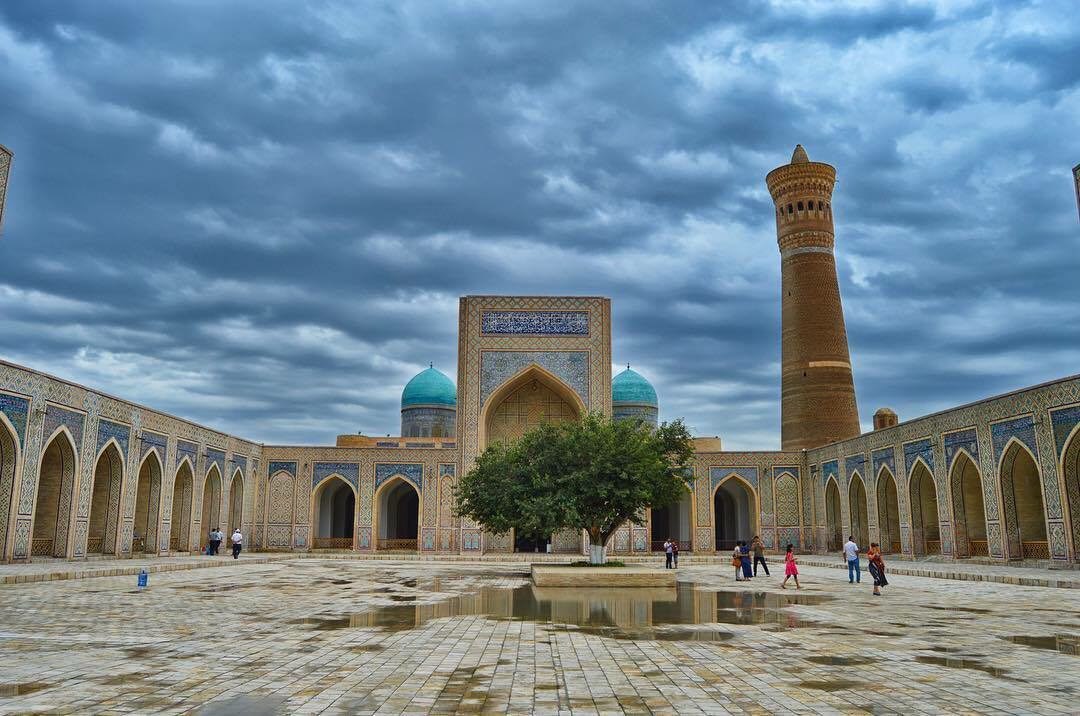
The Kalyan Minaret, the Kalyan Mosque and the Você sabia? Uma madraça que ainda ensina depois de quase 500 anos Mir-i-Arab, construída na década de 1530 em frente à Mesquita Kalyan, foi uma das apenas três escolas islâmicas autorizadas a funcionar na época soviética, e ainda forma estudantes hoje. Saiba mais → Madrasah face each other across one square: the heart of the old town. Look at the bands of patterned brick that run up the minaret. Come at sunset, when the brick turns gold and the terraces around the square fill up.
-
2The Ark and Bolo-Hauz
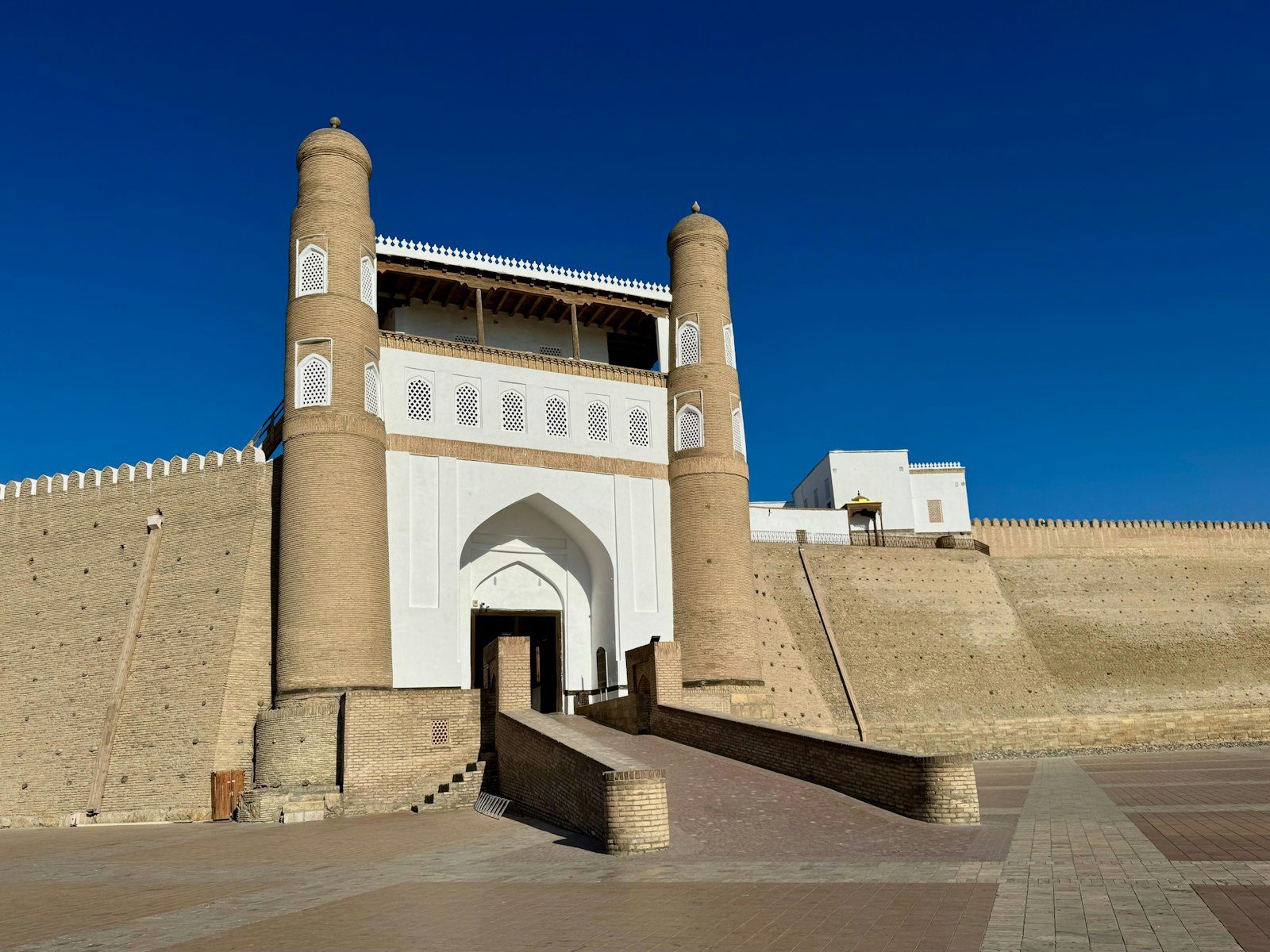
The fortress of the rulers of Bukhara stands on an artificial hill, behind walls 16 to 20 m high. A ramp leads up through the gate between two 18th-century towers to the throne room, the coronation court and the museums inside. Opposite is the Uma mesquita de 1712 em frente ao Ark, em Bukhara. Suas vinte colunas de madeira entalhada se refletem no tanque à frente. mosque of 1712, its twenty carved wooden columns reflected in the pond.
-
3Samanid Mausoleum
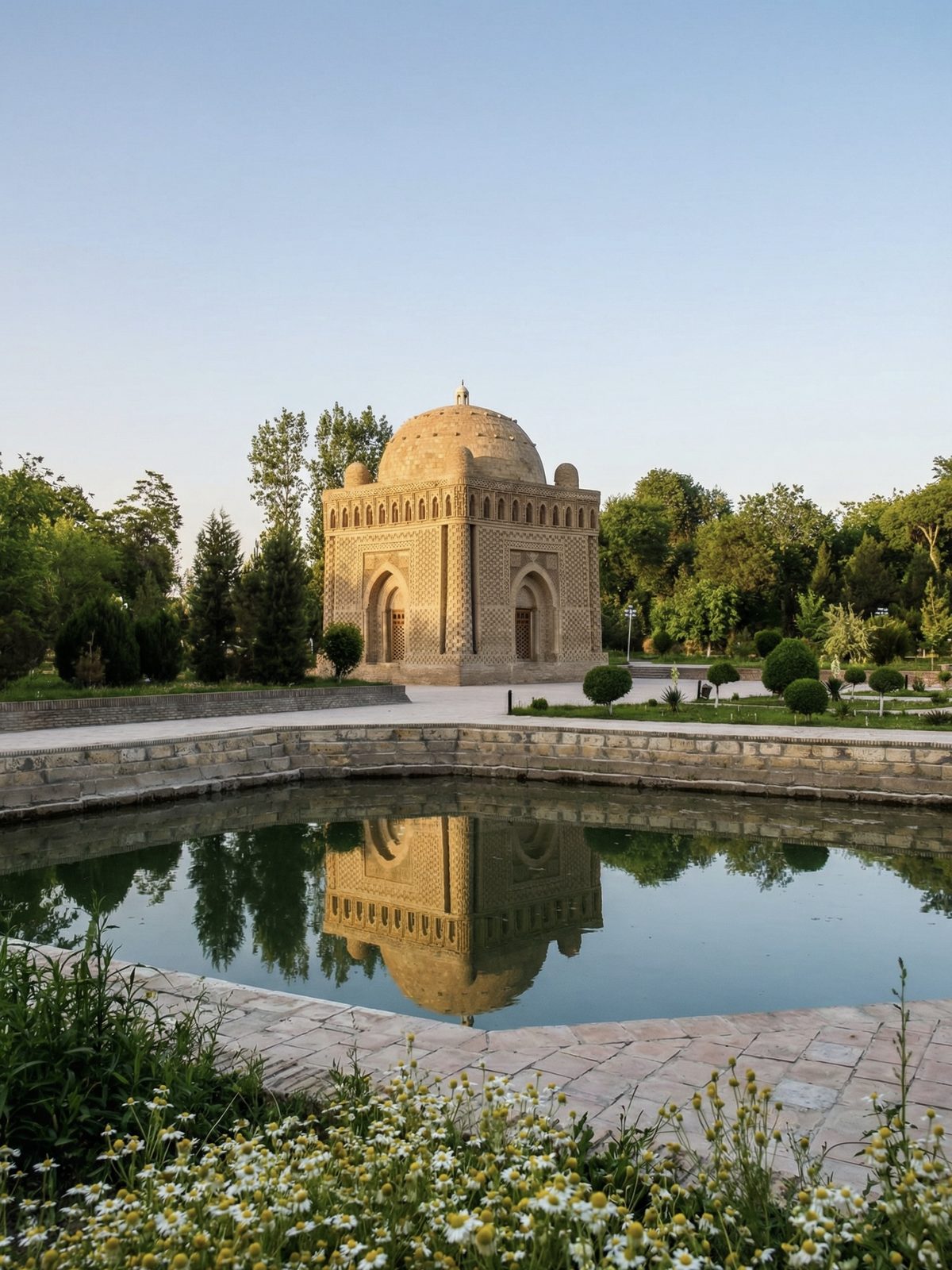
A 10th-century family tomb built entirely of baked brick laid in patterns: basketweave, checkerboard, rosettes. Floods buried it before the Mongols came in 1220, and that is how it survived. Go in the late afternoon, when the low sun brings out the relief; Você sabia? Uma cúpula cônica sobre a fonte de Jó Chashma-Ayub, a “Fonte de Jó”, tem uma cúpula cônica no estilo de Khorezm, rara em Bukhara. Diz a lenda que Jó bateu no chão com o cajado e a água jorrou; lá dentro há um museu do abastecimento de água de Bukhara. Saiba mais → is a short walk away.
-
4Lyabi-Hauz
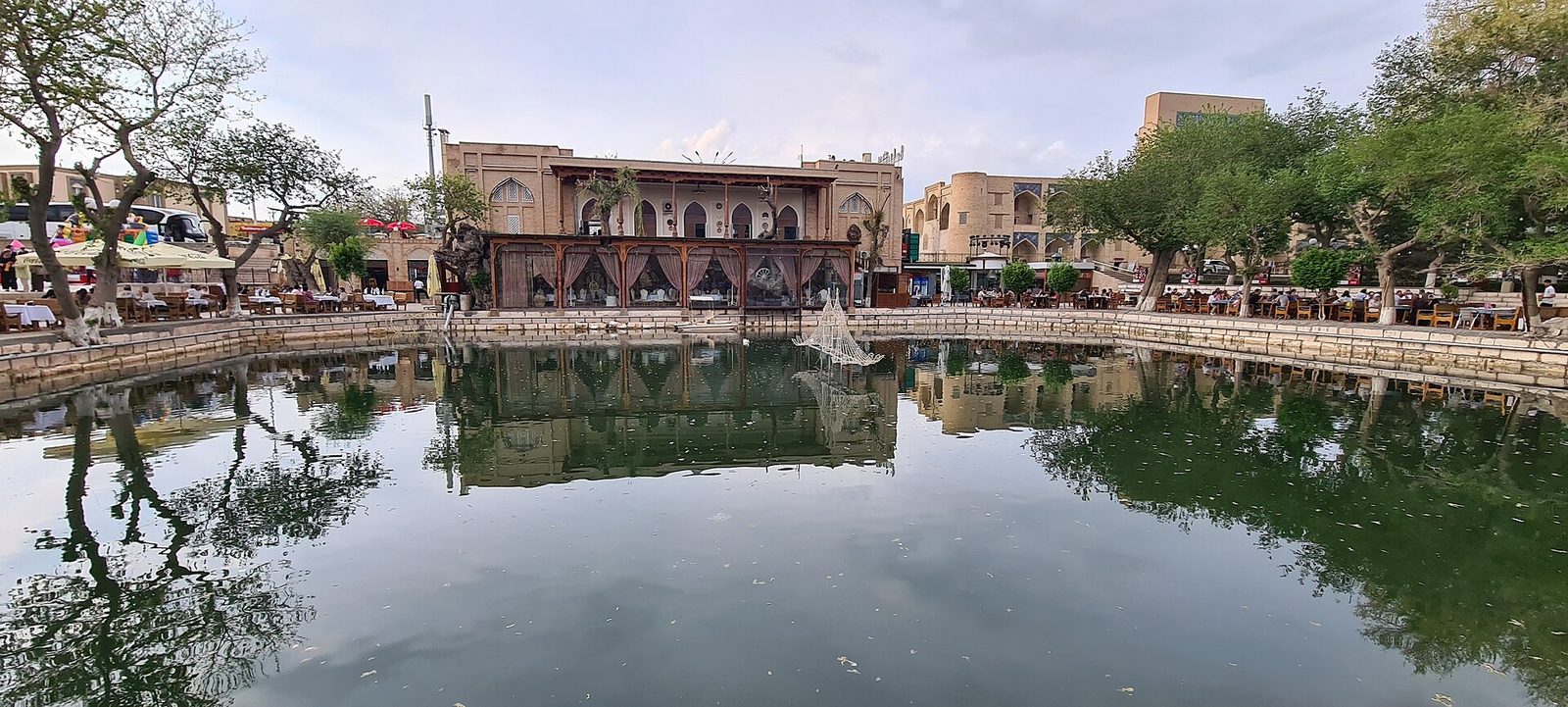
A square around a 17th-century pond, framed by the Kukeldash madrasah of 1568–1569, the largest in Bukhara, and the Nadir Divan-Begi madrasah. On the Nadir Divan-Begi portal two simurgh birds carry white deer towards a sun with a human face. In the evening, sit at the teahouses by the water.
-
5Trading domes
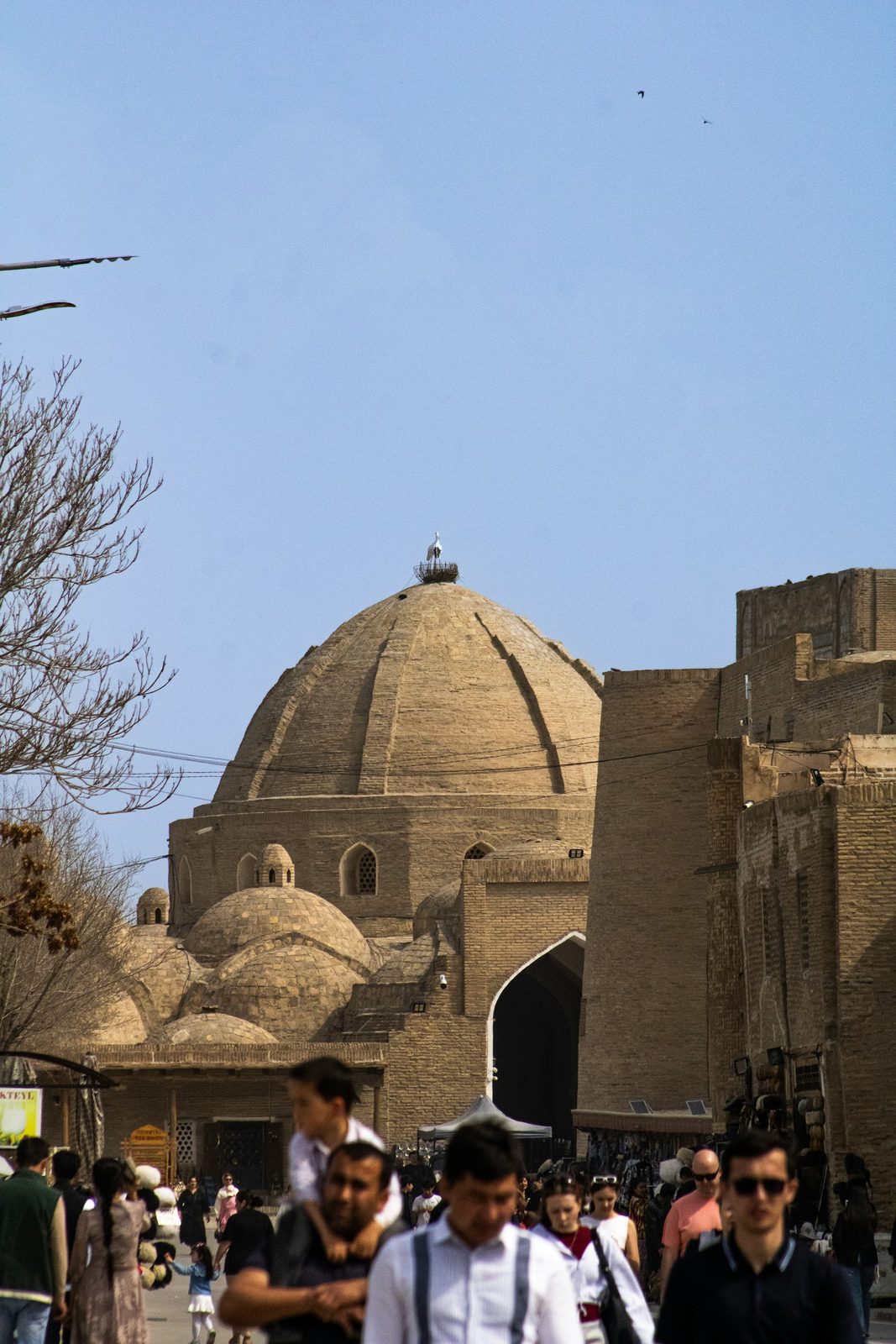
Covered markets at old crossroads, from the 16th century: Toqi Zargaron for jewellers, Toqi Sarrafon for moneychangers, Toqi Telpak Furushon for hat sellers. Today they sell crafts and souvenirs. Between them, below today's street level, stands the Uma das mesquitas mais antigas da Ásia Central, no centro de Bukhara. Fica abaixo do nível atual da rua: a cidade cresceu ao seu redor. Mosque, one of the oldest in Central Asia.
-
6Chor Minor
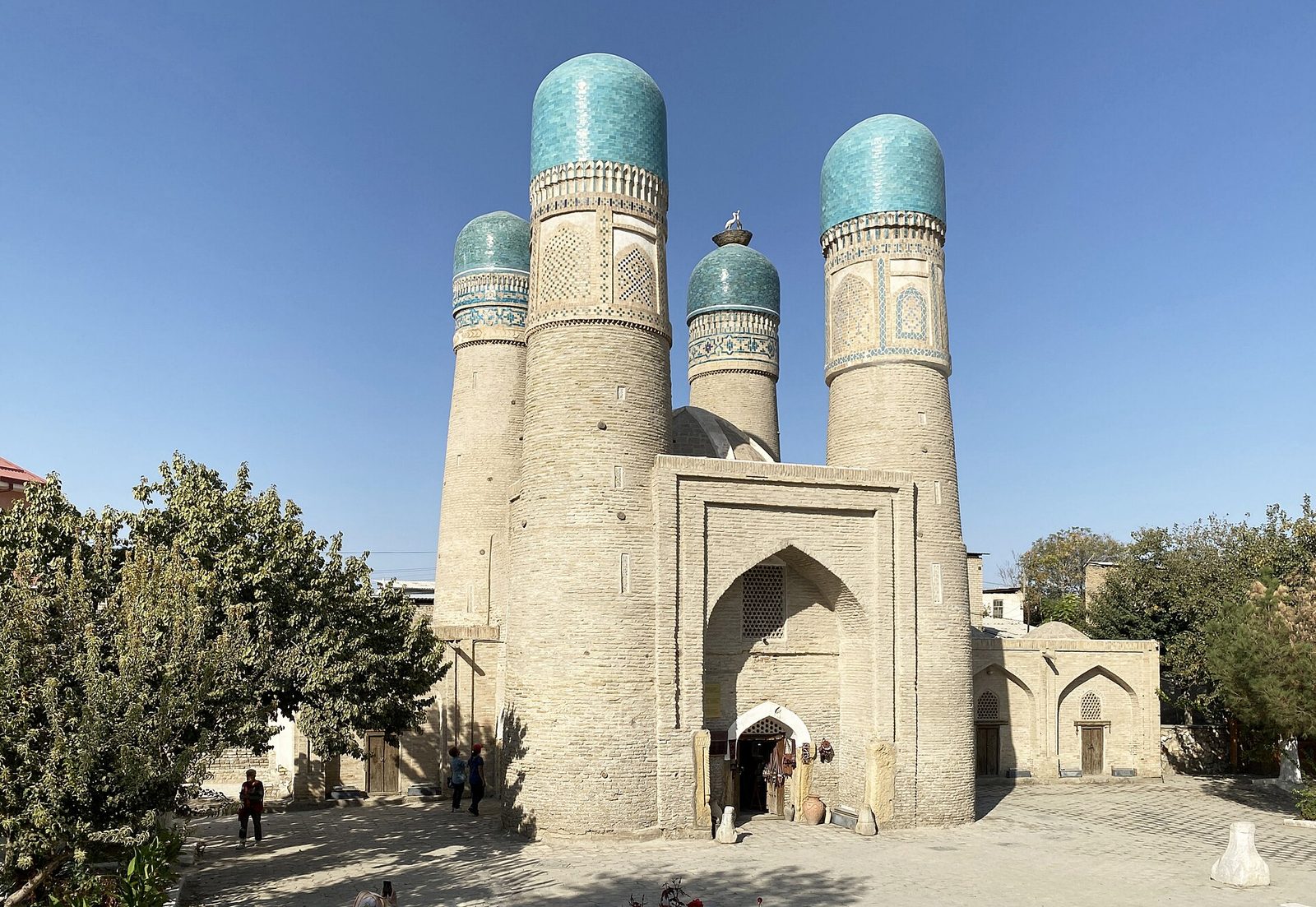
A small gatehouse of 1807 with four towers topped by turquoise domes, hidden in the residential lanes about 700 m east of Você sabia? Os tanques de Bukhara já foram seu abastecimento de água Tanques como o Lyabi-Hauz, escavado por volta de 1620, com 46 × 36 m, eram a principal fonte de água da cidade. A maioria foi aterrada nos anos 1920–30 por espalhar doenças; o Lyabi-Hauz sobreviveu. Saiba mais →. The walk there takes ten minutes, and the lanes are part of the visit.
-
7Sitorai Mohi-Hosa
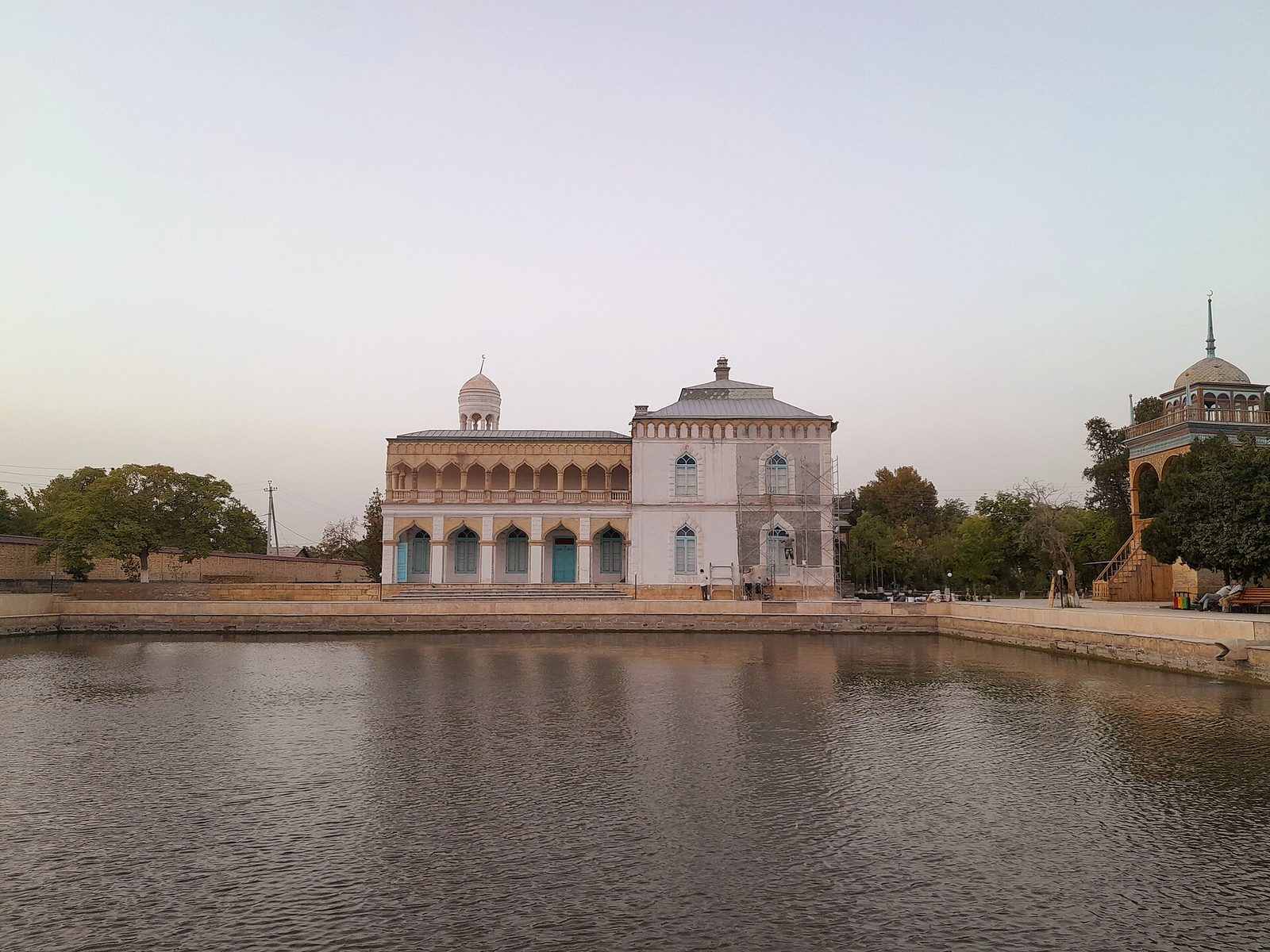
The summer palace of the last emirs, about 5 km north of the old town. The main complex was built in 1912–1918 under Emir Alim Khan, European outside and Bukharan inside, and now houses a museum of decorative arts: suzani, porcelain, gold embroidery. Take a taxi and allow one to two hours.
-
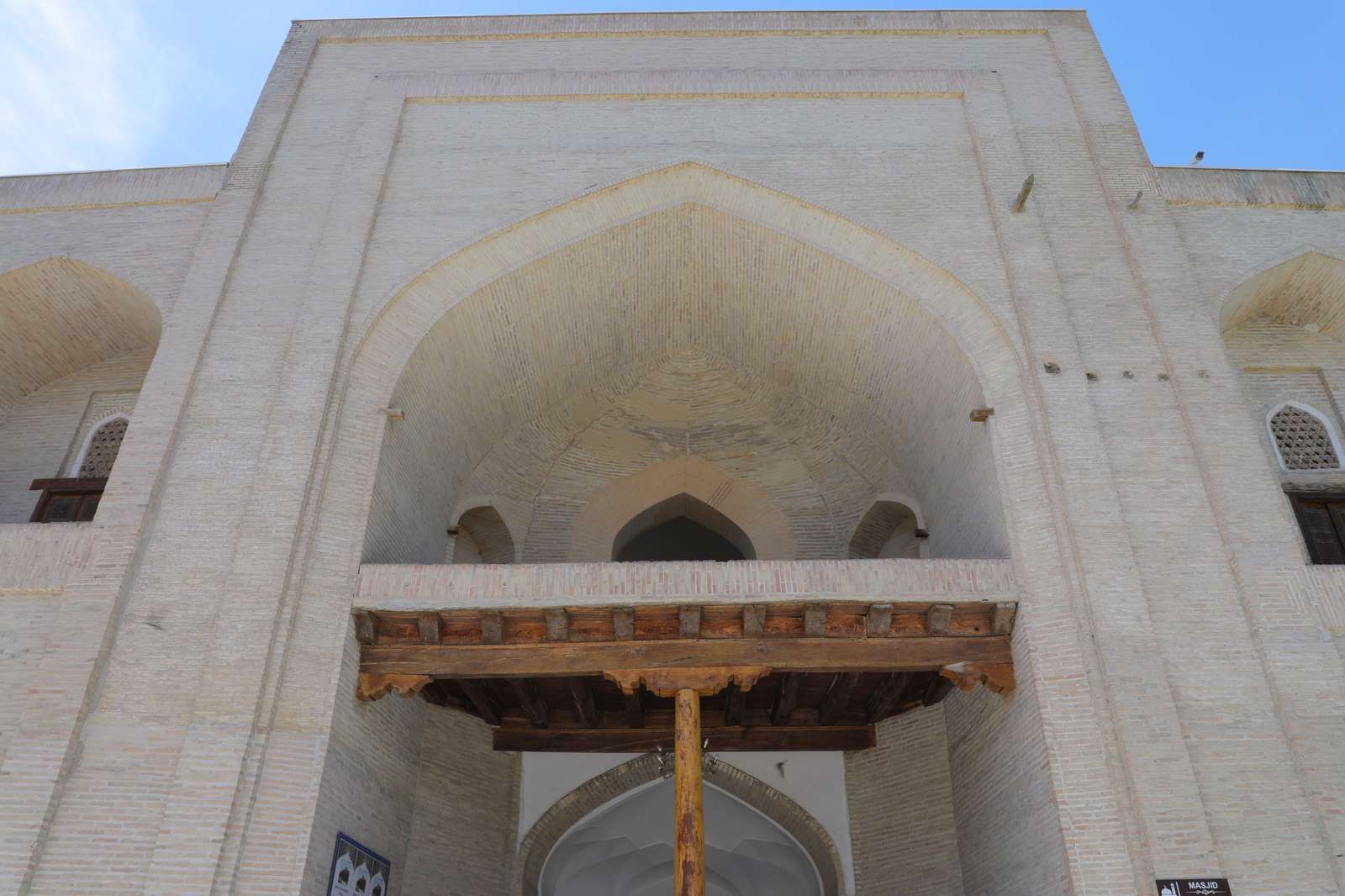
8Bahauddin Naqshband complex
The memorial complex of the founder of the Naqshbandi Sufi order, about 12 km from the city. His tomb dates from 1544, and the complex kept growing for almost four centuries: mosques, a minaret, a khanqah and a museum. It is a place of pilgrimage, so dress as for a mosque.
Fotos: Lyabi-Hauz pond, Bukhara — BeshevI / Wikimedia Commons · CC BY-SA 4.0
Bairros
- Lyabi-Hauz and the trading domes The busiest corner of the old town: the pond, its madrasahs and teahouses, and the domed markets just beyond. A good base, since everything else in the old town is a walk away.
- O coração da antiga Bukhara: o Minarete Kalyan de 1127, a Mesquita Kalyan e a Madraça Mir-i-Arab frente a frente numa mesma praça. Saiba mais → and the A fortaleza-residência dos governantes de Bukhara sobre uma alta colina artificial: a construção mais antiga da cidade. Saiba mais → Ten minutes' walk west: the minaret square, then the fortress with its own A praça principal de Samarcanda, emoldurada por três madraças: Ulugh Beg (século 15), Sher-Dor e Tilya-Kori (ambas do século 17). Saiba mais → square in front of the gate. The terraces around Poi Kalyan are the place for sunset.
- Samanid Park West of the Ark, a park with the Samanid Mausoleum and Chashma-Ayub; the Bolo-Hauz mosque stands between the park and the fortress.
- The new town and Kagan The modern city surrounds the old centre, and the railway station is 12 km to the south-east, in the town of Kagan.
O que comer
- Bukhara Arroz cozido num kazan com cenoura, cebola e carne: o prato de toda celebração uzbeque. Cada região o prepara do seu jeito. Sweeter than plov elsewhere in the country, with dried fruit, and its ingredients are layered in the kazan rather than stirred. As everywhere in Uzbekistan, it is a midday dish.
- Oshi bakhsh The green plov of the Bukharan Jewish community, coloured with chopped herbs such as coriander. It is rarely on menus, so ask your guide or your guesthouse.
- Tea at Lyabi-Hauz Green tea by the pond, on wide wooden beds under century-old trees, is the classic Bukhara evening.
Como se locomover
The old town is best on foot: from Lyabi-Hauz it is about 500 m to the Kalyan Minaret, under 1 km to the Ark and under 2 km to the Samanid Mausoleum. For the summer palace, Bahauddin Naqshband and the station in Kagan, 12 km away, take a taxi: Yandex Go works in Bukhara. City buses serve the modern town, but in the old centre you will hardly need them.
Dicas de quem é daqui
- The fast train from Bukhara to Khiva does not run on Sundays, and from Khiva to Bukhara not on Mondays: plan that leg around it. Leia mais →
- The station is in Kagan, 12 km out: arrange a taxi or a transfer for your arrival. Leia mais →
- See Poi Kalyan twice: in the quiet morning and again at sunset.
- Bahauddin Naqshband and the mosques are places of prayer: shoulders and knees covered, a scarf for women, shoes off on the carpets. Leia mais →
- Cards work in almost all terminals, but carry cash in som for small stalls in the domes and for the bazaar. Leia mais →
- Between Bukhara and Samarkand, Aydarkul lake and a night in a yurt camp make a good stop. Leia mais →
Nossa opinião: quantos dias você precisa
Dois a três dias bastam para percorrer a cidade antiga sem pressa: o Lyabi-Hauz, o minarete Kalyan, a Ark e as cúpulas comerciais ficam perto um do outro. Um dia dá para ver o essencial; os dias extras permitem visitar o palácio de verão e fazer uma oficina com artesãos.
Já está em Bukhara? Serviços no destino: salas VIP, traslados, uma noite na cidade, passeios →
Quando ir: mês a mês
Temperatura durante o dia, chuva, feriados e nossa avaliação de cada mês.
- jan7° Fresco, menos gente Frio: 7° durante o dia 17 mm de chuva ★ 1, 14
- fev10° Fresco, menos gente Frio: 10° durante o dia 24 mm de chuva
- mar17.1° Excelente Fresco: 17.1° durante o dia 25 mm de chuva ★ 8, 21
- abr24.4° Excelente Agradável: 24.4° durante o dia 22 mm de chuva
- mai30.7° Bom Quente: 30.7° durante o dia 11 mm de chuva ★ 9
- jun36° Bom Calor forte: 36° durante o dia 2 mm de chuva
- jul37.3° Difícil Calor forte: 37.3° durante o dia 0 mm de chuva
- ago35.6° Difícil Calor forte: 35.6° durante o dia 0 mm de chuva
- set30° Excelente Agradável: 30° durante o dia 1 mm de chuva ★ 1
- out22.9° Excelente Agradável: 22.9° durante o dia 3 mm de chuva ★ 1
- nov14.5° Excelente Fresco: 14.5° durante o dia 15 mm de chuva
- dez8.2° Fresco, menos gente Frio: 8.2° durante o dia 13 mm de chuva ★ 8
- 1 jan — Ano-Novo
- 14 jan — Dia dos Defensores da Pátria
- 8 mar — Dia Internacional da Mulher
- 21 mar — Navruz
- 9 mai — Dia da Memória e da Honra
- 1 set — Dia da Independência
- 1 out — Dia do Professor
- 8 dez — Dia da Constituição
- Ramadan Hayit (Eid al-Fitr): a data muda a cada ano
- Kurban Hayit (Eid al-Adha): a data muda a cada ano
Fonte do clima: Википедия, статья «Bukhara», таблица климата (нормы 1991–2020; NOAA) — en.wikipedia.org/wiki/Bukhara
Avaliação pela temperatura durante o dia: excelente — 18–30°, bom — 12–18° ou 30–33°, fresco, menos gente — abaixo de 12°, difícil — acima de 33°; chuvas fortes (a partir de 100 mm) rebaixam “excelente” para “bom”. Para as cidades seguimos também a opinião dos nossos especialistas: a temporada vai de março a junho e de setembro a novembro, e março e novembro são os melhores meses (início e fim da temporada, pouca gente); o inverno não é marcado como época ruim.
Como conhecer Bukhara
Escolha o formato e mostramos os roteiros que combinam.
Inclua a partir daqui
Extensões fáceis de incluir em uma viagem que passa por aqui.
Leia sobre Bukhara
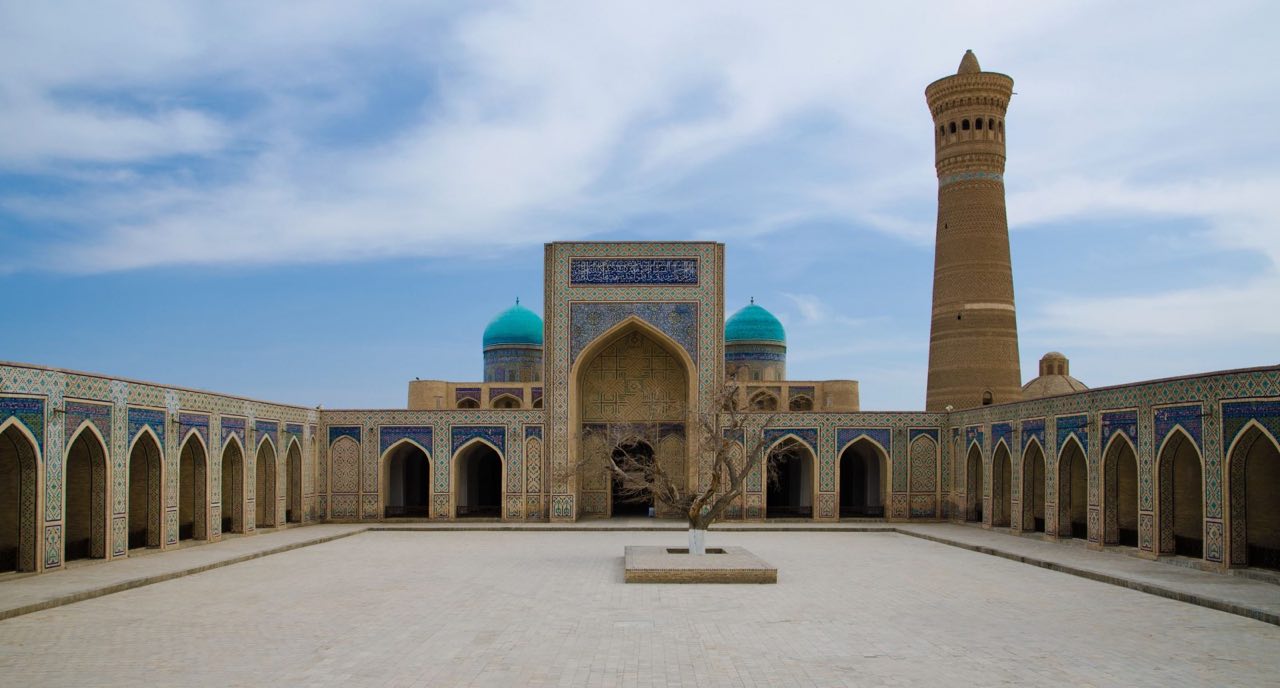 Atrações de Bukhara e Khiva: ingressos, horários e quanto tempo ficarPreços de ingresso para estrangeiros no Ark e no palácio, horários dos museus, o ingresso combinado de Ichan-K…
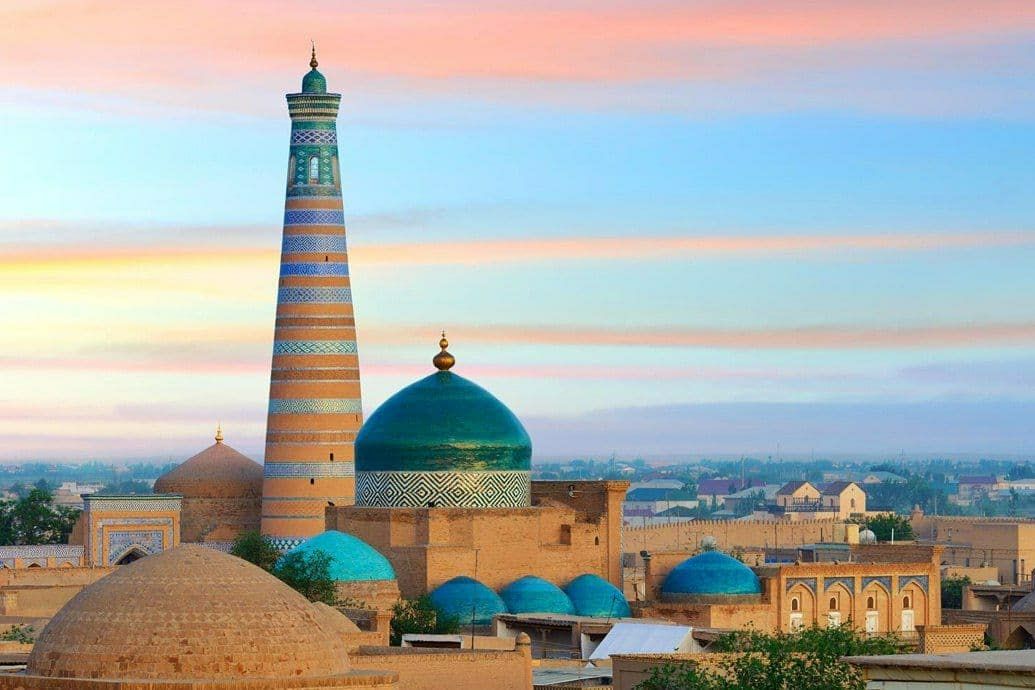 De Khiva a Bukhara (e de volta): trem, carro e o que ver no caminhoDe Bukhara a Khiva e de volta: horários do trem rápido e regras dos dias da semana, trens noturnos, os 450 km …
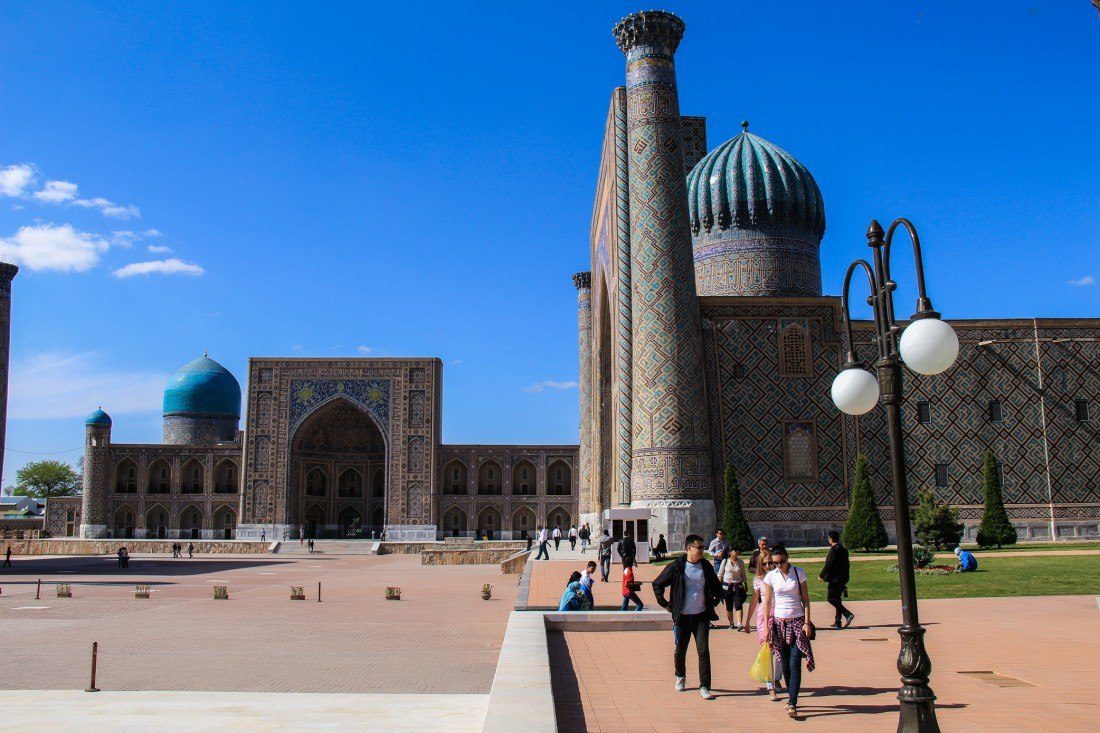 Uzbequistão em 10 dias: Tashkent, Samarcanda, Bukhara e Khiva em ritmo tranquiloUm roteiro de 10 dias pelo Uzbequistão, dia a dia: duas noites em Khiva, um bate-volta a Shahrisabz, uma tarde…
Ziyarat no Uzbequistão: Imam al-Bukhari, Bahauddin Naqshband e os santuários de Bukhara, Samarcanda e TashkentO complexo reconstruído de Imam al-Bukhari, Shah-i-Zinda, os sete pirs de Bukhara e Hazrati Imam: o que é cada…
Uzbequistão em 7 dias: Tashkent, Samarcanda, Bukhara, KhivaO trem rápido para Khiva agora sai de Tashkent todos os dias, exceto domingo, então uma regra simples define o…
Uzbequistão em 10 dias: Tashkent, Samarcanda, Bukhara e Khiva em ritmo tranquiloUm roteiro de 10 dias pelo Uzbequistão, dia a dia: duas noites em Khiva, um bate-volta a Shahrisabz, uma tarde…
Ziyarat no Uzbequistão: Imam al-Bukhari, Bahauddin Naqshband e os santuários de Bukhara, Samarcanda e TashkentO complexo reconstruído de Imam al-Bukhari, Shah-i-Zinda, os sete pirs de Bukhara e Hazrati Imam: o que é cada…
Uzbequistão em 7 dias: Tashkent, Samarcanda, Bukhara, KhivaO trem rápido para Khiva agora sai de Tashkent todos os dias, exceto domingo, então uma regra simples define o…
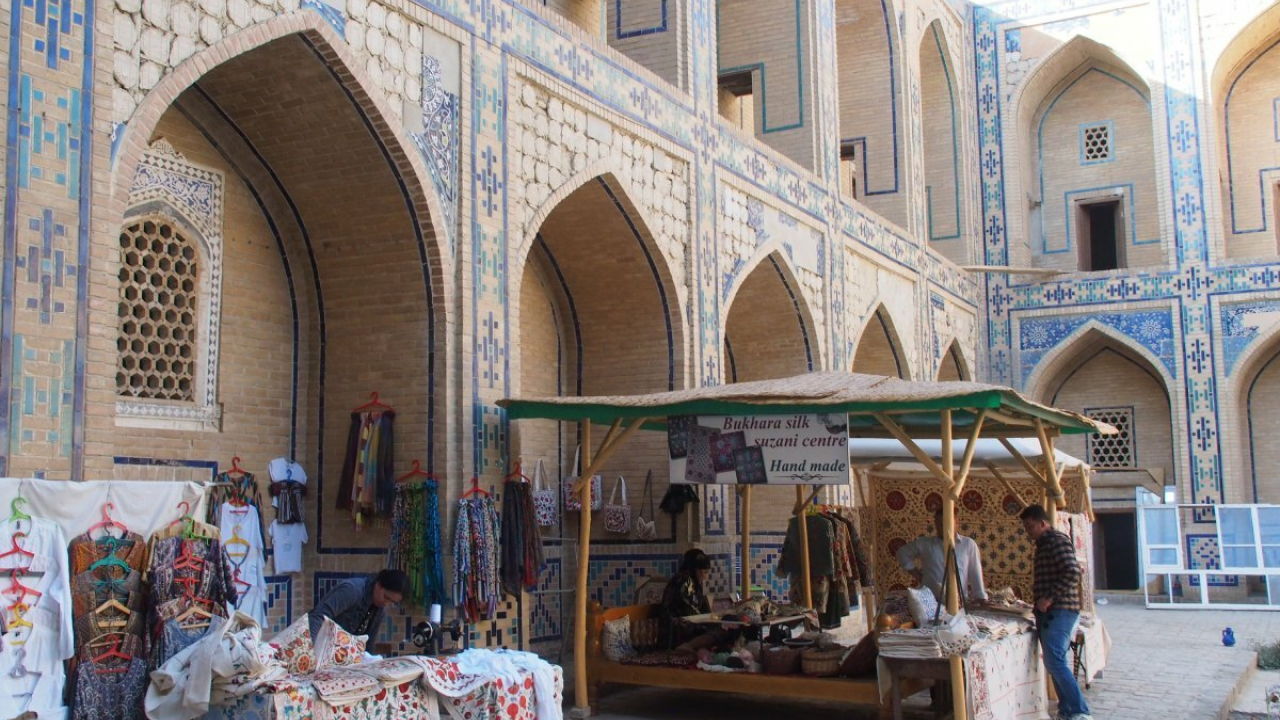 Bukhara — a cidade-museu a céu abertoMais de 140 monumentos protegidos numa cidade velha que se percorre a pé. Bukhara não é uma cidade com locais …
Bukhara: perguntas antes da viagem
Quantos dias ficar em Bukhara?
2–3 dias, de preferência a pé
Como chegar a Bukhara?
Cerca de 1,5 hora de Samarcanda de trem de alta velocidade Mais no artigo: Voos para o Uzbequistão: como chegar da Europa, dos EUA e dos Emirados
Qual a melhor época para ir a Bukhara?
A primavera (abril–maio) e o outono (setembro–outubro) são as épocas mais agradáveis; no verão os dias são quentes. Mais no artigo: Qual é a melhor época para visitar o Uzbequistão? Estações e clima
O que dá para incluir por perto?
Nos arredores: as montanhas Nuratau e casas de hóspedes em vilarejos
Antes de viajar
Visto, estação, orçamento e voos: as respostas rápidas.
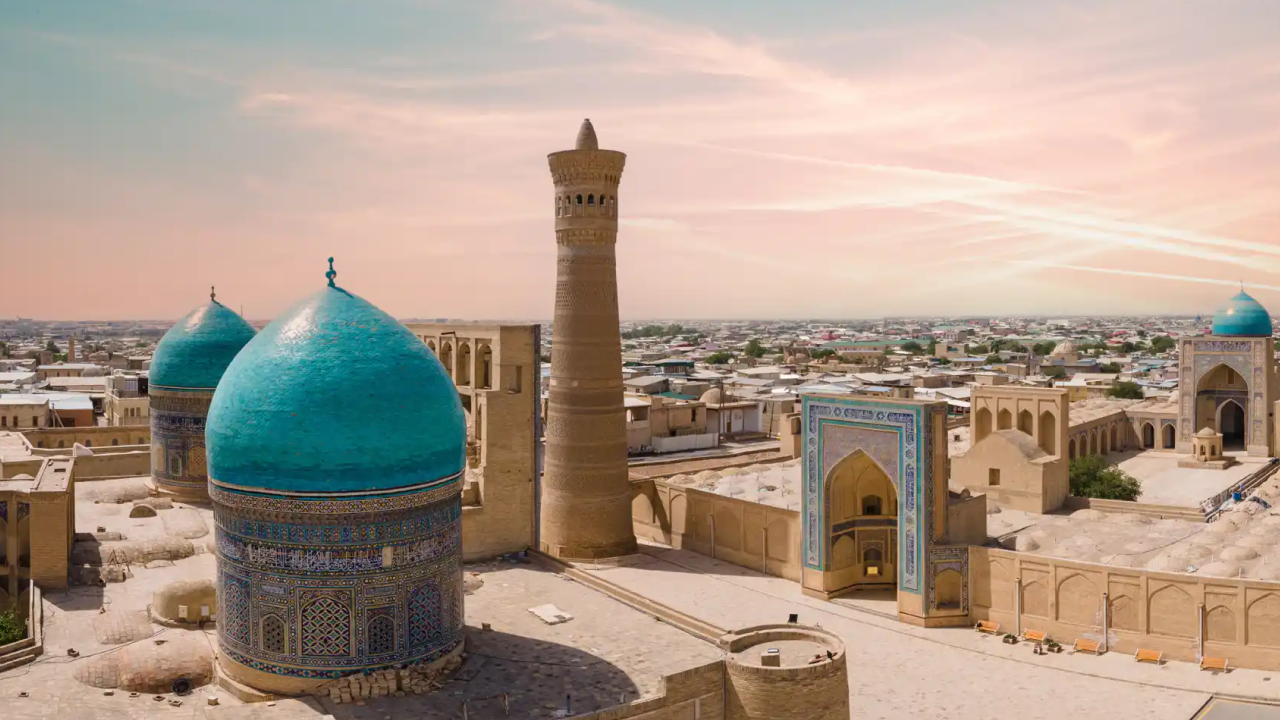 Preciso de visto para o Uzbequistão? Guia completo para turistasAntes de viajar, é essencial verificar as exigências de visto. O Uzbequistão simplificou suas regras de entrad…
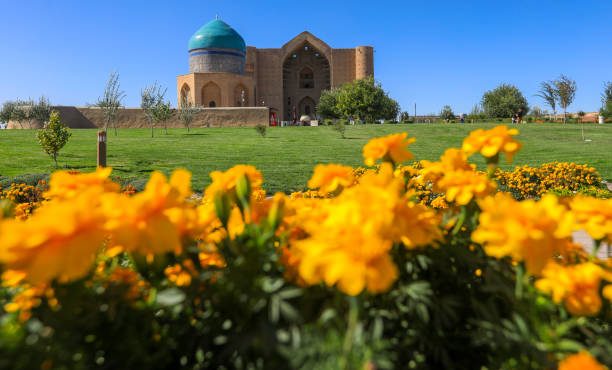 Qual é a melhor época para visitar o Uzbequistão? Estações e climaO Uzbequistão é um país ensolarado, com uma história antiga e uma hospitalidade lendária. Para que a sua viage…
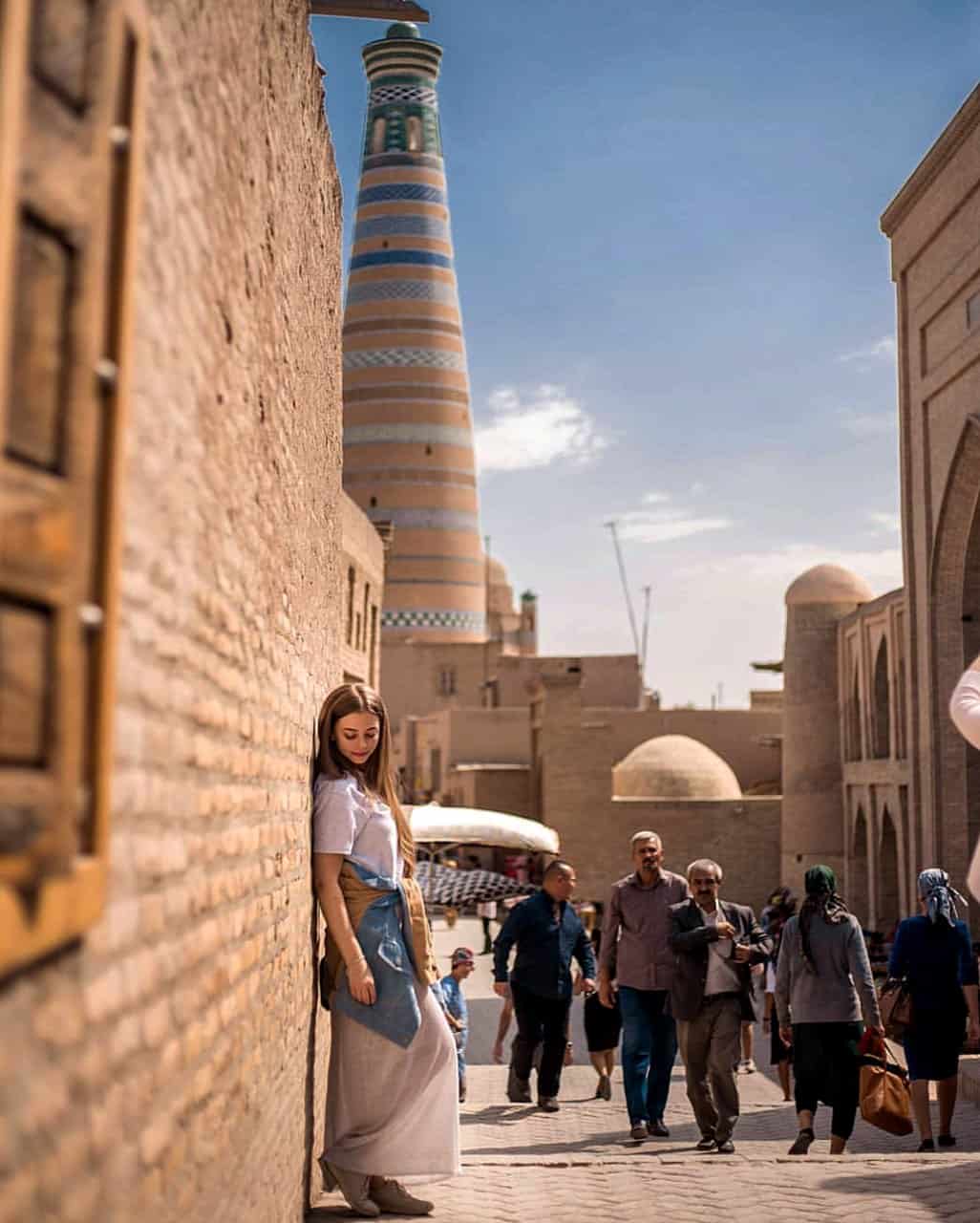 Quanto custa uma viagem ao Uzbequistão? Orçamento para 1 semanaO Uzbequistão é um dos destinos com melhor custo-benefício da Rota da Seda. Abaixo, um detalhamento prático de…
Voos para o Uzbequistão: como chegar da Europa, dos EUA e dos EmiradosO Uzbequistão recebe visitantes o ano todo, e chegar lá é simples quando você conhece os melhores hubs e compa…
Quanto custa uma viagem ao Uzbequistão? Orçamento para 1 semanaO Uzbequistão é um dos destinos com melhor custo-benefício da Rota da Seda. Abaixo, um detalhamento prático de…
Voos para o Uzbequistão: como chegar da Europa, dos EUA e dos EmiradosO Uzbequistão recebe visitantes o ano todo, e chegar lá é simples quando você conhece os melhores hubs e compa…Não encontrou sua viagem?
Conte o que você quer: um consultor prepara um roteiro e um preço em até 24 horas.