Places in this article: Samarkand · Bukhara · Khiva · Tashkent
Uzbekistan tours from Turkey: flights, visa-free entry, Navoi and Ulugh Beg
At Alisher Navoi station in the Tashkent ,Did you know? A metro designed to ride out a magnitude-9 earthquake The three original lines of the Tashkent Metro were built to withstand an earthquake of magnitude 9.0, and the tunnels lie unusually shallow, only 8–25 m below the street. Read more → the walls show scenes from Navoi’s Khamsa, five long poems he finished in 1485. In Samarkand, the marble arc of Did you know? Ulugh Beg measured the year to within 25 seconds Working at his Samarkand observatory, Ulugh Beg put the tropical year at 365 days 5 h 49 min 15 s, about 25 seconds too long, closer than Copernicus a century later. Read more →’s sextant still lies in its trench, and Did you know? The founder of the Mughal Empire was born in Andijan Babur was born in Andijan on 14 February 1483 and, at twelve, took the throne of Fergana in its capital Akhsikath. Later he founded the Mughal Empire in India; his memoir, the Baburnama, still describes the valley's towns. Read more → described the observatory above it in his memoirs. If you know these names as Ali Şir Nevai, Uluğ Bey and Babür Şah, this trip takes you to their places. Turkish Airlines flies from Istanbul to Tashkent several times a day, and citizens of Türkiye need no Entry rules depend on your passport. Once you are here, each stay must be registered within three days, and hotels do it for you; customs and registration rules are in our guide. Read more → for up to 30 days. We are a tour operator in Tashkent, and this is what we tell guests planning Uzbekistan tours from Turkey: flights, entry, heritage, the season, food and money.
Flights from Istanbul, Ankara and Antalya
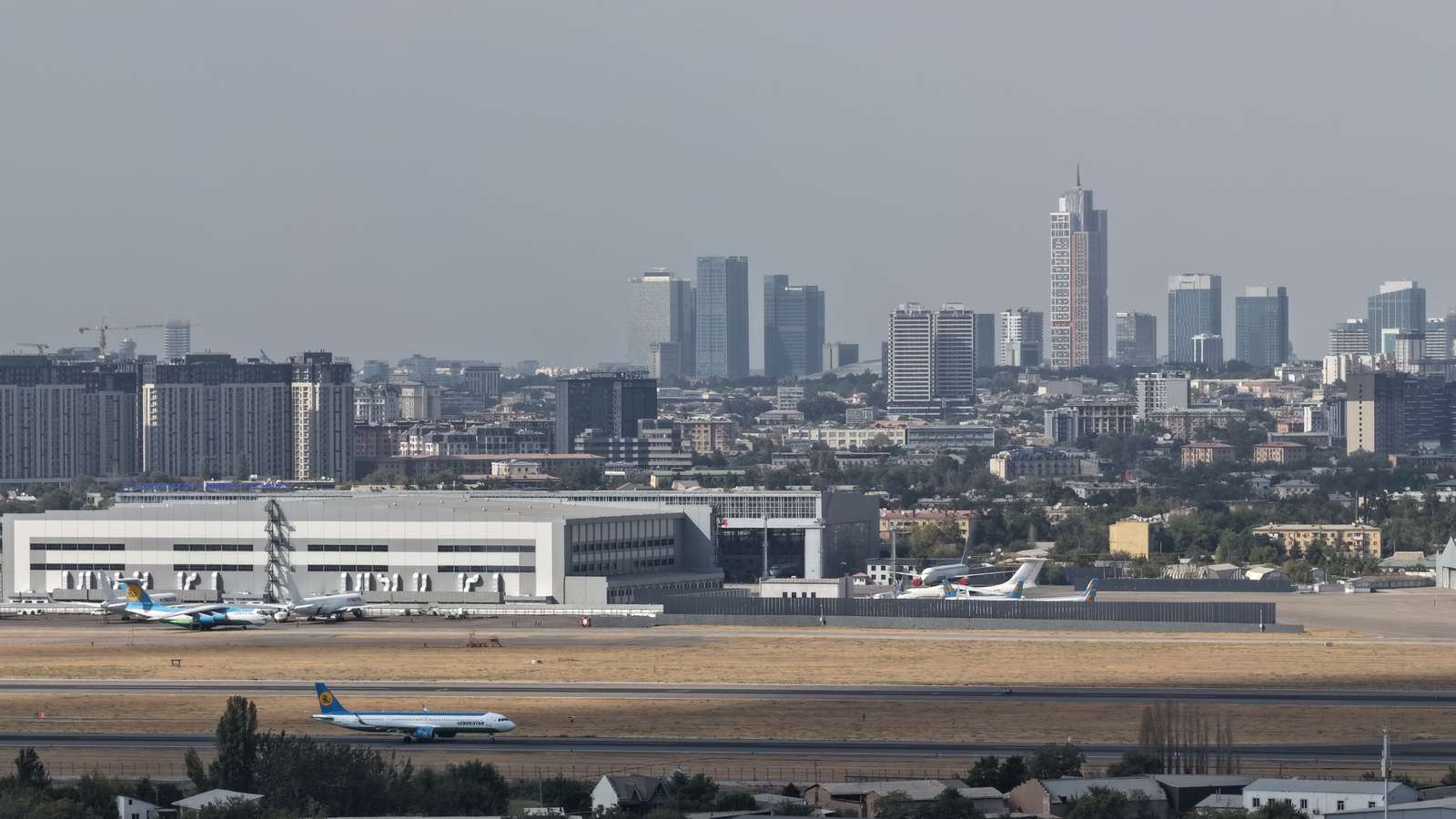
The main gateway is Istanbul. These are the nonstop routes in the 2026 timetables:
- Istanbul – Tashkent. Turkish Airlines alone flies the route 32 to 35 times a week, and Uzbekistan Airways flies it too.
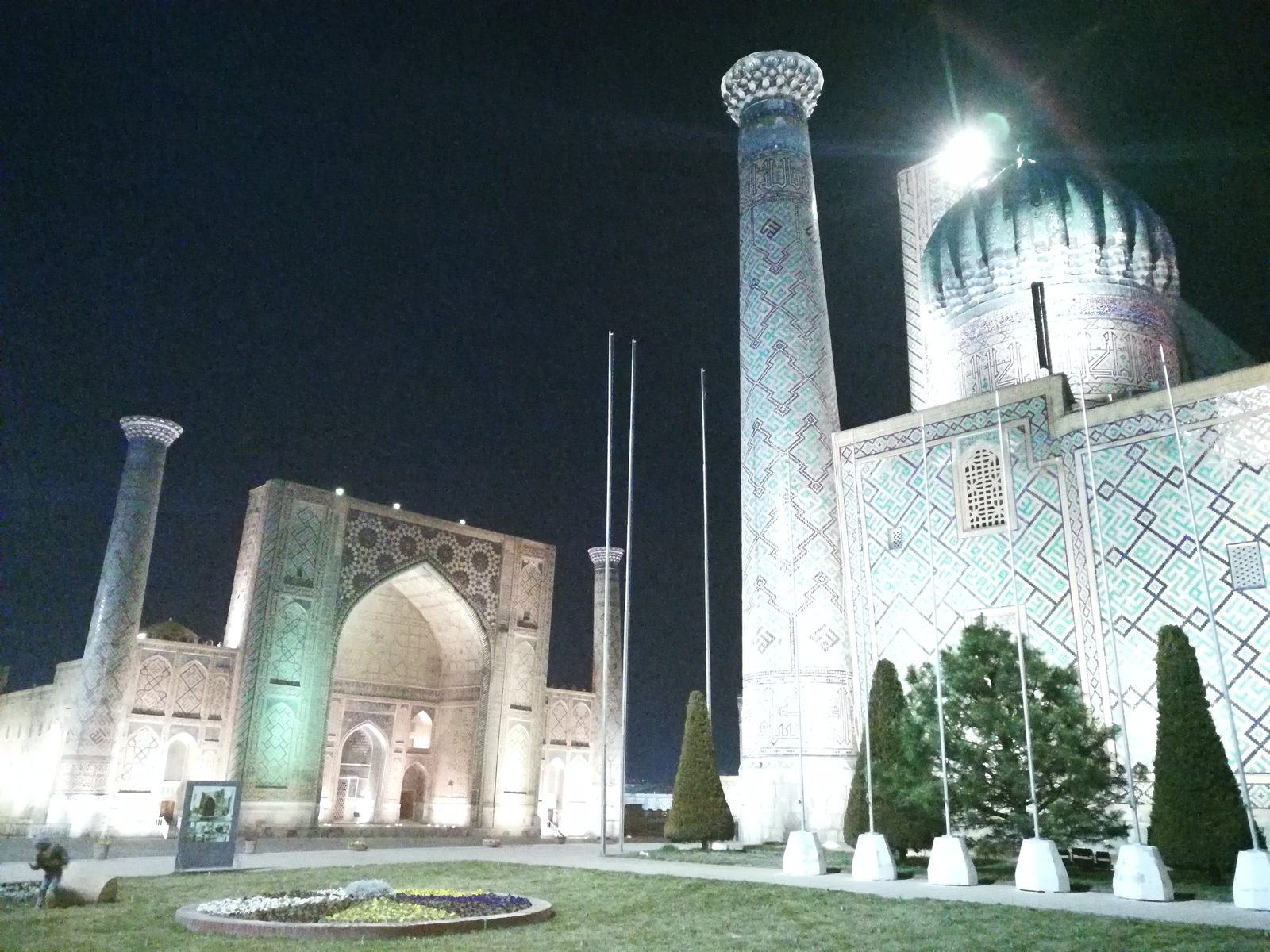
- Istanbul – Samarkand. Turkish Airlines flies straight to Samarkand about nine or ten times a week, a flight of about four and a half hours. You land next to the Did you know? The Registan's sun-carrying lion went on a banknote The Sher-Dor Madrasah (1619–1636) is named for the big cats with the sun on their backs on its portal. The image appeared on the reverse of Uzbekistan's 200-som note of 1997. Read more → and finish the trip in Tashkent.
- Ankara – Tashkent. AJet flies between the two capitals; in April 2026 the route was announced as daily.
- Antalya. Nonstop flights to Tashkent run mainly in the summer season; at other times the easy way is a connection in Istanbul.
Timetables change with the season, so check the days of operation for your dates before you buy. Tashkent is on UTC+5 all year, two hours ahead of Türkiye. More on airports and connections: flights to Uzbekistan.
You book the flight, and we take care of everything on the ground: fast-track passport control at Tashkent airport, a transfer to your hotel, and in Samarkand, where flights from Istanbul land early in the morning, a fast track at Samarkand airport.
Entry: 30 days without a visa
Since 10 February 2018 citizens of Türkiye can visit Uzbekistan without a visa for up to 30 days, whatever the purpose of the trip. You travel on your passport; the Turkish Ministry of Foreign Affairs advises that it should be valid for at least six months. For a longer stay, or to work or study, you need a visa before you travel.
Within three days of arrival every foreign guest must be registered at their address. In a hotel this is done for you at check-in, and in every new city the next hotel does it again. Keep the registration slips until you fly home. Details are in our visa guide and our article on registration and customs.
That is the rule as of October 2026. Rules can change, so check them before your trip; we check them for every booking.
Navoi, Ulugh Beg and Babur: where to find them
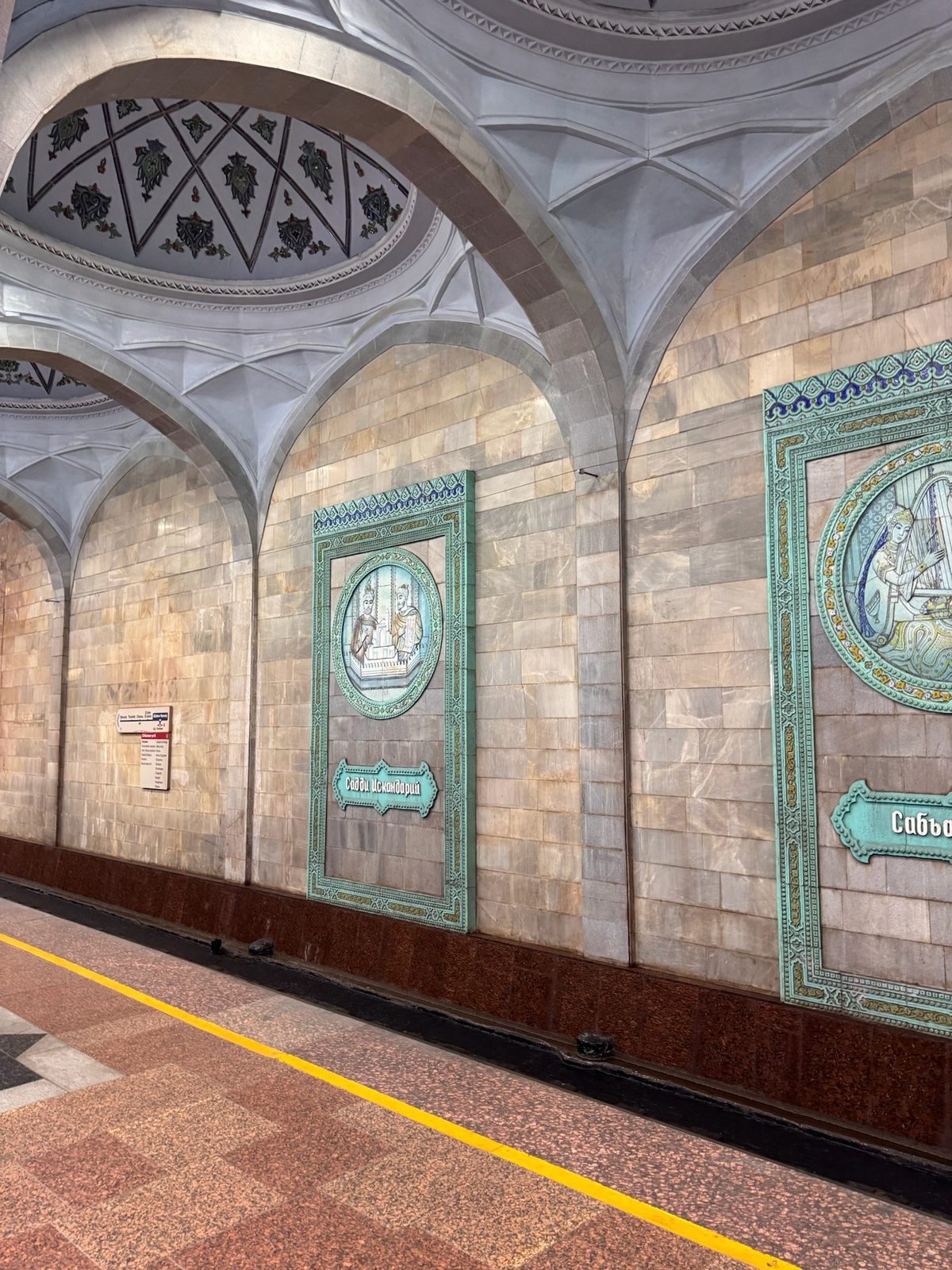
Alisher Navoi (1441–1501). The poet was born and buried in Herat, and he studied in Samarkand in the 1460s. He wrote mostly in Chagatai Turkic, and in Persian under the pen name Fani. His Khamsa, written in 1483–1485, holds five poems, among them Farhad and Shirin and Layli and Majnun. In Tashkent you meet him three times: at the metro station that carries his name; at the State Museum of Literature named after Alisher Navoi, which grew out of an exhibition for his 500th anniversary in 1939 and keeps manuscripts of his works and of Babur’s; and at the ,Did you know? An opera house with a foyer for every region The Alisher Navoi Theatre, opened in 1947, has six halls carved in the styles of Tashkent, Fergana, Bukhara, Samarkand, Khiva and Termez, each led by a master of that school. Read more → opened in 1947, whose six foyers are carved in the styles of six regions of the country.
Ulugh Beg (1394–1449). Amir Timur (Tamerlane, 1336–1405), founder of the Timurid empire, which had its capital in Samarkand. Born near Shahrisabz.’s grandson ruled Samarkand and built three madrasahs: in Bukhara in 1417, the oldest that still stands in Central Asia; on the Registan in Samarkand in 1417–1420, where astronomy was taught; and in Gijduvan in 1433. At his observatory of the 1420s, his astronomers listed 1,018 stars in a catalogue finished in 1437. He lies in ,Did you know? Timur's tombstone went to Persia and came back The dark-green jade slab on Timur's grave in Gur-e-Amir was carried off by Nader Shah in 1740. It broke, and on his advisers' urging he sent it back to Samarkand. Read more → a few steps from Timur. All about the observatory is in our article on the Ulugh Beg Observatory.
Babur (1483–1530). Born in Andijan in the Fergana Valley, Babur took Samarkand as a young man and lost it more than once, then went south and founded the Mughal state in India. His memoirs, the ,Did you know? The Baburnama opens in the Fergana Valley with a boy of twelve Babur wrote his memoirs in his native Chagatai Turkic. The book opens: “In the month of Ramadan of the year 899 [1494], in the twelfth year of my age, I became ruler in the country of Farghana.” A Persian translation followed in 1589–90. Read more → are written in Chagatai, and in them he describes Ulugh Beg’s observatory as a building three storeys high.
Khiva. The literary story continues at the far end of the country. Muhammad Rahim Khan II, who ruled Khiva from 1864 to 1910, wrote poetry under the pen name Feruz, brought printing to Khiva in 1874, and under him more than a hundred books were translated, mostly from Persian into Chagatai. His An Islamic college: student cells and classrooms around a courtyard behind a grand portal. In the old towns many now house museums and craft workshops. of 1871–1876 faces the .The old fortress-residence of the khans of Khiva, inside the walls of Itchan Kala.
All four cities, with Navoi in Tashkent, Ulugh Beg and Babur in Samarkand, the shrines of Bukhara and Feruz’s Khiva, are in our nine-day private tour Turkic Heritage of the Silk Road.
Shrines: Imam al-Bukhari, Naqshband and Hazrati Imam
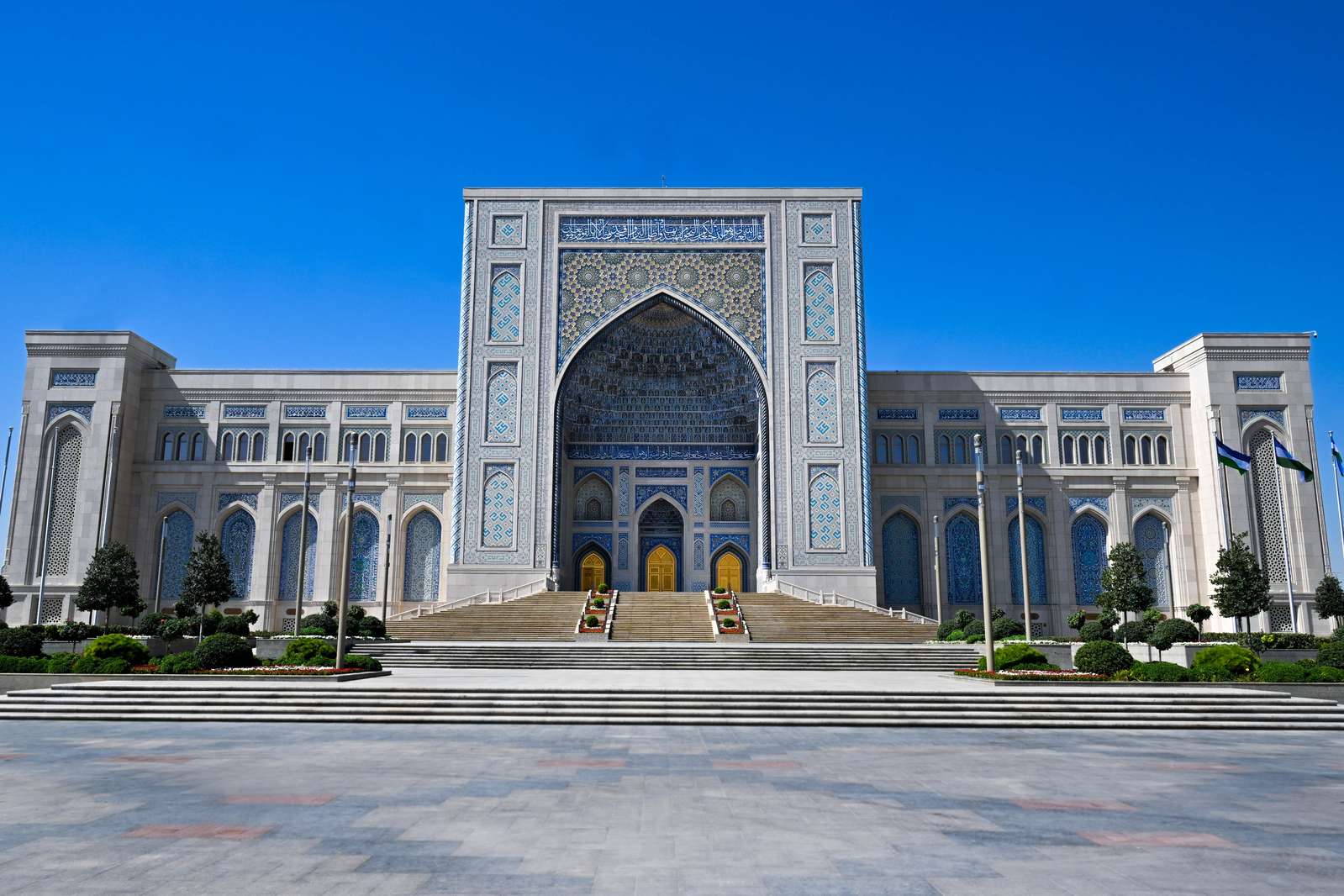
If you want to see the shrines as well as the monuments, these are the main places of ziyarat, in the order a trip usually meets them:
- Tashkent. ,The religious heart of old Tashkent: madrasahs, a Friday mosque and mausoleums. Right next to it stands the new Center of Islamic Civilization, opened in 2026. Read more → the square around the 16th-century mausoleum of the scholar Abu Bakr ,Did you know? Tashkent's patron saint was nicknamed “the locksmith” Abu Bakr Kaffal Shashi, born in Shash, old Tashkent, in 903–904 and died in 976, was a jurist and poet and the son of a locksmith: “kaffal” means locksmith. His mausoleum at Hazrati Imam dates from 1541–1542. Read more → and across it the Center of Islamic Civilization, opened in March 2026, where the ,Did you know? Legend: Caliph Uthman's own Quran is kept in Tashkent Tradition holds that this huge parchment Quran is the personal copy of Caliph Uthman, and one story says Timur brought it to Samarkand. Radiocarbon dating gives 775–995, so it is more likely an early copy, yet still one of the oldest. Read more → a 7th-century Qur’an, is kept.
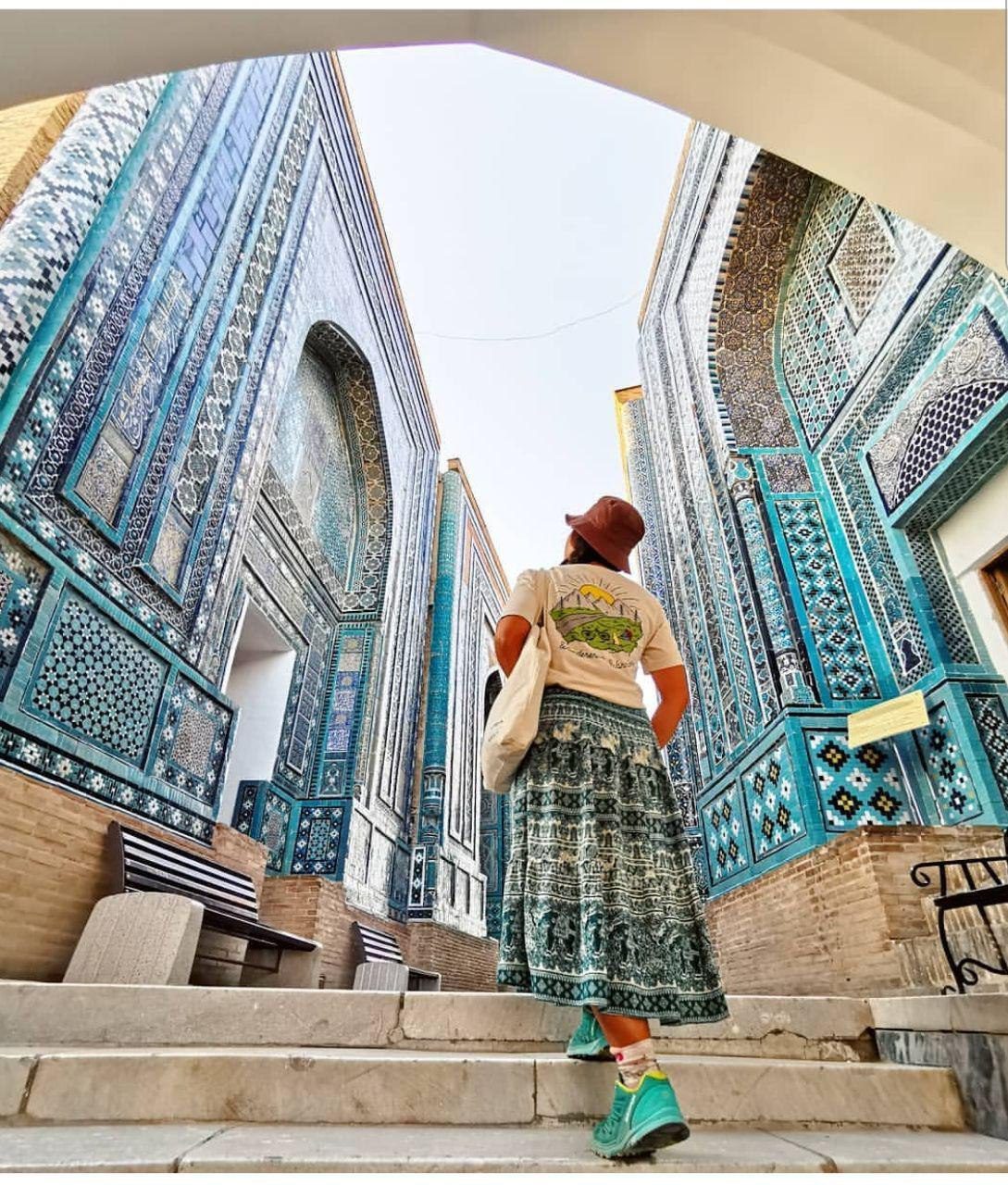
- Samarkand. The Imam al-Bukhari complex, 25 km from the city, where the compiler of the Sahih (810–870) is buried; it reopened in March 2026 after rebuilding. In the city, Did you know? Why Shah-i-Zinda means 'the Living King' The necropolis grew around the shrine of Qutham ibn Abbas, a cousin of the Prophet Muhammad. Legend says he did not die in battle but went down a deep well to a garden of paradise, where he lives on. Read more → grew around the shrine of Qusam ibn Abbas, a cousin of the Prophet.
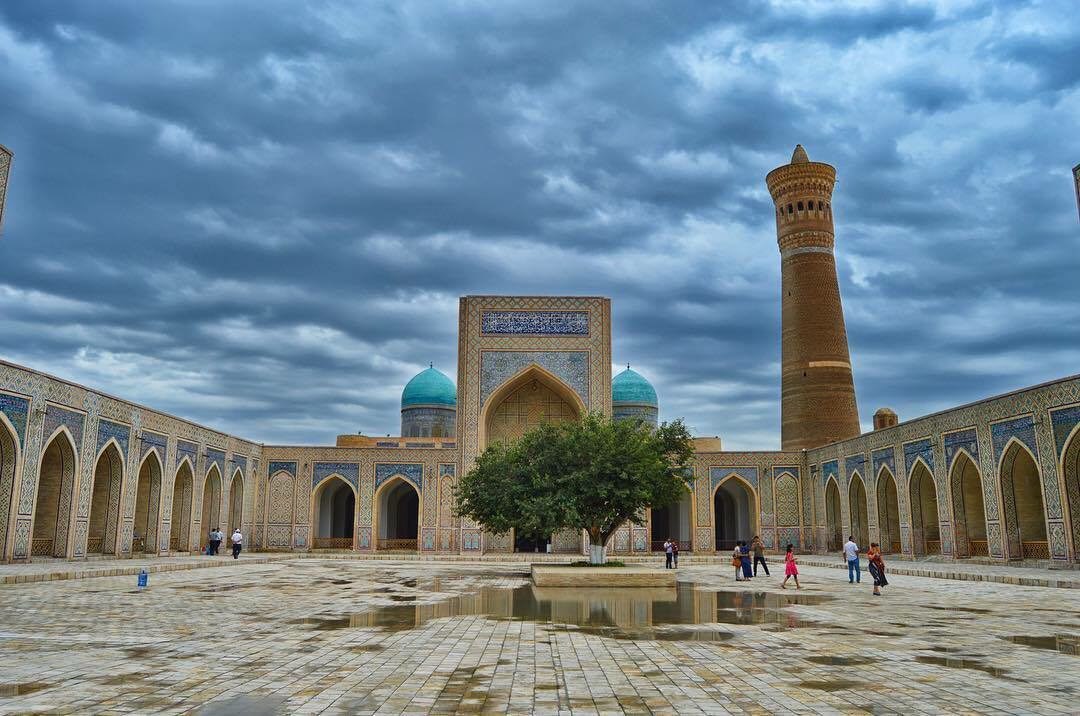
- Bukhara. The complex of Did you know? A village renamed in honour of a Sufi master Bahauddin Naqshband (1318–1389), who gave his name to one of the largest Sufi orders, was born and buried near Bukhara in Qasr-i Hinduvan. The village was later renamed Qasr-i Arifan in his honour; the tomb over his grave dates from 1544. Read more → (1318–1389), about 12 km from the city, part of a UNESCO World Heritage property since 2023. The seven pirs around Bukhara take a full day by car; see our two-day Seven Saints of Bukhara tour.
- Khiva. The mausoleum of ,Did you know? Legend: a wrestler freed captives with a single cowhide Legend says Pahlavan Mahmud won a bout in India and asked to free as many fellow Khorezmians as would fit in a cowhide. He cut it into one long thin strip and encircled them all. The real Mahmud, a poet and wrestler of around 1300, is Khiva's patron saint. Read more → a wrestler and poet who died in 1322; his quatrains are written among the tiles inside.
At every shrine, cover shoulders and knees, women cover their hair, and shoes come off on the carpets. On Friday the midday prayer fills the large mosques; tell us if you want to pray Juma at a particular mosque, and we plan the day around it. More in our guide to ziyarat in Uzbekistan.
When to go: Turkish holidays in 2027
Ramazan Bayramı and the spring school break, March. In 2027 Ramazan Bayramı falls on 9–11 March, and the second-term school break runs from 8 to 12 March: a good week for a family trip. Afternoons in Tashkent average 16 °C in March, and Navruz, the spring holiday, comes on 21 March. Ramadan begins on 8 February 2027; in Uzbekistan cafés stay open in the daytime, and iftar in restaurants starts right after sunset. See Uzbekistan in March.
Kurban Bayramı, May. The holiday runs from 16 to 19 May 2027. May is one of the best months here, with afternoons around 28 °C. Eid al-Adha is a public holiday in Uzbekistan too, and trains and hotels fill up, so we book early. More in Uzbekistan in May.
School breaks in winter and autumn. The mid-year break runs from 25 January to 5 February 2027: winter days of 7–10 °C and quiet museums, see Uzbekistan in January. The autumn break of 16–20 November 2026 falls in cool, clear weather, about 14 °C by day.
October, with afternoons around 22 °C, is the most comfortable month of all. In July Tashkent averages 36 °C in the afternoon. Month by month: when to go.
Which route fits: 7 to 10 days
Nine days of heritage. Tashkent, Samarkand, Bukhara and Khiva, built around Navoi, Ulugh Beg, Babur and the shrines: Turkic Heritage of the Silk Road.
A classic week. The same four cities in eight days are our 8-day classic tour; how we lay out such a week is in Uzbekistan in 7 days. With older parents or small children, our 10-day classic at a gentle pace leaves time to rest.
Open-jaw. Fly into Samarkand from Istanbul and out of Tashkent, or the other way round, and you save a day on the road. Between the cities the Uzbekistan's high-speed train: Tashkent to Samarkand in 2 hours 30 minutes, Tashkent to Bukhara in about 4 hours. Tickets are tied to your passport. Read more → high-speed train takes 2 h 15 min to 2 h 30 min from Tashkent to Samarkand; see Tashkent to Samarkand.
On our tours your guide speaks Turkish, and that is included in the price: tell us when you book, ideally well in advance. Not sure which trip suits you? Try our tour finder.
Food: halal is the norm
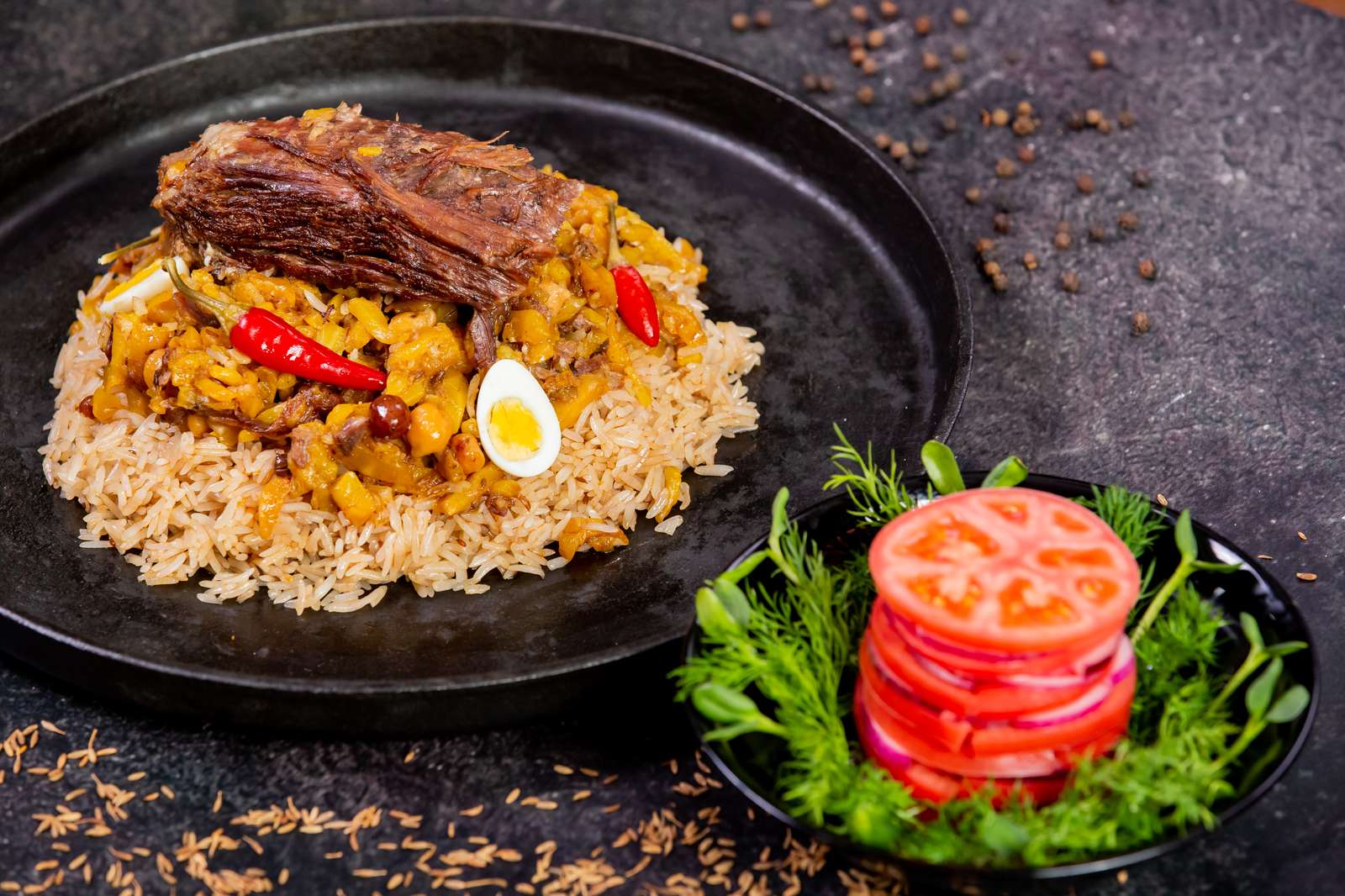
Close to nine in ten Uzbeks are Muslim, and halal is the norm in ordinary restaurants: the meat is lamb, beef or chicken. If you want to be sure, ask “halolmi?”, which means “is it halal?” in Uzbek.
,Rice cooked in a kazan with carrots, onions and meat: the dish of every Uzbek celebration. Each region cooks it its own way. rice cooked with meat, carrots and onions, is the dish of every celebration; shashlik is grilled on skewers; lagman is hand-pulled noodles with meat and vegetables. Every meal comes with non, the round bread from a clay tandir oven, and green tea, poured into small bowls. Our guide to Uzbek cuisine explains the rest, and plov has its own article. Tell us about your food preferences when you book, and we take them into account when we plan the meals.
Money, phone and plugs
- Cards. Visa and Mastercard work almost everywhere there is a terminal: hotels, restaurants, shops, museums and stations. Ask your bank about its fees abroad.
- Cash. The currency is the Uzbek so’m. Keep some for bazaars and small shops; dollars and euros are changed at banks against your passport. See our currency exchange guide and cards, cash and tipping.
- Phone. Roaming or a local SIM card: what to know about registering your phone is in bringing a phone to Uzbekistan.
- Plugs. Sockets are types C and F, 230 V, the same as in Türkiye: no adapter needed.
- Clothes. At mosques and shrines cover shoulders and knees; see what to wear.
In short
- Turkish Airlines flies from Istanbul to Tashkent several times a day and straight to Samarkand; AJet flies from Ankara.
- Citizens of Türkiye can stay up to 30 days without a visa; the hotel registers you on arrival.
- Navoi’s Tashkent, Ulugh Beg’s Samarkand, the shrines of Bukhara and the khan-poet’s Khiva fit into nine days.
- Ramazan Bayramı with the March school break, Kurban Bayramı in May and October are the best times to come.
- Halal is the norm, the plugs are the same as at home, and Tashkent is two hours ahead.