
 Deutsch
 English
 Español
 Français
 Italiano
 Özbekça
 Polski
 Português
 Suomi
 Svenska
 Türkçe
 Ελληνικά
 Български
 Русский
 עברית
 한국어
 中文
 日本語
Places in this article: Samarkand · Bukhara · Khiva · Tashkent
Uzbekistan in 8 days: four cities by train, and what to do with the extra day
From Tashkent to Khiva the railway runs 1,220 km, and since May 2026 a high-speed train covers it in about seven and a half hours. Eight days is enough to ride that line from one end to the other, stop in each of the four main cities and still keep one day that is not about getting anywhere.
We are a tour operator in Tashkent. This is how we plan Uzbekistan in 8 days: the version we run by train, and three other ways to use the extra day.
In short
- Eight days cover Tashkent, Samarkand, Bukhara and Khiva, with two days in Tashkent and two nights in Bukhara.
- Trains do all the long legs: the Uzbekistan's high-speed train: Tashkent to Samarkand in about 2 hours 10 minutes, Tashkent to Bukhara in about 4 hours. Tickets are tied to your passport. Read more → to Samarkand in about 2 h 10 min and on to Bukhara in under two hours, then the high-speed train to Khiva in about 3.5 hours.
- Back from Khiva we use the night train, which reaches Tashkent in the morning; a flight from Urgench works too.
- The extra day can also go to Shahrisabz, a night in a yurt camp by Did you know? Lake Aydarkul appeared by accident in 1969 In the flood year of 1969 the Chardara reservoir on the Syr Darya had to release so much water that it was sent into the Arnasay depression in the desert. The water stayed, and Lake Aydarkul is now a large lake with fish, birds and yurt camps. Read more → or a day in the mountains near Tashkent.
- We run the rail version as a private tour, Uzbekistan by Train, price on request.
Contents
The eight days at a glance
| Day | Where | How the day goes |
|---|---|---|
| 1 | Tashkent | Arrival; the Did you know? A metro designed to ride out a magnitude-9 earthquake The three original lines of the Tashkent Metro were built to withstand an earthquake of magnitude 9.0, and the tunnels lie unusually shallow, only 8–25 m below the street. Read more → with your guide in the afternoon |
| 2 | Tashkent | The Did you know? Tashkent’s railway museum opened for a 100th birthday The Museum of Railway Techniques opened next to Tashkent’s main station on 4 August 1989, for the 100th anniversary of the first railways in Central Asia. Its oldest engine, an OV, dates from 1914, and most locomotives can be climbed, cabs included. Read more → by the main station; The religious heart of old Tashkent: madrasahs, a Friday mosque and mausoleums. Right next to it stands the new Center of Islamic Civilization, opened in 2026. Read more → and Did you know? Tashkent’s Chorsu dome is younger than the city’s metro Trade at the old crossroads is centuries old, but the domed building opened only in 1990, thirteen years after the metro. Architects Vladimir Azimov and Sabir Adylov gave it a main dome of 86 m ringed by seven smaller ones. Read more → |
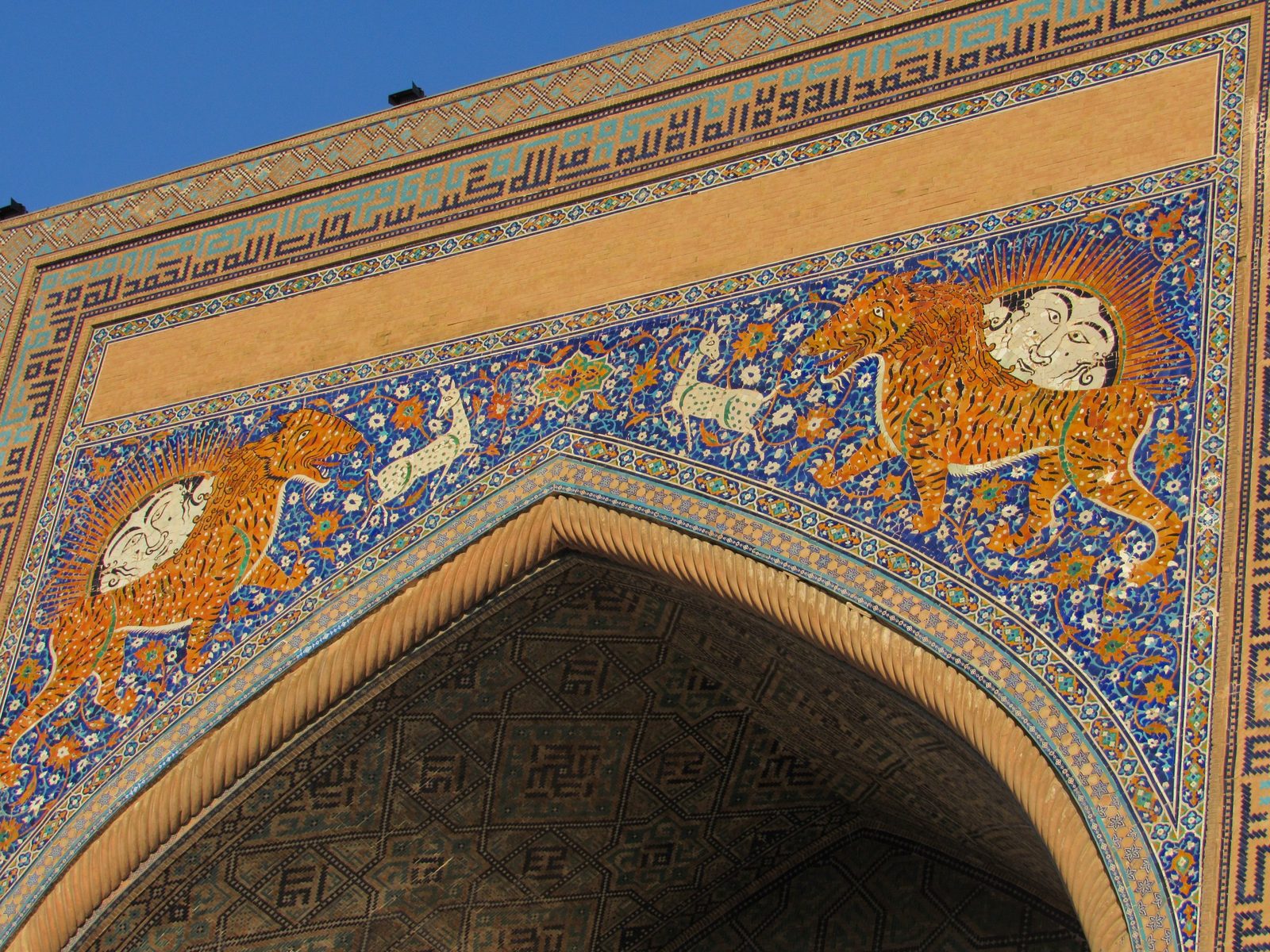
| 3 | Tashkent → Samarkand | The morning Afrosiyob; the ,Did you know? The Registan's sun-carrying lion went on a banknote The Sher-Dor Madrasah (1619–1636) is named for the big cats with the sun on their backs on its portal. The image appeared on the reverse of Uzbekistan's 200-som note of 1997. Read more → ,Did you know? Legend says the architect asked the queen for a kiss Legend says the architect of Bibi-Khanym would finish on time only for a kiss from Timur's wife, and Timur punished him. In fact the mosque was Timur's own project; his wife Saray Mulk Khanum built her madrasah across the road. Read more → Did you know? Timur's tombstone went to Persia and came back The dark-green jade slab on Timur's grave in Gur-e-Amir was carried off by Nader Shah in 1740. It broke, and on his advisers' urging he sent it back to Samarkand. Read more → |
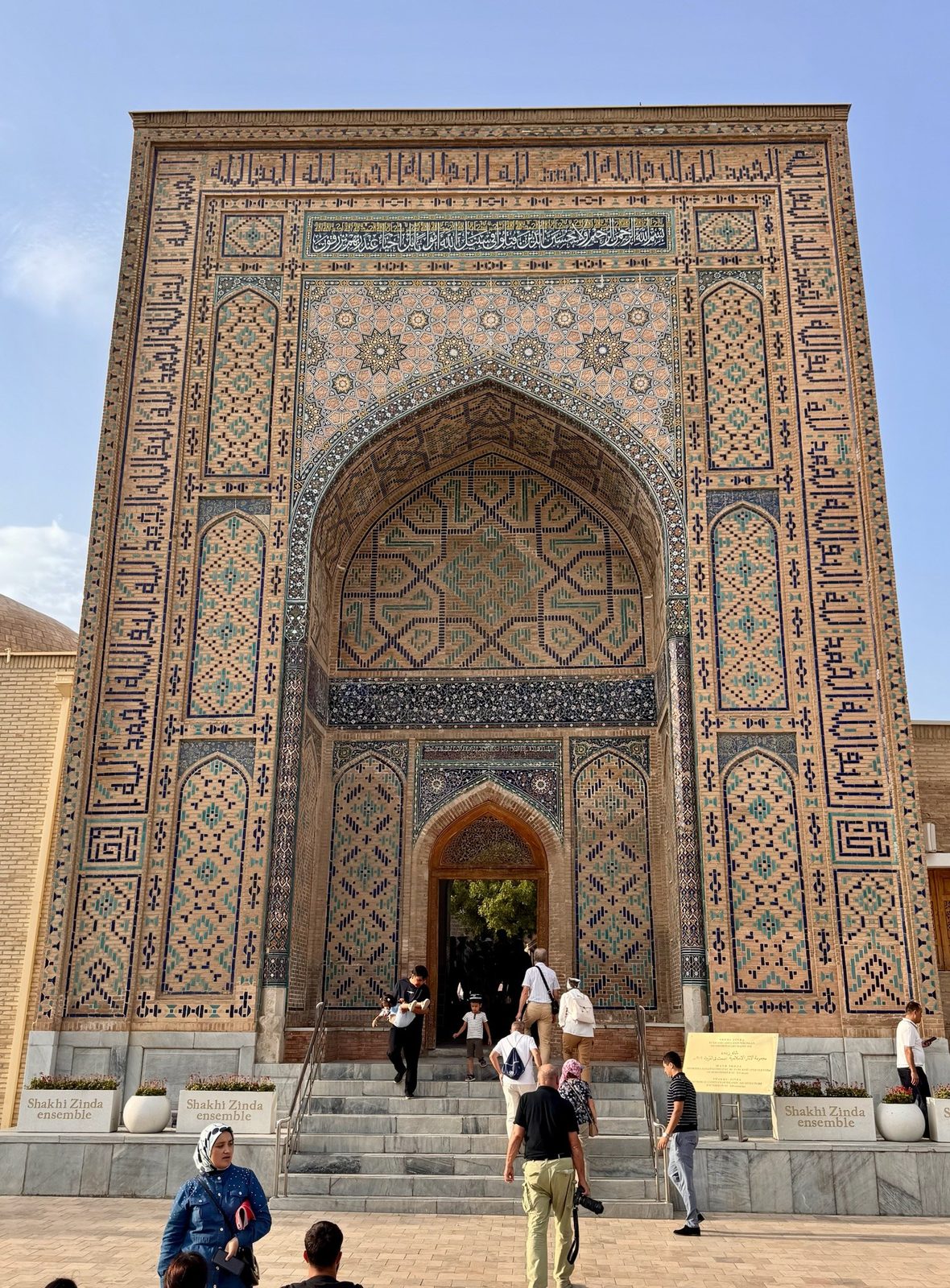
| 4 | Samarkand → Bukhara | Did you know? Why Shah-i-Zinda means 'the Living King' The necropolis grew around the shrine of Qutham ibn Abbas, a cousin of the Prophet Muhammad. Legend says he did not die in battle but went down a deep well to a garden of paradise, where he lives on. Read more → and the Did you know? A 7th-century mural shows envoys from Korea Uncovered by road builders in 1965, the Ambassadors' Painting at Afrasiyab shows delegations bearing gifts, Chinese with silk among them, and two men in feathered hats thought to be envoys from Korea's Goguryeo. Read more → hill; the afternoon Afrosiyob |
| 5 | Bukhara | ,Did you know? Bukhara's ponds were once its water supply Pools like Lyabi-Hauz, dug around 1620 and 46 × 36 m, were the city's main source of water. Most were filled in during the 1920s–30s because they spread disease; Lyabi-Hauz survived. Read more → the ,Did you know? Under Bukhara's domes merchants changed money and gold Four 16th-century trading domes still stand over old crossroads. Toki Sarrafon was the money changers' dome, where merchants from India and China swapped coins; Toki Zargaron held jewellers' workshops, Toki Telpak Furushon sold caps. Read more → ,Did you know? Legend: the minaret's foundation was laid with camel milk Legend says master Bako laid the foundations of the Kalyan minaret with ganch plaster mixed with camel milk, then vanished for two years to let them harden, and only then built the tower. Locals still show a grave they say is his. Read more → ,The fortress-residence of the rulers of Bukhara on a high artificial hill: the oldest structure in the city. Read more → the Did you know? Buried in mud, this tomb escaped Genghis Khan The 10th-century Samanid Mausoleum, one of the oldest monuments of Islamic Central Asia, was covered by flood mud and sand before the Mongols came in 1220. Hidden for centuries, its brick lacework survived intact. Read more → |
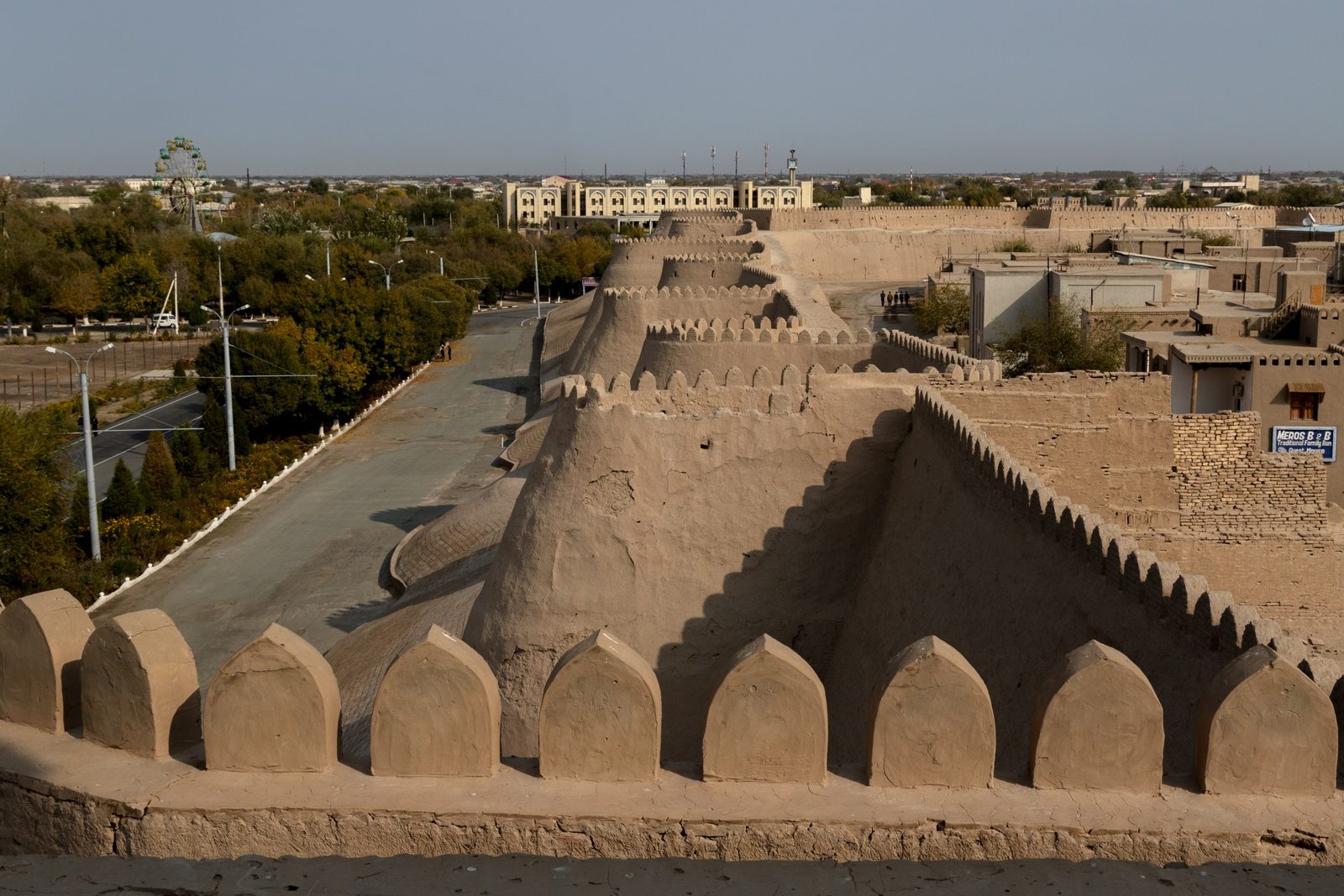
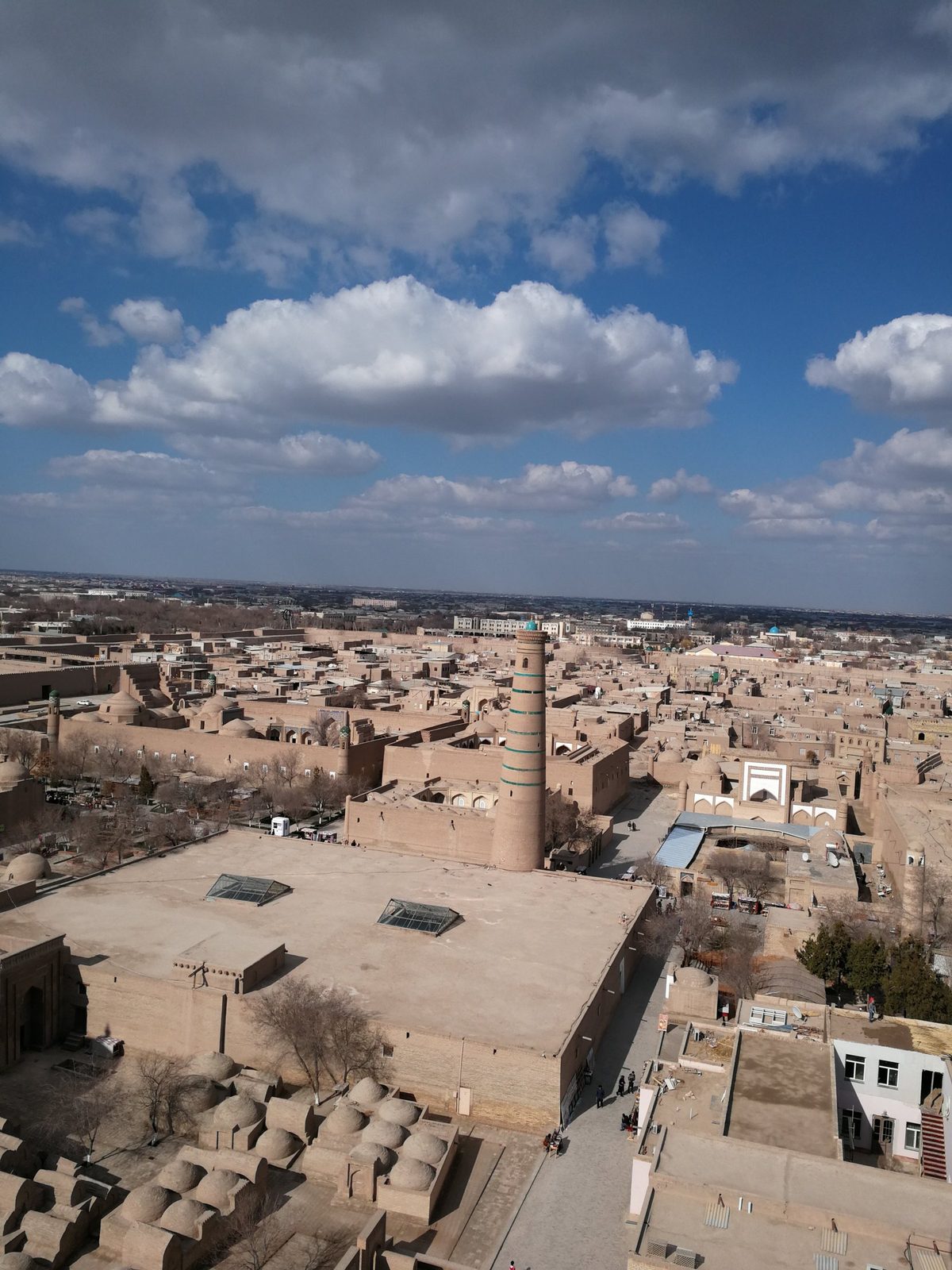
| 6 | Bukhara → Khiva | The high-speed train across the ;The Kyzylkum, or Red Sands: the desert between the Amu Darya and Syr Darya rivers that the road and the railway cross on the way to Khiva. the evening in Did you know? People still live inside Khiva's museum city Itchan Kala packs more than 50 historic monuments and about 250 old houses inside clay walls 8–10 m high and 5–6 m thick, and families still live and work in its lanes. Read more → |
| 7 | Khiva | A full day inside the walls; the night train to Tashkent |
| 8 | Tashkent | Morning arrival at Tashkent South; on to your flight or hotel |
In this plan Samarkand gets one night and Bukhara two. If Samarkand matters more to you than the railway museum, we move the second Tashkent day there: one night in Tashkent, two in Samarkand.
Days 1 and 2: Tashkent, from the metro to the locomotives
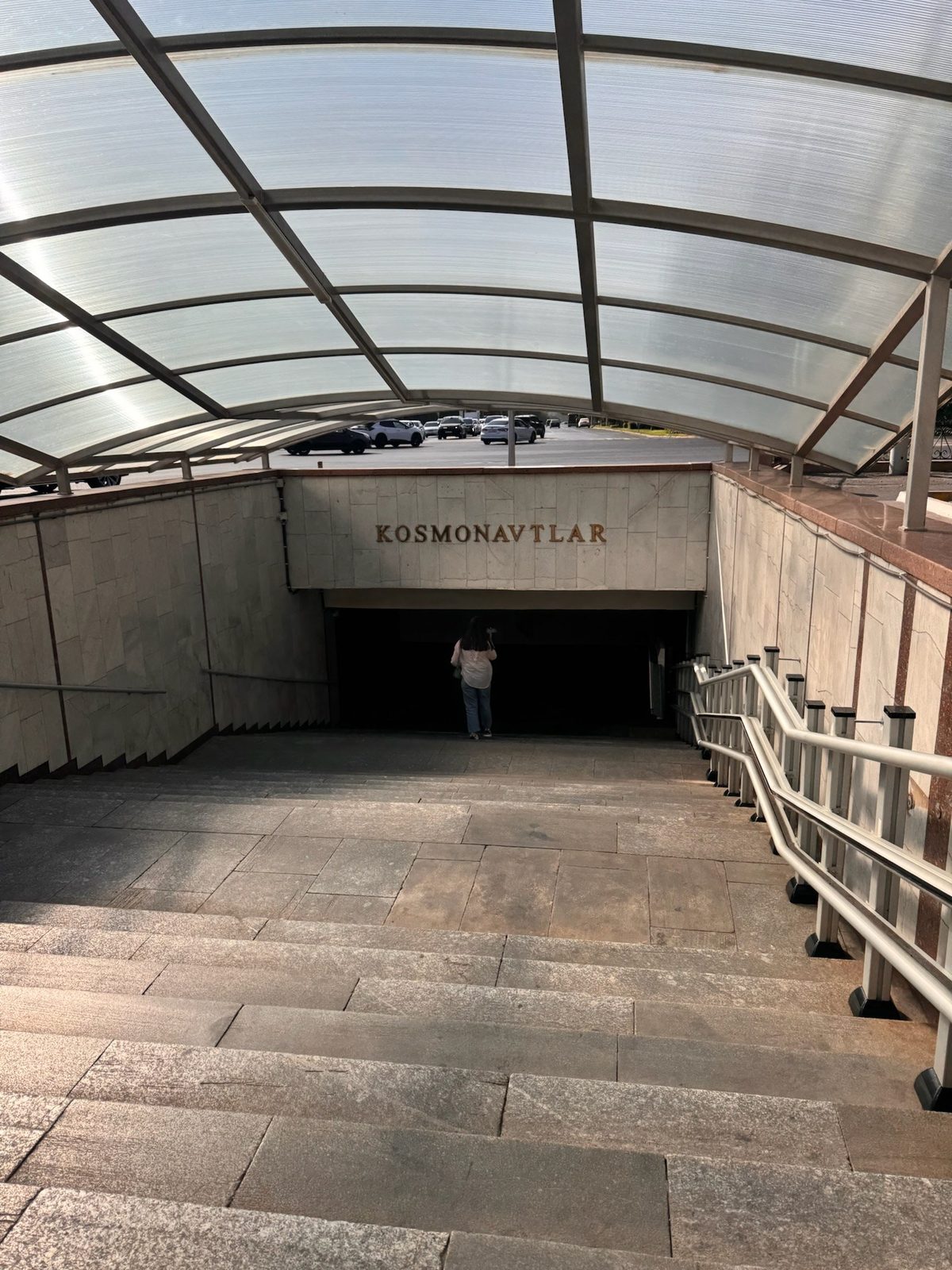
Almost every international flight lands in Tashkent, so we start here and give the capital two days rather than one tired evening. On day 1 your guide takes you underground. The metro opened in 1977, the first in Central Asia, and cameras have been allowed since June 2018. The ride we never skip is to ,Did you know? A metro station where Ulugh Beg meets Gagarin Kosmonavtlar station, opened in 1984, has ceramic medallions of Ulugh Beg, Galileo, Icarus, Gagarin and Tereshkova, and glass stars in the ceiling that hint at the Milky Way. Read more → where cosmonauts look out from ceramic medallions on deep blue walls. More stations are in our article on the Tashkent metro.
On day 2 we go to the museum of railway equipment next to the main station. It opened on 4 August 1989, a hundred years after the first railway reached Central Asia, and it is an open-air yard of steam, diesel and electric locomotives: a good start for a trip spent largely on trains. The afternoon is the old city, Hazrati Imam and Chorsu bazaar under its blue dome.
Days 3 to 5: Samarkand and Bukhara on the Afrosiyob
The Afrosiyob is a Spanish Talgo train built for 250 km/h. In the current timetable morning trains leave Tashkent between about 06:30 and 08:00 and reach Samarkand some 2 h 10 min later, so you are at the Registan before lunch. Day 3 is the Registan, the Did you know? 95 elephants hauled stone for Timur's great mosque Bibi-Khanym, begun in 1399 after Timur took Delhi, was the largest mosque of his empire. Some 200 stonecutters worked on site and 95 elephants brought from India hauled the loads; the courtyard was meant to hold 10,000 people. Read more → with Samarkand's main bazaar, right next to Bibi-Khanym: Samarkand bread, dried fruit, nuts and halva. Read more → beside it, and Gur-e-Amir at the end of the day.
Day 4 starts at Shah-i-Zinda, then goes up the Afrasiyab hill, the ancient city the train is named after. In the afternoon the Afrosiyob takes you from Samarkand to Bukhara in under two hours, and our driver meets you at the station.
Day 5 has no trains at all. The centre of Bukhara is a walk: Lyabi-Hauz, the trading domes, Poi Kalyan with the Did you know? Diggers went 13 m down and never found its base The Kalyan Minaret of 1127 rises about 46 m, and an excavation reached 13 m without finding the bottom of its foundations. Genghis Khan reportedly ordered it spared. Read more → of 1127, the Ark and the Samanid mausoleum. Our longer plans for both cities are in Samarkand in 1, 2 or 3 days and Bukhara in 1, 2 or 3 days.
Days 6 to 8: the high-speed train to Khiva and the sleeper back
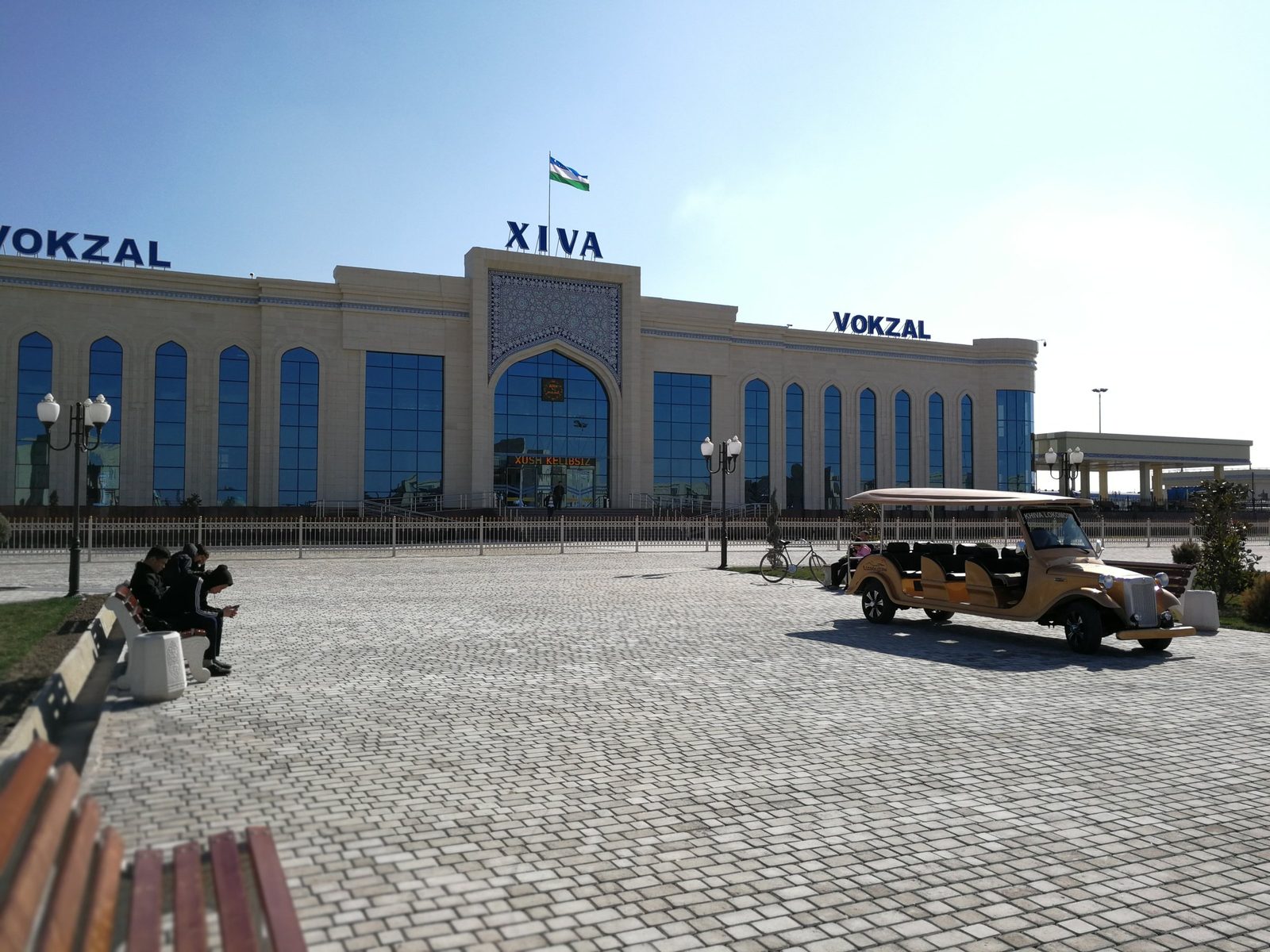
The ,Did you know? The fast train to Khiva bears the name of a 13th-century shah The Jaloliddin Manguberdi, a Hyundai Rotem high-speed train, made its first run on 5 May 2026: 1,220 km from Tashkent to Khiva via Samarkand, Bukhara and Urgench in about 7.5 hours. It is named after Jalal ad-Din, the last Khwarazmshah. Read more → built by Hyundai Rotem in Korea, has run to Khiva since 5 May 2026. In the current timetable the morning train from Tashkent calls at Bukhara at about 10:55 and reaches Khiva at about 14:30. Khiva station, opened in 2018, is the end of the line, a 30-minute walk from the walls of Itchan Kala: your guide walks in with you and the driver takes the bags to the hotel. This train is usually full, and tickets go on sale 60 days before departure, so it is the first ticket we buy.
Day 7 belongs to Itchan Kala, the walled inner town that in 1990 became the first place in Uzbekistan on the UNESCO World Heritage List: the ,Did you know? A 14-metre-wide base for a tower that stopped at 29 m Kalta-Minor was begun in 1852 and meant to reach 70–80 m, but work halted in 1855 at about 29 m when its khan died. It is said to be the only minaret covered entirely in glazed tiles. Read more → ,Did you know? In the khan’s courtyard a round platform waited for a yurt The Kunya-Ark, the khans’ citadel, had its own mint, arsenal and harem. In the courtyard of its reception hall of 1804–1806 stands a round platform: a yurt was set up on it, and there the khan received envoys of the steppe nomads. Read more → the Juma mosque with its hall of carved wooden columns and the .Did you know? Khiva's tallest minaret is barely a century old The Islam Khoja Minaret was begun in 1908, near the very end of the khans' era. At 56.6 m it is one of the tallest in Central Asia; a spiral stair of 175 steps leads up to its windowed top. Read more → In the evening you board the night train. We book a two-berth or a four-berth compartment, and you wake up on the way into Tashkent South station, about 7 km from the main station, where our driver is waiting. How the classes differ is in night trains in Uzbekistan.
If you would rather not sleep on a train, you stay a second night in Khiva and take the morning high-speed train back, or we book the flight from Urgench to Tashkent.
Three other ways to spend the extra day
Each of these takes the place of the second day in Tashkent.
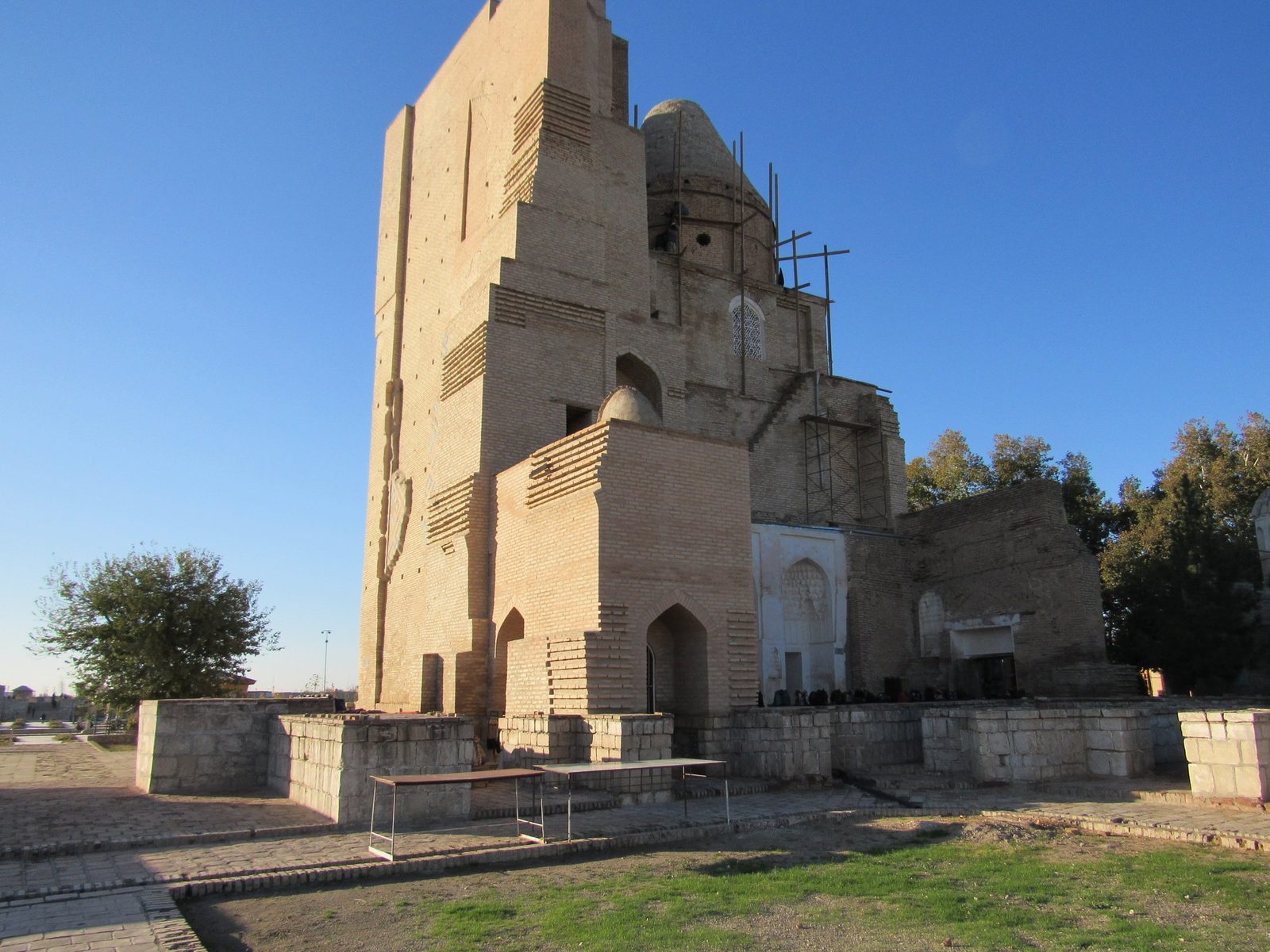
- Shahrisabz. Amir Timur (Tamerlane, 1336–1405), founder of the Timurid empire, which had its capital in Samarkand. Born near Shahrisabz. Read more →'s home town lies about 80 km south of Samarkand, across the Takhtakaracha pass. Its historic centre, with the ruins of the Ak-Saray palace, has been on the UNESCO list since 2000. Snow sometimes closes the pass in winter, so in the cold months we check the road the day before. Shahrisabz is part of our tour In the Footsteps of Clavijo, and the day itself is described in Shahrisabz from Samarkand.
- A night in a yurt camp. Between Samarkand and Bukhara you can swap the train for the road and stop at Lake Aydarkul, which formed in the Kyzylkum in 1969 from Syr Darya flood water. You get an evening by the fire and a night in a felt yurt; the camps close for the winter. See Aydarkul and the yurt camp.
- The mountains near Tashkent. At ,Did you know? Amirsoy drew about 150,000 visitors in its first three months Amirsoy opened in December 2019 on the northern slope of Mount Maygashkan in the Chatkal range, about 65 km from Tashkent. Some 150,000 visitors, mostly locals, came in its first three months, and its chalets get about 90% of their energy from the sun. Read more → about 65 km from the capital, gondolas run up to 2,290 m in winter and in summer, and Mountains of the Western Tien Shan about 80 km from Tashkent: hiking in summer, skiing in winter, the Charvak reservoir nearby. Read more → and Lake Did you know? The lake below Chimgan is held back by a 168-metre dam Charvak is a reservoir: a 168 m stone dam on the Chirchiq, built in 1964–1970, holds about 2 km³ of water from the Pskem, Koksu and Chatkal rivers. Its name is traced to the Persian chorbog, "four gardens". Read more → are close by. The day fits at the start or the end of the trip; for more than one day, see Mountains and Spa near Tashkent.
Eight days in winter, or with a group
From December to February we turn the route round. Winter Silk Road starts with the train to Khiva, fits each day into the short daylight and can end with a day at Amirsoy. If you prefer a fixed date, Essential Uzbekistan by Train is our group tour: it departs every Monday from March to November 2027, with an English-speaking guide and breakfasts included and the evenings free.
What we take care of
Train tickets are issued to each traveller's full name and passport number, so we ask for passport details when you book and buy the tickets the day sales open. On Uzbekistan by Train we also arrange the hotels with breakfast, a car with driver to and from every station, a guide in each city and the entrance tickets, the railway museum included. If you would rather choose the hotels yourself, start with our hotels. We quote the price for your dates.
Seven, eight or ten days?
Seven days cover the same four cities with one day in Tashkent and a flight or an early train back from Khiva: see Uzbekistan in 7 days. With ten, Khiva gets two nights and Samarkand a day for Shahrisabz, as in Uzbekistan in 10 days. Eight days is the shortest trip where every long leg goes by train and one day is left for whatever you came for.