

Vale de Fergana
O coração do artesanato a leste de Tashkent: o palácio do cã em Kokand, os teares de seda de Margilan e a cerâmica de esmalte azul de Rishtan.
- 2–3 dias
- Trem diário saindo de Tashkent às 09:20, passando pelo túnel de Kamchik: Kokand às 12:28, Margilan às 13:00
- Kokand, Rishtan, Margilan e Fergana ficam a pouca distância de carro umas das outras
Encontrar um roteiro sob medida → Todos os roteiros para Vale de Fergana (1)
Sobre Vale de Fergana
The Fergana Valley is the green, busy east of Uzbekistan: a basin about 300 km long and up to 70 km wide, with the Você sabia? A árvore genealógica da tulipa começaria no Tian Shan Muito antes dos jardins otomanos e dos campos de bulbos holandeses, tulipas selvagens cresciam nas montanhas da Ásia Central, e o Tian Shan é muitas vezes apontado como sua terra natal. Em abril elas florescem nas encostas ao redor de Chimgan. Saiba mais → to the north and the Alay range to the south. The Andijan, Fergana and Namangan regions alone are home to about ten million people, so towns, orchards and fields run into one another. For travellers the valley means crafts: woodcarving in Kokand, silk in Margilan and pottery in Rishtan, much of it made by families who have done it for generations.
Margilan was a settlement more than two thousand years ago and has made silk since antiquity. In 1740 Kokand became the capital of the Kokand Khanate, which ruled the valley until it was abolished in 1876. That same year a new town was founded next to Margilan; since 1924 it has been called Fergana. Today a railway under the Kamchik pass links the valley with Tashkent, and since September 2026 a new fast electric train runs every day.
História em poucas linhas
- 2nd–1st century BCA settlement appears on the site of Margilan, a town that has woven silk since antiquity.
- 1740Kokand becomes the capital of the Kokand Khanate, founded in 1709, and the khans rule the valley from here.
- 1870Khudoyar Khan completes his palace in Kokand, with seven courtyards and more than a hundred rooms.
- 1876The khanate is abolished, and a new town, New Margelan, is founded next to Margilan; it has been called Fergana since 1924.
- 2016The 19.2 km Kamchik railway tunnel opens under the Qurama range, the longest tunnel in Central Asia.
- 2017UNESCO recognises the Margilan Crafts Development Centre's work to keep handmade atlas and adras silk alive.
- 2026On 10 September a new CRRC electric train starts running every day between Tashkent and the valley.
O que ver
Carregando o mapa…
Mapa: © colaboradores do OpenStreetMap
-
1Khudoyar Khan's palace, Kokand
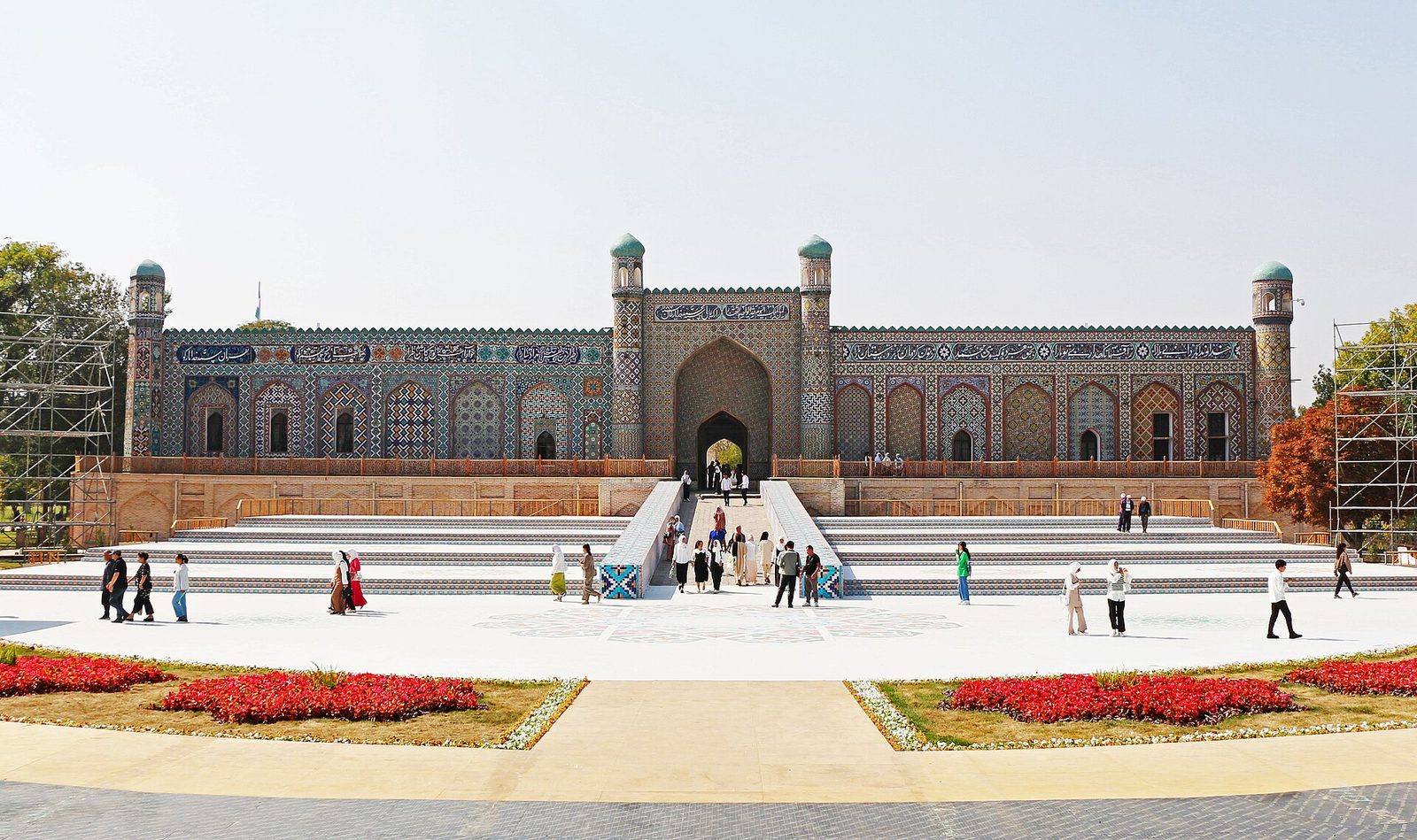
The palace Khudoyar Khan completed around 1870 had seven courtyards; five survive, with 19 rooms. Look at the tiled facade in yellow and green, rare colours in Uzbekistan, and the carved and painted ceilings inside. It has been a museum since 1925.
-
2Juma Mosque, Kokand
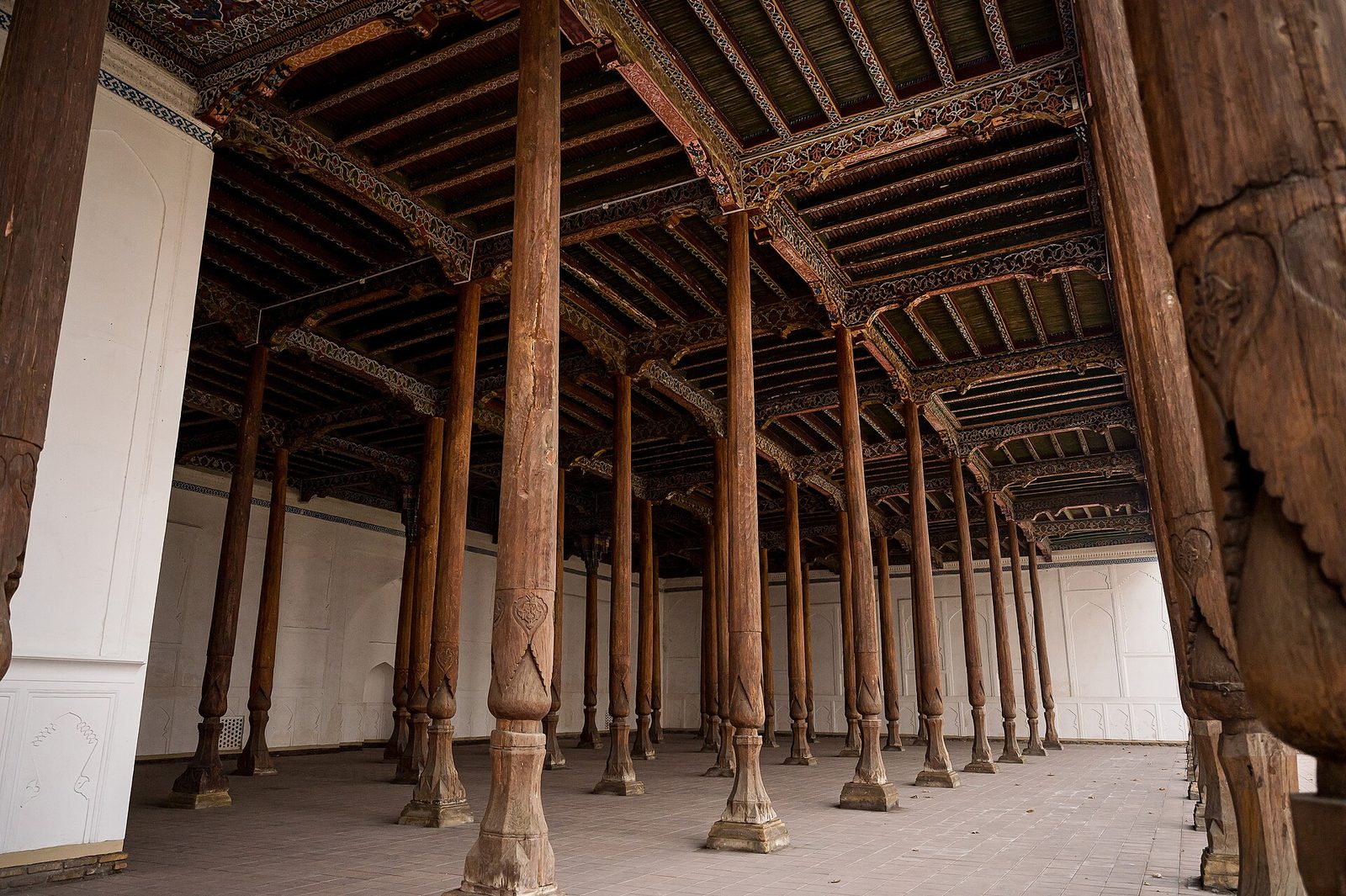
Kokand's Friday mosque from the early 19th century, with a long iwan, a covered porch, on 98 carved wooden columns. Walk its full length: it shows off the woodcarving for which Kokand was named a World Craft City in 2019.
-
3Rishtan potters' workshops
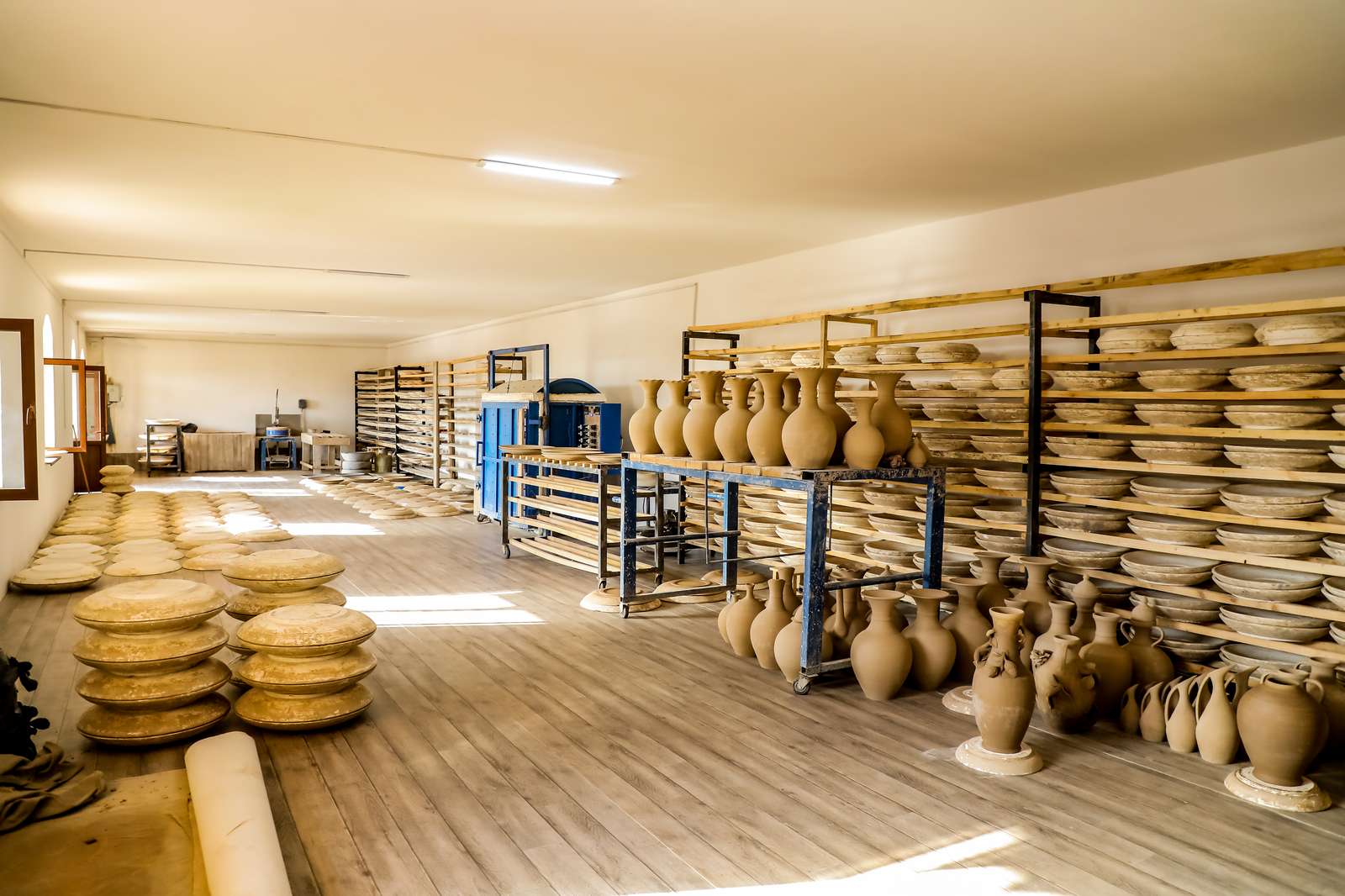
Rishtan has made pottery for about a thousand years from its red local clay, decorated with the blue-green ishkor glaze. In the workshops you watch the wheel, the painting and the kiln, and buy dishes from the people who made them. The International Ceramics Center in town has a museum of Rishtan.
-
4Yodgorlik silk factory, Margilan
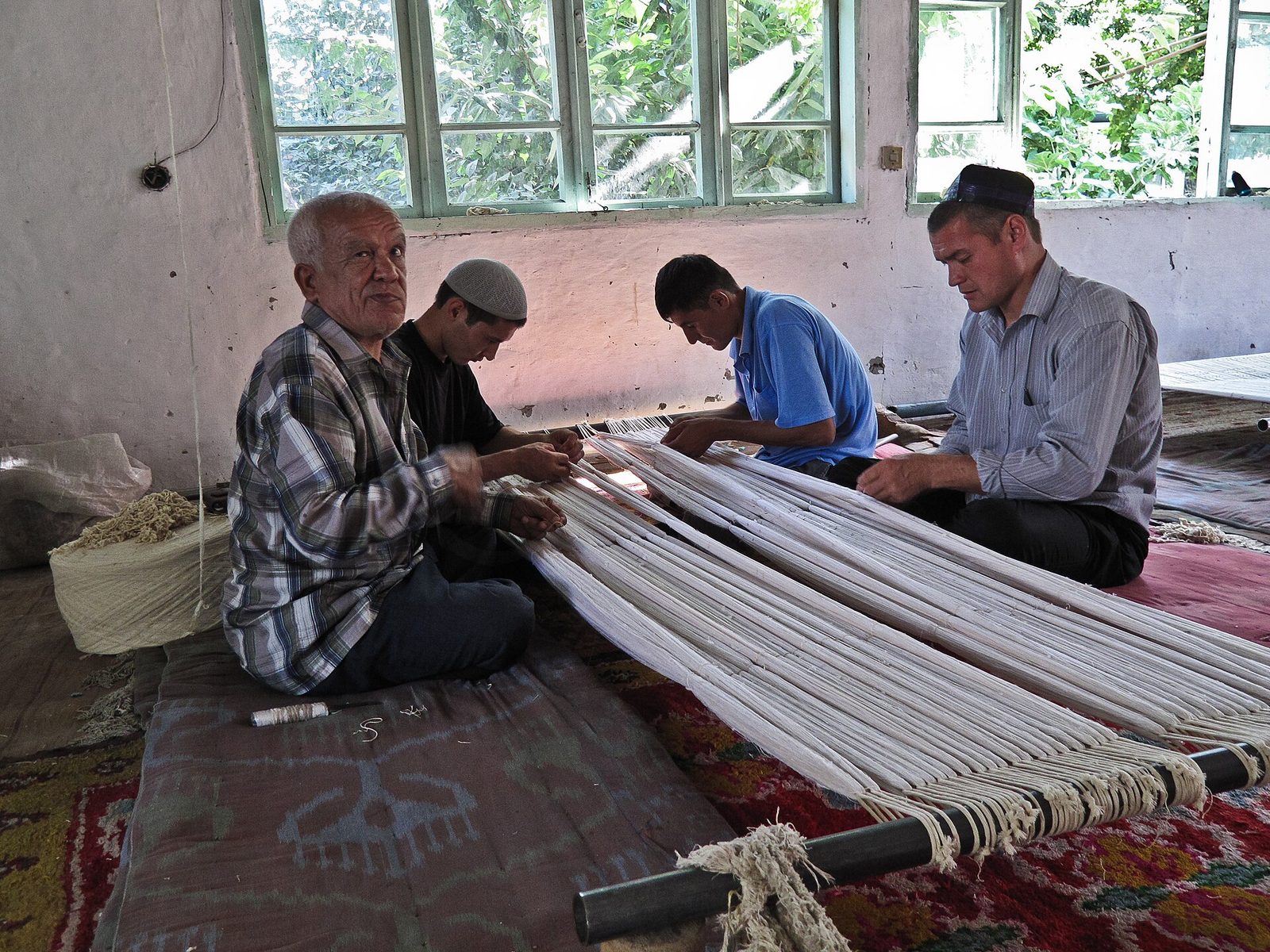
Here the whole chain is done by hand: cocoons are boiled, the thread is reeled and dyed, and ikat is woven on traditional looms. A guided walk takes you through every stage, so give it a morning.
-
5Kumtepa bazaar
A big market about 5 km west of central Margilan, held on Thursdays and Sundays. People come from the surrounding villages for textiles, produce and household goods, so it is a market for living, not for show.
-
6Fergana city
The regional centre of the valley, founded in 1876, with wide tree-lined streets and late 19th-century buildings. The local history museum is in the centre, and the city is a convenient base for the night.
-
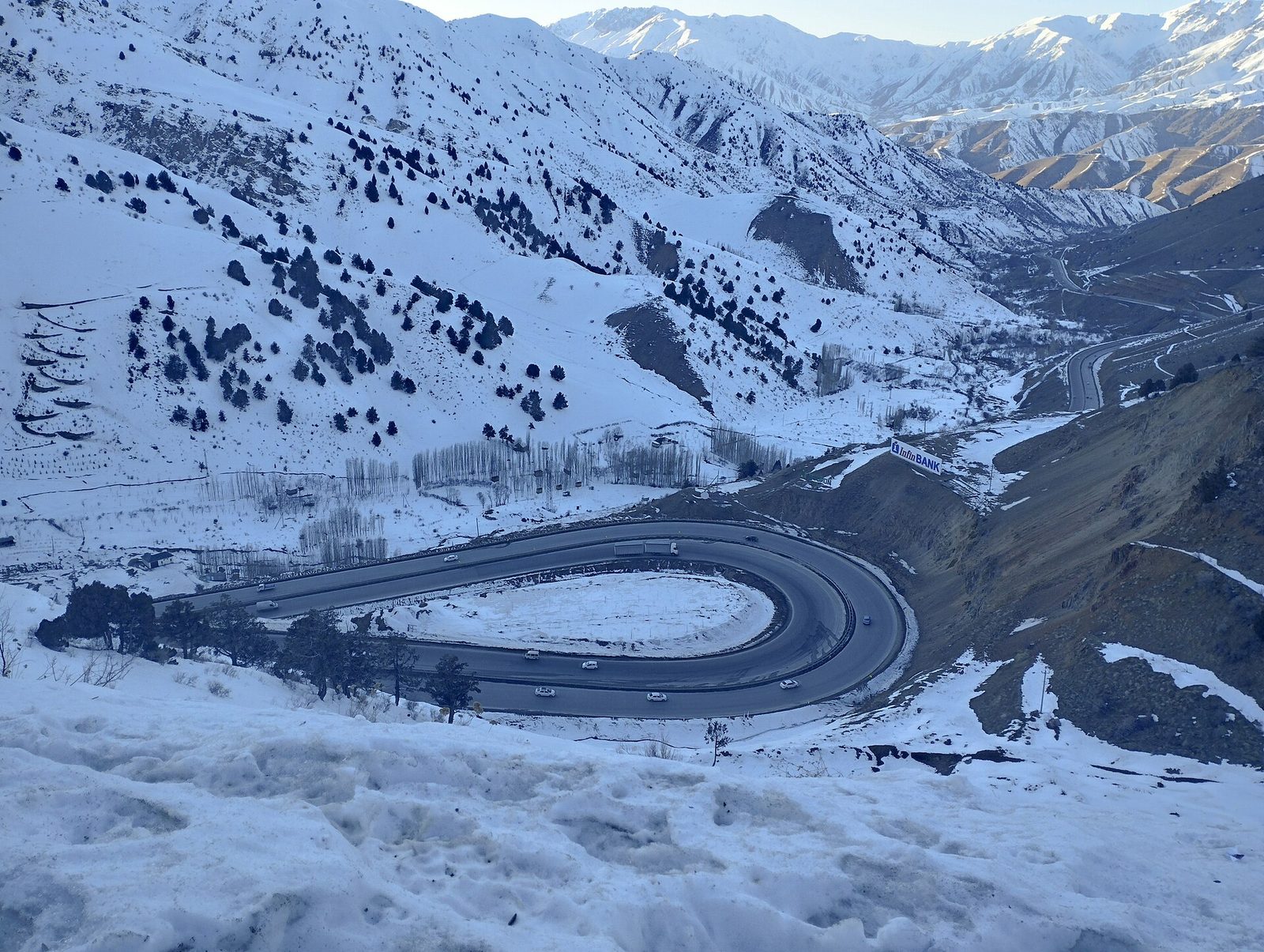
7Kamchik pass and tunnel
The road from Tashkent crosses the Qurama range at the Kamchik pass, 2,268 m high. The train goes underneath, through a 19.2 km tunnel between Angren and Pap. In winter the road can close because of avalanche risk; the train is the simple choice.
Fotos: Juma Mosque columned hall, Kokand — Arina Pan / Wikimedia Commons · CC BY-SA 4.0; Yodgorlik silk factory, Margilan — Peretz Partensky from San Francisco, USA / Wikimedia Commons · CC BY 2.0
Bairros
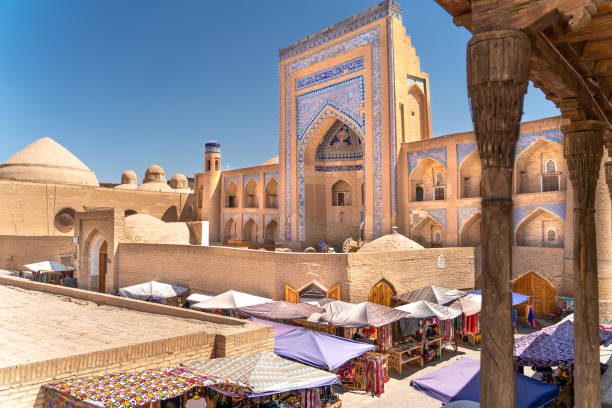
- Old Kokand The khan's palace, the Juma Mosque, the Narbutabey Uma escola islâmica: celas de estudantes e salas de aula em torno de um pátio, atrás de um portal imponente. Nas cidades antigas, muitas hoje abrigam museus e oficinas de artesanato. of the 1790s and the Dakhma-i-Shokhon necropolis of the khans, all in the centre of town.
- Margilan The silk town: the Yodgorlik factory, the Crafts Development Centre in the old Toron mosque and, twice a week, Kumtepa bazaar on the edge of town.
- Rishtan A small town of potters about 45 km from Kokand. Workshops are spread through its streets, and many are run by families of hereditary masters.
- Fergana city The modern regional centre with wide streets, hotels and restaurants, right next to Margilan. A good place to spend the night.
O que comer
- Fergana Valley Arroz cozido num kazan com cenoura, cebola e carne: o prato de toda celebração uzbeque. Cada região o prepara do seu jeito. Each district of the valley has its own plov, and the best known is made with devzira, a red-brown local rice. Andijan plov with devzira is registered as a geographical indication.
- Kokand halva Halva made to old recipes is Kokand's sweet speciality and a good gift to take home.
- Fruit at the bazaar The valley is farming country, and from summer to autumn the bazaars are piled with grapes, melons, pomegranates and apples.
Como se locomover
Most trips start with the train: get off in Kokand at 12:28 or Margilan at 13:00 and continue by car. Kokand to Rishtan is about 45 km, Rishtan to Margilan about 50 km, and Margilan and Fergana are next-door neighbours. In town, Yandex Go taxis work in Kokand, Margilan and Fergana; there is no metro.
Dicas de quem é daqui
- Check the current train timetable on eticket.railway.uz before you book anything else.
- Kumtepa bazaar is held on Thursdays and Sundays: plan your Margilan morning around it if you can.
- Carry cash for bazaars and small workshops.
- Ceramics are heavy and fragile: ask the workshop to wrap them well and keep them in your cabin bag.
- In winter take the train: the road over the Kamchik pass can close because of avalanche risk.
Nossa opinião: quantos dias você precisa
Dois dias com um pernoite dão conta de Kokand, Rishtan e Margilan: o trem diário facilita tudo, e é assim que faz o nosso roteiro de 14 dias. Nossa extensão de 3 dias ao Vale de Fergana a partir de Tashkent acrescenta uma segunda noite e um ritmo mais tranquilo.
Quando ir: mês a mês
Temperatura durante o dia, chuva, feriados e nossa avaliação de cada mês.
- jan6° Fresco, menos gente Frio: 6° durante o dia 32 mm de chuva ★ 1, 14
- fev8.6° Fresco, menos gente Frio: 8.6° durante o dia 41 mm de chuva
- mar15.5° Excelente Fresco: 15.5° durante o dia 47 mm de chuva ★ 8, 21
- abr22.5° Excelente Agradável: 22.5° durante o dia 42 mm de chuva
- mai28.7° Excelente Agradável: 28.7° durante o dia 26 mm de chuva ★ 9
- jun34.1° Bom Calor forte: 34.1° durante o dia 8 mm de chuva
- jul35.9° Difícil Calor forte: 35.9° durante o dia 2 mm de chuva
- ago34.5° Difícil Calor forte: 34.5° durante o dia 2 mm de chuva
- set29° Excelente Agradável: 29° durante o dia 3 mm de chuva ★ 1
- out21.9° Excelente Agradável: 21.9° durante o dia 12 mm de chuva ★ 1
- nov13.4° Excelente Fresco: 13.4° durante o dia 30 mm de chuva
- dez7.5° Fresco, menos gente Frio: 7.5° durante o dia 31 mm de chuva ★ 8
- 1 jan — Ano-Novo
- 14 jan — Dia dos Defensores da Pátria
- 8 mar — Dia Internacional da Mulher
- 21 mar — Navruz
- 9 mai — Dia da Memória e da Honra
- 1 set — Dia da Independência
- 1 out — Dia do Professor
- 8 dez — Dia da Constituição
- Ramadan Hayit (Eid al-Fitr): a data muda a cada ano
- Kurban Hayit (Eid al-Adha): a data muda a cada ano
Fonte do clima: Википедия, статья «Samarkand», таблица климата (нормы 1991–2020; Pogoda.ru.net, NOAA) — en.wikipedia.org/wiki/Samarkand; Википедия, статья «Bukhara», таблица климата (нормы 1991–2020; NOAA) — en.wikipedia.org/wiki/Bukhara; Википедия, статья «Urgench» (метеостанция в 35 км от Хивы; нормы 1991–2020; Pogoda.ru.net, NOAA) — en.wikipedia.org/wiki/Urgench; Википедия, статья «Tashkent», таблица климата (нормы 1991–2020; Pogoda.ru.net, NOAA) — en.wikipedia.org/wiki/Tashkent
Avaliação pela temperatura durante o dia: excelente — 18–30°, bom — 12–18° ou 30–33°, fresco, menos gente — abaixo de 12°, difícil — acima de 33°; chuvas fortes (a partir de 100 mm) rebaixam “excelente” para “bom”. Para as cidades seguimos também a opinião dos nossos especialistas: a temporada vai de março a junho e de setembro a novembro, e março e novembro são os melhores meses (início e fim da temporada, pouca gente); o inverno não é marcado como época ruim.
Como conhecer Vale de Fergana
Escolha o formato e mostramos os roteiros que combinam.
Inclua a partir daqui
Extensões fáceis de incluir em uma viagem que passa por aqui.
Vale de Fergana: perguntas antes da viagem
Quantos dias ficar em Vale de Fergana?
2–3 dias
Como chegar a Vale de Fergana?
Trem diário saindo de Tashkent às 09:20, passando pelo túnel de Kamchik: Kokand às 12:28, Margilan às 13:00 Mais no artigo: Voos para o Uzbequistão: como chegar da Europa, dos EUA e dos Emirados
Qual a melhor época para ir a Vale de Fergana?
A primavera (abril–maio) e o outono (setembro–outubro) são as épocas mais agradáveis; no verão os dias são quentes. Mais no artigo: Qual é a melhor época para visitar o Uzbequistão? Estações e clima
O que dá para incluir por perto?
Kokand, Rishtan, Margilan e Fergana ficam a pouca distância de carro umas das outras
Antes de viajar
Visto, estação, orçamento e voos: as respostas rápidas.
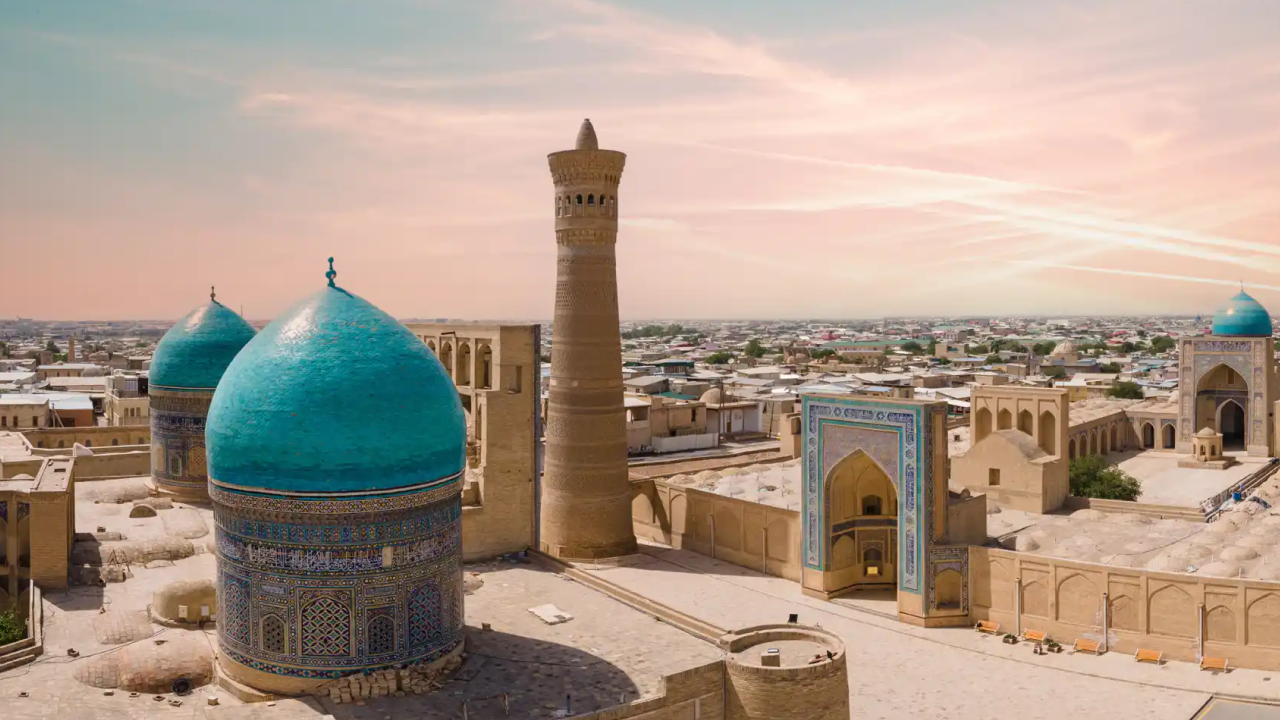 Preciso de visto para o Uzbequistão? Guia completo para turistasAntes de viajar, é essencial verificar as exigências de visto. O Uzbequistão simplificou suas regras de entrad…
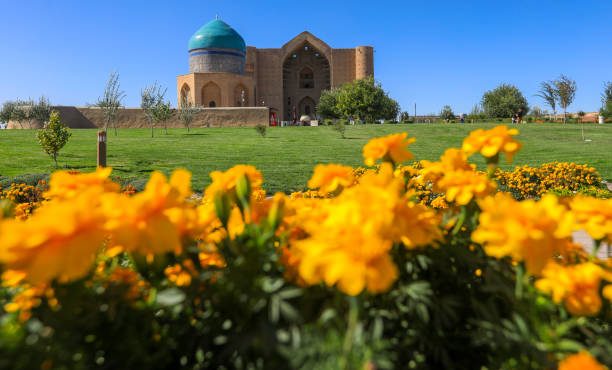 Qual é a melhor época para visitar o Uzbequistão? Estações e climaO Uzbequistão é um país ensolarado, com uma história antiga e uma hospitalidade lendária. Para que a sua viage…
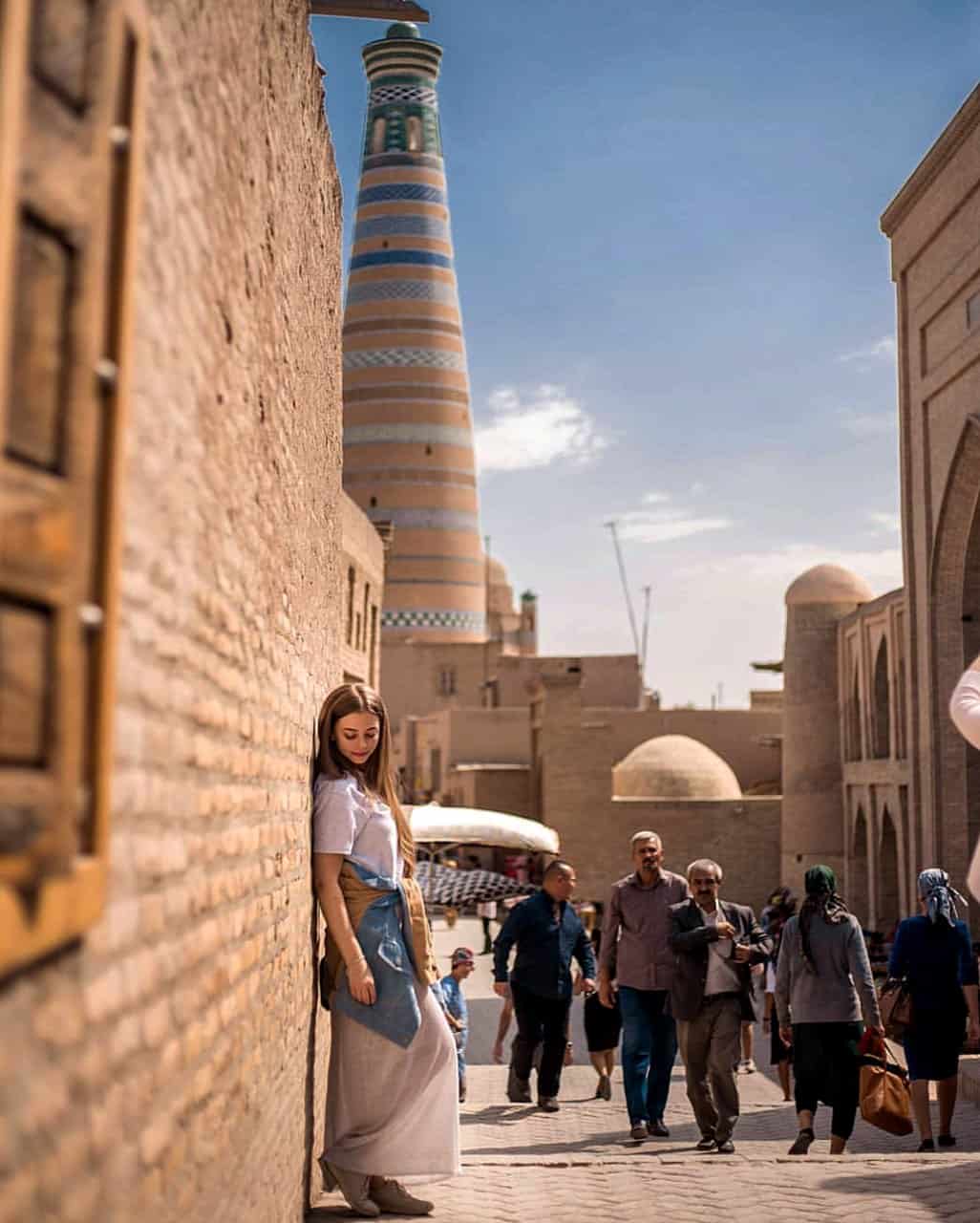 Quanto custa uma viagem ao Uzbequistão? Orçamento para 1 semanaO Uzbequistão é um dos destinos com melhor custo-benefício da Rota da Seda. Abaixo, um detalhamento prático de…
 Voos para o Uzbequistão: como chegar da Europa, dos EUA e dos EmiradosO Uzbequistão recebe visitantes o ano todo, e chegar lá é simples quando você conhece os melhores hubs e compa…
Não encontrou sua viagem?
Conte o que você quer: um consultor prepara um roteiro e um preço em até 24 horas.