
Places in this article: Tashkent
Turkestan from Tashkent: the Khoja Ahmed Yasawi mausoleum and around
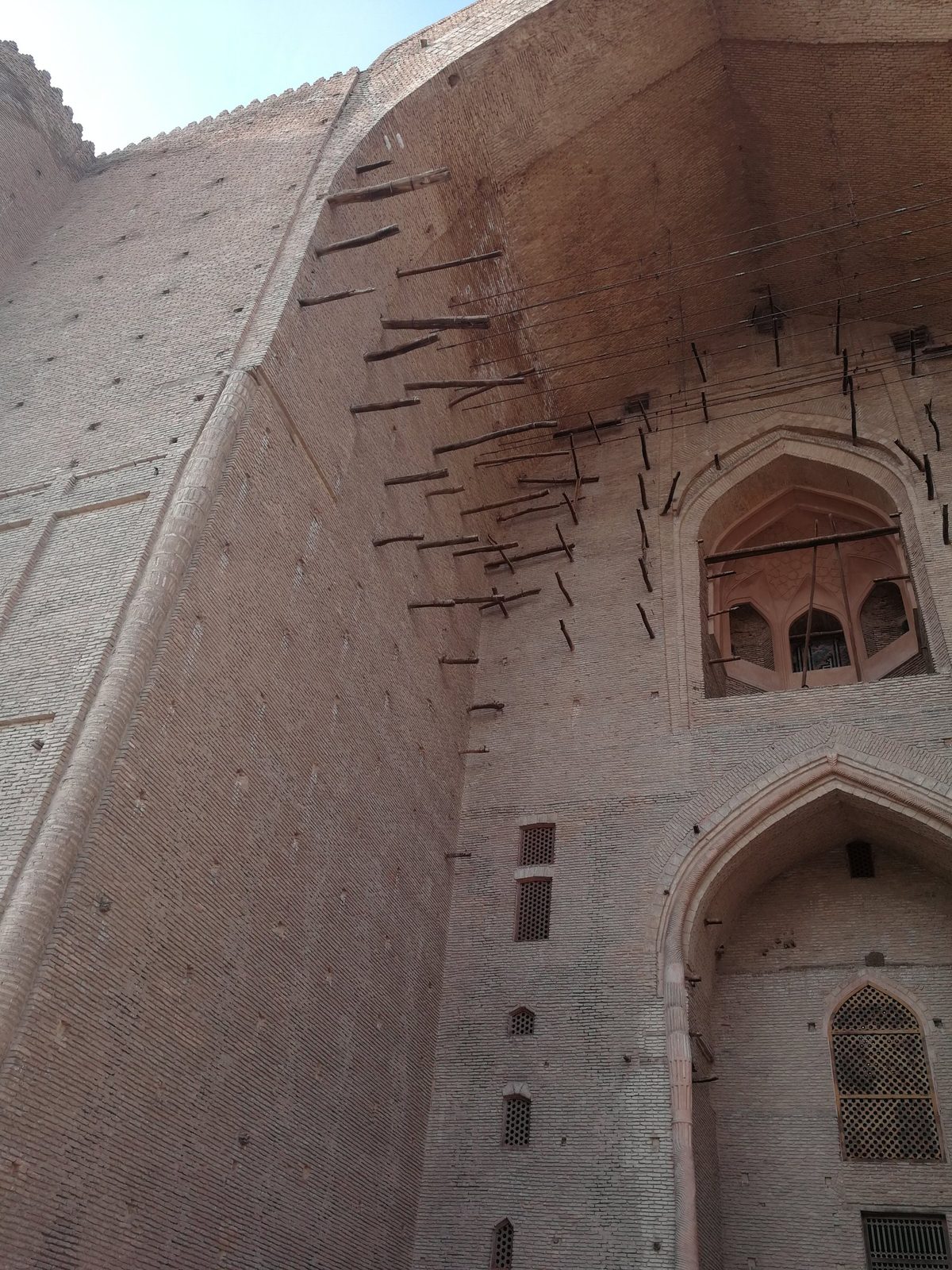
Look up at the main entrance of the Khoja Ahmed Yasawi mausoleum and you will see wooden beams sticking out of bare brick, as if the builders had gone home for the night. In a sense they had. Amir Timur (Tamerlane, 1336–1405), founder of the Timurid empire, which had its capital in Samarkand. Born near Shahrisabz. ordered this building in the late 14th century, and when he died in 1405 the portal was left unfinished. More than six hundred years later it still is.
Turkestan is in southern Kazakhstan, about 300 km from Tashkent by road through Shymkent. We drive there from Tashkent with our guests, and here is what you will see, how the border works and how much time to give it.
Why Turkestan is worth the trip from Tashkent
The Khoja Ahmed Yasawi mausoleum was the first site in Kazakhstan to be inscribed on the UNESCO World Heritage List, in 2003. It is one of the largest and best-preserved buildings of Timur’s time. If you have seen the Samarkand's main square, framed by three madrasahs: Ulugh Beg (15th century), Sher-Dor and Tilya-Kori (both 17th century). Read more → or A street of mausoleums on the edge of old Samarkand, built from the 11th to the 19th century, most of them under Timur and his descendants. Known for its glazed tilework. Read more → in Samarkand, this is the same era on a different scale.
Around the mausoleum lies the Azret Sultan museum-reserve, with the citadel walls, a 15th-century mausoleum built for a daughter of ,Timur's grandson, ruler of Samarkand and an astronomer. He built a madrasah on the Registan and an observatory whose star catalogue was used for centuries. Read more → a 16th-century bathhouse and an excavated ancient town. All of it is within walking distance.
The Khoja Ahmed Yasawi mausoleum
Khoja Ahmed Yasawi was a Sufi master and poet who wrote in Turkic. He was born in Sayram, near today’s Shymkent, and died in Yasi, the old name of Turkestan, in 1166. A small mausoleum stood over his grave for two centuries before Timur replaced it with the building you see now.
Work began around 1389. Timur himself set the main dimensions. Under one roof there are 34 rooms: burial chambers, a mosque, a library and a refectory among them. The domes and the other facades carry their tilework; the main portal on the south-east side never got it. That contrast, glazed tile on one side and raw brick on the other, shows you how a building of this size was put together.
For many people in Central Asia this is a revered place, and you will share it with families who come to pray. Move quietly, keep your voice down inside, and let your guide tell you where photographs are fine.
The Kazandyk hall and the Taikazan
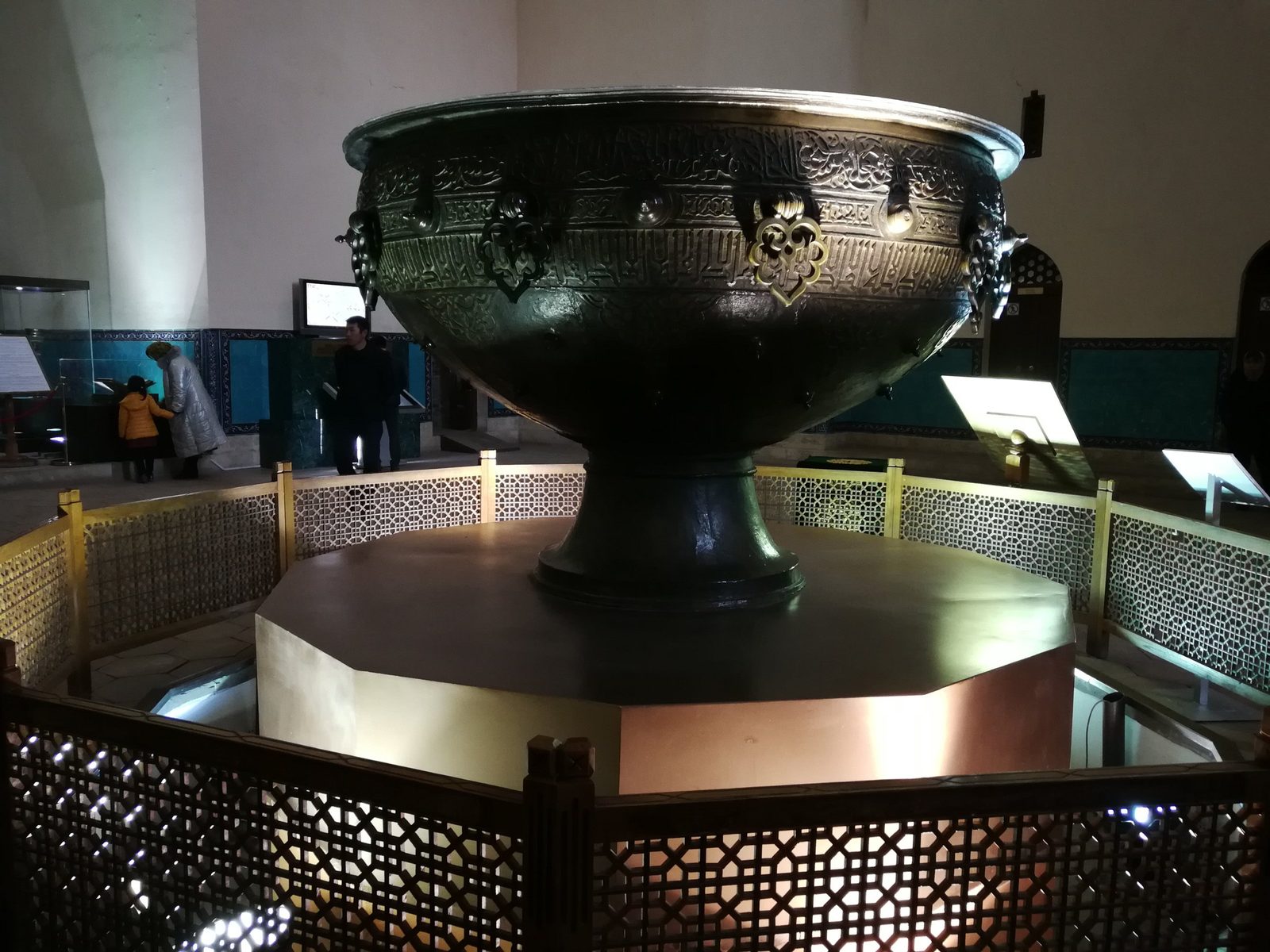
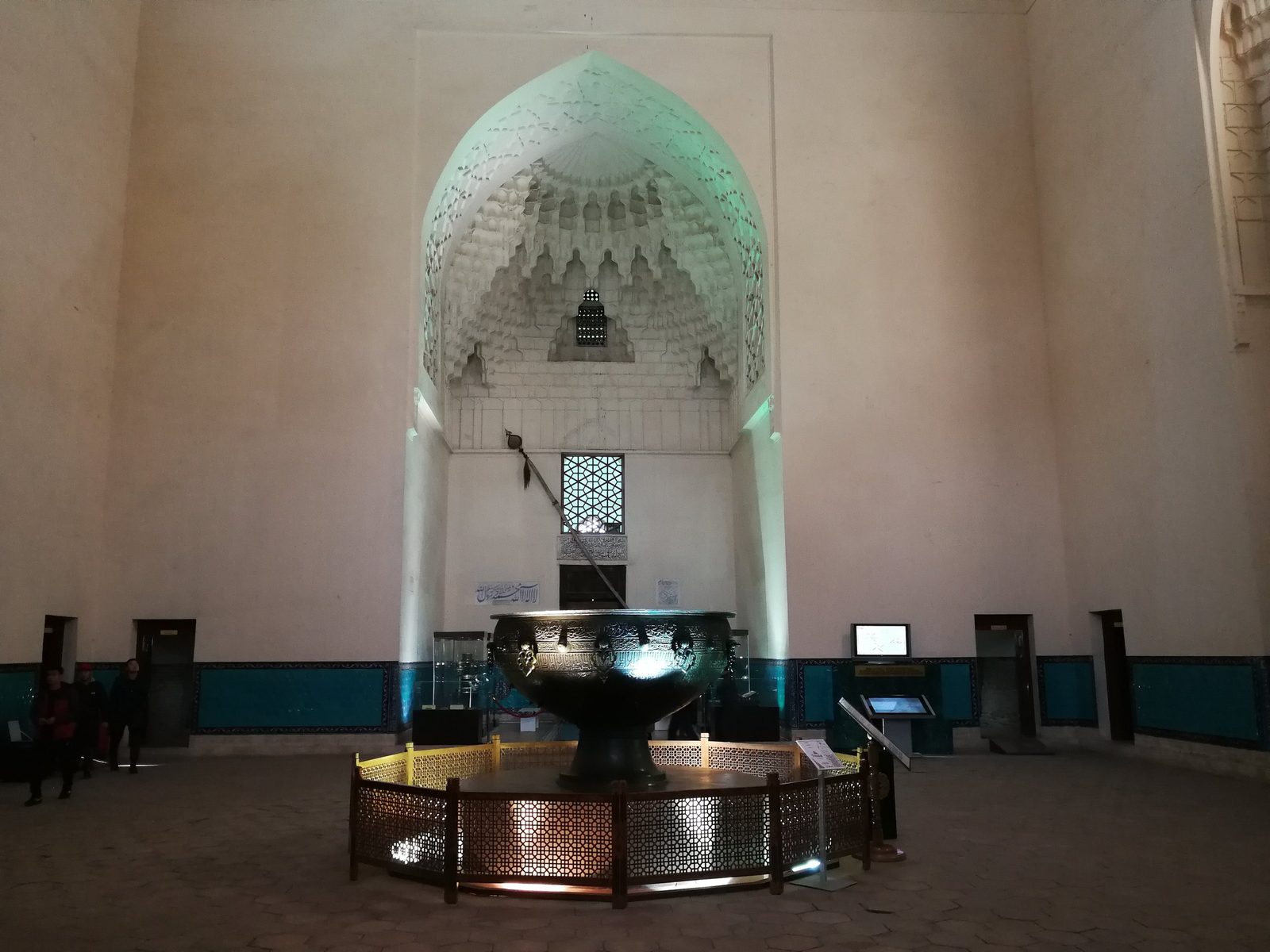
You enter straight into the central hall, the Kazandyk, a square room about 18 m across under the largest dome in Central Asia. In the middle stands the Taikazan: a bronze cauldron about 2.4 m across, weighing around two tonnes and holding about 3,000 litres. It was cast on 25 June 1399, on Timur’s order, in the village of Karnak, 25 km from the city. The master, Abd al-Aziz ibn Sharaf al-Din Tabrizi, signed it in the inscription band.
The cauldron held water that was handed out to visitors after Friday prayers. In 1935 it was taken to Leningrad for an exhibition and stayed there for 54 years. It came back to Turkestan on 18 September 1989.
Doors, tiles and domes
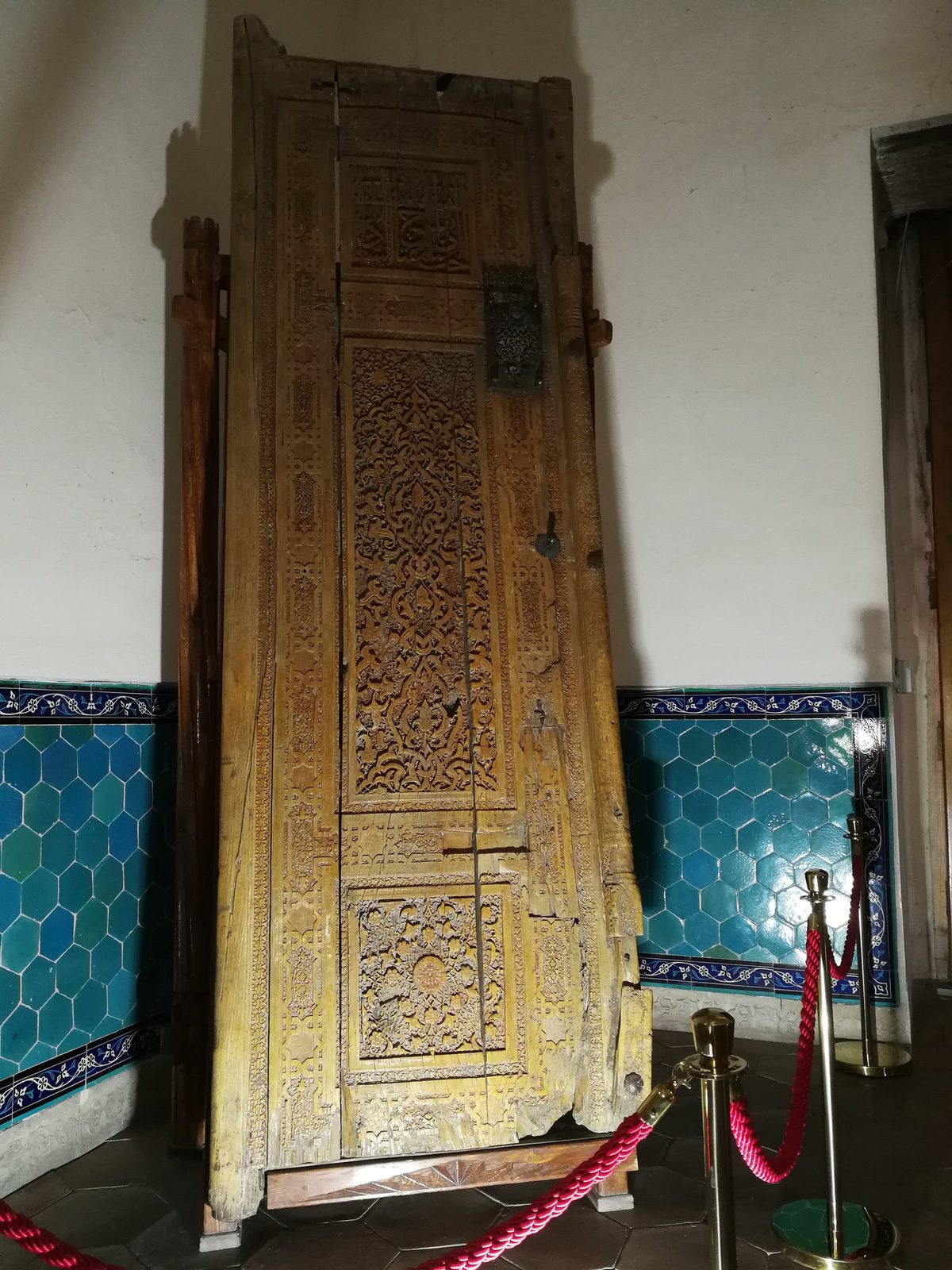
Do not rush the side rooms. Between the Kazandyk and the burial chamber hangs a carved wooden door from the 14th century. The walls are lined with turquoise hexagonal tiles, and the domes are filled with stalactite vaulting. More than 300 notable figures of Kazakh history are buried in the reserve, including Abylai Khan.
The Rabiga Sultan Begim mausoleum
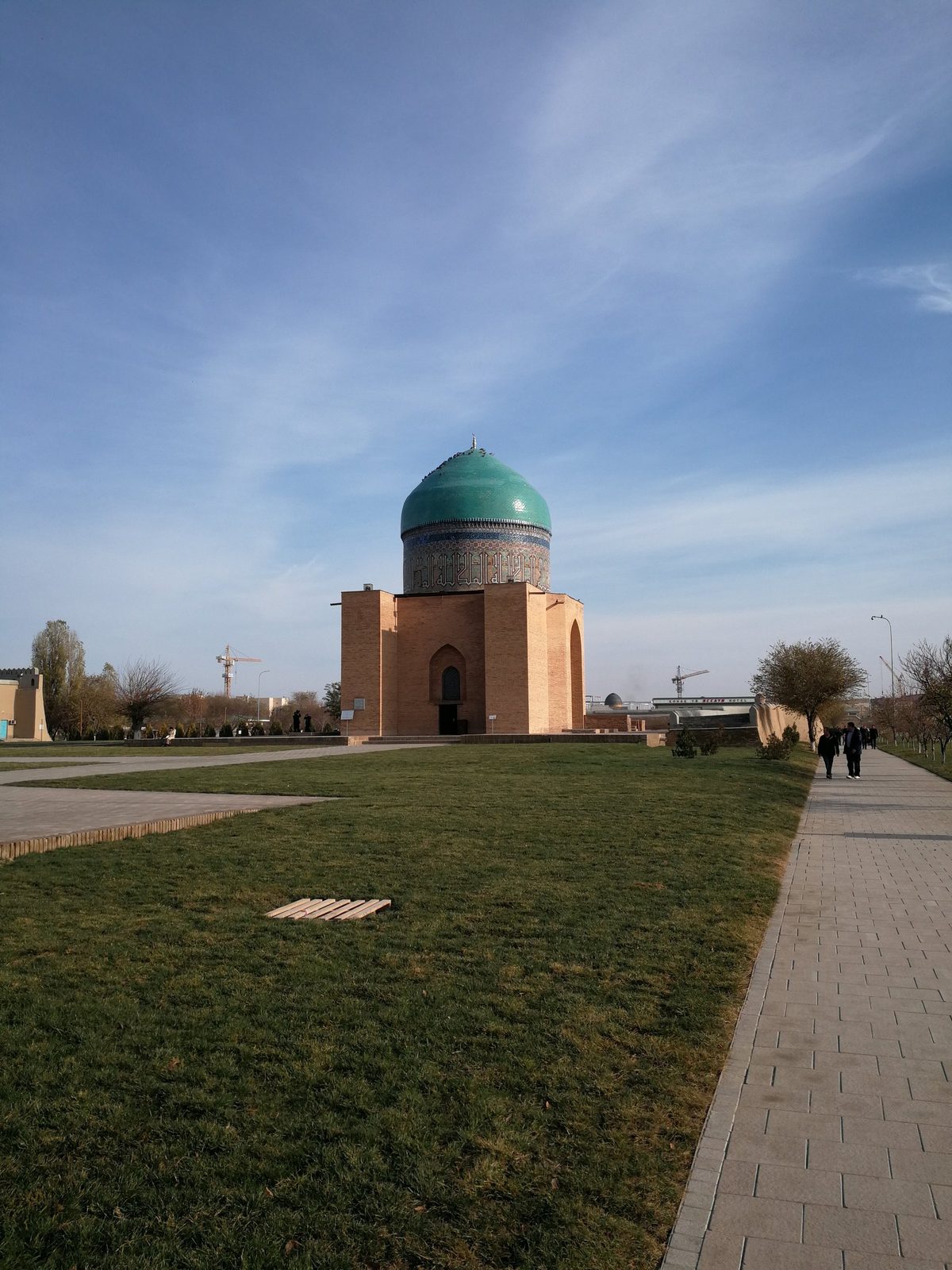
About 60 m south-east of the great mausoleum stands a much smaller one with a turquoise dome. Rabiga Sultan Begim was a daughter of Ulugh Beg, the astronomer-ruler of Samarkand, and the wife of Abu’l-Khayr Khan. After his death she lived in Turkestan for 17 years and was buried here, in the late 15th century, together with her grandson and three great-grandchildren.
The building survived only as a ruin. What you see today is largely the result of a restoration in 1980. For anyone who has visited the Ulugh Beg observatory in Samarkand, it is a quiet link between the two cities.
The citadel, the Eastern Bath and the Kultobe excavations
The citadel walls
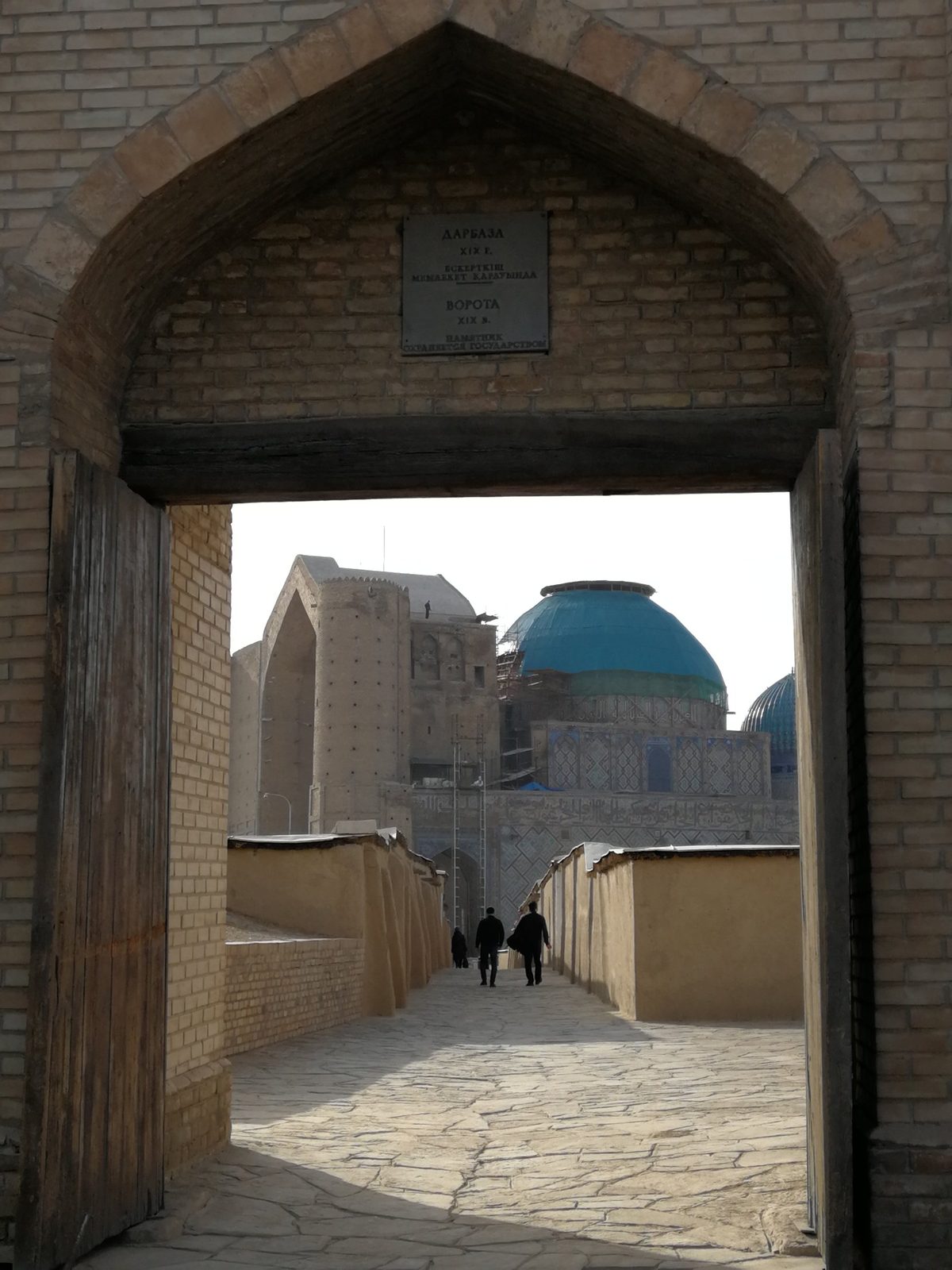
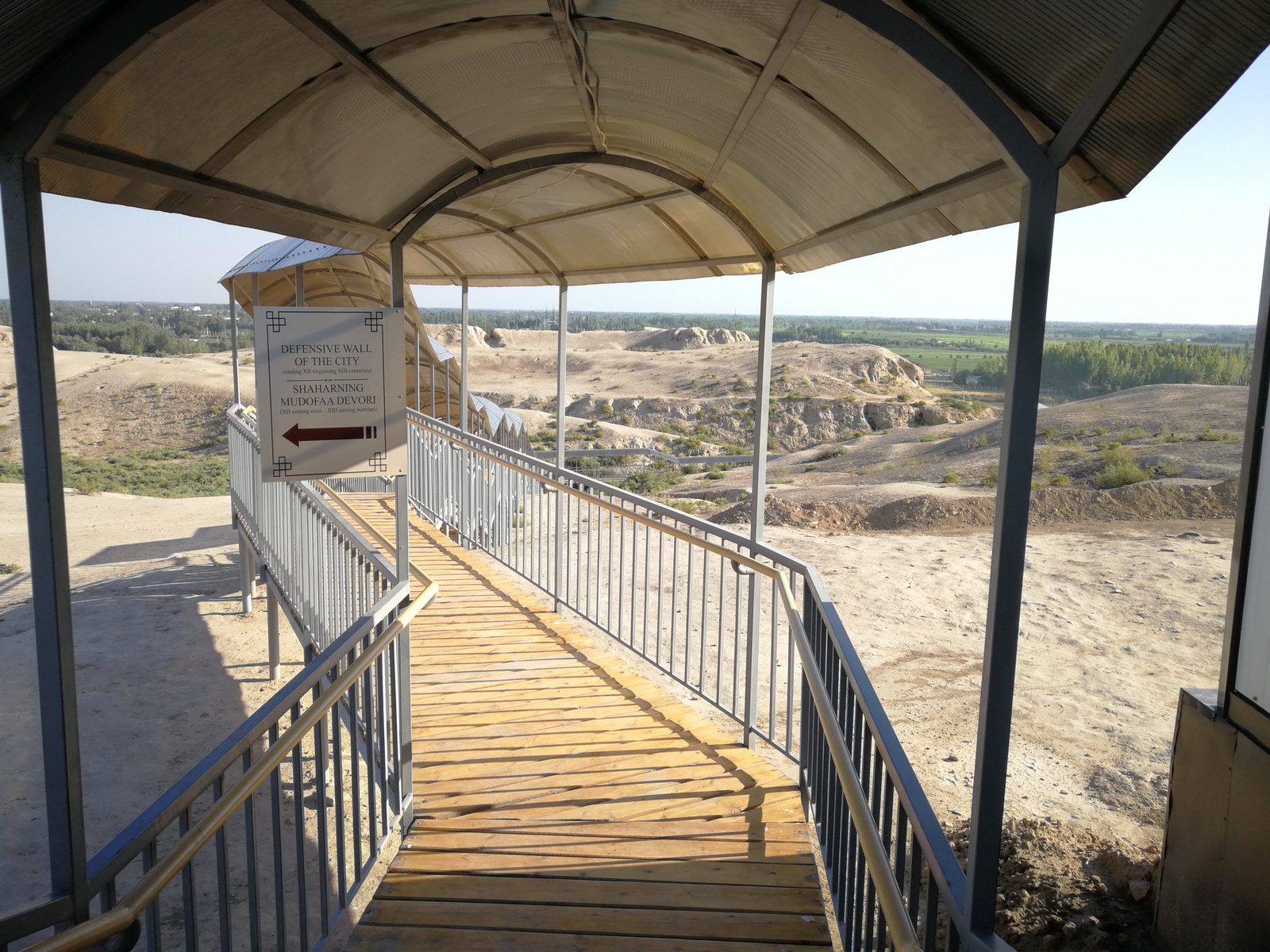
East of the mausoleum runs the brick wall of the old citadel, restored from 1978 on. Its north-eastern gate, with towers on both sides, was rebuilt by the rulers of Kokand between 1843 and 1849. Walk through it and the domes appear framed in the arch.
The Eastern Bath museum
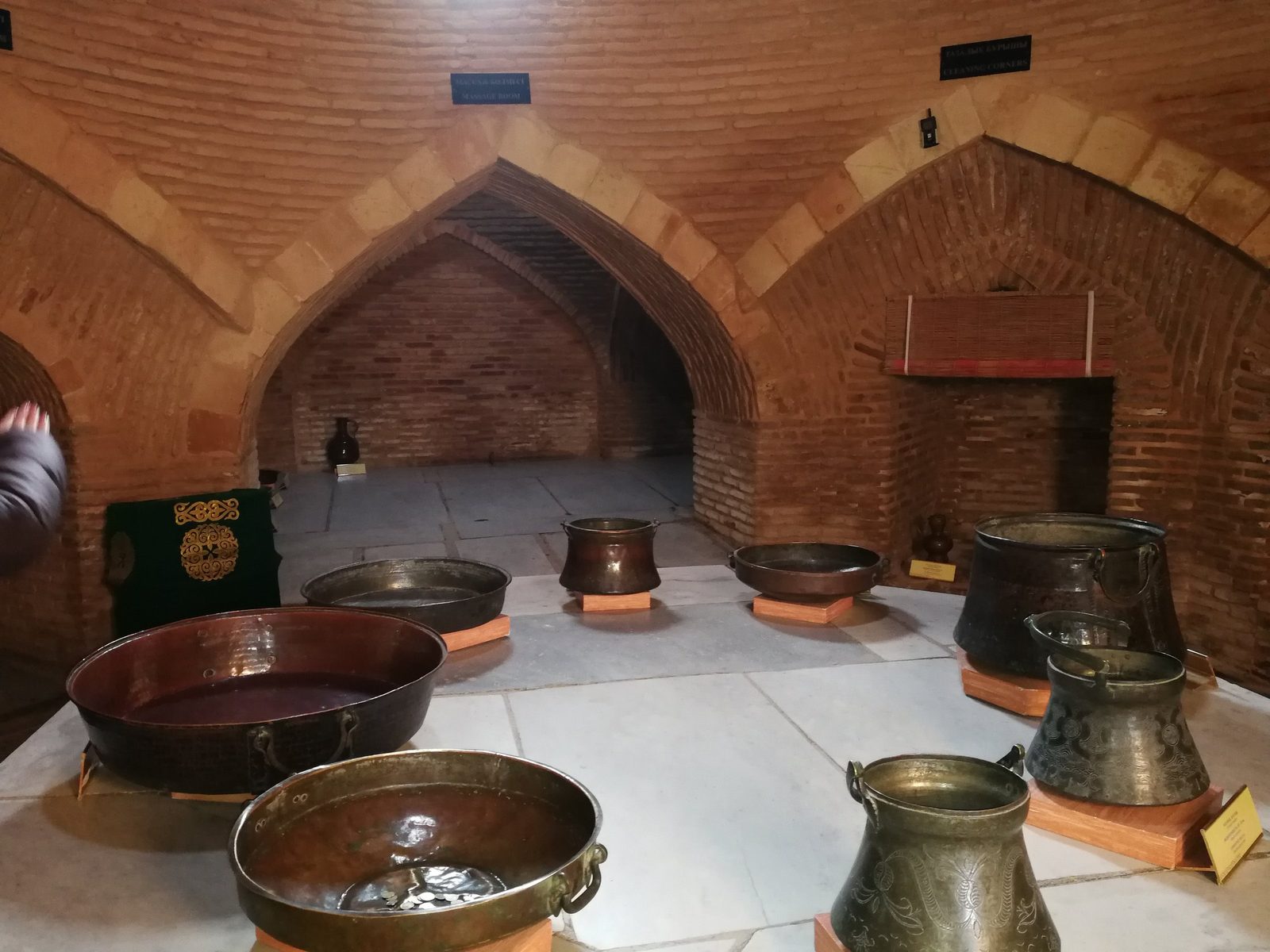
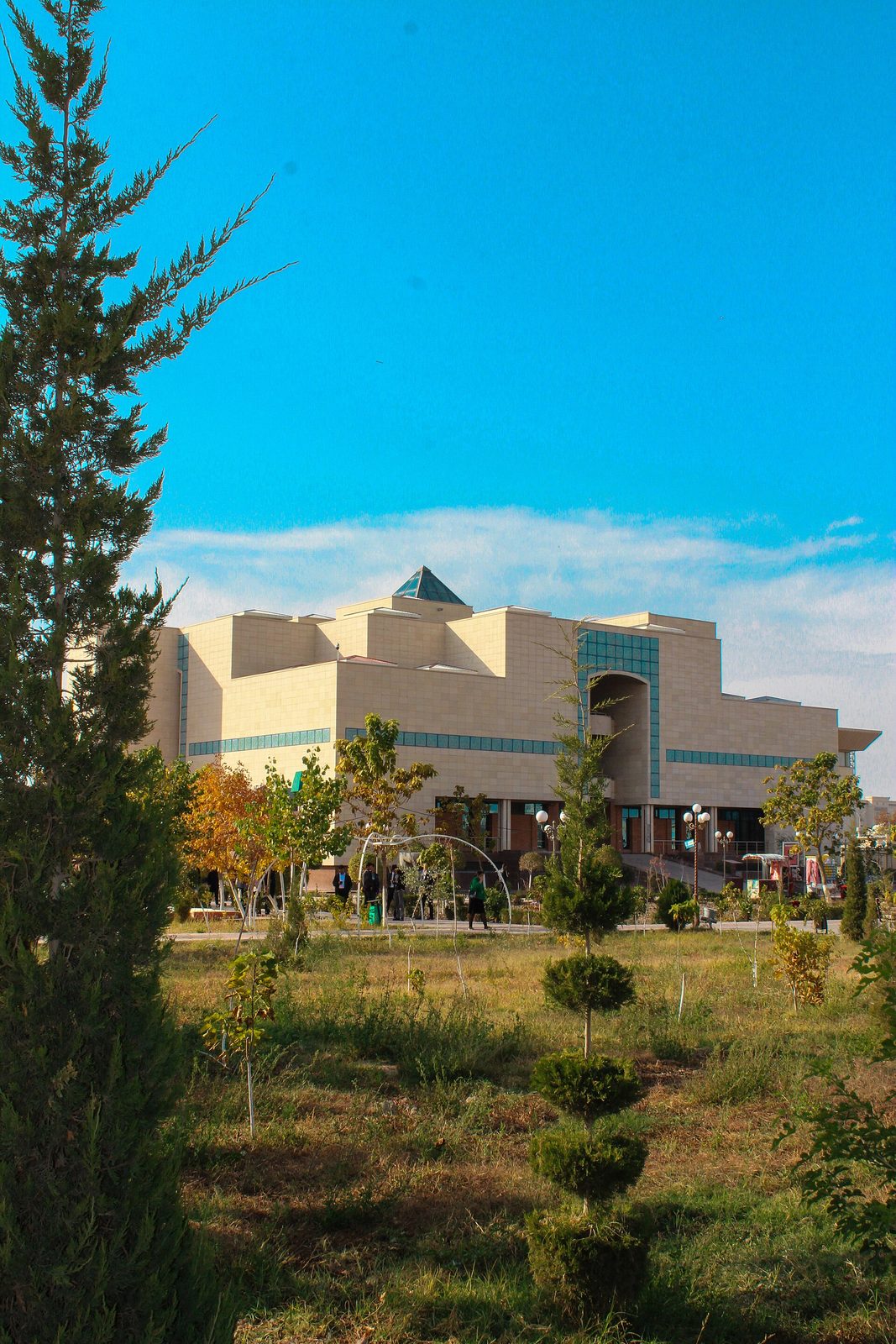
Eighty metres south-west of the mausoleum, half under the ground, is a bathhouse built in the 1580s and 1590s for the many visitors to the shrine. It has nine rooms under five domes, from the changing room to the hot room. Local people used it as a bath until 1975, and since 1979 it has been a museum.
Kultobe: the town before Turkestan
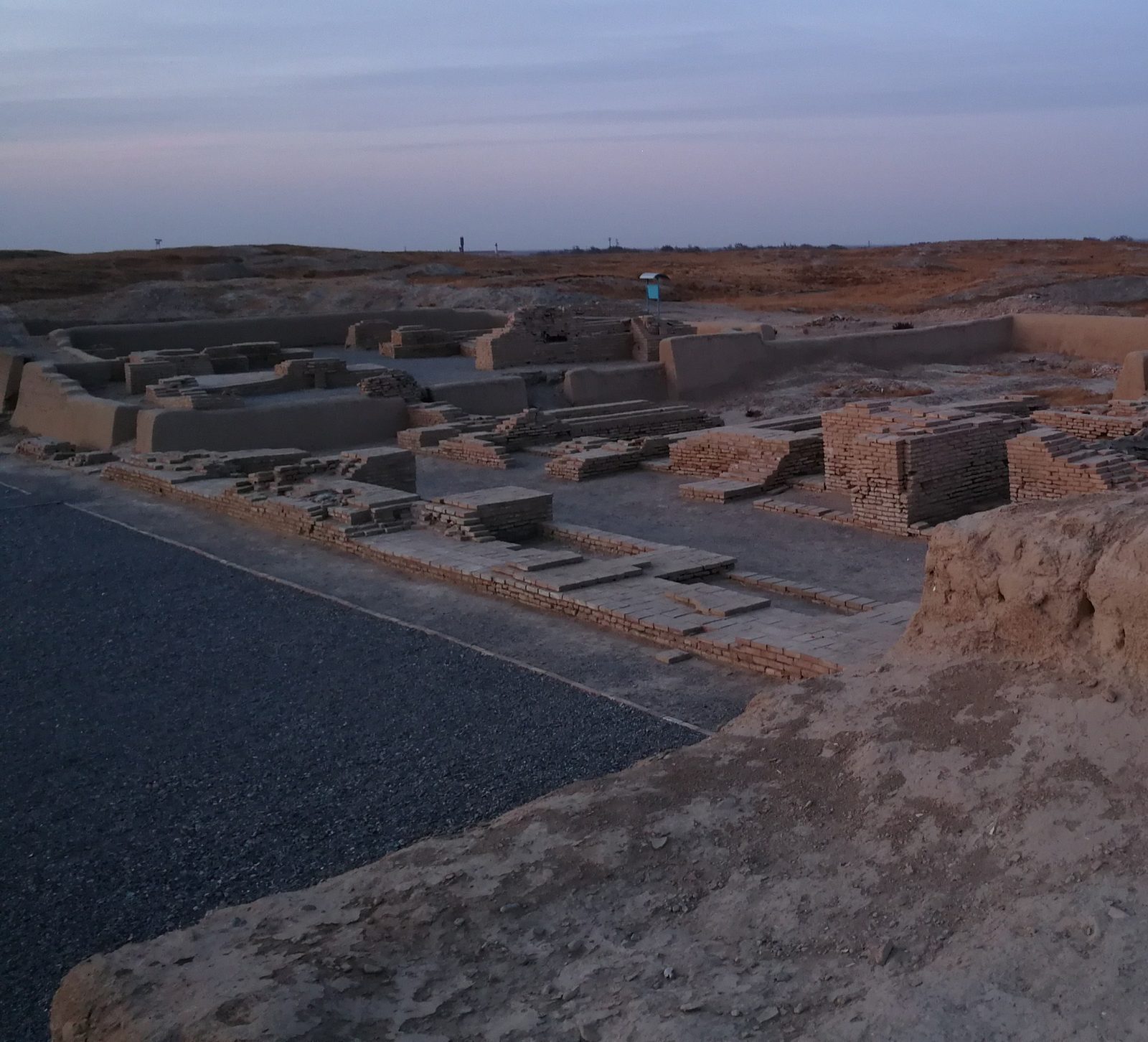
About 350 m south of the mausoleum lies Kultobe, the site of ancient Yasi. People lived here from the 3rd century BC, and the town moved to the area around the shrine only in the late 14th century. Archaeologists are still digging, and the excavated streets and house foundations are laid out under the open sky. Come at sunset, when the low light shows every wall.
Arystan Bab, Otrar and Sauran nearby
If you have more time, three places around Turkestan complete the picture.
- Arystan Bab mausoleum, about 2 km from the ruins of Otrar, around 60 km south of Turkestan. Arystan Bab is remembered as the teacher of Khoja Ahmed Yasawi. The present building dates from 1909, with later restorations.
- Otrar, the ruins of the largest city of its oasis on the Syr Darya, a great mound in open steppe.
- Sauran, 44 km north-west of Turkestan: a late medieval city whose mud-brick walls, 850 by 660 m, still stand 3 to 6 m high in places.
How to get from Tashkent to Turkestan
We go by car with a driver. From Tashkent the road crosses into Kazakhstan towards Shymkent, about 120 km, and then runs another 160 km or so north-west to Turkestan. On the Kazakh side you continue with a Kazakh car and driver. Border formalities take their own time, so on a crossing day we plan nothing tight.
A day trip is possible, but it means about 600 km and two border crossings in one day. We prefer two days: the drive and Arystan Bab on the first, the mausoleum in the morning light on the second.
Entry rules for Kazakhstan depend on your passport, so check yours before you book. If you travel on an Uzbek e-,Entry rules depend on your passport. Once you are here, each stay must be registered within three days, and hotels do it for you; customs and registration rules are in our guide. Read more → you will re-enter Uzbekistan on the way back, so it has to be a double- or multiple-entry visa. How we handle visas and borders on combined trips is in our article on Central Asia tours from Uzbekistan, and the Uzbek rules are in do you need a visa for Uzbekistan.
Opening hours, best time and what to wear
The mausoleum, the underground Kyluet mosque and the Eastern Bath are open every day from 09:00 to 19:00. For foreign visitors entry is 2,000 tenge, so carry some local cash.
The best months are April–May and September–October, with afternoons around 21–29 °C. In July the average afternoon in Turkestan is over 36 °C, and the paths between the monuments are open to the sun.
The reserve’s rules ask visitors not to come in short sleeves. Cover shoulders and knees, and women should carry a light scarf. We explain the customs at mosques and mausoleums in what to wear and etiquette in Uzbekistan; the same applies in Turkestan.
Combine it with Tashkent
Turkestan fits neatly before or after a few days in the capital. Spend a day or two in Tashkent first, with our plan in Tashkent in 1–2 days, then head north. Our two-day private tour to Turkestan from Tashkent covers the drive, Arystan Bab, the Yasawi complex and the museums, with Sauran on request.
In short
- Turkestan is about 300 km from Tashkent by road through Shymkent, with one border crossing each way.
- The Khoja Ahmed Yasawi mausoleum, Kazakhstan’s first UNESCO site, was ordered by Timur and left with its portal unfinished in 1405.
- Inside: the Kazandyk hall and the two-tonne Taikazan, cast in 1399.
- Give it two days, not one, and add Arystan Bab or Sauran.
- Check the Kazakh entry rules for your passport and make sure your Uzbek visa allows a second entry.