Places in this article: Khiva · Samarkand · Bukhara · Tashkent
Honeymoon in Uzbekistan: sunsets in Khiva, a night in a yurt and dinner facing the Registan
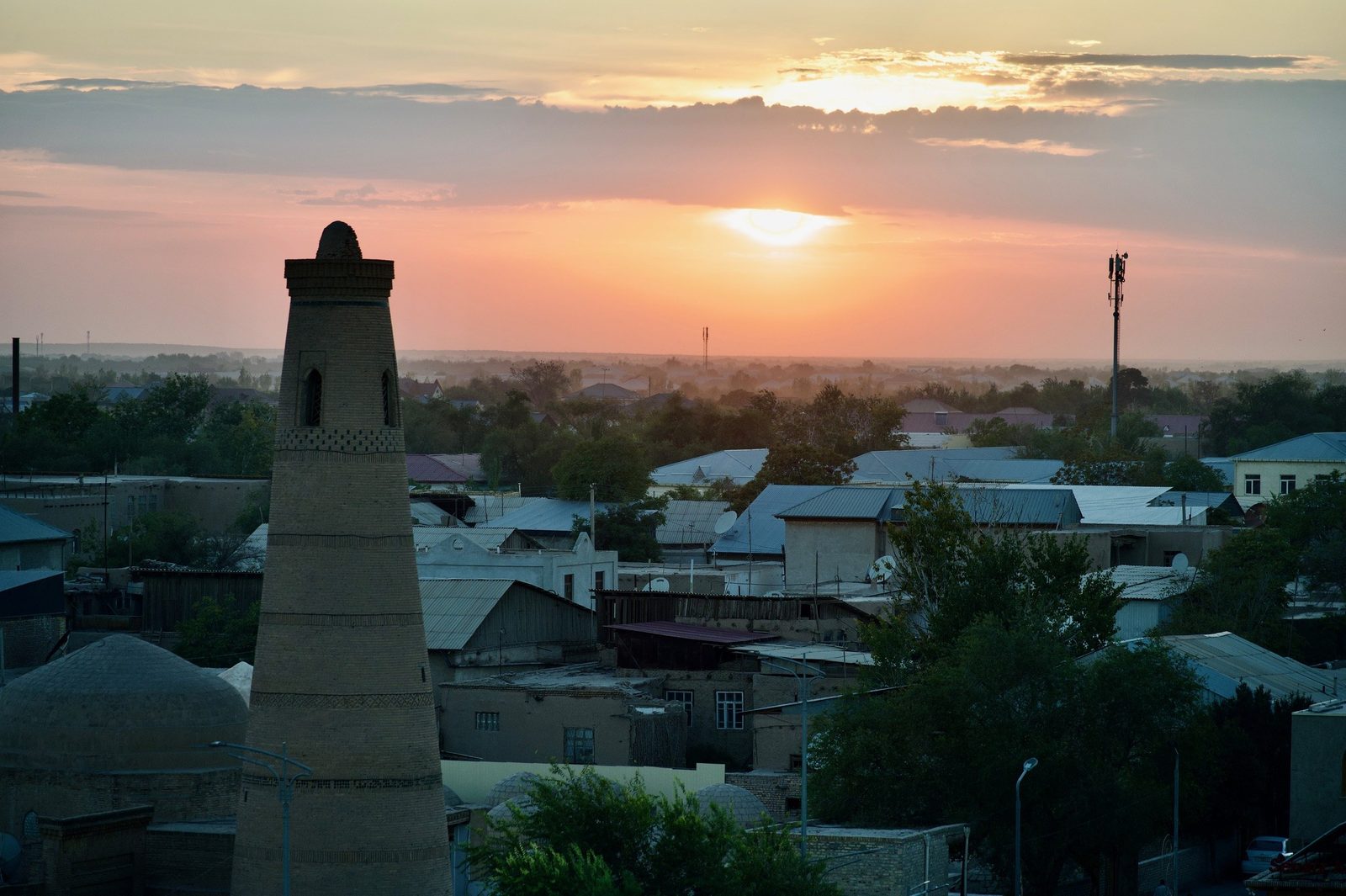
In Khiva the best seat for the sunset is not a restaurant but a watchtower. From the top of ,Did you know? Legend: a White Sheikh lived at the top of the Kunya-Ark Legend says a holy man, Ak Sheikh Bobo, the White Sheikh, lived in a cell on the highest point of the hill long before the khans. What is known: the citadel was first built in 1686–1688, and his cell later served as a watchtower and powder store. Read more → in the last hour of light, the domes, minarets and flat clay roofs of the old town come together into one picture, and an hour later you can be at dinner on a terrace facing the walls of .Did you know? People still live inside Khiva's museum city Itchan Kala packs more than 50 historic monuments and about 250 old houses inside clay walls 8–10 m high and 5–6 m thick, and families still live and work in its lanes. Read more → We are a tour operator in Tashkent, and this is our guide to a honeymoon in Uzbekistan: the seasons, the evenings worth planning a day around, a night in a yurt, the mountains near Tashkent and a route for two.
When to go
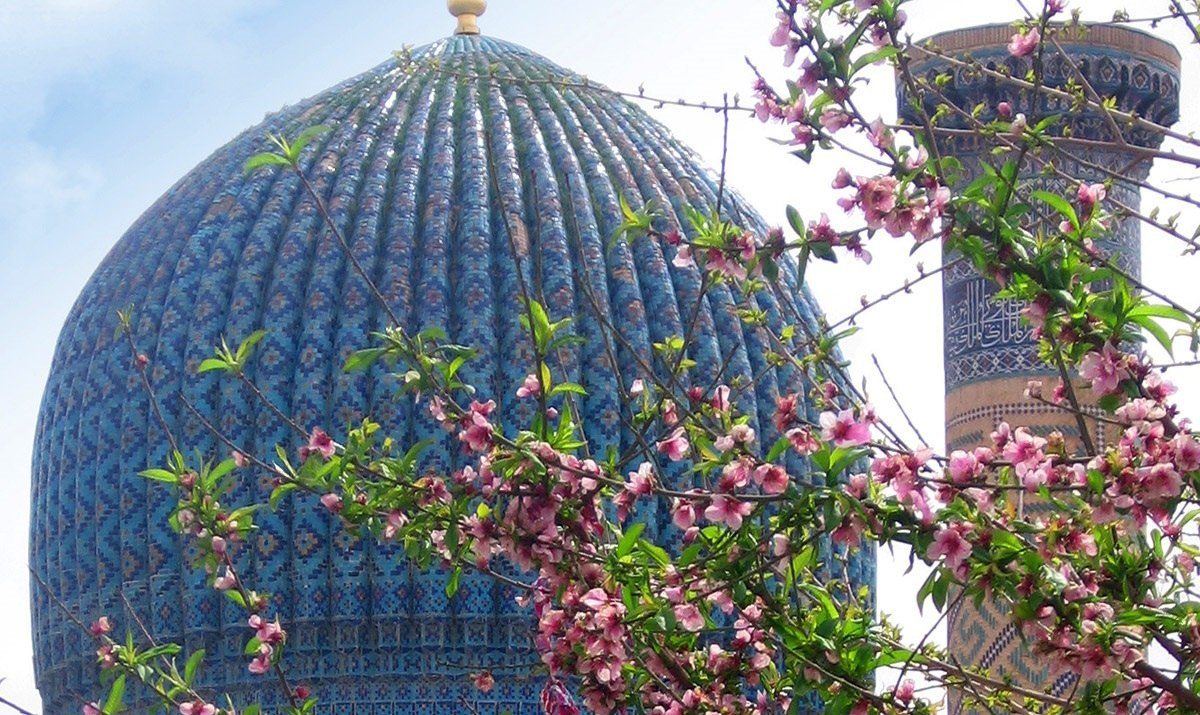
For a honeymoon in the cities we recommend spring and autumn. In May the average afternoon in Tashkent and Samarkand is 27–28 °C, in October about 22 °C, and the evenings are warm enough to sit outside, which matters on a trip built around sunsets and terrace dinners. April and September are just as good: see Uzbekistan in April and in September.
From June to August afternoons reach 35–37 °C. If summer is your window, we plan the monuments for mornings and evenings and give you a day in the mountains, where it is about ten degrees cooler. Winter is the quiet season: the cities are calm, and from December to March there is snow at Amirsoy, but the yurt camps at Did you know? Aydarkul is a wetland of international importance In 2008 the Aydar-Arnasay lake system, about 527,000 ha, became a Ramsar site. It lies where two great bird flyways cross and shelters Dalmatian pelicans and the rare white-headed duck. Read more → are closed. Month by month: weather in Uzbekistan by month.
Samarkand: the Registan after dark
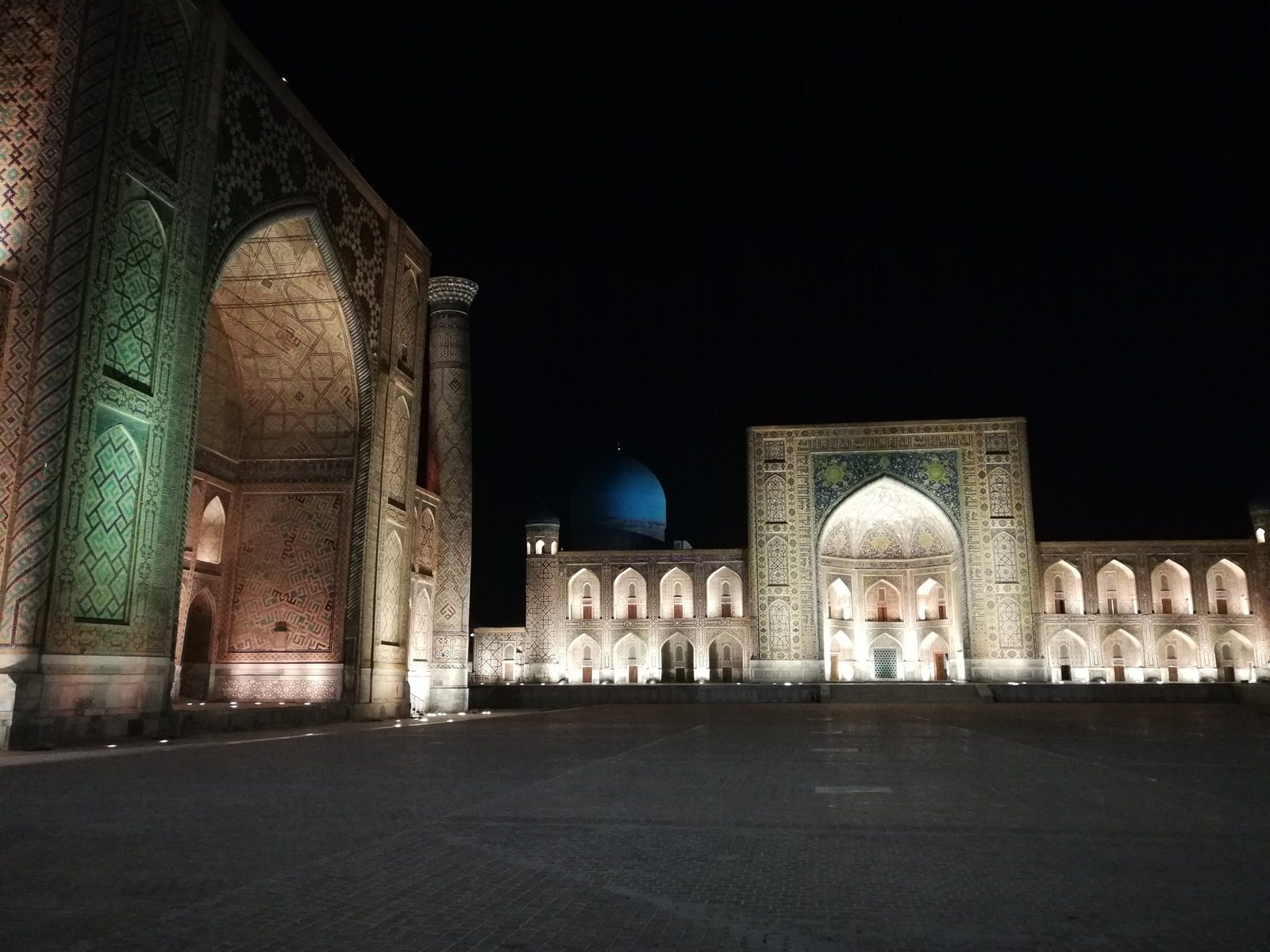
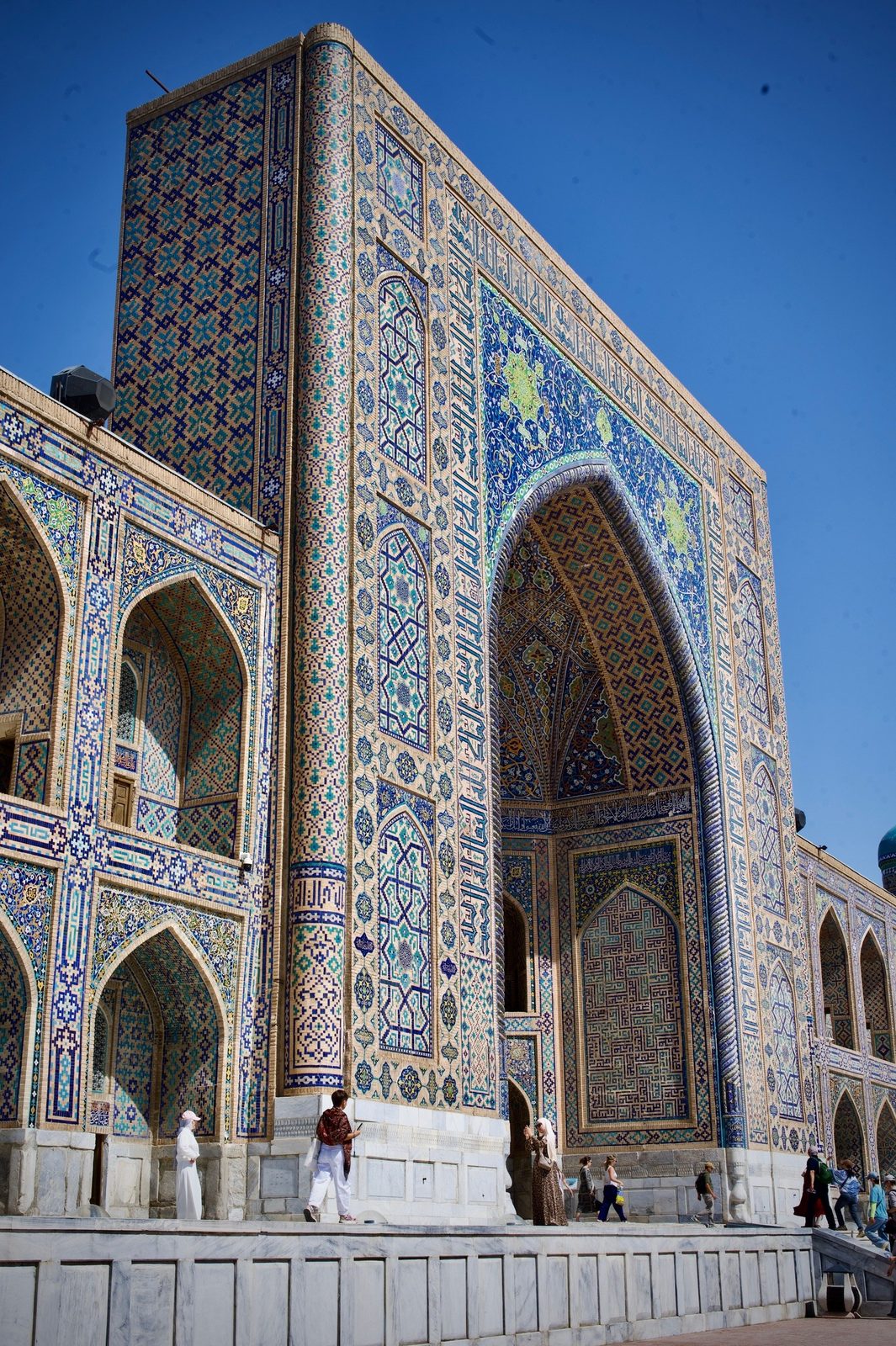
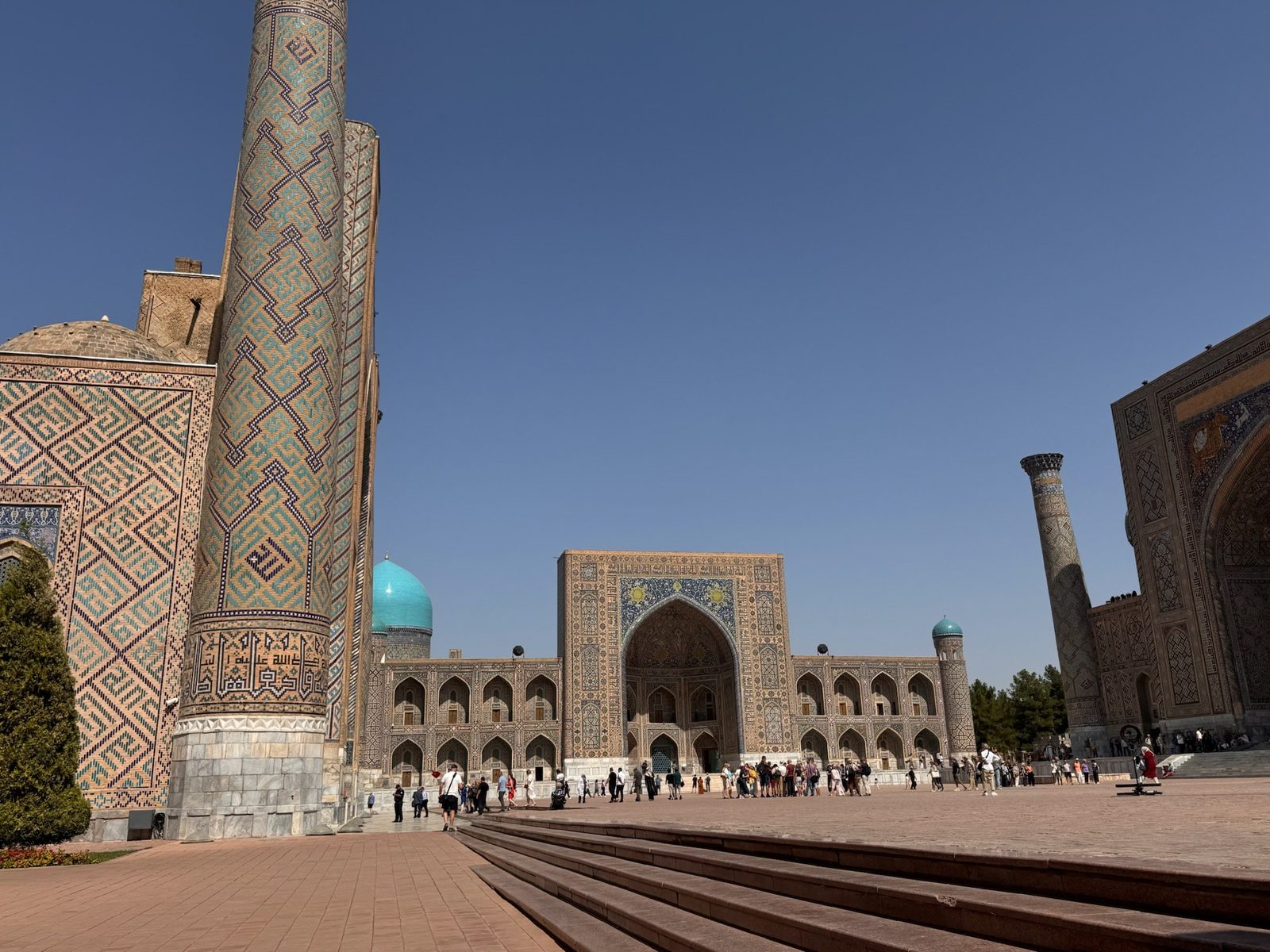
By day the Did you know? The Registan's sun-carrying lion went on a banknote The Sher-Dor Madrasah (1619–1636) is named for the big cats with the sun on their backs on its portal. The image appeared on the reverse of Uzbekistan's 200-som note of 1997. Read more → is a lesson in tilework. After dark it becomes a stage: all three An Islamic college: student cells and classrooms around a courtyard behind a grand portal. In the old towns many now house museums and craft workshops. facades are floodlit, and on some evenings a sound-and-light show throws 3D projections across them. The show pauses at times for maintenance, so we check the schedule on the day. We can arrange the Registan with its evening lights for any evening of your stay; the history of the square is in our guide to the Registan.
Then dinner, with the square still in view: we book a dinner on a terrace with wine and a view of the Registan. For a day around wine, the Bagizagan winery, about 25 km from the city, shows you its cellar and pours its wines with cheese, fruit and nuts: our wine tasting at Bagizagan. In Uzbekistan alcohol is sold only to people aged 21 and over, so carry your passports.
Bukhara: evenings by the water
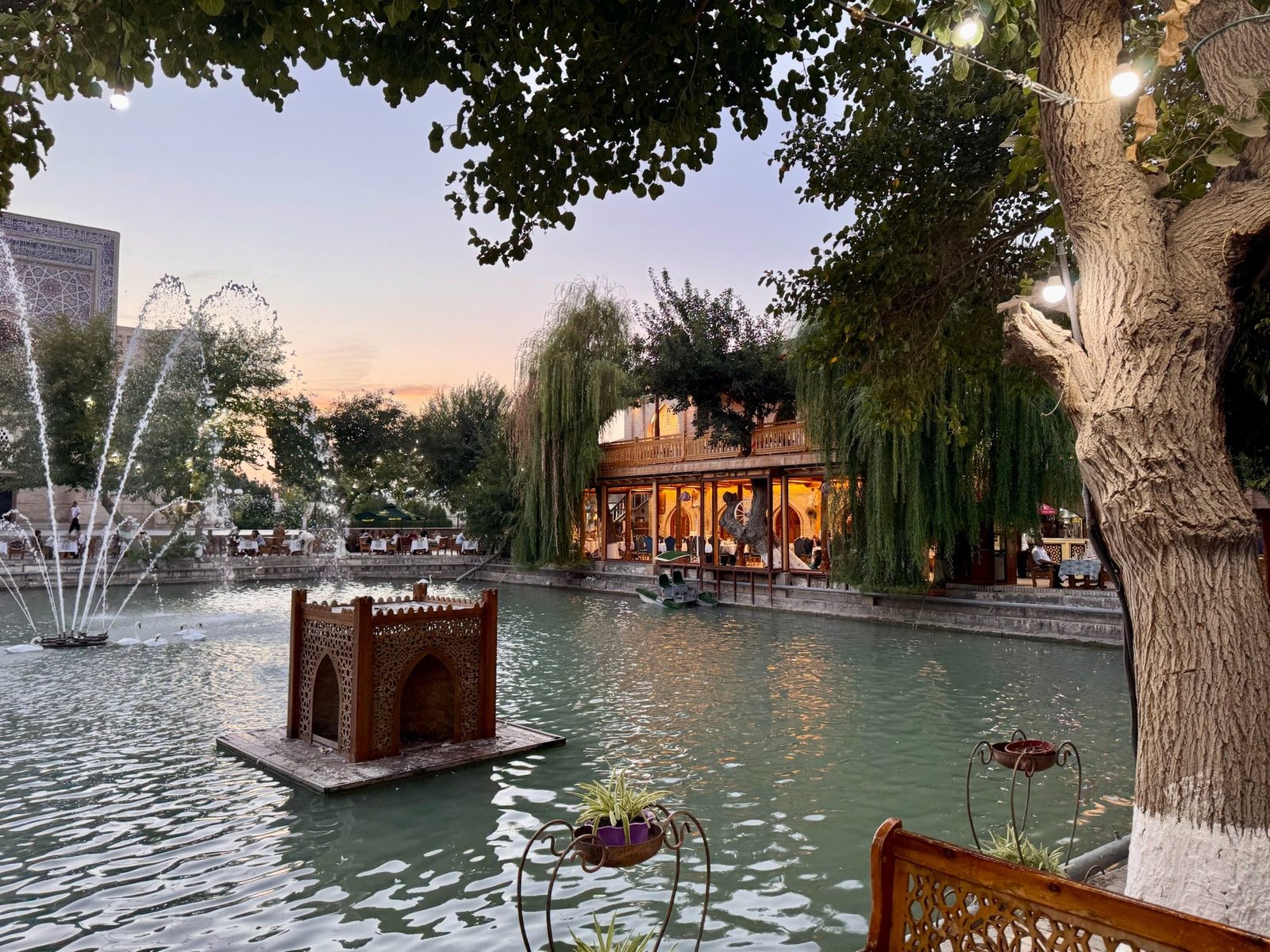
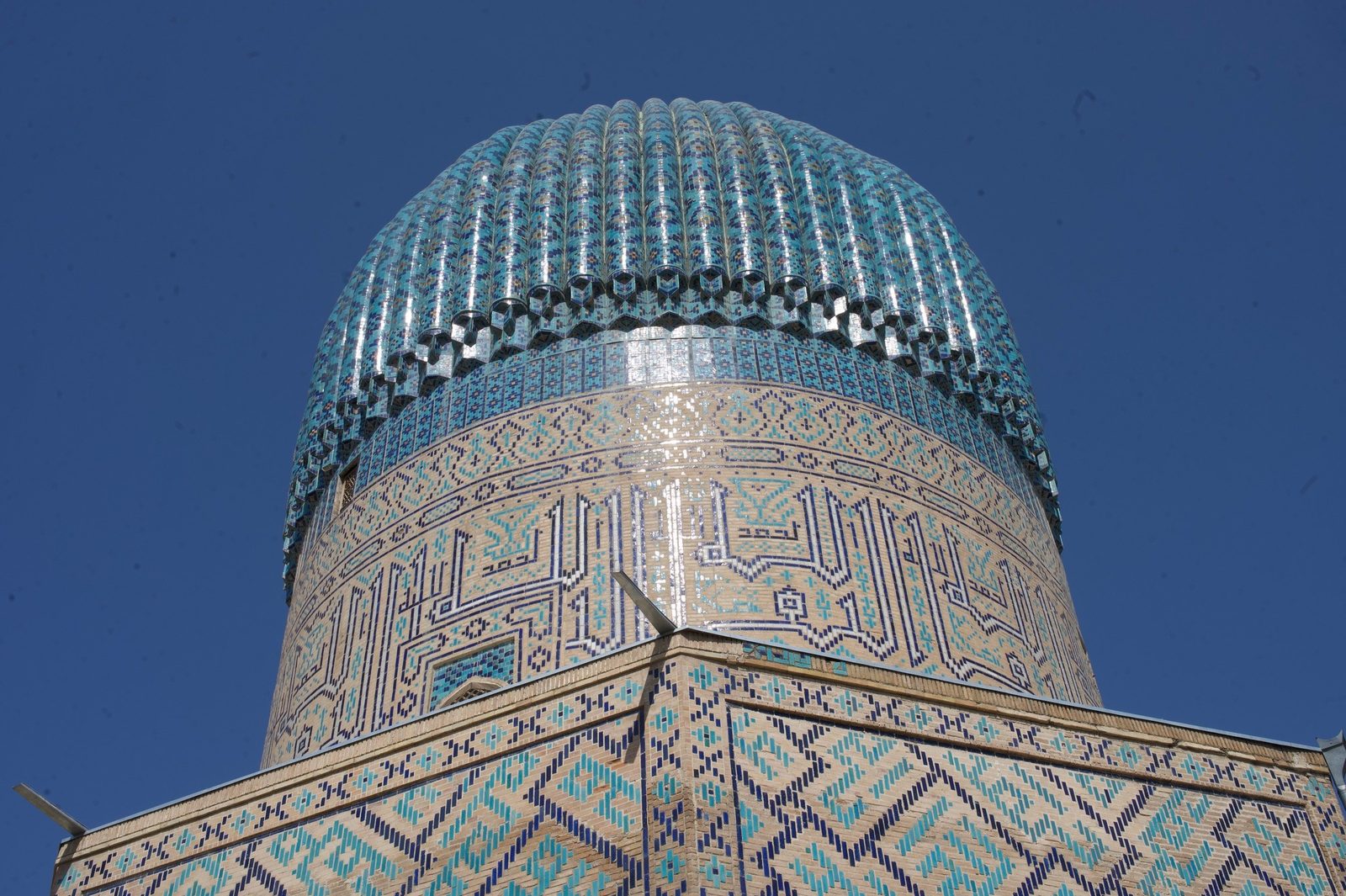
Bukhara spends its evenings at :Did you know? Bukhara's ponds were once its water supply Pools like Lyabi-Hauz, dug around 1620 and 46 × 36 m, were the city's main source of water. Most were filled in during the 1920s–30s because they spread disease; Lyabi-Hauz survived. Read more → A teahouse: green tea, plov and conversation on wide wooden beds called topchan. tables along the water and the lights of the madrasahs reflected in the pond. A few minutes’ walk away, the ,Did you know? Diggers went 13 m down and never found its base The Kalyan Minaret of 1127 rises about 46 m, and an excavation reached 13 m without finding the bottom of its foundations. Genghis Khan reportedly ordered it spared. Read more → built in 1127, and the whole Did you know? Legend: the minaret's foundation was laid with camel milk Legend says master Bako laid the foundations of the Kalyan minaret with ganch plaster mixed with camel milk, then vanished for two years to let them harden, and only then built the tower. Locals still show a grave they say is his. Read more → ensemble are lit up after dark. Both are in our guides to Lyabi-Hauz and Poi Kalyan.
For an evening that no restaurant can give you, we arrange dinner as guests of a local family, with the transfer included. Our plan for the city is Bukhara in 1, 2 or 3 days.
Khiva at sunset
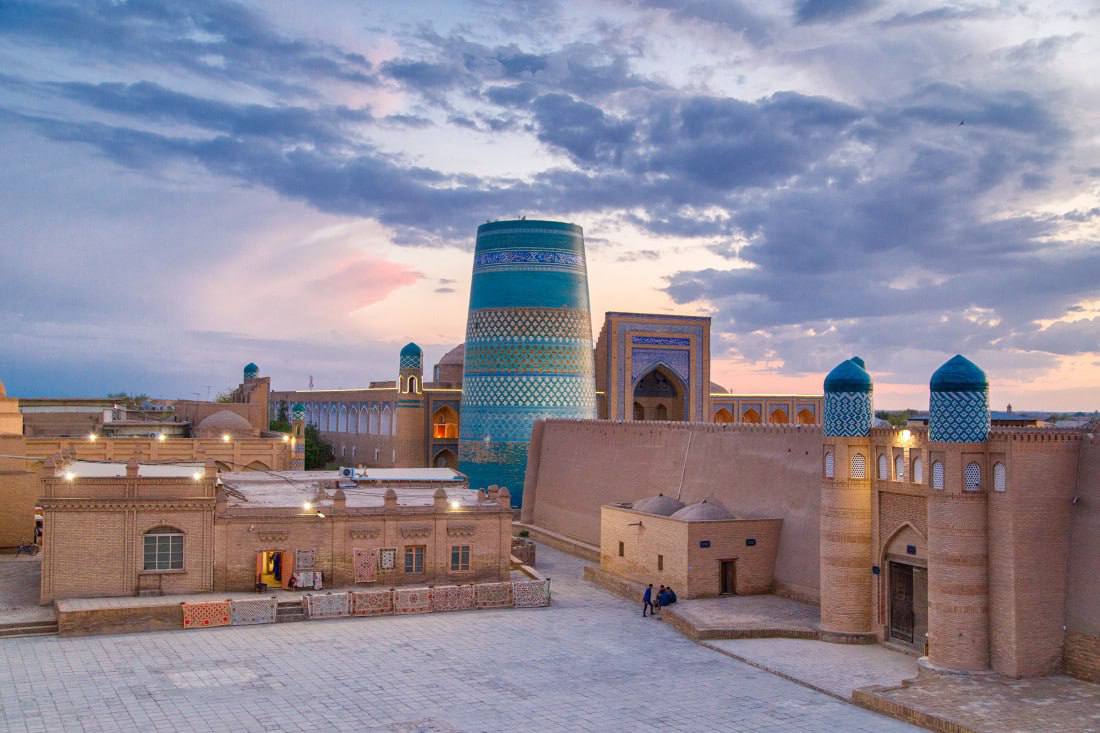
In the late afternoon the low sun falls on the ,Did you know? A 14-metre-wide base for a tower that stopped at 29 m Kalta Minor was begun in 1852 and meant to reach 70–80 m, but work halted in 1855 at about 29 m when its khan died. It is said to be the only minaret covered entirely in glazed tiles. Read more → begun in 1852 and stopped at about 29 m in 1855: the only minaret covered entirely in glazed tiles. In the last hour of light, climb the Ak Sheikh Bobo watchtower of the Did you know? In the khan’s courtyard a round platform waited for a yurt The Kunya-Ark, the khans’ citadel, had its own mint, arsenal and harem. In the courtyard of its reception hall of 1804–1806 stands a round platform: a yurt was set up on it, and there the khan received envoys of the steppe nomads. Read more → for the view over the whole town. A café terrace on a roof is the relaxed alternative. If you can, spend a night inside the walls: by evening, when the day groups have gone, the lanes are quiet again.
For dinner we book a terrace with wine and a view of Ichan-Kala. Or take a taxi to Arda Khiva, the new quarter on Lake Govuk, opened in May 2025: a canal with gondolas runs through it, and a ride takes about 15 minutes, with up to four people in a boat. How to fit it all in: Khiva in 1 or 2 days.
A night in a yurt in the desert
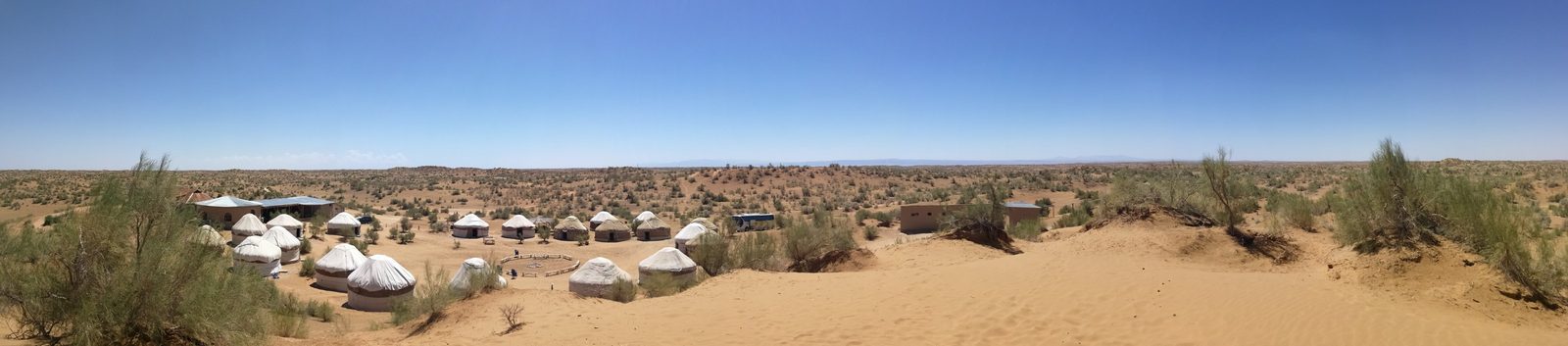
The night most couples remember is the one away from the cities. Between Samarkand and Bukhara lies Aydarkul, a lake that appeared in the The Kyzylkum, or Red Sands: the desert between the Amu Darya and Syr Darya rivers that the road and the railway cross on the way to Khiva. after a flood in 1969 and is now nearly 250 km long. The yurt camps on its shore offer a camel ride on the sand, dinner by the campfire, often with folk music, and a night in a felt yurt, then a morning by the water. Conditions are basic. The camps stand far from city lights, and a night close to the new moon is the darkest for the stars. They work in spring, summer and autumn, not in winter; what to expect is in our guide to Aydarkul and its yurt camps.
Pack a warm layer for the night: the desert cools quickly after sunset.
The mountains near Tashkent
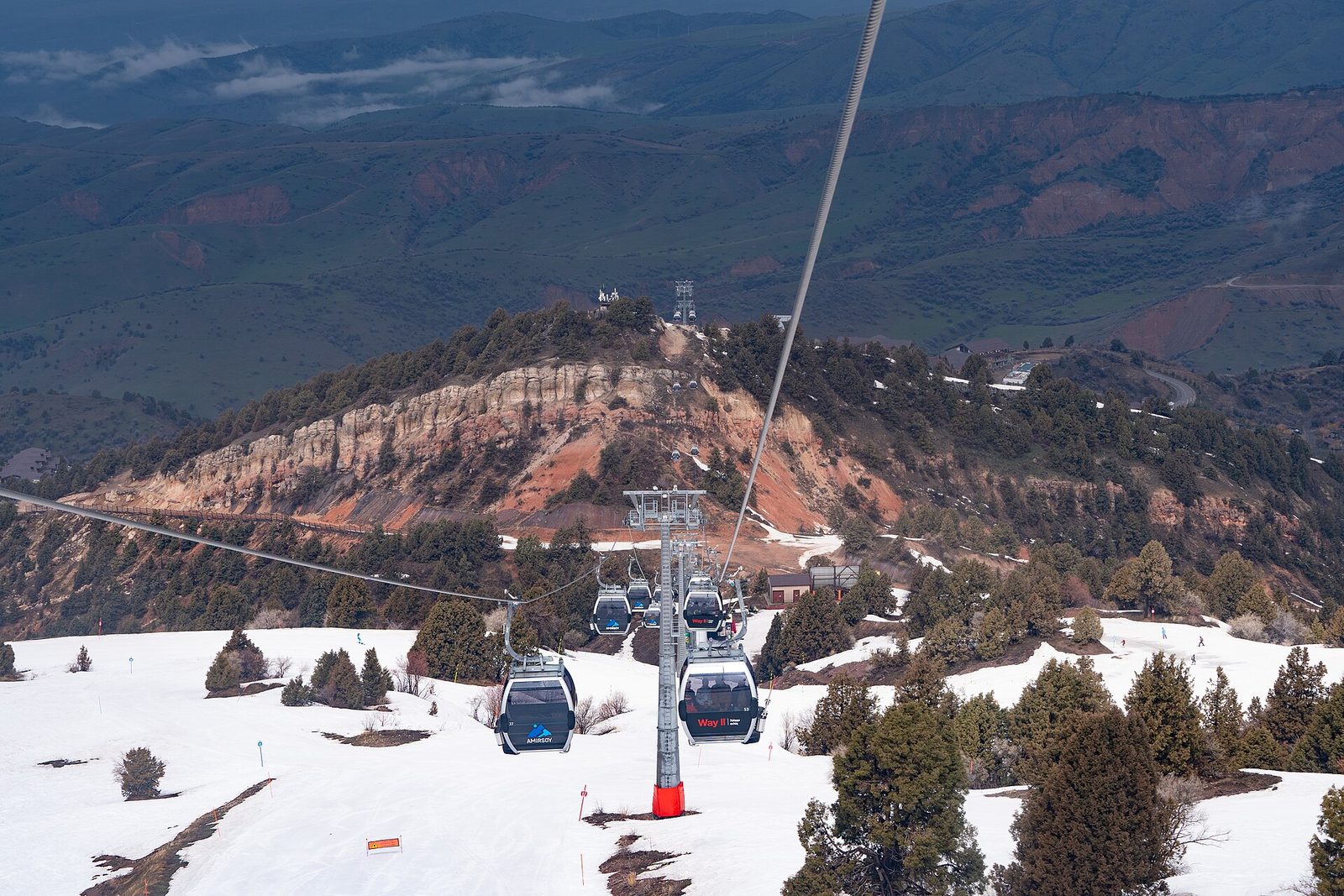
Amirsoy, the mountain resort that opened in December 2019, is 65 km from Tashkent, about an hour and a half by car. Two gondolas run in winter and in summer, all the way to 2,290 m. The resort’s chalets each have a fireplace and a terrace, and there is a heated outdoor pool, a hammam and a spa for the end of the day. In winter the slopes are open from December to March, depending on snow; in July the average afternoon at ,Mountains of the Western Tian Shan about 80 km from Tashkent: hiking in summer, skiing in winter, the Charvak reservoir nearby. Read more → in the same mountains, is 26.2 °C, against 35.9 °C in Tashkent.
For one day out of the city we arrange Amirsoy and Chinorkent with lunch and a cable-car ride. Everything about the resort is in our Amirsoy guide, and for a winter trip there is our ski weekend in the Tashkent mountains.
Photos for two, and a celebration
Plan your photos around the last hour before sunset and the first hour after sunrise, when the low sun warms brick and clay and makes glazed tiles glow. The Registan and Poi Kalyan are at their best just after sunset, against a deep blue sky. Where to stand in each city is in our guide to photo spots in Uzbekistan. Two rules: ask before you photograph people, and drones need prior permission.
How we stage a celebration you can see in our birthday tour in Samarkand: a golden-hour photo session in national costume at the Registan, an actor-led walk through the old town and a festive dinner in a madrasah courtyard or caravanserai with live music and dance. It is made for groups of four or more, so it fits a honeymoon if family or friends come along. Travelling as two, tell us which parts you would like, and we will tell you what we can arrange.
A honeymoon route for 8 to 10 days
This is the route we build most often for couples. Two days in Tashkent, or one in the city and one at Amirsoy. Two nights in Samarkand, reached by the Uzbekistan's high-speed train: Tashkent to Samarkand in about 2 hours 10 minutes, Tashkent to Bukhara in about 4 hours. Tickets are tied to your passport. Read more → high-speed train. A car through Did you know? Legend credits Alexander with Nurata's underground canals Legend says Alexander the Great founded Nur in 327 BC and laid its kariz, underground channels with wells dug a few metres apart for cleaning. Whoever built them, parts of the kariz near Nurata still carry water today. Read more → to a yurt camp at Aydarkul, and on the next day to Bukhara for two nights. Then Khiva for two nights, and a flight back to Tashkent from Urgench. How the cities connect is in trains in Uzbekistan and Khiva to Bukhara.
The bones of it are our tours: the 8-day classic tour, the classic at a gentle pace with fewer early starts, and the wine tour of Tashkent and Samarkand. We add the yurt night, swap a city day for the mountains and leave the evenings free for the dinners above. On our tours your guide speaks your language, and that is included in the price; for the services you book on the spot, the language of the guide is by arrangement. Not sure where to start: try our tour finder.
Before you go
- Getting there. International flights land in Tashkent, and some in Samarkand, Bukhara and Urgench: see flights to Uzbekistan. Entry rules are in our article on visas.
- How long. Eight to ten days covers the four cities with one night in the desert; seven days is enough without Khiva.
- What to pack. A warm layer for desert evenings, comfortable shoes for the sand and the old towns, and clothes that cover shoulders and knees for mosques and shrines: more in what to wear.
- Wine. Tastings and wine dinners are for guests of 21 and over; take your passports.
- Book the evenings early. Tell us your dates and we reserve the terrace dinners and the yurt night along with the hotels.
In short
- Go in spring or autumn; in summer add the mountains, in winter skip the Aydarkul camps.
- Samarkand: the Registan floodlit after dark and a terrace dinner facing it. Bukhara: Lyabi-Hauz in the evening. Khiva: sunset from the Ak Sheikh Bobo watchtower.
- Spend one night in a yurt at Aydarkul, between Samarkand and Bukhara.
- Amirsoy is an hour and a half from Tashkent: gondolas to 2,290 m, chalets with fireplaces, snow from December to March.
- Eight to ten days covers it all; tell us your dates, and we book the evenings with the hotels.
© Photos
- Gondola cabins above the slopes of Amirsoy — Iplossusvulpes19 / Wikimedia Commons · CC BY-SA 4.0