
 Deutsch
 English
 Español
 Français
 Italiano
 Özbekça
 Polski
 Português
 Suomi
 Svenska
 Türkçe
 Ελληνικά
 Български
 Русский
 עברית
 한국어
 中文
 日本語
Places in this article: Samarkand · Tashkent
Stargazing in Uzbekistan: Ulugh Beg's observatory, the Solar Furnace and a night in the desert
On the platform of Did you know? A metro station where Ulugh Beg meets Gagarin Kosmonavtlar station, opened in 1984, has ceramic medallions of Ulugh Beg, Galileo, Icarus, Gagarin and Tereshkova, and glass stars in the ceiling that hint at the Milky Way. Read more → in Tashkent, a round ceramic medallion of Did you know? Ulugh Beg measured the year to within 25 seconds Working at his Samarkand observatory, Ulugh Beg put the tropical year at 365 days 5 h 49 min 15 s, about 25 seconds too long, closer than Copernicus a century later. Read more → is set into the same blue wall as Yuri Gagarin. The astronomer-ruler of Samarkand and the first man in space share one station. People here have measured the sky since the 15th century, and they still do.
We are a tour operator in Tashkent, and stargazing in Uzbekistan is a trip we put together around four places: the observatory in Samarkand, the ,Did you know? A metro designed to ride out a magnitude-9 earthquake The three original lines of the Tashkent Metro were built to withstand an earthquake of magnitude 9.0, and the tunnels lie unusually shallow, only 8–25 m below the street. Read more → the Did you know? A solar furnace near Tashkent catches the sun with 62 mirrors The Big Solar Furnace near Parkent, about 45 km from Tashkent, has worked since 1987. A field of 62 heliostats sends sunlight onto a parabolic concentrator of 10,700 small mirrors, and the heat is used to test and make new materials. Read more → in the foothills and a night far from city lights in the .The Kyzylkum, or Red Sands: the desert between the Amu Darya and Syr Darya rivers that the road and the railway cross on the way to Khiva. Below: what you see at each one and how they fit into our 5-day astronomy tour.
In short
- Did you know? A former teacher found the lost observatory in 1908 After Ulugh Beg's death his observatory was taken apart for its bricks and even its site was forgotten. Vasily Vyatkin, keeper of Samarkand's monuments, traced it through a 17th-century land deed and in 1908 dug up the great marble arc. Read more → in Samarkand was built in the 1420s; the underground arc of its giant sextant, about 40 m in radius, is still on the hill.
- His team listed 1,018 stars in the Zij-i Sultani, finished in 1437.
- The Solar Furnace near Parkent, 45 km from Tashkent, focuses sunlight from 10,700 mirrors to up to 3,000 °C, and it is open to visitors.
- For the dark sky, we take you to a yurt camp by Did you know? Aydarkul is a wetland of international importance In 2008 the Aydar-Arnasay lake system, about 527,000 ha, became a Ramsar site. It lies where two great bird flyways cross and shelters Dalmatian pelicans and the rare white-headed duck. Read more → in the Kyzylkum. The camps work in spring and autumn, not in winter.
Contents
Ulugh Beg's observatory in Samarkand
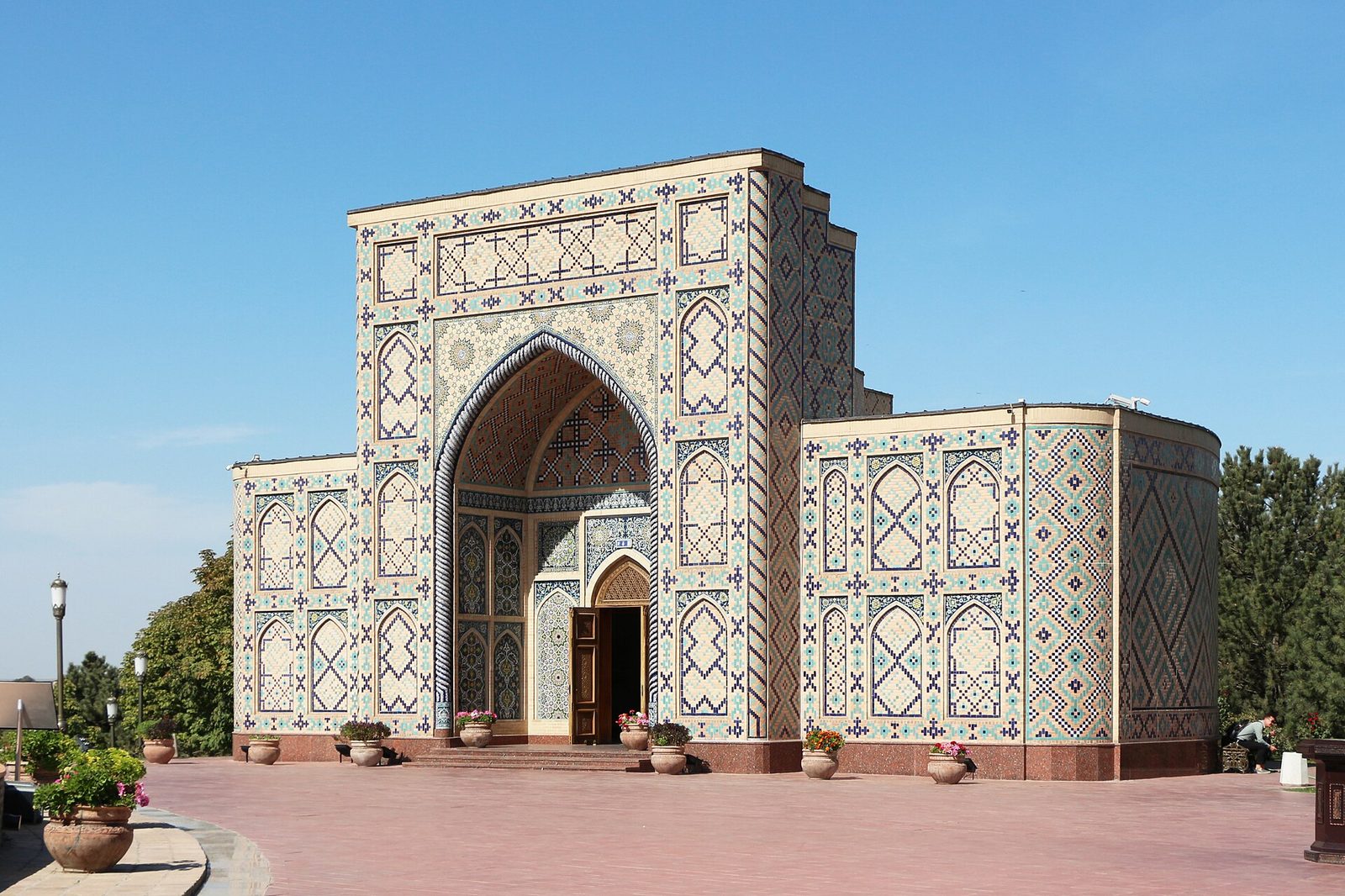
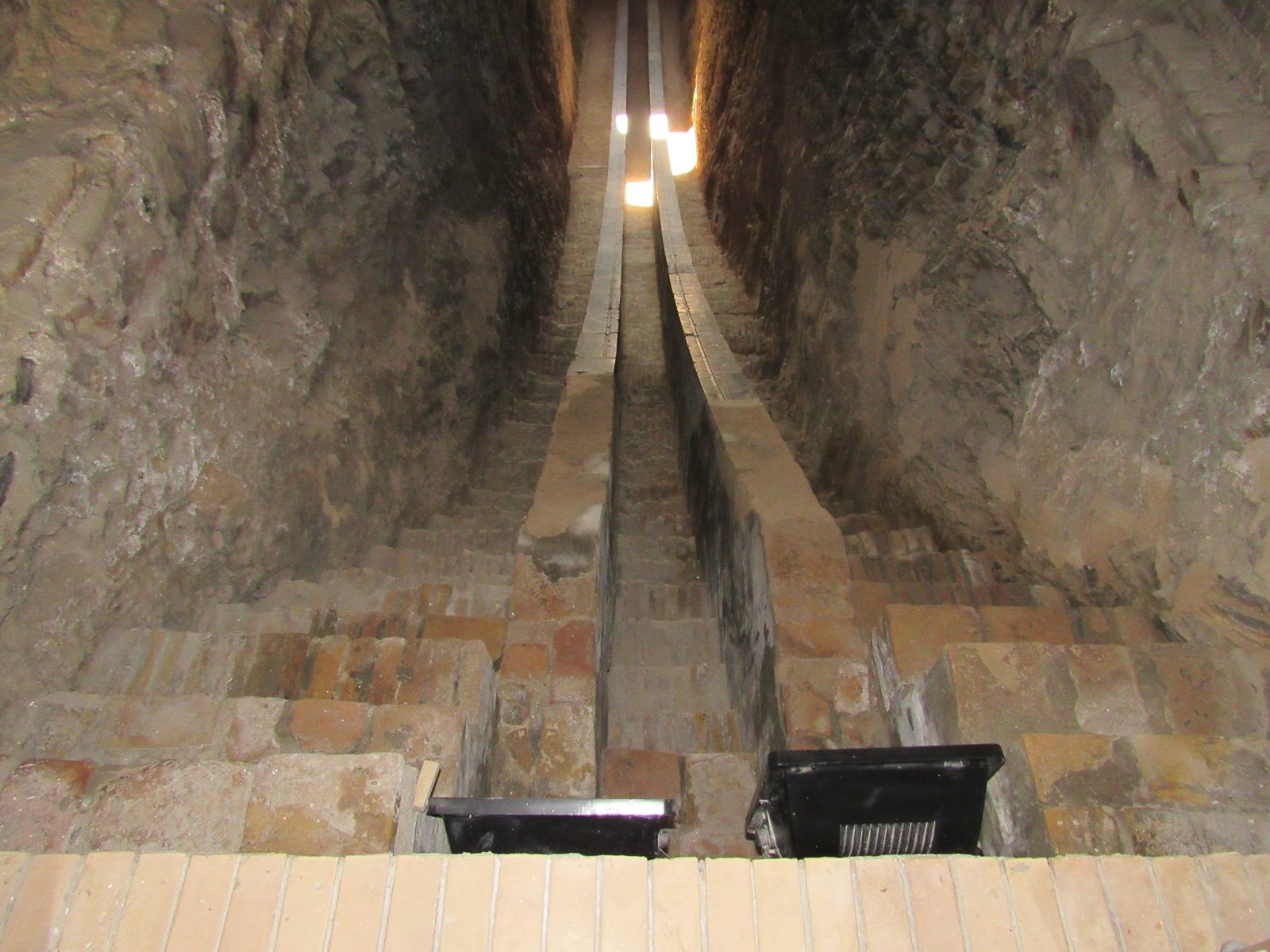
Ulugh Beg, Amir Timur (Tamerlane, 1336–1405), founder of the Timurid empire, which had its capital in Samarkand. Born near Shahrisabz. Read more →'s grandson, ruled Samarkand and studied astronomy himself. In the 1420s he built an observatory on a hill outside the city. Its main instrument was the Fakhri sextant, an arc with a radius of about 40 metres set into a trench in the rock. On a scale that large, one degree took up about 70 cm, which let his astronomers read angles closely without a telescope.
With it they compiled the Zij-i Sultani, a catalogue of 1,018 stars finished in 1437. After Ulugh Beg's death the building was destroyed in 1449 and forgotten. The archaeologist Vasily Vyatkin found the buried arc in 1908. Today you go down a few steps into the trench and see the two stone rails of the sextant disappear into the dark. A small museum, built in 1970, stands next to it.
In town, the Did you know? Engineers pulled a leaning minaret back upright By 1920 a minaret of the Ulugh Beg Madrasah on the Registan was tilting. In 1932 engineer Vladimir Shukhov straightened it; the second minaret was set upright in 1965. Read more → on the ,Did you know? The Registan's sun-carrying lion went on a banknote The Sher-Dor Madrasah (1619–1636) is named for the big cats with the sun on their backs on its portal. The image appeared on the reverse of Uzbekistan's 200-som note of 1997. Read more → built in 1417–1420, is where he brought astronomers and mathematicians to teach. Our guide shows you both, the school and the instrument. More detail is in our article on the Ulugh Beg Observatory.
Stars underground: Kosmonavtlar station in Tashkent
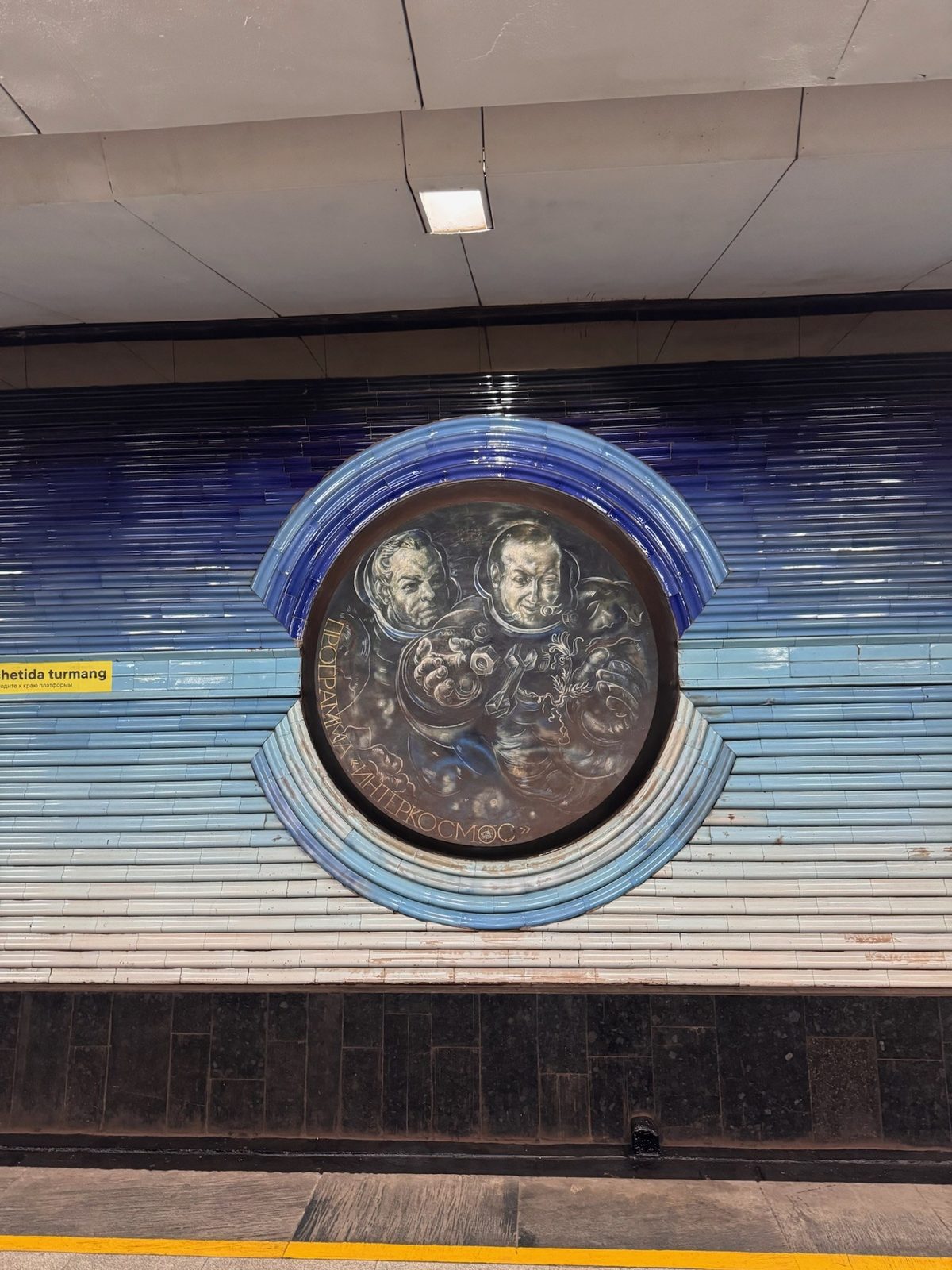
Kosmonavtlar opened on 8 December 1984. The walls run from pale to deep blue, like the sky getting darker on the way up, and glass stars in the ceiling trace the Milky Way. Twelve ceramic medallions show people of astronomy and spaceflight: Ulugh Beg, Galileo, Gagarin, Valentina Tereshkova and others.
In July 2026 the station became part of the UNESCO World Heritage site Tashkent Modernist Architecture. On our tour you ride the metro there on the first afternoon, with your guide. The rest of the city's stations are in our guide to the Tashkent metro.
The Solar Furnace near Parkent
In the foothills about 45 km east of Tashkent, at 1,100 metres, stands a huge curved wall of mirrors. The site was picked for its 270 sunny days a year. Built in 1981–1987, the furnace works with sunlight alone: about 62 flat heliostats on the slope follow the sun and send its light to a curved concentrator of 10,700 mirrors, which focuses it to up to 3,000 °C. Scientists use that heat to test materials.
The furnace is open to visitors. You walk the site with your guide, who explains how the mirrors work, and you can go up for the view; it is not run for visitors. It is the same UNESCO site as the metro station. Our article on the Solar Furnace tells its story.
A night under the desert sky at Aydarkul
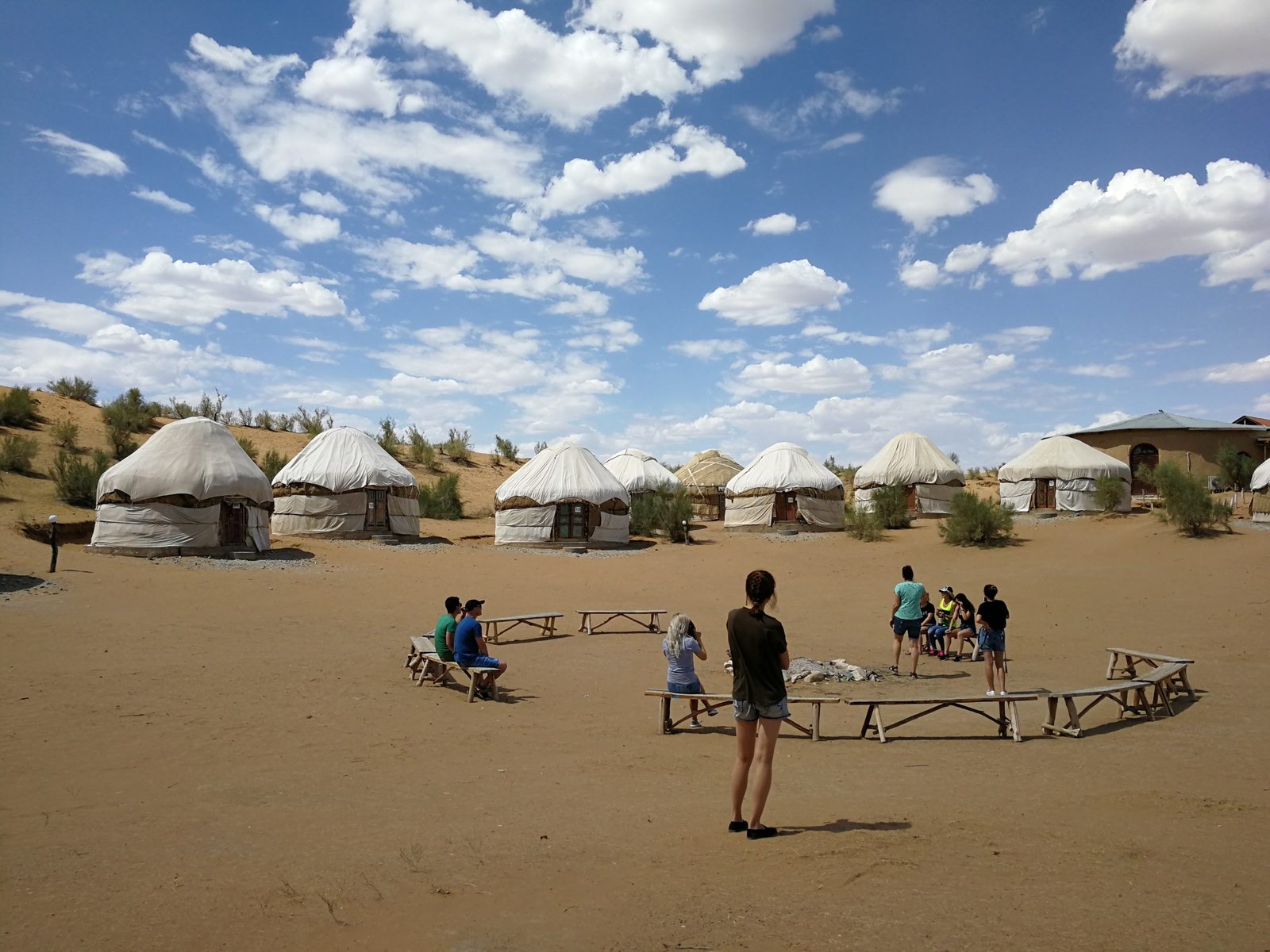
For a dark sky you need distance from towns, and Aydarkul gives you that. The lake filled the Arnasay lowland with Syr Darya flood water from 1969, and the yurt camps sit in the sand near its shore, 3.5 to 4 hours by road from Samarkand via .Did you know? Legend credits Alexander with Nurata's underground canals Legend says Alexander the Great founded Nur in 327 BC and laid its kariz, underground channels with wells dug a few metres apart for cleaning. Whoever built them, parts of the kariz near Nurata still carry water today. Read more →
After dinner, walk a few minutes away from the camp lights and give your eyes twenty minutes to adjust. Your guide helps you find the main constellations and the planets that are up that night. The desert cools fast after sunset, even in autumn, so bring a warm layer, a torch and binoculars if you have them. More about the lake and the camps is in our article on Aydarkul and Nuratau.
When to go: the season and the Moon
The yurt camps work from spring to autumn and close in winter. For the desert night we suggest April–May and September–October, when days are mild and nights are fresh rather than cold.
The Moon matters as much as the month. Around full moon the sky over the dunes is bright and you see far fewer stars. Tell us your travel window, and we will suggest dates with the desert night close to the new moon. Clouds can still cover the sky on any date; the observatory, the metro and the furnace are worth the trip in any weather.
Maidanak: where astronomers work today
In 1970 astronomers set up a station on the Maidanak plateau, about 45 km south of Shahrisabz, after finding that the air there is unusually steady: in 80% of cases the image is sharper than one arcsecond. It now belongs to the Ulugh Beg Astronomical Institute of the Academy of Sciences. It is a research station, not a museum, and it is not part of our tour.
Stargazing in Uzbekistan with AroundCA
Our Stars of Uzbekistan tour puts all of this into five days: Tashkent and Kosmonavtlar, the Solar Furnace, the high-speed train to Samarkand, a full day with Ulugh Beg's An Islamic college: student cells and classrooms around a courtyard behind a grand portal. In the old towns many now house museums and craft workshops. Read more → and observatory, then the drive to Aydarkul for the night in the desert and the train home from Navoi. We buy the train tickets, book the hotels and the camp, and you have a private car with driver and a guide on all five days.
It suits amateur astronomers, engineers, science teachers and families with curious children. The price is on request: it depends on your dates, hotels and group size. Send us your dates and we will check the Moon for you.