
Places in this article: Samarkand · Bukhara · Khiva · Tashkent
Getting around Uzbek cities: transfers, walks and the metro
On a trip with us, getting around Uzbek cities is mostly a pleasant walk. In Bukhara and Khiva the old towns are made for it, and in Samarkand the great sights are a short walk or a short drive apart. A driver meets you at the airport or the station and covers the distances that make no sense on foot, your guide walks the old towns with you, and in Tashkent we take you down into the ,Did you know? A metro designed to ride out a magnitude-9 earthquake The three original lines of the Tashkent Metro were built to withstand an earthquake of magnitude 9.0, and the tunnels lie unusually shallow, only 8–25 m below the street. Read more → because the stations are a sight in themselves.
Here is how a day moves in each city on the classic route, what we arrange for you, and, at the end, a short note on taxi apps and fares for an evening on your own, as of October 2026.
Arrival: a driver with a name sign
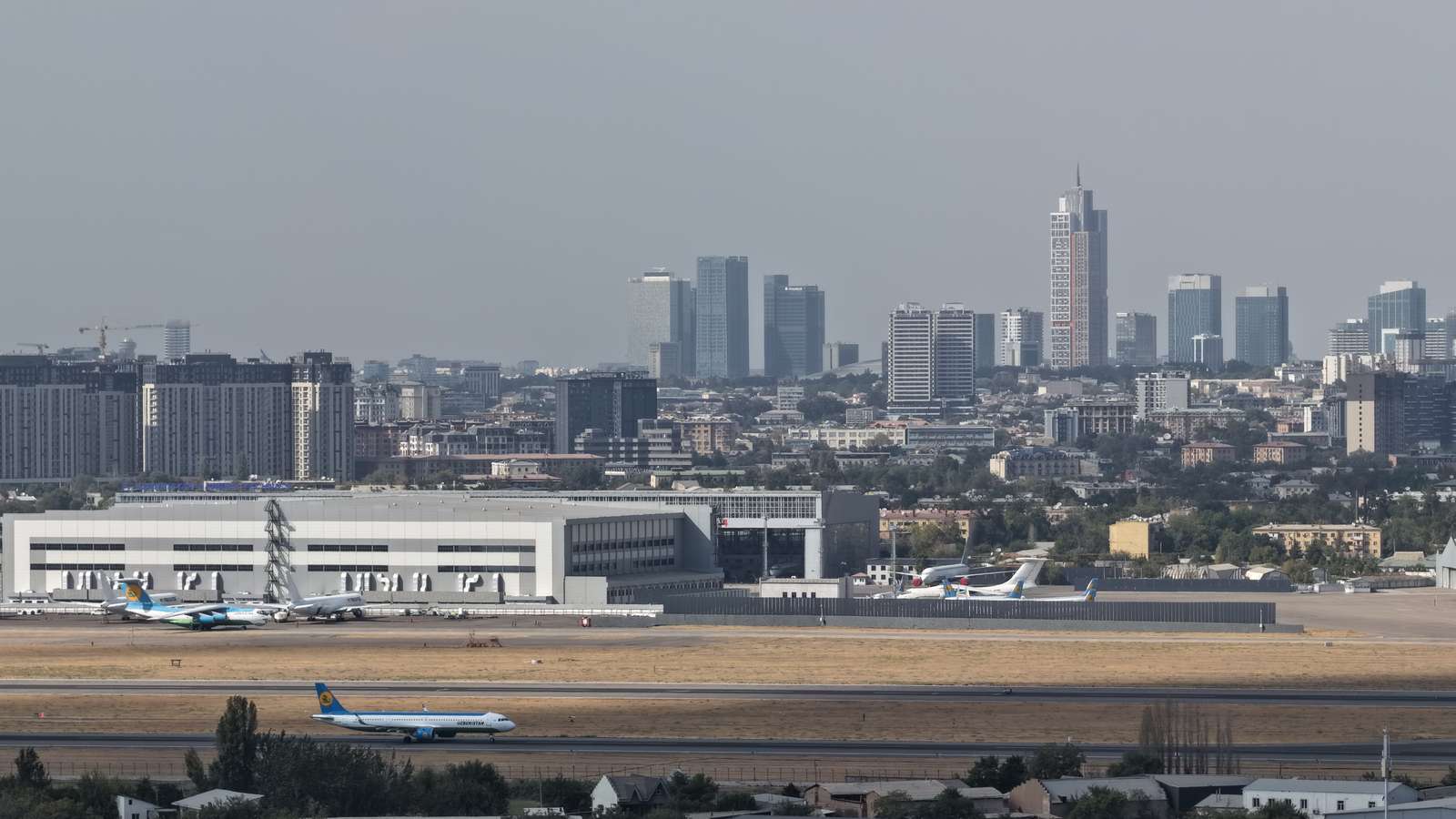
Your trip starts with a transfer. A driver meets you in the arrivals hall at Tashkent airport, or at the station, with a name sign and takes you to your hotel. On our tours this is part of the programme; on its own you can book a sedan or a minivan transfer in Tashkent. Child seats are available on request. After a night flight, the CIP Lounge “Arrival” adds a fast-track lane through passport control and help with your luggage. More in our Tashkent airport guide.
Arriving without a booking? Official taxis at Tashkent airport are booked at a single dispatch desk in the arrivals hall, and app taxis pick you up from the first lane by the exit. Our one big-city tip: ignore drivers who approach you inside the terminal and use the desk or the app.
Tashkent: a car for the distances, the metro for the stations
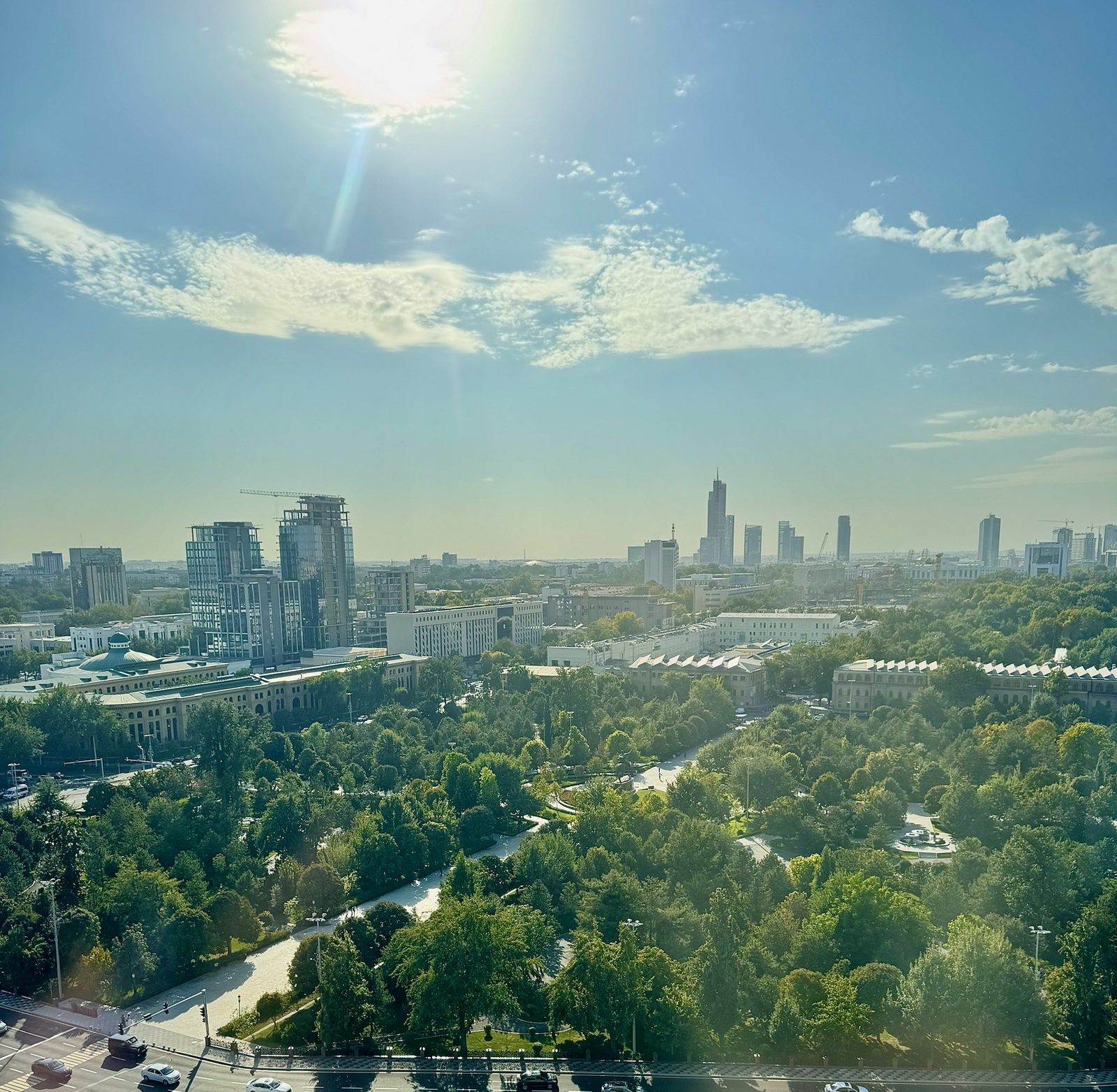
Tashkent is a big, spread-out city, so here the guide and the driver work together. On our Tashkent Highlights tour the car takes you between the The religious heart of old Tashkent: madrasahs, a Friday mosque and mausoleums. Right next to it stands the new Center of Islamic Civilization, opened in 2026. Read more → complex, Did you know? Tashkent’s Chorsu dome is younger than the city’s metro Trade at the old crossroads is centuries old, but the domed building opened only in 1990, thirteen years after the metro. Architects Vladimir Azimov and Sabir Adylov gave it a main dome of 86 m ringed by seven smaller ones. Read more → and the new centre, and your guide takes you down into the metro to see the decorated stations.
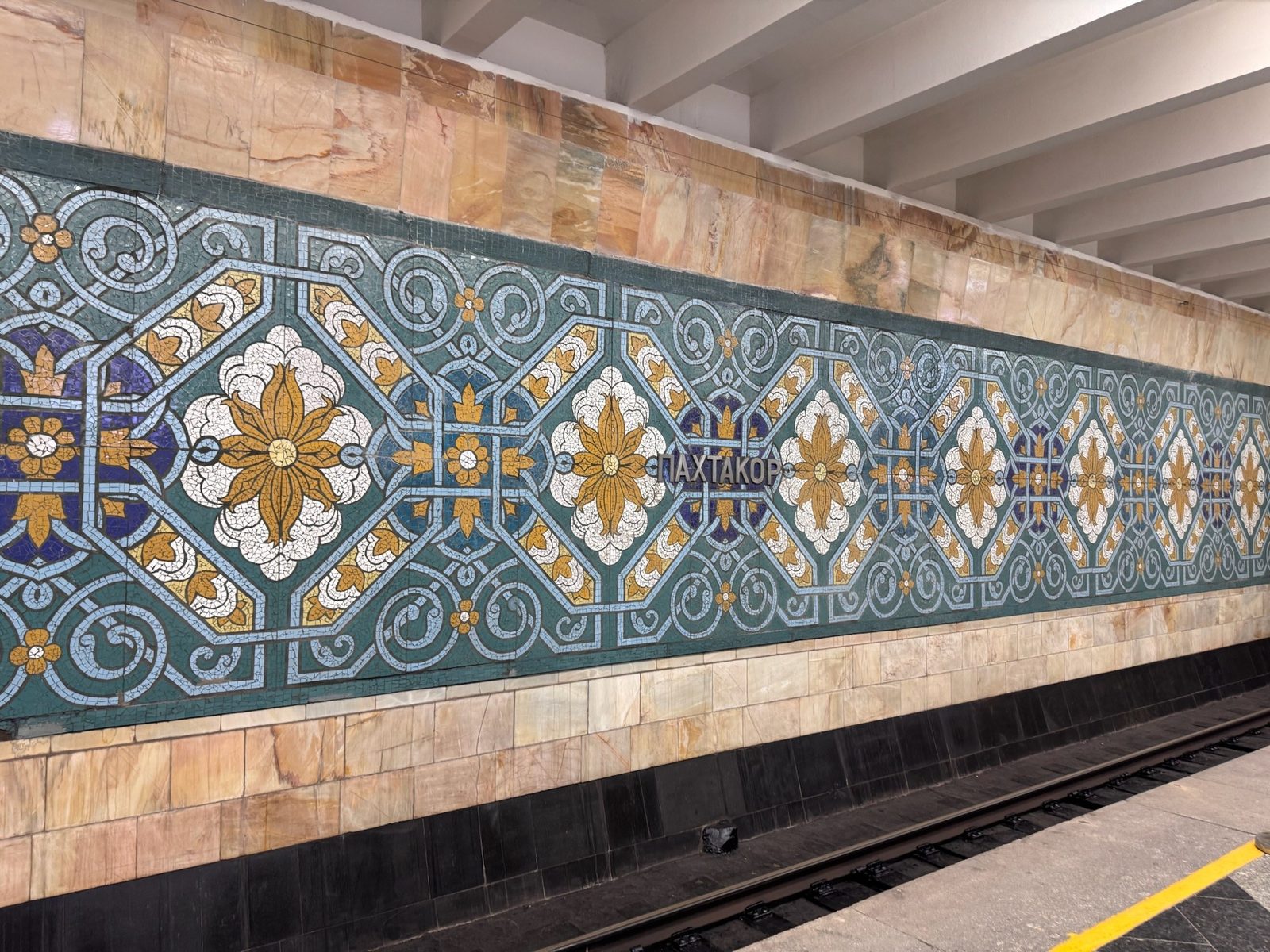
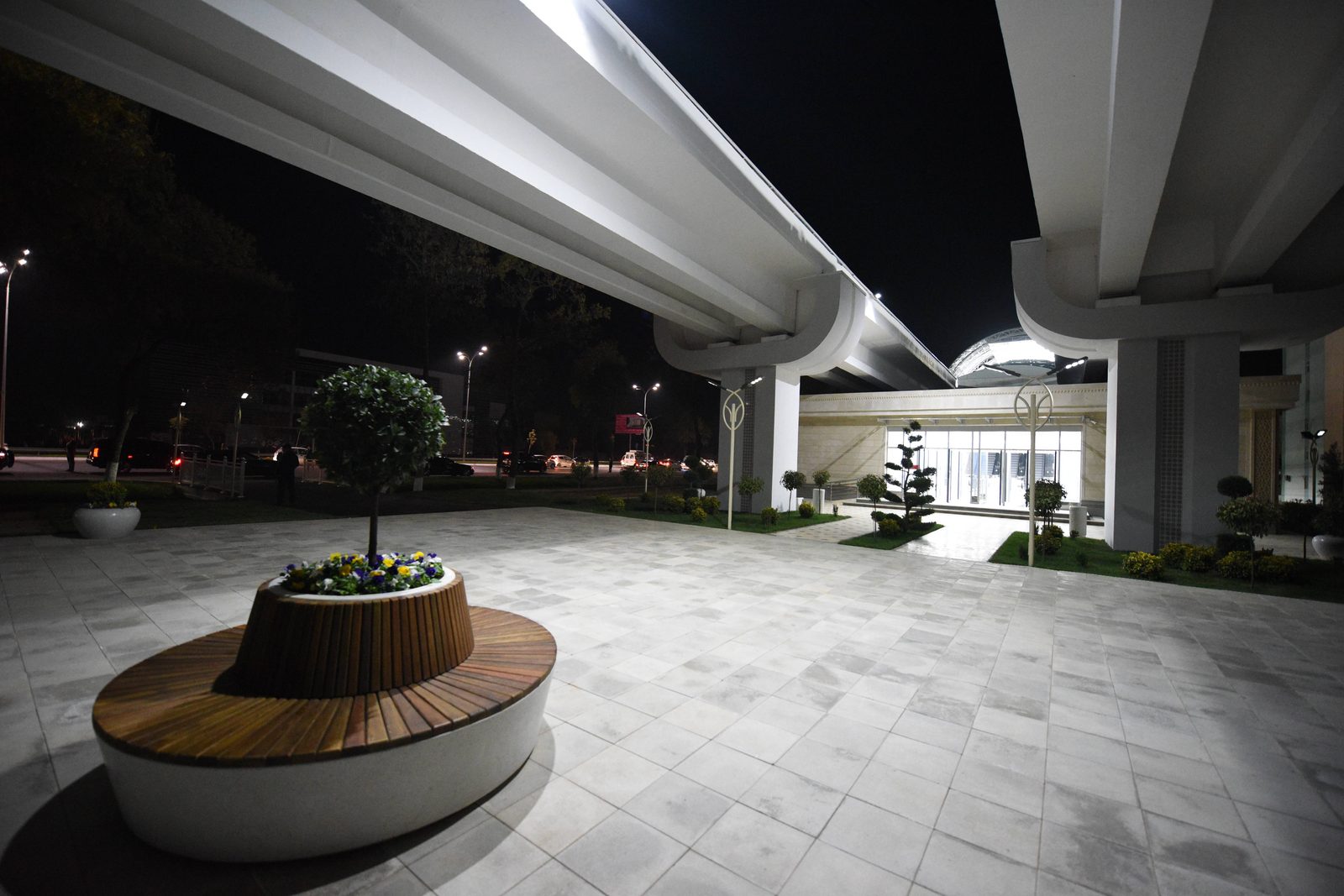
Tashkent has four metro lines, including the overground Circle line, and about 50 stations. It is the fastest way across town at rush hour, and a sight in itself: each station is decorated on its own theme, from cotton to cosmonauts. Our station-by-station route is in the Tashkent metro.
Samarkand: walk the centre, drive the rest
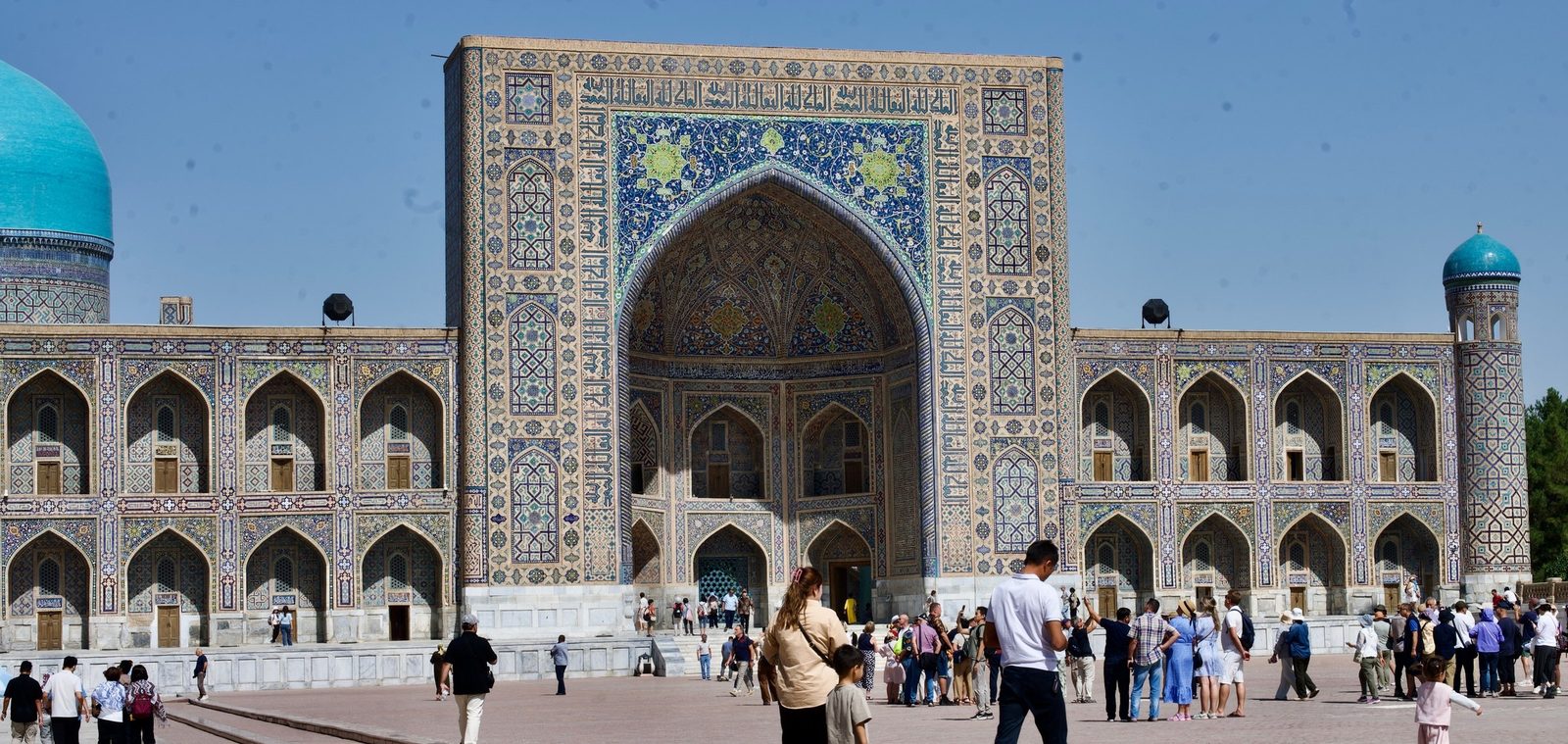
The great sights of Samarkand are close, but not one walk. From the Did you know? The Registan's sun-carrying lion went on a banknote The Sher-Dor Madrasah (1619–1636) is named for the big cats with the sun on their backs on its portal. The image appeared on the reverse of Uzbekistan's 200-som note of 1997. Read more → it is about 1 km to Did you know? Timur's tombstone went to Persia and came back The dark-green jade slab on Timur's grave in Gur-e-Amir was carried off by Nader Shah in 1740. It broke, and on his advisers' urging he sent it back to Samarkand. Read more → and 700–800 m along the pedestrian street to ;Did you know? Legend says the architect asked the queen for a kiss Legend says the architect of Bibi-Khanym would finish on time only for a kiss from Timur's wife, and Timur punished him. In fact the mosque was Timur's own project; his wife Saray Mulk Khanum built her madrasah across the road. Read more → Did you know? Why Shah-i-Zinda means 'the Living King' The necropolis grew around the shrine of Qutham ibn Abbas, a cousin of the Prophet Muhammad. Legend says he did not die in battle but went down a deep well to a garden of paradise, where he lives on. Read more → is 1.5–2 km. The railway station is more than 6 km from the Registan. With us you walk from the Registan to Bibi-Khanym and the Samarkand's main bazaar, right next to Bibi-Khanym: Samarkand bread, dried fruit, nuts and halva. Read more → with your guide, and the driver picks you up for Shah-i-Zinda and the station. That is the day of our Samarkand Highlights tour; if you only need a guide for the walk, book a walking tour of Samarkand with a guide. How we plan the days is in Samarkand in 1, 2 or 3 days.
Bukhara: everything on foot
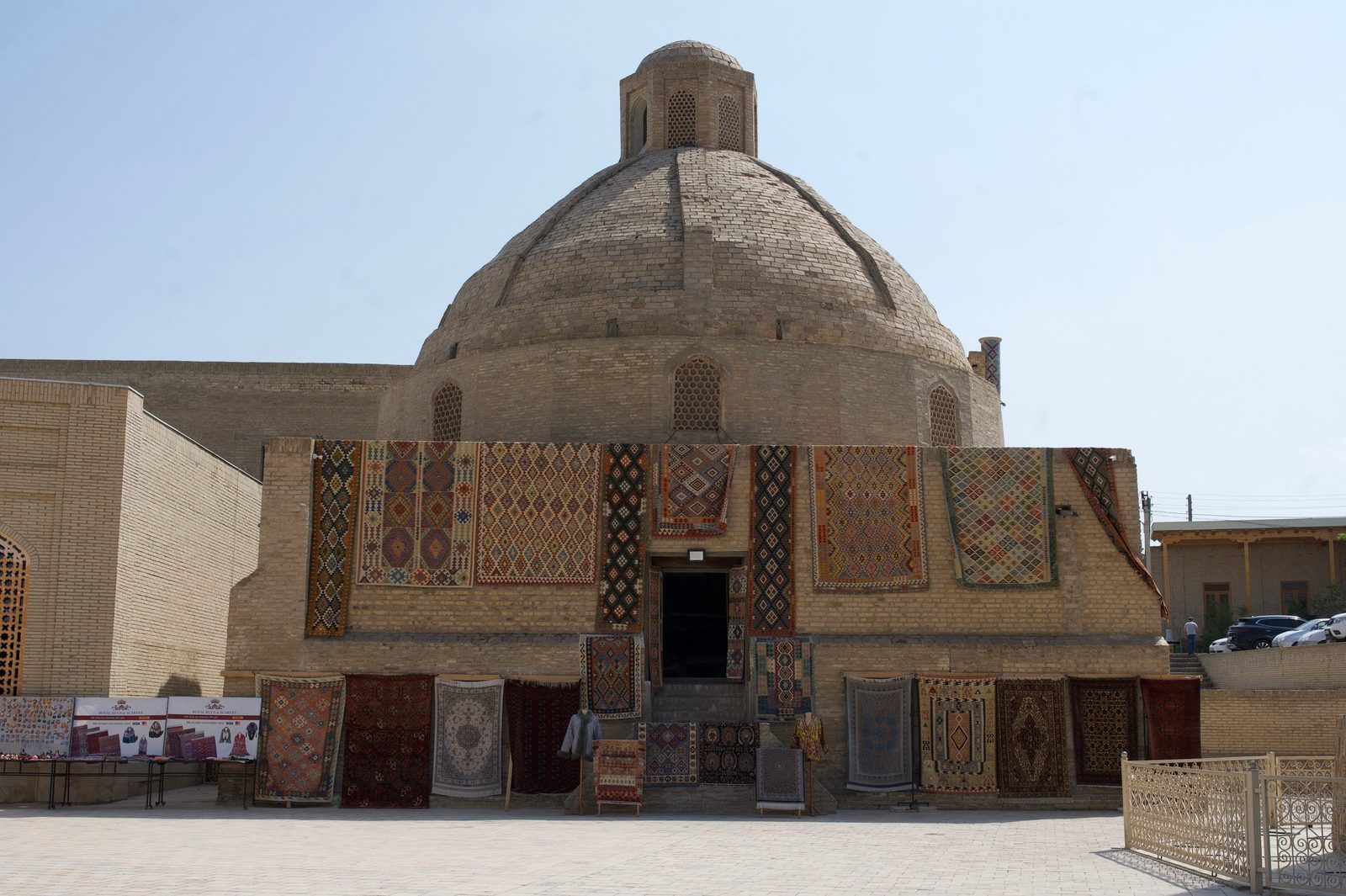
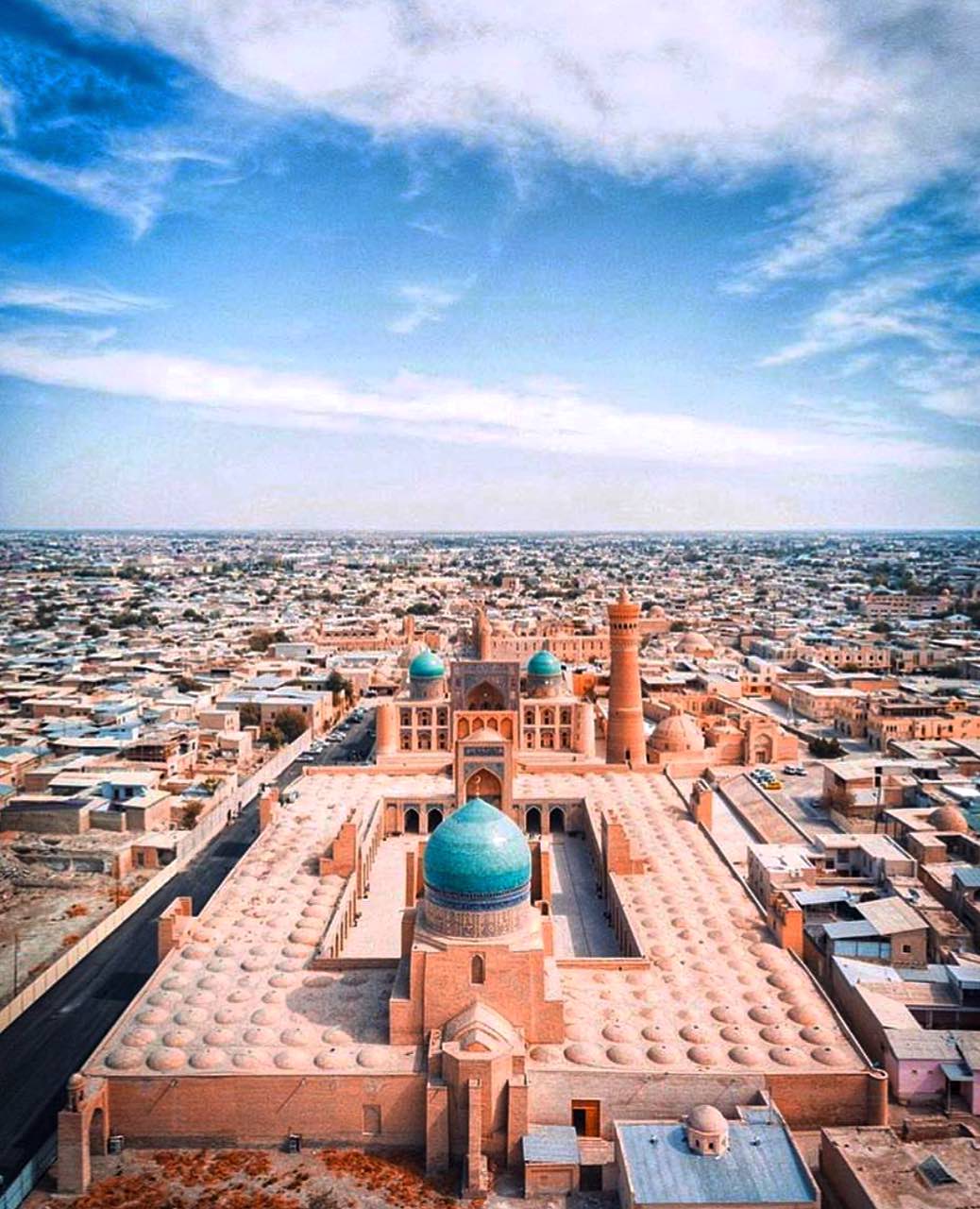
Bukhara is the most walkable city on the route. From Did you know? Bukhara's ponds were once its water supply Pools like Lyabi-Hauz, dug around 1620 and 46 × 36 m, were the city's main source of water. Most were filled in during the 1920s–30s because they spread disease; Lyabi-Hauz survived. Read more → it is about 600–700 m on foot to the Did you know? Legend: the minaret's foundation was laid with camel milk Legend says master Bako laid the foundations of the Kalyan minaret with ganch plaster mixed with camel milk, then vanished for two years to let them harden, and only then built the tower. Locals still show a grave they say is his. Read more → ensemble, through the ,Did you know? Under Bukhara's domes merchants changed money and gold Four 16th-century trading domes still stand over old crossroads. Toki Sarrafon was the money changers' dome, where merchants from India and China swapped coins; Toki Zargaron held jewellers' workshops, Toki Telpak Furushon sold caps. Read more → and about 1 km to .The fortress-residence of the rulers of Bukhara on a high artificial hill: the oldest structure in the city. Read more → A day in the old town needs comfortable shoes, not a car, and our Bukhara Highlights tour is exactly that: a day on foot with a guide. The car is for the station, which is about 12 km from the centre, and for trips out of town such as .Did you know? Legend: the emir's palace site was chosen with meat Legend says that when Emir Nasrullah wanted a summer palace in the mid-19th century, sheep carcasses were hung in several places around Bukhara, and the spot where the meat spoiled last was chosen. Sitorai Mohi-Hosa there today dates from 1912–1918. Read more → Our walk through the city is in Bukhara in 1, 2 or 3 days.
Khiva: a town inside its walls
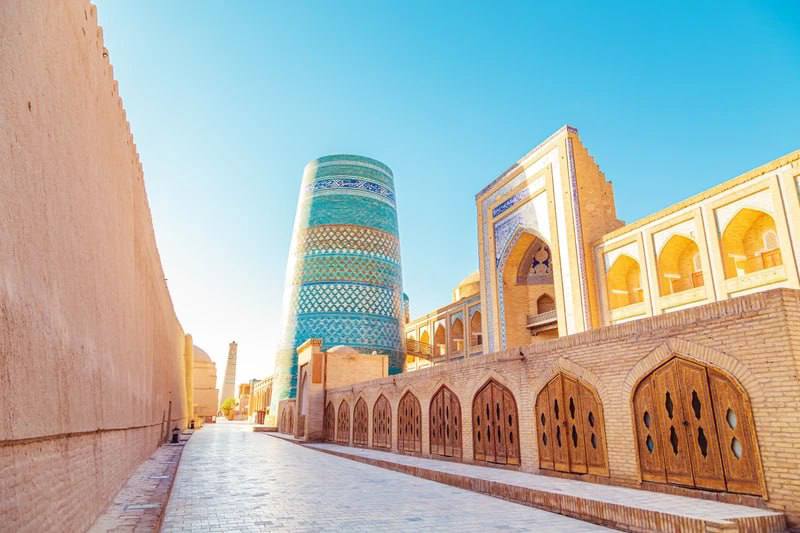
,Did you know? People still live inside Khiva's museum city Itchan Kala packs more than 50 historic monuments and about 250 old houses inside clay walls 8–10 m high and 5–6 m thick, and families still live and work in its lanes. Read more → the walled inner town of Khiva, is small enough to cross on foot in about ten minutes, and almost everything you come for is inside the walls. Not every lane is open to cars, so our driver may stop at a gate, a short walk from your hotel. The railway station is a half-hour walk from the walls; Urgench airport is about 30 km away, and we meet you there with a transfer from Urgench airport to Khiva. A full day inside the walls with a guide is our Khiva Itchan Kala walk, or book a private guide in Khiva for half a day. A plan for the town is in Khiva in 1 or 2 days.
Between cities
Between the cities you ride the Uzbekistan's high-speed train: Tashkent to Samarkand in about 2 hours 10 minutes, Tashkent to Bukhara in about 4 hours. Tickets are tied to your passport. Read more → or travel with our driver. On our tours the train tickets and the transfers to and from the stations are booked for you. If you only need one leg, book a transfer to another city from Tashkent, a private transfer from Samarkand or a transfer from Khiva to Bukhara, or let us buy a train ticket from Samarkand, Bukhara or Khiva. The trains themselves are in trains in Uzbekistan.
On your own in the evening: taxis and fares
Taxis in Uzbek cities are booked through apps. Yandex Go is the one most people use: the Competition Committee counted 86.3% of the taxi app market for it. The app shows the price before you confirm, the car and its number plate, and the route, so there is no bargaining and no language problem. You can pay in cash or link a card; many drivers still prefer cash, so keep some small notes. Which apps to install, with a second taxi app as a back-up, is in useful apps for Uzbekistan, and money matters in cards, cash and tipping.
The Tashkent metro is easy to ride on your own too. From 1 October 2026 a ride costs 2,500 so’m by card or other electronic payment, and 3,000 so’m with a single QR ticket, sold by machines in the stations. You can also pay with the ATTO transport card or a QR code in the ATTO app. A one-day pass for buses and the metro, 13,500 so’m, covers seven trips. For a visitor, the QR ticket from the machine is the simplest start.
Tashkent buses take no cash: since 1 January 2025 you pay by card, app or QR ticket, at the metro fares, and 200 new electric buses arrived in October 2025. Samarkand has electric buses and a tram: since 2017 two lines have run from the railway station across the city, about 11.4 km in all, one of them towards the Siab Bazaar.
Plan it with us
If you would rather not think about getting around at all, tell us your dates and wishes on the tailor-made tours page: we book the transfers, trains and guides and put them into one programme, and we are on call 24/7 during the trip. A ready route with all of this included is our 8-day classic Uzbekistan tour, and the tour finder suggests others in a few questions.
In short
- With us, a driver meets you at the airport or station with a name sign and covers the distances; child seats on request.
- Samarkand: the Registan, Bibi-Khanym and the Siab Bazaar on foot with your guide; the car for Shah-i-Zinda and the station.
- Bukhara and Khiva: the old towns are on foot; the car is for stations, the airport and trips out of town.
- Tashkent: a car between the sights, and the metro with your guide for the stations.
- On your own: taxis in apps, and in Tashkent the metro and buses at 2,500 so’m by card or 3,000 so’m with a QR ticket (from 1 October 2026); no cash on buses.