
Places in this article: Khiva
Around Khiva: day trips to Dishan Kala, the desert fortresses, Hazarasp, Urgench and Nukus
In 1842 Allakuli Khan had a second wall built around Khiva: about 5.6 km of clay, up to 8 m high. Most visitors never notice it. They spend their days inside ,Did you know? People still live inside Khiva's museum city Itchan Kala packs more than 50 historic monuments and about 250 old houses inside clay walls 8–10 m high and 5–6 m thick, and families still live and work in its lanes. Read more → the inner town, and leave on the morning train. Yet some of the best things in Khorezm lie outside the old walls, from clay fortresses in the desert to a museum of art in Nukus.
Here is what to see around Khiva, as we plan it for our guests: the outer town of ,Did you know? Legend: Khiva's 6-km outer wall went up in 30 days Legend says Allakuli Khan raised the outer wall of Dishan Kala in 1842, more than 6 km long with ten gates, in just 30 days. The court historian Agahi, however, wrote of about three years of work. Read more → the desert fortresses of ,Did you know? Ellikqala: a district named after “fifty fortresses” Across the Amu Darya from Khiva, a district of Karakalpakstan is called Ellikqala, from a phrase meaning roughly “fifty forts”. Its clay castles of ancient Khorezm, Ayaz-Kala among them, have been on Uzbekistan’s tentative UNESCO list since 2008. Read more → the old town of Hazarasp, Urgench with its airport, Nukus and the ,Did you know? A desert city keeps one of the great avant-garde collections The Savitsky Museum in Nukus holds tens of thousands of works and is often called the world’s second-largest collection of the Russian avant-garde, after the Russian Museum in St Petersburg. It also keeps Karakalpak crafts and finds from ancient Khorezm. Read more → and evenings at .A new tourist complex on the shore of Lake Govuk, a short drive from Itchan Kala, opened in May 2025: 17 hotels and guest houses, a 3,000-seat amphitheatre, restaurants, a bazaar under domes and a canal with gondolas. Read more → For each place: how far it is, how long it takes, the best season and what we can arrange.
Dishan Kala: Khiva beyond the inner walls
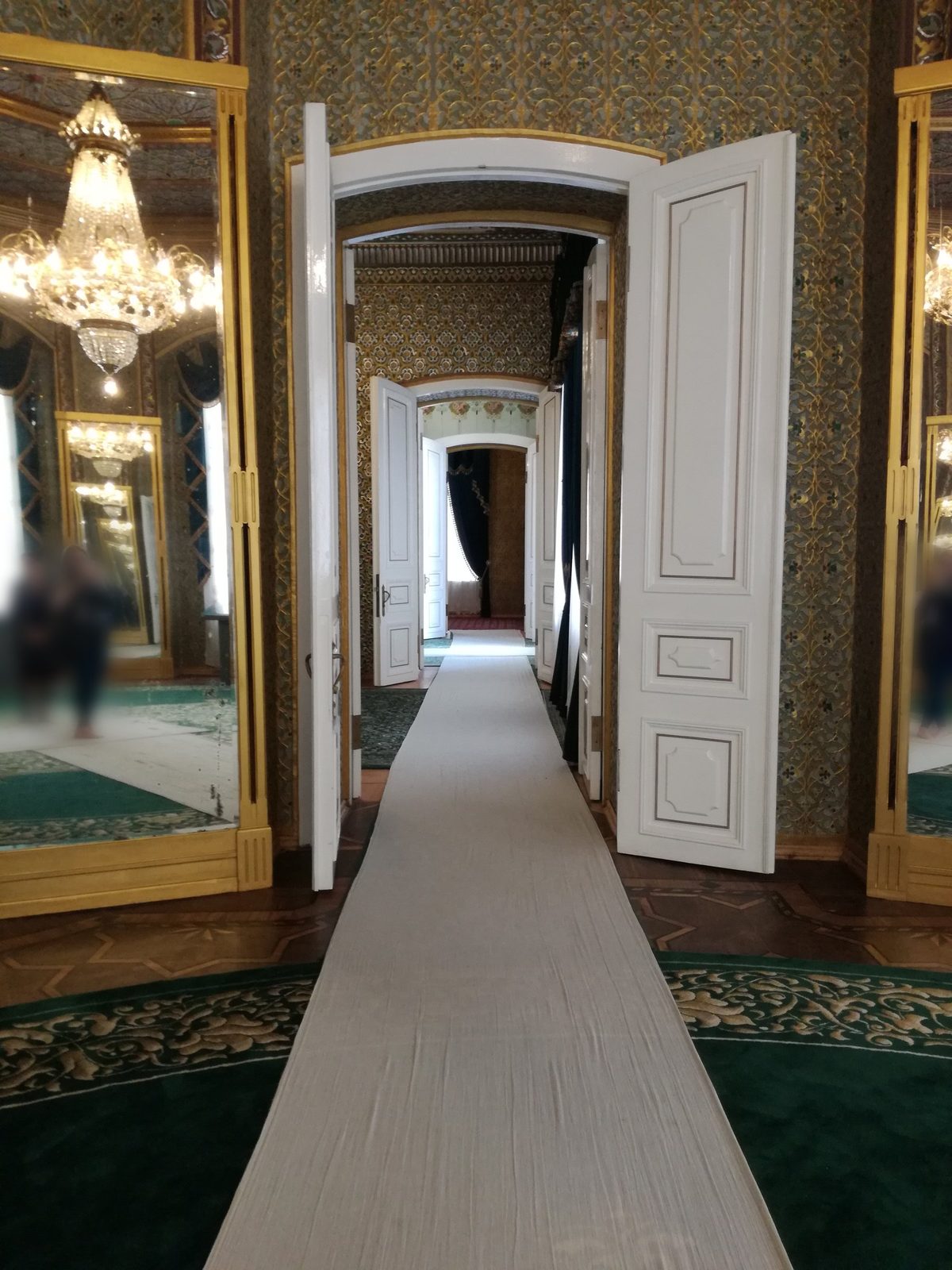
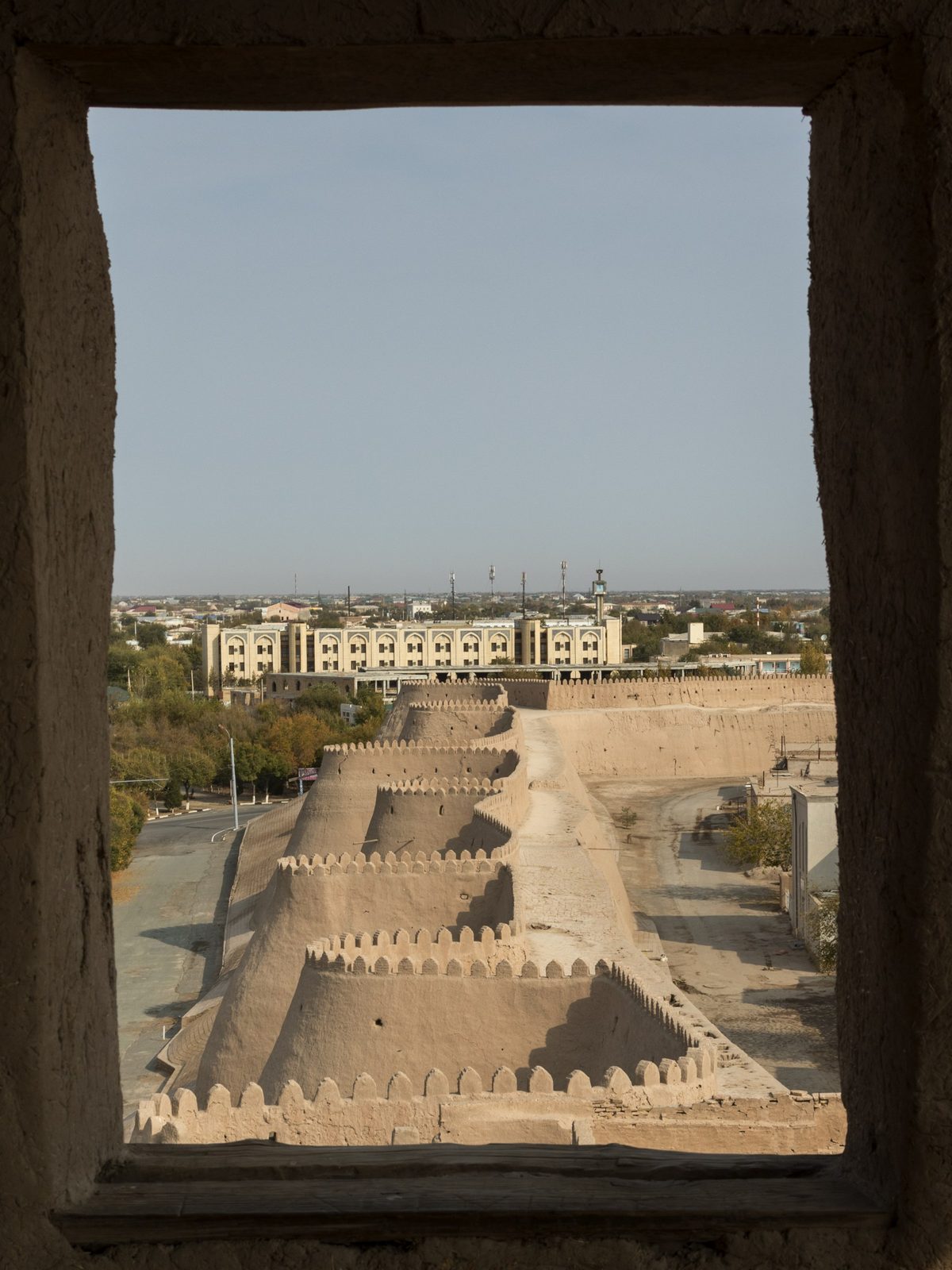
Itchan Kala is only the core of Khiva. Around it grew Dishan Kala, the outer town, where people lived, traded and worked. Its wall, built under Allakuli Khan, is about 5.6 km long and 6–8 m high, and it once had 11 gates. Only a few gates survive; one of them, the Hazarasp Gate, still bears the name of the town it led to, which we describe below.
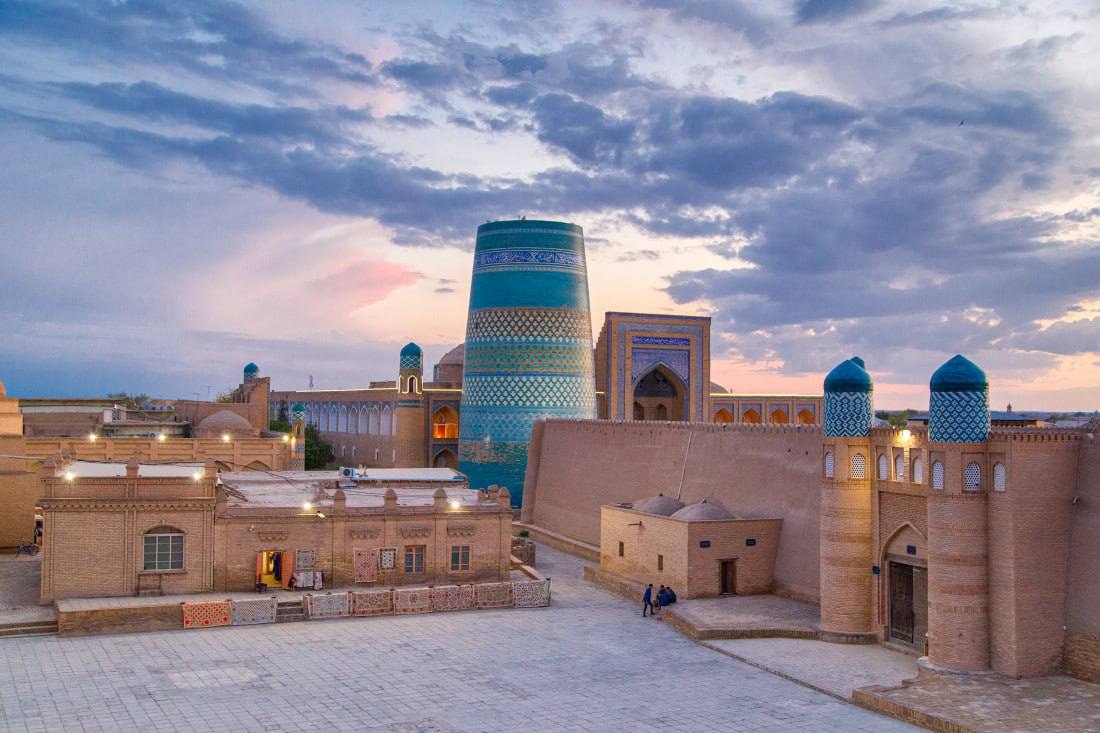
The main sight here is the Nurullaboy Palace, home of the last khans, a short walk from the North Gate of Itchan Kala. Its reception hall, finished in 1912, mixes carved plaster with mirrors, chandeliers and tiled stoves brought from Russia. Give it an hour on foot, as on the second day of our plan for Khiva in 1 or 2 days. The inner town itself is covered in our guide to Itchan Kala.
The desert fortresses: Ayaz-Kala, Toprak-Kala and Kyzyl-Kala
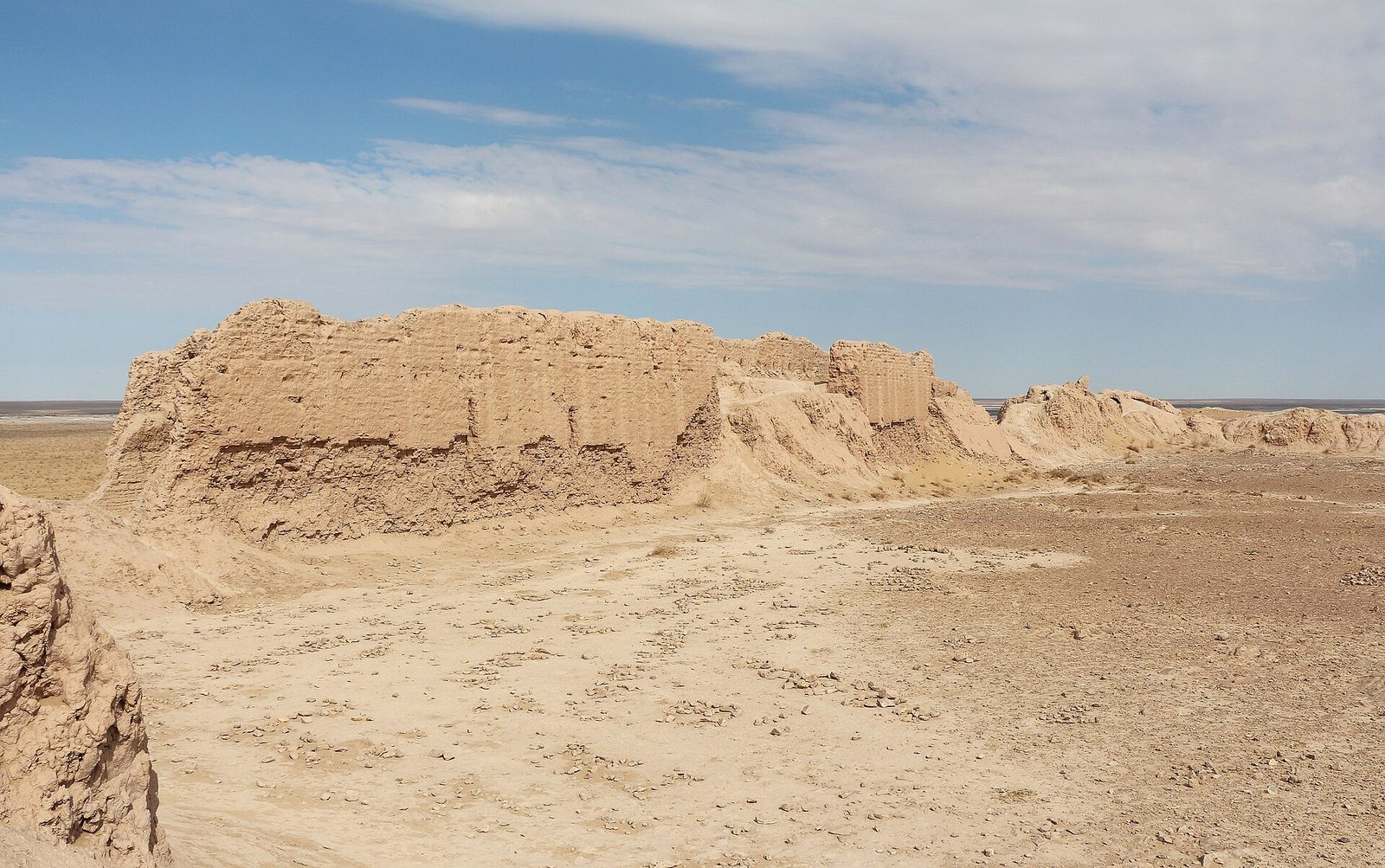
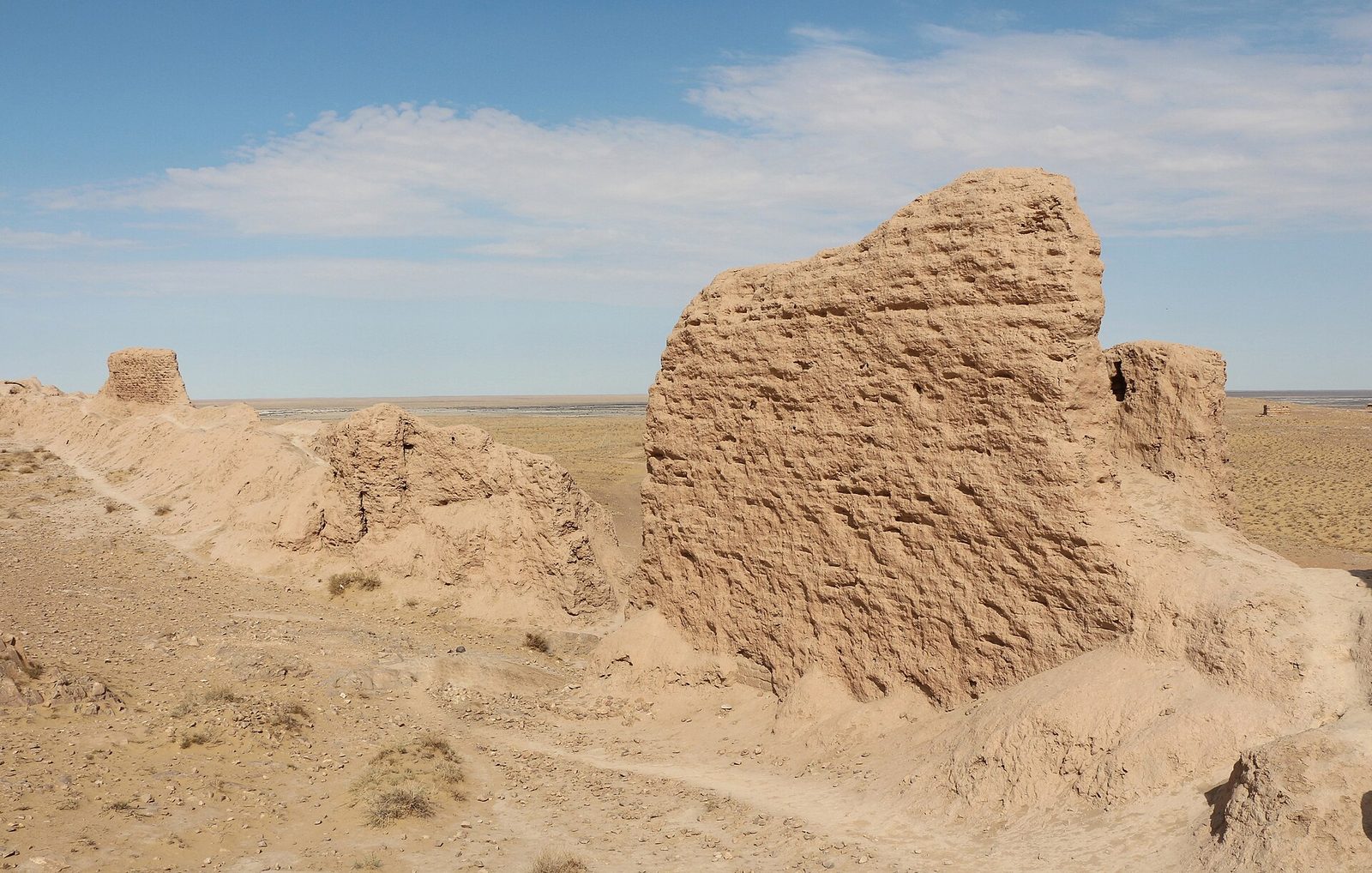
Across the Amu Darya, in Karakalpakstan, a chain of clay forts once guarded the oasis from the desert. The area is traditionally called Ellikqala, “fifty fortresses”, and three of them make the classic trip from Khiva. Did you know? Legend says a shepherd named Ayaz built Ayaz-Kala for a bride Legend says a Khorezm king promised his daughter to whoever built an unassailable fortress; the shepherd Ayaz began, the king broke his word, and the walls stayed unfinished. In fact the oldest fort here dates to the 4th–3rd century BC. Read more → is three fortresses on and below a hill; the oldest dates from the end of the 4th or the start of the 3rd century BC, and from its walls the view runs far over the .The Kyzylkum, or Red Sands: the desert between the Amu Darya and Syr Darya rivers that the road and the railway cross on the way to Khiva. Did you know? Toprak-Kala was the palace city of ancient Khorezm's kings In the 2nd–3rd century AD Toprak-Kala was the capital of Khorezm. From 1938 Sergey Tolstov's expedition uncovered its palace, with wall paintings, coins and archives; its sculptures are now in the Hermitage. Read more →, about 32 km away, was the capital of Khorezm in the 2nd–3rd century AD, with a palace of about 150 halls and rooms. Did you know? Legend says a tunnel links Kyzyl-Kala and Toprak-Kala Legend says the small, almost square fortress of Kyzyl-Kala, the “Red Fortress”, is joined to neighbouring Toprak-Kala by an underground passage. No tunnel has been found yet; the fort itself was discovered by S. P. Tolstov’s expedition in 1938. Read more →, the “Red Fortress”, stands just west of Toprak-Kala, its walls up to 16 m high.
Ayaz-Kala is about 100 km from Khiva, with a short sandy stretch at the end, so plan half a day by car, most of it on the road. From Khiva we arrange a trip to the Ayaz-Kala fortress with a guide and entrance tickets included. The history, the legends and what to see at each fort are in our guide to the desert fortresses of Khorezm.
Hazarasp: the fortress town of a thousand horses
Hazarasp lies on the southern edge of the Khorezm oasis, about 60 km east of Khiva. Its name is usually read as “a thousand horses”, and it is one of the oldest towns of the region: pottery found here goes back to the first half of the 1st millennium BC, and archaeologists traced fortress walls with towers and arrow slits. Medieval geographers described a large trading town with many markets. In the 18th and 19th centuries Hazarasp was the second town of the Khiva khanate after Khiva itself.
Today it is a busy district town, and its old walls are the reason to stop. To be honest, it is not a full day out: an hour on the walls fits into a drive through the south of the oasis. Tell us when you book, and we will add it to your route with a car and driver.
Urgench: the regional capital and its airport
Urgench, about 30–35 km north-east of Khiva, is the capital of the Khorezm region and its gateway: the airport has flights to Tashkent of about 1 h 30 min, and overnight trains stop at its station. The city is young. It grew in the second half of the 19th century around a trading station of the Khiva khanate, so do not look for madrasahs here: the old monuments are in Khiva.
If you have an hour between the plane and Khiva, see the Did you know? The fast train to Khiva bears the name of a 13th-century shah The Jaloliddin Manguberdi, a Hyundai Rotem high-speed train, made its first run on 5 May 2026: 1,220 km from Tashkent to Khiva via Samarkand, Bukhara and Urgench in about 7.5 hours. It is named after Jalal ad-Din, the last Khwarazmshah. Read more → memorial complex in the centre, opened in 2022: a 25-metre monument to the last Khorezmshah, who fought the Mongols in the 13th century, shown on horseback with his sword drawn, in a park of about 8 hectares. Otherwise Urgench is where your Khiva days begin and end. We meet you with a transfer from Urgench airport to Khiva, a drive of 35 to 45 minutes, and can book your flight from Urgench to Tashkent.
Nukus and the Savitsky Museum in a day: possible, but long
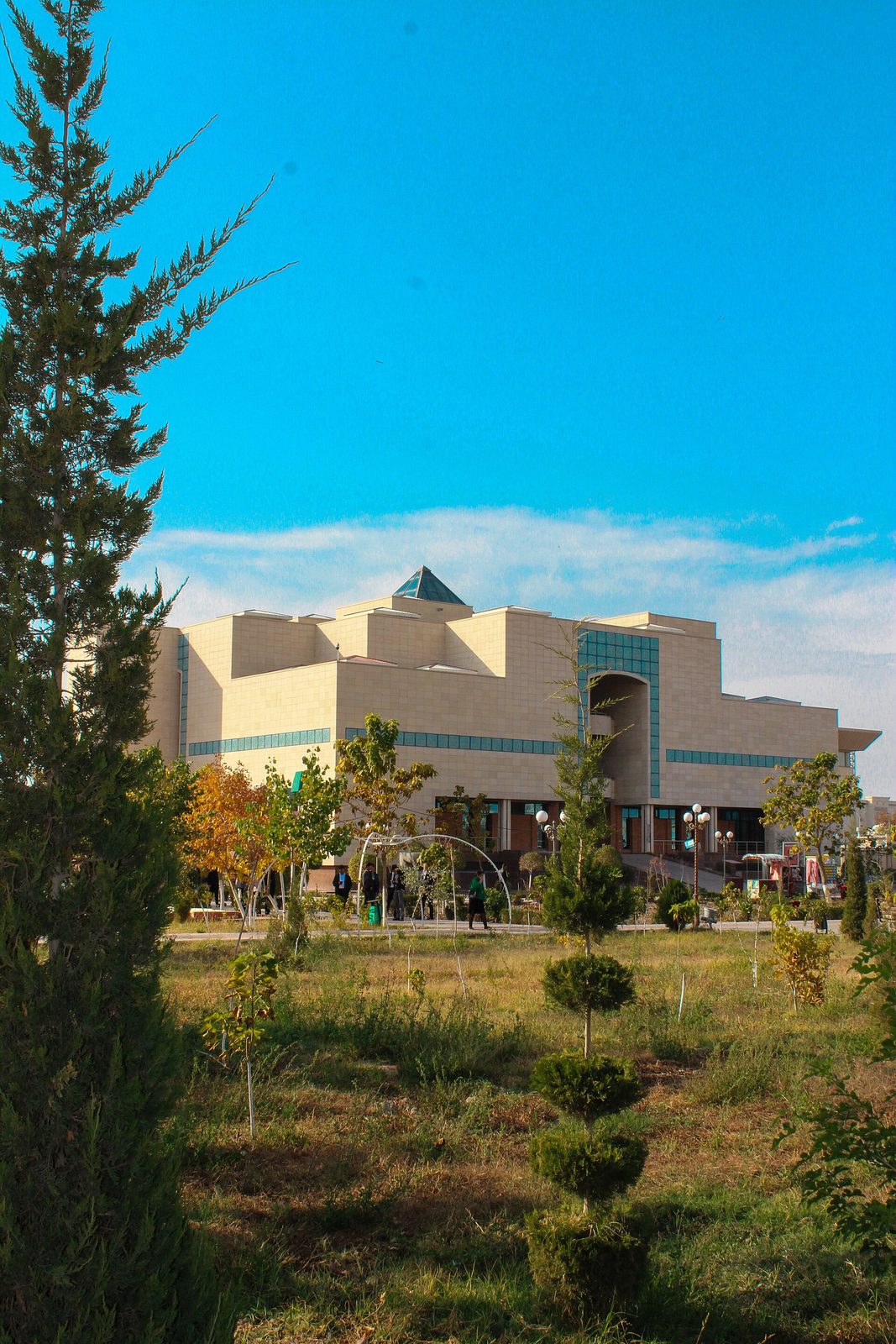
Nukus, the capital of Karakalpakstan, is about 200 km from Khiva: some four hours of driving each way. The reason to go is the Savitsky Museum, with one of the largest collections of the Russian and Turkestan avant-garde, Did you know? Karakalpak means 'black hat' The Karakalpaks, who gave Karakalpakstan its name, call themselves Qaraqalpaq: qara means black and qalpaq a hat. About 770,000 of the world's 900,000 Karakalpaks live in the republic, whose capital is Nukus. Read more → jewellery and costume, and the finds from the desert fortresses. It is open Tuesday to Sunday, 9:00 to 18:00, and closed on Mondays.
A day trip works only with a very early start: eight hours in the car leave about three hours for the museum, and that is a brisk visit. We prefer a one-way journey: leave Khiva in the morning, see Ayaz-Kala and Toprak-Kala on the way, spend the night in Nukus and the next morning in the museum, then fly back to Tashkent from Nukus. Everything about the museum is in our guide to the Savitsky Museum in Nukus.
Close to town: Arda Khiva and a silk factory
Arda Khiva, opened in May 2025 on the shore of Lake Govuk, is a short taxi ride from the walls. It is a new quarter in the style of old Khiva: hotels, restaurants, a bazaar under domes, a canal with gondolas and an amphitheatre for about 3,000 people. Go after a day in Itchan Kala, when the heat drops and the lights over the water come on.
For a morning of crafts, we arrange a visit to a silk factory with a car and an escort, for two people or more. On local services like this one, the language of your guide is agreed when you book.
For groups and MICE: an evening and a night in the Karakum
On this side of the Amu Darya the Karakum desert begins close to Khiva. We arrange the desert programmes below for groups and corporate (MICE) trips only; we do not offer them to individual travellers.
- An evening in the desert, from about 17:00 to 22:00: the “Desert Sunset” show, a Khorezm dinner and two experiences of your choice, such as melon tasting in season, traditional archery or a masterclass in Khorezm Rice cooked in a kazan with carrots, onions and meat: the dish of every Uzbek celebration. Each region cooks it its own way. or shivit oshi.
- A night in a yurt: arrival in the afternoon, the same evening programme, a night in a traditional yurt, breakfast and departure by 12:00.
- Khorezm in a day and a night: breakfast at the camp, Itchan Kala with a guide, then back to the desert for the evening and the night.
For groups of 10 or more, the evening can end with the theatrical show “Legends of Ancient Khorezm”. Prices are on request; how we build programmes for companies is on our MICE page.
Getting there, seasons and time
- Distances from Khiva: the Nurullaboy Palace on foot, Arda Khiva a short taxi ride, Urgench and its airport about 30–35 km, Hazarasp about 60 km, Ayaz-Kala about 100 km, Nukus about 200 km.
- Transport: beyond Dishan Kala you need a car with a driver; a taxi is fine for Arda Khiva.
- Time: an hour for the Nurullaboy Palace, an evening for Arda Khiva, an hour for Hazarasp plus the road, half a day for Ayaz-Kala and Toprak-Kala, a long full day for Nukus.
- Season: April–May and September–October suit the desert best, at about 20–22 °C by day. In July the average high in Urgench is about 36 °C, so we leave at first light and are back for lunch; in January the days stay below 3 °C. Khorezm melons are in season from June to October.
- What to take: a hat, sunscreen and plenty of bottled water for the fortresses, and a warm layer for desert evenings in spring and autumn.
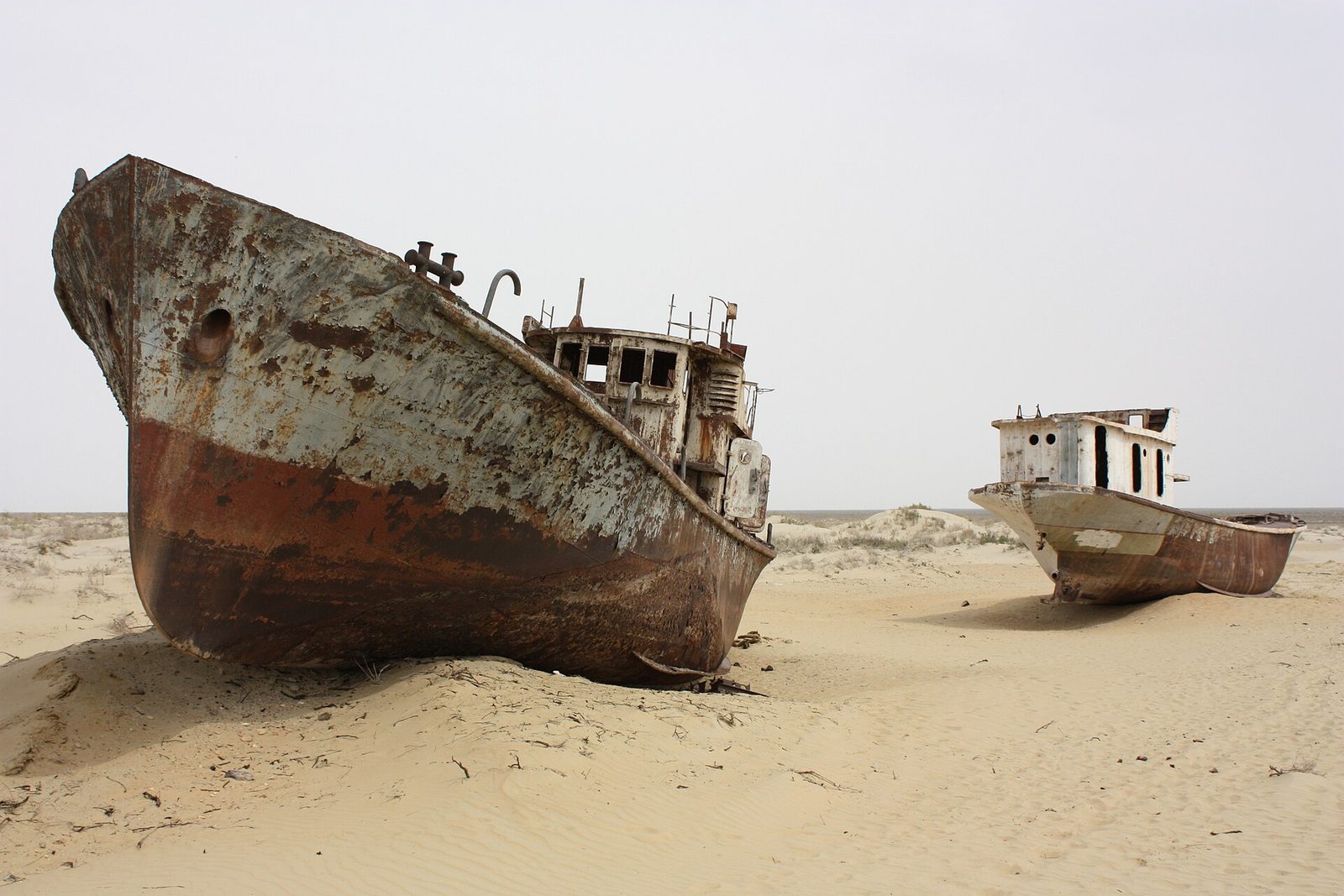
Two longer trips meet Khiva here. Our Aral Sea expedition goes from Nukus to Did you know? A music festival is held among Muynak's old fishing boats Since 2018 the Stihia festival of electronic music, art and science has gathered in Muynak, once a port on the Aral Sea, right beside the ships left on the sand. It ends by burning a 10-metre installation of the word SEA. Read more → and the .Did you know? Giant stone “arrows” on the Ustyurt plateau were hunting traps Along the Ustyurt cliffs run low stone walls called arans, laid out as arrows, triangles and even stars. Saiga and gazelles run along a wall rather than over it, so hunters steered herds into pens. They were used from the Bronze Age on. Read more → Our Merv, Darvaza and Khiva tour starts in Turkmenistan and crosses the land border at Dashoguz – Shavat into Khiva; we arrange the letter of invitation you need for the Turkmen .Entry rules depend on your passport. Once you are here, each stay must be registered within three days, and hotels do it for you; customs and registration rules are in our guide. Read more → While you travel, our office is in touch 24/7. All our routes are in Khiva tours and on our Khiva page.
In short
- Dishan Kala and the Nurullaboy Palace are a walk from Itchan Kala; Arda Khiva is a short taxi ride for the evening.
- Ayaz-Kala, Toprak-Kala and Kyzyl-Kala make a half day by car, about 100 km each way.
- Hazarasp, about 60 km away, is an hour on its old walls rather than a day trip.
- Urgench is the airport and the regional capital; with an hour to spare, see the Jaloliddin Manguberdi memorial.
- Nukus is about 200 km away: a long day, better as a one-way trip with a night there.
- Desert evenings and nights in the Karakum are for groups and MICE only.