
 Deutsch
 English
 Español
 Français
 Italiano
 Polski
 Português
 Suomi
 Svenska
 Türkçe
 Ελληνικά
 Български
 Русский
 עברית
 한국어
 中文
 日本語
Programme and details
Small group · premium · 6 days
Silk Road — Samarkand & Bukhara, 6 Days
Two great A network of caravan routes between China and the Mediterranean. Samarkand, Bukhara and Khiva grew rich as stops along it. cities at a premium pace: Samarkand’s monuments and Bukhara’s old town, with masterclasses, gastronomy and 5-star hotels throughout.
5-star hotels
Groups 10–60 people
MICE & premium cultural
Highlights
What’s inside
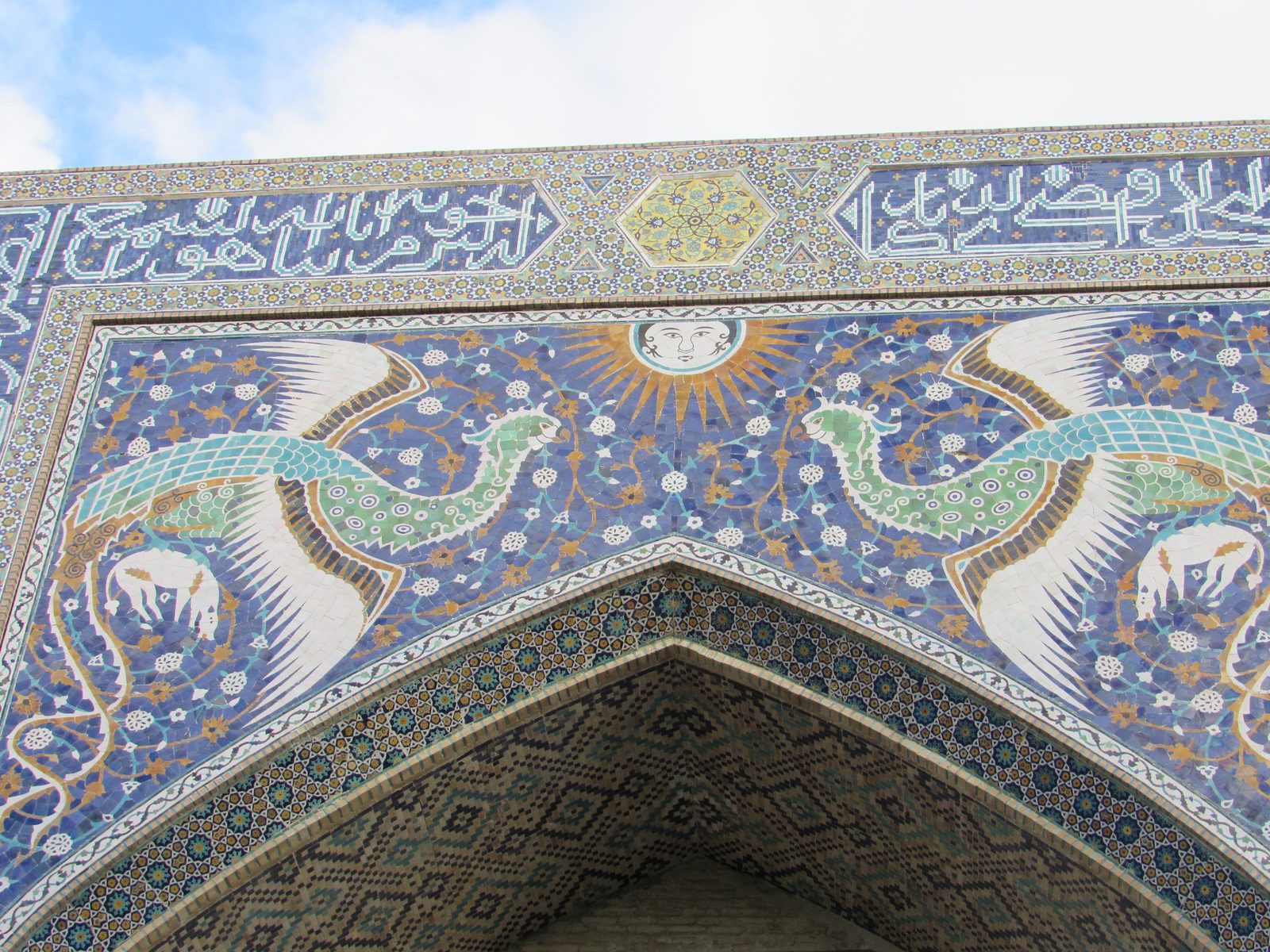
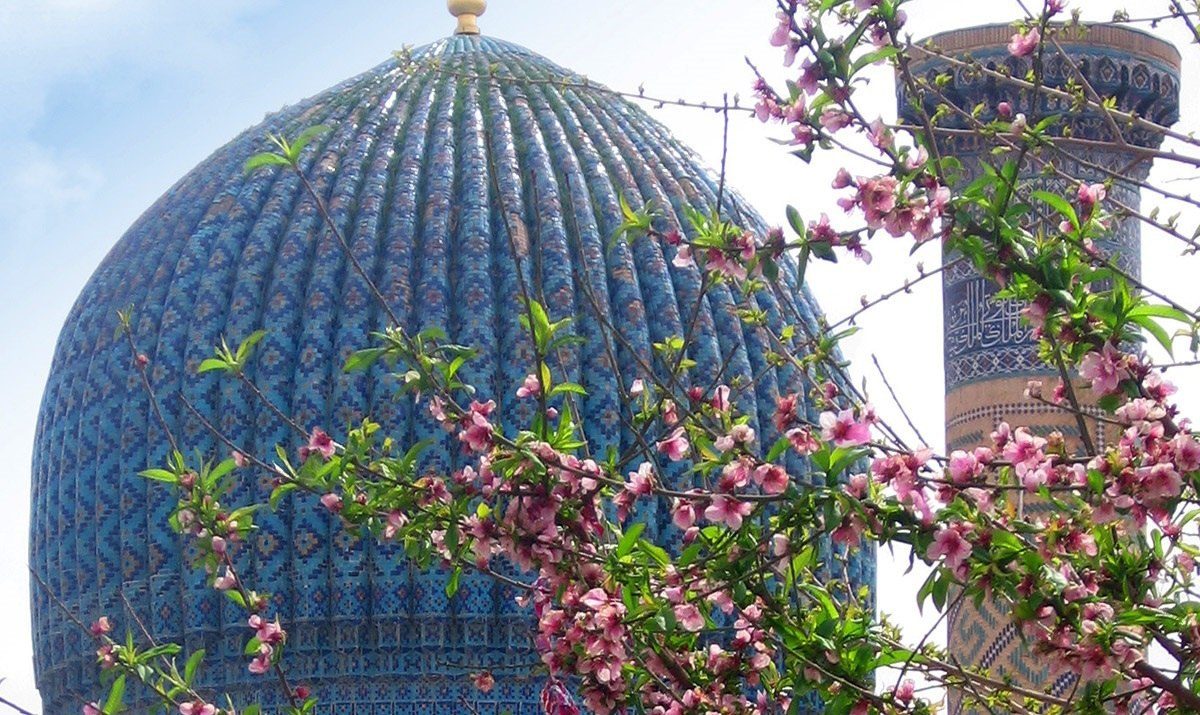
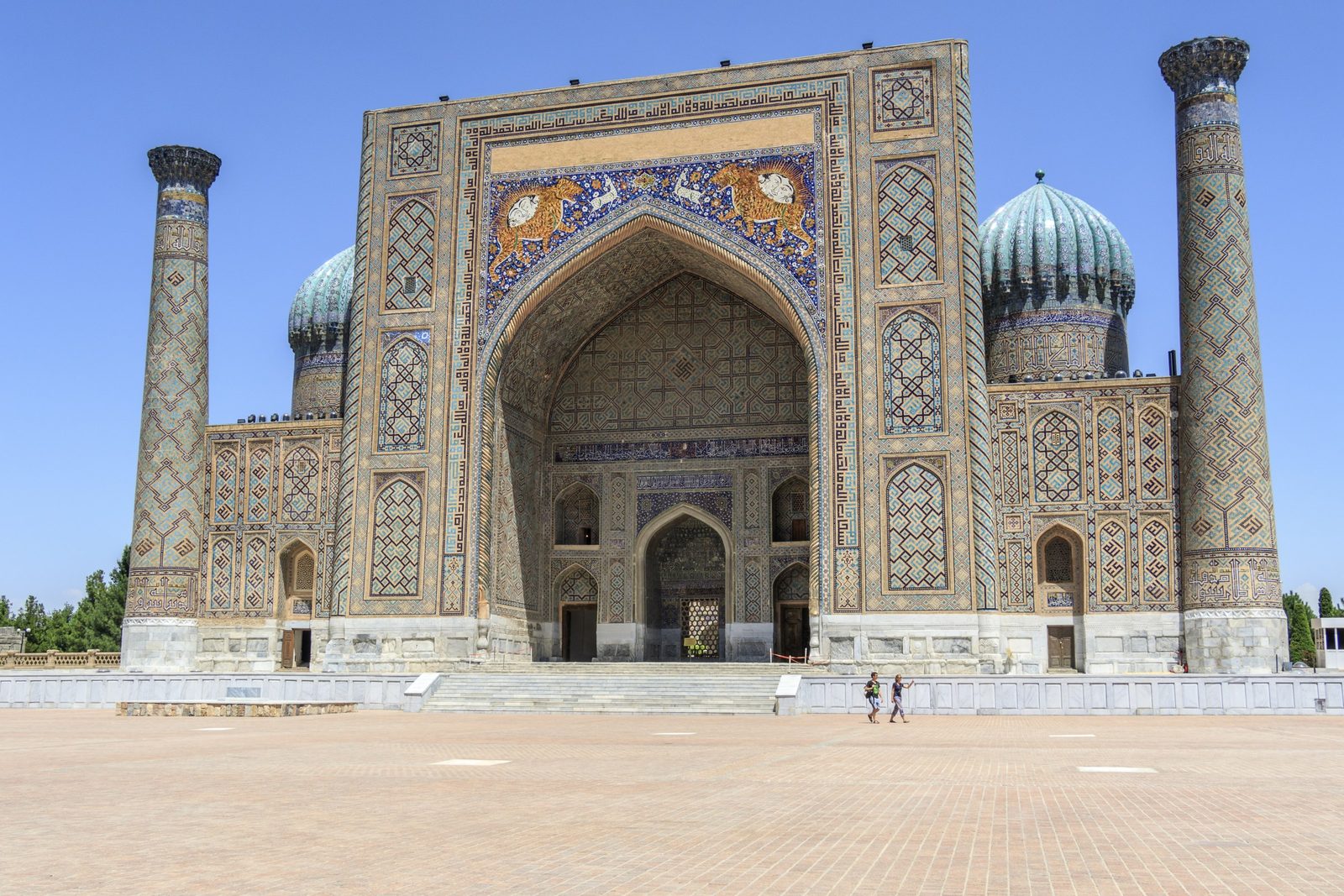
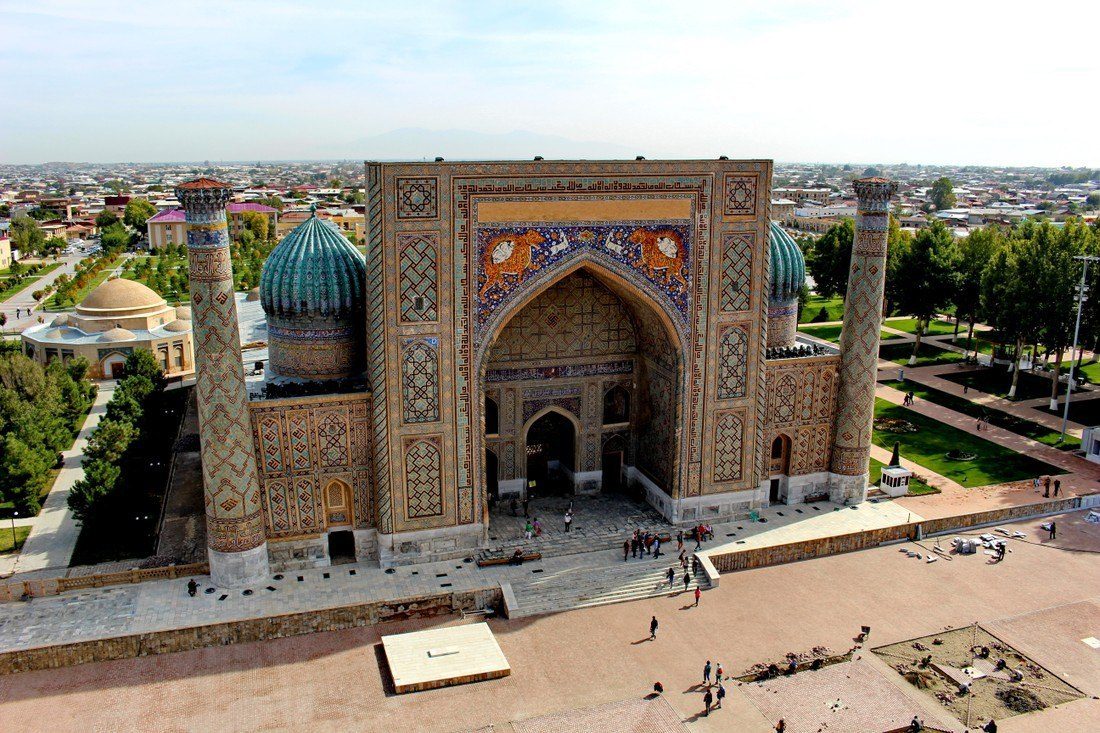
- Samarkand — the ,Did you know? The Registan's sun-carrying lion went on a banknote The Sher-Dor Madrasah (1619–1636) is named for the big cats with the sun on their backs on its portal. The image appeared on the reverse of Uzbekistan's 200-som note of 1997. Read more → Did you know? Timur's tombstone went to Persia and came back The dark-green jade slab on Timur's grave in Gur-e-Amir was carried off by Nader Shah in 1740. It broke, and on his advisers' urging he sent it back to Samarkand. Read more → and ,Did you know? Why Shah-i-Zinda means 'the Living King' The necropolis grew around the shrine of Qutham ibn Abbas, a cousin of the Prophet Muhammad. Legend says he did not die in battle but went down a deep well to a garden of paradise, where he lives on. Read more → plus the «Invisible Samarkand» audio walk
- Hands-on: a batik masterclass, a Rice cooked in a kazan with carrots, onions and meat: the dish of every Uzbek celebration. Each region cooks it its own way. masterclass at Traditions Square, optional ceramics / mosaic / blacksmithing
- A countryside day — Charcinar Park, a mountain-pass lunch and a Bagizagan wine tasting
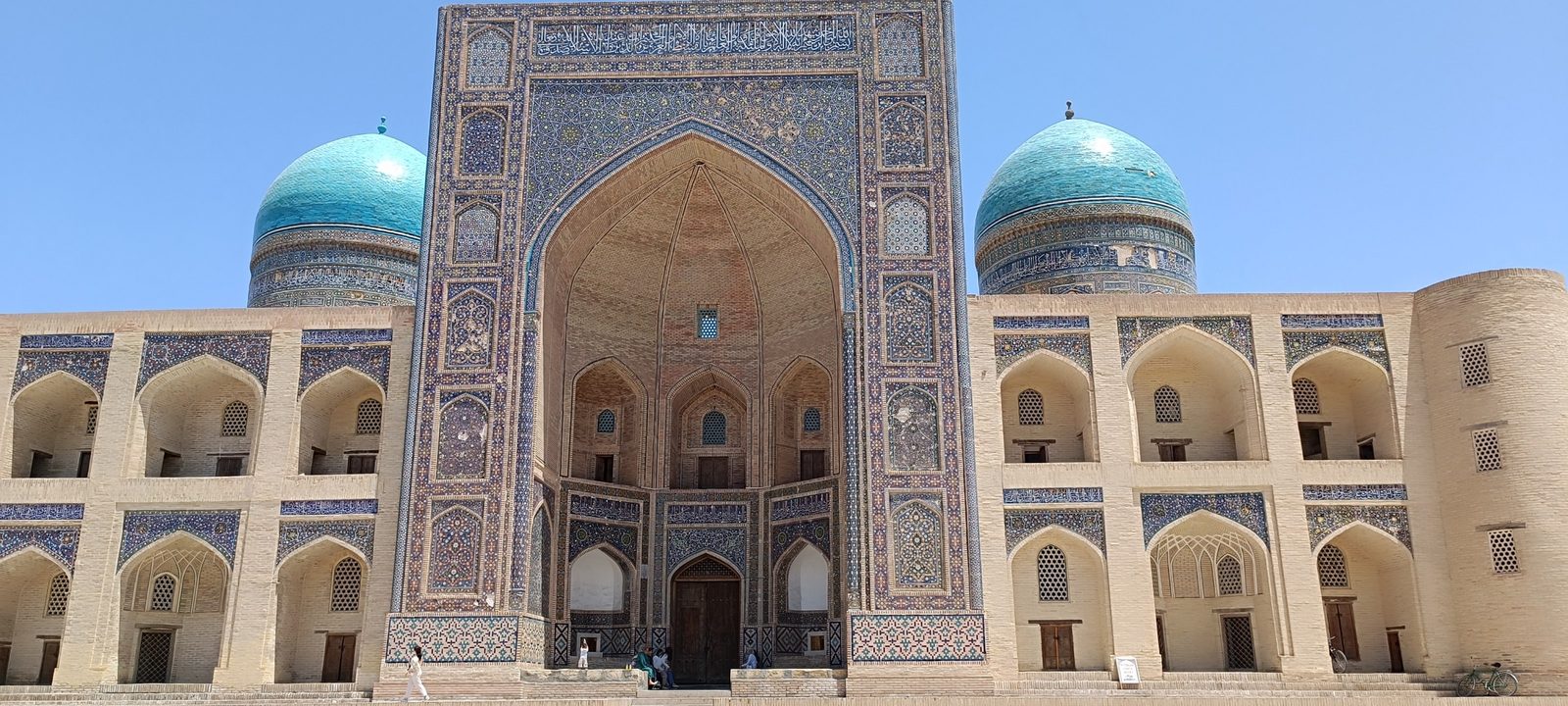
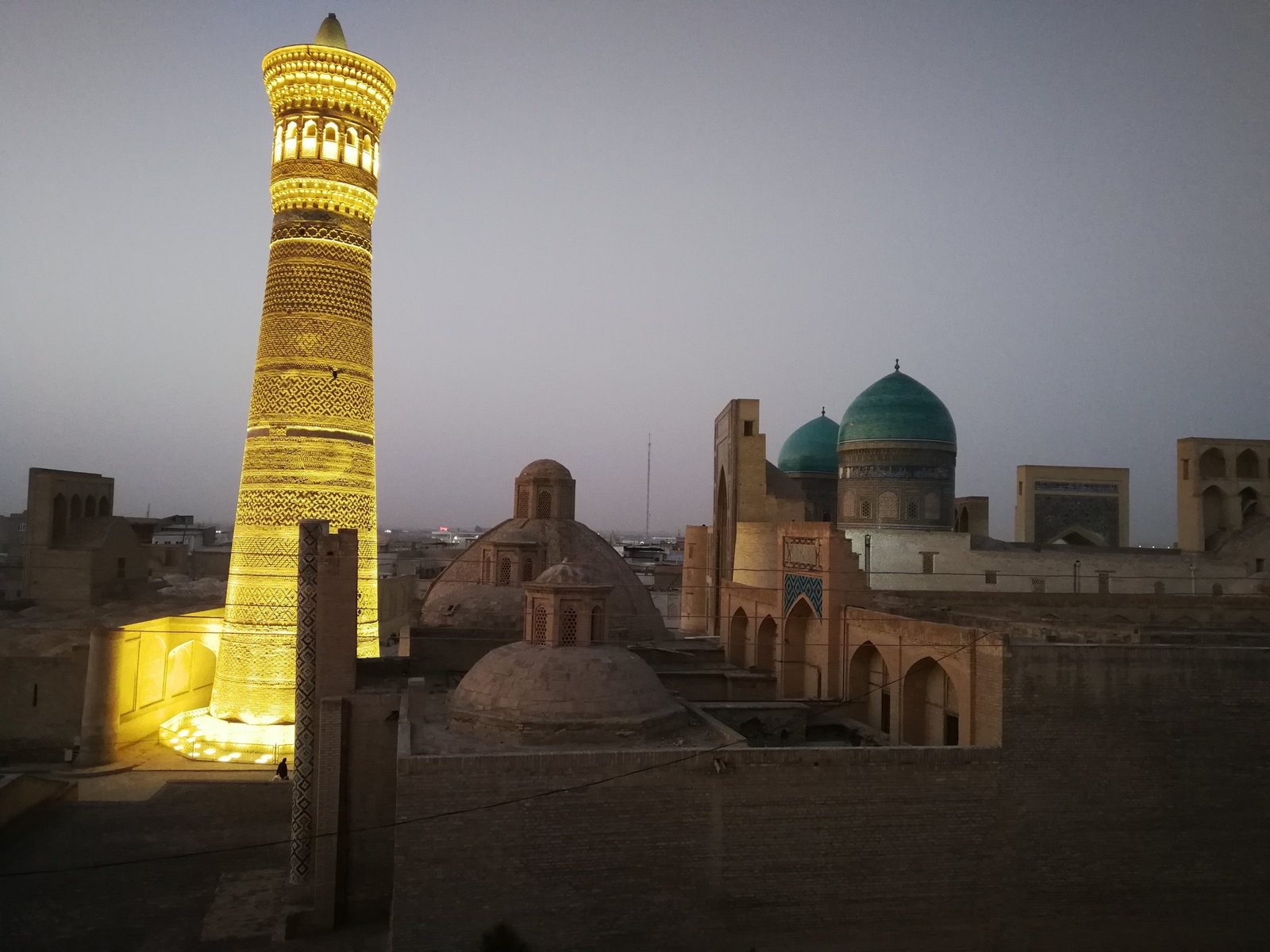
- Bukhara — ,Did you know? Bukhara's ponds were once its water supply Pools like Lyabi-Hauz, dug around 1620 and 46 × 36 m, were the city's main source of water. Most were filled in during the 1920s–30s because they spread disease; Lyabi-Hauz survived. Read more → the ,Did you know? Diggers went 13 m down and never found its base The Kalyan Minaret of 1127 rises about 46 m, and an excavation reached 13 m without finding the bottom of its foundations. Genghis Khan reportedly ordered it spared. Read more → ,The fortress-residence of the rulers of Bukhara on a high artificial hill: the oldest structure in the city. Read more → the ,Did you know? Buried in mud, this tomb escaped Genghis Khan The 10th-century Samanid Mausoleum, one of the oldest monuments of Islamic Central Asia, was covered by flood mud and sand before the Mongols came in 1220. Hidden for centuries, its brick lacework survived intact. Read more → Did you know? Legend: four towers for four world religions? Chor Minor, a gatehouse of 1807, has four towers, each decorated differently. Guides say they stand for four world religions and look for a cross, a fish and a prayer wheel in the decor; others say four dynasties. All are interpretations. Read more →
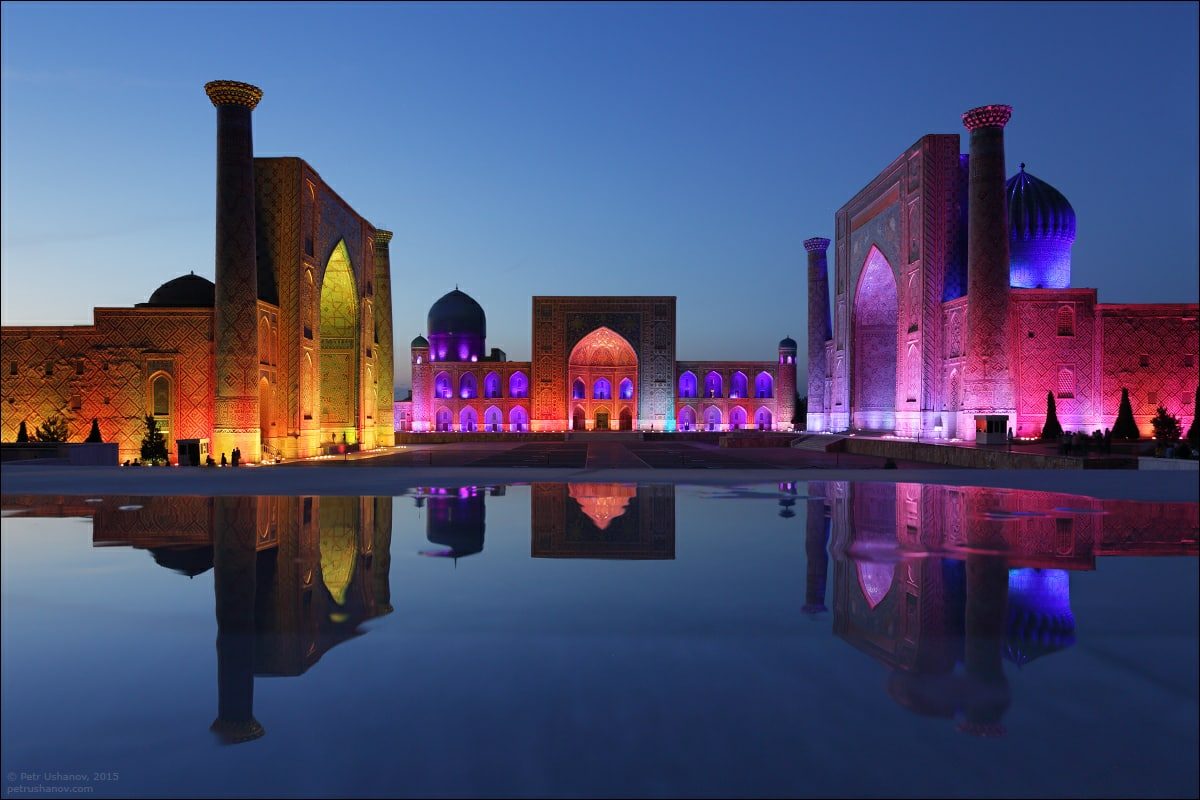
- Dinners with folklore, an open-fire whole-lamb roast and a Registan light show
Programme
Day by day
Day 1 · Arrival in Samarkand
Transfer and check-in. The Did you know? Timur's tomb was built for his grandson Gur-e-Amir was begun in 1404 for Muhammad Sultan, Timur's grandson and chosen heir. Timur had a crypt ready in his home town of Shahrisabz, but when he died in 1405 he was laid in Samarkand, in the tomb meant for the young prince. Read more → and Registan Square, lunch, a batik masterclass at an artisan studio, the Did you know? Paper polished with stone, made to last 400 years At the Meros mill in Konigil, founded in 1996 to revive a craft that had died out, a water wheel beats mulberry bark into pulp, and each sheet is polished for hours with agate, shell or horn. It is made to last some 400 years. Read more → silk-paper mill and a dinner with a folklore concert.
Day 2 · Samarkand
The Did you know? Legend: count the steps of Shah-i-Zinda twice Legend says you should count the steps at the entrance of the Shah-i-Zinda necropolis on the way up and again on the way down. If the numbers match, your soul is pure and your wish will come true. Most people count about 40. Read more → and the «Invisible Samarkand» audio walk. Lunch, a Samarkand's main bazaar, right next to Bibi-Khanym: Samarkand bread, dried fruit, nuts and halva. Read more → walk to choose ingredients, then a plov masterclass at Traditions Square (optional craft workshops) and a dinner of the plov you cooked.
Day 3 · Samarkand countryside
Charcinar Park with its sacred spring and old plane trees, a mountain-pass lunch of tandoor lamb, a Bagizagan wine tasting. Dinner with a Registan view and an evening LED light show.
Day 4 · Samarkand → Bukhara
Morning train to Bukhara. On arrival: Lyabi-Hauz, the Did you know? A caravanserai that became a madrasah by a khan's word Nadir Divan-Begi built his 1622 building by Lyabi-Hauz as a caravanserai. At the opening Imam Quli Khan praised it as a fine madrasah, and a khan's word could not be taken back: a portal and cells were added, and a madrasah it became. Read more → and ,Did you know? Magoki-Attori: a mosque 'in the pit' Magoki-Attori means roughly 'in the pit': even in the 10th century it lay below street level. Beneath it lie remains of a pre-Islamic temple. Read more → the ,Did you know? Under Bukhara's domes merchants changed money and gold Four 16th-century trading domes still stand over old crossroads. Toki Sarrafon was the money changers' dome, where merchants from India and China swapped coins; Toki Zargaron held jewellers' workshops, Toki Telpak Furushon sold caps. Read more → the Kalyan minaret and ,Did you know? A madrasah still teaching after almost 500 years Mir-i-Arab, built in the 1530s opposite the Kalyan Mosque, was one of only three Islamic schools that kept working through the Soviet period, and it still trains students today. Read more → the Ark and the Samanid Mausoleum, with a A teahouse: green tea, plov and conversation on wide wooden beds called topchan. break.
Day 5 · Bukhara
The Bahauddin Did you know? A village renamed in honour of a Sufi master Bahauddin Naqshband (1318–1389), who gave his name to one of the largest Sufi orders, was born and buried near Bukhara in Qasr-i Hinduvan. The village was later renamed Qasri Orifon in his honour; the tomb over his grave dates from 1544. Read more → Mausoleum, the Did you know? Legend: the emir's palace site was chosen with meat Legend says that when Emir Nasrullah wanted a summer palace in the mid-19th century, sheep carcasses were hung in several places around Bukhara, and the spot where the meat spoiled last was chosen. Sitorai Mohi-Hosa there today dates from 1912–1918. Read more → summer palace and Chor Minor. Free time in the trading domes, then a guesthouse dinner with slow-roasted whole lamb.
Day 6 · Departure
Breakfast and transfer to Bukhara airport.
The places
About the places
Samarkand: the Registan and Shah-i-Zinda
Three madrasahs of the 15th to 17th centuries face one square on the Registan, and the lane of Shah-i-Zinda climbs past more than twenty mausoleums, many built for women of Amir Timur (Tamerlane, 1336–1405), founder of the Timurid empire, which had its capital in Samarkand. Born near Shahrisabz. Read more →’s family. Our Samarkand guide.
The Meros paper mill
In ,A village near Samarkand where paper is made by hand from mulberry bark, the old way, at a working mill on the stream. about 13 km from the city, Did you know? Legend says Chinese prisoners taught Samarkand paper A legend recorded in the 11th century says Chinese prisoners taken at the Battle of Talas in 751 taught Samarkand to make paper. In fact paper was used here earlier, and the craft most likely came gradually along the Silk Road. Read more → is made from mulberry bark, beaten into pulp by a water-driven mill; the craft was revived here in 1996. How the paper is made.
Chor-Chinor
Near Urgut, several dozen giant plane trees stand around a spring-fed pond; the oldest are estimated at more than 1,000 years. Pilgrims come here as well as travellers, so the group dresses modestly. Day trips from Samarkand.
Bagizagan
A winery in the village of the same name, about 25 km from Samarkand, with a history going back to 1964 and more than 20 wines. Uzbek wine.
Bukhara’s old town
Lyabi-Hauz, the trading domes, Did you know? Legend: the minaret's foundation was laid with camel milk Legend says master Bako laid the foundations of the Kalyan minaret with ganch plaster mixed with camel milk, then vanished for two years to let them harden, and only then built the tower. Locals still show a grave they say is his. Read more → with the minaret of 1127 and the Ark are all within a walk of each other, and the Samanid Mausoleum is a short way further. Our Bukhara guide.
For groups
How we prepare your programme
- You send us the dates, the group size, the budget and the goal of the trip.
- We adapt the route, hotels and events to your dates, budget, group profile and business objectives.
- You receive descriptions, photos, cancellation terms and contract-ready details in English and Russian.
- Hotels, transport, venues and guides come from one operator. Train seats are booked as soon as sales open, up to 60 days ahead.
- During the trip we are on call 24/7. More about our formats: corporate events in Uzbekistan.
Good to know
Practical notes for the group
- Train tickets are issued to passports: we need each traveller’s name and passport number exactly as in the document.
- Shah-i-Zinda, Chor-Chinor and Bahauddin Naqshband are places of prayer: shoulders and knees covered, scarves for women.
- In Uzbekistan alcohol is sold from the age of 21, so the wine tasting is for guests of 21 and over.
- Spring and autumn suit classic cultural routes best.
- Drink only bottled water; it is sold everywhere.
Price
Price
| Per group / per person | On request |
Hotels: Mövenpick / Hilton / Regency (Samarkand, 3 nights), Zargaron Plaza / Mövenpick / Minorai Kalon (Bukhara, 2 nights), or equivalents. Price depends on group size, hotels and dates.
- 5-star hotels throughout with breakfast
- All transfers and the Samarkand — Bukhara train
- Professional guide and all entrance tickets
- All lunches and dinners in the itinerary
- The batik and plov masterclasses
- The Bagizagan wine tasting
- Mineral water in the vehicle
- International flights
- Local tourist tax if charged by the hotel
- Photo and video fees at individual monuments
- Travel insurance
- Personal expenses, souvenirs and tips
Booking
How to book
- Send your dates, group size and requests via the form on this page, by email hello@aroundca.com or on WhatsApp. Reply within 24 hours.
- Cancellation: 30+ days — full refund minus costs incurred; 15–29 days — up to 30%; 8–14 days — up to 50%; 7 days or less — up to 100%. Rail/air tickets per carrier rules; passport data needed in advance for train tickets.
The two greatest Silk Road cities, made hands-on — crafts, food and 5-star comfort.
Good for
- Corporate, incentive and agency groups of 10–60 people
- Groups who want hands-on crafts and gastronomy, not just sightseeing
- Those who expect 5-star hotels throughout
Maybe not for you if
- Those who want Khiva or Tashkent — the route covers Samarkand and Bukhara only
- Budget groups — the programme uses 5-star hotels throughout
Questions about this tour
How big should the group be, and how much does it cost?
The programme is designed for groups of 10–60 people. The price is on request and depends on group size, hotels and dates.
Which hotels are used?
Mövenpick, Hilton or Regency in Samarkand for 3 nights and Zargaron Plaza, Mövenpick or Minorai Kalon in Bukhara for 2 nights, or equivalents — all with breakfast.
Which meals are included?
Breakfasts plus all lunches and dinners in the itinerary, including the folklore dinner, the dinner of the plov you cook and the whole-lamb dinner in Bukhara.
How does the group travel?
All transfers and the Samarkand–Bukhara train are included, and the tour ends with a transfer to Bukhara airport. International flights are not included; passport data is needed in advance for the train tickets.
What are the cancellation terms?
30+ days before: full refund minus costs incurred; 15–29 days: up to 30% retained; 8–14 days: up to 50%; 7 days or less: up to 100%. Rail and air tickets follow the carrier’s rules.
What should the group wear?
Clothes that cover shoulders and knees at Shah-i-Zinda, Chor-Chinor and Bahauddin Naqshband, and scarves for women; comfortable shoes for the old towns.
Didn’t find your answer? Ask about this tour →