
 Deutsch
 English
 Español
 Français
 Italiano
 Polski
 Português
 Suomi
 Svenska
 Türkçe
 Русский
 עברית
 한국어
 中文
 日本語
Places in this article: Bukhara
Navruz: Uzbekistan's New Year Is Older Than Islam and Bigger Than a Holiday
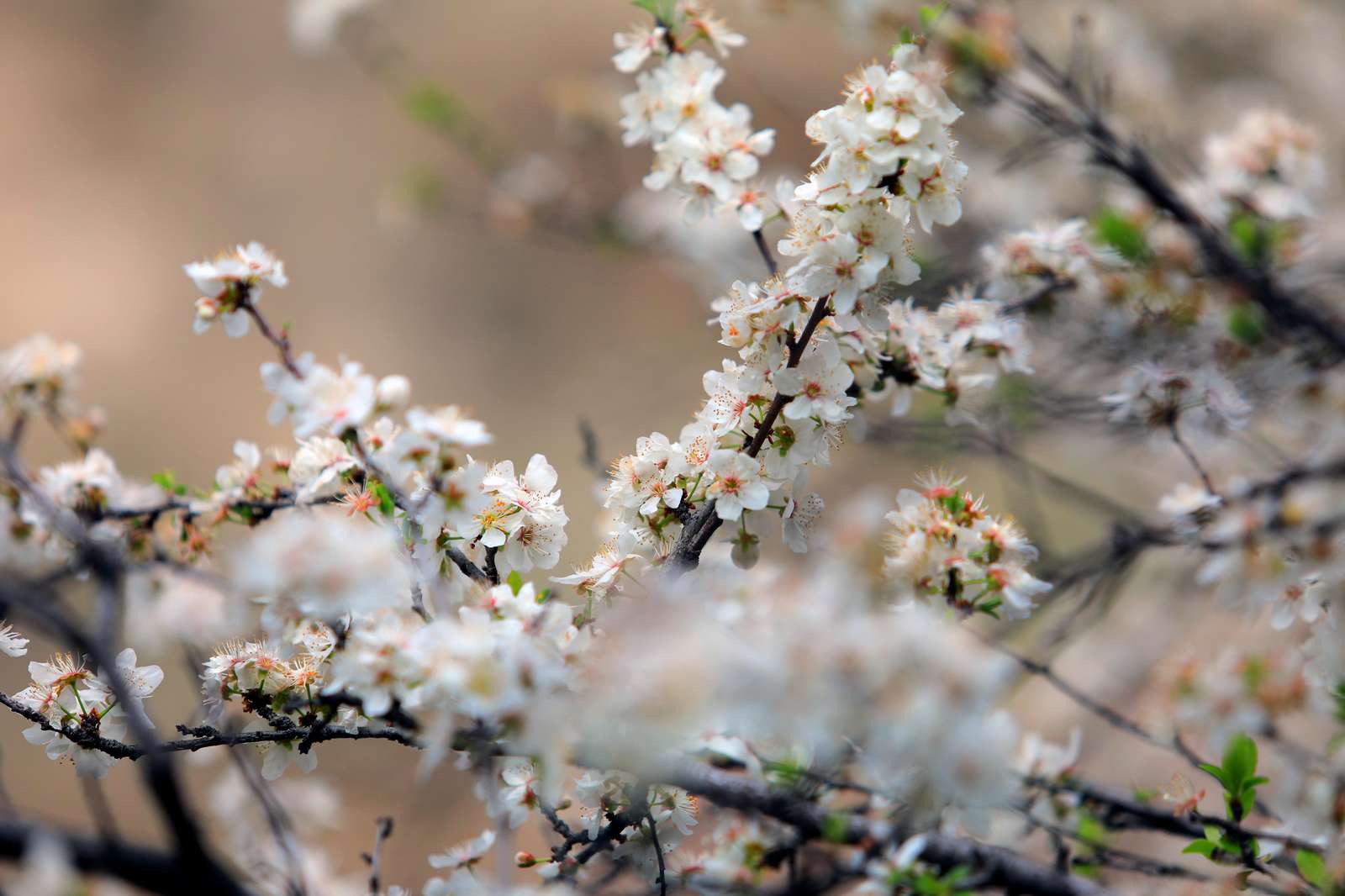
Navruz means «new day». In Uzbekistan it falls on 21 March, around the spring equinox, when day and night are equal and the orchards are about to flower. It is a new year set not by a decree or a religious calendar but by the sun, and that is one reason it has lasted so long: people here have celebrated it for at least two thousand years, through every change of empire and faith.
We are a tour operator in Tashkent, and every March we watch the whole country move outdoors for it. This article is the longer story: where Navruz comes from, why it survived, what its rituals mean and how it is shared with a dozen other countries. For dates, days off and where travellers can join in, see our practical guide to Navruz in Uzbekistan.
A new year counted by the sun
Navruz belongs to the Iranian solar year, which begins at the equinox. Its roots go back to Zoroastrianism and the older beliefs of the Iranian world, long before Islam came to Central Asia. The scholar al-Biruni, born in Khorezm in 973, wrote that Navruz was believed to mark the first day the universe began to move. In 1079 a group of astronomers led by Omar Khayyam drew up the Jalali calendar, which fixed the start of the year at Navruz and the equinox.
The Persian epic «Shahnameh» gives the holiday a legend: the mythical king Jamshid saves people from a deadly winter, rises into the sky on a jewelled throne, and the world greets the «new day». It is a story, not history, but it explains what Navruz has always celebrated: the end of winter.
Why a festival older than Islam survived
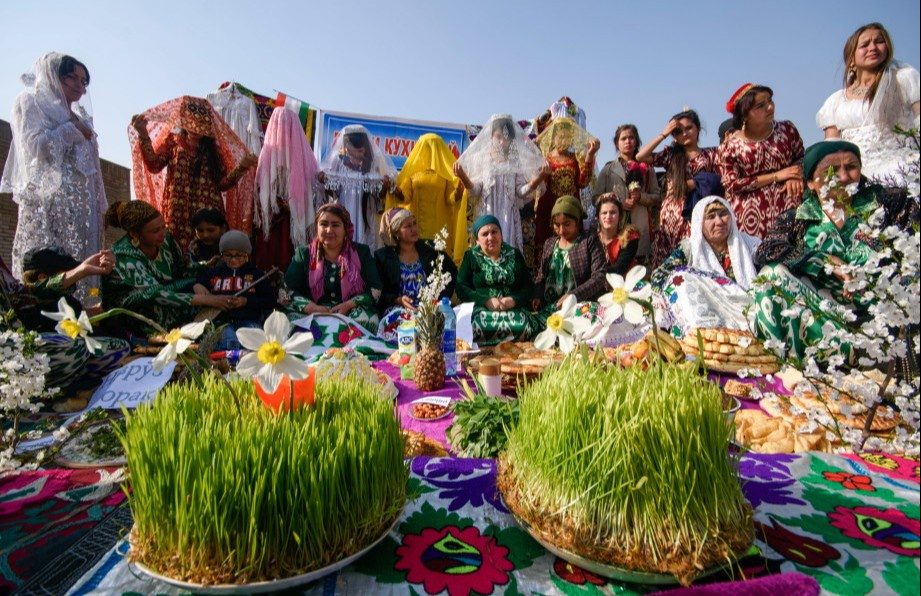
Islam came to Central Asia in the 8th century, and Navruz outlived the change. It marks the turn of the farming year, the first greens and the first work in the orchards, a moment that matters to every family whatever its faith. So the date stayed, and the customs lived on at home and in the street. Before the holiday people clean their houses and mahallas and buy new clothes; during it they visit relatives and friends and give presents to children. All of it belongs to the same idea of a fresh start.
In the 19th century the emirs of Bukhara turned Navruz into a large official celebration. Today Bukhara is one of the best places to see it, which is why our Navruz in Bukhara tour spends 21 March in the old city.
Sumalak: the ritual at the heart of it
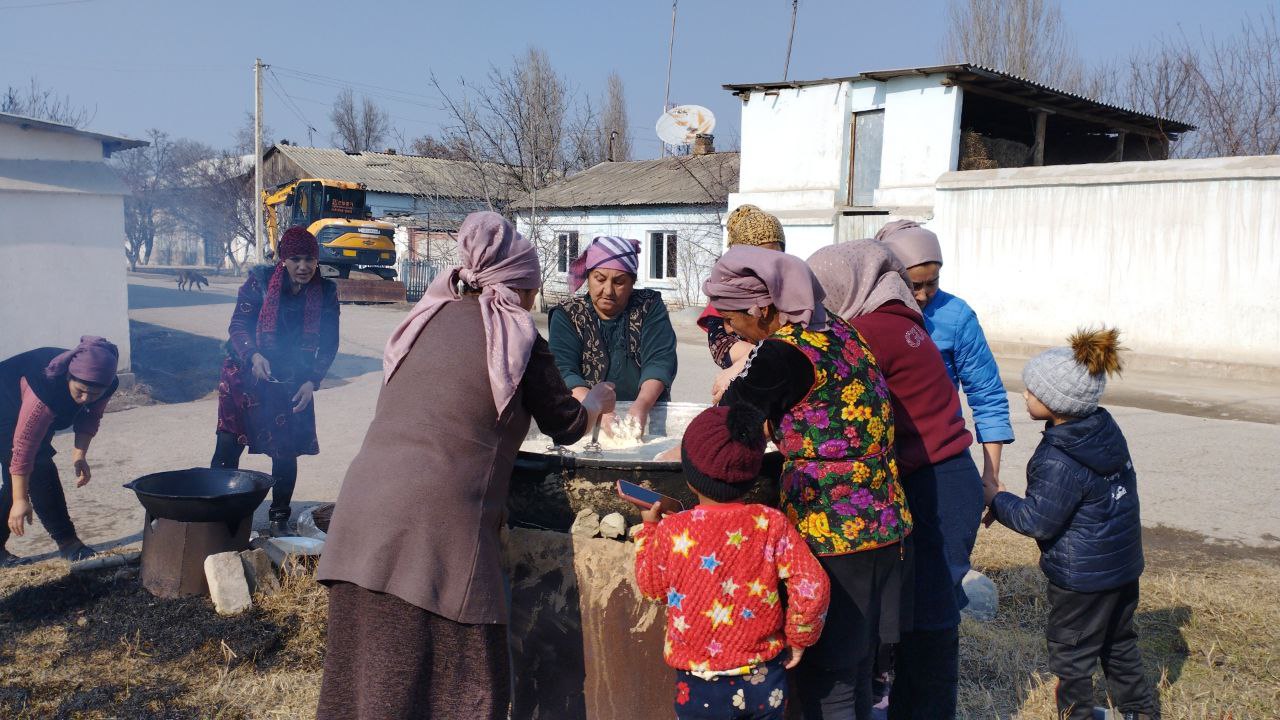
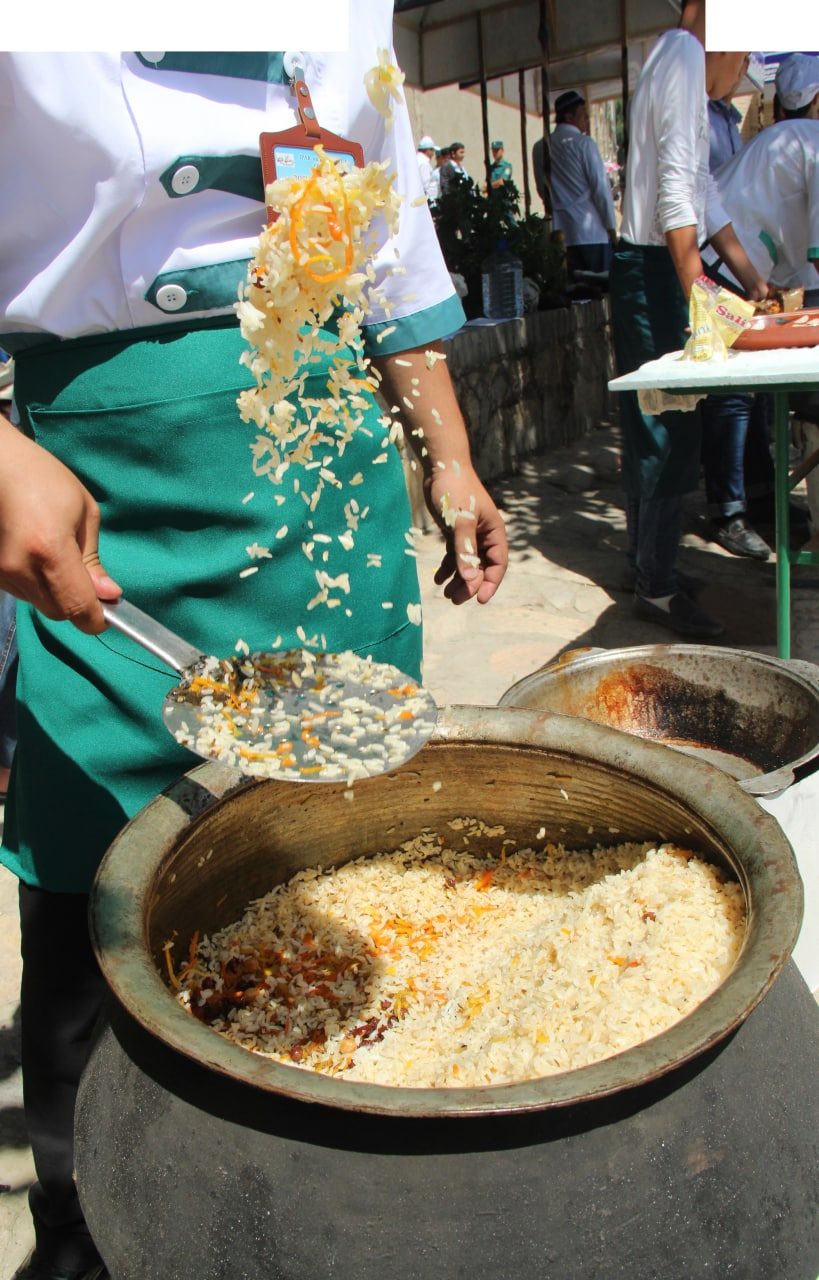
If Navruz has one ritual that belongs to it alone, it is sumalak. Days before the holiday, wheat is soaked and left to sprout. The sprouted wheat is cooked with flour and water in a wide kazan, and the pot cooks from evening until daylight. It must be stirred all the time or it burns, so nobody cooks sumalak alone: neighbours sit around the fire, take turns at the paddle, sing and make a wish with each turn. Near the end whole walnuts go in, each with a wish of its own.
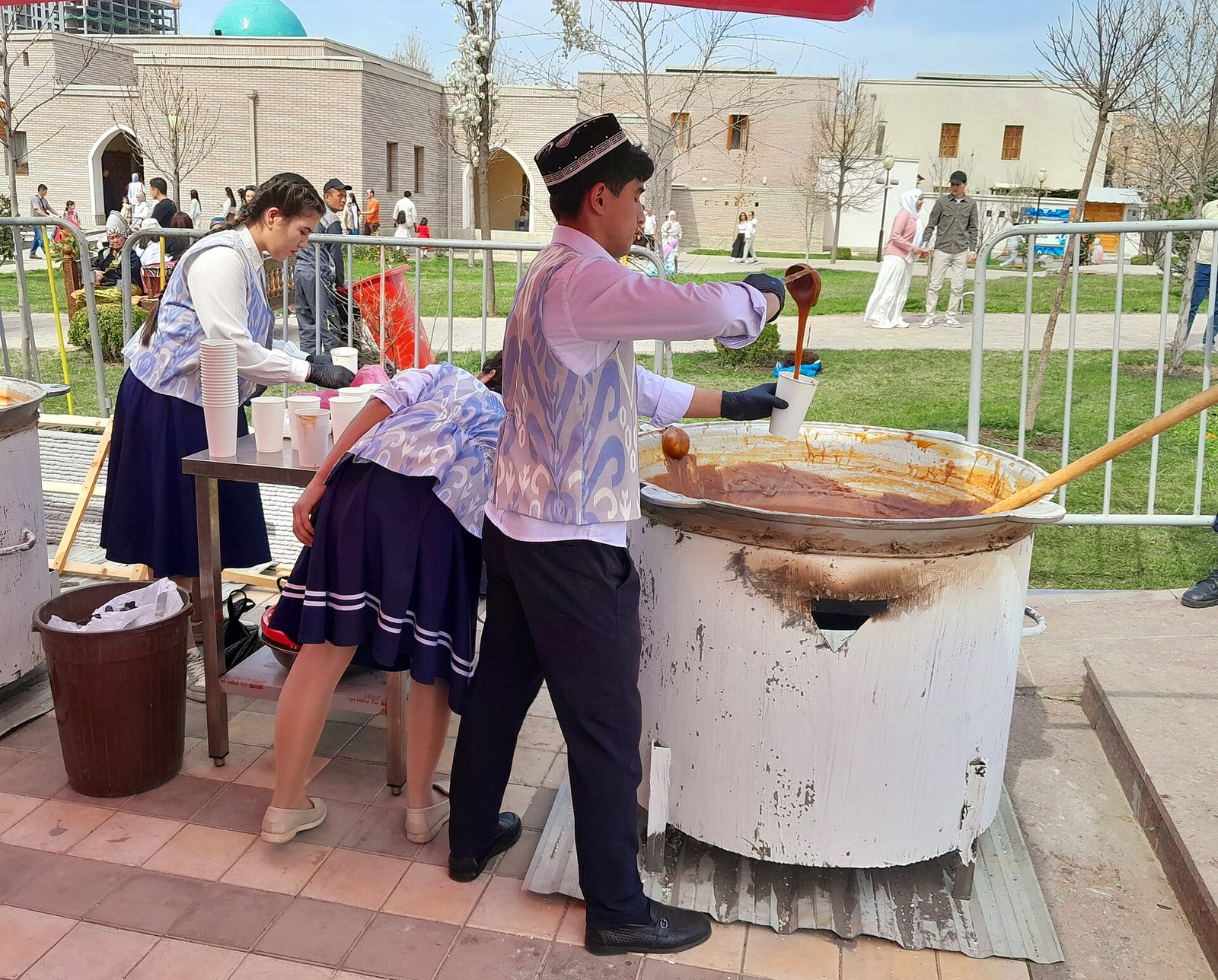
By morning the pot holds a thick, sweet, dark brown paste. There is no sugar in it at all: the sweetness comes from the sprouted grain. It is carried round to neighbours in bowls, and that sharing is the point. A portion of sumalak is less a dish than a greeting from the whole street.
Green dishes and the first spring table
Navruz is the moment when the first spring greens reach the bazaars, and they go straight into the holiday food. Ko'k somsa is baked with greens instead of meat, ko'k chuchvara are small dumplings filled with greens, and halim is a slow-cooked porridge of wheat and meat. In mahallas, the neighbourhood communities, people cook together and sit down to a shared meal. Many of these dishes appear only in these weeks, so March is the time to try them. More on Uzbek food through the year is in our guide to 10 Uzbek dishes worth trying.
Wrestling, kites and the spring fair
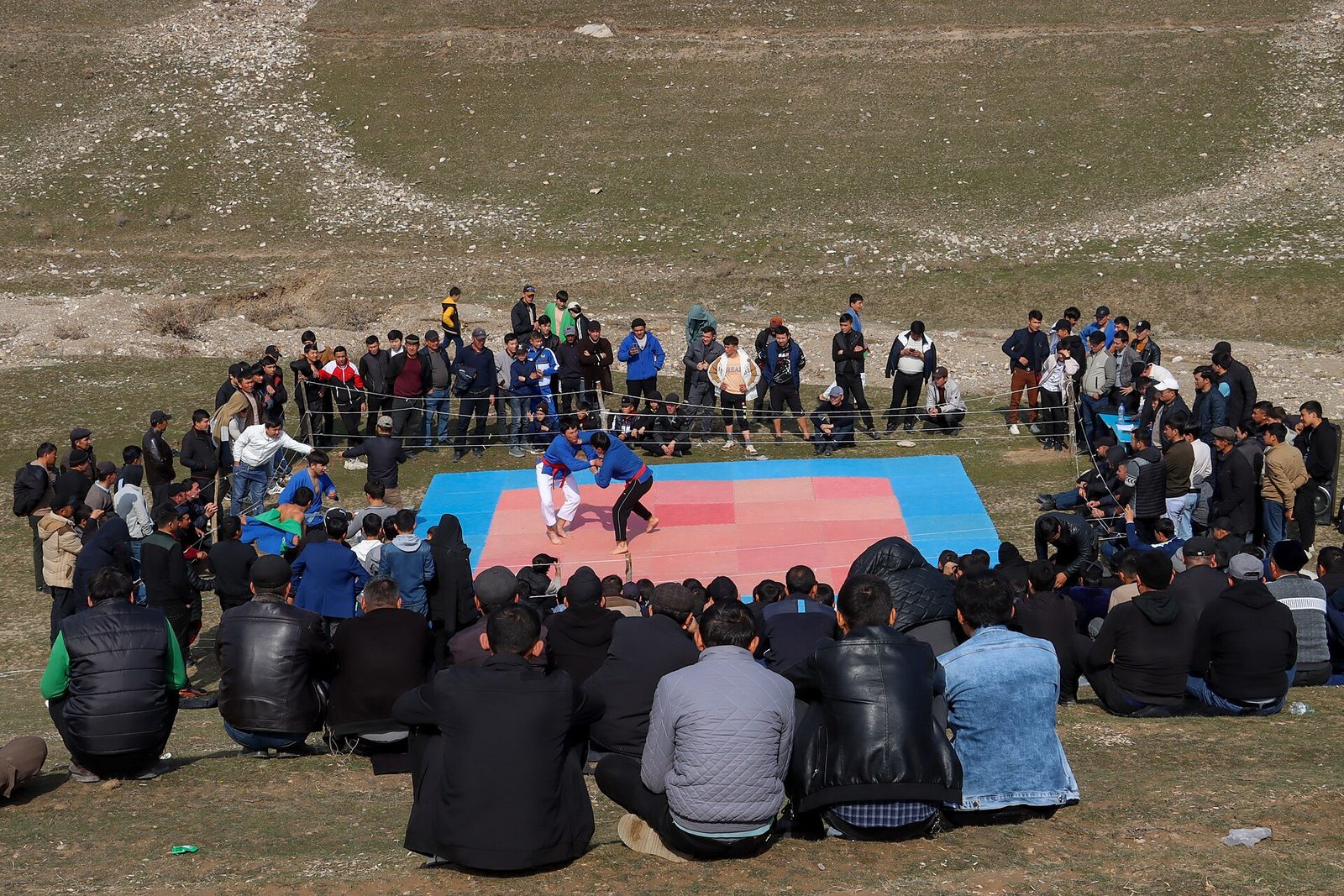
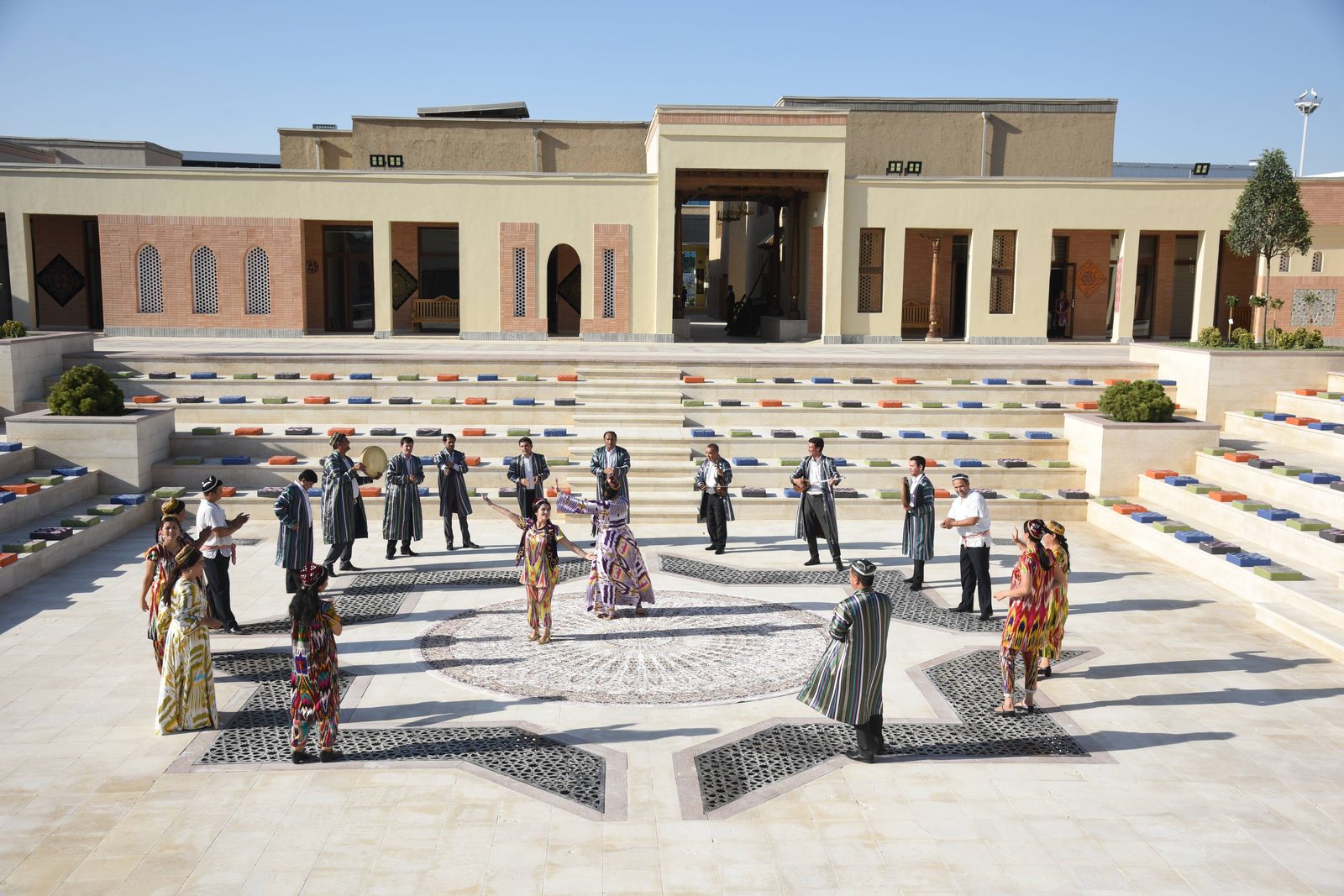
Navruz is loud and public. Towns and villages hold a sayl, a spring fair with music, food stalls and games. Kurash, the traditional Uzbek wrestling, draws crowds around an open-air mat. Children fly kites, swings go up between trees, and folk musicians play in parks and squares. In Tashkent the main concert takes place on 21 March, and smaller celebrations fill parks across the city for several days.
Neighbours also plant trees together and tidy their streets, a custom of shared voluntary work called hashar. For a visitor it is the easiest way to see a mahalla at work.
One holiday, thirteen countries
In 2009 UNESCO added Navruz to the Representative List of the Intangible Cultural Heritage of Humanity; Uzbekistan was among the seven countries that nominated it. The entry was widened in 2016 and again in 2024, and now covers thirteen countries, from Türkiye to Mongolia. In 2010 the United Nations General Assembly proclaimed 21 March the International Day of Nowruz.
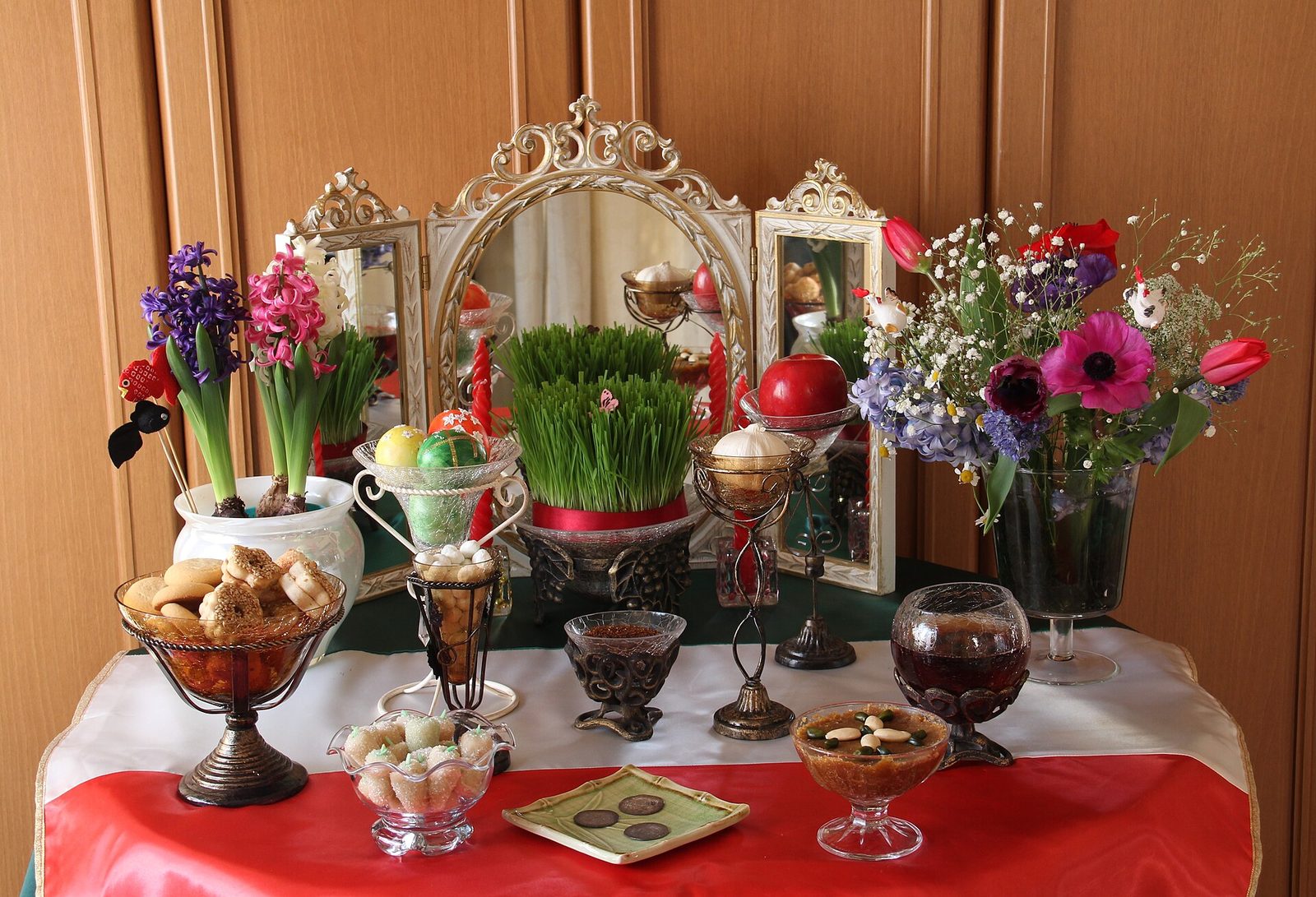
Shared roots do not mean identical customs. In Iran the symbol of the holiday is the haft-seen, a table of seven items whose names begin with the letter «s». In Uzbekistan that table is not a tradition; the Uzbek Navruz lives in the street, in the mahalla and around the sumalak pot.
Being in Uzbekistan for Navruz
21 March is a public holiday every year, and extra days off are announced by decree each winter. March is also one of the pleasant months to travel: days are mild, evenings are cool, and the orchards begin to bloom. It is a busy time for domestic travel too, so book trains and hotels in Samarkand and Bukhara early. Our article on Uzbekistan in March covers the weather, and festivals in Uzbekistan 2027 lists the other dates of the year.
The night at the sumalak pot is a neighbourhood event, not a show, and nobody can promise an invitation. Public celebrations are open to everyone, and that is where most travellers taste sumalak for the first time.
In short
- Navruz, «new day», is the spring new year of 21 March, set by the equinox and celebrated here for at least two thousand years.
- It is older than Islam and survived because it was tied to farming and the season, not to a temple.
- Its signature ritual is sumalak: sprouted wheat stirred through the night by neighbours, sweet without sugar, shared in the morning.
- UNESCO inscribed Navruz in 2009; the entry now covers thirteen countries, each with its own customs.
- For dates, days off and where to join in, read our practical Navruz guide.
© Photos
- Sprouted wheat on a Navruz table, Uzbekistan — SarvinozGulomova / Wikimedia Commons · CC BY-SA 4.0
- Neighbours taking turns at the sumalak kazan in a village yard, Uzbekistan — Avazbek Abdulhayev / Wikimedia Commons · CC BY-SA 4.0
- Ladling sumalak from the kazan at Navruz Park, Tashkent — Miss Kamola / Wikimedia Commons · CC BY-SA 4.0
- A kurash wrestling bout on an open-air mat, watched by a crowd, Uzbekistan — Sinchalak Musulmon / Wikimedia Commons · CC BY-SA 4.0
- A haft-seen table set for Nowruz in Iran, with wheat sprouts and samanu — Roozitaa / Wikimedia Commons · CC BY-SA 4.0