

Khiva
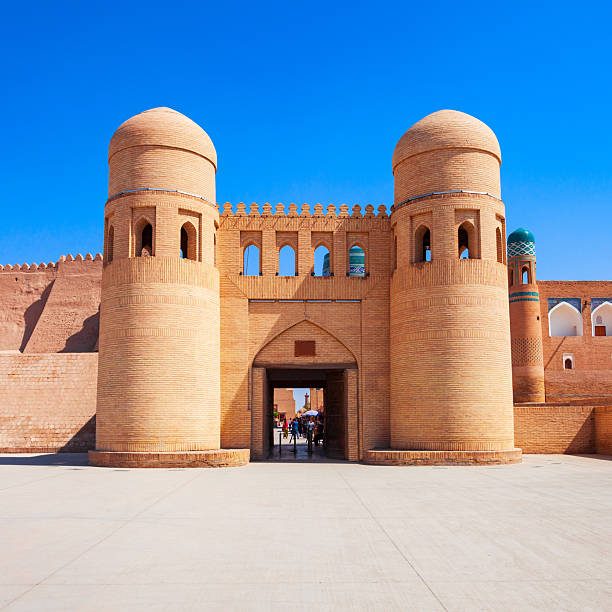
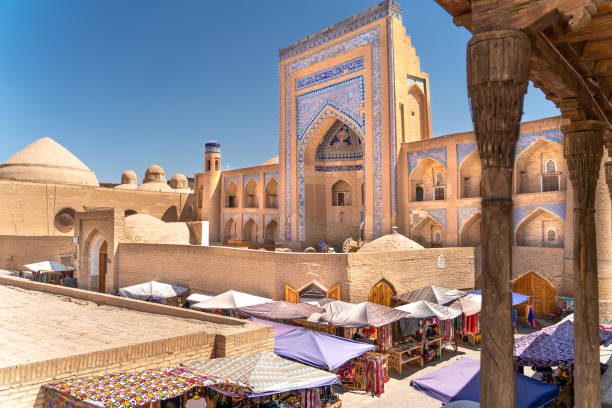
Ichan-Kala, uma cidade inteira cercada de muralhas, com minaretes e madraças, pequena o bastante para ser atravessada em vinte minutos e mais bonita ao pôr do sol.
- 1–2 dias
- Voe até Urgench ou vá de trem; Khiva fica a 30 minutos de Urgench
- Ponto de partida para o Mar de Aral e as fortalezas do deserto
Encontrar um roteiro sob medida → Todos os roteiros para Khiva (11)
Sobre Khiva
Khiva is a small town in the Khorezm oasis on the lower Amu Darya, half an hour from the regional capital, Urgench. Its heart is Você sabia? Ainda se mora dentro da cidade-museu de Khiva Itchan Kala reúne mais de 50 monumentos históricos e cerca de 250 casas antigas dentro de muralhas de barro de 8–10 m de altura e 5–6 m de espessura, e famílias ainda vivem e trabalham em suas vielas. Saiba mais →: a walled rectangle of 26 hectares, about 650 by 400 metres, with four gates. Around it lies Dishan Kala, the outer town, where Khiva goes to school, shops and works. By day the lanes inside the walls fill with craft workshops and visitors; after dark many of them move out to the new lakeside quarter of Um novo complexo turístico às margens do lago Govuk, a pouca distância de carro de Ichan-Kala, inaugurado em maio de 2025: 17 hotéis e pousadas, um anfiteatro de 3.000 lugares, restaurantes, um bazar sob cúpulas e um canal com gôndolas. Saiba mais →.
By Silk Road standards most of what you see is young. The monuments of Itchan Kala date mainly from the 16th to the 19th centuries, when Khiva was the capital of a khanate, and the khans kept building until the early 20th century. That is why the town looks so complete: a late royal capital that has survived almost whole.
História em poucas linhas
- 10th centuryArab travellers mention Khiva in writing for the first time. Tradition makes the town far older, and in 1997 it celebrated its 2,500th anniversary.
- 17th centuryKhiva becomes the capital of the Khanate of Khiva, and from here the khans rule Khorezm for the next three centuries.
- 1830–1842Allakuli Khan builds the Tosh Hovli palace and then the outer wall of Dishan Kala, more than 5.6 km long.
- 1873Khiva becomes a protectorate of the Russian Empire. The khans stay on the throne and keep building, right up to the last Uma escola islâmica: celas de estudantes e salas de aula em torno de um pátio, atrás de um portal imponente. Nas cidades antigas, muitas hoje abrigam museus e oficinas de artesanato. and minaret of the early 20th century.
- 1920The khanate ends and Khiva becomes the capital of the Khorezm People's Soviet Republic. In 1924 Khiva becomes part of Uzbekistan.
- 1990Itchan Kala becomes the first UNESCO World Heritage Site in Uzbekistan.
- 2018The railway reaches Khiva, with a new station in the Khorezm style. In 2026 a high-speed train from Tashkent starts running here.
O que ver
Carregando o mapa…
Mapa: © colaboradores do OpenStreetMap
-
1West Gate and Kalta Minor
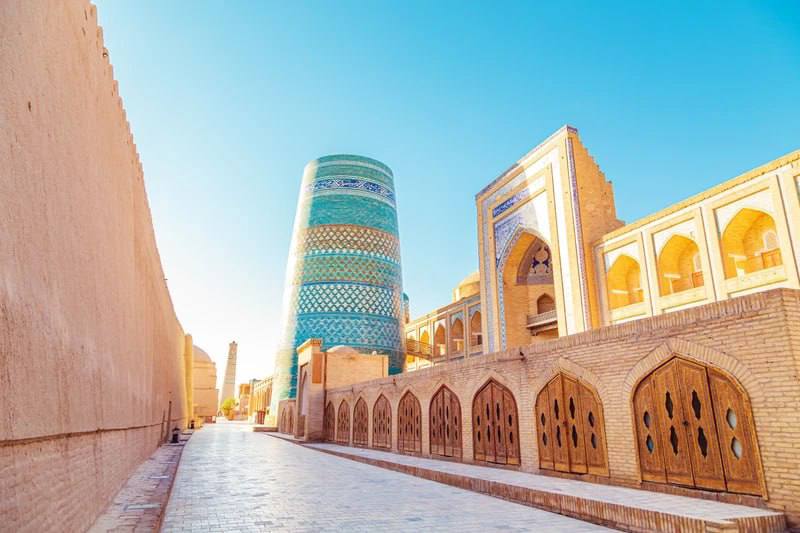
Most visitors enter Itchan Kala through Ota Darvoza, the West Gate. Just inside stands the madrasa of Muhammad Amin Khan (1852–1855), the largest in Khiva, with 130 rooms over two floors, and beside it the turquoise drum of Você sabia? Uma base de 14 m de largura para uma torre que parou em 29 m O Kalta Minor foi iniciado em 1852 para chegar a 70–80 m, mas a obra parou em 1855, em cerca de 29 m, quando seu cã morreu. Dizem que é o único minarete todo coberto de azulejos esmaltados. Saiba mais →. Come back in the late afternoon, when the low sun lights up the tiles.
-
2Kunya Ark
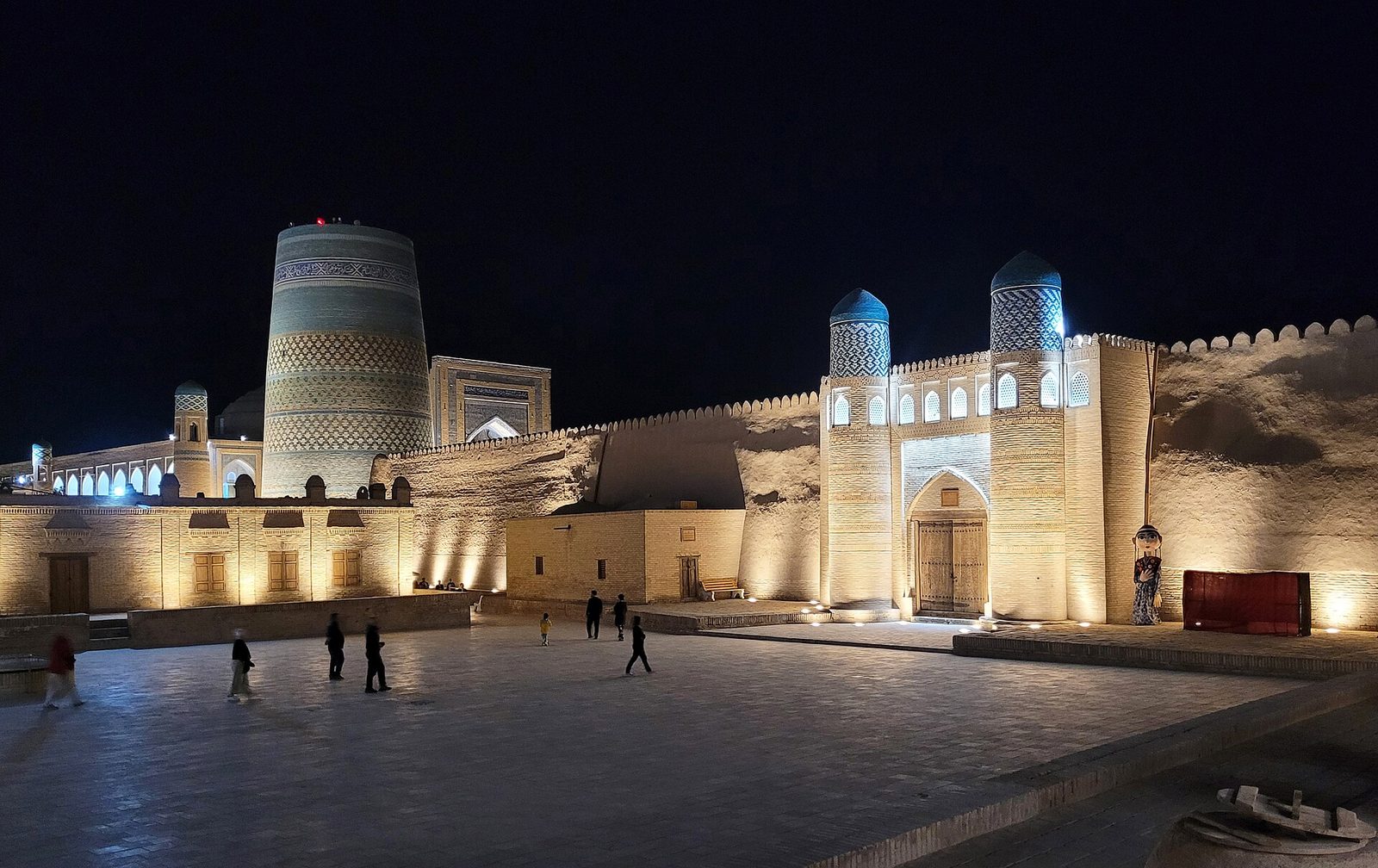
The old citadel of the khans, begun in 1686, once held a chancellery, a harem, a mint and mosques for summer and winter. The reception hall, both mosques and the harem survive. Climb the Ak Sheikh Bobo bastion, a former watchtower in the western wall, for the widest view over the domes and minarets.
-
3Juma Mosque
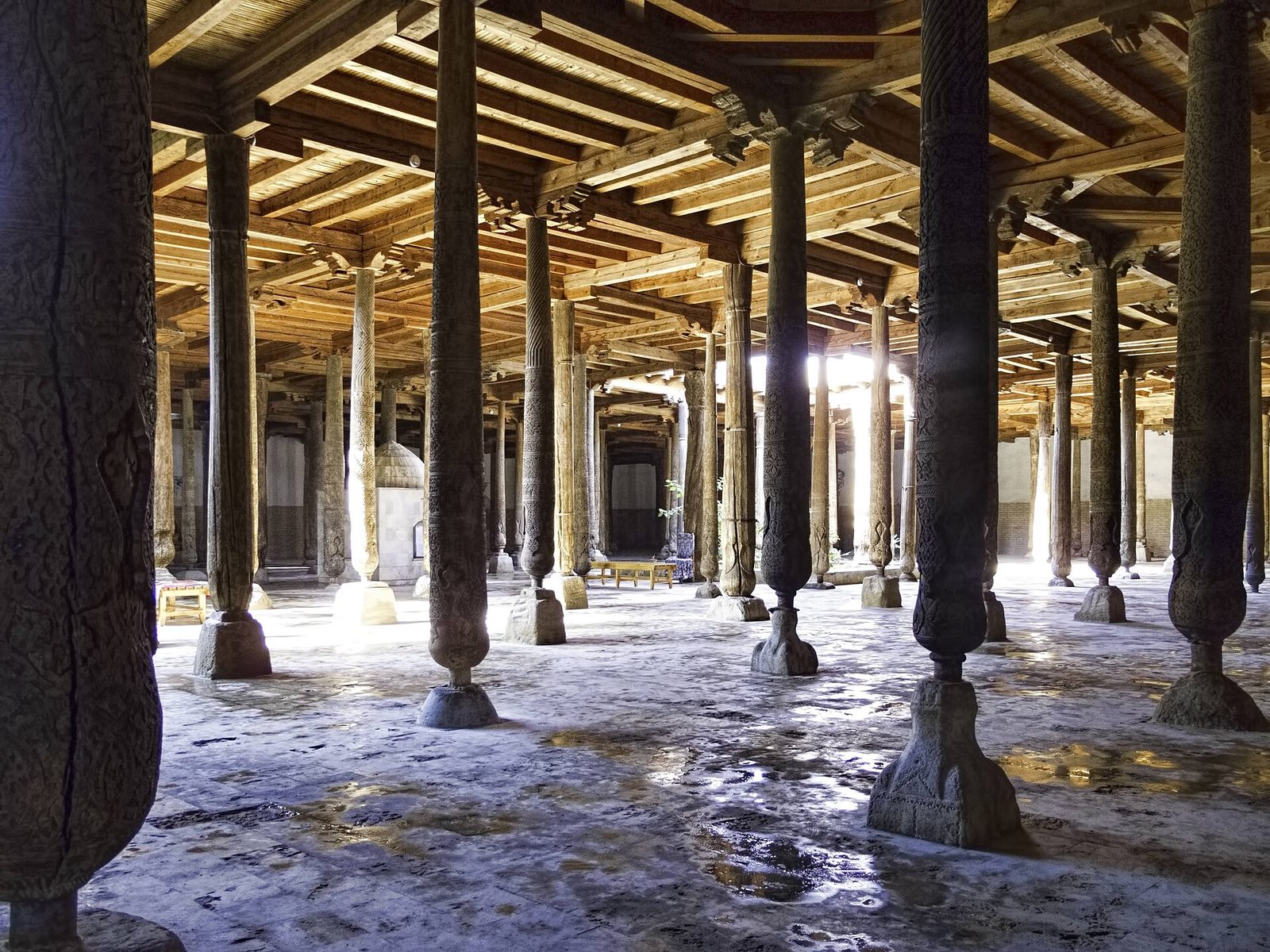
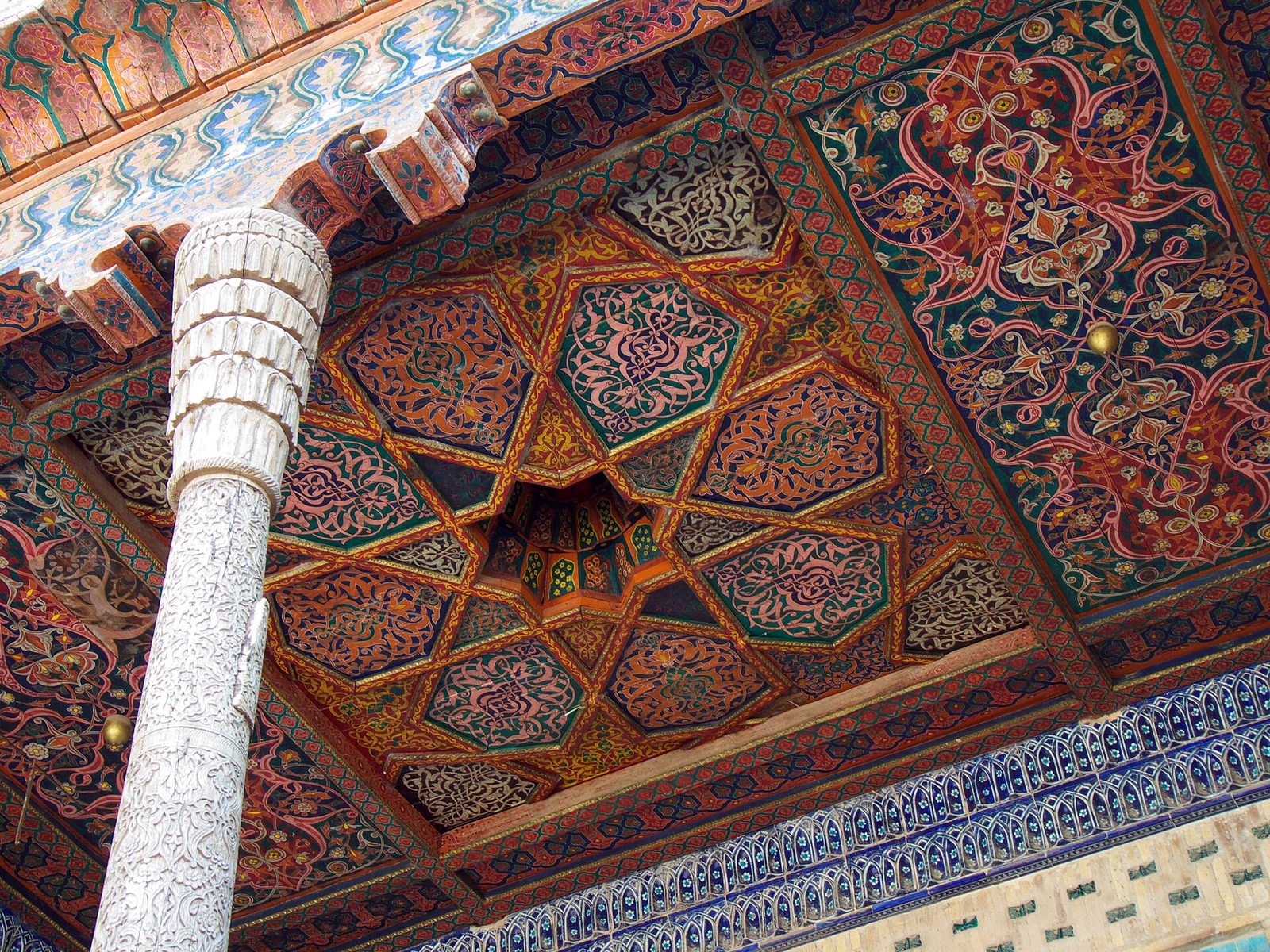
Khiva's Friday mosque was first recorded in the 10th century and rebuilt in 1788. Its single hall, 55 by 46 metres, rests on 212 wooden columns in 17 rows, and no two are carved alike. Come around midday, when light falls through the two openings in the roof.
-
4Tosh Hovli Palace
Allakuli Khan's 'Stone Courtyard', built in the 1830s, has more than 260 rooms around three courtyards. In the harem, four loggias belonged to the khan's four wives and the fifth, the largest, to the khan. Look for the round platforms in the reception courtyard, where guests set up their yurts.
-
5Pahlavan Mahmud Mausoleum
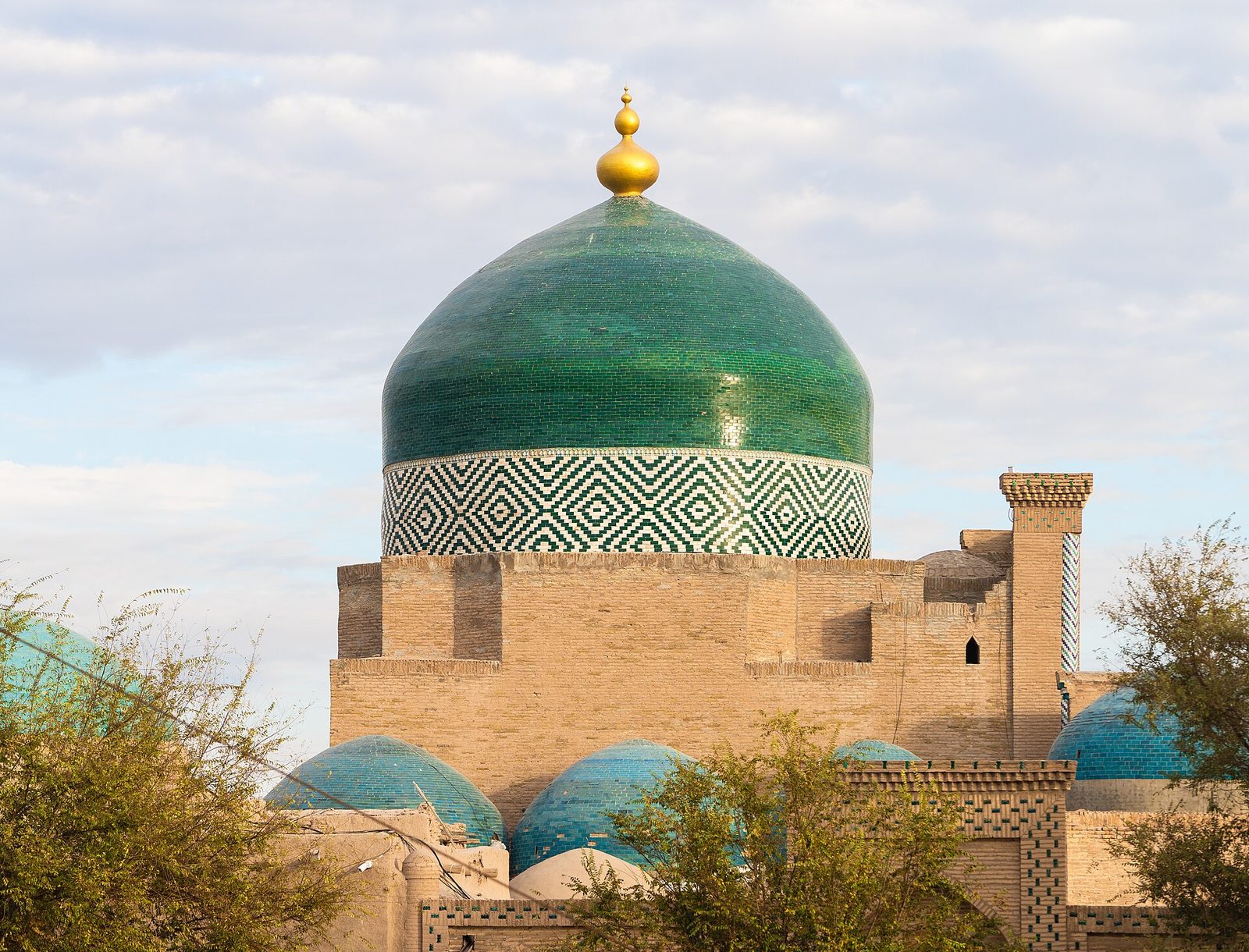
Khiva's patron saint, a poet and wrestler who died in 1326, lies under the largest dome in town, covered in turquoise tiles. Khans of Khiva were later buried around him. It is still a place of pilgrimage, so dress modestly and keep your voice down.
-
6Islam Khoja Madrasa and Minaret
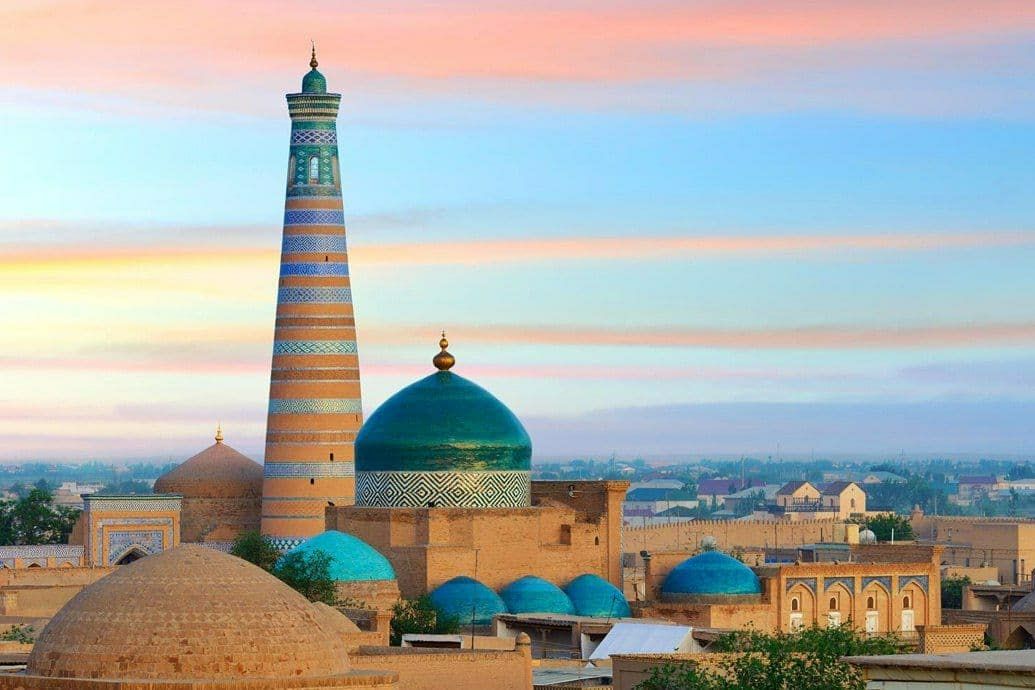
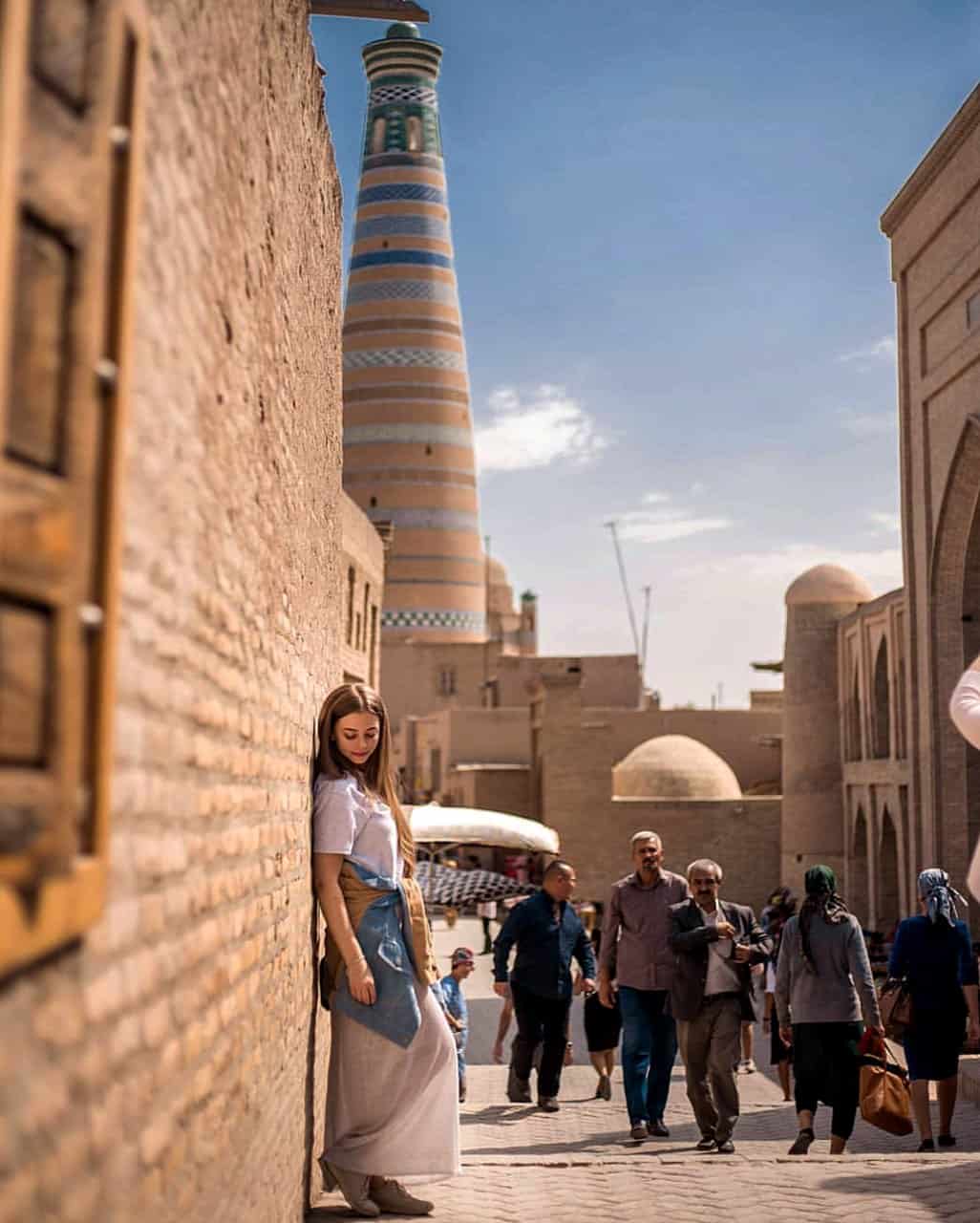
The last madrasa of the khans, finished around 1910, has 42 small cells around a courtyard and now houses the Museum of Applied Arts: Khorezm woodcarving, metalwork, carpets and tiles. The minaret next to it can be seen from all over town and is the place to be at sunset.
-
7Nurullaboy Palace
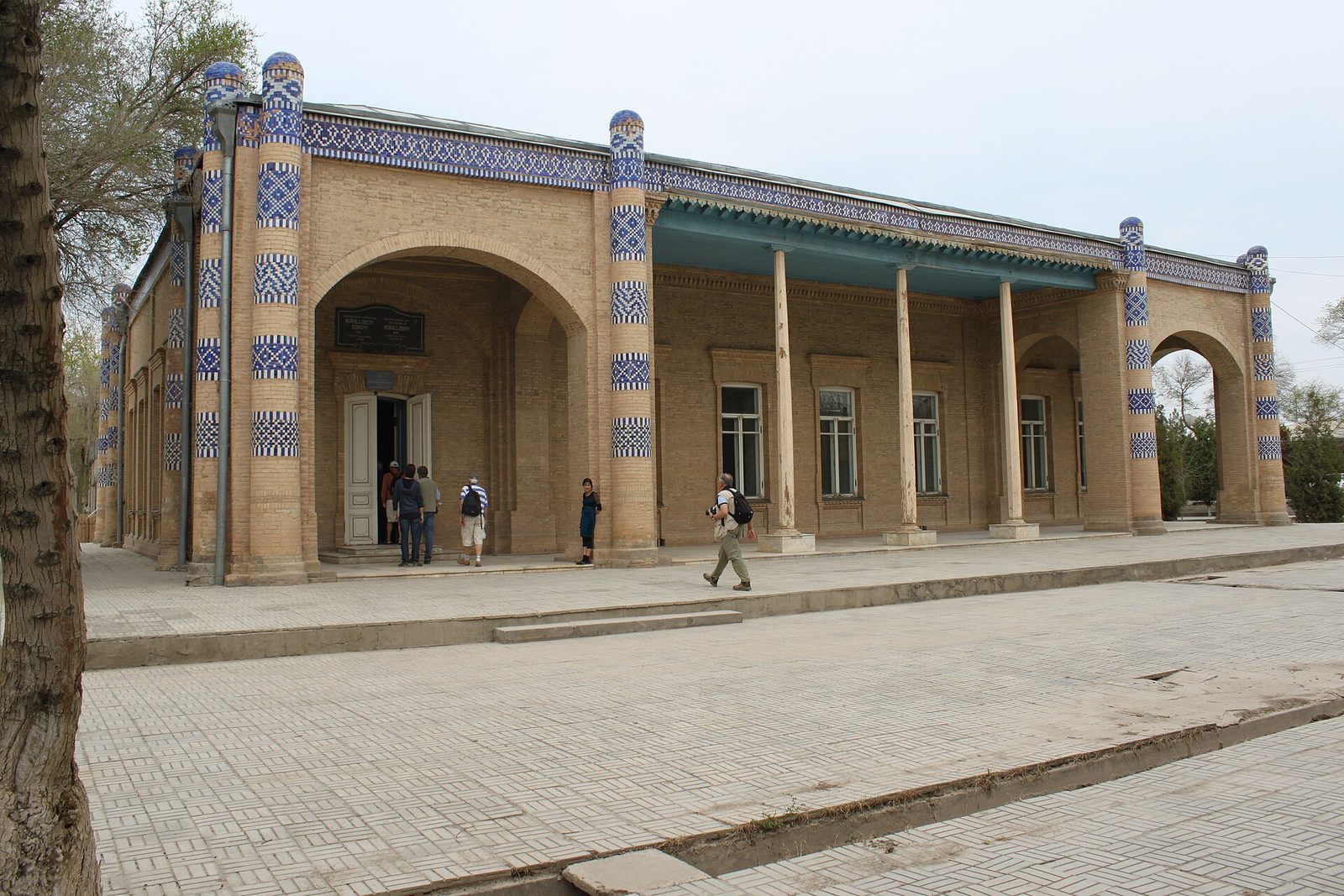
Outside the walls, in Dishan Kala, the last khans built a palace in a new style. Its reception hall, finished in 1912, mixes local carved plaster with mirrors, painted ceilings and tiled stoves brought from Russia. The restoration was completed in 2017.
-
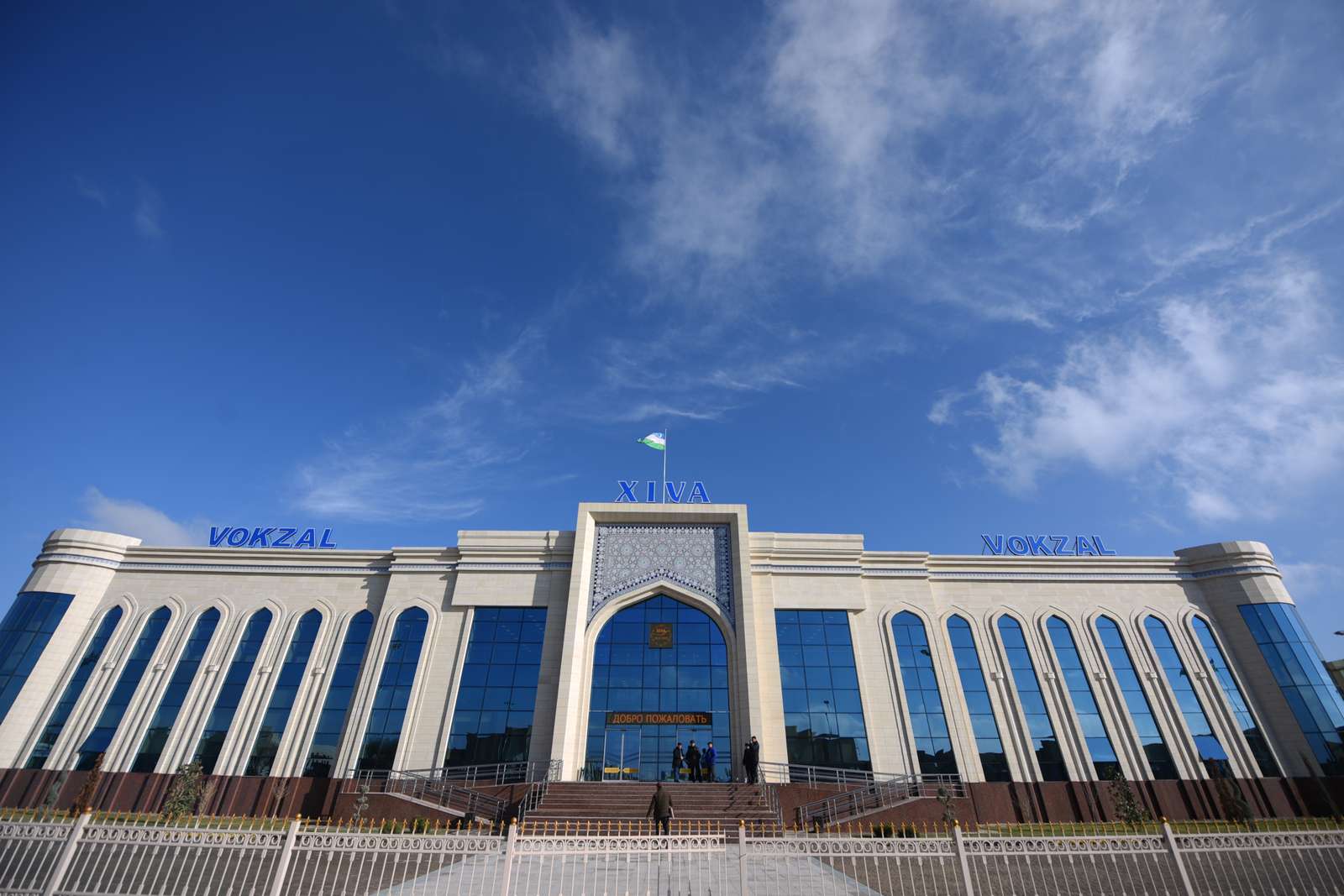
8Khiva Railway Station
Opened in November 2018, the station is decorated in the spirit of old Khorezm architecture, with white carved columns and arches. It stands less than 2 km east of Itchan Kala, and this is where the high-speed train from Tashkent arrives.
Fotos: Wooden columns of the Juma Mosque, Khiva — Dan Lundberg / Wikimedia Commons · CC BY-SA 2.0; Tosh Hovli Palace, Khiva — Fulvio Spada from Torino, Italy / Wikimedia Commons · CC BY-SA 2.0; Pahlavan Mahmud Mausoleum, Khiva — Panpanchik / Wikimedia Commons · CC BY-SA 4.0; Nurullaboy Palace, Khiva — Faqscl / Wikimedia Commons · CC BY-SA 3.0
Bairros
- Itchan Kala The walled inner town: monuments, workshops and guest houses inside one rectangle. Sleep inside the walls and you have the lanes to yourself early in the morning and late in the evening.
- Dishan Kala The outer town, once enclosed by a wall built in 1842, of which only a few gates survive. Walk out through the north gate to Nurullaboy Palace and you are in everyday Khiva.
- Arda Khiva and Lake Govuk A new quarter on the lake north of the old town, opened in May 2025: hotels, restaurants, a bazaar under domes and a canal with gondolas. The clay for the outer wall was dug here, and the pit later filled with water. Leia mais →
- The desert fortresses On the right bank of the Amu Darya, in Karakalpakstan, the clay fortresses of Ruínas de antigas fortalezas da Corásmia sobre colinas na borda do Kyzylkum, no Karakalpaquistão. and Toprak-Kala stand above the O Kyzylkum, ou Areias Vermelhas: o deserto entre os rios Amu Darya e Syr Darya que a estrada e a ferrovia atravessam a caminho de Khiva.. We drive out to them from Khiva as a separate trip. Leia mais →
O que comer
- Shivit oshi Khiva's signature dish: noodles turned bright green with dill, topped with a stew of meat, potatoes and carrots and served with yoghurt. Have it for lunch in the old town.
- Tukhum barak Khorezm's egg dumplings: the raw egg filling sets in the boiling water. They are served with sour cream or yoghurt.
- Khorezm melons Khorezm is famous for its melons, above all the gurvak. In late summer they are piled high at every market.
Como se locomover
Inside the walls you walk everywhere. For the station, Nurullaboy Palace or Arda Khiva, call a Yandex Go taxi: it has worked in Khiva and Urgench since 2024, and you pay in cash or by a card linked to the app. A trolleybus line of about 30 km runs between Khiva and Urgench, where the airport is.
Dicas de quem é daqui
- In the last hour before sunset, climb the A antiga fortaleza-residência dos cãs de Khiva, dentro das muralhas de Itchan Kala. watchtower or a stretch of the wall: from above, the domes, minarets and flat clay roofs come together into one picture.
- Go out early. Before the tour groups arrive, the lanes of Itchan Kala are almost empty and the light on the walls is soft.
- O mausoléu de Pahlavan Mahmud, poeta e lutador venerado como o santo padroeiro de Khiva. and the Juma Mosque are places of prayer: cover shoulders and knees, and women should bring a scarf for the mausoleum.
- The high-speed train arrives from Tashkent every day except Sunday and leaves Khiva every day except Monday, so build your days around it. Leia mais →
- Bring cash in som for the craft stalls inside the walls; hotels and restaurants take cards.
- Look at the carved wooden doors and columns all over town: woodcarving is Khiva's own craft, and workshops inside the walls still practise it.
Nossa opinião: quantos dias você precisa
Um dia inteiro basta para percorrer Ichan-Kala, que se atravessa em vinte minutos. Um segundo dia é ideal para as fortalezas do deserto, com a fortaleza de Ayaz-Kala incluída nos nossos programas.
Já está em Khiva? Serviços no destino: salas VIP, traslados, uma noite na cidade, passeios →
Quando ir: mês a mês
Temperatura durante o dia, chuva, feriados e nossa avaliação de cada mês.
- jan2.6° Fresco, menos gente Frio: 2.6° durante o dia 13 mm de chuva ★ 1, 14
- fev5.5° Fresco, menos gente Frio: 5.5° durante o dia 16 mm de chuva
- mar13.6° Excelente Fresco: 13.6° durante o dia 22 mm de chuva ★ 8, 21
- abr22° Excelente Agradável: 22° durante o dia 19 mm de chuva
- mai29° Excelente Agradável: 29° durante o dia 13 mm de chuva ★ 9
- jun34.4° Bom Calor forte: 34.4° durante o dia 5 mm de chuva
- jul35.8° Difícil Calor forte: 35.8° durante o dia 1 mm de chuva
- ago34° Difícil Calor forte: 34° durante o dia 2 mm de chuva
- set27.8° Excelente Agradável: 27.8° durante o dia 2 mm de chuva ★ 1
- out20.3° Excelente Agradável: 20.3° durante o dia 6 mm de chuva ★ 1
- nov10.6° Excelente Fresco: 10.6° durante o dia 12 mm de chuva
- dez4° Fresco, menos gente Frio: 4° durante o dia 13 mm de chuva ★ 8
- 1 jan — Ano-Novo
- 14 jan — Dia dos Defensores da Pátria
- 8 mar — Dia Internacional da Mulher
- 21 mar — Navruz
- 9 mai — Dia da Memória e da Honra
- 1 set — Dia da Independência
- 1 out — Dia do Professor
- 8 dez — Dia da Constituição
- Ramadan Hayit (Eid al-Fitr): a data muda a cada ano
- Kurban Hayit (Eid al-Adha): a data muda a cada ano
Fonte do clima: Википедия, статья «Urgench» (метеостанция в 35 км от Хивы; нормы 1991–2020; Pogoda.ru.net, NOAA) — en.wikipedia.org/wiki/Urgench
Avaliação pela temperatura durante o dia: excelente — 18–30°, bom — 12–18° ou 30–33°, fresco, menos gente — abaixo de 12°, difícil — acima de 33°; chuvas fortes (a partir de 100 mm) rebaixam “excelente” para “bom”. Para as cidades seguimos também a opinião dos nossos especialistas: a temporada vai de março a junho e de setembro a novembro, e março e novembro são os melhores meses (início e fim da temporada, pouca gente); o inverno não é marcado como época ruim.
Como conhecer Khiva
Escolha o formato e mostramos os roteiros que combinam.
Inclua a partir daqui
Extensões fáceis de incluir em uma viagem que passa por aqui.
Leia sobre Khiva
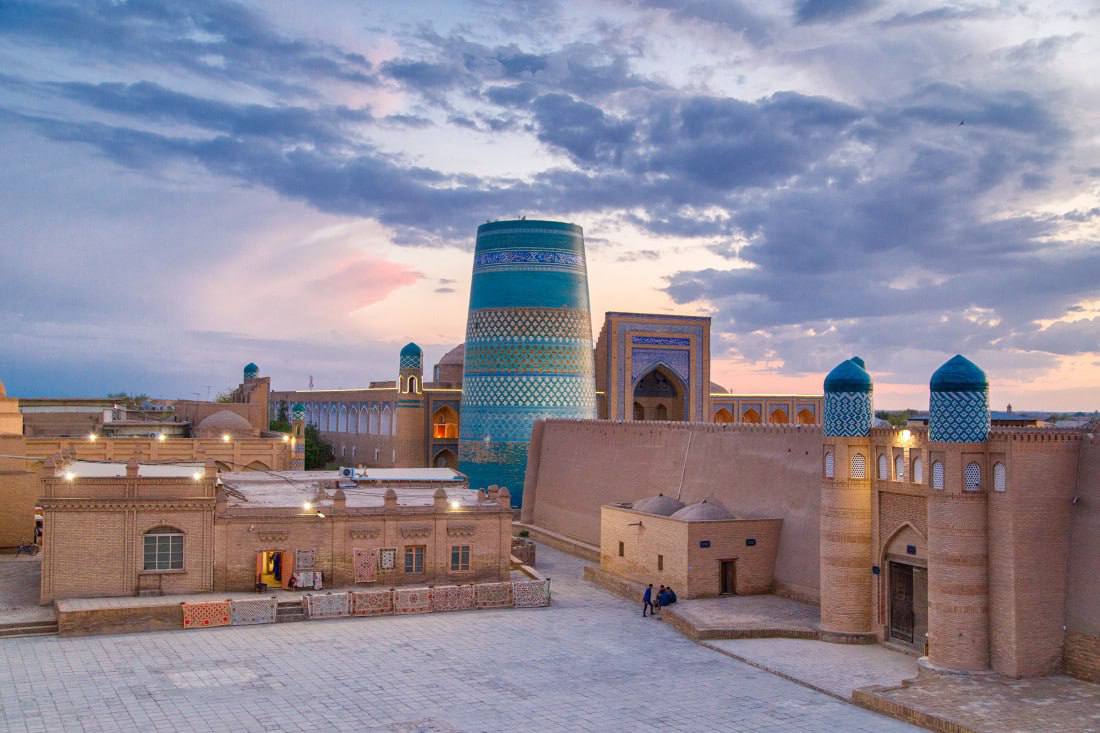 Arda Khiva: o novo bairro noturno de Khiva, para viajantes e grupos MICEUm anfiteatro de 3.000 lugares à beira d’água, 17 hotéis e pousadas e um bazar sob cúpulas nos arredores de Kh…
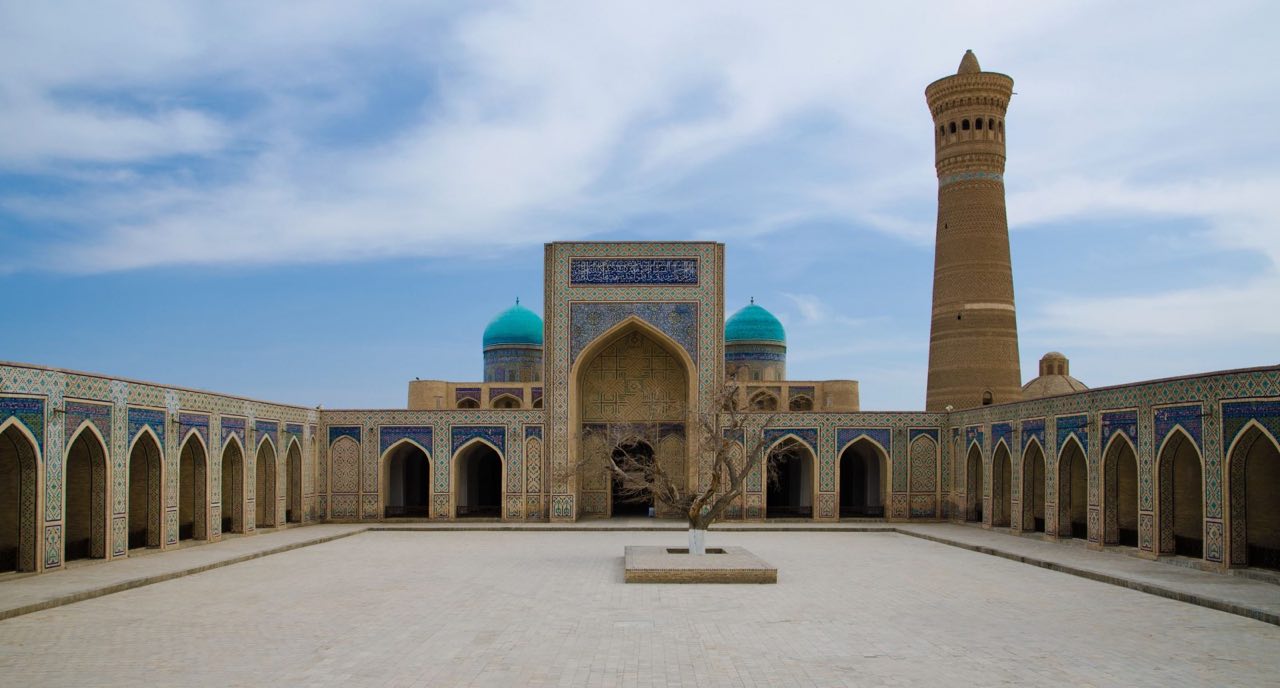 Atrações de Bukhara e Khiva: ingressos, horários e quanto tempo ficarPreços de ingresso para estrangeiros no Ark e no palácio, horários dos museus, o ingresso combinado de Ichan-K…
De Khiva a Bukhara (e de volta): trem, carro e o que ver no caminhoDe Bukhara a Khiva e de volta: horários do trem rápido e regras dos dias da semana, trens noturnos, os 450 km …
Atrações de Bukhara e Khiva: ingressos, horários e quanto tempo ficarPreços de ingresso para estrangeiros no Ark e no palácio, horários dos museus, o ingresso combinado de Ichan-K…
De Khiva a Bukhara (e de volta): trem, carro e o que ver no caminhoDe Bukhara a Khiva e de volta: horários do trem rápido e regras dos dias da semana, trens noturnos, os 450 km …
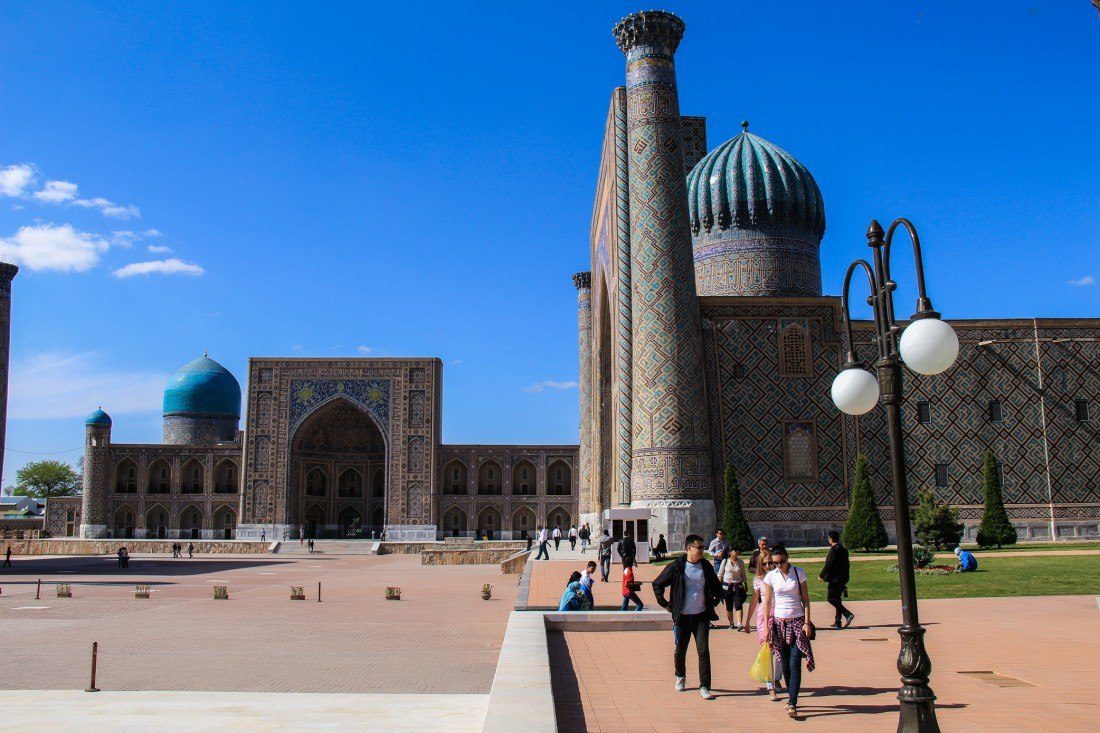 Uzbequistão em 10 dias: Tashkent, Samarcanda, Bukhara e Khiva em ritmo tranquiloUm roteiro de 10 dias pelo Uzbequistão, dia a dia: duas noites em Khiva, um bate-volta a Shahrisabz, uma tarde…
Roteiro de 14 dias pelo Uzbequistão: 2 semanas do Vale de Fergana a KhivaDuas semanas comportam o que uma só não comporta: o Vale de Fergana pelo novo trem diário, Shahrisabz, as fort…
Uzbequistão em 10 dias: Tashkent, Samarcanda, Bukhara e Khiva em ritmo tranquiloUm roteiro de 10 dias pelo Uzbequistão, dia a dia: duas noites em Khiva, um bate-volta a Shahrisabz, uma tarde…
Roteiro de 14 dias pelo Uzbequistão: 2 semanas do Vale de Fergana a KhivaDuas semanas comportam o que uma só não comporta: o Vale de Fergana pelo novo trem diário, Shahrisabz, as fort…
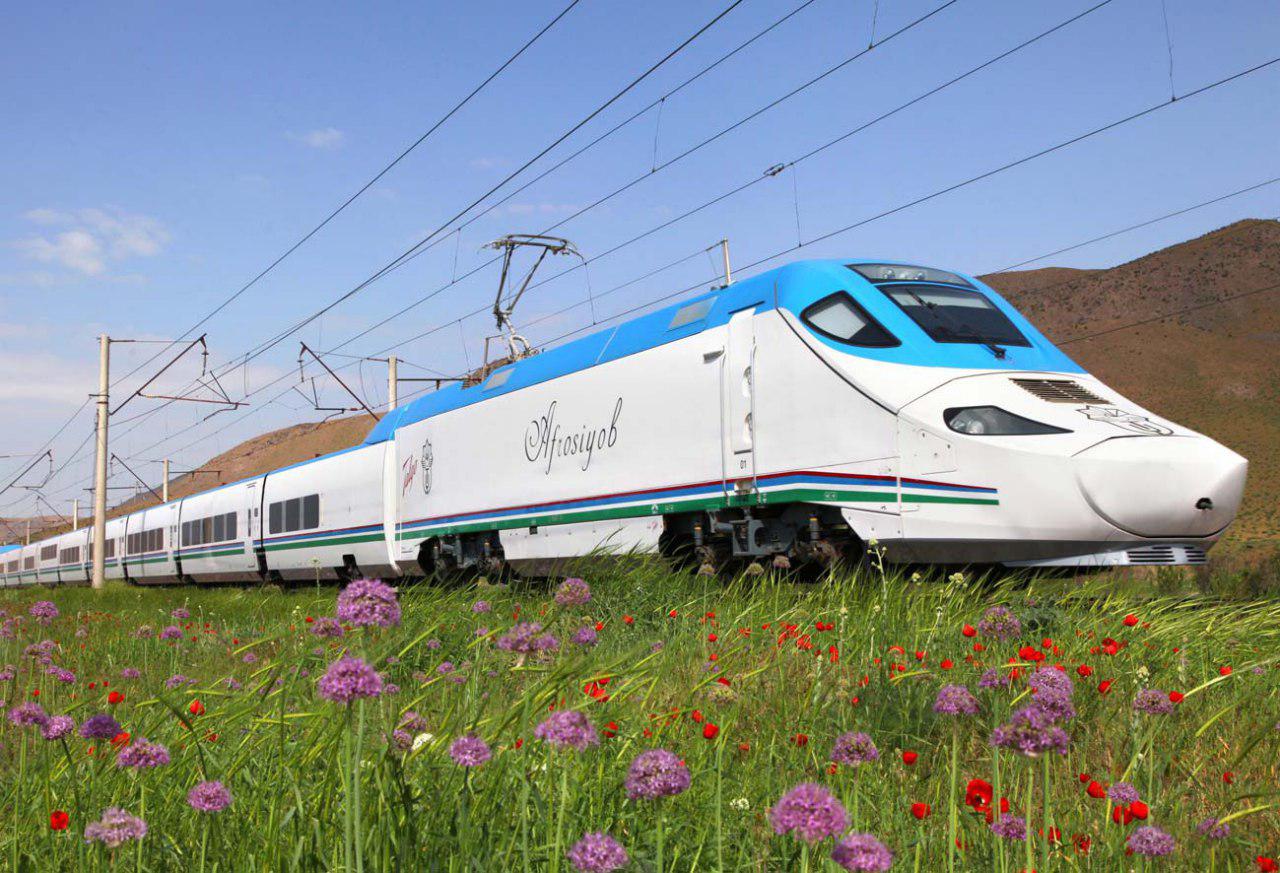 Trens no Uzbequistão: Afrosiyob, Sharq, o novo trem para Khiva, passagens e embarqueDe Tashkent a Samarcanda em 2,5 horas, a Khiva em 7,5. Qual trem pegar, como comprar uma passagem vinculada ao…
Khiva: perguntas antes da viagem
Quantos dias ficar em Khiva?
1–2 dias
Como chegar a Khiva?
Voe até Urgench ou vá de trem; Khiva fica a 30 minutos de Urgench Mais no artigo: Voos para o Uzbequistão: como chegar da Europa, dos EUA e dos Emirados
Qual a melhor época para ir a Khiva?
A primavera (abril–maio) e o outono (setembro–outubro) são as épocas mais agradáveis; no verão os dias são quentes. Mais no artigo: Qual é a melhor época para visitar o Uzbequistão? Estações e clima
O que dá para incluir por perto?
Ponto de partida para o Mar de Aral e as fortalezas do deserto
Antes de viajar
Visto, estação, orçamento e voos: as respostas rápidas.
 Preciso de visto para o Uzbequistão? Guia completo para turistasAntes de viajar, é essencial verificar as exigências de visto. O Uzbequistão simplificou suas regras de entrad…
 Qual é a melhor época para visitar o Uzbequistão? Estações e climaO Uzbequistão é um país ensolarado, com uma história antiga e uma hospitalidade lendária. Para que a sua viage…
 Quanto custa uma viagem ao Uzbequistão? Orçamento para 1 semanaO Uzbequistão é um dos destinos com melhor custo-benefício da Rota da Seda. Abaixo, um detalhamento prático de…
 Voos para o Uzbequistão: como chegar da Europa, dos EUA e dos EmiradosO Uzbequistão recebe visitantes o ano todo, e chegar lá é simples quando você conhece os melhores hubs e compa…
Não encontrou sua viagem?
Conte o que você quer: um consultor prepara um roteiro e um preço em até 24 horas.